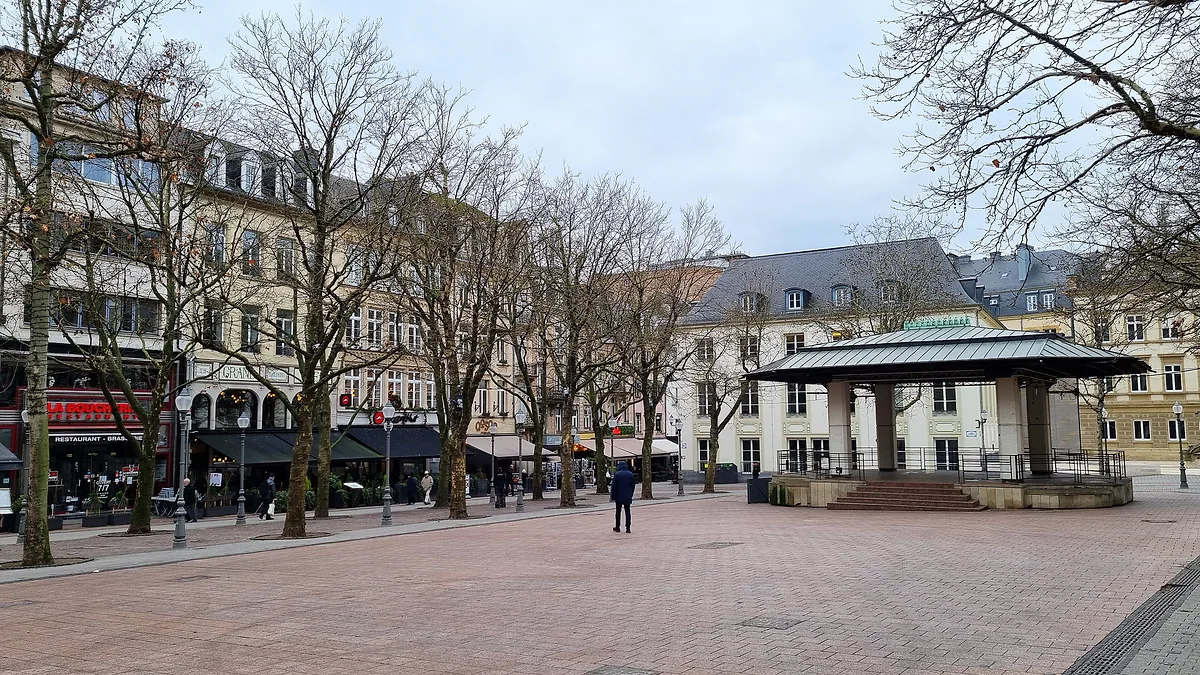
Nearly half hold a foreign passport
How many people live in Luxembourg, and who they are
Luxembourg had 690,959 residents on 1 January 2026, according to STATEC, 1.3% more than a year earlier. Some 46.6% are foreign nationals from around 180 countries, led by the Portuguese (12.8%). Density is 267 people per km², and on top of that about 237,200 cross-border workers come in every working day.
What tells me most about Luxembourg isn't the total, it's the mix. Nearly one resident in two is foreign, and in the capital seven in ten. That's why you'll hear French, Portuguese, Luxembourgish and English in the same café, and why nobody minds that you don't speak the national language.

Before you go
What I would keep in mind
-
01 My tip
In the capital, seven in ten are foreign
The official portal puts foreign nationals at 70.8% in Luxembourg City, against 46.6% for the country as a whole. That's why English gets you a very long way.
what language do they speak in Luxembourg -
02 Most beautiful
A country built by migration
Luxembourg was a land of emigration until the steel boom, the official portal explains. Germans arrived in the 19th century, Italians in the early 20th and Portuguese in the 1960s; today the Portuguese number 88,300.
history of Luxembourg -
03 Getting there
The commuters who don't count
Around 237,200 workers come in every working day from the neighbouring countries, 124,900 from France, 53,400 from Germany and 51,900 from Belgium. They're not in the census, but they're very much part of daily life.
trains in Luxembourg
What I would book
Luxembourg is small in numbers, but its population is one of the most interesting in Europe. Nearly half don’t hold a Luxembourg passport, people routinely speak three or four languages, and every morning a workforce equal to about a third of the residents crosses in from next door. Here are the official 2026 figures and what they mean for a visitor.
690,959 people, and growing more slowly
According to STATEC, the statistics office, Luxembourg had 690,959 residents on 1 January 2026. It added 9,027 people during 2025, or 1.3%, and STATEC itself points out that’s slower than over the past decade, when growth ran at 2 to 2.5% a year. Two figures explain why. Arrivals were 24,985 and departures 17,141, with less migration than in previous years according to STATEC, and fertility fell to 1.23 children per woman, the lowest on record.
Density is 267 people per km², more than twice the EU average of 109.7. But people aren’t spread evenly. The cantons of Luxembourg and Esch-sur-Alzette alone hold more than 410,000 residents, and the north is far emptier. You can see it canton by canton in cantons of Luxembourg.
Nearly half are foreign nationals
This is the figure that surprises people. On 1 January 2026 there were 322,050 foreign nationals living in the country, 46.6% of the population, from around 180 countries. The Portuguese are by far the largest community, with 88,300 people, 12.8% of the total. Then come the French, with 49,300, the Italians, with 25,500, the Belgians and the Germans. Portuguese, French and Italians together make up half of all foreign residents. From outside the EU, the largest group is Ukrainian, with 6,028 people, followed by Indian, with 5,728. And one telling detail, 11.8% of those foreign nationals were born in Luxembourg, so they’re foreign on paper only.
The STATEC figures I’ve read don’t break out British residents, so I can’t give you a number I’d stand behind. Spaniards, for the record, number 10,300.
History explains the mix. According to the official portal, the country was a land of emigration until steel changed everything. In 1908 around 16,000 Luxembourg emigrants were living in Chicago. Then came Germans in the later 19th century, Italians in the early 20th and Portuguese in the 1960s. In 2025 there were also 8,223 naturalisations, another sign of how the country is changing.
Once your dates are set, check which hotels are still free in Luxembourg before prices climb.
The capital, even more mixed
Luxembourg City had 137,700 residents in 2026, according to STATEC, nearly one in five of the country’s population. There, the share of foreign nationals rises to 70.8%. The city keeps its own count too, 137,696 residents on 31 December 2025, spread across 24 official districts. Next come Esch-sur-Alzette, with 38,300, Differdange, with 31,400, Dudelange, with 22,400, and Pétange, with 21,300. The other communes and their figures are in towns in Luxembourg.
The 237,200 who don’t live there
On top of the resident population come the cross-border workers. In 2025 an average of 237,200 came in every working day, 124,900 from France, 53,400 from Germany and 51,900 from Belgium. They live outside, work inside and don’t count in the census. It’s one of my favourite facts about Luxembourg. The Spanish Foreign Ministry’s country profile points out that this is partly why GDP per head looks so high, because commuters produce wealth without adding to the population. STATEC puts it at 239 in purchasing power standards in 2025, with the EU average at 100.
Once your dates are set, check which hotels are still free in Luxembourg before prices climb.
What do you call someone from Luxembourg?
A Luxembourger. The adjective is Luxembourgish, the same word used for the language a 1984 law made the national tongue. On the street, though, you’ll mostly hear French, and thanks to the mix of nationalities, Portuguese and English too. In a 2018 Education Ministry survey, 98% of residents said they spoke French, 80% English and 77% used Luxembourgish. How the languages divide up is covered under what language do they speak in Luxembourg.
A long life ahead
Life expectancy is 85.2 years for women and 81.1 for men, according to STATEC. In 2025 there were 6,439 births and 4,396 deaths, so the country grows through natural change as well, though mainly through immigration. STATEC publishes the 1 January figure every May, and I will update this page as soon as the 2027 number comes out.
If you would rather have a local show you round, book a guided tour in Luxembourg and choose by the reviews.
A car frees you from timetables: search car hire in Luxembourg on DiscoverCars and compare companies.
So you do not pay over the odds, look at trains, coaches and flights to Luxembourg on Omio and pick the one that suits you.
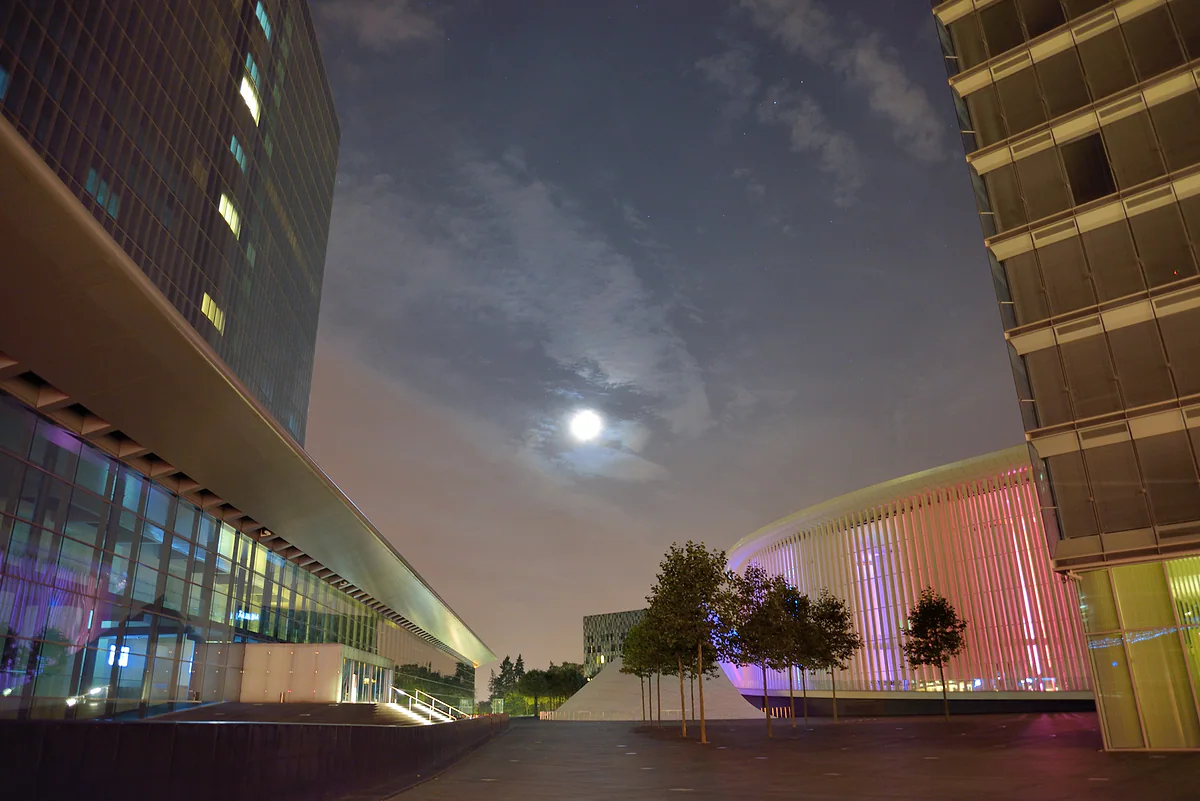
Place de l'Europe in Kirchberg at night, between lit glass façades and young trees beneath the moon
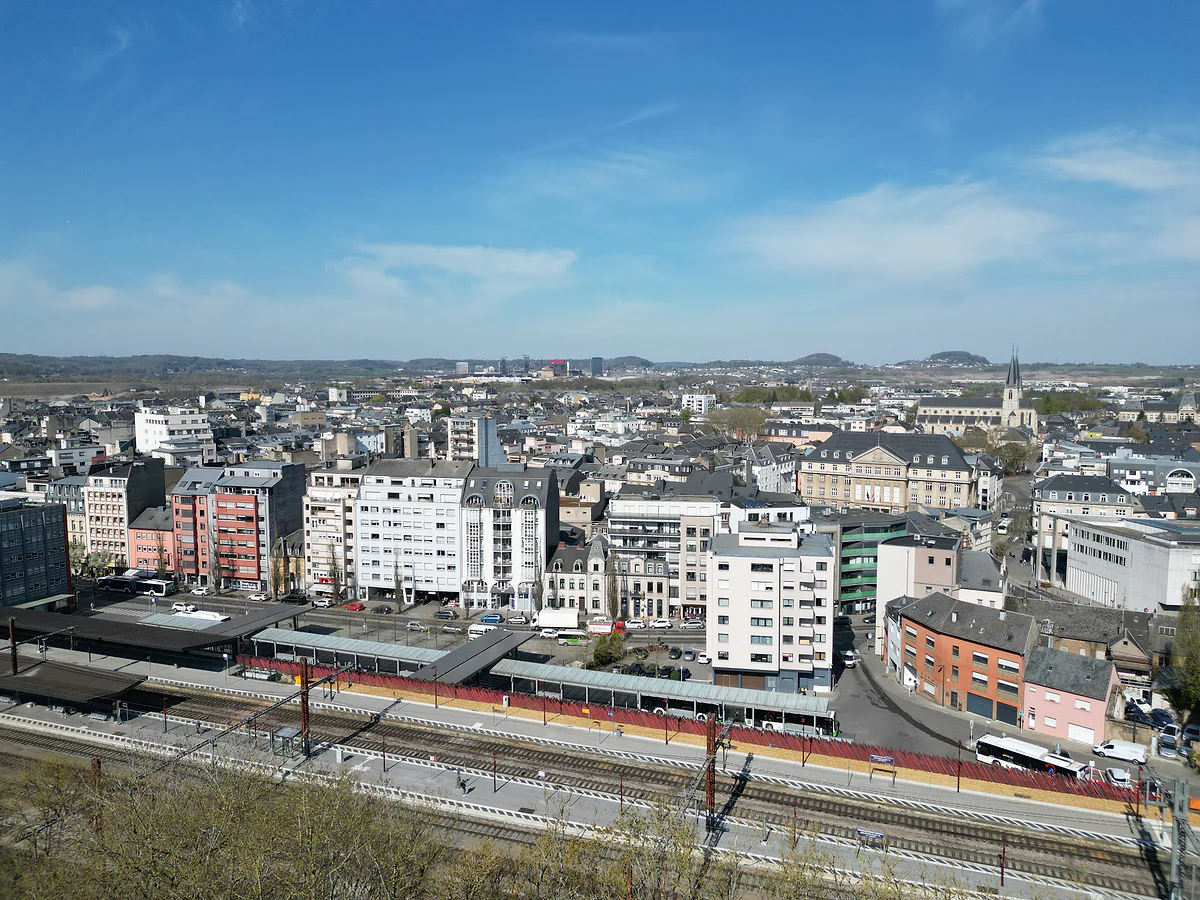
Esch-sur-Alzette from above, with the station and railway tracks in front and blocks of flats to the horizon
The largest nationalities (1-1-2026)
| Nationality | People | % of population |
|---|---|---|
| Portuguese | 88,300 | 12.8% |
| French | 49,300 | 7.1% |
| Italian | 25,500 | 3.7% |
| Belgian | 18,300 | 2.6% |
| German | 12,100 | 1.8% |
| Spanish | 10,300 | No percentage published |
Population in figures
| Fact | Figure |
|---|---|
| Residents on 1-1-2026 | 690,959 |
| Foreign nationals | 322,050 (46.6%) |
| Births and deaths in 2025 | 6,439 and 4,396 |
| Arrivals and departures in 2025 | 24,985 and 17,141 |
| Children per woman | 1.23 |
| Naturalisations in 2025 | 8,223 |
| Life expectancy | 85.2 years women, 81.1 men |
| Cross-border workers (2025 average) | 237,200 |
Figures from STATEC (release of 06-05-2026 and Le Luxembourg en chiffres 2026) and luxembourg.public.lu, checked on 29-09-2026.
Test yourself
True or false?
0/3 Pick before you peek.
-
More than half of Luxembourg's residents are foreign nationals.
See the answer
False. It's 46.6% on 1 January 2026, according to STATEC, slightly down on 47.0% a year earlier. In the capital, though, it is over half, at 70.8%.
-
The Portuguese are Luxembourg's largest foreign community.
See the answer
True. With 88,300 people, 12.8% of the whole population, ahead of the French (49,300) and Italians (25,500).
-
Luxembourg's birth rate has never been lower.
See the answer
True. STATEC puts fertility at 1.23 children per woman in 2025 and says it «n'a jamais été aussi faible». There were 6,439 births and 4,396 deaths.
0 of 425 Luxembourg guides
Your next stamp
- Towns and villages
- Cantons
- Public holidays
- Languages
- Where is Luxembourg
- Luxembourg City
- A Possen Museum
- American Cemetery
- Ansembourg
- Ansembourg Castles
- Asselborn
- Bascharage
- Beaufort castles
- Belval
- Belval blast furnaces
- Berg Castle
- Bernard-Massard cellars
- Bourglinster Castle
- Bourscheid Castle
- Brandenbourg
- Brandenbourg Castle
- Caves St Martin
- Christmas
- Clervaux Castle
- Echternach
- Echternach Abbey
- Ehnen
- Ehnen Wine Museum
- Esch-sur-Alzette
- Esch-sur-Sûre Castle
- European Museum Schengen
- Fond-de-Gras
- General Patton Museum
- German war cemetery
- Haff Réimech
- Hohllay
- Hollenfels Castle
- Hosingen
- Kautenbach
- Kneiff
- Koerich Castle
- Larochette Castle
- Lasauvage
- Mersch Castle
- Military History Museum
- Moersdorf
- Mondorf Domaine Thermal
- Munsbach Castle
- National Mining Museum
- Parc Merveilleux
- Park Sënnesräich
- Places to visit
- Remich
- Rindschleiden
- Schiessentümpel
- Septfontaines Castle
- Slate Museum
- Stolzembourg
- Tudor Museum
- Useldange Castle
- Valley of the Seven Castles
- Vianden
- Vianden Castle
- Ville Haute
- Wasserbillig Aquarium
- Weiswampach lakes
- Wiltz Castle
- Ahn
- Berdorf
- Bourscheid-Plage
- Butterfly garden
- Clervaux
- Differdange
- Echternach lake
- Grevenmacher
- Heringer Millen
- Hollenfels
- Luxembourg Science Center
- Meysembourg Castle
- Mullerthal
- National Day
- National Resistance Museum
- Perekop
- Remerschen
- Schoenfels Castle
- The Family of Man
- Things to do
- Upper Sûre Lake
- Vianden chairlift
- Wasserbillig
- Clervaux Abbey
- Echternach Roman villa
- Éislek
- Insenborn
- Kallektuffquell
- Machtum
- Most beautiful places
- Our Nature Park
- Pétange
- Pettingen Castle
- Schueberfouer
- Schwebsingen
- Victor Hugo House
- Waldbillig
- Dudelange
- Kuelscheier
- Lultzhausen
- Moselle Valley
- Octave
- Prettiest villages
- Sanem
- Schengen
- Wellenstein
- Wiltz
- Wolfsschlucht
- Beaufort
- Bech-Kleinmacher
- Éimaischen
- Gaalgebierg
- Guttland
- Marnach
- Mondorf-les-Bains
- Putscheid
- Schifflange
- UNESCO World Heritage
- Carnival
- Consdorf
- Ellergronn
- Käerjeng
- Kayl
- Map
- Minett
- Munshausen
- Tandel
- Bech
- Buergbrennen
- Esch-sur-Sûre
- Rumelange
- Is it a country?
- Lac de la Haute-Sûre (commune)
- Rosport-Mompach
- Wormeldange
- Larochette
- Mondercange
- Regions
- Bettembourg
- Bock Casemates
- Dancing procession
- Diekirch
- Fischbach
- Garnich
- Mersch
- Moselle wine route
- Ettelbruck
- Grund
- Heffingen
- Kehlen
- Lintgen
- Moselle river cruises
- Pétrusse Casemates
- Chemin de la Corniche
- Erpeldange-sur-Sûre
- Junglinster
- Kopstal
- Lorentzweiler
- Nommern
- Pfaffenthal
- Bissen
- Clausen
- Grand Ducal Palace
- Koerich
- Schieren
- Size
- Vallée de l'Ernz
- Feulen
- Kirchberg
- Notre-Dame Cathedral
- Reisdorf
- Steinfort
- Bettendorf
- Habscht
- St Michael's Church
- Helperknapp
- Luxembourgish
- Place Guillaume II
- Name
- Place d'Armes
- History
- Place de la Constitution
- Grand Duke
- Colmar-Berg
- Flaxweiler
- Gare
- Hamm
- Kirchberg funicular
- Luxembourg fortress
- Mamer
- Mertert
- Minett Trail
- Mullerthal Trail
- Neumünster Abbey
- Parc Hosingen
- Pfaffenthal lift
- Political system
- Redange
- The Passerelle
- Wine festivals
- Winseler
- Beckerich
- Biwer
- EU institutions
- Goesdorf
- Limpertsberg
- Mudam
- Natur Musée
- Pulvermühl
- Stadtbredimus
- Troisvierges
- Wenzel walk
- Bonnevoie
- Bous-Waldbredimus
- Ell
- Flag
- Kiischpelt
- Manternach
- Philharmonie
- Vauban circuit
- Weiswampach
- Betzdorf
- Boulaide
- Dräi Eechelen Museum
- Facts
- Hollerich
- Lenningen
- Useldange
- Wincrange
- Bourscheid
- Dalheim
- Gasperich
- Red Bridge
- Saeul
- Belair
- Second World War
- Vichten
- Battle of the Bulge
- Merl
- Préizerdaul
- Cents
- EU and Schengen
- Groussbus-Wal
- Entry requirements
- Neudorf
- Rambrouch
- Currency and payments
- Mertzig
- Weimerskirch
- Adolphe Bridge
- Beggen
- Escapardenne
- How to get there
- International March of Diekirch
- MNHA (National Museum)
- Rock climbing
- Sandweiler
- Bridges
- Eich
- Flights
- Golf
- Hesperange
- Lëtzebuerg City Museum
- Canoeing and kayaking
- Dommeldange
- Luxembourg airport
- Strassen
- Villa Vauban
- Airport to city centre
- Bertrange
- Casino Luxembourg
- Mühlenbach
- Swimming pools
- From Brussels
- Pétrusse Valley
- Rollingergrund
- Walferdange
- Cessange
- Day trip from Brussels
- Municipal Park
- Steinsel
- Free walking tours
- From Paris
- Niederanven
- From Frankfurt
- Schuttrange
- Sightseeing train and bus
- By train
- Contern
- By coach
- Weiler-la-Tour
- Driving
- Luxembourg in one day
- Pretzel Sunday
- Rham Plateau
- Tour de Luxembourg
- Candlemas (Liichtmëssdag)
- Car hire
- Luxembourg in two days
- Saint-Esprit Plateau
- Luxembourg in three days
- Melusina statue
- Parking
- St Nicholas Day (Kleeschen)
- Fête de la Musique
- Luxembourg in four days
- Museums in Luxembourg
- Petrol
- Place de Clairefontaine
- A week in Luxembourg
- Getting around
- Luxembourg Marathon
- Tram and Bus Museum
- Free public transport
- Parks in Luxembourg City
- Road trip
- Belgium and Luxembourg
- Tram
- Buses
- Viewpoints
- Trains
- Luxembourg station
- Cycling
- LuxembourgPass
- Prices and budget
- On a budget
- Free things to do
- Mobile and roaming
- Healthcare
- Safety
- Scams
- Tourist information
- Packing list
- Swimming lakes
- With a dog
- Markets
- Tipping
- Shopping
- What to buy
- Shopping centres
- With kids
- For couples
- Playgrounds
- Adventure parks
- Nightlife
- Castles
- Theatres and concert venues
- Leudelange
- Nature parks
- Where to stay
- City-centre hotels
- Hiking
- Nature reserves
- Reckange-sur-Mess
- Hotels near the station
- Roeser
- Frisange
- Hotels in Kirchberg
- Airport hotels
- Dippach
- Hotels in Vianden
- Hotels in Echternach
- Hotels in Clervaux
- Hotels in Mondorf-les-Bains
- Hotels in Esch-sur-Alzette
- Hotels on the Moselle
- Mullerthal hotels
- Upper Sûre lake hotels
- Hotels in Diekirch and Ettelbruck
- Cheap hotels
- Luxury hotels
- Boutique hotels
- Spa hotels
- Family hotels
- Apartments
- Weather
- Youth hostels
- Best time to visit
- Campsites
- Holiday cottages
- In winter
- Castle hotels
- In spring
- Day trips
- In summer
- Around Luxembourg
- In autumn
- Ice skating
- Trier day trip
- Metz day trip
- Arlon day trip
- In January
- In February
- In March
- In April
- In May
- In June
- In July
- In August
- In September
- Food
- In October
- In November
- Where to eat
- In December
- Michelin restaurants
- Cheap eats
- Judd mat Gaardebounen
- Bouneschlupp
- Gromperekichelcher
- Kniddelen
- Quetschentaart
- Rieslingspaschtéit
- Events
- Wine
- Crémant
- Beer
Frequently asked questions
What is the population of Luxembourg?
690,959 on 1 January 2026, according to STATEC. In 2025 it grew by 9,027 people, or 1.3%, a slower pace than over the previous decade, when growth ran at 2 to 2.5% a year.
What is the population of Luxembourg City?
STATEC gives Luxembourg City 137,700 residents in 2026, almost a fifth of the country. According to the government portal, 70.8% of them are foreign nationals.
What are people from Luxembourg called?
Luxembourgers. The adjective, Luxembourgish, is also the name of the national language, which a 1984 law made the country's national tongue.
How many British people live in Luxembourg?
The STATEC figures I've read don't give a number for British residents. It lists the Portuguese, French, Italians, Belgians and Germans as the largest groups, with Ukrainians and Indians the biggest from outside the EU.
Why are there so many foreigners in Luxembourg?
The official portal puts it down to history. The country was a land of emigration until the steel boom, which drew Germans in the 19th century, Italians in the early 20th and Portuguese in the 1960s. Today around 180 nationalities live there.
What is Luxembourg's population density?
267 people per km² on 1 January 2026, against an EU average of 109.7, according to the government portal. Most people live in the south, in the cantons of Luxembourg and Esch-sur-Alzette.
By
Tourism graduate with a master’s in Tourism Management and Planning from the University of Málaga, who has travelled across Europe. He writes every guide from official sources and his own judgement.
Published on . Facts checked on .
Sources
Some links in this guide are affiliate links: if you book through them, the site earns a commission at no extra cost to you. Affiliate disclosure
Photos: GilPe (CC BY-SA 4.0); Tristan Schmurr from Luxembourg, Luxembourg (CC BY 2.0); Zinneke (CC BY-SA 4.0), via Wikimedia Commons.