Town in the canton of Esch-sur-Alzette, Minett region
Rumelange, where the country ends and the mine begins
Rumelange is a town of 5,767 people in the canton of Esch-sur-Alzette and the southernmost point of Luxembourg. It sold its first iron ore in 1863, closed its last mine in 1978 and since 1973 has been home to the National Mining Museum, which takes visitors by train into a former iron mine.
In 30 seconds
Full read: 2 min
- Rumelange is a town of 5,767 people at the southern tip of Luxembourg.
- It sold its first iron ore in 1863 and closed its last mine in 1978.
- Its big draw is the National Mining Museum, opened in 1973.
- Trains run on the branch from Noertzange, free in second class.
People come to Rumelange for the mining museum, and rightly so. I'd book an afternoon guided tour, arrive an hour early to see the free exhibition in the main building and, if there's daylight left, wander through the old opencast workings next door.

Before you go
What I would keep in mind
-
01 Most beautiful
Into the mine by train
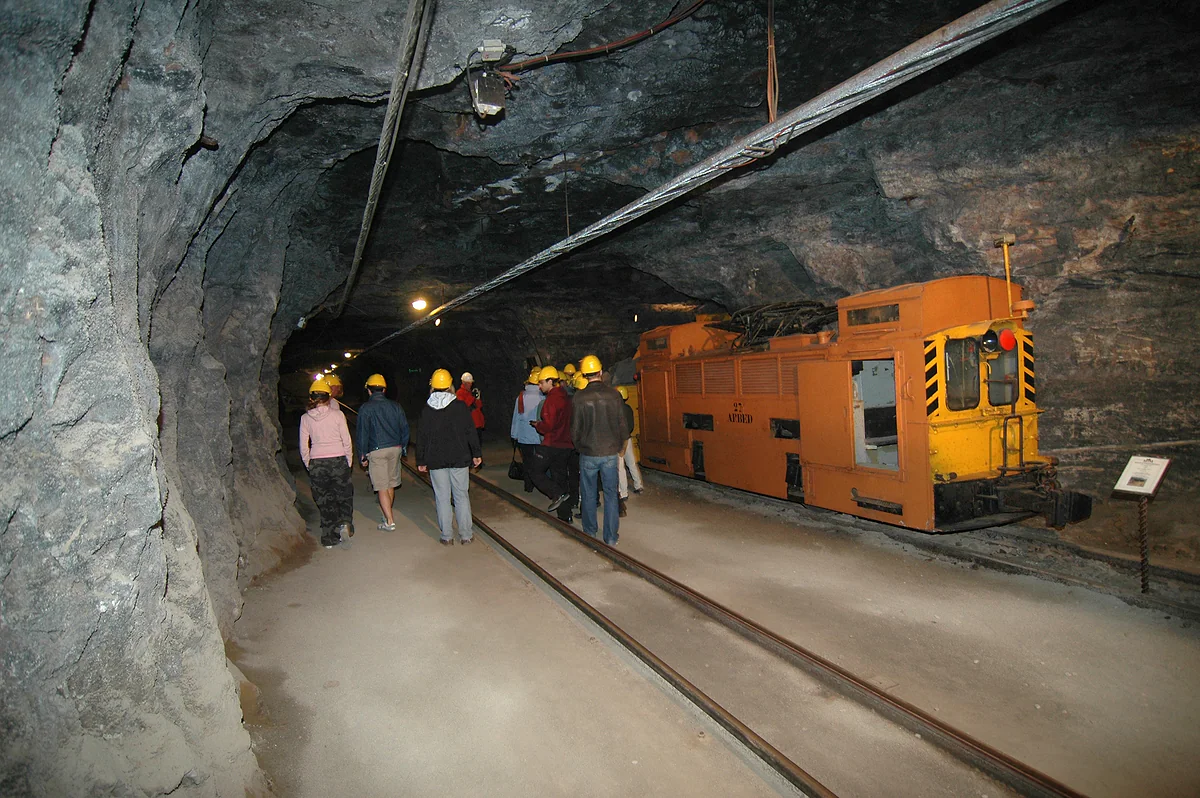
The National Mining Museum takes visitors on a mine train into the galleries of the Walert mine, worked from 1891 to 1963, and the tour carries on underground on foot with a guide.
National Mining Museum in Rumelange -
02 To save money
Free with the LuxembourgPass
The guided mine tour with the train ride is included in the LuxembourgPass, according to visitluxembourg. Without it, adults pay €14 if booked or €15 at the desk.
LuxembourgPass -
03 My tip
Sleep in the old mine office
Maison Gonner, which housed the mine's offices around 1900, has been a Minett Trail hikers' lodge since 2022, with eight beds in four two-bed cabins.
Minett Trail
Draw a line down Luxembourg from north to south and, according to STATEC, it runs 82 km from Huldange to Rumelange. This is where the country stops. Rumelange is a small town, 5,767 people on about 6.8 km², ringed by the woods of the Kayl valley, and visitluxembourg credits it with a leading role in the industrial history of the south.
A town built on iron
The town’s own timeline tells the story better than any summary. The first reliable record of Rumelange dates from 1297 and the first forge from 1571. On 18 June 1863 the first iron ore was sold. The works started up in 1872, the village became a commune in its own right in 1891, and in 1894 the country’s first cement works opened here. The railway arrived in 1900, and in 1907 Grand Duke Guillaume granted it town status, which only twelve places hold today.
The ending is on the list too. The National Museum of Iron Mines opened in 1973, and Rumelange’s last mine closed in 1978. I find it telling that the museum came first, as if the town already knew what was coming.
The mining museum
This is why you come. The National Mining Museum sits on the old pithead of the Walert mine, worked from 1891 to 1963. A mine train first runs through the greenery of the old opencast pits and then heads into the main gallery, and the tour continues on foot with a guide among machines more than a century old. You can only go underground on a guided tour at set times, so booking is sensible. The exhibition in the main building, on the other hand, is free.
Once your dates are set, check which hotels are still free in Esch-sur-Alzette before prices climb.
What else is there nearby?
Nature growing over the scars of mining. Rumelange shares the Haard-Hesselsbierg-Staebierg reserve, the largest in the country, with Dudelange and Kayl, and the town also mentions the Haedbierg reserve and an arboretum with a panel in front of each tree. Beside the museum, the MNM points out that the abandoned opencast pits are criss-crossed by walking and mountain-bike trails between red rock faces, like a miniature canyon. visitluxembourg lists seven local waymarked walks from 1.74 km to 12.84 km.
On rue de la Bruyère is Spektrum, opened in 2022 as a space for experimental and immersive art and creative tourism.
Getting there and staying over
The CFL branch from Noertzange to Rumelange runs through Kayl and Tétange and is free in second class. The Minett Trail links the station with Tétange in 7.79 km and with Dudelange in 10.74 km. The trail’s lodge here is Maison Gonner, the house that held the mine’s offices around 1900, on the old mining path towards the Intermoselle works. For a hotel night I’d head to Esch-sur-Alzette.
Once your dates are set, check which hotels are still free in Esch-sur-Alzette before prices climb.
If you would rather have a local show you round, book a guided tour in Esch-sur-Alzette and choose by the reviews.
A car frees you from timetables: search car hire in Luxembourg on DiscoverCars and compare companies.
So you do not pay over the odds, look at trains, coaches and flights to Luxembourg on Omio and pick the one that suits you.
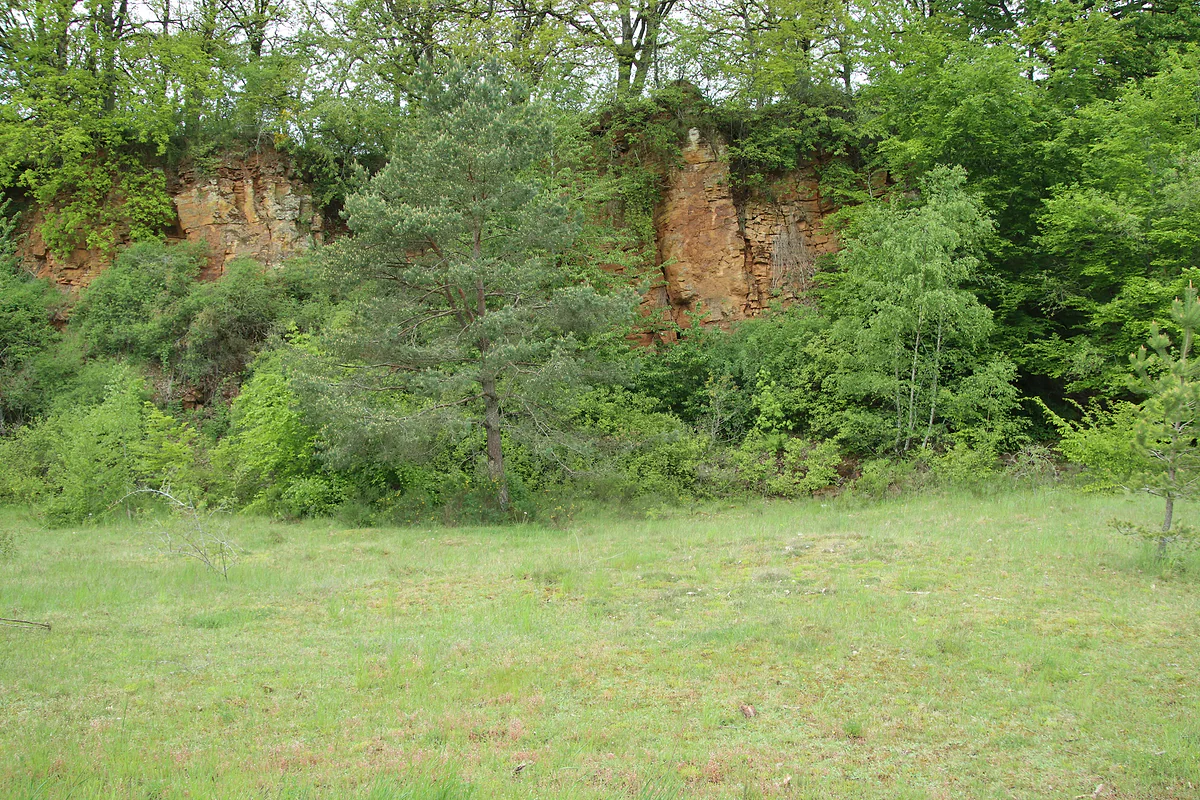
A reddish outcrop of minette ironstone in the Léiffrächen nature reserve at Kayl, among trees and grassland
Rumelange through the years
| Year | What happened |
|---|---|
| 1297 | First reliable record of the village |
| 1863 | First iron ore sold, on 18 June |
| 1891 | Rumelange becomes a separate commune |
| 1894 | The country's first cement works opens |
| 1907 | Grand Duke Guillaume grants it town status |
| 1973 | The National Museum of Iron Mines opens |
| 1978 | Rumelange's last mine closes |
| 2022 | Maison Gonner and the Spektrum art space open |
Timeline from the Ville de Rumelange, checked on 30-09-2026.
Test yourself
True or false?
0/3 Pick before you peek.
-
Rumelange has always been a commune in its own right.
See the answer
False. It became a separate commune in 1891, according to the town's own timeline.
-
Luxembourg's first cement works opened in Rumelange.
See the answer
True. The town's timeline dates the country's first cement works here to 1894.
-
The National Mining Museum opened after the town's last mine closed.
See the answer
False. The museum opened in 1973, and Rumelange's last mine closed in 1978.
- Residents on 1-1-2026
- 5,767
- First iron ore sold
- 1863
- Last mine closed
- 1978
- Town status granted
- 1907
Map
Where Rumelange is
The thick dashed line is the border with Belgium, France and Germany, and the fine ones divide the twelve cantons. The Éislek lies to the north and the Moselle to the east. Every number opens its guide.
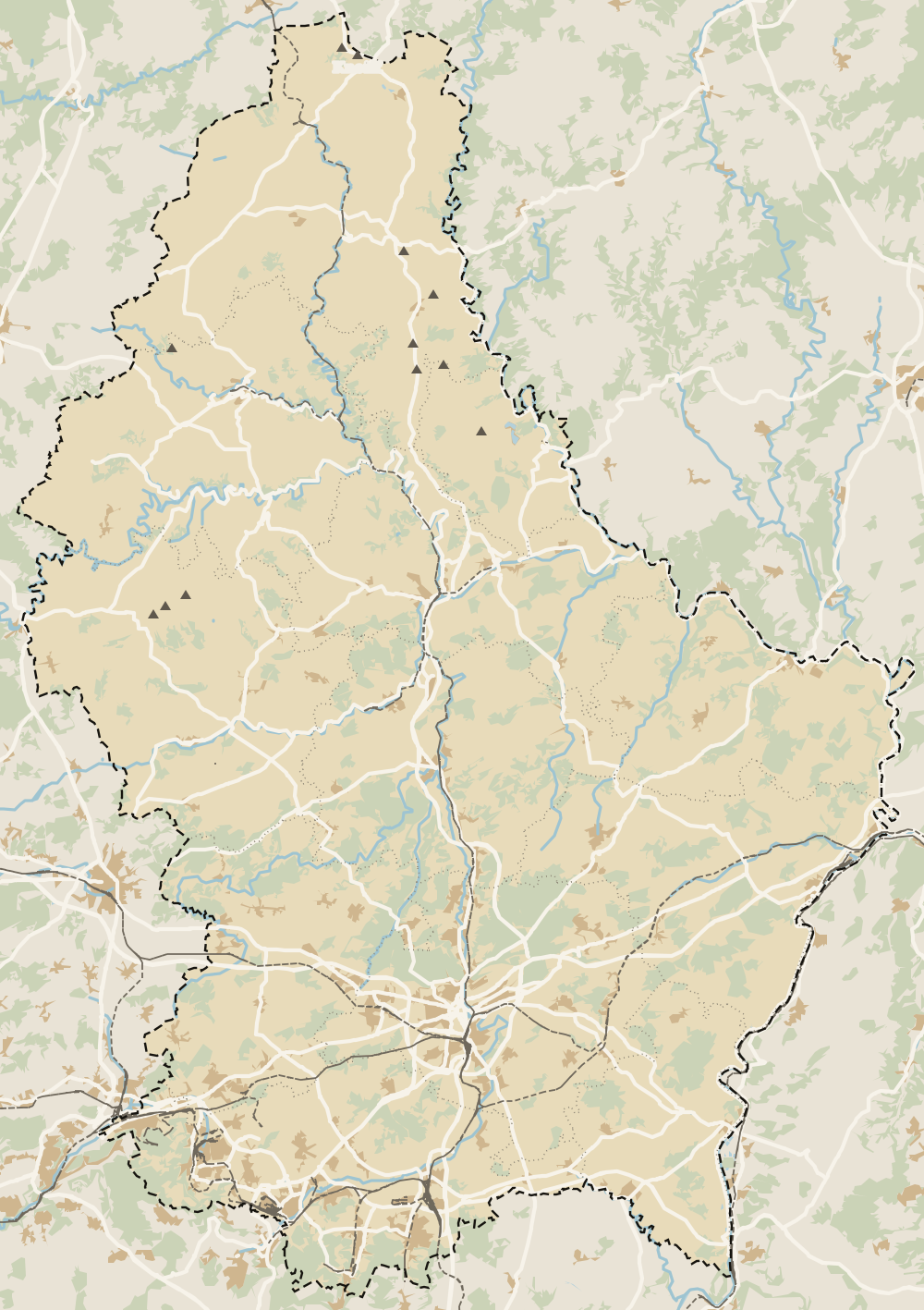 1Esch-sur-Alzette 2Differdange 3Pétange 4Dudelange 5Sanem 6Schifflange 7Käerjeng 8Kayl 9Rumelange 10Mondercange 11Bettembourg
 Map data © OpenStreetMap contributors (ODbL)
- 1Esch-sur-AlzetteCommune in the canton of Esch-sur-Alzette, in the Minett
- 2DifferdangeCommune in the canton of Esch-sur-Alzette, in the Minett
- 3PétangeCommune in the canton of Esch-sur-Alzette, in the Minett
- 4DudelangeTown in the canton of Esch-sur-Alzette, Minett region
- 5SanemCommune in the canton of Esch-sur-Alzette, in the Minett
- 6SchifflangeCommune in the canton of Esch-sur-Alzette, in the Minett
- 7KäerjengCommune in the canton of Capellen, in the Minett
- 8KaylCommune in the canton of Esch-sur-Alzette, Minett region
- 9RumelangeTown in the canton of Esch-sur-Alzette, Minett region
- 10MondercangeCommune in the canton of Esch-sur-Alzette, Minett region
- 11BettembourgCommune in the canton of Esch-sur-Alzette, Minett region
What to see
What to see in Rumelange
0 of 425 Luxembourg guides
Your next stamp
- National Mining Museum
- Dudelange
- Minett
- Minett Trail
- Walferdange
- Rindschleiden
- Slate Museum
- Kayl
- A Possen Museum
- American Cemetery
- Ansembourg
- Ansembourg Castles
- Asselborn
- Bascharage
- Beaufort castles
- Belval
- Belval blast furnaces
- Berg Castle
- Bernard-Massard cellars
- Bourglinster Castle
- Bourscheid Castle
- Brandenbourg
- Brandenbourg Castle
- Caves St Martin
- Christmas
- Clervaux Castle
- Echternach
- Echternach Abbey
- Ehnen
- Ehnen Wine Museum
- Esch-sur-Alzette
- Esch-sur-Sûre Castle
- European Museum Schengen
- Fond-de-Gras
- General Patton Museum
- German war cemetery
- Haff Réimech
- Hohllay
- Hollenfels Castle
- Hosingen
- Kautenbach
- Kneiff
- Koerich Castle
- Larochette Castle
- Lasauvage
- Mersch Castle
- Military History Museum
- Moersdorf
- Mondorf Domaine Thermal
- Munsbach Castle
- Parc Merveilleux
- Park Sënnesräich
- Places to visit
- Remich
- Schiessentümpel
- Septfontaines Castle
- Stolzembourg
- Tudor Museum
- Useldange Castle
- Valley of the Seven Castles
- Vianden
- Vianden Castle
- Ville Haute
- Wasserbillig Aquarium
- Weiswampach lakes
- Wiltz Castle
- Ahn
- Berdorf
- Bourscheid-Plage
- Butterfly garden
- Clervaux
- Differdange
- Echternach lake
- Grevenmacher
- Heringer Millen
- Hollenfels
- Luxembourg City
- Luxembourg Science Center
- Meysembourg Castle
- Mullerthal
- National Day
- National Resistance Museum
- Perekop
- Remerschen
- Schoenfels Castle
- The Family of Man
- Things to do
- Upper Sûre Lake
- Vianden chairlift
- Wasserbillig
- Clervaux Abbey
- Echternach Roman villa
- Éislek
- Insenborn
- Kallektuffquell
- Machtum
- Most beautiful places
- Our Nature Park
- Pétange
- Pettingen Castle
- Schueberfouer
- Schwebsingen
- Victor Hugo House
- Waldbillig
- Kuelscheier
- Lultzhausen
- Moselle Valley
- Octave
- Prettiest villages
- Sanem
- Schengen
- Wellenstein
- Wiltz
- Wolfsschlucht
- Beaufort
- Bech-Kleinmacher
- Éimaischen
- Gaalgebierg
- Guttland
- Marnach
- Mondorf-les-Bains
- Putscheid
- Schifflange
- UNESCO World Heritage
- Carnival
- Consdorf
- Ellergronn
- Käerjeng
- Map
- Munshausen
- Tandel
- Bech
- Buergbrennen
- Esch-sur-Sûre
- Where is Luxembourg
- Is it a country?
- Lac de la Haute-Sûre (commune)
- Rosport-Mompach
- Wormeldange
- Larochette
- Mondercange
- Regions
- Bettembourg
- Bock Casemates
- Cantons
- Dancing procession
- Diekirch
- Fischbach
- Garnich
- Mersch
- Moselle wine route
- Ettelbruck
- Grund
- Heffingen
- Kehlen
- Lintgen
- Moselle river cruises
- Pétrusse Casemates
- Towns and villages
- Chemin de la Corniche
- Erpeldange-sur-Sûre
- Junglinster
- Kopstal
- Lorentzweiler
- Nommern
- Pfaffenthal
- Population
- Bissen
- Clausen
- Grand Ducal Palace
- Koerich
- Schieren
- Size
- Vallée de l'Ernz
- Feulen
- Kirchberg
- Languages
- Notre-Dame Cathedral
- Reisdorf
- Steinfort
- Bettendorf
- Habscht
- St Michael's Church
- Helperknapp
- Luxembourgish
- Place Guillaume II
- Name
- Place d'Armes
- History
- Place de la Constitution
- Grand Duke
- Colmar-Berg
- Flaxweiler
- Gare
- Hamm
- Kirchberg funicular
- Luxembourg fortress
- Mamer
- Mertert
- Mullerthal Trail
- Neumünster Abbey
- Parc Hosingen
- Pfaffenthal lift
- Political system
- Redange
- The Passerelle
- Wine festivals
- Winseler
- Beckerich
- Biwer
- EU institutions
- Goesdorf
- Limpertsberg
- Mudam
- Natur Musée
- Pulvermühl
- Stadtbredimus
- Troisvierges
- Wenzel walk
- Bonnevoie
- Bous-Waldbredimus
- Ell
- Flag
- Kiischpelt
- Manternach
- Philharmonie
- Vauban circuit
- Weiswampach
- Betzdorf
- Boulaide
- Dräi Eechelen Museum
- Facts
- Hollerich
- Lenningen
- Useldange
- Wincrange
- Bourscheid
- Dalheim
- Gasperich
- Public holidays
- Red Bridge
- Saeul
- Belair
- Second World War
- Vichten
- Battle of the Bulge
- Merl
- Préizerdaul
- Cents
- EU and Schengen
- Groussbus-Wal
- Entry requirements
- Neudorf
- Rambrouch
- Currency and payments
- Mertzig
- Weimerskirch
- Adolphe Bridge
- Beggen
- Escapardenne
- How to get there
- International March of Diekirch
- MNHA (National Museum)
- Rock climbing
- Sandweiler
- Bridges
- Eich
- Flights
- Golf
- Hesperange
- Lëtzebuerg City Museum
- Canoeing and kayaking
- Dommeldange
- Luxembourg airport
- Strassen
- Villa Vauban
- Airport to city centre
- Bertrange
- Casino Luxembourg
- Mühlenbach
- Swimming pools
- From Brussels
- Pétrusse Valley
- Rollingergrund
- Cessange
- Day trip from Brussels
- Municipal Park
- Steinsel
- Free walking tours
- From Paris
- Niederanven
- From Frankfurt
- Schuttrange
- Sightseeing train and bus
- By train
- Contern
- By coach
- Weiler-la-Tour
- Driving
- Luxembourg in one day
- Pretzel Sunday
- Rham Plateau
- Tour de Luxembourg
- Candlemas (Liichtmëssdag)
- Car hire
- Luxembourg in two days
- Saint-Esprit Plateau
- Luxembourg in three days
- Melusina statue
- Parking
- St Nicholas Day (Kleeschen)
- Fête de la Musique
- Luxembourg in four days
- Museums in Luxembourg
- Petrol
- Place de Clairefontaine
- A week in Luxembourg
- Getting around
- Luxembourg Marathon
- Tram and Bus Museum
- Free public transport
- Parks in Luxembourg City
- Road trip
- Belgium and Luxembourg
- Tram
- Buses
- Viewpoints
- Trains
- Luxembourg station
- Cycling
- LuxembourgPass
- Prices and budget
- On a budget
- Free things to do
- Mobile and roaming
- Healthcare
- Safety
- Scams
- Tourist information
- Packing list
- Swimming lakes
- With a dog
- Markets
- Tipping
- Shopping
- What to buy
- Shopping centres
- With kids
- For couples
- Playgrounds
- Adventure parks
- Nightlife
- Castles
- Theatres and concert venues
- Leudelange
- Nature parks
- Where to stay
- City-centre hotels
- Hiking
- Nature reserves
- Reckange-sur-Mess
- Hotels near the station
- Roeser
- Frisange
- Hotels in Kirchberg
- Airport hotels
- Dippach
- Hotels in Vianden
- Hotels in Echternach
- Hotels in Clervaux
- Hotels in Mondorf-les-Bains
- Hotels in Esch-sur-Alzette
- Hotels on the Moselle
- Mullerthal hotels
- Upper Sûre lake hotels
- Hotels in Diekirch and Ettelbruck
- Cheap hotels
- Luxury hotels
- Boutique hotels
- Spa hotels
- Family hotels
- Apartments
- Weather
- Youth hostels
- Best time to visit
- Campsites
- Holiday cottages
- In winter
- Castle hotels
- In spring
- Day trips
- In summer
- Around Luxembourg
- In autumn
- Ice skating
- Trier day trip
- Metz day trip
- Arlon day trip
- In January
- In February
- In March
- In April
- In May
- In June
- In July
- In August
- In September
- Food
- In October
- In November
- Where to eat
- In December
- Michelin restaurants
- Cheap eats
- Judd mat Gaardebounen
- Bouneschlupp
- Gromperekichelcher
- Kniddelen
- Quetschentaart
- Rieslingspaschtéit
- Events
- Wine
- Crémant
- Beer
Frequently asked questions
What is there to do in Rumelange?
Visit the National Mining Museum with its train and underground galleries, walk the old opencast workings around it and explore the Haard-Hesselsbierg-Staebierg nature reserve. The town also has a labelled arboretum and several waymarked walks.
Is Rumelange the southernmost point of Luxembourg?
Yes. STATEC puts the country's southern extremity in Rumelange, at 49°26'52" north, and measures Luxembourg's greatest north-south length, 82 km, from Huldange to Rumelange.
How do I get to Rumelange by train?
Take the CFL branch line from Noertzange, which runs through Kayl and Tétange. Rumelange has had a station since 1900, and second-class travel within Luxembourg is free.
How many people live in Rumelange?
5,767 on 1 January 2026, according to STATEC. It's one of the twelve places with official town status, with an area of about 6.8 km² worked out from STATEC data.
When did Rumelange's last mine close?
In 1978, according to the town's timeline. The first iron ore had been sold on 18 June 1863.
By
Tourism graduate with a master’s in Tourism Management and Planning from the University of Málaga, who has travelled across Europe. He writes every guide from official sources and his own judgement.
Published on . Facts checked on .
Sources
Some links in this guide are affiliate links: if you book through them, the site earns a commission at no extra cost to you. Affiliate disclosure
Photos: Schnékert (Public domain); Paul Braun (CC0), via Wikimedia Commons.