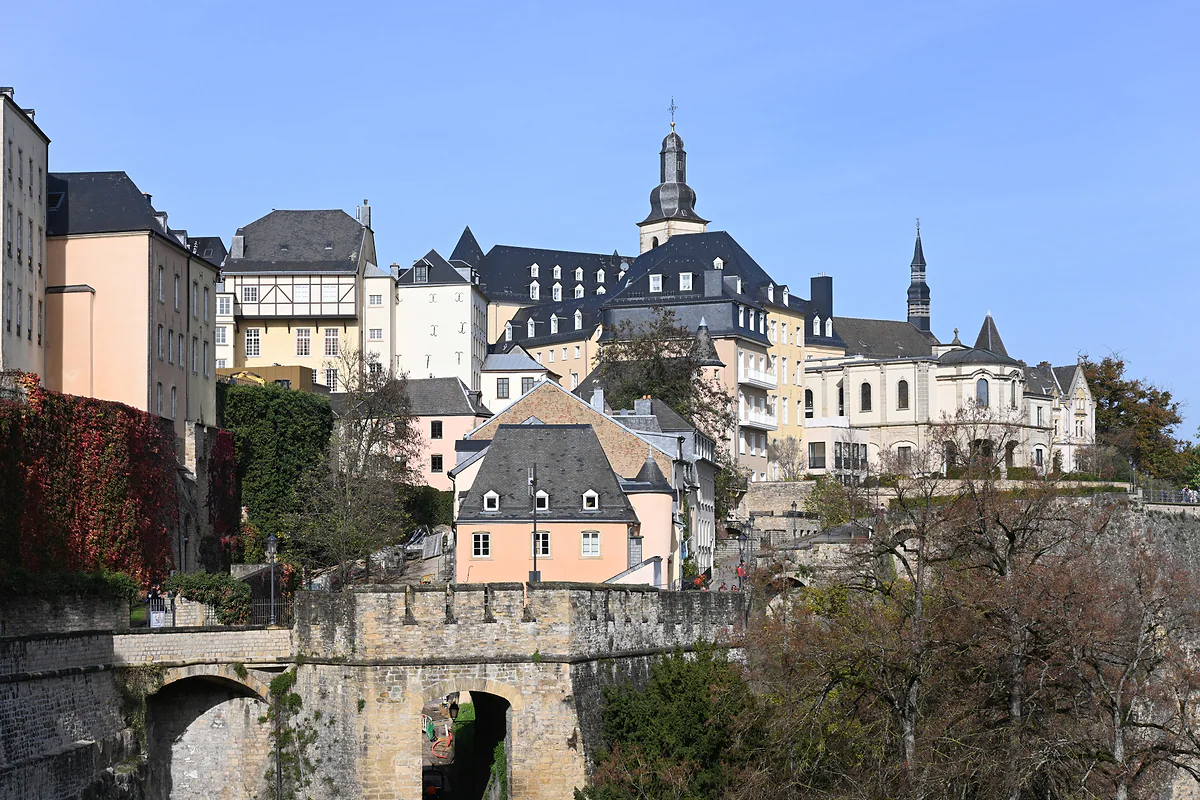
Citadel in the Ville Haute
The Saint-Esprit Plateau, Vauban's citadel above the Grund
The Saint-Esprit Plateau, or Holy Ghost Citadel, is the fortified southern tip of Luxembourg's upper town, shaped by Vauban in 1685 to 1687. It now holds the Cité judiciaire law courts, an archaeological crypt from a Poor Clares convent founded in 1234 and the National Monument of Solidarity, opened in 1971. The plateau is open to all; the crypt is guided-tour only.
In 30 seconds
Full read: 3 min
- The Saint-Esprit Plateau is the citadel at the southern tip of the upper town, shaped by Vauban in 1685-1687.
- It holds the Cité judiciaire and the National Monument of Solidarity, opened in 1971 with an eternal flame.
- Beneath the justice quarter lies a crypt from a Poor Clares convent of 1234, with nearly 300 burials.
- The plateau is free to walk; the crypt is only open on LCTO guided tours.
- A free public lift links the plateau with the Grund.
I treat the Saint-Esprit as the hinge of any walk round the old town. Ride the lift up from the Grund, stop for a couple of minutes at the memorial flame, then carry on along the Corniche. If you're booking an LCTO guide for a group, ask for the crypt to be included, because it's the one thing up here you can't see alone.

Before you go
What I would keep in mind
-
01 Most beautiful
The flame on Cannon Hill
The National Monument of Solidarity has a paved courtyard standing for prisons and camps, an uncut stone for the victims and an eternal flame burning in front.
-
02 My tip
Skip the climb with the lift
A public lift runs between the plateau, by the law courts, and the Grund below. It's free like all city transport, and it's the painless way to link the upper town and the river.
the Grund -
03 Worth the splurge
A crypt few visitors see
The LCTO occasionally includes the archaeological crypt in its regular guided tours and can add it to a private guided tour. Check the tour description mentions it before you book.
Luxembourg fortress -
04 Getting there
One end of the Corniche
The Corniche promenade runs down to the lower part of the citadel, known as the rondelles, so the Saint-Esprit makes a natural start or finish for that walk.
Chemin de la Corniche
My ranking, scored
What to see on the Saint-Esprit Plateau
My own marks out of 10, for an hour on foot without a guide, except the crypt, which you can only see with the LCTO.
0 of 5 seen
-
National Monument of Solidarity
The country's central place of remembrance for the Second World War, with its eternal flame and the dedication to the dead of 1940-1945.
8.8 out of 10
-
View over the Grund and the Rham
From the edge of the citadel you look down on the Alzette valley and across to the towers of the Rham Plateau.
8.5 out of 10
-
Archaeological crypt
Remains of the Poor Clares convent of 1234 beneath the justice quarter. Excellent, but guided visits only.
8.0 out of 10
-
Vauban's bastions
The walls Vauban strengthened in 1685-1687 give the plateau its shape. They read best from below or from the Rham.
7.5 out of 10
-
Cité judiciaire
The court complex built between 2003 and 2008. A working building, so it's one to look at from outside.
6.0 out of 10
Most people cross the Saint-Esprit Plateau without realising they’ve arrived anywhere. It’s the flat bit you walk over between the Grund lift and the Corniche. Give it an hour instead. On this spur at the southern end of the upper town you’ll find a buried medieval convent, Vauban’s citadel, the country’s law courts and Luxembourg’s main Second World War memorial, all within a few hundred metres.
A convent turned into a fortress
The name comes from a Holy Ghost convent founded here in 1234. The LCTO says Countess Ermesinde set it up for Poor Clares, who stayed until 1690. That year Louis XIV had the nuns thrown out and the buildings handed to the army.
By then the plateau was already part of the defences. The third ring of walls in the 14th century had tied it to the protected town, and the Spanish spotted its strategic value during their first period in charge. What you walk on today, though, is Vauban’s work. In 1685 to 1687 the French engineer enlarged the citadel and turned its walls into bastions. French, Prussian and German soldiers were all quartered here in later centuries.
A detail that shows how much this spot mattered. When the Passerelle viaduct was built in the mid-19th century, it was given a deliberate curve to protect it from the guns on the Saint-Esprit.
What lies under the law courts
The part hardly anyone sees is underground. In 1996, surveys ahead of the new Cité judiciaire found significant medieval remains, and digs from 2001 to 2003 uncovered walls, painted plaster, tiled floors and nearly 300 burials under the choir and cloister walks. While the courts went up between 2003 and 2008, the remains were protected under layers of sand and rubble.
In 2023 the national heritage and archaeology institutes started removing 3,000 m³ of backfill to expose them again. The finds include 19th-century military odds and ends, buttons, buckles, coins and pipes, left by the garrisons.
Seeing it takes a guide. The LCTO occasionally includes the crypt in its regular guided tours and asks you to check the description mentions it; it will also add it to a private tour on request by email. The entrance is a red door by the Rousegaart op de Rondellen.
Once your dates are set, check which hotels are still free in Luxemburgo before prices climb.
Cannon Hill and its flame
The bit I’d never skip is the National Monument of Solidarity. It stands on the hill locals call Kanounenhiwwel, Cannon Hill, and it’s where the country remembers all the victims of the war. It opened on 10 October 1971, exactly thirty years after the so-called referendum of 1941, when Luxembourgers made it plain they wanted to remain an independent country rather than be annexed by Nazi Germany.
It’s plain and needs no explanation. The paved inner courtyard stands for prisons, concentration camps and barracks, an ordinary uncut stone represents the victims and an eternal flame burns in front. Inside is the inscription «D’Hémecht hiren Doudegen 1940-1945», the homeland to its dead. The occupation and the liberation are told at length in Luxembourg in the Second World War.
Getting up here and moving on
Come from below if you can. A public lift runs up from the Grund and drops you by the Cité judiciaire, free like all city transport, which is one less thing to budget for on a city break. From the top, the Chemin de la Corniche heads off towards the Bock and ends at the lower part of the citadel, the rondelles, so the Saint-Esprit is the obvious doorway to that walk.
From the bastion edge you look across the Alzette to the Rham Plateau with its medieval towers and Vauban-era barracks. They’re two halves of the same defence, and each is best admired from the other.
Once your dates are set, check which hotels are still free in Luxemburgo before prices climb.
Is it worth it without a tour?
Yes, crypt or no crypt. The memorial, the view and the lines of the bastions justify the stop, and none of it costs anything. A few minutes’ walk away, near the cathedral, the Place de Clairefontaine and its statue of Grand Duchess Charlotte fit neatly into the same stroll.
One last thing. The Schueberfouer, the big August funfair founded by John the Blind in 1340, was first held right here on the Saint-Esprit before moving to Limpertsberg and then the Glacis. If your dates line up, the Schueberfouer page has the 2027 dates.
If you would rather have a local show you round, book a guided tour in Saint-Esprit Plateau and choose by the reviews.
A car frees you from timetables: search car hire in Luxembourg on DiscoverCars and compare companies.
So you do not pay over the odds, look at trains, coaches and flights to Luxembourg on Omio and pick the one that suits you.
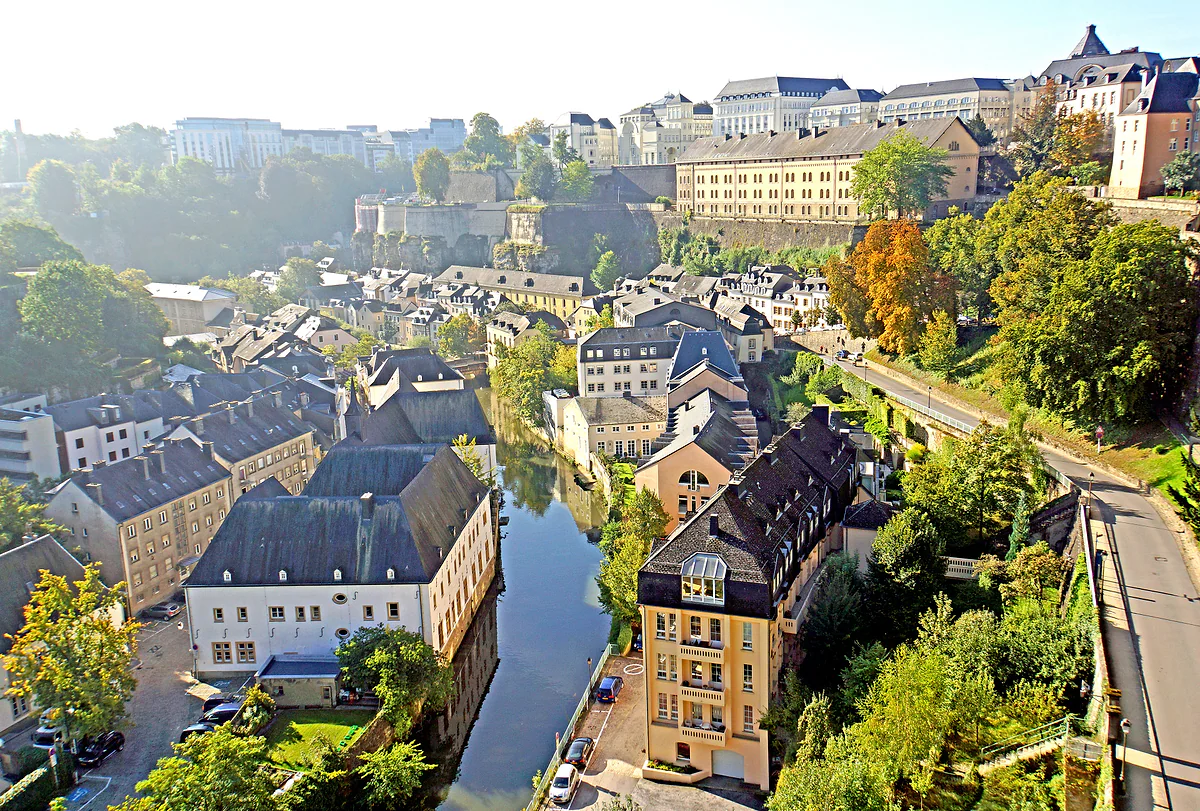
The Grund quarter and the River Alzette seen from the Corniche, with slate roofs and trees in autumn colours
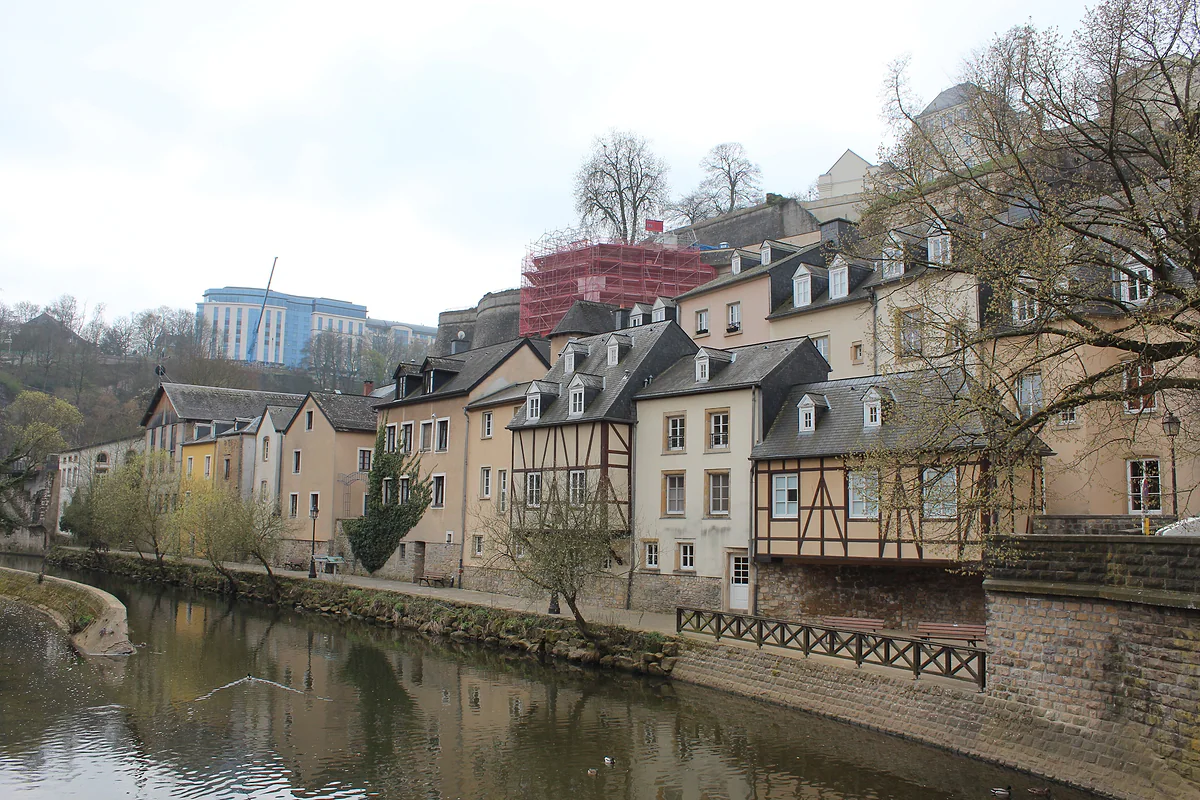
Old houses on rue Saint-Ulric in the Grund, one half-timbered, overlooking the River Alzette in spring
Saint-Esprit Plateau essentials
| What | Detail |
|---|---|
| Address | Plateau du Saint-Esprit, L-1475 Luxembourg |
| Plateau and memorial | Open access, no ticket |
| Archaeological crypt | LCTO guided tours only |
| Crypt entrance | Red door by the Rousegaart op de Rondellen |
| LCTO private guide | Bookings Monday to Friday, €50 surcharge under 10 working days |
| From the Grund | Free public lift |
LCTO and visitluxembourg, checked on 30-09-2026. The LCTO's crypt page gives no tour price.
Test yourself
True or false?
0/3 Pick before you peek.
-
Countess Ermesinde founded the Saint-Esprit convent in 1234.
See the answer
True. The LCTO credits Countess Ermesinde with founding the Poor Clares convent whose remains survive in the crypt.
-
The crypt was found while digging a car park under the Corniche.
See the answer
False. Surveys ahead of the Cité judiciaire revealed it in 1996, and excavations from 2001 to 2003 brought it to light.
-
The National Monument of Solidarity opened on the 30th anniversary of the so-called 1941 referendum.
See the answer
True. It was inaugurated on 10 October 1971, thirty years after the vote in which Luxembourgers made clear they wanted to stay independent.
- Holy Ghost convent founded
- 1234
- Vauban's works on the citadel
- 1685-1687
- Burials found, almost
- 300
- Memorial opened
- 1971
Map
Where Saint-Esprit Plateau is
The thick dashed line is the border with Belgium, France and Germany, and the fine ones divide the twelve cantons. The Éislek lies to the north and the Moselle to the east. Every number opens its guide.
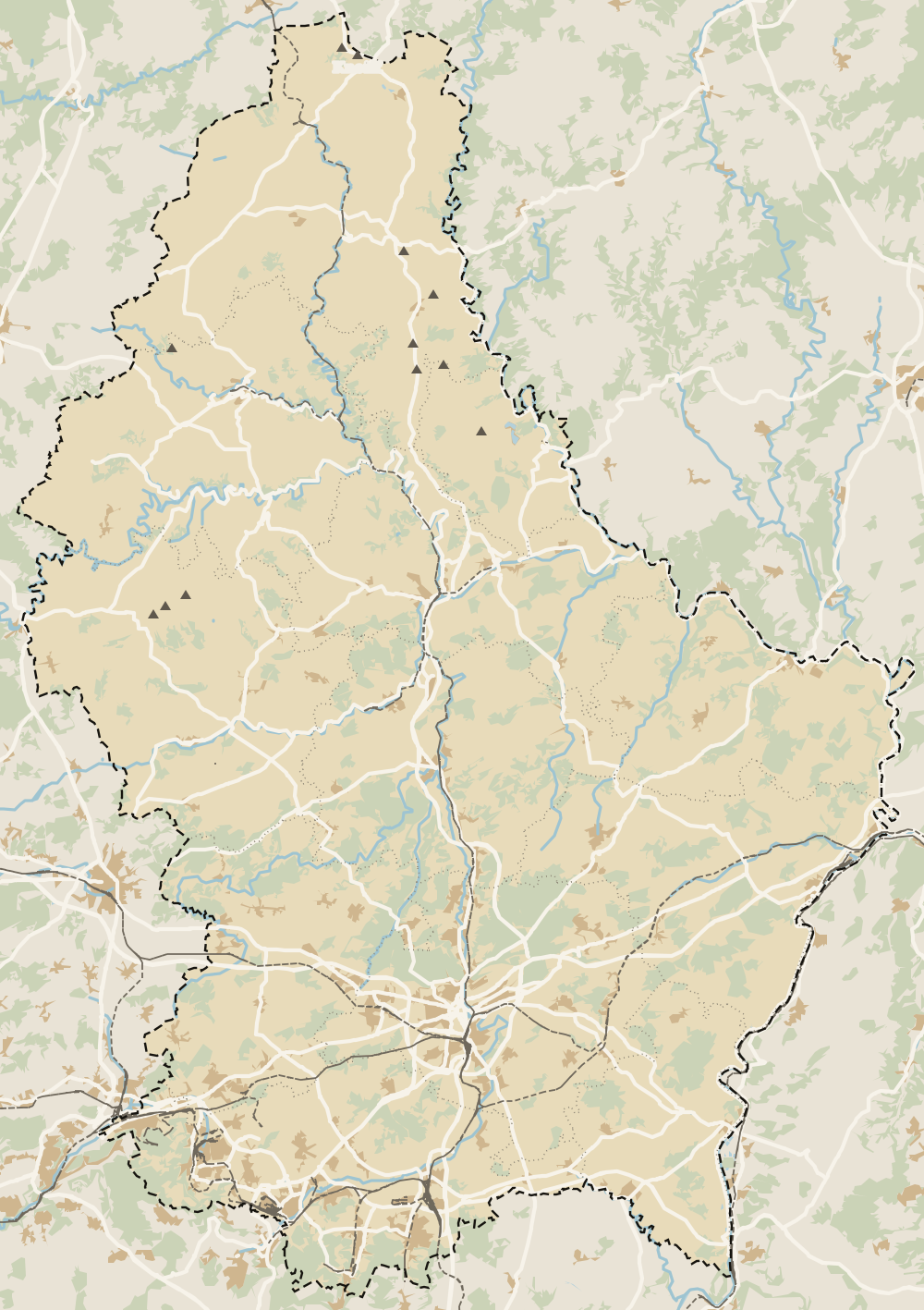 1Ville Haute 2Bock Casemates 3Pétrusse Casemates 4Chemin de la Corniche 5Grand Ducal Palace 6Notre-Dame Cathedral 7St Michael's Church 8Place Guillaume II 9Place d'Armes 10Place de la Constitution 11Adolphe Bridge 12MNHA (National Museum) 13Lëtzebuerg City Museum 14Villa Vauban 15Casino Luxembourg 16Municipal Park 17Saint-Esprit Plateau 18Place de Clairefontaine
 Map data © OpenStreetMap contributors (ODbL)
- 1Ville HauteA district of Luxembourg City
- 2Bock CasematesTunnels in a World Heritage Site
- 3Pétrusse CasematesSandstone galleries by the Gëlle Fra
- 4Chemin de la CornicheThe rampart walk of the old town
- 5Grand Ducal PalaceOfficial seat in the old town
- 6Notre-Dame CathedralThe country's only cathedral
- 7St Michael's ChurchOne of the capital's oldest places of worship
- 8Place Guillaume IITown hall square and William II
- 9Place d'ArmesPedestrian square in the old town
- 10Place de la ConstitutionMonument of Remembrance on the Beck bastion
- 11Adolphe BridgeThe capital's emblem, between the Ville Haute and the Gare
- 12MNHA (National Museum)National museum on the Marché-aux-Poissons, old town
- 13Lëtzebuerg City MuseumThe capital's history museum, old town
- 14Villa VaubanThe city's art museum, in the municipal park
- 15Casino LuxembourgForum d'art contemporain, old town
- 16Municipal ParkParc municipal Édouard André, old town
- 17Saint-Esprit PlateauCitadel in the Ville Haute
- 18Place de ClairefontaineSquare in the Ville Haute
0 of 425 Luxembourg guides
Your next stamp
- Place de la Constitution
- Rham Plateau
- Luxembourg fortress
- Grund
- Cents
- Chemin de la Corniche
- Ville Haute
- Gasperich
- A Possen Museum
- American Cemetery
- Ansembourg
- Ansembourg Castles
- Asselborn
- Bascharage
- Beaufort castles
- Belval
- Belval blast furnaces
- Berg Castle
- Bernard-Massard cellars
- Bourglinster Castle
- Bourscheid Castle
- Brandenbourg
- Brandenbourg Castle
- Caves St Martin
- Christmas
- Clervaux Castle
- Echternach
- Echternach Abbey
- Ehnen
- Ehnen Wine Museum
- Esch-sur-Alzette
- Esch-sur-Sûre Castle
- European Museum Schengen
- Fond-de-Gras
- General Patton Museum
- German war cemetery
- Haff Réimech
- Hohllay
- Hollenfels Castle
- Hosingen
- Kautenbach
- Kneiff
- Koerich Castle
- Larochette Castle
- Lasauvage
- Mersch Castle
- Military History Museum
- Moersdorf
- Mondorf Domaine Thermal
- Munsbach Castle
- National Mining Museum
- Parc Merveilleux
- Park Sënnesräich
- Places to visit
- Remich
- Rindschleiden
- Schiessentümpel
- Septfontaines Castle
- Slate Museum
- Stolzembourg
- Tudor Museum
- Useldange Castle
- Valley of the Seven Castles
- Vianden
- Vianden Castle
- Wasserbillig Aquarium
- Weiswampach lakes
- Wiltz Castle
- Ahn
- Berdorf
- Bourscheid-Plage
- Butterfly garden
- Clervaux
- Differdange
- Echternach lake
- Grevenmacher
- Heringer Millen
- Hollenfels
- Luxembourg City
- Luxembourg Science Center
- Meysembourg Castle
- Mullerthal
- National Day
- National Resistance Museum
- Perekop
- Remerschen
- Schoenfels Castle
- The Family of Man
- Things to do
- Upper Sûre Lake
- Vianden chairlift
- Wasserbillig
- Clervaux Abbey
- Echternach Roman villa
- Éislek
- Insenborn
- Kallektuffquell
- Machtum
- Most beautiful places
- Our Nature Park
- Pétange
- Pettingen Castle
- Schueberfouer
- Schwebsingen
- Victor Hugo House
- Waldbillig
- Dudelange
- Kuelscheier
- Lultzhausen
- Moselle Valley
- Octave
- Prettiest villages
- Sanem
- Schengen
- Wellenstein
- Wiltz
- Wolfsschlucht
- Beaufort
- Bech-Kleinmacher
- Éimaischen
- Gaalgebierg
- Guttland
- Marnach
- Mondorf-les-Bains
- Putscheid
- Schifflange
- UNESCO World Heritage
- Carnival
- Consdorf
- Ellergronn
- Käerjeng
- Kayl
- Map
- Minett
- Munshausen
- Tandel
- Bech
- Buergbrennen
- Esch-sur-Sûre
- Rumelange
- Where is Luxembourg
- Is it a country?
- Lac de la Haute-Sûre (commune)
- Rosport-Mompach
- Wormeldange
- Larochette
- Mondercange
- Regions
- Bettembourg
- Bock Casemates
- Cantons
- Dancing procession
- Diekirch
- Fischbach
- Garnich
- Mersch
- Moselle wine route
- Ettelbruck
- Heffingen
- Kehlen
- Lintgen
- Moselle river cruises
- Pétrusse Casemates
- Towns and villages
- Erpeldange-sur-Sûre
- Junglinster
- Kopstal
- Lorentzweiler
- Nommern
- Pfaffenthal
- Population
- Bissen
- Clausen
- Grand Ducal Palace
- Koerich
- Schieren
- Size
- Vallée de l'Ernz
- Feulen
- Kirchberg
- Languages
- Notre-Dame Cathedral
- Reisdorf
- Steinfort
- Bettendorf
- Habscht
- St Michael's Church
- Helperknapp
- Luxembourgish
- Place Guillaume II
- Name
- Place d'Armes
- History
- Grand Duke
- Colmar-Berg
- Flaxweiler
- Gare
- Hamm
- Kirchberg funicular
- Mamer
- Mertert
- Minett Trail
- Mullerthal Trail
- Neumünster Abbey
- Parc Hosingen
- Pfaffenthal lift
- Political system
- Redange
- The Passerelle
- Wine festivals
- Winseler
- Beckerich
- Biwer
- EU institutions
- Goesdorf
- Limpertsberg
- Mudam
- Natur Musée
- Pulvermühl
- Stadtbredimus
- Troisvierges
- Wenzel walk
- Bonnevoie
- Bous-Waldbredimus
- Ell
- Flag
- Kiischpelt
- Manternach
- Philharmonie
- Vauban circuit
- Weiswampach
- Betzdorf
- Boulaide
- Dräi Eechelen Museum
- Facts
- Hollerich
- Lenningen
- Useldange
- Wincrange
- Bourscheid
- Dalheim
- Public holidays
- Red Bridge
- Saeul
- Belair
- Second World War
- Vichten
- Battle of the Bulge
- Merl
- Préizerdaul
- EU and Schengen
- Groussbus-Wal
- Entry requirements
- Neudorf
- Rambrouch
- Currency and payments
- Mertzig
- Weimerskirch
- Adolphe Bridge
- Beggen
- Escapardenne
- How to get there
- International March of Diekirch
- MNHA (National Museum)
- Rock climbing
- Sandweiler
- Bridges
- Eich
- Flights
- Golf
- Hesperange
- Lëtzebuerg City Museum
- Canoeing and kayaking
- Dommeldange
- Luxembourg airport
- Strassen
- Villa Vauban
- Airport to city centre
- Bertrange
- Casino Luxembourg
- Mühlenbach
- Swimming pools
- From Brussels
- Pétrusse Valley
- Rollingergrund
- Walferdange
- Cessange
- Day trip from Brussels
- Municipal Park
- Steinsel
- Free walking tours
- From Paris
- Niederanven
- From Frankfurt
- Schuttrange
- Sightseeing train and bus
- By train
- Contern
- By coach
- Weiler-la-Tour
- Driving
- Luxembourg in one day
- Pretzel Sunday
- Tour de Luxembourg
- Candlemas (Liichtmëssdag)
- Car hire
- Luxembourg in two days
- Luxembourg in three days
- Melusina statue
- Parking
- St Nicholas Day (Kleeschen)
- Fête de la Musique
- Luxembourg in four days
- Museums in Luxembourg
- Petrol
- Place de Clairefontaine
- A week in Luxembourg
- Getting around
- Luxembourg Marathon
- Tram and Bus Museum
- Free public transport
- Parks in Luxembourg City
- Road trip
- Belgium and Luxembourg
- Tram
- Buses
- Viewpoints
- Trains
- Luxembourg station
- Cycling
- LuxembourgPass
- Prices and budget
- On a budget
- Free things to do
- Mobile and roaming
- Healthcare
- Safety
- Scams
- Tourist information
- Packing list
- Swimming lakes
- With a dog
- Markets
- Tipping
- Shopping
- What to buy
- Shopping centres
- With kids
- For couples
- Playgrounds
- Adventure parks
- Nightlife
- Castles
- Theatres and concert venues
- Leudelange
- Nature parks
- Where to stay
- City-centre hotels
- Hiking
- Nature reserves
- Reckange-sur-Mess
- Hotels near the station
- Roeser
- Frisange
- Hotels in Kirchberg
- Airport hotels
- Dippach
- Hotels in Vianden
- Hotels in Echternach
- Hotels in Clervaux
- Hotels in Mondorf-les-Bains
- Hotels in Esch-sur-Alzette
- Hotels on the Moselle
- Mullerthal hotels
- Upper Sûre lake hotels
- Hotels in Diekirch and Ettelbruck
- Cheap hotels
- Luxury hotels
- Boutique hotels
- Spa hotels
- Family hotels
- Apartments
- Weather
- Youth hostels
- Best time to visit
- Campsites
- Holiday cottages
- In winter
- Castle hotels
- In spring
- Day trips
- In summer
- Around Luxembourg
- In autumn
- Ice skating
- Trier day trip
- Metz day trip
- Arlon day trip
- In January
- In February
- In March
- In April
- In May
- In June
- In July
- In August
- In September
- Food
- In October
- In November
- Where to eat
- In December
- Michelin restaurants
- Cheap eats
- Judd mat Gaardebounen
- Bouneschlupp
- Gromperekichelcher
- Kniddelen
- Quetschentaart
- Rieslingspaschtéit
- Events
- Wine
- Crémant
- Beer
Frequently asked questions
What is there to see on the Saint-Esprit Plateau?
The National Monument of Solidarity and its eternal flame, the view over the Grund and the Rham, Vauban's bastions and, on a guided tour, the archaeological crypt of the old convent. The law courts are to be seen from outside.
What is the National Monument of Solidarity in Luxembourg?
The memorial to the victims of the Second World War on the hill locals call Kanounenhiwwel, Cannon Hill. It opened on 10 October 1971 and has a paved courtyard symbolising prisons and camps, an uncut stone and an eternal flame.
Can you visit the Saint-Esprit crypt?
Only with a guide. The LCTO occasionally builds it into its regular guided tours, so check the tour description mentions the crypt, and it can add it to a private tour if you email them.
How do you get from the Grund up to the Saint-Esprit Plateau?
Take the public lift between the Grund and the plateau, next to the Cité judiciaire. It's free, like the rest of Luxembourg City's public transport.
Is it free to visit the Holy Ghost Citadel?
Yes. The plateau and the memorial are open spaces. The only paid option is a guided tour taking in the crypt, and the LCTO doesn't list its price on the crypt page.
Why is it called the Holy Ghost Citadel?
After the Holy Ghost convent founded here in 1234. Its Poor Clares nuns stayed until 1690, when Louis XIV had them evicted and the buildings turned over to the military.
By
Tourism graduate with a master’s in Tourism Management and Planning from the University of Málaga, who has travelled across Europe. He writes every guide from official sources and his own judgement.
Published on . Facts checked on .
Sources
- Luxembourg City Tourist Office, Holy Ghost Citadel
- Luxembourg City Tourist Office, Archaeological crypt of Saint Esprit
- Luxembourg City Tourist Office, National Monument of the Solidarity
- Visit Luxembourg, Monument national de la solidarité
- Luxembourg City Tourist Office, Siegfried & Melusina tour (booking terms)
Some links in this guide are affiliate links: if you book through them, the site earns a commission at no extra cost to you. Affiliate disclosure
Photos: Cayambe (CC BY-SA 4.0); Dennis G. Jarvis (CC BY-SA 2.0); Zinneke (CC BY-SA 3.0 lu), via Wikimedia Commons.