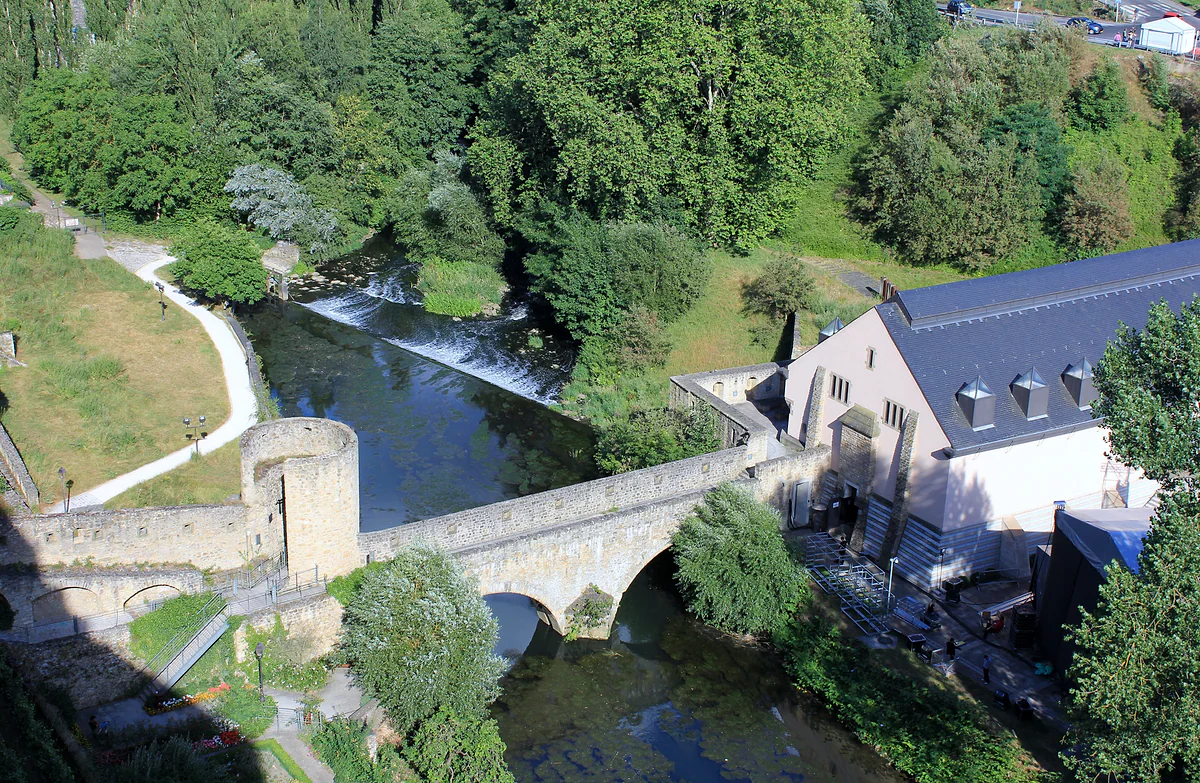
From the Bock rock to the EU Court of Justice
A thousand years of Luxembourg, told at walking pace
Luxembourg's history starts in 963 with a small castle on the Bock rock. In the 14th century its ruling house produced three emperors; from the 15th to the 19th it passed through Burgundian, Spanish, French and Austrian hands. The 1839 Treaty of London fixed its borders, it got its own dynasty in 1890, and after Nazi occupation it helped found the UN, Benelux and today's EU.
With one afternoon for history, I'd walk the Wenzel circuit along the old walls first and then head to the Dräi Eechelen Museum, which covers the fortress from 1443 to 1903. Stone first, explanation second; it sticks better that way round.

Before you go
What I would keep in mind
-
01 Most beautiful
A thousand years in a three-hour walk
The Wenzel circuit follows the 14th-century wall, the Bock and the Grund. The official portal pitches it as a thousand years of fortress in about 2.5 km and three hours on foot.
Wenzel walk -
02 To save money
Two history museums for €12
The National Museum (MNHA) and the Dräi Eechelen sell a combined ticket for €12, against €7 each separately. Under-26s get into the MNHA free.
Dräi Eechelen Museum -
03 Most beautiful
Where the Prince of Wales motto comes from
Legend says the Black Prince took the «Ich dien» motto from John the Blind, the King of Bohemia and Count of Luxembourg who died at Crécy in 1346. John is buried in the crypt of Luxembourg's cathedral.
Notre-Dame Cathedral
What I would book
Luxembourg’s history is the story of a small place with a strategic rock in the middle of Europe, and almost everything that happened to it follows from that. For centuries, whoever wanted to control the route between France and the German lands needed the fortress. That’s why it changed hands so often, why it was pulled down in 1867 and why, after two invasions in the 20th century, it threw itself behind a united Europe. Here it is in six chapters.
A castle, a line of counts and three emperors
It begins in 963, when Count Sigefroi swapped land with the monks of St Maximin in Trier for the castle on the Bock. According to the commune of Feulen, the land he gave up was his estate there. A fortified town grew around it and, through marriages, purchases and the odd war, the county had become a serious regional power by the early 13th century. It straddled the language border, part German-speaking and part French-speaking.
The high point came next. In 1308 Count Henry VII was elected King of the Romans, and in 1312 a papal legate crowned him emperor in Rome. He died of malaria the following year and is buried in Pisa. After him Charles IV, who made the county a duchy in 1354, and Sigismund, who died in 1437, also wore the imperial crown.
John the Blind and the Black Prince
This is the chapter British readers tend to enjoy. John the Blind, Henry VII’s son, was King of Bohemia and Count of Luxembourg. Having lost his sight late in life, he still rode into the Battle of Crécy in 1346, led by his knights, and was killed there. Legend has it that Edward the Black Prince, fighting on the winning English side, was so struck by his courage that he adopted his crest and the motto «Ich dien» (I serve), which the official portal notes still appears in the arms of the heir to the British throne. John also signed the founding charter of the Schueberfouer fair in 1340, and he lies in the crypt of Notre-Dame Cathedral.
To sleep close to everything, search places to stay in Luxembourg on Booking.com and filter by area before price.
Four centuries of foreign masters
Debt finished the dynasty. In 1441 the last duchess sold the duchy to Philip the Good of Burgundy, and in 1443 his troops took and sacked the city. Four centuries of rule from elsewhere followed. Under the Habsburgs, the duchy sat on Spain’s side of its long contest with France, and Paris saw its fortress as a thorn in its flank. The Treaty of the Pyrenees in 1659 cost it Thionville and Longwy.
In 1684 Louis XIV’s army took the city, and Vauban, who had directed the siege, rebuilt the walls until they were reckoned impregnable. It went back to the Habsburgs in 1697, to their Austrian branch in 1715, and the 18th century under Maria Theresa was peaceful. Revolutionary France arrived in 1795 and renamed it the Département des Forêts. Conscription sparked the Cudgel War, the Klëppelkrich, in 1798, and it was put down within two days. What survives of that fortress is covered in Luxembourg fortress.
From tied grand duchy to a country of its own
In 1815 the Congress of Vienna raised it to a grand duchy, yet gave it to the Dutch king and stationed Prussian troops in the fortress. When the Belgian revolution broke out in 1830, Luxembourgers joined in, and only the capital, protected by the Prussians, stayed under Dutch control. A treaty signed in London on 19 April 1839 settled things with a partition, creating two Luxembourgs, the grand duchy and a Belgian province.
In 1841 King William II granted a first constitutional charter and the country joined the Zollverein, the German customs union that powered its steel industry and railways. In 1867 Napoleon III tried to buy it for five million gold francs, and the crisis ended with another Treaty of London that pulled out the Prussians, had the fortress razed and made the country permanently neutral. In 1890 William III died, and since the Nassau family agreement admitted only men to the succession, the throne went to Adolphe of Nassau-Weilburg, founder of today’s ruling family. I follow it through to Guillaume in Grand Duke of Luxembourg. How power is shared today is covered in Luxembourg government.
To sleep close to everything, search places to stay in Luxembourg on Expedia and filter by area before price.
Two wars and a hard lesson
Neutrality didn’t protect it. It had already been violated in the First World War, and German troops crossed the border again on 10 May 1940, less than 25 years later. Grand Duchess Charlotte and the government went into exile, eventually in London, while the occupiers banned French and forcibly conscripted some 10,000 young men into the German army. 5,700 people died, about 2% of the population, and of nearly 1,300 Jews deported only 69 survived. For the whole story, read Luxembourg in the Second World War.
Luxembourg and a united Europe
Modern Luxembourg grew out of that experience. A founder of the UN in 1945 and of Benelux, it took part in the Schuman Plan, hosted the ECSC High Authority from 1952 and signed the Treaties of Rome in 1957. In 1985 the village of Schengen gave its name to the agreement on open borders. The latest chapter, for now, came in 2025. On 3 October Henri abdicated after 25 years on the throne and his son Guillaume was sworn in as Grand Duke.
If you are short on time, see the best tours in Luxembourg and pick one that fits your day.
Where the bus does not go, a car does: compare car hire in Luxembourg before you arrive rather than at the desk.
If you still need a way in, check the best ticket deals to Luxembourg from where you are.
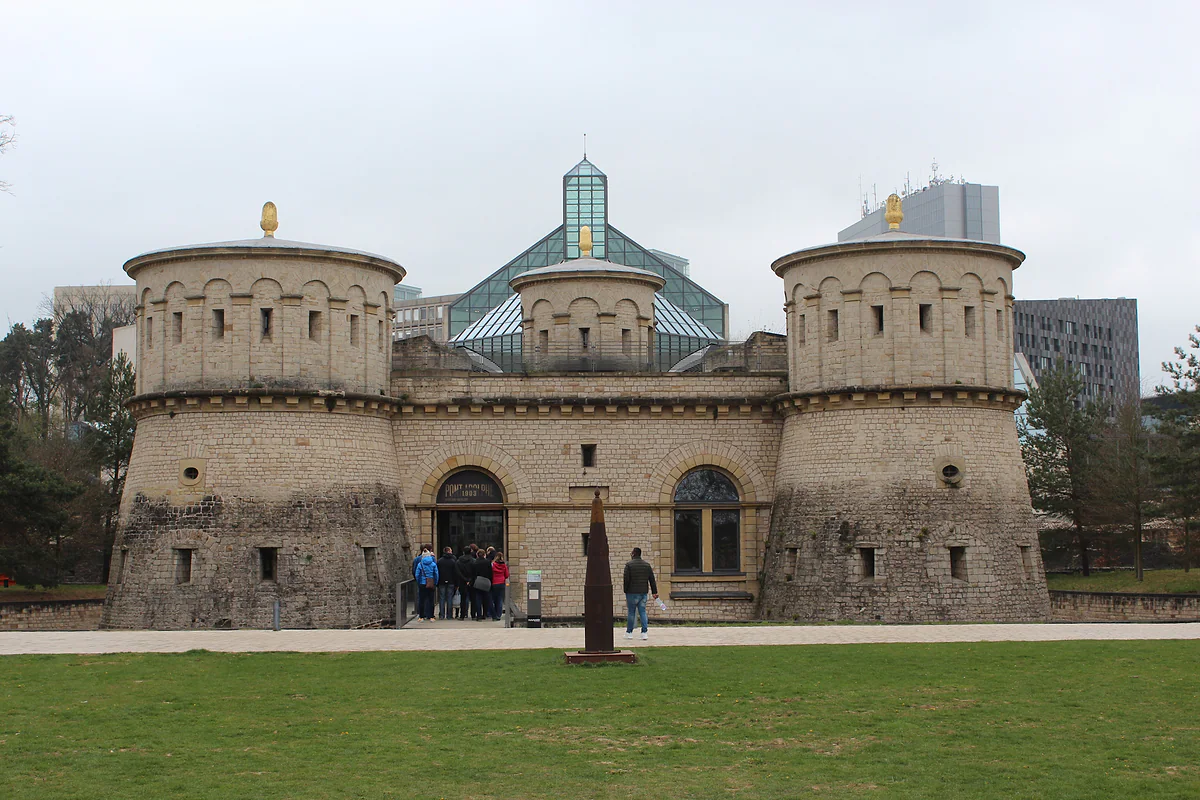
Fort Thüngen with its two round towers and golden acorns, home of the Dräi Eechelen museum in Kirchberg
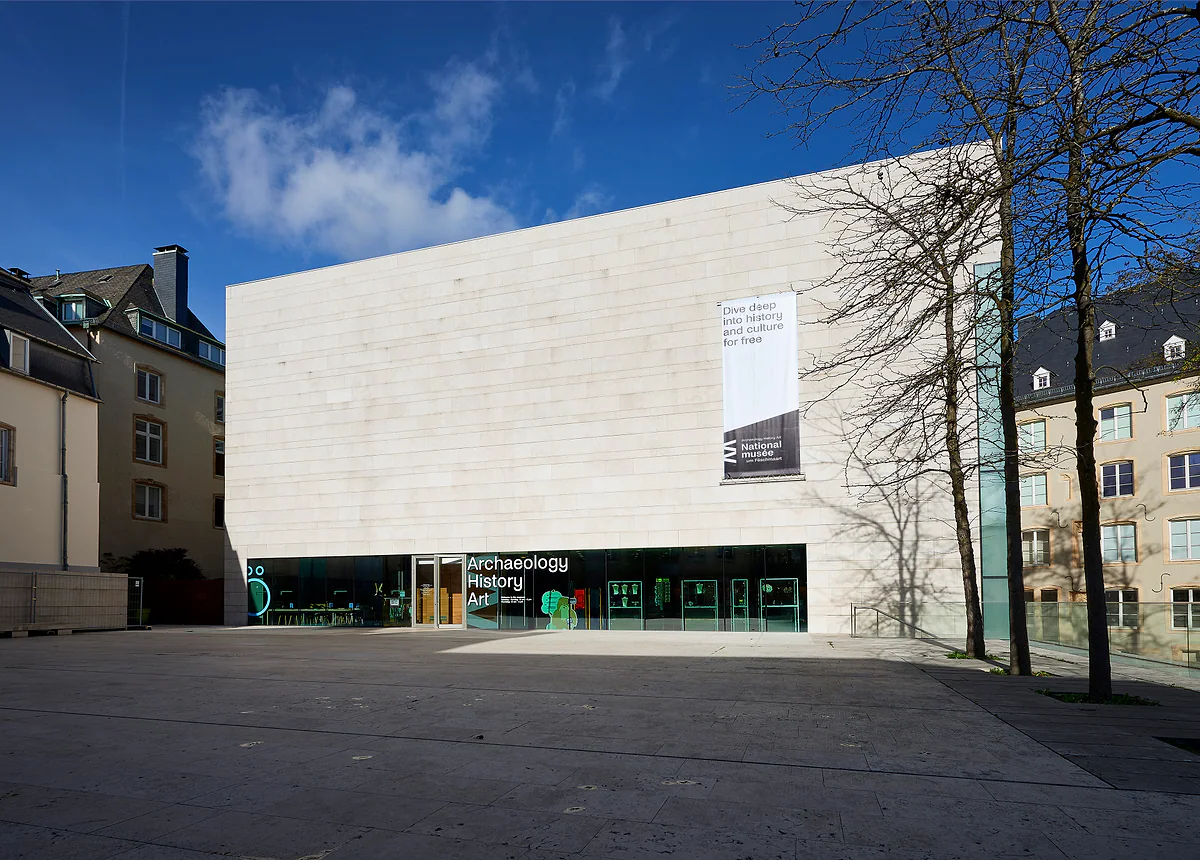
The pale stone building of the National Museum of Archaeology, History and Art on the Marché-aux-Poissons
Luxembourg's history in dates
| Year | What happened |
|---|---|
| 963 | Count Sigefroi acquires the castle on the Bock, Lucilinburhuc |
| 1308 | Henry VII, Count of Luxembourg, elected King of the Romans; emperor in 1312 |
| 1346 | John the Blind killed at the Battle of Crécy |
| 1354 | Charles IV raises the county to a duchy |
| 1443 | Troops of Philip the Good of Burgundy take the city |
| 1659 | Treaty of the Pyrenees; Thionville and Longwy lost |
| 1684 | Louis XIV takes the city and Vauban rebuilds the fortress |
| 1795 | Annexed by France as the Département des Forêts |
| 1815 | Congress of Vienna; grand duchy tied to the King of the Netherlands |
| 1839 | Treaty of London; split with Belgium, present borders fixed |
| 1867 | Second Treaty of London; fortress dismantled, neutrality declared |
| 1890 | Adolphe of Nassau-Weilburg founds the current dynasty |
| 1940-1944 | German occupation; liberated on 10 September 1944 |
| 1952 | The ECSC High Authority moves to Luxembourg |
| 1958 | Founding member of the European Economic Community |
| 2025 | Henri abdicates; Guillaume sworn in as Grand Duke on 3 October |
Dates from luxembourg.public.lu (history section) and monarchie.lu, checked on 29-09-2026.
Where to see the history in the capital
| Museum | What it covers | Adult ticket |
|---|---|---|
| Dräi Eechelen Museum (Kirchberg) | The fortress from 1443 to 1903, about 600 objects | €7; closed Mondays |
| National Museum of Archaeology, History and Art | National collections, on the Marché-aux-Poissons | €7; free for under-26s |
| Lëtzebuerg City Museum | «The Luxembourg Story», over 500 objects | €5; free for under-21s |
Prices from each museum's website and visitluxembourg, September 2026. MNHA plus Dräi Eechelen combined ticket, €12.
Test yourself
True or false?
0/4 Pick before you peek.
-
A Count of Luxembourg became Holy Roman Emperor.
See the answer
True. Henry VII was elected King of the Romans in 1308 and crowned emperor in Rome in 1312. Charles IV and Sigismund later wore the imperial crown too.
-
Luxembourg's current borders were drawn after the Second World War.
See the answer
False. They were fixed by the Treaty of London of 19 April 1839 and, according to the official portal, haven't changed since.
-
In 1867 France tried to buy Luxembourg.
See the answer
True. Napoleon III offered the king-grand duke five million gold francs. The crisis ended with the 1867 Treaty of London, which had the fortress dismantled and declared the country neutral.
-
The 1798 uprising against the French lasted for months.
See the answer
False. The Cudgel War (Klëppelkrich) was crushed in two days. 200 Luxembourgers died in the fighting and 35 were executed.
What to see
What to see in History
0 of 425 Luxembourg guides
Your next stamp
- Luxembourg fortress
- Second World War
- EU and Schengen
- Name
- Is it a country?
- Luxembourg in two days
- Facts
- A Possen Museum
- American Cemetery
- Ansembourg
- Ansembourg Castles
- Asselborn
- Bascharage
- Beaufort castles
- Belval
- Belval blast furnaces
- Berg Castle
- Bernard-Massard cellars
- Bourglinster Castle
- Bourscheid Castle
- Brandenbourg
- Brandenbourg Castle
- Caves St Martin
- Christmas
- Clervaux Castle
- Echternach
- Echternach Abbey
- Ehnen
- Ehnen Wine Museum
- Esch-sur-Alzette
- Esch-sur-Sûre Castle
- European Museum Schengen
- Fond-de-Gras
- General Patton Museum
- German war cemetery
- Haff Réimech
- Hohllay
- Hollenfels Castle
- Hosingen
- Kautenbach
- Kneiff
- Koerich Castle
- Larochette Castle
- Lasauvage
- Mersch Castle
- Military History Museum
- Moersdorf
- Mondorf Domaine Thermal
- Munsbach Castle
- National Mining Museum
- Parc Merveilleux
- Park Sënnesräich
- Places to visit
- Remich
- Rindschleiden
- Schiessentümpel
- Septfontaines Castle
- Slate Museum
- Stolzembourg
- Tudor Museum
- Useldange Castle
- Valley of the Seven Castles
- Vianden
- Vianden Castle
- Ville Haute
- Wasserbillig Aquarium
- Weiswampach lakes
- Wiltz Castle
- Ahn
- Berdorf
- Bourscheid-Plage
- Butterfly garden
- Clervaux
- Differdange
- Echternach lake
- Grevenmacher
- Heringer Millen
- Hollenfels
- Luxembourg City
- Luxembourg Science Center
- Meysembourg Castle
- Mullerthal
- National Day
- National Resistance Museum
- Perekop
- Remerschen
- Schoenfels Castle
- The Family of Man
- Things to do
- Upper Sûre Lake
- Vianden chairlift
- Wasserbillig
- Clervaux Abbey
- Echternach Roman villa
- Éislek
- Insenborn
- Kallektuffquell
- Machtum
- Most beautiful places
- Our Nature Park
- Pétange
- Pettingen Castle
- Schueberfouer
- Schwebsingen
- Victor Hugo House
- Waldbillig
- Dudelange
- Kuelscheier
- Lultzhausen
- Moselle Valley
- Octave
- Prettiest villages
- Sanem
- Schengen
- Wellenstein
- Wiltz
- Wolfsschlucht
- Beaufort
- Bech-Kleinmacher
- Éimaischen
- Gaalgebierg
- Guttland
- Marnach
- Mondorf-les-Bains
- Putscheid
- Schifflange
- UNESCO World Heritage
- Carnival
- Consdorf
- Ellergronn
- Käerjeng
- Kayl
- Map
- Minett
- Munshausen
- Tandel
- Bech
- Buergbrennen
- Esch-sur-Sûre
- Rumelange
- Where is Luxembourg
- Lac de la Haute-Sûre (commune)
- Rosport-Mompach
- Wormeldange
- Larochette
- Mondercange
- Regions
- Bettembourg
- Bock Casemates
- Cantons
- Dancing procession
- Diekirch
- Fischbach
- Garnich
- Mersch
- Moselle wine route
- Ettelbruck
- Grund
- Heffingen
- Kehlen
- Lintgen
- Moselle river cruises
- Pétrusse Casemates
- Towns and villages
- Chemin de la Corniche
- Erpeldange-sur-Sûre
- Junglinster
- Kopstal
- Lorentzweiler
- Nommern
- Pfaffenthal
- Population
- Bissen
- Clausen
- Grand Ducal Palace
- Koerich
- Schieren
- Size
- Vallée de l'Ernz
- Feulen
- Kirchberg
- Languages
- Notre-Dame Cathedral
- Reisdorf
- Steinfort
- Bettendorf
- Habscht
- St Michael's Church
- Helperknapp
- Luxembourgish
- Place Guillaume II
- Place d'Armes
- Place de la Constitution
- Grand Duke
- Colmar-Berg
- Flaxweiler
- Gare
- Hamm
- Kirchberg funicular
- Mamer
- Mertert
- Minett Trail
- Mullerthal Trail
- Neumünster Abbey
- Parc Hosingen
- Pfaffenthal lift
- Political system
- Redange
- The Passerelle
- Wine festivals
- Winseler
- Beckerich
- Biwer
- EU institutions
- Goesdorf
- Limpertsberg
- Mudam
- Natur Musée
- Pulvermühl
- Stadtbredimus
- Troisvierges
- Wenzel walk
- Bonnevoie
- Bous-Waldbredimus
- Ell
- Flag
- Kiischpelt
- Manternach
- Philharmonie
- Vauban circuit
- Weiswampach
- Betzdorf
- Boulaide
- Dräi Eechelen Museum
- Hollerich
- Lenningen
- Useldange
- Wincrange
- Bourscheid
- Dalheim
- Gasperich
- Public holidays
- Red Bridge
- Saeul
- Belair
- Vichten
- Battle of the Bulge
- Merl
- Préizerdaul
- Cents
- Groussbus-Wal
- Entry requirements
- Neudorf
- Rambrouch
- Currency and payments
- Mertzig
- Weimerskirch
- Adolphe Bridge
- Beggen
- Escapardenne
- How to get there
- International March of Diekirch
- MNHA (National Museum)
- Rock climbing
- Sandweiler
- Bridges
- Eich
- Flights
- Golf
- Hesperange
- Lëtzebuerg City Museum
- Canoeing and kayaking
- Dommeldange
- Luxembourg airport
- Strassen
- Villa Vauban
- Airport to city centre
- Bertrange
- Casino Luxembourg
- Mühlenbach
- Swimming pools
- From Brussels
- Pétrusse Valley
- Rollingergrund
- Walferdange
- Cessange
- Day trip from Brussels
- Municipal Park
- Steinsel
- Free walking tours
- From Paris
- Niederanven
- From Frankfurt
- Schuttrange
- Sightseeing train and bus
- By train
- Contern
- By coach
- Weiler-la-Tour
- Driving
- Luxembourg in one day
- Pretzel Sunday
- Rham Plateau
- Tour de Luxembourg
- Candlemas (Liichtmëssdag)
- Car hire
- Saint-Esprit Plateau
- Luxembourg in three days
- Melusina statue
- Parking
- St Nicholas Day (Kleeschen)
- Fête de la Musique
- Luxembourg in four days
- Museums in Luxembourg
- Petrol
- Place de Clairefontaine
- A week in Luxembourg
- Getting around
- Luxembourg Marathon
- Tram and Bus Museum
- Free public transport
- Parks in Luxembourg City
- Road trip
- Belgium and Luxembourg
- Tram
- Buses
- Viewpoints
- Trains
- Luxembourg station
- Cycling
- LuxembourgPass
- Prices and budget
- On a budget
- Free things to do
- Mobile and roaming
- Healthcare
- Safety
- Scams
- Tourist information
- Packing list
- Swimming lakes
- With a dog
- Markets
- Tipping
- Shopping
- What to buy
- Shopping centres
- With kids
- For couples
- Playgrounds
- Adventure parks
- Nightlife
- Castles
- Theatres and concert venues
- Leudelange
- Nature parks
- Where to stay
- City-centre hotels
- Hiking
- Nature reserves
- Reckange-sur-Mess
- Hotels near the station
- Roeser
- Frisange
- Hotels in Kirchberg
- Airport hotels
- Dippach
- Hotels in Vianden
- Hotels in Echternach
- Hotels in Clervaux
- Hotels in Mondorf-les-Bains
- Hotels in Esch-sur-Alzette
- Hotels on the Moselle
- Mullerthal hotels
- Upper Sûre lake hotels
- Hotels in Diekirch and Ettelbruck
- Cheap hotels
- Luxury hotels
- Boutique hotels
- Spa hotels
- Family hotels
- Apartments
- Weather
- Youth hostels
- Best time to visit
- Campsites
- Holiday cottages
- In winter
- Castle hotels
- In spring
- Day trips
- In summer
- Around Luxembourg
- In autumn
- Ice skating
- Trier day trip
- Metz day trip
- Arlon day trip
- In January
- In February
- In March
- In April
- In May
- In June
- In July
- In August
- In September
- Food
- In October
- In November
- Where to eat
- In December
- Michelin restaurants
- Cheap eats
- Judd mat Gaardebounen
- Bouneschlupp
- Gromperekichelcher
- Kniddelen
- Quetschentaart
- Rieslingspaschtéit
- Events
- Wine
- Crémant
- Beer
Frequently asked questions
When was Luxembourg founded?
The reference date is 963, when Count Sigefroi acquired the castle on the Bock rock in exchange for other land. The official portal adds that the charter formalising it dates from 987.
Was there a Luxembourg empire?
Not an empire of its own, but the House of Luxembourg gave the Holy Roman Empire three emperors, Henry VII (crowned in 1312), Charles IV and Sigismund, the last of them, who died in 1437.
Who ruled Luxembourg before it was independent?
From 1443 Burgundy, then the Habsburgs, including a long spell on Spain's side against France, the French from 1684 to 1697, the Austrian Habsburgs from 1715, revolutionary France from 1795 and, after 1815, the King of the Netherlands.
When did Luxembourg become independent?
The Congress of Vienna declared it an independent grand duchy in 1815, but under the King of the Netherlands. The 1839 Treaty of London fixed its borders, and in 1890 it got its own dynasty.
What happened to Luxembourg in the Second World War?
Germany invaded on 10 May 1940 and annexed it in all but name. The US Army liberated it on 10 September 1944, and the Battle of the Bulge then devastated the north of the country.
Why are EU institutions based in Luxembourg?
Because it was a founder of European integration. The ECSC High Authority moved there in 1952, and today the capital hosts the EU Court of Justice and the European Investment Bank.
By
Tourism graduate with a master’s in Tourism Management and Planning from the University of Málaga, who has travelled across Europe. He writes every guide from official sources and his own judgement.
Published on . Facts checked on .
Sources
Some links in this guide are affiliate links: if you book through them, the site earns a commission at no extra cost to you. Affiliate disclosure
Photos: trolvag (CC BY-SA 3.0); Zinneke (CC BY-SA 3.0); MNAHA / Tom Lucas (CC0), via Wikimedia Commons.