Euros, outside the EU
Montenegro currency: how to pay without surprises
Montenegro's currency is the euro. The European Commission says the country uses it as its de facto national currency with no agreement with the EU. Most hotels, restaurants and petrol stations take cards, and there are cash machines in every town, according to the National Tourism Organisation.
In 30 seconds
Full read: 3 min
- Montenegro uses the euro even though it isn't in the EU.
- Most hotels, restaurants and petrol stations accept cards.
- There are cash machines in every town; use those inside banks.
- Always pay in euros rather than accepting a conversion to pounds.
Coming from the UK, the one thing I'd sort out before leaving is a card with low fees abroad. Then I'd pay by card for almost everything, keep some euros for the Sveti Nikola boat, sunbeds and inland villages, and always choose to be charged in euros, never in pounds.

Before you go
What I would keep in mind
-
01 Money
Euros, with no local currency
Standard euro notes and coins. There's no local currency to learn, and other currencies can be changed at banks and bureaux de change, says the National Tourism Organisation.
-
02 Watch out
Use machines inside banks
gov.uk warns about card fraud. Its advice, which I follow, is to use cash machines inside bank branches and never lose sight of your card when you pay.
is Montenegro safe -
03 Watch out
Always pay in euros, not pounds
If a card machine or cash machine offers to charge you in sterling, decline and pay in euros. The rate applied on the spot is usually worse than your own bank's.
-
04 To save money
Carry change for the small stuff
The boat to Sveti Nikola island costs €3 to €4 and a parasol with two sunbeds about €10 in Ulcinj or Igalo, according to the National Tourism Organisation.
prices in Montenegro
What I would book
Montenegro’s currency is the euro, which makes it simpler than it might sound for a country outside the EU. The interesting part is how it came to use the euro without being a member, and what that means for your card and your fees. Here’s what the European Commission, gov.uk and the National Tourism Organisation say, plus how I’d handle money from the UK.
The euro, without EU membership
That’s how the European Commission puts it on its page about countries using the euro outside the eurozone. It names Kosovo and Montenegro as the two Balkan countries that run on the euro without having signed anything with Brussels, and Spain’s foreign ministry calls it a unilateral adoption. For you, at the till, it works as it would in Spain or Italy, with the same notes and coins.
The difference shows up on your bank statement. Montenegro isn’t in the EU, and from the UK it’s a non-sterling transaction either way, so check what your card charges for overseas spending and cash withdrawals before you go. What being outside the EU does and doesn’t change is covered in Montenegro and the EU.
Card for almost everything
The National Tourism Organisation says the vast majority of restaurants, hotels, bars, petrol stations and grocery shops take cards, naming Visa, Visa Electron, Mastercard, Maestro and American Express, and that there are cash machines in every town. Even so, I’d always carry some cash for the small things, the beach boat, a village car park or a shop in a northern hamlet, which is exactly where a declined card leaves you stuck.
gov.uk’s advice, which I think is sensible, is to use cash machines inside a bank branch and never lose sight of your card while paying. There are more warnings of this kind in is Montenegro safe.
If you are staying the night, see the best hotel deals in Kotor for your dates: the well-placed rooms go fast.
The pay-in-pounds trap
This is the one that catches British visitors. When a card machine or cash machine offers to charge you in pounds, it’s a currency conversion done on the spot, and the rate is usually worse than your bank’s. I’d decline every time and pay in euros. It’s an easy saving that adds up over a week, and the same goes for withdrawals, where the screen may offer a ‘guaranteed’ sterling amount. Pick euros there as well and leave the exchange to your card provider.
How much cash, and what it’s for
To give you an idea, the National Tourism Organisation puts a parasol and two sunbeds at about €10 at the mud-therapy beaches of Igalo and Ulcinj and the boat to Sveti Nikola island from Budva at €3 to €4, though it doesn’t date those prices. National park entry ranges from €3 on Lovćen and Prokletije to €5 in Durmitor and at Lake Skadar, and the Kotor City Pass costs €19 or €30 depending on the version. It’s all pulled together, with a daily budget, in is Montenegro expensive.
If you’re carrying a lot of cash, remember that €10,000 or more has to be declared at the border, as gov.uk points out.
So you do not lose the morning at the ticket office, browse tickets and tours in Kotor on GetYourGuide.
When banks and shops open
If you need to change money or sort something out in a branch, mind the hours. Banks keep long weekday hours and most food shops shut on Sundays; the exact times the National Tourism Organisation gives are in time in Montenegro. I wouldn’t leave the picnic shop for a northern day trip until Sunday afternoon. Bear in mind too that some of the small payments you’ll make, a car park in a mountain village or a boat across to an island, are the kind where a card machine may not be on hand, so a few notes in your pocket save a wasted trip back to the cash machine.
Tourist tax and tipping
Each municipality sets its own tourist tax, and the only official amount I’ve read is Herceg Novi’s, €1 per adult per night, €0.50 for 12 to 18-year-olds and free for under-12s. The tax and the compulsory 24-hour registration, which hotels handle for you, are both explained in Montenegro tourist registration.
Tipping has no official rule that I’ve come across. My own habit is to round up in restaurants and taxis when the service has been good, without feeling obliged, and to leave nothing extra if service is already on the bill. For more ways to stretch the budget, see Montenegro on a budget.
If you are staying the night, see the best hotel deals in Kotor for your dates: the well-placed rooms go fast.
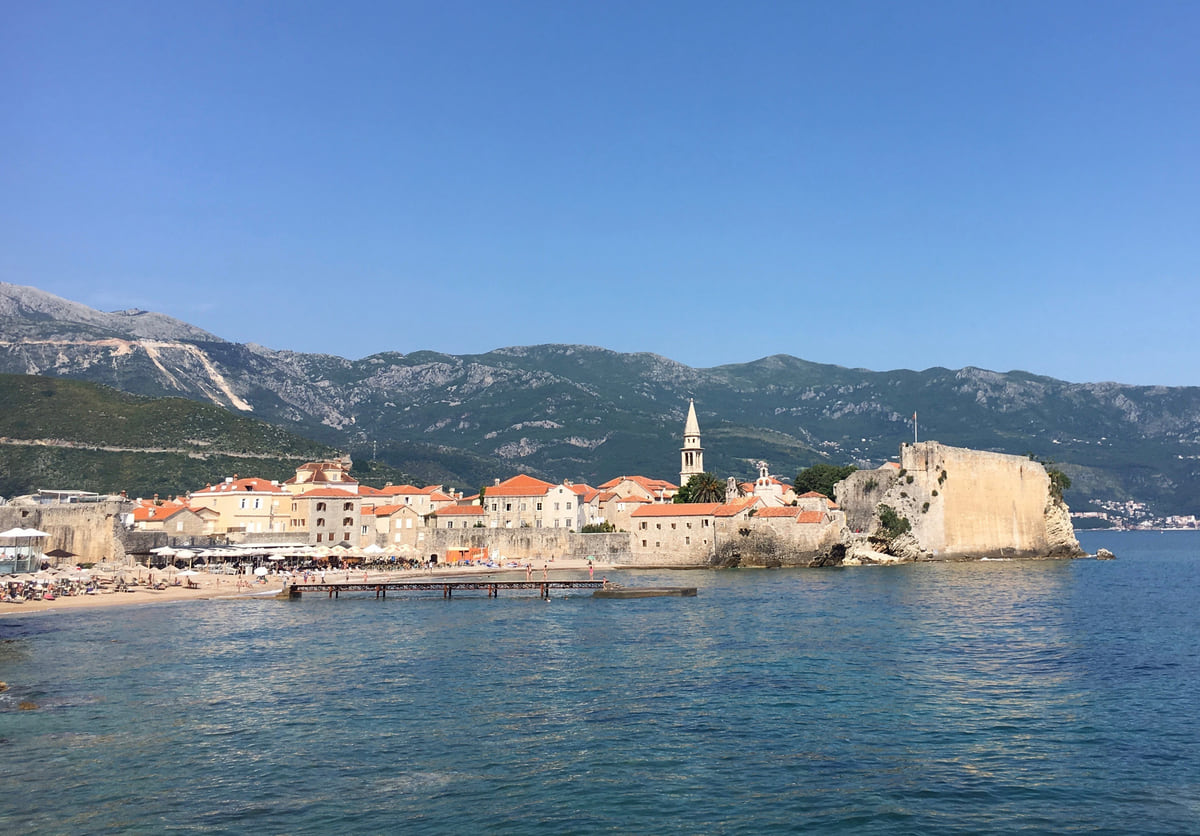
Budva's walled old town and citadel above the sea, with a bell tower rising from the rooftops and mountains in the distance
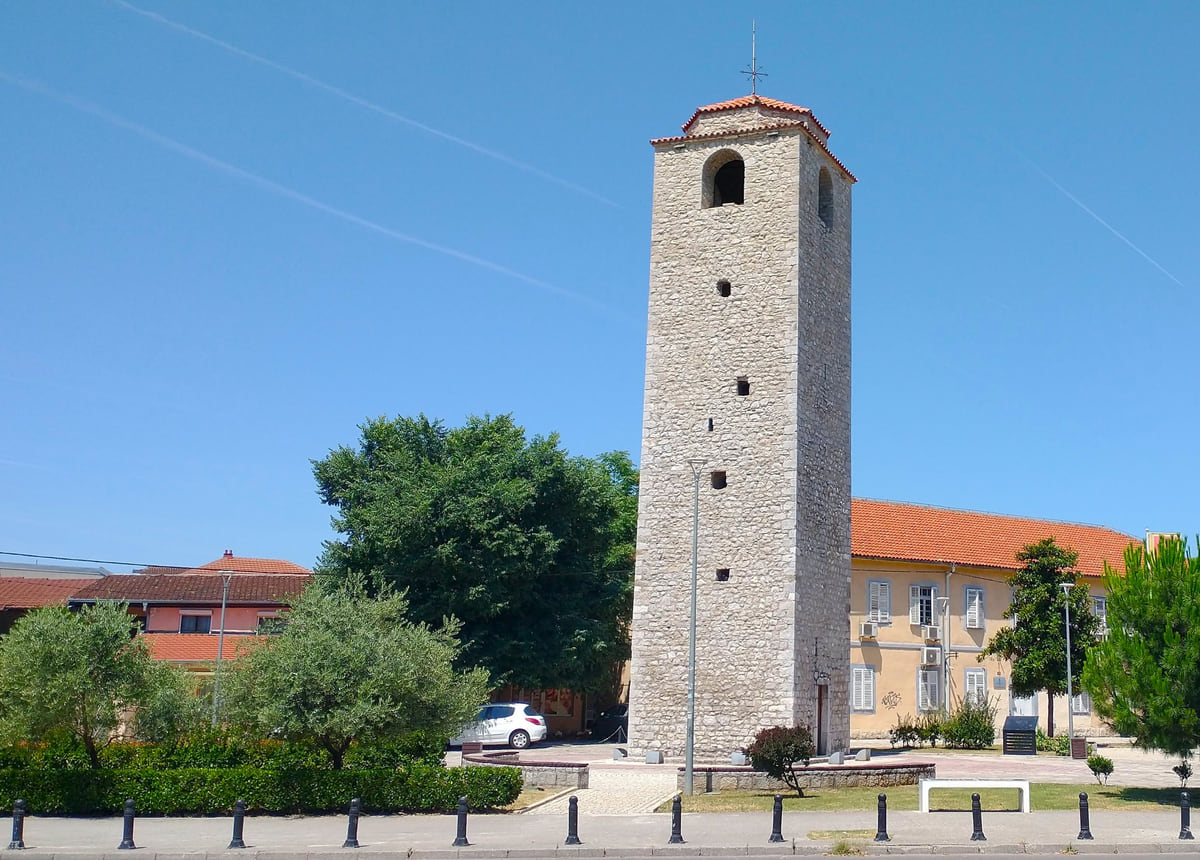
Podgorica's Ottoman clock tower in grey stone, standing in the old quarter's square with trees and low buildings around it
Official reference prices
| What | Price | Source |
|---|---|---|
| Durmitor or Lake Skadar entry | €5 per person per day | National Parks |
| Biogradska Gora entry | €4 | National Parks |
| Lovćen or Prokletije entry | €3 | National Parks |
| Kotor City Pass S / M | €19 / €30 | Kotor Tourism Organisation |
| Kamenari-Lepetane ferry, car | €5 | Official 2026 tariff |
| Tourist tax in Herceg Novi | €1 per adult per night | Herceg Novi Tourism Organisation |
| Parasol and two sunbeds, Ulcinj or Igalo | About €10 a day | National Tourism Organisation (undated tariff) |
Checked on 10-10-2026. National Tourism Organisation prices carry no date and are a rough guide.
Test yourself
True or false?
0/3 Pick before you peek.
-
Montenegro has its own national currency.
See the answer
False. It uses the euro, with no agreement with the EU, according to the European Commission.
-
You must declare €10,000 or more in cash at the border.
See the answer
True. gov.uk lists it among Montenegro's entry rules.
-
Cards are accepted only in hotels in Montenegro.
See the answer
False. The National Tourism Organisation says the vast majority of restaurants, bars, petrol stations and grocery shops take cards too.
- Currency: the euro, with no EU agreement
- €
- Cash threshold for declaring at the border
- €10,000
- Kotor City Pass S
- €19
- National park entry
- €3-5
0 of 278 Montenegro guides
Your next stamp
- EU membership
- Aman Sveti Stefan
- Budva Old Town
- Haj-Nehaj
- Kotor
- Lučice Beach
- Montenegro's coast
- Peaks of the Balkans
- Porto Montenegro
- Sea Dance Festival
- Splendid Conference & Spa Resort
- Stari Bar
- Ulcinj Old Town
- Bay of Kotor
- Budva Riviera
- Heroj submarine
- Iberostar Bellevue
- Independence Day
- Old olive tree of Mirovica
- Tivat
- Velika plaža
- Ada Bojana
- Beaches in Budva
- Eurostars Queen of Montenegro
- Herceg Novi
- Kotor Old Town
- Mount Rumija
- Igalo
- Kotor city walls
- Mogren Beach
- Montenegro Beach Resort
- Svač
- Vrmac
- Hiking
- Jaz Beach
- Kanli kula
- Luštica peninsula
- St Tryphon Cathedral
- Ulcinj salt pans
- Forte Mare
- Gornja Lastva
- Maritime Museum, Kotor
- Slovenska Beach
- Drobni Pijesak Beach
- Kotor viewpoints
- Mamula
- Žanjic beach
- Kotor cruise port
- Orjen
- Plavi horizonti beach
- Sveti Nikola Island
- Blue Cave
- Restaurants in Budva
- Restaurants in Kotor
- Canyoning
- Hotels
- Perast
- Sutomore
- Sveti Stefan
- Čanj
- Luxury hotels
- Our Lady of the Rocks
- Pržno
- Things to do
- Activities
- All-inclusive hotels
- Bar Riviera
- Bečići
- Hotel Palma
- St George island
- Dobrota
- Hladna uvala
- Most beautiful places
- Petrovac
- Crvena stijena
- Prčanj
- Prettiest villages
- Cycling
- Risan
- UNESCO sites
- Heritage Grand Perast
- Map
- Hyatt Regency Kotor Bay
- Where is it?
- Regions
- Cities
- Beaches in Bar
- Budva
- Central Montenegro
- Hotels in Budva
- Hotels in Kotor
- Iberostar Waves Herceg Novi
- Kitesurfing
- The name
- Beaches in Ulcinj
- Flag
- Hotels in Perast
- Palmon Bay Hotel & Spa
- Podgorica
- Cathedral of the Resurrection
- One&Only Portonovi
- Population
- Sandy beaches
- Azul Beach Resort Montenegro
- Naturist beaches
- Size
- Stara Varoš
- Doclea
- Language
- Mimosa Festival
- Medun
- Religion
- Zipline
- Museums in Podgorica
- Dajbabe Monastery
- History
- Restaurants in Podgorica
- Hotels in Podgorica
- Public holidays
- Avala Resort & Villas
- Bar
- Beaches in Kotor
- Birdwatching
- Hotels in Ulcinj
- Kotor carnival
- Time zone
- Tivat beaches
- Tuzi
- Boka Night
- Dukley Hotel & Resort
- Facts
- Hotels in Tivat
- Zeta
- Caves
- Herceg Novi beaches
- National parks
- Šipčanik
- Hotels in Herceg Novi
- Monasteries
- Fortresses
- Fly fishing
- Museums
- Canyons and waterfalls
- Lakes
- Mountains
- Montenegro and Croatia
- Beaches
- Boat trips
- Cetinje
- Montenegro and Albania
- Nightlife
- Ulcinj
- Weather
- Best time to visit
- Cetinje Monastery
- Kayaking
- Montenegro and the Balkans
- How to get there
- In summer
- King Nikola's Palace
- Sailing
- Biljarda
- Flights
- In winter
- Airports
- Museums in Cetinje
- New Year's Eve
- Lovćen
- Paragliding
- Tivat Airport
- Njegoš Mausoleum
- Podgorica Airport
- Dubrovnik to Kotor
- Kotor serpentine
- Belgrade to Montenegro
- Njeguši
- Ferry to Italy
- Njeguši prosciutto
- Border crossings
- In January
- Lipa Cave
- Where to stay
- In February
- Kamenari-Lepetane ferry
- Pavlova strana
- Getting around
- In March
- Rijeka Crnojevića
- In April
- Trains
- Buses
- In May
- Car hire
- In June
- Driving
- In July
- In August
- Taxis
- Distances
- In September
- In October
- Road trip
- Food
- In November
- Lake Skadar
- Scenic drives
- In December
- Kotor cable car
- Virpazar
- Where to eat
- Budva to Kotor
- Godinje
- Wine
- Podgorica to Kotor
- Vranjina
- Besac fortress
- Prices and budget
- On a budget
- Žabljak Crnojevića
- Danilovgrad
- Entry requirements
- Ostrog Monastery
- Tourist registration
- Customs
- Nikšić
- Crvena Stijena cave
- Safety
- Events
- Healthcare
- Northern Montenegro
- Mobile and roaming
- Žabljak
- Durmitor
- Plugs
- Black Lake
- With kids
- Bobotov Kuk
- Holidays
- Day trips
- Stećci tombstones
- Hotels in Žabljak
- Three-day itinerary
- Five-day itinerary
- Skiing in Montenegro
- One-week itinerary
- Skiing in Žabljak
- Šavnik
- Ten-day itinerary
- Nevidio Canyon
- Tara Canyon
- Tara rafting
- Đurđevića Tara Bridge
- Plužine
- Lake Piva
- Piva Monastery
- Mojkovac
- Brskovo
- Pljevlja
- Husein Pasha Mosque
- Kolašin
- Hotels in Kolašin
- Skiing in Kolašin
- Biogradska Gora National Park
- Komovi
- Morača Monastery
- Morača Canyon
- Bijelo Polje
- Đalovića Cave
- Berane
- Andrijevica
- Petnjica
- Rožaje
- Plav
- Lake Plav
- Gusinje
- Vusanje
- Prokletije National Park
Frequently asked questions
What currency does Montenegro use?
The euro. The European Commission says Montenegro uses it as a de facto national currency, without any agreement with the EU, and Spain's foreign ministry describes the adoption as unilateral.
Should I take euros or pounds to Montenegro?
Euros. Prices are in euros and the National Tourism Organisation says other currencies are changed at banks and bureaux de change. I'd bring a little cash in euros and rely on a card with low overseas fees.
Can I use my card in Montenegro?
Yes. The National Tourism Organisation says the vast majority of restaurants, hotels, bars, petrol stations and grocery shops accept Visa, Mastercard, Maestro and American Express.
Are there cash machines in Montenegro?
Yes, in every town, according to the National Tourism Organisation. gov.uk recommends using those inside banks to reduce the risk of fraud.
Do you tip in Montenegro?
I haven't found any official guidance on tipping. I'd round up in restaurants and taxis if the service was good, but that's my own habit, not a local rule.
How much cash can I take into Montenegro?
There's no limit as such, but amounts of €10,000 or more must be declared at the border, according to gov.uk.
By
Tourism graduate with a master’s in Tourism Management and Planning from the University of Málaga, who has travelled across Europe. He writes every guide from official sources and his own judgement.
Published on . Facts checked on .
Sources
Some links in this guide are affiliate links: if you book through them, the site earns a commission at no extra cost to you. Affiliate disclosure
Photos: lienyuan lee (CC BY 3.0); Dirgela (CC BY-SA 4.0); MOs810 (CC BY 4.0), via Wikimedia Commons.