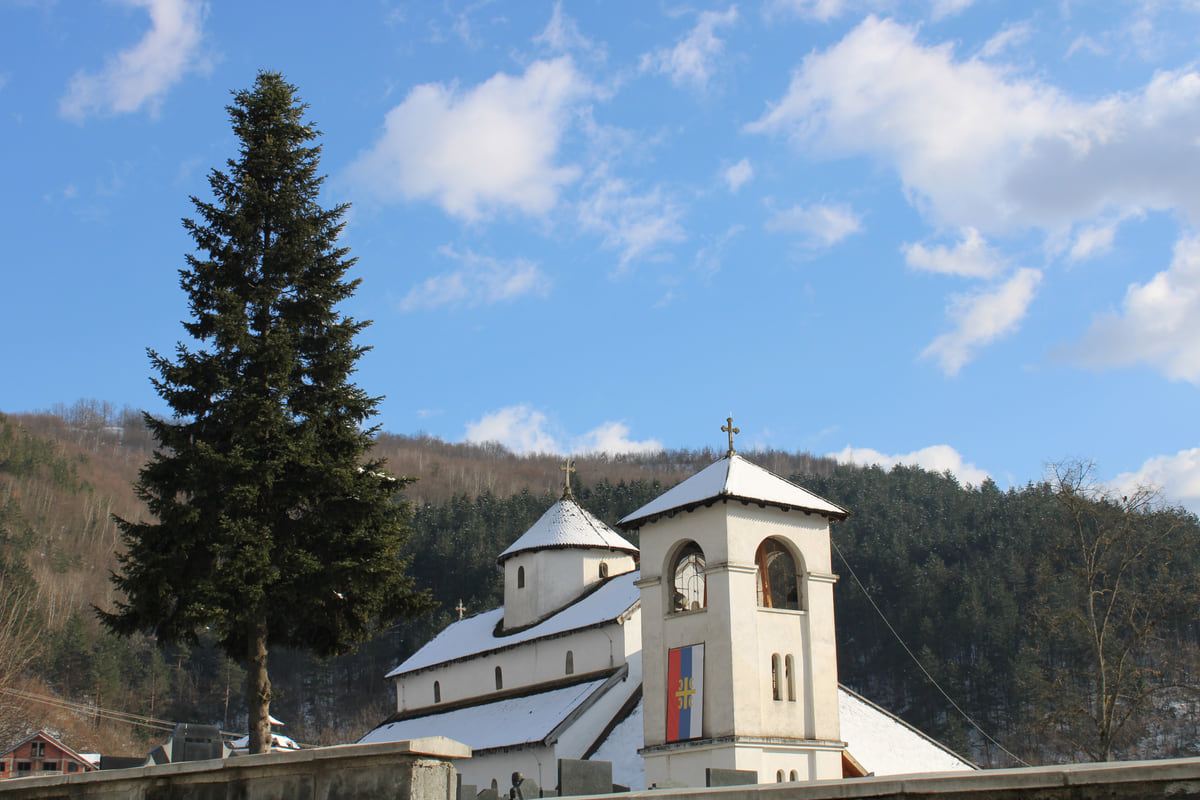
Northern Montenegro, Lim valley
Bijelo Polje, the Lim valley town between Bjelasica and the border
Bijelo Polje is the seat of a municipality of 38,662 people (2023) in the Lim valley, on the Belgrade to Bar road and railway, with Bjelasica to the south and Mount Lisa to the north. The old town sits at 575 metres. Its story goes back to 1252, when the bishopric of Hum moved here, its festivals date from 1970, and the country's longest cave lies within its boundaries.
In 30 seconds
Full read: 4 min
- Bijelo Polje is a municipality of 38,662 people in the Lim valley, at 575 metres.
- Four daily trains run from Podgorica for €5.20, and it's the rail crossing into Serbia.
- Its urban story begins in 1252, when the bishopric of Hum moved to St Peter's Church.
- Drama and poetry festivals since 1970, with jazz and tamburica in summer.
Bijelo Polje isn't a postcard town; it's a town for understanding the north. I'd use it as a stop on the train towards Serbia or as a base for north Bjelasica and the caves, and I'd come in summer, when the jazz festival and the painters' gathering by the Old Bridge coincide.

Before you go
What I would keep in mind
-
01 Getting there
The last big town before Serbia by rail
Bijelo Polje has a rail border crossing and four daily trains from Podgorica, taking 2 hr to 2 hr 24, for €5.20 in second class and €7.80 in first, on ZPCG's timetable.
-
02 Most beautiful
Miroslav's Gospel
The national tourist board says Miroslav's Gospel, which it calls the oldest Cyrillic manuscript, was written at the Church of the Holy Apostles Peter and Paul.
-
03 Worth the splurge
A tamburica festival in August
Since 2003 the town has hosted the International Tamburica Orchestra Festival, with 18 to 20 orchestras from eight to ten countries, the municipality says. The national tourist board places it in August.
-
04 My tip
The town of caves
The municipality holds the Đalovića, Novakovića and Osoja caves. Đalovića, the country's longest, isn't open for tourist visits.
Đalovića Cave -
05 Worth the splurge
Bihor and its three-storey mosque
Bijelo Polje was Bihor's trading centre. The heart of upper Bihor today is Petnjica, with a three-storey mosque and more than 500 rugs, according to the tourist board.
Petnjica -
06 Most beautiful
Silver and trade in the 13th century
Nearby, by Mojkovac, Brskovo minted silver coins and had Saxon miners. It declined in the 14th century.
Brskovo
What I would book
Bijelo Polje is the big town of the north-east, the one you pass through on the train to Serbia and where hardly anyone stops. I think it deserves more. It lies in the Lim valley, with Bjelasica to the south and Mount Lisa, 1,509 metres, to the north, and the municipality describes it as the transport, trading and cultural hub of northern Montenegro. It has a long, well-documented history, a cultural life I didn’t expect to find and, within its boundaries, the longest cave in Montenegro.
A town that began in 1252
The municipality dates the start of the town to the 13th century. In 1252 the seat of the bishopric of Hum moved from Ston, on the Dalmatian coast, to St Peter’s Church, and a settlement began to grow around this new religious centre where two routes crossed, one along the valley and one east to west. After the Ottomans arrived, St Nicholas’ Church at Nikoljac took over St Peter’s role, and in the notes of a Dubrovnik merchant from 1456-1458 the place appears as Nikolj-Pazar.
The present name means «white field». According to the municipality, the usual explanation is the white daisies that cover the meadows, and the national tourist board tells it the same way. The first written mention dates from 28 June 1589, in a document from the Kotor notarial registers, and in the 17th century the Turkish name, Akovo, with the same meaning, appears.
Old Bijelo Polje
The town you see today began to take shape in the early 19th century. In 1806, fearing the insurgents who had reached Sjenica, the Ottomans rebuilt a stone wall with loopholes around the core, with several gates and the main one by the old bridge over the Lim. The municipality describes quarters of narrow cobbled lanes, houses with a stone ground floor and a timber-framed upper storey, three-storey stone towers belonging to wealthy families and an old Ottoman-built bridge linking the town with Nikoljac.
By the late 19th century it was the trading and craft centre of the Bihor region, home to dyers, silversmiths, furriers, potters and blacksmiths, and its rakija sold in Berane, Sjenica and Pljevlja. Farm produce went on sale on Saturdays in the main square, and livestock at Nikoljac.
To sleep close to everything, search places to stay in Bijelo Polje on Expedia and filter by area before price.
The churches and Miroslav’s Gospel
The most visited church, according to the national tourist board, is that of the Holy Apostles Peter and Paul, where Miroslav’s Gospel was written, which the board presents as the oldest Cyrillic manuscript. St Nicholas’ Church, the one in this page’s photo, is the one that took over in Ottoman times. I’d see both without rushing, since their value lies in what they tell you about the town’s past.
Festivals all year round
What surprised me most when reading up on Bijelo Polje was its cultural calendar. The Montenegro Amateur Drama Festival has run since 1970 and lasts seven days; the Ratković Poetry Evenings, also going since 1970, award the Risto Ratković prize to poets from Montenegro, Serbia, Bosnia and Herzegovina and Croatia. Art Spring is held every 21 March since 1994, the jazz festival every July since 2006, and the International Tamburica Orchestra Festival, founded in 2003, brings together more than 200 musicians from eight to ten countries. In July, the «Stari most» art meeting draws painters from across Europe to the Old Bridge at Lozna Luka. The national tourist board adds the Days of Fish Soup, with accordion and clarinet.
If you are short on time, see the best tours in Bijelo Polje and pick one that fits your day.
Nature, caves and skiing
The municipality covers 923 km², its countryside cut by the valleys of the Ljuboviđa, Lješnica and Bistrica, all tributaries of the Lim. The national tourist board recommends fishing and kayaking on the Lim and mentions the small Majstorovina ski area, at 930 metres on the north side of Bjelasica. The state ski operator is planning a bigger one at Cmiljača.
The board calls Bijelo Polje «the town of caves». The best known is Đalovića Cave, the country’s longest, which for now can only be entered with a permit on organised expeditions; Novakovića and Osoja caves are nearby.
Getting there and where to stay
The train is the best way in. ZPCG’s timetable for 11 October 2026 shows four trains a day from Podgorica, taking 2 hr to 2 hr 24, for €5.20 in second class and €7.80 in first, calling at Kolašin and Mojkovac. Bijelo Polje is also the rail border crossing into Serbia, and the night train continues to Belgrade.
Accommodation is limited. The national tourist board lists the Hotel Dvor in the centre, and in 2024 the municipality logged 5,775 arrivals and 19,794 overnight stays according to MONSTAT, a fraction of Kolašin’s. The wider region is covered in northern Montenegro.
To sleep close to everything, search places to stay in Bijelo Polje on Booking.com and filter by area before price.
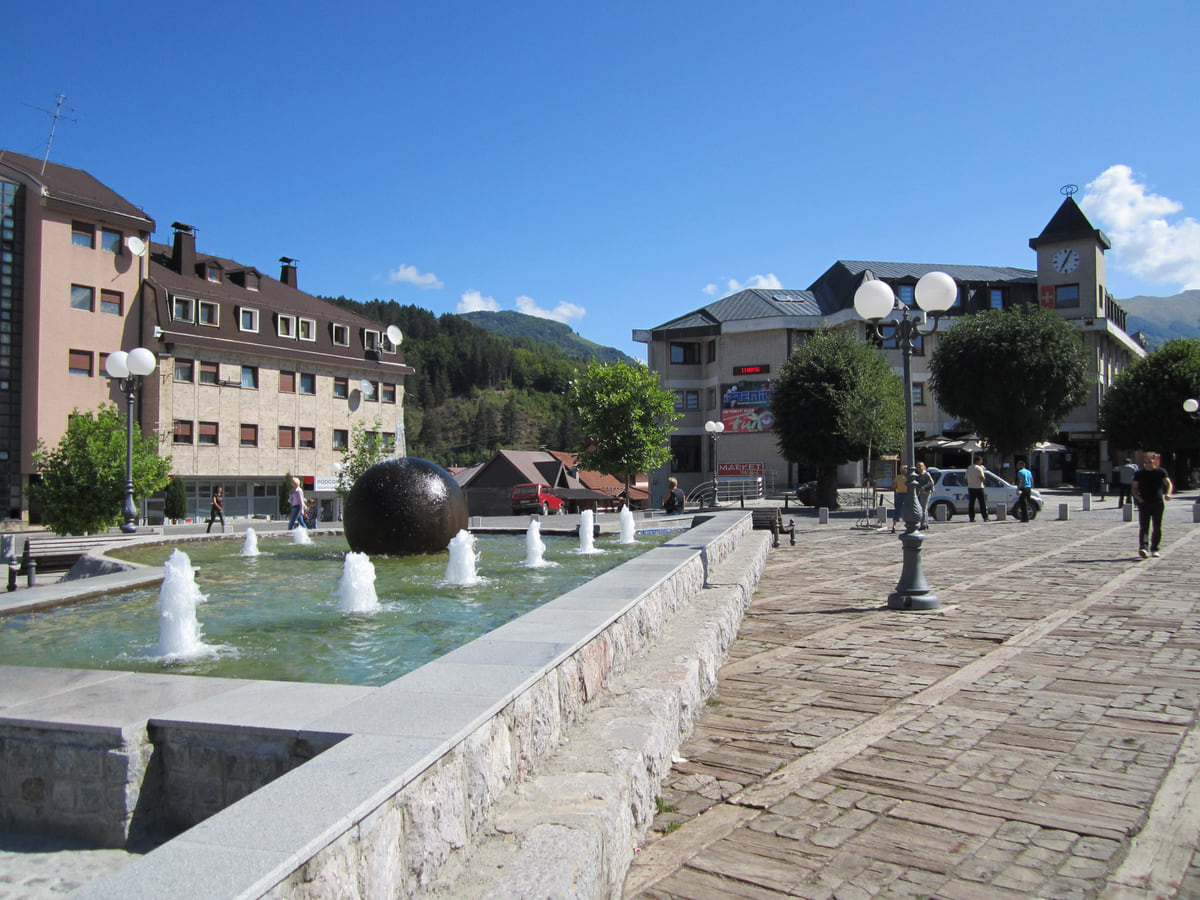
The main square in Kolašin with a fountain, a large stone sphere and mountain-style buildings under a clear sky
Trains from Podgorica to Bijelo Polje
| Leaves Podgorica | Arrives Bijelo Polje |
|---|---|
| 06:21 | 08:41 |
| 17:40 | 19:56 |
| 19:48 | 22:12 |
| 21:20 | 23:20 |
Source: ZPCG timetable checked on 11 October 2026. Fares €5.20 second class and €7.80 first. The 21:20 continues to Belgrade.
Bijelo Polje's festivals
| Festival | Since | When |
|---|---|---|
| Montenegro Amateur Drama Festival | 1970 | Seven days a year |
| Ratković Poetry Evenings | 1970 | Annual |
| Bijelo Polje Art Spring | 1994 | 21 March |
| International Tamburica Orchestra Festival | 2003 | August |
| Jazz festival | 2006 | July |
| «Stari most» art meeting | No start date given | July, at Lozna Luka |
Sources: Bijelo Polje municipality (festivals and cultural events) and the national tourist board, checked on 11 October 2026.
Test yourself
True or false?
0/3 Pick before you peek.
-
Bijelo Polje means «white field».
See the answer
True. The municipality puts it down to the white daisies common in the area; the Turkish name, Akovo, means the same.
-
Bijelo Polje is on Montenegro's coast.
See the answer
False. It's in the north-east, in the Lim valley, near the border with Serbia.
-
The Ratković Poetry Evenings have run since 1970.
See the answer
True. The municipality says they've been held since 1970 and award the Risto Ratković prize for the best book of poetry.
- Municipal population in 2023
- 38,662
- Altitude of the town
- 575 m
- The bishopric of Hum arrives
- 1252
- Second-class train from Podgorica
- €5.20
Map
Where Bijelo Polje is
The Adriatic coast runs from Herceg Novi to Ulcinj; the centre holds Podgorica, Cetinje and Lake Skadar, and the north, Durmitor and the Tara Canyon. Every number opens its guide.
 1Northern Montenegro 2Žabljak 3Šavnik 4Tara Canyon 5Plužine 6Mojkovac 7Pljevlja 8Kolašin 9Bijelo Polje 10Berane 11Andrijevica 12Petnjica 13Rožaje 14Plav 15Gusinje
 Map data © OpenStreetMap contributors (ODbL)
- 1Northern MontenegroMontenegro's northern region
- 2ŽabljakNorthern Montenegro, Žabljak municipality
- 3ŠavnikNorthern Montenegro, south of Durmitor
- 4Tara CanyonDurmitor National Park, northern Montenegro
- 5PlužineNorthern Montenegro, the Piva area
- 6MojkovacNorthern Montenegro, the Tara valley
- 7PljevljaTown in northern Montenegro
- 8KolašinNorthern Montenegro, Bjelasica
- 9Bijelo PoljeNorthern Montenegro, Lim valley
- 10BeraneNorthern Montenegro, Lim valley
- 11AndrijevicaNorthern Montenegro, upper Lim
- 12PetnjicaNorthern Montenegro, Bihor
- 13RožajeNorthern Montenegro, Ibar valley
- 14PlavNorthern Montenegro, upper Lim
- 15GusinjeNorthern Montenegro, Prokletije
What to see
What to see in Bijelo Polje
0 of 278 Montenegro guides
Your next stamp
- Đalovića Cave
- Caves
- Plav
- Kolašin
- Lipa Cave
- Podgorica
- Bar
- Belgrade to Montenegro
- Aman Sveti Stefan
- Budva Old Town
- Haj-Nehaj
- Kotor
- Lučice Beach
- Montenegro's coast
- Peaks of the Balkans
- Porto Montenegro
- Sea Dance Festival
- Splendid Conference & Spa Resort
- Stari Bar
- Ulcinj Old Town
- Bay of Kotor
- Budva Riviera
- Heroj submarine
- Iberostar Bellevue
- Independence Day
- Old olive tree of Mirovica
- Tivat
- Velika plaža
- Ada Bojana
- Beaches in Budva
- Eurostars Queen of Montenegro
- Herceg Novi
- Kotor Old Town
- Mount Rumija
- Igalo
- Kotor city walls
- Mogren Beach
- Montenegro Beach Resort
- Svač
- Vrmac
- Hiking
- Jaz Beach
- Kanli kula
- Luštica peninsula
- St Tryphon Cathedral
- Ulcinj salt pans
- Forte Mare
- Gornja Lastva
- Maritime Museum, Kotor
- Slovenska Beach
- Drobni Pijesak Beach
- Kotor viewpoints
- Mamula
- Žanjic beach
- Kotor cruise port
- Orjen
- Plavi horizonti beach
- Sveti Nikola Island
- Blue Cave
- Restaurants in Budva
- Restaurants in Kotor
- Canyoning
- Hotels
- Perast
- Sutomore
- Sveti Stefan
- Čanj
- Luxury hotels
- Our Lady of the Rocks
- Pržno
- Things to do
- Activities
- All-inclusive hotels
- Bar Riviera
- Bečići
- Hotel Palma
- St George island
- Dobrota
- Hladna uvala
- Most beautiful places
- Petrovac
- Crvena stijena
- Prčanj
- Prettiest villages
- Cycling
- Risan
- UNESCO sites
- Heritage Grand Perast
- Map
- Hyatt Regency Kotor Bay
- Where is it?
- Regions
- Cities
- Beaches in Bar
- Budva
- Central Montenegro
- Hotels in Budva
- Hotels in Kotor
- Iberostar Waves Herceg Novi
- Kitesurfing
- The name
- Beaches in Ulcinj
- Flag
- Hotels in Perast
- Palmon Bay Hotel & Spa
- Cathedral of the Resurrection
- One&Only Portonovi
- Population
- Sandy beaches
- Azul Beach Resort Montenegro
- Naturist beaches
- Size
- Stara Varoš
- Doclea
- Language
- Mimosa Festival
- Medun
- Religion
- Zipline
- Currency
- Museums in Podgorica
- Dajbabe Monastery
- EU membership
- History
- Restaurants in Podgorica
- Hotels in Podgorica
- Public holidays
- Avala Resort & Villas
- Beaches in Kotor
- Birdwatching
- Hotels in Ulcinj
- Kotor carnival
- Time zone
- Tivat beaches
- Tuzi
- Boka Night
- Dukley Hotel & Resort
- Facts
- Hotels in Tivat
- Zeta
- Herceg Novi beaches
- National parks
- Šipčanik
- Hotels in Herceg Novi
- Monasteries
- Fortresses
- Fly fishing
- Museums
- Canyons and waterfalls
- Lakes
- Mountains
- Montenegro and Croatia
- Beaches
- Boat trips
- Cetinje
- Montenegro and Albania
- Nightlife
- Ulcinj
- Weather
- Best time to visit
- Cetinje Monastery
- Kayaking
- Montenegro and the Balkans
- How to get there
- In summer
- King Nikola's Palace
- Sailing
- Biljarda
- Flights
- In winter
- Airports
- Museums in Cetinje
- New Year's Eve
- Lovćen
- Paragliding
- Tivat Airport
- Njegoš Mausoleum
- Podgorica Airport
- Dubrovnik to Kotor
- Kotor serpentine
- Njeguši
- Ferry to Italy
- Njeguši prosciutto
- Border crossings
- In January
- Where to stay
- In February
- Kamenari-Lepetane ferry
- Pavlova strana
- Getting around
- In March
- Rijeka Crnojevića
- In April
- Trains
- Buses
- In May
- Car hire
- In June
- Driving
- In July
- In August
- Taxis
- Distances
- In September
- In October
- Road trip
- Food
- In November
- Lake Skadar
- Scenic drives
- In December
- Kotor cable car
- Virpazar
- Where to eat
- Budva to Kotor
- Godinje
- Wine
- Podgorica to Kotor
- Vranjina
- Besac fortress
- Prices and budget
- On a budget
- Žabljak Crnojevića
- Danilovgrad
- Entry requirements
- Ostrog Monastery
- Tourist registration
- Customs
- Nikšić
- Crvena Stijena cave
- Safety
- Events
- Healthcare
- Northern Montenegro
- Mobile and roaming
- Žabljak
- Durmitor
- Plugs
- Black Lake
- With kids
- Bobotov Kuk
- Holidays
- Day trips
- Stećci tombstones
- Hotels in Žabljak
- Three-day itinerary
- Five-day itinerary
- Skiing in Montenegro
- One-week itinerary
- Skiing in Žabljak
- Šavnik
- Ten-day itinerary
- Nevidio Canyon
- Tara Canyon
- Tara rafting
- Đurđevića Tara Bridge
- Plužine
- Lake Piva
- Piva Monastery
- Mojkovac
- Brskovo
- Pljevlja
- Husein Pasha Mosque
- Hotels in Kolašin
- Skiing in Kolašin
- Biogradska Gora National Park
- Komovi
- Morača Monastery
- Morača Canyon
- Berane
- Andrijevica
- Petnjica
- Rožaje
- Lake Plav
- Gusinje
- Vusanje
- Prokletije National Park
Frequently asked questions
What is there to see in Bijelo Polje?
The Church of the Holy Apostles Peter and Paul, linked to Miroslav's Gospel, St Nicholas' Church, the Lim valley, the Majstorovina ski area on Bjelasica and the municipality's caves.
How do I get from Podgorica to Bijelo Polje?
By ZPCG train, with four departures a day taking 2 hr to 2 hr 24 and fares of €5.20 in second class and €7.80 in first. By road, via Kolašin and Mojkovac.
What does Bijelo Polje mean?
«White field». The municipality says the usual explanation is the white daisies that carpet the meadows; the name is first recorded on 28 June 1589, in a document from the Kotor notarial registers.
How many people live in Bijelo Polje?
The municipality had 38,662 residents at the 2023 census, according to MONSTAT, down from 46,051 in 2011.
Is there skiing near Bijelo Polje?
Yes. The national tourist board mentions the Majstorovina ski area, at 930 metres on the north side of Bjelasica. The state ski operator is planning a larger resort at Cmiljača.
Where should I stay in Bijelo Polje?
In the centre. The national tourist board lists the Hotel Dvor, in the heart of town. In 2024 the municipality logged 19,794 overnight stays, according to MONSTAT.
By
Tourism graduate with a master’s in Tourism Management and Planning from the University of Málaga, who has travelled across Europe. He writes every guide from official sources and his own judgement.
Published on . Facts checked on .
Sources
Some links in this guide are affiliate links: if you book through them, the site earns a commission at no extra cost to you. Affiliate disclosure
Photos: Steffpop (CC BY-SA 4.0); Pythonax (CC BY-SA 3.0), via Wikimedia Commons.