Twelve sights, each with my own score
The best places to visit in Andorra, ranked
Andorra's best sights are a long way from its shops. My top four are the Madriu valley, a World Heritage site since 2004, the Romanesque church of Sant Joan de Caselles, the Tristaina lakes and the stone village of Pal. The churches are free to enter apart from Santa Coloma, and the Canillo Tibetan bridge costs €17 outside summer.
In 30 seconds
Full read: 4 min
- Andorra's best sights are in the high valleys rather than the shopping streets.
- My number one is the Madriu valley, World Heritage since 2004 and with no roads at all.
- The Romanesque churches are free except Santa Coloma, which is sold with Espai Columba.
- The Canillo Tibetan bridge costs €17 outside summer and is reached only by its official bus.
If you're here on a ski package, I'd still carve out one afternoon for the capital's old town and Santa Coloma. In summer, I'd do it the other way round, with mornings in the high valleys and Andorra la Vella once the light has gone off the peaks.

Before you go
What I would keep in mind
-
01 Most beautiful
A whole valley with no roads
The Madriu-Perafita-Claror covers 4,247 hectares, close to 10% of the country, and you can only enter on foot along old stone paths. It's Andorra's only World Heritage site and, for me, the best thing in it.
Madriu valley -
02 To save money
Romanesque churches cost nothing
The tourist board says every church visit is free apart from Santa Coloma, which goes with the Espai Columba museum. For museums, the Passmuseu takes 50% off three of your choice.
Romanesque churches in Andorra -
03 Worth the splurge
The Tibetan bridge plus the glass viewpoint
For €20 (€22 from 18 July to 13 September) you get the 603 m bridge and the Roc del Quer viewpoint together. The only way in is the official shuttle bus from Canillo, so don't plan on parking at the bridge.
Canillo Tibetan bridge -
04 Getting there
Plan your days valley by valley
The national bus reaches every parish for €1.90 to €4.80 a ticket, and in summer an electric train runs up the Incles valley. Grouping sights by valley saves you half a day on the road.
getting around Andorra
What I would book
- Places to stayBooking.com The capital, for buses to everything National bus lines leave Andorra la Vella for Canillo, Ordino and La Massana, and Casa de la Vall is on your doorstep.
- Places to stayBooking.com Ordino, for the lakes and villages It puts you close to Tristaina, La Cortinada and Casa d'Areny-Plandolit, away from the traffic of the capital.
My ranking, scored
Places to visit in Andorra, my ranking
These scores are my own. I reward what you wouldn't find in any other Pyrenean valley and what each visit gives back for the effort, and I mark down anything whose price I can't confirm.
0 of 12 seen
-
Madriu-Perafita-Claror valley
World Heritage since 2004, 12 km end to end, and a landscape of stone barns and dry-stone walls that no road has ever reached. Nothing else in Andorra is quite like it.
9.6 out of 10
-
Sant Joan de Caselles
An 11th and 12th-century church in Canillo with a free-standing Lombard bell tower and a Renaissance altarpiece. One of the big three of Andorran Romanesque, and free.
9.2 out of 10
-
Tristaina lakes
Three lakes above 2,300 m reached from the Coma d'Arcalís in Ordino. If I could only do one high-mountain walk in Andorra, this would be it.
9.1 out of 10
-
Pal
A village of stone, timber and slate above 1,500 m, with Sant Climent and its three-storey bell tower. The one that has kept its mountain-village character best.
8.8 out of 10
-
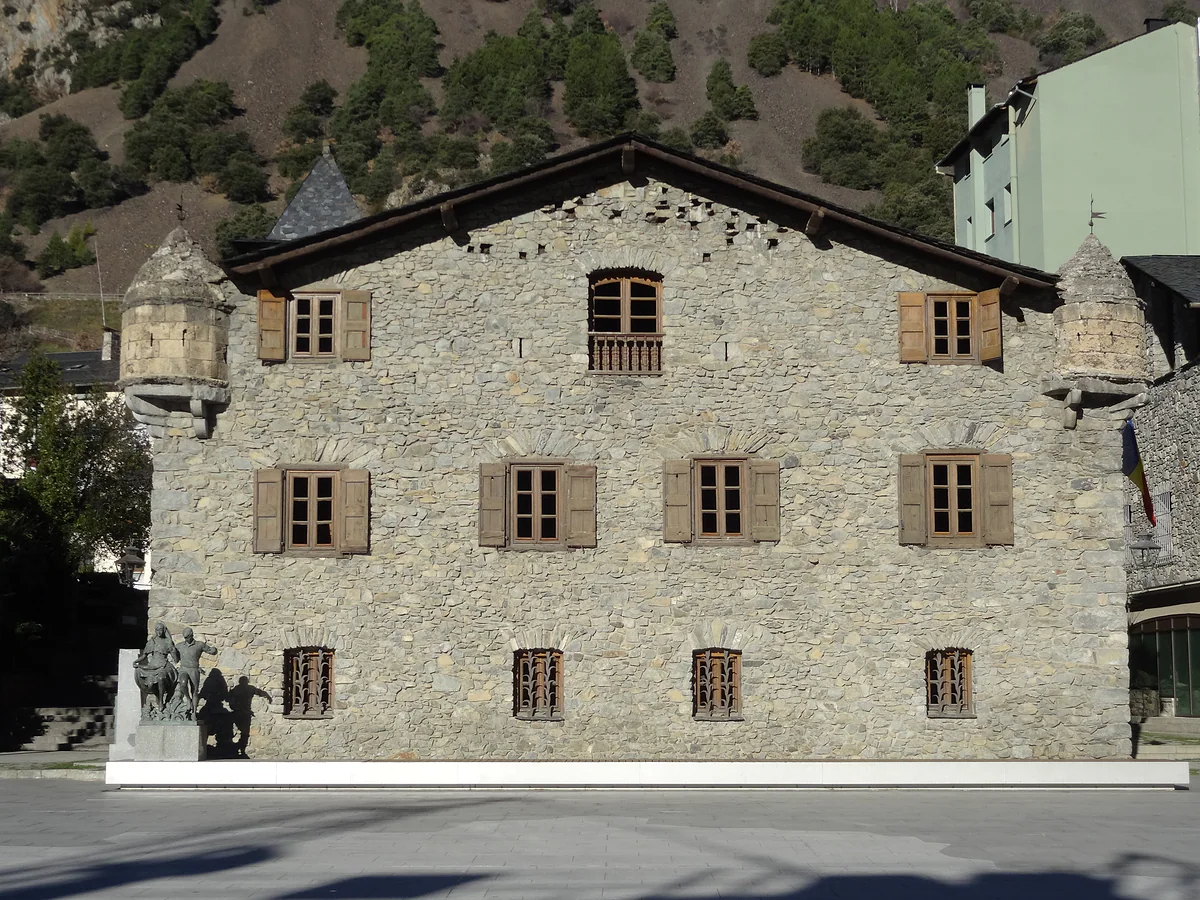
Casa de la Vall
The Busquets family house of the late 16th century, seat of the General Council from 1702 to 2011, with the Cupboard of the Seven Keys. This is where the country makes sense.
8.7 out of 10
-
Santa Coloma and Espai Columba
A church of pre-Romanesque origin with a round bell tower and a projection of its lost murals, whose 12th-century originals hang in the museum across the road.
8.5 out of 10
-
Incles valley
A U-shaped glacial valley between El Tarter and Soldeu, closed to cars in high summer, with an electric train up to the head and a flat 2.6 km path.
8.4 out of 10
-
Roc del Quer viewpoint
A 20 m glass walkway, 12 m of it cantilevered over the Canillo valley. It shares a ticket with the Tibetan bridge.
8.3 out of 10
-
Engolasters lake and Sant Miquel
The most accessible of the big lakes, 7 hectares and off limits for swimming, with the church of Sant Miquel and its 17 m tower on the meadow nearby.
8.2 out of 10
-
Meritxell Sanctuary
The patron saint's sanctuary, rebuilt by Ricardo Bofill after the 1972 fire and opened in 1976, with the old church beside it. I find its story more interesting than its architecture.
7.9 out of 10
-
Casa d'Areny-Plandolit
A 17th-century manor house in the middle of Ordino, now a museum. Worth an hour if you're already in the valley for the lakes.
7.7 out of 10
-
Caldea
Thermal water that rises at 65-70 °C and is cooled to 34-37 °C, inside the glass building in Escaldes. I mark it down only because I couldn't read its official prices.
7.5 out of 10
Most British visitors see Andorra from a chairlift or a shop window, and both are fair enough. But the country has a second face that the ski brochures rarely show, with glacial lakes, churches that have stood for nine centuries and a valley where no car has ever driven. This ranking is for that side of Andorra. I’ve scored twelve places on what they offer that you couldn’t get elsewhere in the Pyrenees and on the effort they ask, and I tell you which cost nothing.
My top three, and not a shop among them
In first place is the Madriu-Perafita-Claror valley. It covers 4,247 hectares, close to a tenth of the country, spread over four parishes. What wins me over isn’t the view, although there is one, but that it’s a landscape shaped over centuries by shepherds and ironworkers and never reached by tarmac. UNESCO made it a World Heritage site in 2004 and it’s still the only one in Andorra. The usual way in is from the Engolasters road.
Second comes Sant Joan de Caselles in Canillo, an 11th and 12th-century church whose Lombard bell tower stands apart from the nave, with a Renaissance altarpiece inside. The tourist board puts it among the three key Romanesque monuments alongside Sant Miquel d’Engolasters and Santa Coloma, and I’d go along with that. Third are the Tristaina lakes, three of them above 2,300 m, reached from the Coma d’Arcalís. If you only walk once in the high mountains here, make it this one.
The house that explains the country
If you only go inside one building in the capital, make it Casa de la Vall. The Busquets family built it at the end of the 16th century, the General Council bought it in 1702 and met there until 2011. Inside is the Cupboard of the Seven Keys, and the motto of the coat of arms is on the facade. To me it’s the clearest answer to why Andorra is a country rather than a county.
In the same parish you’ll find Santa Coloma, a church of pre-Romanesque origin with a round bell tower. A projection brings back the murals that were stripped from its walls in the 20th century, and the 12th-century originals are displayed in the Espai Columba across the road. It’s the only church on my list that charges, because the visit comes with the museum.
Villages and valleys to slow the pace
Pal is my favourite village in the country. It sits above 1,500 m, all stone, timber and slate, and its church of Sant Climent, from the late 11th century, has Andorra’s only three-storey bell tower. Over in Ordino, La Cortinada has Cal Pal, a house dated 1347, and the church of Sant Martí with Romanesque paintings. The rest are in the prettiest villages in Andorra.
The Incles valley is the easy summer option. It’s a glacial valley between El Tarter and Soldeu, and for the core of the summer season (roughly mid-June into the first days of September) cars are kept out and an electric train carries you to the head. The Obac path is 2.6 km and graded easy, and routes lead on from there to the Juclar lakes, the largest in the country at 21 hectares.
Is the Tibetan bridge worth it?
Yes, as long as you have a head for heights and accept that it’s an attraction rather than wilderness. The Canillo bridge is 603 m long and hangs 158 m above the Vall del Riu, and its operator describes it as one of the longest in the world. Tickets are €17, or €19 from 18 July to 13 September, and the only access is the official bus from Canillo. The pack with the Roc del Quer viewpoint, a 20 m glass walkway with 12 m in thin air, costs €20. I’d do both the same morning.
The ones I’d leave till last
Meritxell is the sanctuary of Andorra’s patron saint. The old one burnt down on 8 September 1972 and Ricardo Bofill designed the new one, which opened in 1976. It matters more to Andorrans than it does to me as a building. Casa d’Areny-Plandolit in Ordino is a 17th-century manor house turned museum, a good stop if you’re in that valley anyway.
Caldea comes last for a practical reason. The thermal water rises at 65 to 70 °C and the glass building in Escaldes has become one of the country’s calling cards, but I couldn’t read its official prices, and I won’t recommend something without knowing what it costs. If you’re after activities rather than sights, see things to do in Andorra, and to fit it all into a short break, try a weekend in Andorra. For the overall picture first, with the seven parishes, the weather and the paperwork, start with my Andorra travel guide; the UNESCO-listed side, the Madriu valley and the fallas, has its own page on Andorra’s UNESCO World Heritage. My favourite landscapes, rather than sights, are in most beautiful places in Andorra.
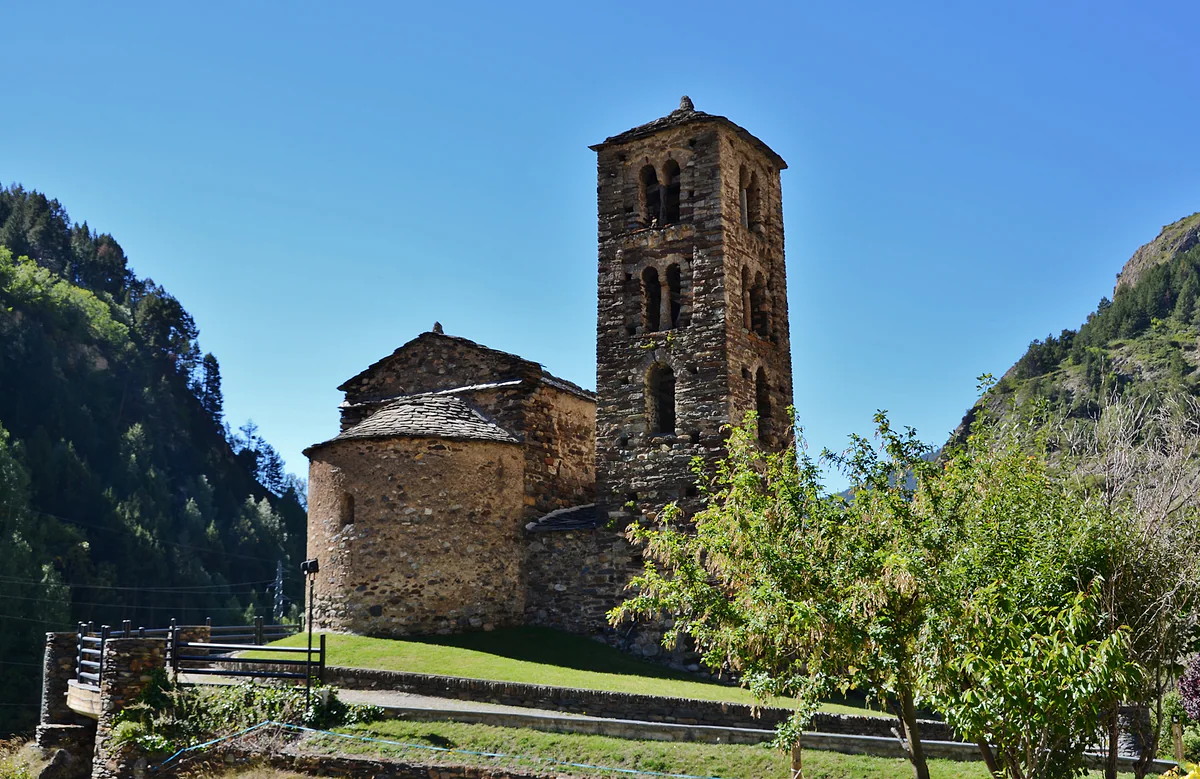
The rounded apse and bell tower of Sant Joan de Caselles, one of the best-preserved Romanesque churches
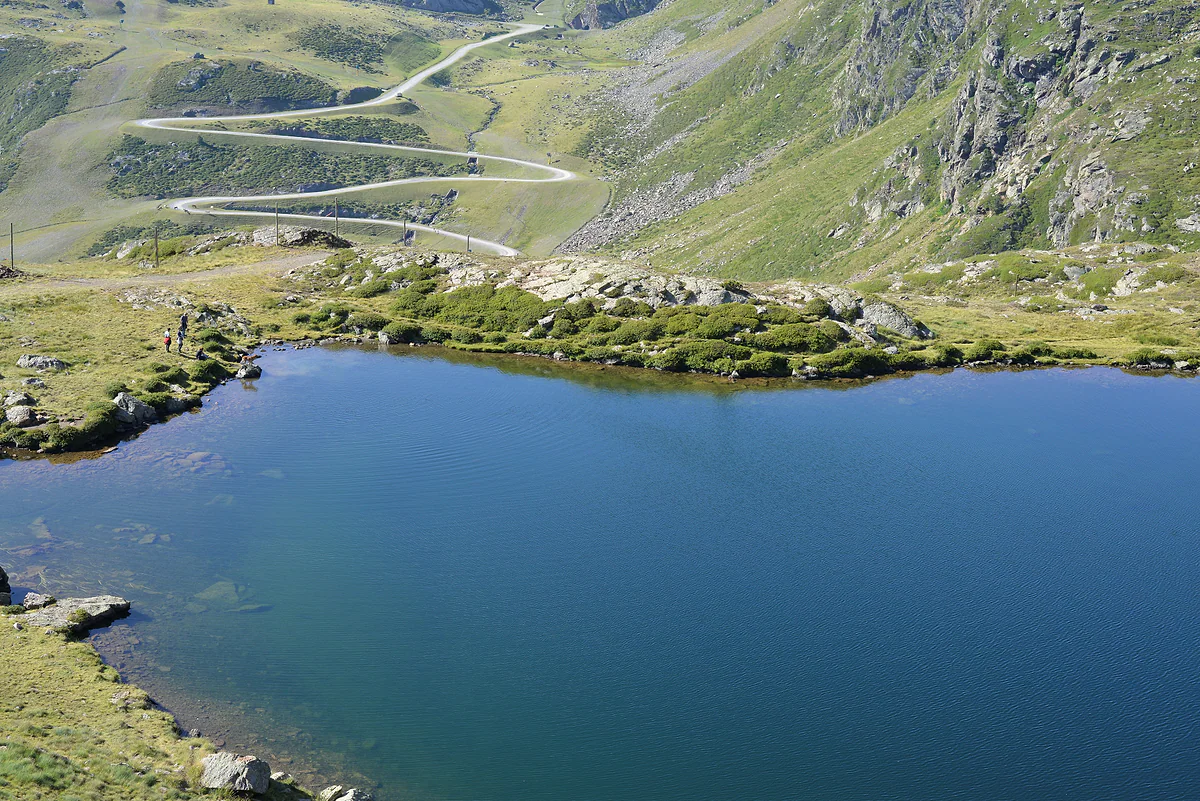
One of the Tristaina lakes, deep blue water with the zigzag road to Arcalís on the slope behind
What you pay and what you don't
| Sight | Price | Note |
|---|---|---|
| Romanesque churches | Free | Except Santa Coloma, sold with Espai Columba |
| Romànic de bat a bat | Guided visits in July and August | Six churches; bookings on (+376) 839 760 |
| Canillo Tibetan bridge | €17 (€19 from 18-7 to 13-9) | Under-12s €14 (€16); under-5s free |
| Bridge and Roc del Quer pack | €20 (€22 in summer) | Viewpoint only, €6 |
| Museums | Passmuseu, 50% off three | From tourist offices or museums |
| Madriu valley | Free on foot | No cars inside; paid track to Claror |
Official prices checked on 28-09-2026. Caldea, Casa de la Vall and the museums don't publish prices I've been able to read, so I don't quote them.
Test yourself
True or false?
0/4 Pick before you peek.
-
You have to buy a ticket to enter Andorra's Romanesque churches.
See the answer
False. The tourist board says all church visits are free except Santa Coloma, which is visited together with the Espai Columba museum.
-
The Madriu valley is Andorra's only World Heritage site.
See the answer
True. It was inscribed in 2004 as a cultural landscape. Andorra's other UNESCO listings are intangible heritage, such as the fire festivals, or the Ordino Biosphere Reserve.
-
You can drive right up to the Canillo Tibetan bridge.
See the answer
False. Its official website says access is only by the official bus that leaves from Canillo.
-
Engolasters is Andorra's most accessible lake, but swimming is banned.
See the answer
True. The tourist board calls it the most accessible in the country and says bathing is forbidden, because it feeds the FEDA hydroelectric plant.
- Area of the Madriu valley
- 4,247 ha
- Length of the Canillo Tibetan bridge
- 603 m
- Minimum height of the Tristaina lakes
- 2,300 m
- Entry to the churches, except Santa Coloma
- €0
0 of 269 Andorra guides
Your next stamp
- Most beautiful places
- Viewpoints
- Around Andorra
- Where to stay
- On a budget
- Museums in Andorra
- UNESCO World Heritage
- Things to do
- Prettiest villages
- Andorra la Vella
- Map
- Escaldes-Engordany
- Where is Andorra?
- Is Andorra a country?
- Parishes
- Casa de la Vall
- Margineda bridge
- Old town
- Santa Coloma church
- Towns and villages
- Population
- Size
- Mountains
- Language
- Andorra in one day
- Canillo
- Espai Columba
- History
- Margineda rock shelter
- Sant Esteve church
- Co-princes
- Soldeu
- Weekend break
- Andorra in 3 days
- El Tarter
- Political system
- Andorra in 4 days
- Flag
- Ransol
- A week in Andorra
- Facts
- Prats
- El Forn
- Public holidays
- Sant Julià de Lòria
- Currency and payments
- L'Aldosa de Canillo
- Els Plans
- EU and Schengen
- Bordes d'Envalira
- Entry requirements
- Prices and budget
- Sant Joan de Caselles
- Santa Coloma
- Ski holidays
- Tourist tax
- Mobile and roaming
- Sant Serni de Canillo
- Tourist information
- Healthcare
- Meritxell Sanctuary
- With a dog
- Packing list
- Safety
- How to get there
- Scams
- From Barcelona
- Bus from Barcelona
- Day trip from Barcelona
- From Madrid
- From Toulouse
- Encamp
- Flights
- La Margineda
- La Massana
- Roc del Quer viewpoint
- Romanesque churches
- Andorra-La Seu airport
- Canillo Tibetan bridge
- Pal
- Pas de la Casa
- Arinsal
- Driving
- Grau Roig
- Mon(t) Magic
- Nearest airports
- By train
- Erts
- Les Bons
- Palau de Gel
- Road conditions
- Motorcycle Museum
- Parking
- Sispony
- Vila
- Anyós
- Incles valley
- La Mosquera
- Petrol
- El Tremat
- Getting around
- Juclar lakes
- L'Aldosa (La Massana)
- Buses
- Els Cortals d'Encamp
- Sant Climent de Pal
- Bus station
- Sant Cristòfol d'Anyós
- Casa Rull
- Shopping
- Farga Rossell
- Sant Vicenç d'Enclar
- Santa Eulàlia d'Encamp
- What to buy
- Customs allowances
- La Massana Còmic
- Sant Romà de les Bons
- Car Museum
- Cigarettes
- Comapedrosa
- Electronics
- Alcohol
- Casa Cristo
- Clothes and sports shops
- Iron Route
- Coll d'Ordino
- Perfume
- Sacred Art Museum
- Shopping centres
- Funicamp
- Supermarkets
- Avinguda Meritxell
- Encamp Tibetan bridge
- Avinguda Carlemany (Vivand)
- Envalira pass
- Auvinyà
- Bici Lab Andorra
- Ordino
- Skiing
- With kids
- Zip lines
- Fontaneda
- For couples
- La Cortinada
- Ski pass
- Via ferratas
- Climbing
- Llorts
- Nagol
- Nightlife
- Ski season
- El Serrat
- Grandvalira
- Horse riding
- Juberri
- Aixovall
- Mountain biking
- Pal Arinsal
- Sornàs
- Aixirivall
- Ansalonga
- Ordino Arcalís
- Road cycling
- Bixessarri
- Naturland
- Segudet
- Arans
- Llumeneres
- Tobotronc
- Casa d'Areny-Plandolit
- Cross-country skiing
- Miniature Museum
- Skiing with kids
- Cal Pal
- Free walking tour
- Pessons lakes
- Sant Serni de Nagol
- Ski lessons
- Canòlich Sanctuary
- Hotels in Andorra la Vella
- Sant Martí de la Cortinada
- Ski hire
- Hotels in Escaldes
- Juberri Gardens
- Llorts iron mine
- Webcams
- Hotels in Soldeu
- Snow report
- Sorteny valley
- Hotels in El Tarter
- Tristaina lakes
- Hotels in Canillo
- Night skiing
- Tristaina solar viewpoint
- Freeride
- Hotels in Encamp
- Hotels in Pas de la Casa
- Ski touring
- Hotels in La Massana
- Snowshoeing
- Hotels in Arinsal and Pal
- Snow activities
- Après-ski
- Engordany
- Hotels in Ordino
- Medieval bridges
- Nature parks
- Els Vilars
- Hotels in Sant Julià de Lòria
- Lakes
- Sant Romà dels Vilars
- Where to eat
- Caldea
- Restaurants in Andorra la Vella
- Borda restaurants
- Inúu
- Cheap hotels
- Food
- Hiking
- Spas and thermal baths
- Weather and climate
- Engolasters lake
- Pas de la Casa weather
- Spa hotels
- Trinxat
- Events
- Luxury hotels
- Sant Miquel d'Engolasters
- Ski resort weather
- Wine
- Best time to visit
- Family hotels
- Madriu valley
- All inclusive
- Estany de l'Illa
- In winter
- Apartments
- Coronallacs
- In spring
- Ski World Cup
- Christmas
- Hostels
- In summer
- Mountain huts
- Camping and rural stays
- Easy walks
- In autumn
- New Year
- Family walks
- Festes majors
- In January
- GR11 and other GRs
- In February
- National day
- GRP round Andorra
- In March
- Midsummer fire festival
- Carnival
- In April
- In May
- Travessa d'Encamp
- In June
- In July
- In August
- In September
- In October
- In November
- In December
Frequently asked questions
What is Andorra best known for?
Skiing and duty-free shopping, mostly. I'd add the Romanesque churches, which are free to visit, and the Madriu valley, the country's only World Heritage site since 2004.
What are the top attractions in Andorra?
My top five are the Madriu valley, Sant Joan de Caselles, the Tristaina lakes, the village of Pal and Casa de la Vall. For something with a thrill, add the 603 m Tibetan bridge at Canillo.
Is Andorra worth visiting in summer?
Very much so. The tourist board recommends walks above 1,700 m from late June to late September, and the Incles valley runs an electric train from mid-June to early September.
What is there to see in Andorra la Vella?
Casa de la Vall, the church of Sant Esteve and the old town. In the same parish you'll find Santa Coloma and the Espai Columba, with 12th-century frescoes.
How many days do you need in Andorra?
A long weekend covers the capital and one valley. For the Madriu, Ordino and Canillo at a sensible pace, I'd allow three or four days.
Are Andorra's churches free to visit?
Yes, according to the tourist board, except Santa Coloma, which you visit together with the Espai Columba museum. Six churches also open for guided visits in July and August.
By
Tourism graduate with a master’s in Tourism Management and Planning from the University of Málaga, who has travelled across Europe. He writes every guide from official sources and his own judgement.
Published on . Updated on . Facts checked on .
Sources
Photos: Don-vip (CC BY-SA 3.0); Maria Rosa Ferre (CC BY-SA 2.0); Alberto-g-rovi (CC BY 3.0), via Wikimedia Commons.