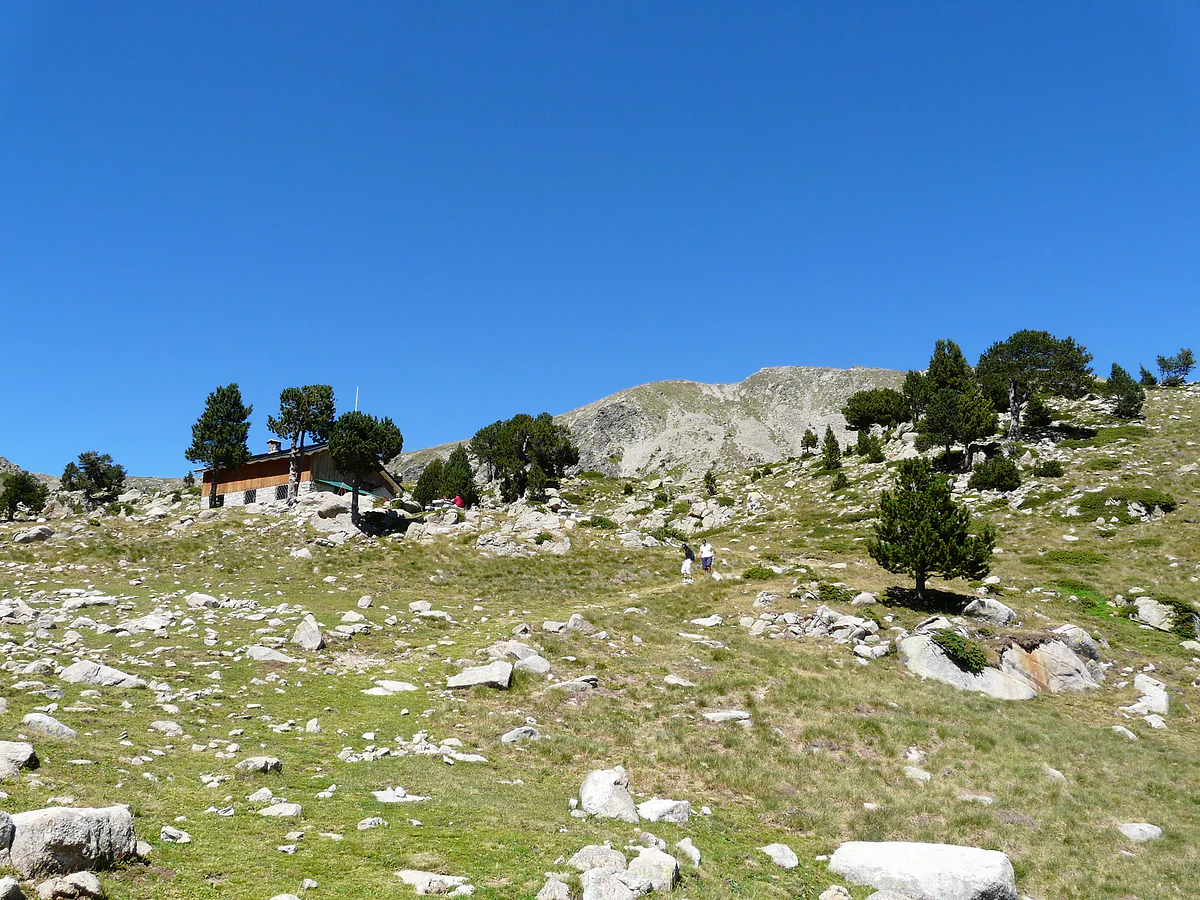
Sleeping in the Andorran mountains
Mountain huts in Andorra, which are staffed and which aren't
Andorra has around thirty mountain huts, all reached only on foot and open all year. Four are staffed with meals, Comapedrosa, Borda de Sorteny, l'Illa and Juclar; the rest are free unstaffed huts with a fireplace, table and benches. Collect stamps in the free hut passport from tourist offices and you earn a diploma.
In 30 seconds
Full read: 3 min
- Andorra has around thirty mountain huts, open all year and reached only on foot.
- Four are staffed, Comapedrosa, Borda de Sorteny, l'Illa and Juclar.
- The unstaffed huts are free, with a fireplace, table and benches.
- The hut passport is free and earns a diploma if you complete the GRP, GR7 or GR11.
For a first night in the Andorran mountains, I'd pick a staffed hut, and on paper my favourite is l'Illa. The free huts are for people who are happy with a sleeping bag, their own food and the chance of finding them full.

Before you go
What I would keep in mind
-
01 To save money
The unstaffed huts are free
Canillo's unstaffed huts are free and open all year, according to the parish council. They have a fireplace, table and benches, and not much else.
-
02 Worth the splurge
Bed, shower and dinner at 2,488 m
The four staffed huts have showers, mattresses, bedding and basic meals. L'Illa, at the head of the Madriu, sleeps about 60.
Estany de l'Illa -
03 My tip
Get the hut passport before you go
It's free from any tourist office. Stamp it at each hut on the GRP, GR7 or GR11 and exchange it in Andorra la Vella for a diploma and a gift.
GRP round Andorra -
04 Getting there
All four staffed huts in one loop
The Coronallacs links the four staffed huts in 92 km and five stages, starting and finishing in Escaldes-Engordany.
Coronallacs trek
Sleeping in a hut is the best way to see the Andorran mountains with nobody else around, at dusk and at dawn. The country has a good network, but the huts aren’t all alike, and the difference between a staffed hut and a free one changes everything about what goes in your rucksack.
Around thirty, and only four staffed
Andorra Turisme mentions up to 30 mountain huts on one page and 29 on another, so I’ll settle for “around thirty”. All are reached only on foot, most in remote spots, though a few are less than an hour’s walk from the road. And all of them are open all year.
Only four are staffed. They are Comapedrosa in La Massana, Borda de Sorteny in Ordino, l’Illa at the head of the Madriu, and Juclar in Canillo. The tourist board says these four have showers, mattresses, bedding and basic meals. They’re the huts the Coronallacs trek links in five stages.
The staffed huts, one by one
L’Illa stands at 2,488 m on the shore of the country’s second-largest lake, and according to the Madriu’s official site it’s open all year with about 60 places, ten of them in the free section. Bookings go through refugidelilla.ad. If you’re only spending one night in an Andorran hut, this is the one I’d look at first, and I explain how to get there in Estany de l’Illa.
Juclar, at 2,310 m, has 50 places and is staffed between 1 June and 30 September, as the Comú de Canillo puts it, and you reach it from the Incles valley below the Juclar lakes. Comapedrosa, at 2,265 m, sits beside the Estany de les Truites and offers beds and meals in summer. Borda de Sorteny, at 1,965 m, is inside the Sorteny nature park, near its botanical garden.
What are the unstaffed huts like?
They’re stone shelters without a warden, free and basic. The ones in the Madriu valley have a fireplace, table, benches and sometimes a log porch, and a few have water close by. Fontverd, at 1,880 m, takes about 14 people; Claror, at 2,280 m, about 20; Perafita and Riu dels Orris 10 each. In Canillo, the council lists Cabana Sorda with 20 places, Cóms de Jan and Vall del Riu with 10, and La Portella and Ribaescorxada with 6.
There’s no booking and no dinner. Bring a sleeping bag, food, something to cook on and the expectation that it might be full. For me they’re ideal for the second night of a trek, not the first. Treat them kindly, too, since they rely on walkers leaving them tidy, with logs replaced and rubbish carried out, for the next people who arrive tired and cold.
Before you set off
Andorra Turisme’s advice is to save routes over 1,700 m for high summer, roughly the last days of June to the last days of September, pushing into May or October only if the weather plays along. Almost every hut I mention here sits above that line. Every route sheet repeats the same advice, carry enough food and water, and there’s nothing to buy at an unstaffed hut.
Health cards from the UK or the EU count for nothing up there, so for nights in the mountains I’d carry insurance that covers rescue. Emergencies are on 112, and fire and rescue on 118.
The hut passport
It’s a free booklet you can pick up at any tourist office. If you walk the GRP, GR7 or GR11, you stamp the box for each hut with the marker left inside, and at the end you take it to the National Tourist Office in Andorra la Vella. They ask a few questions to check your route and, if all’s well, hand over a diploma and a small gift. The most complete challenge is the GRP round Andorra.
Although the huts are open all year, Andorra Turisme advises doing these routes in spring or summer and, in winter, checking conditions and access before setting out. In the Madriu, camping needs permission from the parish council and is banned outright on the Sant Julià side, so a hut is often your only way to sleep high. That alone is a good reason to plan your nights around them from the start. If what you want is a cheap bed down in the valley, compare with the hostels in Andorra.
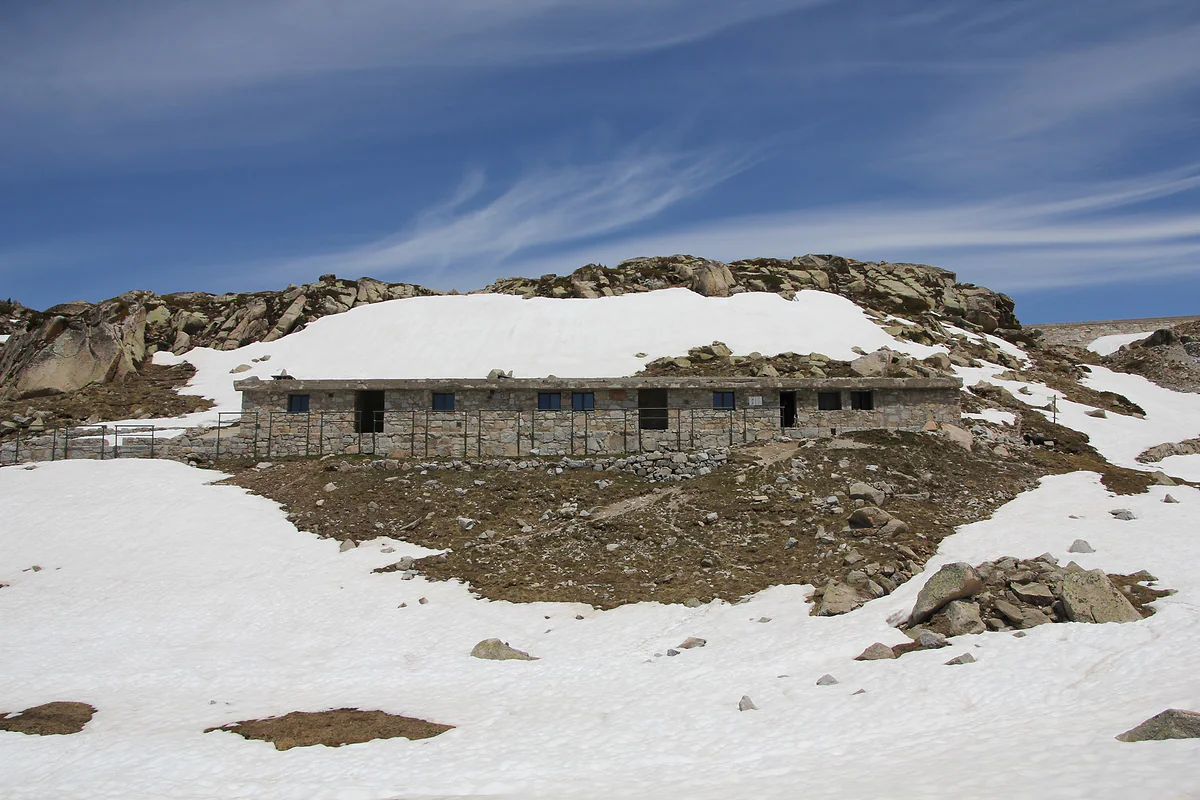
The Refugi de l'Illa at the head of the Madriu valley, its stone building surrounded by snow
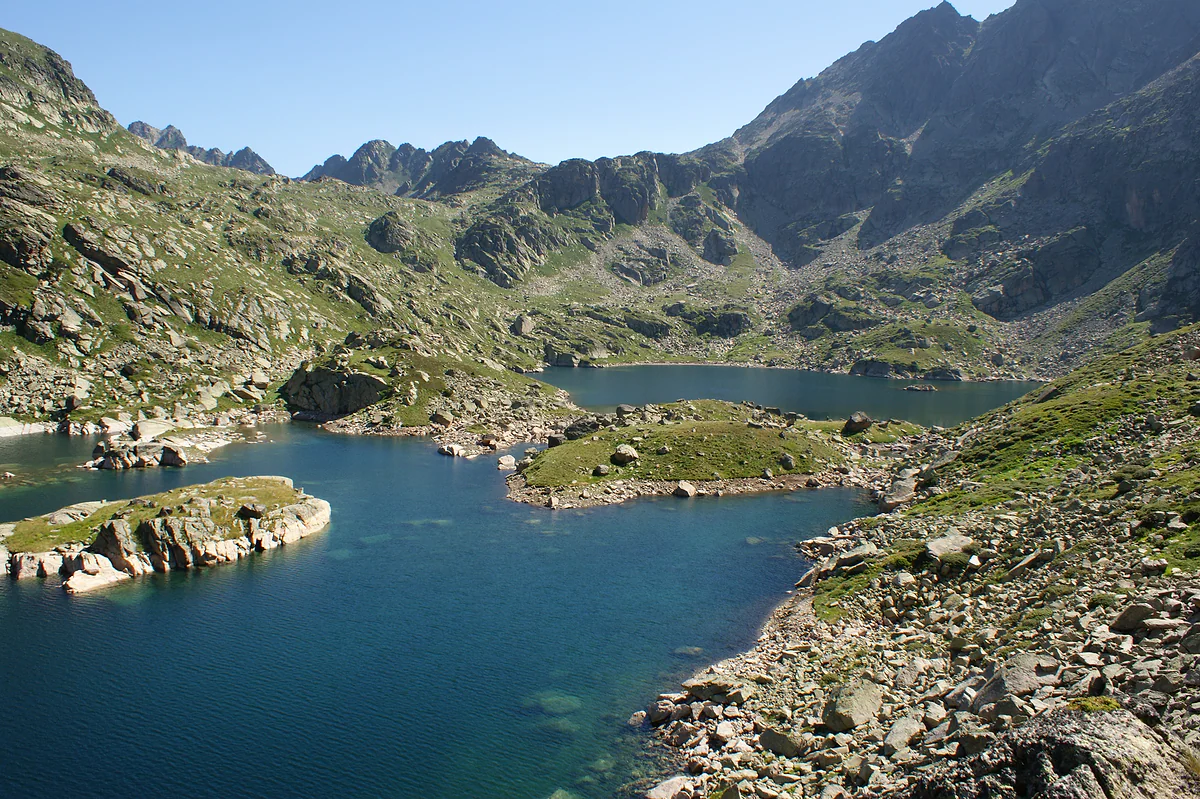
The Juclar lakes, a glacial lake of clear blue water dotted with islets and ringed by granite peaks
Andorra's staffed mountain huts
| Hut | Altitude | Area | Details |
|---|---|---|---|
| L'Illa | 2,488 m | Head of the Madriu | Open all year, about 60 places (50 staffed, 10 free) |
| Juclar | 2,310 m | Canillo, Incles valley | 50 places, staffed 1 June to 30 September per the council |
| Comapedrosa | 2,265 m | La Massana, by the Estany de les Truites | Beds and meals in summer |
| Borda de Sorteny | 1,965 m | Ordino, Sorteny park | The nature park's staffed hut |
Andorra Turisme, Comú de Canillo and the Madriu valley's official site, checked on 29-09-2026. Altitudes from the Coronallacs route sheet.
Some unstaffed huts
| Hut | Altitude | Places | Area |
|---|---|---|---|
| Fontverd | 1,880 m | About 14 | Madriu |
| Claror | 2,280 m | 20 | Madriu |
| Perafita | 2,200 m | 10 | Madriu, by the Estany de la Nou |
| Riu dels Orris | 2,230 m | 10 | Madriu |
| Cabana Sorda | Not given | 20 | Canillo |
| Cóms de Jan | 2,215 m | 10 | Canillo |
| La Portella | 2,265 m | 6 | Canillo, from Soldeu or Envalira |
Madriu valley's official site (source, Andorran government) and Comú de Canillo. Not the full national list, which I couldn't find from an official source.
Test yourself
True or false?
0/3 Pick before you peek.
-
Every mountain hut in Andorra is staffed and serves meals.
See the answer
False. Only four are staffed. The rest are free unstaffed huts with a fireplace, table and benches.
-
Andorra's mountain huts close in winter.
See the answer
False. Andorra Turisme lists them as open all year, although it recommends going in spring or summer.
-
You exchange the hut passport for a diploma in Andorra la Vella.
See the answer
True. You present it stamped at the National Tourist Office in Andorra la Vella, which gives a diploma and a gift after a short quiz.
- Mountain huts in the country
- ~30
- Staffed huts
- 4
- Altitude of the l'Illa hut
- 2,488 m
0 of 269 Andorra guides
Your next stamp
- Hostels
- Where to stay
- Facts
- Hiking
- Coronallacs
- On a budget
- Museums in Andorra
- Skiing with kids
- Places to visit
- Things to do
- Most beautiful places
- Prettiest villages
- Andorra la Vella
- UNESCO World Heritage
- Map
- Escaldes-Engordany
- Where is Andorra?
- Is Andorra a country?
- Parishes
- Casa de la Vall
- Margineda bridge
- Old town
- Santa Coloma church
- Towns and villages
- Population
- Size
- Mountains
- Language
- Andorra in one day
- Canillo
- Espai Columba
- History
- Margineda rock shelter
- Sant Esteve church
- Co-princes
- Soldeu
- Weekend break
- Andorra in 3 days
- El Tarter
- Political system
- Andorra in 4 days
- Flag
- Ransol
- A week in Andorra
- Prats
- El Forn
- Public holidays
- Sant Julià de Lòria
- Currency and payments
- L'Aldosa de Canillo
- Els Plans
- EU and Schengen
- Bordes d'Envalira
- Entry requirements
- Prices and budget
- Sant Joan de Caselles
- Santa Coloma
- Ski holidays
- Tourist tax
- Mobile and roaming
- Sant Serni de Canillo
- Tourist information
- Healthcare
- Meritxell Sanctuary
- With a dog
- Packing list
- Safety
- How to get there
- Scams
- From Barcelona
- Bus from Barcelona
- Day trip from Barcelona
- From Madrid
- From Toulouse
- Encamp
- Flights
- La Margineda
- La Massana
- Roc del Quer viewpoint
- Romanesque churches
- Andorra-La Seu airport
- Canillo Tibetan bridge
- Pal
- Pas de la Casa
- Arinsal
- Driving
- Grau Roig
- Mon(t) Magic
- Nearest airports
- By train
- Erts
- Les Bons
- Palau de Gel
- Road conditions
- Motorcycle Museum
- Parking
- Sispony
- Vila
- Anyós
- Incles valley
- La Mosquera
- Petrol
- El Tremat
- Getting around
- Juclar lakes
- L'Aldosa (La Massana)
- Buses
- Els Cortals d'Encamp
- Sant Climent de Pal
- Bus station
- Sant Cristòfol d'Anyós
- Casa Rull
- Shopping
- Farga Rossell
- Sant Vicenç d'Enclar
- Santa Eulàlia d'Encamp
- What to buy
- Customs allowances
- La Massana Còmic
- Sant Romà de les Bons
- Car Museum
- Cigarettes
- Comapedrosa
- Electronics
- Alcohol
- Casa Cristo
- Clothes and sports shops
- Iron Route
- Coll d'Ordino
- Perfume
- Sacred Art Museum
- Shopping centres
- Funicamp
- Supermarkets
- Avinguda Meritxell
- Encamp Tibetan bridge
- Avinguda Carlemany (Vivand)
- Envalira pass
- Auvinyà
- Bici Lab Andorra
- Ordino
- Skiing
- With kids
- Zip lines
- Fontaneda
- For couples
- La Cortinada
- Ski pass
- Via ferratas
- Climbing
- Llorts
- Nagol
- Nightlife
- Ski season
- El Serrat
- Grandvalira
- Horse riding
- Juberri
- Aixovall
- Mountain biking
- Pal Arinsal
- Sornàs
- Aixirivall
- Ansalonga
- Ordino Arcalís
- Road cycling
- Bixessarri
- Naturland
- Segudet
- Arans
- Llumeneres
- Tobotronc
- Casa d'Areny-Plandolit
- Cross-country skiing
- Miniature Museum
- Cal Pal
- Free walking tour
- Pessons lakes
- Sant Serni de Nagol
- Ski lessons
- Canòlich Sanctuary
- Hotels in Andorra la Vella
- Sant Martí de la Cortinada
- Ski hire
- Hotels in Escaldes
- Juberri Gardens
- Llorts iron mine
- Webcams
- Hotels in Soldeu
- Snow report
- Sorteny valley
- Hotels in El Tarter
- Tristaina lakes
- Hotels in Canillo
- Night skiing
- Tristaina solar viewpoint
- Freeride
- Hotels in Encamp
- Hotels in Pas de la Casa
- Ski touring
- Hotels in La Massana
- Snowshoeing
- Hotels in Arinsal and Pal
- Snow activities
- Après-ski
- Engordany
- Hotels in Ordino
- Medieval bridges
- Nature parks
- Els Vilars
- Hotels in Sant Julià de Lòria
- Lakes
- Sant Romà dels Vilars
- Viewpoints
- Where to eat
- Caldea
- Restaurants in Andorra la Vella
- Borda restaurants
- Inúu
- Cheap hotels
- Food
- Spas and thermal baths
- Weather and climate
- Engolasters lake
- Pas de la Casa weather
- Spa hotels
- Trinxat
- Events
- Luxury hotels
- Sant Miquel d'Engolasters
- Ski resort weather
- Wine
- Best time to visit
- Family hotels
- Madriu valley
- All inclusive
- Estany de l'Illa
- In winter
- Apartments
- In spring
- Ski World Cup
- Christmas
- In summer
- Camping and rural stays
- Easy walks
- In autumn
- New Year
- Family walks
- Festes majors
- In January
- GR11 and other GRs
- In February
- National day
- Around Andorra
- GRP round Andorra
- In March
- Midsummer fire festival
- Carnival
- In April
- In May
- Travessa d'Encamp
- In June
- In July
- In August
- In September
- In October
- In November
- In December
Frequently asked questions
How many mountain huts are there in Andorra?
Around thirty. Andorra Turisme says up to 30 on one page and 29 on another, so the exact number depends on what each source counts. All are open year-round and reached only on foot.
Which huts in Andorra are staffed?
Four, Comapedrosa (La Massana), Borda de Sorteny (Ordino), l'Illa (head of the Madriu) and Juclar (Canillo). They have showers, mattresses, bedding and basic meals.
Are Andorra's unstaffed huts free?
Yes. The Comú de Canillo describes its huts as free, unstaffed and open all year. The Madriu huts have a fireplace, table and benches, and some have water nearby.
How does the Andorra hut passport work?
Pick one up free at any tourist office, stamp it at each hut on the GRP, GR7 or GR11, then take it to the National Tourist Office in Andorra la Vella, which asks a few questions and gives you a diploma and a gift.
Can you use the huts in winter?
They're open all year, but Andorra Turisme recommends doing the routes in spring or summer and, in winter, taking extra care and checking conditions and access first.
Do I need insurance to stay in Andorra's mountain huts?
Nothing I've read requires it to book a bed, but Andorra isn't in the EU and your GHIC or EHIC won't cover you there. For hut-to-hut walking I'd take travel insurance that includes mountain rescue.
By
Tourism graduate with a master’s in Tourism Management and Planning from the University of Málaga, who has travelled across Europe. He writes every guide from official sources and his own judgement.
Published on . Facts checked on .
Sources
Photos: Pere López (CC BY-SA 3.0); Ferran Llorens (CC BY-SA 2.0); Ferran Llorens (CC BY-SA 2.0), via Wikimedia Commons.