Protected landscapes
Andorra's nature parks, three protected areas and a biosphere reserve
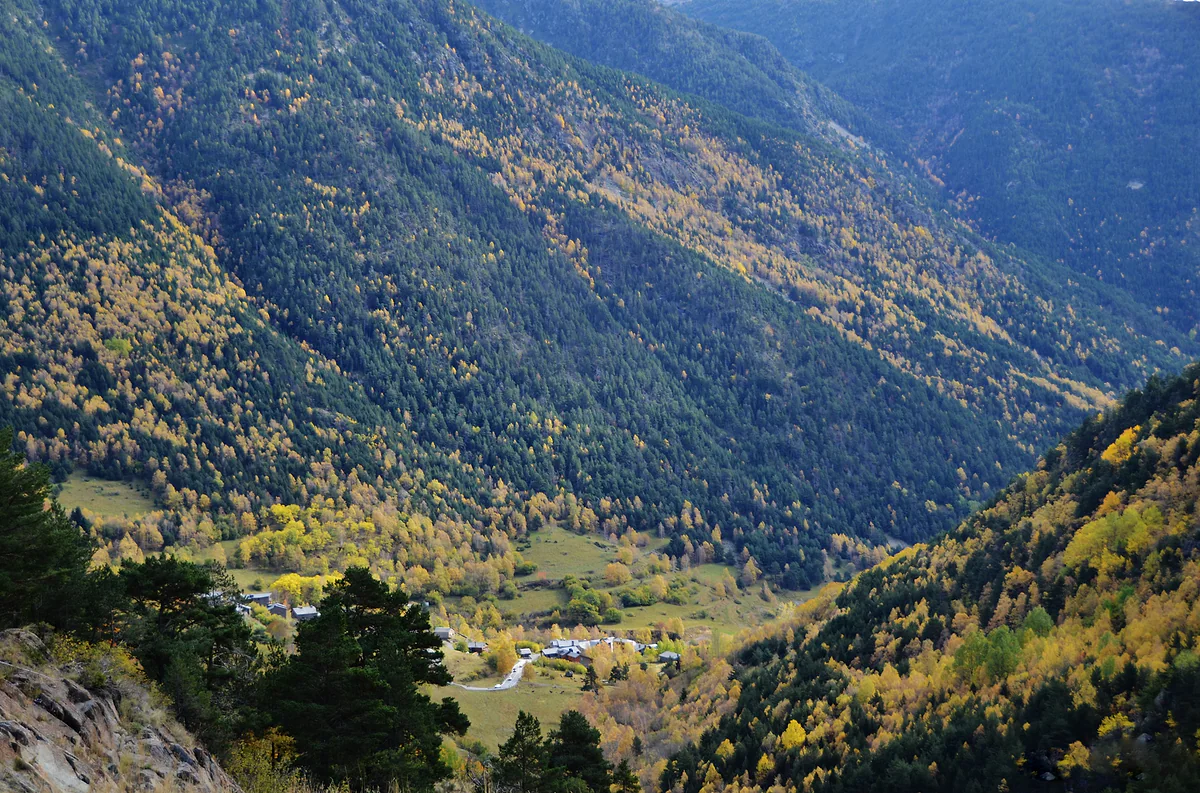
Andorra has no national parks, but it does have three large protected areas, the Madriu-Perafita-Claror valley (4,247 ha, World Heritage since 2004), the Sorteny valley natural park in Ordino and the Comapedrosa natural park in La Massana, home to the country's highest summit. The whole parish of Ordino has also been a UNESCO Biosphere Reserve since 2020.
In 30 seconds
Full read: 3 min
- Andorra has no national parks but three protected areas, the Madriu, Sorteny and the Comapedrosa.
- The Madriu has been World Heritage since 2004 and covers close to 10% of the country.
- The whole parish of Ordino has been a UNESCO Biosphere Reserve since 2020.
- Entry to the parks is free; at most you pay for the Sorteny car park in summer.
With only one day, I'd pick the Madriu for its history, or Sorteny if you have children or love wild flowers. The Comapedrosa is for anyone who wants to stand on the roof of the country and has eight hours and strong legs.

Before you go
What I would keep in mind
-
01 Most beautiful
A whole valley with no road
The Madriu covers close to 10% of the country and can only be explored on foot. Its official site stresses that protecting an entire valley is unique in the Pyrenees.
Madriu valley -
02 To save money
Twenty cents to Sorteny
In summer the Sorteny car park is pay and display, but a bus runs up from El Serrat for €0.20 a head. Entry to the park itself is free.
Sorteny valley -
03 My tip
Naturland isn't a nature park
Plenty of visitors search for a nature park and end up at Naturland. It's a mountain leisure park in Sant Julià, with the Tobotronc and cross-country skiing.
Naturland Andorra -
04 Worth the splurge
A night at the Borda de Sorteny
The park's staffed hut, at 1,965 m, has rooms and a kitchen. Until 30-11-2026, half board costs €70 according to the operator.
What I would book
More than 90% of Andorra is natural land, according to Andorra Turisme, but not all of it is protected in the same way. The country has three large areas with formal protection, each with its own character, plus an entire parish designated a Biosphere Reserve. Worth knowing before you search, because there are no national parks here, and the word park sends more than one visitor to Naturland by mistake.
How many nature parks does Andorra have?
Andorra Turisme lists three natural areas. The Madriu-Perafita-Claror valley, spread across four parishes; the Sorteny valley natural park in Ordino; and the Comapedrosa natural park in La Massana. Sorteny and the Comapedrosa are also part of the Three Nations Pyrenean Park, together with the Alt Pirineu park in Catalonia and the Ariège Pyrenees park in France.
Above all three sits the Ordino Biosphere Reserve. UNESCO designated the whole parish in 2020, and two years later it became part of UNESCO’s network of mountain reserves.
The Madriu, a whole valley under protection
It’s the largest and the best known. The Madriu valley covers 4,247 ha, close to 10% of the country, spread over four parishes with the capital among them, and has held UNESCO World Heritage status since 2004 as a cultural landscape. Around it lies a buffer zone of 4,092 ha. Its official site makes a point I find the most compelling of all, that protecting an entire valley is a one-off in the Pyrenees.
Almost all of it, 99%, is communal land. Inside are more than thirty lakes, 70% of the country’s catalogued animal species and the traces of over seven centuries of shepherds and ironworkers. There’s no road, and you walk in from Escaldes. The visitor centre moved in October 2025 to the Borda Gabriel in Escaldes-Engordany.
Sorteny, the park of wild flowers
The Sorteny valley in Ordino covers more than 1,000 ha and is, according to Andorra Turisme, the smallest of the three, but its biodiversity is remarkable. The parks page speaks of more than 700 species of flowers and plants, Ordino council of more than 800. Its botanical garden, around 800 m², holds close to 300 species, and its wildlife includes chamois, the Pyrenean newt and the common frog.
It’s the easiest with children. There’s an information hut at the car park, open in summer and winter, a staffed hut about 30 minutes’ walk away and a bus from El Serrat for €0.20 a head, handy in July and August when the car park is pay and display.
The Comapedrosa, the roof of the country
The Comapedrosa park in La Massana protects 15.42 km² around Andorra’s highest summit, the Pic del Comapedrosa at 2,942 m. It has three huts, one of them staffed with meals in summer, a 1.2 km interpretive trail and an interpretation centre in Arinsal with exhibitions and films. Andorra Turisme mentions golden eagles, bearded vultures and Aurelio’s rock lizard among its residents, and alpine flowers such as the alpine violet.
It’s also the heart of Andorra Comapedrosa Starlight, certified as a Starlight reserve and destination; the places to look up are the Roca de la Sabina and the Coll de la Botella. In June, Arinsal also hosts an astronomy festival.
Rules worth knowing
These are working landscapes, with livestock, hunting and private land in places. In the Madriu, for example, you need the parish council’s permission to pitch a tent, and on Sant Julià’s land you can’t camp at all, and from September to February, during the hunting season, its website asks walkers to keep to the tracks and dress to be seen. For high routes in all three parks, Andorra Turisme recommends high summer, from late June to late September.
Which to visit if you only have a day?
That depends on your priorities. For history and a walk without the car, the Madriu, whose main entrance is in Escaldes. For children or plants, Sorteny. For a summit, the Comapedrosa, bearing in mind the climb from Arinsal takes around 8 hours.
All three are free to enter. What you might pay for is the Sorteny car park in summer. You can’t drive into the Madriu, since its official site bans vehicles inside the valley, and the one forestry track, climbing from Sant Julià to Claror, stops outside the protected area; the tourist board lists it as paid access. And if what you were really after was a park with zip lines and a 5.3 km toboggan run, that’s Naturland, a leisure park in the mountains rather than a nature park.
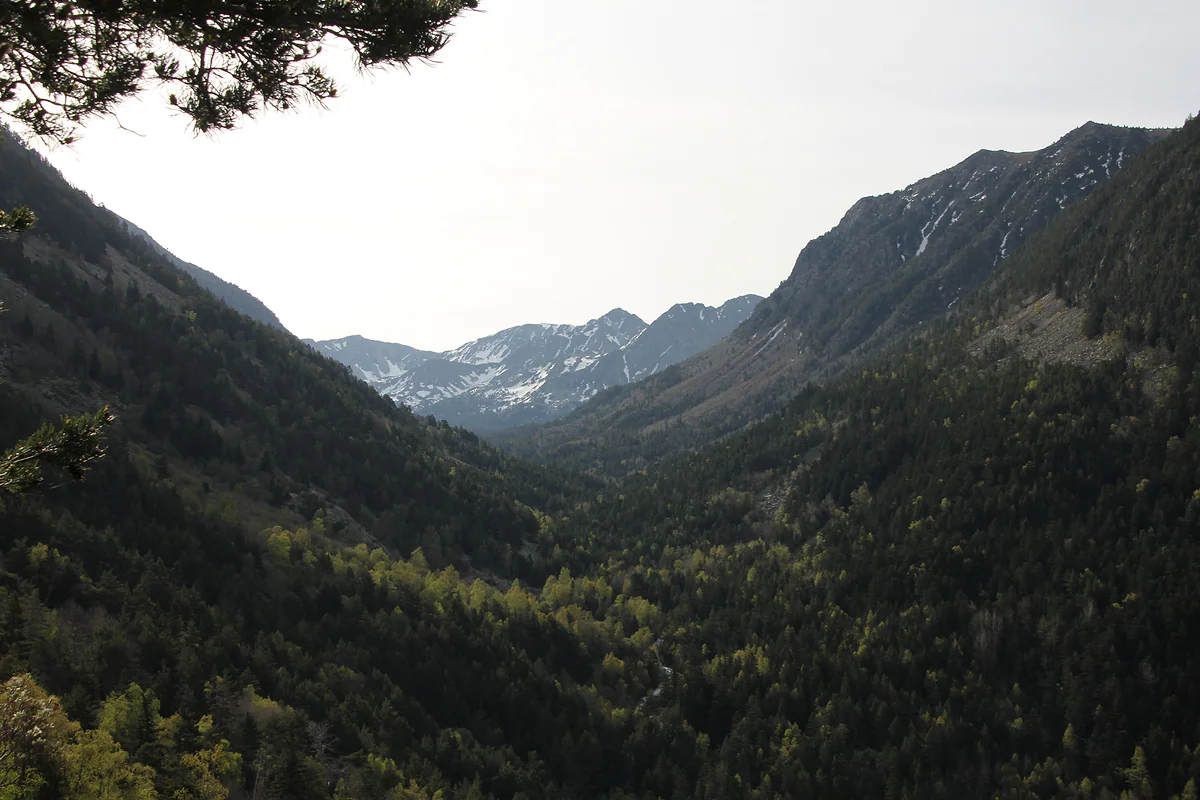
The Madriu-Perafita-Claror valley, a World Heritage site, with forested slopes and peaks beyond
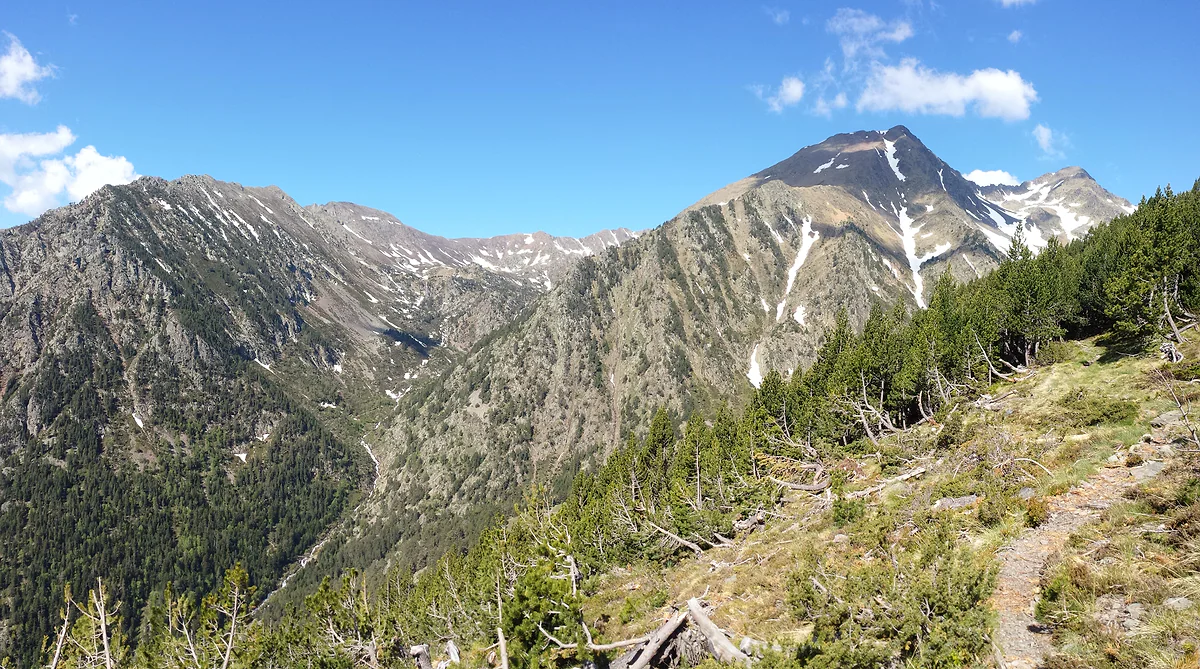
The Valls del Comapedrosa in La Massana, with rocky summits and late snow above the pine forest
Andorra's protected natural areas
| Area | Parish | Size | What sets it apart |
|---|---|---|---|
| Madriu-Perafita-Claror valley | Escaldes-Engordany, Andorra la Vella, Encamp and Sant Julià | 4,247 ha, close to 10% of the country | World Heritage (2004), no road, over 30 lakes |
| Sorteny valley natural park | Ordino | Over 1,000 ha | Botanical garden, 700 to 800 plant species depending on the source |
| Comapedrosa natural park | La Massana | 15.42 km² | The country's highest summit, 2,942 m |
| Biosphere Reserve | The whole parish of Ordino | No figure | UNESCO since 2020, mountain network since 2022 |
Andorra Turisme, the Madriu valley's official site, the Comapedrosa park and Ordino council, checked on 28 and 29-09-2026.
Test yourself
True or false?
0/3 Pick before you peek.
-
Andorra has a national park in the Madriu valley.
See the answer
False. There are no national parks. The Madriu is a protected area and has been a UNESCO World Heritage Site since 2004.
-
Andorra's highest mountain lies inside a natural park.
See the answer
True. The 2,942 m Comapedrosa is in the Comapedrosa natural park, in La Massana.
-
The whole parish of Ordino is a Biosphere Reserve.
See the answer
True. UNESCO designated it in 2020, and two years later it became part of UNESCO's network of mountain reserves.
- Madriu-Perafita-Claror valley
- 4,247 ha
- Comapedrosa natural park
- 15.42 km²
- Ordino becomes a Biosphere Reserve
- 2020
0 of 269 Andorra guides
Your next stamp
- UNESCO World Heritage
- Comapedrosa
- Mountains
- Sorteny valley
- A week in Andorra
- Where to stay
- Ordino
- Madriu valley
- Places to visit
- Things to do
- Most beautiful places
- Prettiest villages
- Andorra la Vella
- Map
- Escaldes-Engordany
- Where is Andorra?
- Is Andorra a country?
- Parishes
- Casa de la Vall
- Margineda bridge
- Old town
- Santa Coloma church
- Towns and villages
- Population
- Size
- Language
- Andorra in one day
- Canillo
- Espai Columba
- History
- Margineda rock shelter
- Sant Esteve church
- Co-princes
- Soldeu
- Weekend break
- Andorra in 3 days
- El Tarter
- Political system
- Andorra in 4 days
- Flag
- Ransol
- Facts
- Prats
- El Forn
- Public holidays
- Sant Julià de Lòria
- Currency and payments
- L'Aldosa de Canillo
- Els Plans
- EU and Schengen
- Bordes d'Envalira
- Entry requirements
- Prices and budget
- On a budget
- Sant Joan de Caselles
- Santa Coloma
- Ski holidays
- Tourist tax
- Mobile and roaming
- Sant Serni de Canillo
- Tourist information
- Healthcare
- Meritxell Sanctuary
- With a dog
- Packing list
- Safety
- How to get there
- Scams
- From Barcelona
- Bus from Barcelona
- Day trip from Barcelona
- From Madrid
- From Toulouse
- Encamp
- Flights
- La Margineda
- La Massana
- Roc del Quer viewpoint
- Romanesque churches
- Andorra-La Seu airport
- Canillo Tibetan bridge
- Museums in Andorra
- Pal
- Pas de la Casa
- Arinsal
- Driving
- Grau Roig
- Mon(t) Magic
- Nearest airports
- By train
- Erts
- Les Bons
- Palau de Gel
- Road conditions
- Motorcycle Museum
- Parking
- Sispony
- Vila
- Anyós
- Incles valley
- La Mosquera
- Petrol
- El Tremat
- Getting around
- Juclar lakes
- L'Aldosa (La Massana)
- Buses
- Els Cortals d'Encamp
- Sant Climent de Pal
- Bus station
- Sant Cristòfol d'Anyós
- Casa Rull
- Shopping
- Farga Rossell
- Sant Vicenç d'Enclar
- Santa Eulàlia d'Encamp
- What to buy
- Customs allowances
- La Massana Còmic
- Sant Romà de les Bons
- Car Museum
- Cigarettes
- Electronics
- Alcohol
- Casa Cristo
- Clothes and sports shops
- Iron Route
- Coll d'Ordino
- Perfume
- Sacred Art Museum
- Shopping centres
- Funicamp
- Supermarkets
- Avinguda Meritxell
- Encamp Tibetan bridge
- Avinguda Carlemany (Vivand)
- Envalira pass
- Auvinyà
- Bici Lab Andorra
- Skiing
- With kids
- Zip lines
- Fontaneda
- For couples
- La Cortinada
- Ski pass
- Via ferratas
- Climbing
- Llorts
- Nagol
- Nightlife
- Ski season
- El Serrat
- Grandvalira
- Horse riding
- Juberri
- Aixovall
- Mountain biking
- Pal Arinsal
- Sornàs
- Aixirivall
- Ansalonga
- Ordino Arcalís
- Road cycling
- Bixessarri
- Naturland
- Segudet
- Arans
- Llumeneres
- Tobotronc
- Casa d'Areny-Plandolit
- Cross-country skiing
- Miniature Museum
- Skiing with kids
- Cal Pal
- Free walking tour
- Pessons lakes
- Sant Serni de Nagol
- Ski lessons
- Canòlich Sanctuary
- Hotels in Andorra la Vella
- Sant Martí de la Cortinada
- Ski hire
- Hotels in Escaldes
- Juberri Gardens
- Llorts iron mine
- Webcams
- Hotels in Soldeu
- Snow report
- Hotels in El Tarter
- Tristaina lakes
- Hotels in Canillo
- Night skiing
- Tristaina solar viewpoint
- Freeride
- Hotels in Encamp
- Hotels in Pas de la Casa
- Ski touring
- Hotels in La Massana
- Snowshoeing
- Hotels in Arinsal and Pal
- Snow activities
- Après-ski
- Engordany
- Hotels in Ordino
- Medieval bridges
- Els Vilars
- Hotels in Sant Julià de Lòria
- Lakes
- Sant Romà dels Vilars
- Viewpoints
- Where to eat
- Caldea
- Restaurants in Andorra la Vella
- Borda restaurants
- Inúu
- Cheap hotels
- Food
- Hiking
- Spas and thermal baths
- Weather and climate
- Engolasters lake
- Pas de la Casa weather
- Spa hotels
- Trinxat
- Events
- Luxury hotels
- Sant Miquel d'Engolasters
- Ski resort weather
- Wine
- Best time to visit
- Family hotels
- All inclusive
- Estany de l'Illa
- In winter
- Apartments
- Coronallacs
- In spring
- Ski World Cup
- Christmas
- Hostels
- In summer
- Mountain huts
- Camping and rural stays
- Easy walks
- In autumn
- New Year
- Family walks
- Festes majors
- In January
- GR11 and other GRs
- In February
- National day
- Around Andorra
- GRP round Andorra
- In March
- Midsummer fire festival
- Carnival
- In April
- In May
- Travessa d'Encamp
- In June
- In July
- In August
- In September
- In October
- In November
- In December
Frequently asked questions
Does Andorra have national parks?
No. The designations it uses are natural park and protected area. The closest thing to a national park in scale and protection is the Madriu valley, which is also a UNESCO World Heritage Site.
How many nature parks are there in Andorra?
Andorra Turisme lists three protected natural areas, the Madriu-Perafita-Claror valley, the Sorteny valley natural park and the Comapedrosa natural park. On top of that, the parish of Ordino is a UNESCO Biosphere Reserve.
What wildlife can you see in Andorra's nature parks?
In the Madriu, chamois, roe deer, mouflon, wild boar, foxes and marmots. In Sorteny, chamois, the Pyrenean newt and the common frog. In the Comapedrosa, golden eagles, bearded vultures and the Aurelio's rock lizard.
Which Andorran nature park is best for hiking?
For a day walk with history, the Madriu. For family walking and wild flowers, Sorteny, with its botanical garden. For a summit, the Comapedrosa, though the climb takes around 8 hours.
Do you have to pay to enter Andorra's nature parks?
No. What you might pay for is the Sorteny car park in July and August. Vehicles are banned inside the Madriu; the only driveable route is the forestry track from Sant Julià up to Claror, outside the protected area, which the tourist board lists as paid access.
Is there a visitor centre?
The Madriu's visitor centre is at the Borda Gabriel in Escaldes-Engordany, Sorteny has an information hut at its car park, and the Comapedrosa has an interpretation centre in Arinsal.
By
Tourism graduate with a master’s in Tourism Management and Planning from the University of Málaga, who has travelled across Europe. He writes every guide from official sources and his own judgement.
Published on . Facts checked on .
Sources
Photos: Maria Rosa Ferre (CC BY-SA 2.0); Ferran Llorens (CC BY-SA 2.0); Ferran Llorens (CC BY-SA 2.0), via Wikimedia Commons.