Money in Malta
Malta currency: euros, cards and cash for UK visitors
Malta's currency is the euro, used since 1 January 2008 and the only legal tender since 1 February that year. Before that it was the Maltese lira. Visa, Mastercard, American Express and Diners are accepted in most places and there are cashpoints across the islands, but when a card machine offers you pounds, pay in euros.
In 30 seconds
Full read: 3 min
- Malta's currency is the euro, used since 1 January 2008; before that it was the Maltese lira.
- Cards are accepted almost everywhere, and there are cashpoints across the islands.
- Some museums, like the Saluting Battery, are card-only.
- When offered pounds at a card machine, choose euros.
I'd travel with a card and a little cash, never none at all. Buses take cash or contactless, and some museums are card-only, so the sensible thing is to carry both and depend on neither. And whenever you're asked, choose euros over pounds.

Before you go
What I would keep in mind
-
01 Watch out
Say no to paying in pounds
Visit Malta notes that hotels, larger shops and restaurants may take foreign currencies, with conversion charges applied. When a card terminal offers you sterling, I'd always pick euros.
-
02 Money
Some ticket desks don't take cash
The Saluting Battery, Lascaris War Rooms and Malta at War Museum, run by Fondazzjoni Wirt Artna, are card-only at the desk. Turn up with notes and you won't get in.
Lascaris War Rooms in Valletta -
03 To save money
Claim your VAT back
As a non-EU resident leaving the EU, you may be able to reclaim VAT on purchases of at least €55 in one shop and €315 per departure, less a fee, according to Valletta Cruise Port.
Malta cruise port -
04 Money
Exchange open around the clock
Visit Malta says the bureaux de change at Malta International Airport are open 24 hours, so you can swap leftover cash whenever you land.
Malta airport
Malta’s currency is the euro, not the pound, which surprises a fair few British visitors given the red postboxes and the driving on the left. It’s worth sorting out before you go, not because paying is difficult but because a couple of habits will save you money. Which card to use, what to say when a machine offers sterling, where cash still matters and how the VAT refund works if you shop.
From the lira to the euro
Malta switched to the euro with the new year in 2008, four years after joining the EU. It went for a big-bang changeover, with notes and coins in use from the first day, and through January 2008 the euro and the Maltese lira circulated side by side. From 1 February, according to Visit Malta, the euro has been the only legal tender in Malta and Gozo.
Each euro was swapped for 0.4293 lira, which put a single lira at about €2.33. If you’ve a few old lira notes in a drawer from a trip decades ago, I’m afraid they’re keepsakes now. The Central Bank of Malta accepted coins until 1 February 2010 and notes until 31 January 2018, the European Commission records.
Should you pay in euros or pounds?
In euros, every time. Visit Malta notes that most hotels, larger shops and restaurants will take payment in major international currencies, but that conversion charges may be applied when they do. The same logic applies when a card terminal asks whether you’d like to be charged in pounds. I’d always choose euros and let my own card handle the exchange, as at least then I know the terms in advance. Card payments converted into pounds with a fee are one of the few scams in Malta that official sources record. Your own bank’s fees for card use and cash withdrawals abroad vary from one account to the next, so it pays to look them up before the trip.
Cards, cash and card-only museums
Spain’s Foreign Ministry lists Visa, Mastercard, American Express, Diners Club and Eurocard as the most widely accepted cards, and notes that some shops also take prepaid cards like Revolut. Bus drivers sell tickets on board for cash, a contactless card or your phone.
The surprise runs the other way. Fondazzjoni Wirt Artna’s wartime sites in Valletta and Birgu, led by the Lascaris War Rooms, are cashless and only take cards at the ticket desk. I think that’s fine, but if you’re someone who travels with notes, know it before you reach the door.
Cashpoints, banks and the airport
Visit Malta says banks, cashpoints and bureaux de change are found all over the islands, and those at the airport are open 24 hours. You’ll find cash machines in the arrivals hall straight after landing, with more in check-in and by gate 4 in Schengen departures. Banks keep morning hours, open until 14:30 on weekdays and 11:30 on Saturdays, according to the Spanish Foreign Ministry.
If you hire a car, expect the company to block a sum on your card as a deposit. Under EU rules they must tell you and get your agreement, and your bank has to release it once you’ve paid the final bill. There’s more in my guide to car hire in Malta.
VAT, and getting some of it back
Standard VAT is 18%, hotel stays 7% and food 0%. On top of that sits the eco-contribution introduced in July 2026, €1.50 for every adult and every night, stopping at €22.50, charged without VAT or commission. How it all adds up is in is Malta expensive.
Living outside the EU also means a tax refund is possible on bigger shopping trips. The cruise port’s guide to the scheme sets two thresholds, €55 with any one retailer and €315 overall each time you depart, asks for the paperwork to be stamped as you leave EU territory for the last time and deducts a handling charge of 4%, or €23 if that’s more.
The coins in your change
Malta’s coins are worth a look. The European Central Bank lists three national faces. The small change of 1, 2 and 5 cents carries the altar at Mnajdra, a temple from around 3600 BC above the sea; the 10, 20 and 50 cent coins show the Malta coat of arms with its mural crown standing for the fortifications; and the €1 and €2 coins bear the white eight-pointed cross of the Order of St John, which the ECB notes is now often referred to as the Maltese Cross.
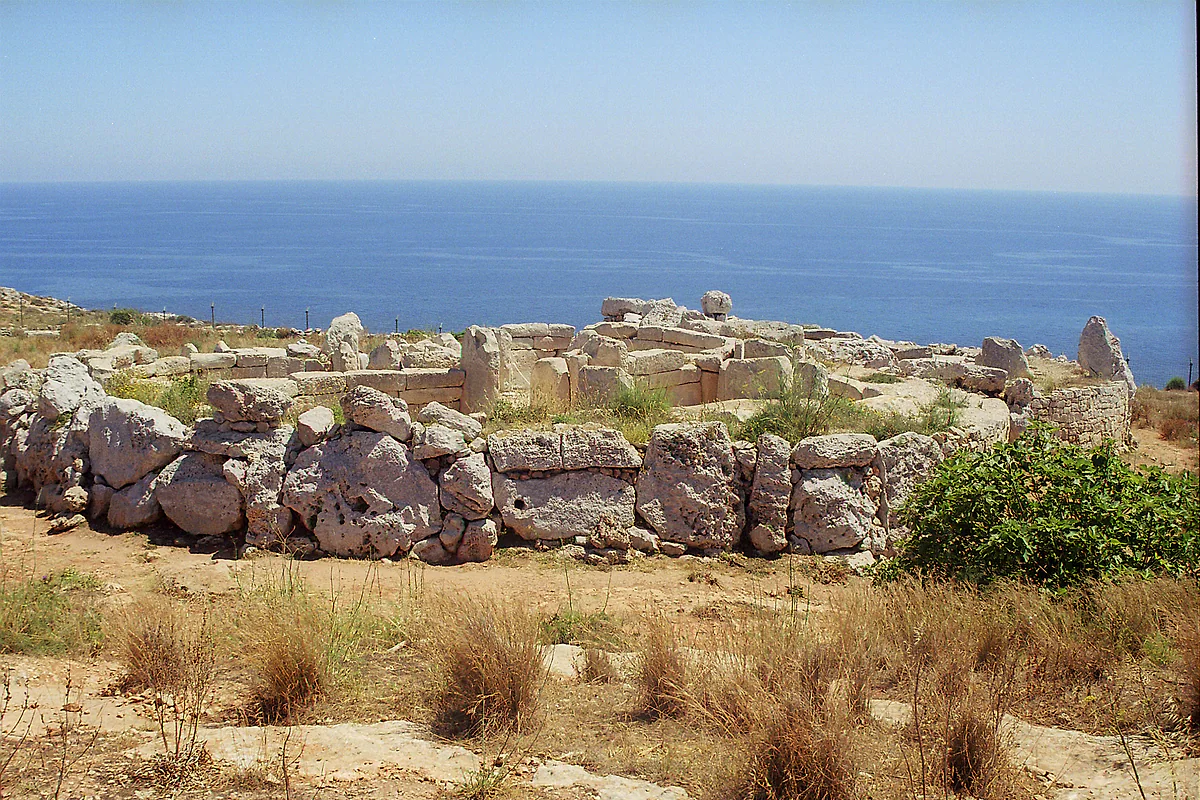
The stone walls of the Mnajdra temples among dry scrub on the hillside of Malta's south coast, with the blue sea behind.
Malta's euro coins
| Coins | Design |
|---|---|
| 1, 2 and 5 cent | Altar of the Mnajdra temple, around 3600 BC |
| 10, 20 and 50 cent | Emblem of Malta, with mural crown and the words Repubblika ta' Malta |
| €1 and €2 | Eight-pointed cross of the Order of Malta |
Source, European Central Bank.
VAT rates in Malta
| Rate | Applies to |
|---|---|
| 18% | Standard rate |
| 7% | Hotel stays and sports facilities |
| 5% | Medical products and electricity |
| 0% | Food |
Source, Spain's Foreign Ministry. The €1.50 a night eco-contribution is charged separately, with no VAT.
Test yourself
True or false?
0/3 Pick before you peek.
-
Malta uses the pound sterling alongside the euro.
See the answer
False. The euro has been Malta's only legal tender since 1 February 2008. Some businesses accept other currencies, but with conversion charges.
-
Malta's 1, 2 and 5 cent coins show a prehistoric temple.
See the answer
True. They depict the altar of the Mnajdra temple, from around 3600 BC, according to the European Central Bank.
-
Food in Malta carries 18% VAT.
See the answer
False. Spain's Foreign Ministry lists food at 0% VAT. The standard rate is 18% and hotel stays are 7%.
- Year Malta adopted the euro
- 2008
- Maltese lira to the euro
- 0.4293
- Standard VAT rate
- 18%
- Minimum spend in one shop for a VAT refund
- €55
0 of 279 Malta guides
Your next stamp
- EU, Schengen and the euro
- Scams
- Malta on a budget
- Things to do in Malta
- Gozo
- Most beautiful places
- Comino
- Prettiest villages
- UNESCO World Heritage Sites
- Where is Malta
- The Maltese islands
- Towns and villages
- Island of Malta
- Blue Lagoon
- Fort Rinella
- Fort St Angelo
- Gardjola Gardens
- Ħal Saflieni Hypogeum
- Is Malta a country?
- Popeye Village
- Tarxien Temples
- Things to do in Gozo
- Valletta
- Esplora
- Golden Bay
- Gozo day trip
- Inquisitor's Palace
- Population
- St John's Co-Cathedral
- St Mary's Tower
- Grandmaster's Palace
- How big is Malta
- Maritime Museum
- Mellieħa Bay
- Fort St Elmo
- Language
- Malta at War Museum
- Paradise Bay
- Barrakka Gardens
- Red Tower
- Religion
- Malta government
- Saluting Battery
- MUŻA
- National Museum of Archaeology
- Underground Valletta
- Lascaris War Rooms
- Casa Rocca Piccola
- Malta in one day
- Three Cities
- Victoria
- Birgu
- Manoel Theatre
- Weekend in Malta
- Xagħra
- City Gate and Parliament
- Malta in three days
- Nadur
- Senglea
- Cospicua
- Malta in four days
- Qala
- Valletta Waterfront
- Għajnsielem
- Kalkara
- Malta in five days
- Malta in a week
- Paola
- Xewkija
- Sannat
- Tarxien
- Munxar
- Żabbar
- Fgura
- Fontana
- Kerċem
- Luqa
- Floriana
- Marsa
- Mellieħa
- The Citadel, Gozo
- Żebbuġ (Gozo)
- Ġgantija Temples
- Marsalforn
- Santa Luċija
- Ramla Bay
- San Lawrenz
- Xgħajra
- Xwejni salt pans
- Calypso's Cave
- Għarb
- Żejtun
- Għasri
- Gudja
- San Blas Bay
- Għaxaq
- Ħondoq Bay
- Marsaxlokk
- Kirkop
- Marsaxlokk Fish Market
- Mqabba
- St Peter's Pool
- Marsaskala
- Qrendi
- Żurrieq
- Beaches
- Comino ferry
- Ħaġar Qim and Mnajdra
- Mdina
- Mġarr (Gozo)
- Blue Grotto
- Diving
- Entry requirements
- Mdina Cathedral
- Xewkija Rotunda
- Birżebbuġa
- Palazzo Falson
- Safi
- Shipwrecks
- Ta' Ċenċ Cliffs
- Għar Dalam
- Mdina Dungeons
- Mġarr ix-Xini
- Prices and budget
- Snorkelling
- Boat trips
- Playmobil FunPark
- Rabat (Malta)
- Xlendi
- Dwejra
- Gozo beaches
- History
- Siġġiewi
- St Paul's Catacombs
- Tipping
- Azure Window
- Domvs Romana
- Għar Lapsi
- Great Siege of 1565
- Plugs
- Limestone Heritage Park
- Second World War
- St Paul's Grotto
- Ta' Pinu Basilica
- Time zone
- Buskett Gardens
- Knights of Malta
- Mobile and roaming
- Wied il-Għasri
- Dingli
- Maltese cross
- Dingli Cliffs
- Flag
- Żebbuġ
- Coat of arms
- Mtarfa
- Balzan
- National anthem
- Lija
- Malta facts
- Game of Thrones
- Iklin
- Attard
- Film locations
- Forts and fortifications
- San Anton Gardens
- Ta' Qali Crafts Village
- Victoria Lines
- Megalithic temples
- Catacombs
- Museums
- Where to eat
- Where to stay
- Churches
- Hotels in Valletta
- Restaurants in Valletta
- Hotels in Sliema
- Maltese food
- Restaurants in Marsaxlokk
- Viewpoints
- Hotels in St Julian's
- Pastizzi
- Walking and hiking
- Hotels in Buġibba and Qawra
- Maltese rabbit stew
- Safety
- Hotels in Mellieħa
- Kinnie and Cisk
- Gozo hotels
- Nightlife
- Tap water
- Boat parties
- Holiday packages
- Tourist tax
- All inclusive
- Gay Malta
- Sightseeing passes
- Apartments
- Malta with kids
- Public holidays
- How to get there
- Luxury
- Malta for couples
- Taxis and ride-hailing
- Weather
- Best time to visit
- Cycling
- English schools
- Flights
- Flights from Madrid
- Sea temperature
- Shopping and souvenirs
- Airport
- Free walking tours
- In winter
- Airport transfers
- Day trips and tours
- In summer
- Ferry from Sicily
- In January
- Cruise stop
- In February
- In March
- In April
- In May
- Getting around
- In June
- Buses
- July
- August
- Hop on hop off
- Gozo ferry
- September
- Gozo fast ferry
- October
- November
- Valletta ferries
- Car hire
- December
- Driving
- Events
- St Paul's Bay
- Village feasts
- Buġibba
- Christmas
- Easter
- Qawra
- Carnival
- Xemxija
- Fireworks festival
- Malta National Aquarium
- Isle of MTV
- St Paul's Islands
- Mosta
- Mosta Rotunda
- Naxxar
- Palazzo Parisio
- Għargħur
- Mġarr (Malta)
- Sliema
- Ta' Ħaġrat and Skorba Temples
- Għajn Tuffieħa Bay
- Tigné Point
- Ġnejna Bay
- St Julian's
- Paceville
- St George's Bay
- Gżira
- Msida
- Ta' Xbiex
- Pietà
- Pembroke
- Swieqi
- San Ġwann
- Birkirkara
- Ħamrun
- Santa Venera
- Qormi
Frequently asked questions
What currency does Malta use?
The euro, since 1 January 2008. It has been the only legal tender in Malta and Gozo since 1 February 2008.
Can I use pounds in Malta?
Some hotels, larger shops and restaurants accept major foreign currencies, according to Visit Malta, but conversion charges may apply. I'd pay in euros, by card or cash.
What was Malta's currency before the euro?
The Maltese lira, converted at a fixed 0.4293 lira to the euro. The Central Bank of Malta exchanged lira coins until 1 February 2010 and notes until 31 January 2018.
Are cards widely accepted in Malta?
Yes. Visa, Mastercard, American Express, Diners Club and Eurocard are accepted in most places, and some shops take prepaid cards such as Revolut. A few museums accept cards only.
Where can I get cash in Malta?
Cashpoints are found all over the islands. At the airport there are machines in the arrivals and check-in halls and in Schengen departures by gate 4, and the bureaux de change are open 24 hours.
Can UK visitors get a VAT refund in Malta?
Non-EU residents leaving the EU can claim on purchases of at least €55 in one shop and €315 in total per departure, with the form stamped at the last EU exit. Valletta Cruise Port quotes a fee of €23 or 4%, whichever is more.
By
Tourism graduate with a master’s in Tourism Management and Planning from the University of Málaga, who has travelled across Europe. He writes every guide from official sources and his own judgement.
Published on . Facts checked on .
Sources
Photos: Cosal (CC BY-SA 4.0); Silar (CC BY-SA 4.0), via Wikimedia Commons.