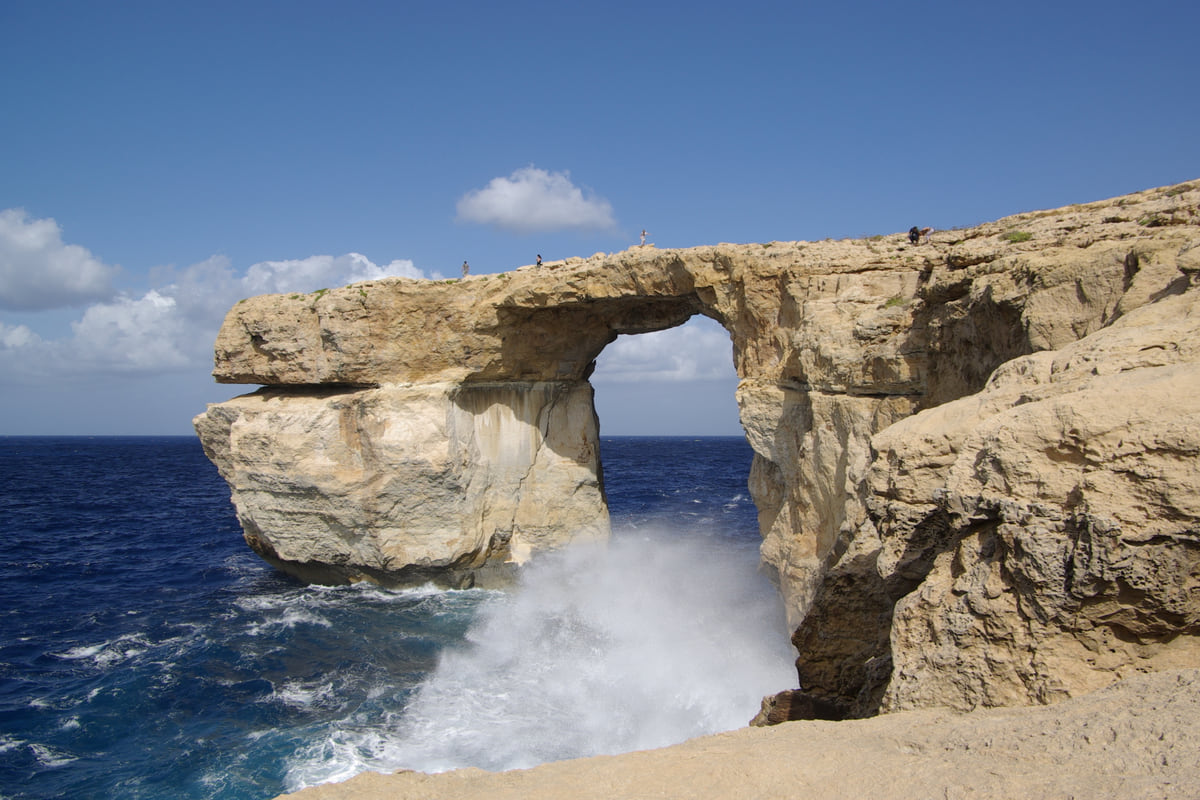
Dwejra, Gozo
The Azure Window, the Gozo arch the sea took in 2017

- What it was
- A natural rock arch over the sea
- Where
- Dwejra, west coast of Gozo
- Status
- Collapsed in March 2017
No, the Azure Window is no longer there. The rock arch on the Dwejra coast in western Gozo collapsed in a storm in March 2017, and what's left of it lies under water as a dive site. If you want to see a natural arch still standing on Gozo, the one to visit is at Wied il-Mielaħ, near the village of Għarb.
If the Azure Window is the reason you booked a day on Gozo, I wouldn't cancel. I'd swap it for the Inland Sea at Dwejra in the morning and the arch at Wied il-Mielaħ in the afternoon, on the way back past Ta' Pinu. You get the photograph, just not the one on the postcards.
Azure Window: the quick answer
Full read: 2 min
- The Azure Window was a rock arch at Dwejra, on the west coast of Gozo.
- It collapsed in a storm in March 2017 and can no longer be seen.
- Its remains, under water, are now a dive site.
- The arch still standing on Gozo is the Wied il-Mielaħ Window, in Għarb.
Azure Window, step by step
-
Cross to Gozo
Take the Gozo Channel ferry from Ċirkewwa to Mġarr, or the fast ferry from Valletta, then head for Victoria.
25 min from Ċirkewwa
-
Bus 311 to Dwejra
Bus 311 runs from Victoria to Dwejra by way of Għarb, which puts the old Azure Window site and the Inland Sea at the end of the line.
-
On to Wied il-Mielaħ
The standing arch is reached by the country road down the valley from Għarb, or on foot along the clifftop path from Għasri.
-
Ta' Pinu on the way back
The Ta' Pinu Basilica is on the edge of Għarb, so it fits neatly into the return leg to Victoria.
Is Azure Window worth visiting?
Yes
Going to see the Azure Window is pointless now, because it's gone. Going to Dwejra is still very much worth it for the Inland Sea, Fungus Rock and the 1652 tower, with Wied il-Mielaħ as the arch you came for.
My key points
Before you go to Dwejra, this
-
01 Watch out
Nobody can show it to you standing
If a trip promises the Azure Window as though it were still there, be wary. It fell in March 2017 and what remains is under the sea.
-
02 Most beautiful
The window that's still standing
At the end of the Wied il-Mielaħ valley, in Għarb, there's another natural arch in excellent condition. You can drive there, and it gets busier every year.
Għarb -
03 My tip
Divers can still visit
The Ministry for Gozo says the remains of the arch have become a dive site, next to the Blue Hole.
diving in Malta -
04 Getting there
Dwejra is still worth the trip
The Inland Sea, Fungus Rock and the 1652 tower are all where they were, a few steps from where the arch stood.
Dwejra Bay
Is the Azure Window still there?
No. It fell during a storm in March 2017, and where the arch stood there’s now open sea. The Ministry for Gozo doesn’t give the exact date on the pages I’ve read, so I’ll stick to the month, and I haven’t found official measurements of the arch either, so I won’t repeat the unattributed figures that float around online. I say it up front because the Azure Window still appears on posters, fridge magnets and old brochures.
Where was the Azure Window?
On the Dwejra coast in western Gozo, next to the village of San Lawrenz. To the Ministry for Gozo it was a beautiful arch that was for years the defining image of that coastline, along with the Inland Sea, Fungus Rock and the Blue Hole. Plenty of people search for it as the Azure Window in Malta, which is fair enough, since Gozo is part of the Republic of Malta, but it was never on the main island.
Arches like this are carved by the sea and storms working at the cliff, as the Ministry explains when describing another on the island. A storm is what finished this one off.
Diving the remains
The rubble went into the sea, and the Ministry says it’s now simply another Dwejra dive site, close to the Blue Hole. If you dive, it’s a site with a story. I’d only do it with an MTA-licensed centre, and how to choose one is in diving in Malta.
Once your dates are set, check which hotels are still free in Victoria before prices climb.
Wied il-Mielaħ, the arch that’s still standing
It’s at the end of the valley of the same name, in the Għarb area. The Ministry for Gozo calls it a little-known alternative to the Azure Window that came into its own after 2017. You can drive there, the arch is in excellent condition, and you can see it from land or get closer by boat. Recent works have made access easier, and from a small passage opposite you can pick out a second arch in the cliffs. The surrounding area is a 65.31-hectare Natura 2000 site.
Dwejra without the Azure Window
To me it’s still the most dramatic stretch of coast on Gozo. The Inland Sea, a lagoon linked to the open sea by a tunnel through the rock, is still there, as is Fungus Rock, the islet the Knights smoothed so nobody could climb it, and the 1652 watchtower. It’s protected under Natura 2000, and UNESCO added Qawra/Dwejra to its Tentative List in 1998. What changes is the expectation, and the gap where the window stood tells the story better than any sign.
So you do not pay over the odds, look at trains, coaches and flights to Malta on Omio and pick the one that suits you.
If you would rather have a local show you round, book a guided tour in Azure Window and choose by the reviews.
A car frees you from timetables: search car hire in Gozo on DiscoverCars and compare companies.
Once your dates are set, check which hotels are still free in Victoria before prices climb.
The Azure Window and Wied il-Mielaħ
| Azure Window | Wied il-Mielaħ Window | |
|---|---|---|
| Where | Dwejra, next to San Lawrenz | End of the Wied il-Mielaħ valley, Għarb |
| Status | Collapsed in March 2017 | Standing, in excellent condition |
| How to see it | Only by diving | From land or from the sea |
| Access | Dwejra coast, bus 311 | By road from Għarb or along the cliffs from Għasri |
| Protection | Dwejra Natura 2000 site | Natura 2000, 65.31 ha |
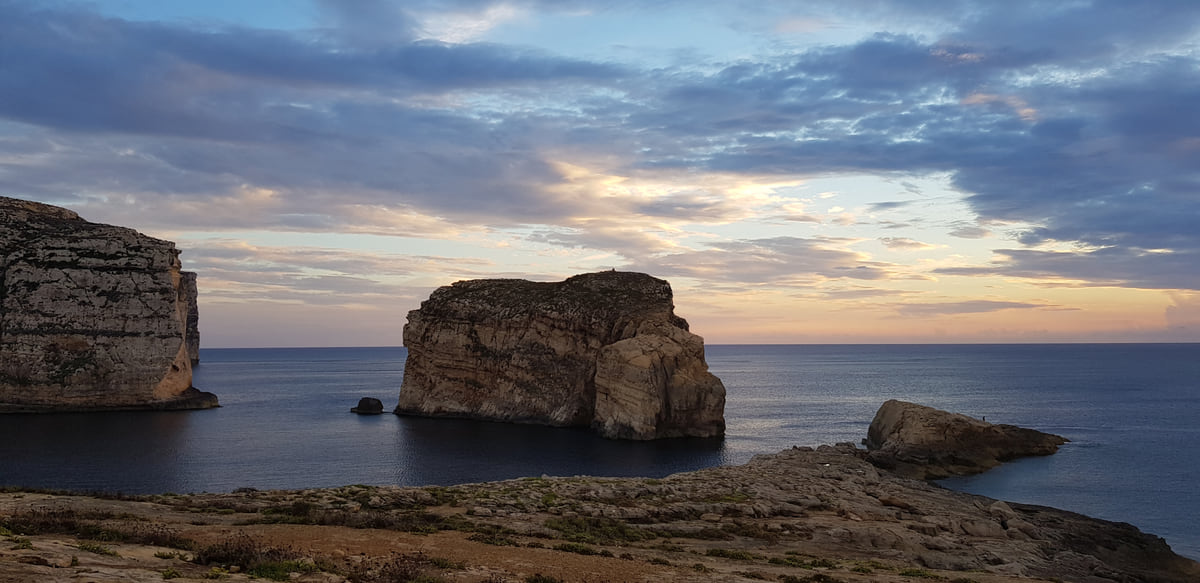
Fungus Rock at sunset in Dwejra Bay, Gozo, the rocky islet off the coast close to where the Azure Window stood until 2017.
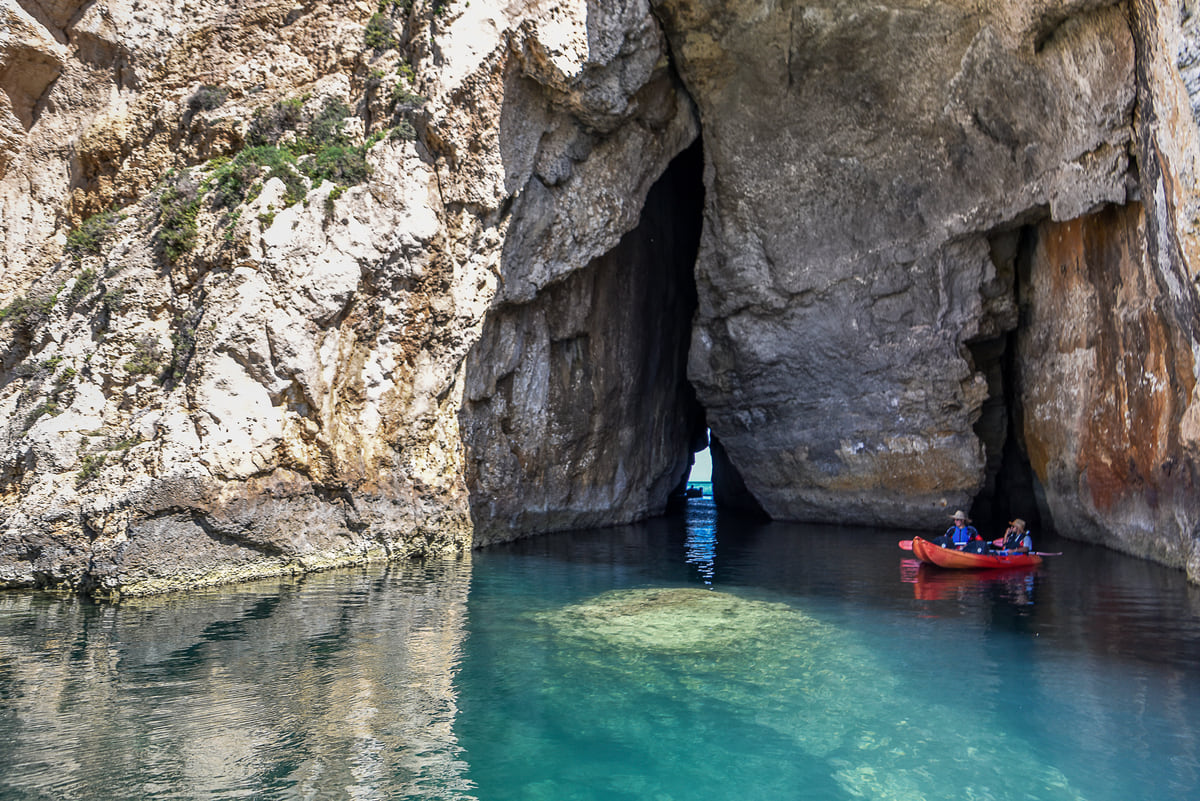
The natural rock tunnel of the Inland Sea at Dwejra, Gozo, with turquoise water beneath the cliff and a kayak heading out to open sea.
Test yourself
True or false?
0/3 Pick before you peek.
-
The Azure Window collapsed in 2017.
See the answer
True. It fell during a storm in March 2017, according to the Ministry for Gozo. It hasn't existed as an arch since.
-
Part of the arch can still be seen standing from the shore.
See the answer
False. What remains lies under water. The Ministry for Gozo explains that the spot has become a dive site.
-
Another similar natural arch still stands on Gozo.
See the answer
True. The Wied il-Mielaħ Window, at the end of its valley in Għarb, rose to fame precisely after the Azure Window collapsed.
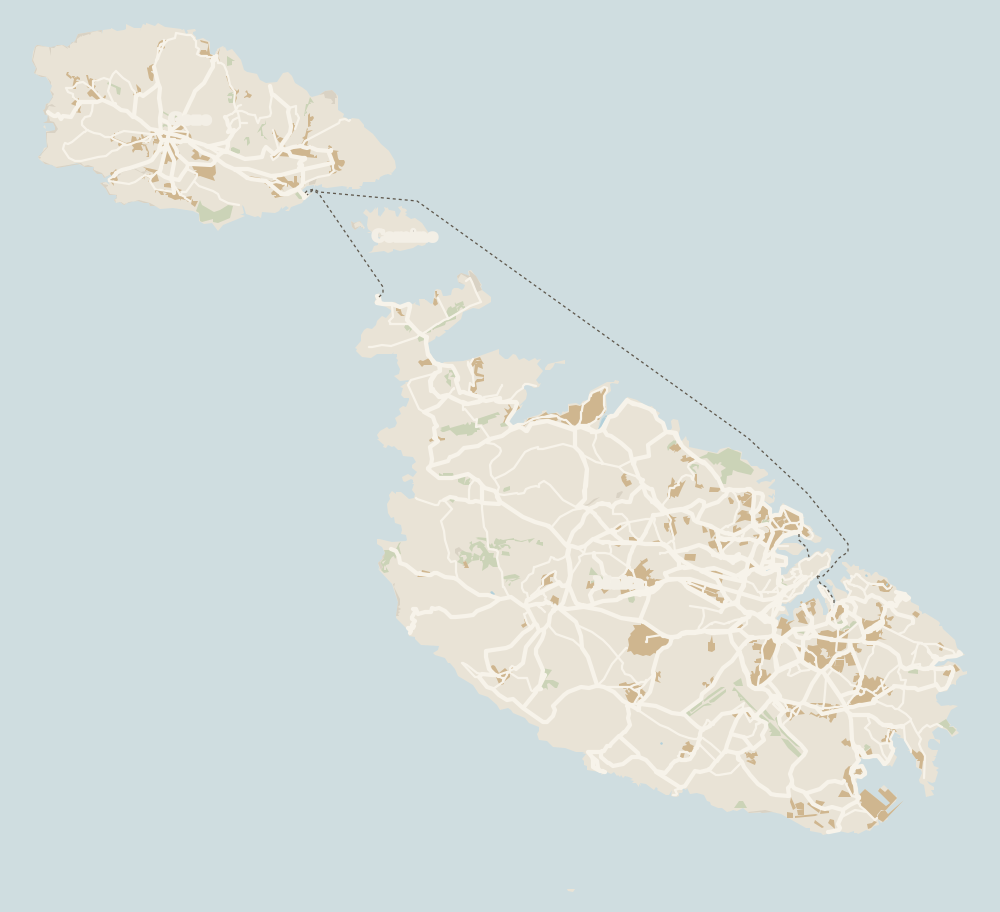
Map
Where Azure Window is
Gozo lies to the north-west, across the channel the ferry crosses from Ċirkewwa, with Comino between the two islands. Every number opens its guide.
- Year of the collapse
- 2017
- Month of the storm
- March
- Wied il-Mielaħ Natura 2000 site
- 65.31 ha
What people ask most about Azure Window
Where was the Azure Window?
At Dwejra on the west coast of Gozo, Malta's second island, next to the village of San Lawrenz. You can't see it any more, because it collapsed in 2017.
When did the Azure Window collapse?
During a storm in March 2017, according to the Ministry for Gozo. The pages I've read don't give the exact day.
Can you still visit the Azure Window?
Not as an arch. What's left is under water and has become a dive site. The Dwejra coast is very much worth visiting, though, for the Inland Sea and Fungus Rock.
Is there another rock window on Gozo?
Yes, at Wied il-Mielaħ, at the end of the valley of the same name in Għarb. You can reach it by road and it's in excellent condition.
Can you dive where the Azure Window was?
Yes. The Ministry for Gozo says it became a dive site after the collapse, in the same area as the Blue Hole. Always go with a licensed dive centre.
Why did the Azure Window fall down?
A storm brought it down in March 2017, according to the Ministry for Gozo. The same Ministry explains that the sea and storms cut these arches in the first place, so the forces that make them eventually take them away.
0 of 294 Malta guides
Your next stamp
- Dwejra
- Ġgantija Temples
- Għarb
- Ta' Kola Windmill
- Xwejni salt pans
- Xagħra
- Wied il-Għasri
- Things to do in Malta
- Gozo
- Most beautiful places
- Comino
- Prettiest villages
- UNESCO World Heritage Sites
- Where is Malta
- The Maltese islands
- Towns and villages
- Island of Malta
- Blue Lagoon
- Fort Rinella
- Fort St Angelo
- Gardjola Gardens
- Ħal Saflieni Hypogeum
- Is Malta a country?
- Popeye Village
- Tarxien Temples
- Things to do in Gozo
- Valletta
- Esplora
- Golden Bay
- Gozo day trip
- Inquisitor's Palace
- Population
- St John's Co-Cathedral
- St Mary's Tower
- Grandmaster's Palace
- How big is Malta
- Maritime Museum
- Mellieħa Bay
- Fort St Elmo
- Language
- Malta at War Museum
- Paradise Bay
- Barrakka Gardens
- Red Tower
- Religion
- Malta government
- Saluting Battery
- MUŻA
- National Museum of Archaeology
- Underground Valletta
- Lascaris War Rooms
- Casa Rocca Piccola
- Malta in one day
- Three Cities
- Victoria
- Birgu
- Manoel Theatre
- Weekend in Malta
- City Gate and Parliament
- Malta in three days
- Nadur
- Senglea
- Cospicua
- Malta in four days
- Qala
- Valletta Waterfront
- Għajnsielem
- Kalkara
- Malta in five days
- Malta in a week
- Paola
- Xewkija
- Sannat
- Tarxien
- Munxar
- Żabbar
- Fgura
- Fontana
- Kerċem
- Luqa
- Floriana
- Marsa
- Mellieħa
- The Citadel, Gozo
- Żebbuġ (Gozo)
- Marsalforn
- Santa Luċija
- Ramla Bay
- San Lawrenz
- Xgħajra
- Calypso's Cave
- Żejtun
- Għasri
- Gudja
- San Blas Bay
- Għaxaq
- Ħondoq Bay
- Marsaxlokk
- Kirkop
- Marsaxlokk Fish Market
- Mqabba
- St Peter's Pool
- Marsaskala
- Qrendi
- Żurrieq
- Beaches
- Comino ferry
- EU, Schengen and the euro
- Ħaġar Qim and Mnajdra
- Mdina
- Mġarr (Gozo)
- Blue Grotto
- Diving
- Entry requirements
- Mdina Cathedral
- Xewkija Rotunda
- Birżebbuġa
- Money and payments
- Palazzo Falson
- Safi
- Shipwrecks
- Ta' Ċenċ Cliffs
- Għar Dalam
- Mdina Dungeons
- Mġarr ix-Xini
- Prices and budget
- Snorkelling
- Boat trips
- Malta on a budget
- Playmobil FunPark
- Rabat (Malta)
- Xlendi
- Gozo beaches
- History
- Siġġiewi
- St Paul's Catacombs
- Tipping
- Domvs Romana
- Għar Lapsi
- Great Siege of 1565
- Plugs
- Limestone Heritage Park
- Second World War
- St Paul's Grotto
- Ta' Pinu Basilica
- Time zone
- Buskett Gardens
- Knights of Malta
- Mobile and roaming
- Dingli
- Maltese cross
- Dingli Cliffs
- Flag
- Żebbuġ
- Coat of arms
- Mtarfa
- Balzan
- National anthem
- Lija
- Malta facts
- Game of Thrones
- Iklin
- Attard
- Film locations
- Forts and fortifications
- San Anton Gardens
- Ta' Qali Crafts Village
- Victoria Lines
- Megalithic temples
- Catacombs
- Museums
- Where to eat
- Where to stay
- Churches
- Hotels in Valletta
- Restaurants in Valletta
- Hotels in Sliema
- Maltese food
- Restaurants in Marsaxlokk
- Viewpoints
- Hotels in St Julian's
- Pastizzi
- Walking and hiking
- Hotels in Buġibba and Qawra
- Maltese rabbit stew
- Safety
- Hotels in Mellieħa
- Kinnie and Cisk
- Scams
- Gozo hotels
- Nightlife
- Ramla Bay Resort
- Tap water
- Boat parties
- Holiday packages
- Sliema Marina Hotel
- Tourist tax
- All inclusive
- Gay Malta
- Qawra Palace
- Sightseeing passes
- Apartments
- Malta with kids
- Novotel Malta Sliema
- Public holidays
- How to get there
- Luxury
- Malta for couples
- Natural History Museum
- Taxis and ride-hailing
- Weather
- Best time to visit
- Cycling
- English schools
- Flights
- Fort Delimara
- Flights from Madrid
- Sea temperature
- Shopping and souvenirs
- Tas-Silġ
- Airport
- Free walking tours
- In winter
- Ta' Bistra Catacombs
- Airport transfers
- Day trips and tours
- Gran Castello Historic House
- In summer
- Ferry from Sicily
- In January
- Old Prison, Gozo
- Cruise stop
- In February
- In March
- Kordin III
- In April
- Villa Frere
- In May
- Villa Guardamangia
- Getting around
- In June
- Roman Baths
- Buses
- July
- August
- Hop on hop off
- Gozo ferry
- September
- Gozo fast ferry
- October
- November
- Valletta ferries
- Car hire
- December
- Driving
- Events
- St Paul's Bay
- Village feasts
- Buġibba
- Christmas
- Easter
- Qawra
- Carnival
- Xemxija
- Fireworks festival
- Malta National Aquarium
- Isle of MTV
- St Paul's Islands
- Mosta
- Mosta Rotunda
- Naxxar
- Palazzo Parisio
- Għargħur
- Mġarr (Malta)
- Sliema
- Ta' Ħaġrat and Skorba Temples
- Għajn Tuffieħa Bay
- Tigné Point
- Ġnejna Bay
- St Julian's
- Paceville
- St George's Bay
- Gżira
- Msida
- Ta' Xbiex
- Pietà
- Pembroke
- Swieqi
- San Ġwann
- Birkirkara
- Ħamrun
- Santa Venera
- Qormi

Questions about Azure Window? Write to me
I read every email. If a fact is wrong or missing, tell me and I will check it.
My email sergiolepone@gmail.com
By
Tourism graduate with a master’s in Tourism Management and Planning from the University of Málaga, who has travelled across Europe. He writes every guide from official sources and his own judgement.
Published on . Updated on . Facts checked on .
Sources
Some links in this guide are affiliate links: if you book through them, the site earns a commission at no extra cost to you. Affiliate disclosure
Photos: Berthold Werner (CC BY-SA 3.0); Zulimark (CC BY-SA 4.0); Bellina 09 (CC BY-SA 4.0), via Wikimedia Commons.