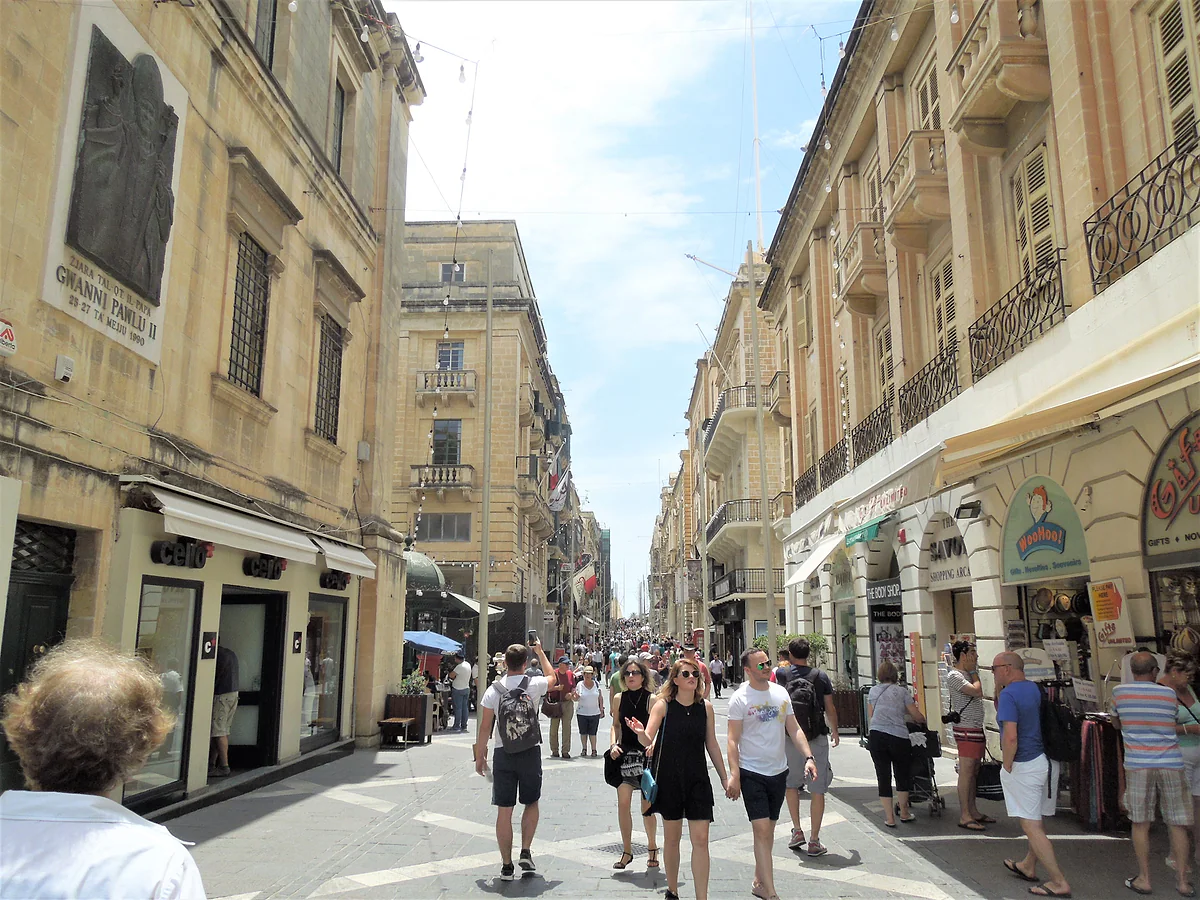
When to go to Malta: the right month for the holiday you want
The best time to visit Malta is April to June and September to October. It's warm without the punishing heat of July and August, the sea is above 18°C (65°F) by late May, and the airport is far quieter than in August, when 1,072,390 passengers passed through in 2025. For a cheap city break, go between November and March.
In 30 seconds
Full read: 4 min
The best months to visit Malta are May, June, September and October.
July and August are the busiest, with over a million passengers a month through the airport in 2025.
January and February are cheapest and quietest, but windy, with the sea at 15 to 16°C.
For water above 22°C (72°F), go between June and October.
If I could only pick one month, it would be May. Long days, a sea you can actually get into, the first village feasts at the end of the month and an airport that hasn't hit its summer peak. October is my plan B, with warmer water and fewer people than August.
Sergio LeponeMy advice
Before you go
What I would keep in mind
01 To save money
Winter is cheaper to get around
A single bus ticket was €2 from 19 October 2025 to 13 June 2026 and is €2.50 the rest of the year. The Gozo ferry has a cheaper night fare from November to March.
Malta International Airport handled 1,072,390 passengers in August 2025 and 507,574 in January, less than half. It's the best guide I have to how busy the islands will be.
03 Most beautiful
October, warm sea and a gentler pace
The sea still averages 24°C (75°F) in October and the average high is around 25°C. The 2026 Blue Flag season ran until 11 October.
The big Heritage Malta sites open 09:00-19:00 from 1 March to 31 October 2026 and close at 17:00 in winter. In January and February the smaller museums close on Mondays and Wednesdays.
The months to visit Malta, best to worst in my view
My own score out of 10. It weighs weather for sightseeing, whether the sea is warm enough to enjoy, how busy it gets (airport passengers in 2025) and what's on. Opinion, with the figures alongside.
Cheapest and quietest, with averages of 12.6 to 14.5°C. Wind storms, and a sea between 15 and 18°C.
5.4 out of 10
Picking when to go to Malta has less to do with the weather, which is decent most of the year, than with what you’re going for. A beach week and a temples trip want different months, and so do a half-term family holiday and a long weekend in March. I’ve sorted it by trip type, using the two figures I trust most for this, the Met Office climate data and the number of passengers going through the airport each month.
The short answer is May or October
Ask me for one month and I’ll say May. It averages about 20°C (68°F), gets roughly 10 mm of rain across the whole month, clocks over 300 hours of sunshine, and the sea is creeping towards 18°C. Village feasts start at the end of the month too, and the 2026 Blue Flag season began on 29 May, so you get lifeguarded beaches without the August crush.
October mirrors it. The water is warmer than in May, averaging 24°C, and highs are still around 25°C. The trade-off is the first storms (October’s rainfall norm is 77.6 mm), and one heavy downpour can rearrange a day. I’d still take it over July or August without much hesitation.
When is Malta least crowded?
In winter, and the gap is big. Malta International Airport handled 507,574 passengers in January 2025 and 1,072,390 in August, more than twice as many. The curve climbs through spring (896,750 in April, 927,709 in May), peaks in July and August and eases off slowly until November. Hotels tell the same story, with the Malta Tourism Authority putting occupancy at 49% from January to March 2024 and 80.7% from July to September.
I haven’t found an official index of hotel or flight prices by month, so I won’t quote any. What I can say is that more demand usually means less choice and higher prices, and that the winter bus fare is €2 instead of €2.50. If saving money is the aim, start with Malta on a budget.
For beaches and swimming
Here the water matters more than the air. From June to October the sea sits above 22°C (72°F), peaking in August and September at around 26°C. May is swimmable but fresh. Every month is laid out in my guide to Malta sea temperature.
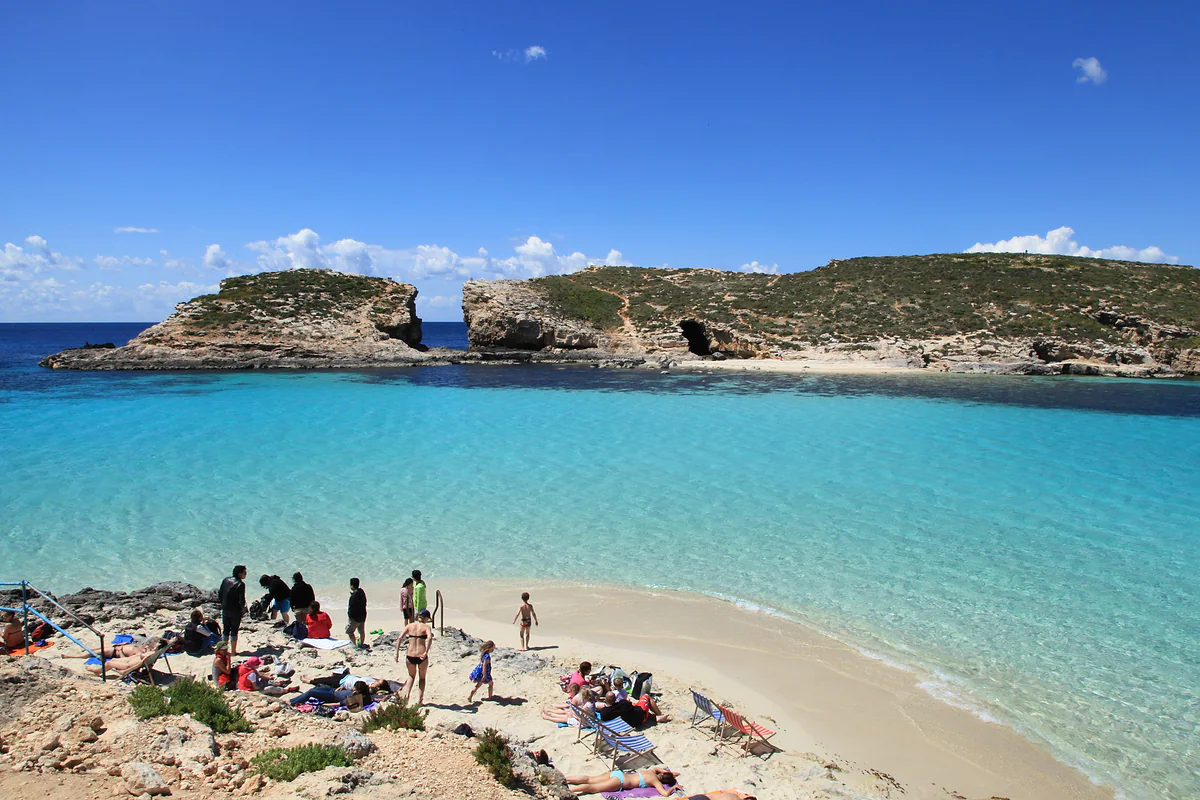
My pick for a beach holiday is the second half of June or September. Warm water, long days, the feasts, and none of the August peak. In high summer, bear in mind that landing at Comino’s Blue Lagoon now means booking a free slot, with numbers capped, so check this year’s rules first.
For towns, temples and museums
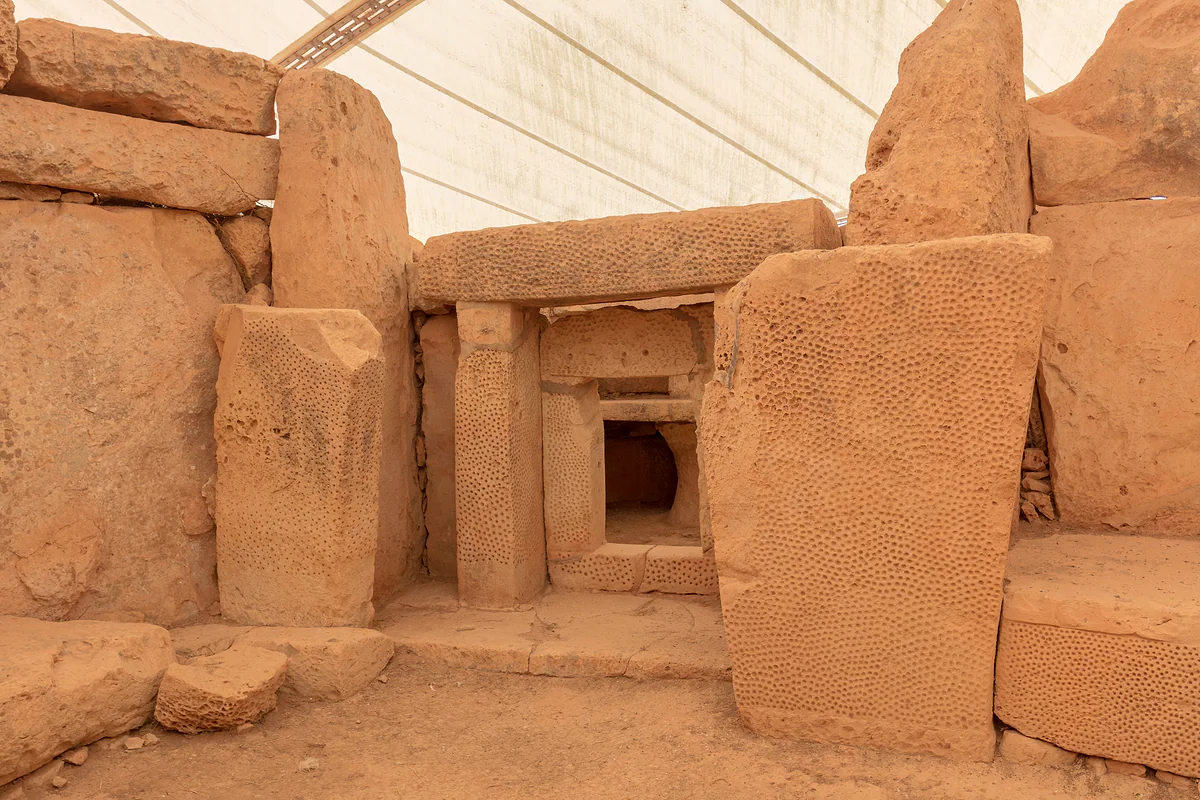
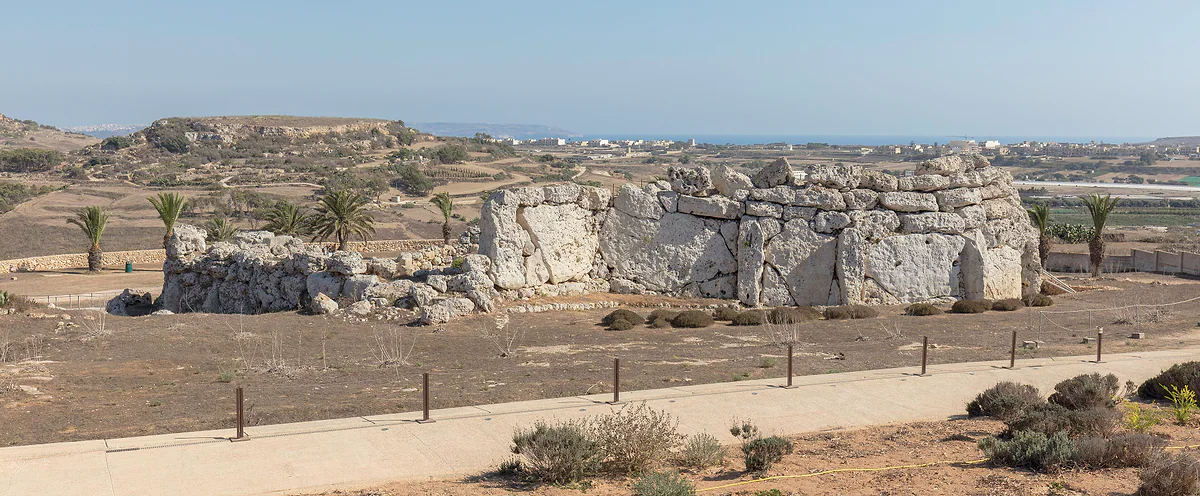
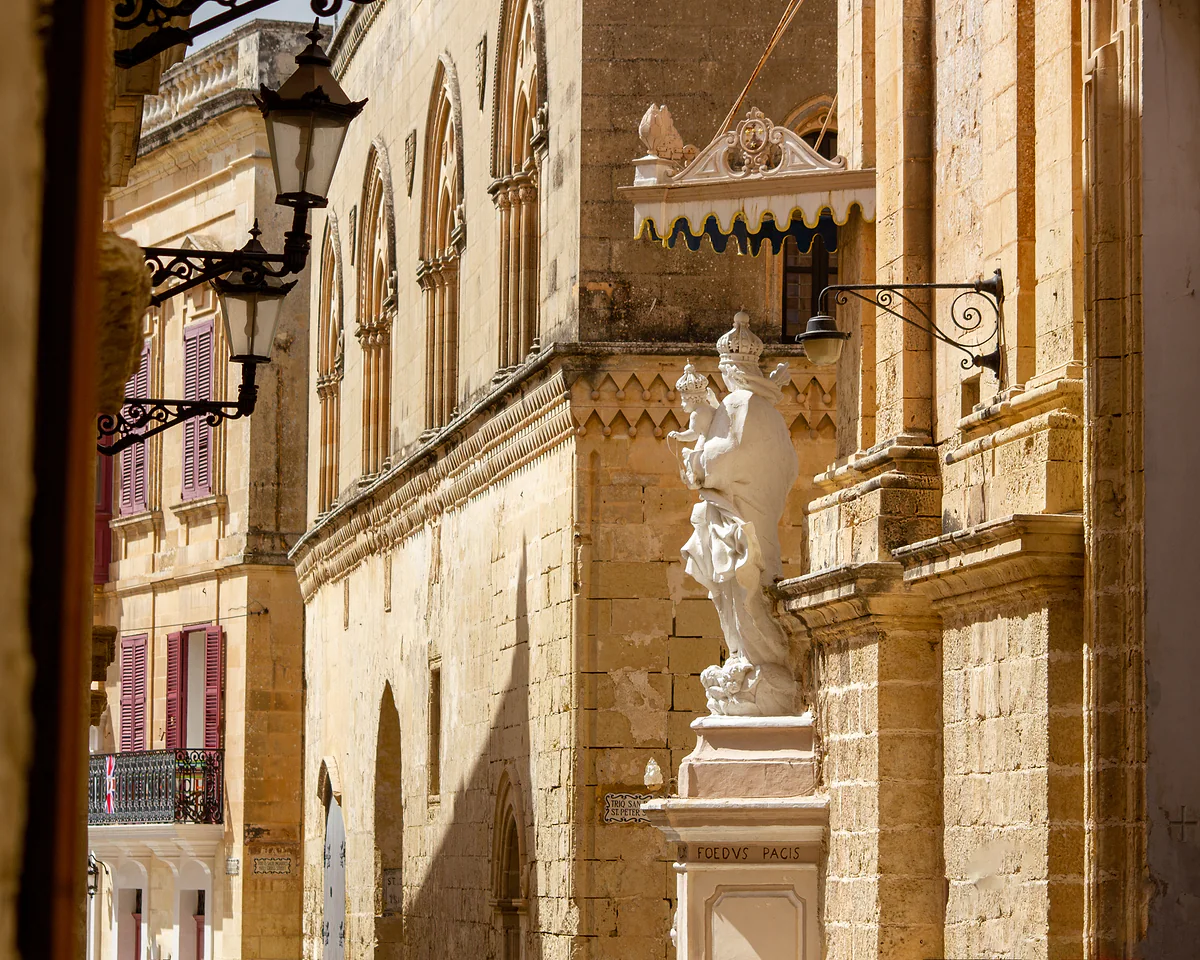
This is where winter and early spring win. Wandering Valletta or Mdina at 14 or 16°C beats doing it at 32°C, and at open-air sites such as Ħaġar Qim the midday sun is hard to escape. Do check Heritage Malta’s hours, though. From 1 March to 31 October 2026 the big sites opened 09:00 to 19:00, and in winter they shut at 17:00. Between 4 January and 28 February 2027 the smaller museums also close on Mondays and Wednesdays.
March is the most underrated month for this kind of trip. You get the long museum hours, around 224 hours of sunshine and occasions like Freedom Day on 31 March, while the airport is still well below its summer pace.
When I’d stay away, and why
I’d avoid July and August unless you’ll spend most of the day in the water. August’s average high is 32°C (90°F) and heatwaves are becoming routine. July 2026 had one lasting seven days, from the 16th to the 22nd, hitting 43.3°C (110°F), and late August brought another with an orange warning. In that heat, sightseeing shrinks to early morning and early evening. If that’s when you’re going anyway, Malta in July and Malta in August show how I’d split those days.
Nor would I choose January or February for a beach trip. The sea is around 15 or 16°C and the storms can be serious. On 20 January 2026, Storm Harry kept the Met Office’s red wind warning in force. In return you get museums without queues, which is how I pitch Malta in January. For a city break, though, those months have their charm, and I cover them in Malta in winter.
If you’re tied to school holidays
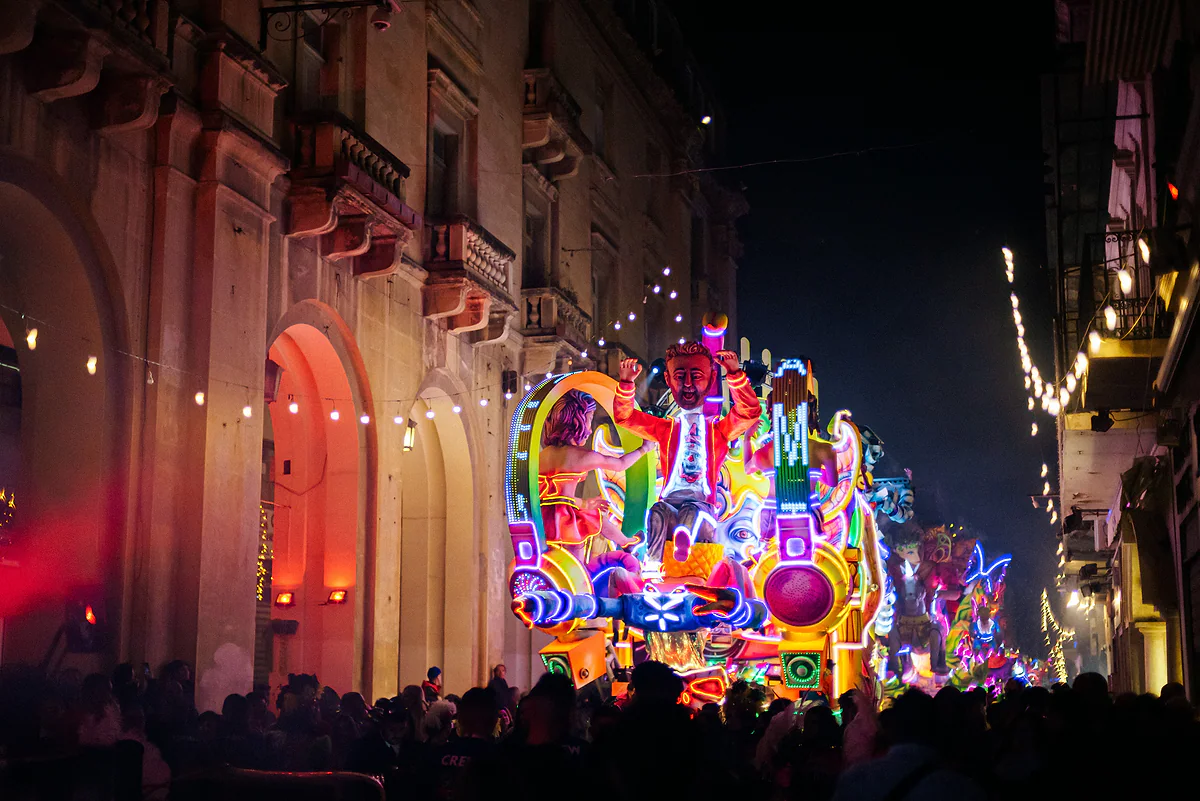
Easter works well, and in 2027 it’s an early one, Good Friday being 26 March, with spring weather and processions in the villages. February half-term lands in Malta’s coolest, windiest weeks, fine for sightseeing but not for the beach. In summer, if there’s no alternative, book early, stay near the sea and flip the day round, culture first thing and the beach at midday. Temperatures and rainfall for each season are in my page on Malta weather.
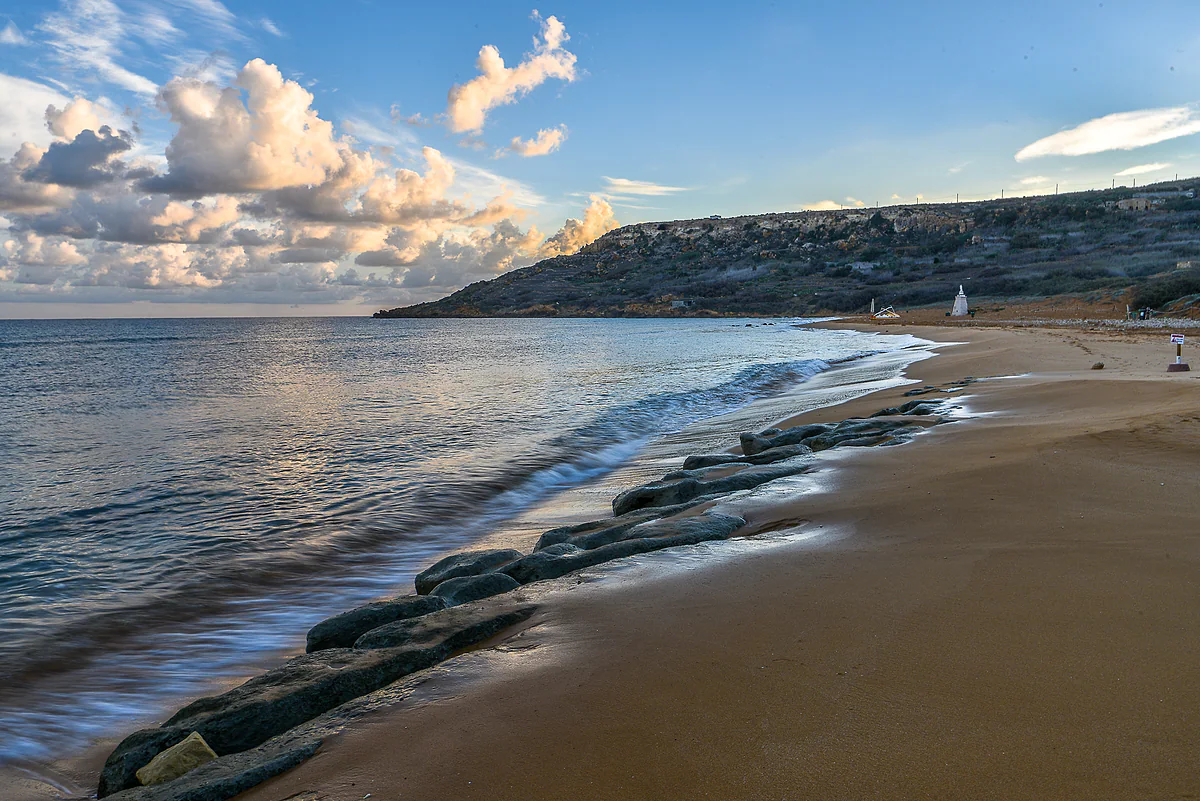
Ramla l-Ħamra beach in Gozo, with its reddish sand, gentle waves on the shore and the green hill that closes off the bay.
Malta month by month, at a glance
Month
Average temperature
Sea
Airport passengers (2025)
January
12.9°C (55°F)
16.2°C (61°F)
507,574
February
12.6°C (55°F)
About 15.3°C (60°F)
560,553
March
14.1°C (57°F)
15.3°C (60°F)
725,134
April
16.4°C (62°F)
16.3°C (61°F)
896,750
May
About 20°C (68°F)
About 18.4°C (65°F)
927,709
June
24.2°C (76°F)
22°C (72°F)
923,374
July
26.9°C (80°F)
About 25.2°C (77°F)
1,035,341
August
Average high 32°C (90°F)
About 26.7°C (80°F)
1,072,390
September
Average high about 28.6°C (83°F)
26.1°C (79°F)
990,556
October
21.7°C (71°F)
24°C (75°F)
978,445
November
17.9°C (64°F)
21°C (older norm)
734,791
December
14.5°C (58°F)
About 18.3°C (65°F)
709,352
Climate figures are Malta Meteorological Office norms (Luqa); the ones marked «about» are my own sums from its notes. Passengers from Malta International Airport's 2025 annual report.
What changes between winter and summer
What
Winter
Summer
Bus (single ticket)
€2 (19 Oct 2025 to 13 Jun 2026)
€2.50
Main Heritage Malta sites
09:00-17:00
09:00-19:00 (1 Mar to 31 Oct 2026)
Sliema-Valletta ferry, Sundays
Until 18:30 (1 Nov to 31 May)
Until 00:00 (1 Jun to 31 Oct)
Gozo ferry
Night fare November to March
Standard fare
Hotel occupancy (2024)
49% January to March
80.7% July to September
Test yourself
True or false?
0/4Pick before you peek.
August is the busiest month at Malta's airport.
See the answer
True. In 2025, 1,072,390 people passed through Malta International Airport in August, the year's peak, with July second on 1,035,341.
Malta's Blue Flag beach season runs all year round.
See the answer
False. In 2026 it ran from 29 May to 11 October, according to the Malta Tourism Authority's call for beach supervisors.
The bus is cheaper in winter than in summer.
See the answer
True. Malta Public Transport charges €2 a ticket in the winter season and €2.50 in summer.
Maltese hotels are as full in January as in August.
See the answer
False. The MTA puts collective accommodation occupancy at 49% from January to March 2024, against 80.7% from July to September.
For me, May, with an average of about 20°C (68°F), 307 hours of sunshine and the first village feasts. If you want the warmest sea without August, go in October, when the water is at 24°C.
When is peak season in Malta?
July and August. In 2025 the airport handled 1,035,341 passengers in July and 1,072,390 in August, double January's figure. Hotel occupancy from July to September 2024 was 80.7%.
When is the off season in Malta?
November to March, with January and February the quietest. Collective accommodation occupancy from January to March 2024 was 49%, and buses and the Gozo ferry have winter prices.
When is the cheapest time to go to Malta?
Winter, although there's no official price index by month. What is measured is lower demand, with 507,574 passengers in January 2025, and the bus fare drops to €2.
Is Malta warm enough in October?
Yes. October averages 21.7°C with average highs around 25°C (77°F), and the sea is still at 24°C. Expect some heavy showers, as October's rainfall norm is 77.6 mm.
Is Malta worth visiting in winter?
Yes, if you're after towns, temples and museums. January averages 12.9°C (55°F) with around 170 hours of sunshine, but plan for days of strong wind and rain.
Tourism graduate with a master’s in Tourism Management and Planning from the University of Málaga, who has travelled across Europe. He writes every guide from official sources and his own judgement.