May to September
Malta in summer and spring: the sea, the feasts and the heat
Summer in Malta is long, dry and very hot, with an average August high of 32°C (90°F) and the sea between 22°C in June and about 26°C in August and September, according to the Met Office. It's the season for beaches and village feasts, from late May to September, and the busiest, with over a million airport passengers a month in July and August.
In 30 seconds
Full read: 4 min
- Maltese summers are dry and hot, with a 32°C (90°F) average high in August and just 15.8 mm of rain from June to August.
- The sea is 22°C in June and about 26°C in August and September.
- Village feasts fill the weekends from late May to September.
- July and August are the busiest months and the heatwave months, like the 43.3°C one in July 2026.
My rule for a Maltese summer is to turn the day upside down. Temples, forts and museums first thing or after 17:00, and midday in the water or in the shade. Given the choice, I'd take June or September over July and August.

Before you go
What I would keep in mind
-
01 My tip
The Blue Lagoon needs a booking
Since 2025 you need a free booking for one of three time slots to set foot on Comino's Blue Lagoon, with a cap of 4,000 people at once. Check the current rules before you go.
Blue Lagoon on Comino -
02 Most beautiful
A festa beats any organised show
Visit Malta describes the feast season as a run of long weekends from late May well into September, with statues, band marches and fireworks to finish.
Malta's village feasts -
03 My tip
On Sundays, the ferry runs till midnight
From 1 June to 31 October, the Sliema to Valletta ferry runs 08:45 to 00:00 on Sundays and public holidays. In winter it stops at 18:30.
Sliema to Valletta ferry -
04 My tip
Heritage Malta opens until 19:00
From 1 March to 31 October 2026, the main sites open 09:00 to 19:00. That's your window to see the temples in the evening light and with less heat.
the megalithic temples of Malta
What I would book
- Places to stayBooking.com Mellieħa stays for a beach summer You have the sandy Għadira beach alongside and the Gozo ferry at Ċirkewwa close by.
- Tours and ticketsGetYourGuide Boat to Comino and the Blue Lagoon Summer places go fast. Check that the trip includes, or leaves you time to make, the free lagoon booking.
I’ve put summer together with the spring that leads into it, because in Malta the good weather starts well before June, and so does the urge to swim. March to May is the season of wind and Saharan dust, and June to September the season of heat, beaches and village feasts. If you want to pick a specific month, each one is covered in the best time to visit Malta.
Spring, when Malta gets going
The Met Office gives spring an average of 16.8°C (62°F), 68.6 mm of rain and almost 785 hours of sunshine. March is still windy with a cold sea, but by May it’s around 20°C, and summer sometimes jumps the queue. In 2024, for instance, May already had three days of heatwave, peaking at 32.3°C.
The detail I’d bear in mind is dust. When a depression settles over the Maghreb, desert sand crosses the sea and leaves days of white skies and low visibility. In April 2022 it was observed on six days. It won’t spoil a holiday, but it can spoil a clifftop photo.
Spring also brings two dates worth planning around. The Malta International Fireworks Festival filled the second half of April in 2026, from the 18th in Nadur to the final on the 30th, and Easter processions take over the villages in Holy Week. Easter 2027 comes early, with Good Friday on 26 March, so expect spring rather than summer weather.
Summer, dry heat and no rain
From June to August the rainfall norm is 15.8 mm in total. 2026 was more extreme. The last rain the Met Office measured at Luqa before its end-of-summer note on 28 August had fallen on 16 May. July’s average high is 31.7°C (89°F) and August’s 32°C (90°F).
Heatwaves are no longer unusual. The July 2026 heatwave lasted a week and set a reading of 43.3°C (110°F) on Saturday the 18th, unmatched in a hundred years of Julys, plus three days in a row above 42°C, another first. The Met Office issued a red warning. Another, shorter one followed at the end of August, with an orange warning and a forecast “feels like” temperature close to 46°C because of the humidity.
What to do in Malta in summer
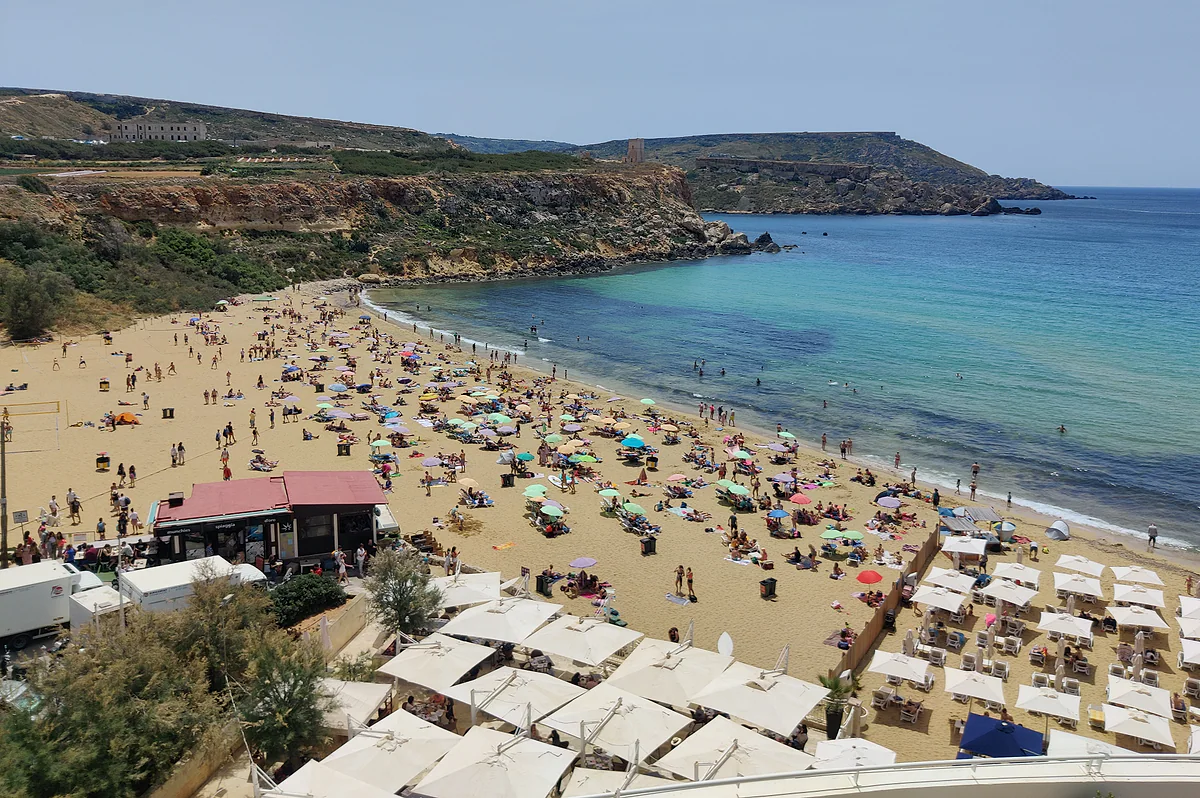
First, the sea. With the water between 22 and 26°C, it’s the season for the best beaches in Malta, for snorkelling and for boat trips to Comino. The 2026 Blue Flag season ran from 29 May to 11 October, with lifeguarded beaches and sea-condition flags. And for the Blue Lagoon, remember the free booking required since 2025, with no more than 4,000 swimmers allowed at once.
Second, the feasts. According to Visit Malta each festa runs for three days or more, and the season strings weekends together from the end of spring into September. Expect bunting over the streets, saints in papier-mâché, stalls of Maltese nougat and fireworks to wrap it up. On Gozo, the Ministry published the 2026 calendar, which took in Għasri, Fontana, Gozo and Xewkija in June. The dates and my favourites are in Malta’s village feasts. In Malta in September I follow the season through to Xagħra’s feast on the 8th.
Third, culture on summer hours. With the long 2026 hours, applied by Heritage Malta from March to October, the big temples and forts closed at 19:00, and I’d save them for the end of the day.
Coping with the heat without missing out
My plan for July and August is simple. Sightseeing first thing, sea or a siesta from 12:00 to 17:00, and a stroll as the evening cools. The Met Office tells people to follow the health authorities’ advice, drink plenty of water and avoid long exposure to direct sun, and in the first week of June 2026 the UV index had already reached 10, which counts as very high. Pack high-factor sun cream from home. For refills, the answer to can you drink tap water in Malta is yes by the utility’s account, even if it can taste of chlorine.
Getting around, you pay €2.50 per bus ticket in summer, and from June to October the Sliema to Valletta boat stays on until midnight on Sundays and public holidays. It’s the coolest way across the harbour. And if you’d rather spend the night on the water, the Ministry for Gozo names summer as peak season for Malta boat parties.
What to book early
July and August are the airport’s busiest months (1,035,341 and 1,072,390 passengers in 2025), and hotel occupancy from July to September 2024 was 80.7%. I’d book accommodation, any car hire and the Comino boat well ahead. If your trip falls in high summer, see Malta in August, and if you prefer early summer, Malta in June. For the month of Valletta’s Jazz Festival there’s Malta in July.
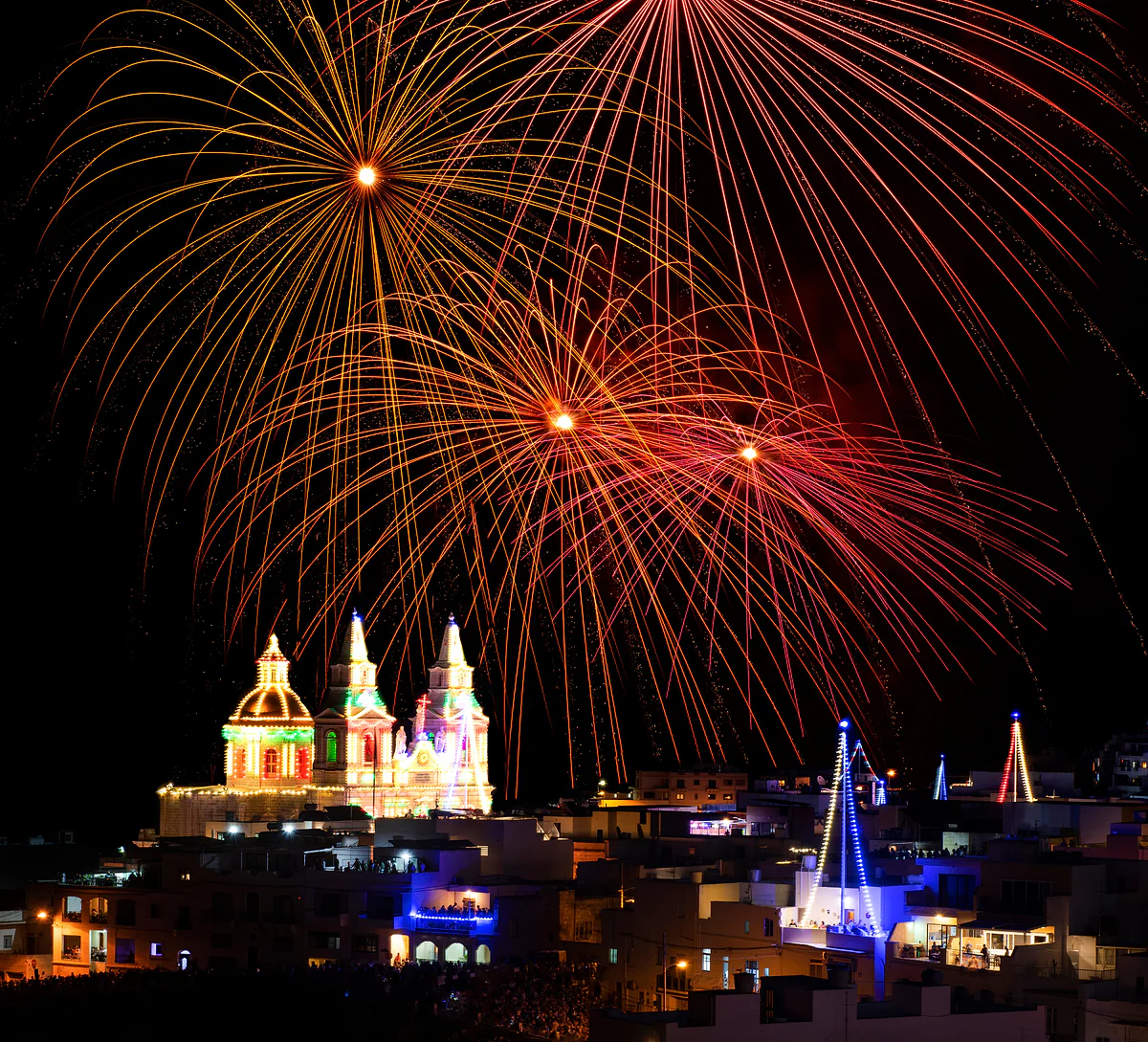
Red and gold fireworks bursting over the illuminated parish church of Mellieħa on the closing night of its September village festa.
Spring and summer in figures (Met Office)
| Month | Temperature | Rain | Sunshine | Sea |
|---|---|---|---|---|
| May | About 20°C (68°F) average | 10.2 mm | 307.2 h | About 18.4°C |
| June | 24.2°C (76°F) average | 5.8 mm | 334.1 h | 22°C |
| July | 26.9°C (80°F) average, 31.7°C (89°F) average high | 0.1 mm | No published norm | About 25.2°C |
| August | Average high 32°C (90°F) | No published norm | No published norm | About 26.7°C |
| September | Average high about 28.6°C (83°F) | 59.2 mm | 253.1 h | 26.1°C |
1991-2020 norms quoted in the Malta Meteorological Office's notes. Figures marked «about» are my own sums.
What only runs, or runs longer, in the summer season
| What | When | Source |
|---|---|---|
| Blue Flag (lifeguarded beaches) | 29 May to 11 Oct 2026 | MTA |
| Heritage Malta long hours | 1 Mar to 31 Oct 2026, 09:00-19:00 | Heritage Malta |
| Boats from Ċirkewwa to the Blue Lagoon | 1 May to 31 Oct (2023 information) | Visit Malta |
| Sliema-Valletta ferry on Sundays until 00:00 | 1 Jun to 31 Oct | Valletta Ferry Services |
| Harvest at the Xwejni salt pans (Gozo) | Mid-May to September | Visit Gozo |
Test yourself
True or false?
0/4 Pick before you peek.
-
In July 2026 Malta broke its all-time temperature record.
See the answer
False. It hit 43.3°C on 18 July, a record for July, but the all-time high is still 43.8°C, from 9 August 1999.
-
It hardly rains in Malta in summer.
See the answer
True. The June to August norm is 15.8 mm in total, and in 2026 the last rain measured at Luqa before the end of August fell on 16 May.
-
The 2026 Blue Flag season started in June.
See the answer
False. It started on 29 May and ended on 11 October, according to the MTA's call for beach supervisors.
-
Spring in Malta gets almost 785 hours of sunshine.
See the answer
True. That's the Met Office norm for March to May, with an average of 16.8°C and 68.6 mm of rain.
- August average high
- 32°C
- July record, 18 July 2026
- 43.3°C
- Normal rainfall, June to August
- 15.8 mm
- Normal spring sunshine, March to May
- 785 h
0 of 279 Malta guides
Your next stamp
- In June
- July
- August
- In May
- Sea temperature
- September
- Weather
- In April
- Things to do in Malta
- Gozo
- Most beautiful places
- Comino
- Prettiest villages
- UNESCO World Heritage Sites
- Where is Malta
- The Maltese islands
- Towns and villages
- Island of Malta
- Blue Lagoon
- Fort Rinella
- Fort St Angelo
- Gardjola Gardens
- Ħal Saflieni Hypogeum
- Is Malta a country?
- Popeye Village
- Tarxien Temples
- Things to do in Gozo
- Valletta
- Esplora
- Golden Bay
- Gozo day trip
- Inquisitor's Palace
- Population
- St John's Co-Cathedral
- St Mary's Tower
- Grandmaster's Palace
- How big is Malta
- Maritime Museum
- Mellieħa Bay
- Fort St Elmo
- Language
- Malta at War Museum
- Paradise Bay
- Barrakka Gardens
- Red Tower
- Religion
- Malta government
- Saluting Battery
- MUŻA
- National Museum of Archaeology
- Underground Valletta
- Lascaris War Rooms
- Casa Rocca Piccola
- Malta in one day
- Three Cities
- Victoria
- Birgu
- Manoel Theatre
- Weekend in Malta
- Xagħra
- City Gate and Parliament
- Malta in three days
- Nadur
- Senglea
- Cospicua
- Malta in four days
- Qala
- Valletta Waterfront
- Għajnsielem
- Kalkara
- Malta in five days
- Malta in a week
- Paola
- Xewkija
- Sannat
- Tarxien
- Munxar
- Żabbar
- Fgura
- Fontana
- Kerċem
- Luqa
- Floriana
- Marsa
- Mellieħa
- The Citadel, Gozo
- Żebbuġ (Gozo)
- Ġgantija Temples
- Marsalforn
- Santa Luċija
- Ramla Bay
- San Lawrenz
- Xgħajra
- Xwejni salt pans
- Calypso's Cave
- Għarb
- Żejtun
- Għasri
- Gudja
- San Blas Bay
- Għaxaq
- Ħondoq Bay
- Marsaxlokk
- Kirkop
- Marsaxlokk Fish Market
- Mqabba
- St Peter's Pool
- Marsaskala
- Qrendi
- Żurrieq
- Beaches
- Comino ferry
- EU, Schengen and the euro
- Ħaġar Qim and Mnajdra
- Mdina
- Mġarr (Gozo)
- Blue Grotto
- Diving
- Entry requirements
- Mdina Cathedral
- Xewkija Rotunda
- Birżebbuġa
- Money and payments
- Palazzo Falson
- Safi
- Shipwrecks
- Ta' Ċenċ Cliffs
- Għar Dalam
- Mdina Dungeons
- Mġarr ix-Xini
- Prices and budget
- Snorkelling
- Boat trips
- Malta on a budget
- Playmobil FunPark
- Rabat (Malta)
- Xlendi
- Dwejra
- Gozo beaches
- History
- Siġġiewi
- St Paul's Catacombs
- Tipping
- Azure Window
- Domvs Romana
- Għar Lapsi
- Great Siege of 1565
- Plugs
- Limestone Heritage Park
- Second World War
- St Paul's Grotto
- Ta' Pinu Basilica
- Time zone
- Buskett Gardens
- Knights of Malta
- Mobile and roaming
- Wied il-Għasri
- Dingli
- Maltese cross
- Dingli Cliffs
- Flag
- Żebbuġ
- Coat of arms
- Mtarfa
- Balzan
- National anthem
- Lija
- Malta facts
- Game of Thrones
- Iklin
- Attard
- Film locations
- Forts and fortifications
- San Anton Gardens
- Ta' Qali Crafts Village
- Victoria Lines
- Megalithic temples
- Catacombs
- Museums
- Where to eat
- Where to stay
- Churches
- Hotels in Valletta
- Restaurants in Valletta
- Hotels in Sliema
- Maltese food
- Restaurants in Marsaxlokk
- Viewpoints
- Hotels in St Julian's
- Pastizzi
- Walking and hiking
- Hotels in Buġibba and Qawra
- Maltese rabbit stew
- Safety
- Hotels in Mellieħa
- Kinnie and Cisk
- Scams
- Gozo hotels
- Nightlife
- Tap water
- Boat parties
- Holiday packages
- Tourist tax
- All inclusive
- Gay Malta
- Sightseeing passes
- Apartments
- Malta with kids
- Public holidays
- How to get there
- Luxury
- Malta for couples
- Taxis and ride-hailing
- Best time to visit
- Cycling
- English schools
- Flights
- Flights from Madrid
- Shopping and souvenirs
- Airport
- Free walking tours
- In winter
- Airport transfers
- Day trips and tours
- Ferry from Sicily
- In January
- Cruise stop
- In February
- In March
- Getting around
- Buses
- Hop on hop off
- Gozo ferry
- Gozo fast ferry
- October
- November
- Valletta ferries
- Car hire
- December
- Driving
- Events
- St Paul's Bay
- Village feasts
- Buġibba
- Christmas
- Easter
- Qawra
- Carnival
- Xemxija
- Fireworks festival
- Malta National Aquarium
- Isle of MTV
- St Paul's Islands
- Mosta
- Mosta Rotunda
- Naxxar
- Palazzo Parisio
- Għargħur
- Mġarr (Malta)
- Sliema
- Ta' Ħaġrat and Skorba Temples
- Għajn Tuffieħa Bay
- Tigné Point
- Ġnejna Bay
- St Julian's
- Paceville
- St George's Bay
- Gżira
- Msida
- Ta' Xbiex
- Pietà
- Pembroke
- Swieqi
- San Ġwann
- Birkirkara
- Ħamrun
- Santa Venera
- Qormi
Frequently asked questions
What is the weather like in Malta in summer?
Dry heat and sunshine almost every day. July averages 26.9°C with an average high of 31.7°C (89°F), and August's average high is 32°C (90°F). The rainfall norm from June to August is just 15.8 mm.
Is Malta too hot in summer?
It can be, and increasingly so. July 2026 had a seven-day heatwave peaking at 43.3°C (110°F), a July record, and late August brought another with an orange warning and a forecast 'feels like' temperature near 46°C.
What is there to do in Malta in summer?
Beaches and coves, boat trips to Comino and Gozo, diving and snorkelling with the water above 22°C and, above all, the weekend village feasts with processions, band marches and fireworks.
Is Malta busy in summer?
Yes. In 2025 the airport handled 1,035,341 passengers in July and 1,072,390 in August, and hotel occupancy from July to September 2024 was 80.7%. Book accommodation early.
Where should I stay in Malta in summer?
Near the sea with good bus links. Sliema and St Julian's have swimming off the rocks and the Valletta ferry, while Mellieħa or Bugibba put you close to the sandy beaches of the north and the Gozo ferry.
What is Malta like in spring?
Mild and bright, averaging 16.8°C (62°F) with almost 785 hours of sunshine from March to May. The sea stays cold until May, and there are windy days and some Saharan dust.
By
Tourism graduate with a master’s in Tourism Management and Planning from the University of Málaga, who has travelled across Europe. He writes every guide from official sources and his own judgement.
Published on . Facts checked on .
Sources
Photos: Searching For Bliss (CC BY 4.0); Renata Apan (CC BY-SA 4.0), via Wikimedia Commons.