Ten stone villages, each with a score
The prettiest villages in Andorra
My pick for the prettiest village in Andorra is Pal, above 1,500 m in La Massana, all stone, timber and slate around the Romanesque church of Sant Climent. Next come La Cortinada and Llorts in Ordino and the old quarter of Les Bons in Encamp. One warning: Auvinyà looks medieval, but it's a 21st-century recreation.
In 30 seconds
Full read: 3 min
- My pick for Andorra's prettiest village is Pal, above 1,500 m in La Massana.
- Next come La Cortinada and Llorts in Ordino and the old quarter of Les Bons in Encamp.
- Auvinyà looks medieval but is a 21st-century recreation.
- The Romanesque churches in the villages are free to visit.
Don't try to do all ten in a day. I'd pair Pal, Sispony and Anyós for one morning in La Massana, and La Cortinada and Llorts for another in Ordino, because each group shares a valley and they're minutes apart.

Before you go
What I would keep in mind
-
01 Most beautiful
Pal still looks like a mountain village
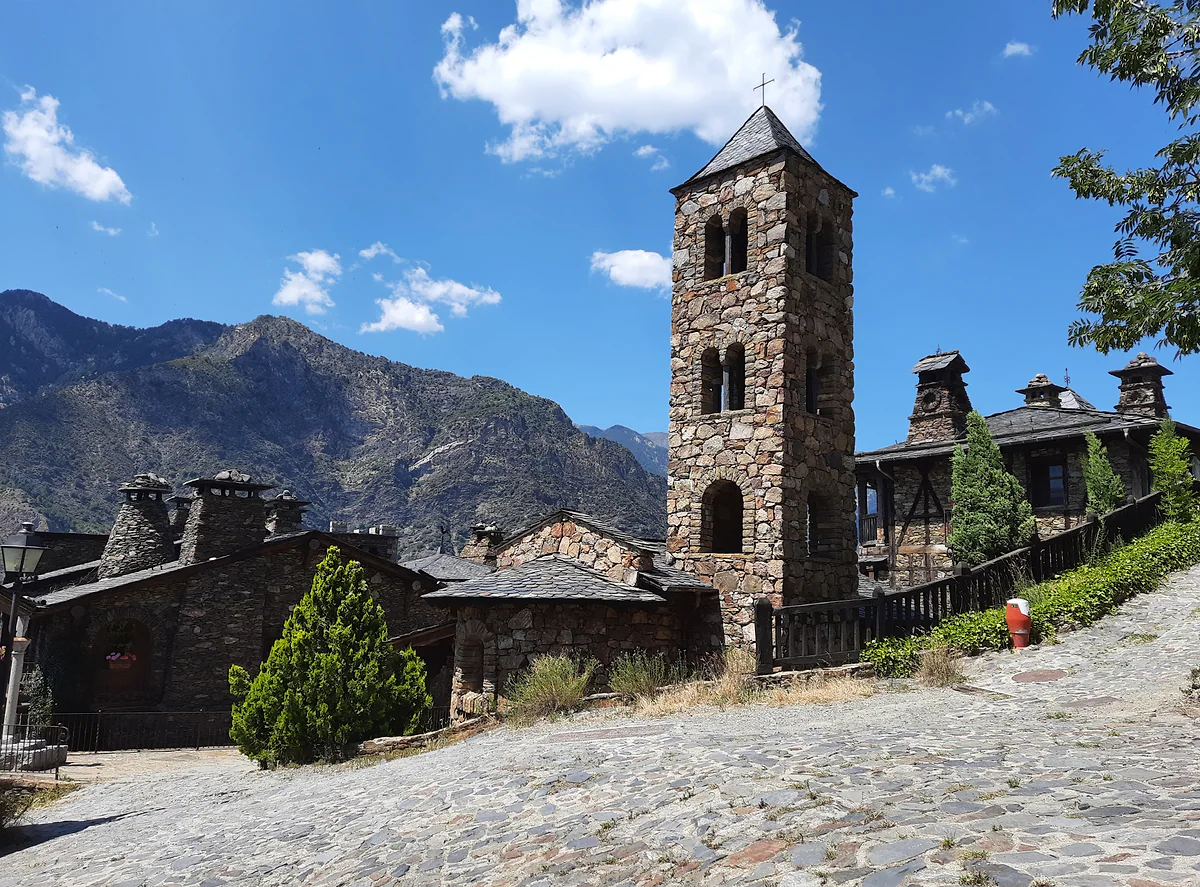
The tourist board calls it one of the few that have kept the profile of a traditional mountain village, and I agree. Stone, timber, slate and Sant Climent at the top.
Pal village -
02 Watch out
Auvinyà isn't medieval, whatever it looks like
It has cobbled lanes, handmade street lamps and stone bridges, but the tourist board itself explains it's a recreation of a medieval village built in the 21st century. Pretty, yes; old, no.
Auvinyà -
03 To save money
Village churches don't charge
Sant Climent de Pal, Sant Martí de la Cortinada and Sant Serni de Llorts are free to visit, like nearly every church in the country. Only Santa Coloma charges, because it's sold with the Espai Columba.
Romanesque churches in Andorra -
04 Getting there
The national bus reaches most of them
Lines L5 to Arinsal, L6 to Ordino and L7 to La Massana leave from Andorra la Vella, every 20 minutes to an hour. For Fontaneda or Ransol, a hire car is easier.
Andorra buses
What I would book
- Places to stayBooking.com La Massana, for Pal, Sispony and Anyós All three villages are minutes away, and the L7 bus takes you back to Andorra la Vella without a car.
- Places to stayBooking.com Ordino, for La Cortinada and Llorts You stay in the parish with the most stone villages, close to the start of the Iron Route.
My ranking, scored
The prettiest villages in Andorra, my ranking
The scores are mine. I reward villages whose stone core survives intact, that have something to see inside and a setting to match, and I take points off where roads or new building crowd the picture.
0 of 10 seen
-
Pal
Stone, timber and slate houses above 1,500 m, and Sant Climent from the late 11th century, the only church in Andorra with a three-storey bell tower.
9.3 out of 10
-
La Cortinada
Cal Pal, a house dated 1347, the church of Sant Martí with its wall paintings, and the old mill and sawmill with their original water-powered saw.
9.0 out of 10
-
Llorts
Stone houses with wrought-iron balconies, Sant Serni and the only mine in the country still intact, at the end of the Iron Route.
8.8 out of 10
-
Les Bons
An old quarter of Encamp with 16th and 17th-century buildings, two dovecotes, the Torre dels Moros and Sant Romà on the slope above.
8.6 out of 10
-
Sispony
Stone farmyards at the heart of the village, Sant Joan in the middle and Casa Rull, the house of a well-off farming family.
8.3 out of 10
-
Ransol
Medieval houses in a side valley of Canillo, with Sant Jaume by the road and the way up to the Serrera peak.
8.2 out of 10
-
Fontaneda
Fewer than 150 residents, stone houses with slab roofs lined up on one side of the road, and one of the best views over the Sant Julià valley.
8.0 out of 10
-
Anyós
Sant Cristòfol, from the 12th century, on a hill at about 1,300 m. To me the church and the view matter more than the streets.
7.8 out of 10
-
Santa Coloma
Old village and modern suburb side by side, with the pre-Romanesque church and the Torre dels Russos, listed in 2004.
7.6 out of 10
-
Auvinyà
Pedestrianised and well kept, five minutes from Sant Julià. It scores lower only because it's a 21st-century recreation, not an old village.
7.2 out of 10
Andorra has a reputation for hotel blocks and shopping streets, and on the valley floor it’s earned. But drive ten minutes up almost any side road and you reach villages of stone and slate with a Romanesque church, old hay barns and meadows all around. These are the ten I’d visit, each scored, with a warning about one that isn’t what it seems. For a complete list of villages, without the ranking, see towns and villages in Andorra.
Pal, where the mountain village survives
My number one is Pal in La Massana. It stands above 1,500 m and the comú has protected it as a historic ensemble under a special planning scheme since 1998. Old houses and new ones share the same stone, timber and slate, and above them rises Sant Climent, built between the late 11th and early 12th centuries. The tourist board says it’s the only church in Andorra with a three-storey bell tower. A few kilometres away, the Bike Park and Pal’s viewpoints give it a summer life too.
Nearby in the same parish are Sispony and Anyós. Sispony keeps its stone farmyards right at its heart, along with Casa Rull, one of the few places that show how a farming family lived when crops and livestock were the whole economy. Anyós is worth it mainly for Sant Cristòfol, a 12th-century church on a hill at about 1,300 m.
Ordino, the parish of stone villages
If I could pick only one parish for a village tour, it would be Ordino. Its comú recognises eight official villages, and two of them sit near the top of my list. La Cortinada has Cal Pal, a manor house dated 1347, the church of Sant Martí with murals inside, and the Mola and Serradora de Cal Pal, a mill and sawmill from the late 16th and early 17th centuries that still hold their water-powered saw and millstone.
Llorts is the village of wrought-iron balconies, with the Els Cóms fountain and Sant Serni, a listed building. Next to it is the Llorts mine, the only one in the country still intact, with about 30 metres of tunnel. The Iron Route ends here, a walk of an hour and a half along the old royal road from La Cortinada.
Les Bons and Ransol, in the eastern valleys
In Encamp, the historic quarter of Les Bons is one of the parish’s best-kept corners. It has 16th and 17th-century buildings, a water tank dug into the ground, the Rossell and Cotxa dovecotes and the Torre dels Moros. Above them stands Sant Romà de les Bons, which the tourist board describes as the only church in Andorra with a semicircular Lombard-style apse.
Ransol, in Canillo, is small, with medieval houses in its old centre. Its church, Sant Jaume de Ransol, is of pre-Romanesque origin and stands by the road on a stretch of the Camino de Santiago. From the Coma de Ransol a path climbs to the Serrera peak, over 2,900 m, which makes the village a good base for walkers.
Is there a medieval village in Andorra?
This is where many visitors get it wrong. Auvinyà, five minutes from Sant Julià de Lòria, has cobbled lanes, handmade street lamps, stone houses with wooden balconies and even little bridges. It looks like an untouched medieval village, but the tourist board says plainly that it’s a recreation built in the 21st century. It’s traffic-free and pleasant, and from the chapel of Sant Romà d’Auvinyà, dated to the 10th century, you can see the whole valley. Worth a stop, provided you go in knowing it’s new.
If you want the genuinely old, Les Bons and Ransol are your answer.
Two more in the south
Fontaneda, also in Sant Julià, has fewer than 150 residents and one quirk, every stone house with its slab roof stands on the same side of the road, looking out over the valley. The church of Sant Miquel sits above and keeps traces of paintings by the Master of Anyós. The Mas Berenguer winery, which grows pinot noir, chardonnay and sauvignon blanc, is close by.
In Andorra la Vella, Santa Coloma pairs an old core with its pre-Romanesque church and the Torre dels Russos, listed in 2004. It’s the least village-like of the ten, but it has the most interesting church. All the Romanesque churches, with how to visit them, are in Romanesque churches in Andorra. The landscapes that aren’t villages are in most beautiful places in Andorra.
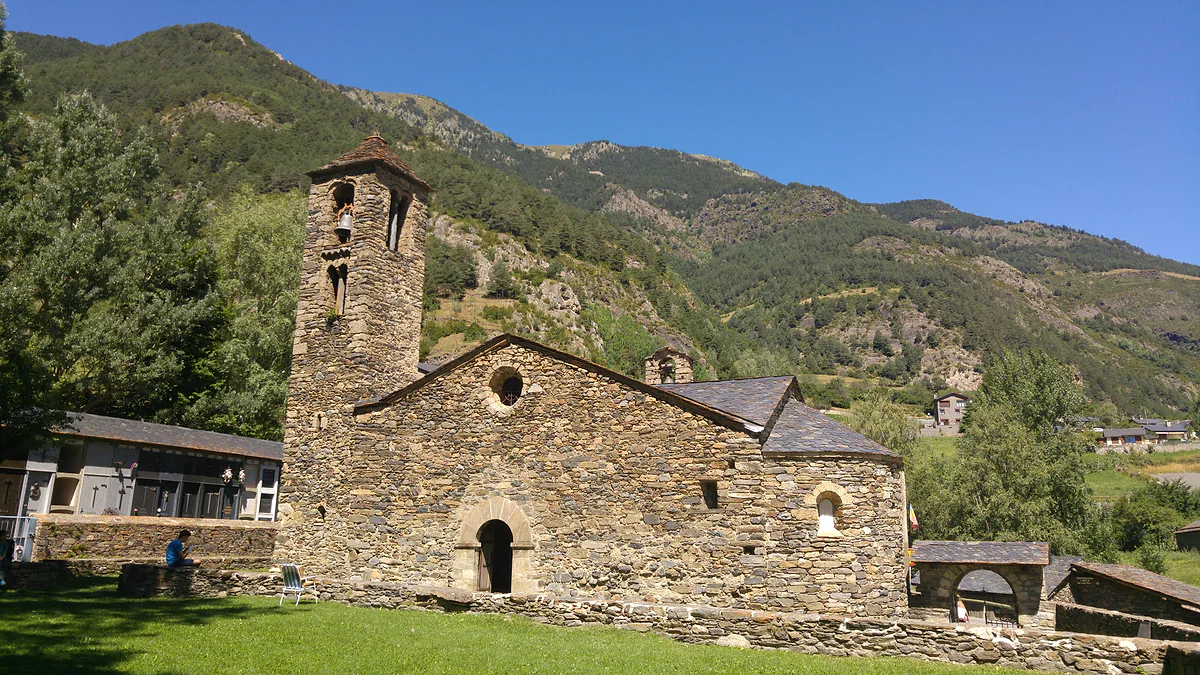
La Cortinada in Ordino, with the church of Sant Martí and its meadows at the foot of the mountain
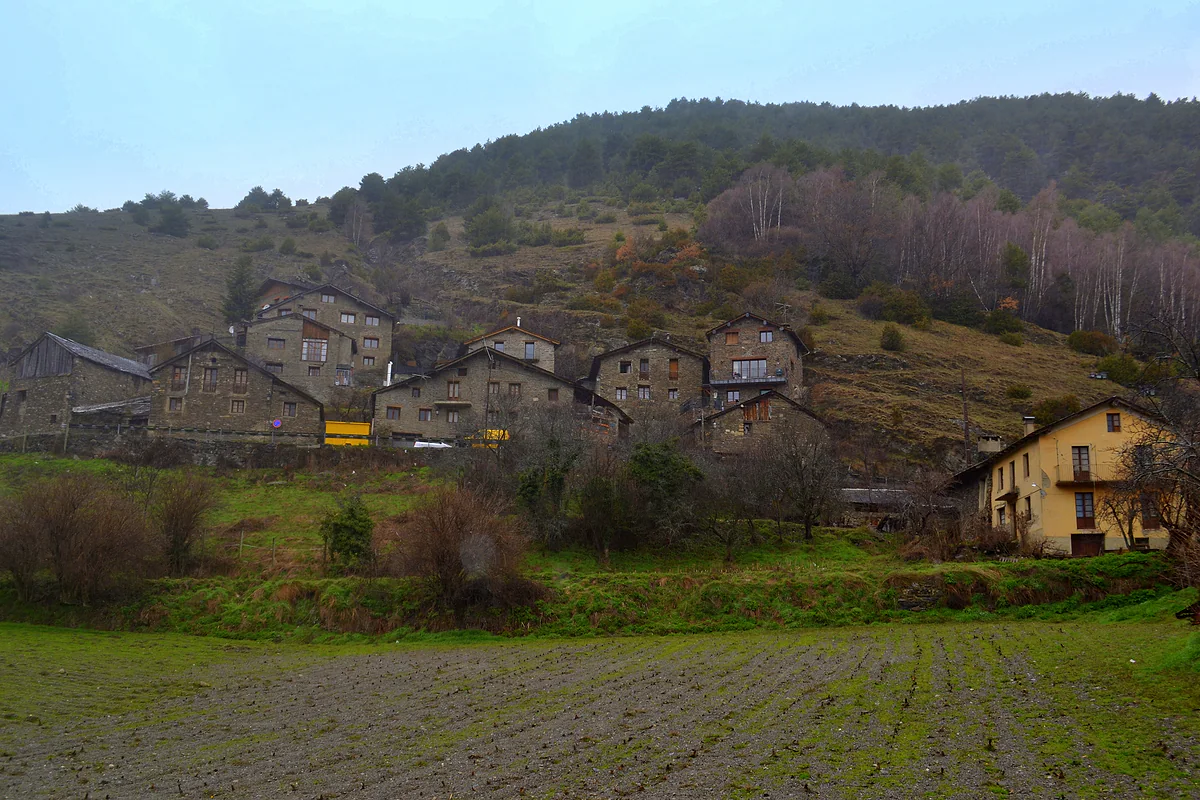
Old stone houses of Sispony stepped up the wooded hillside, with a ploughed field in front
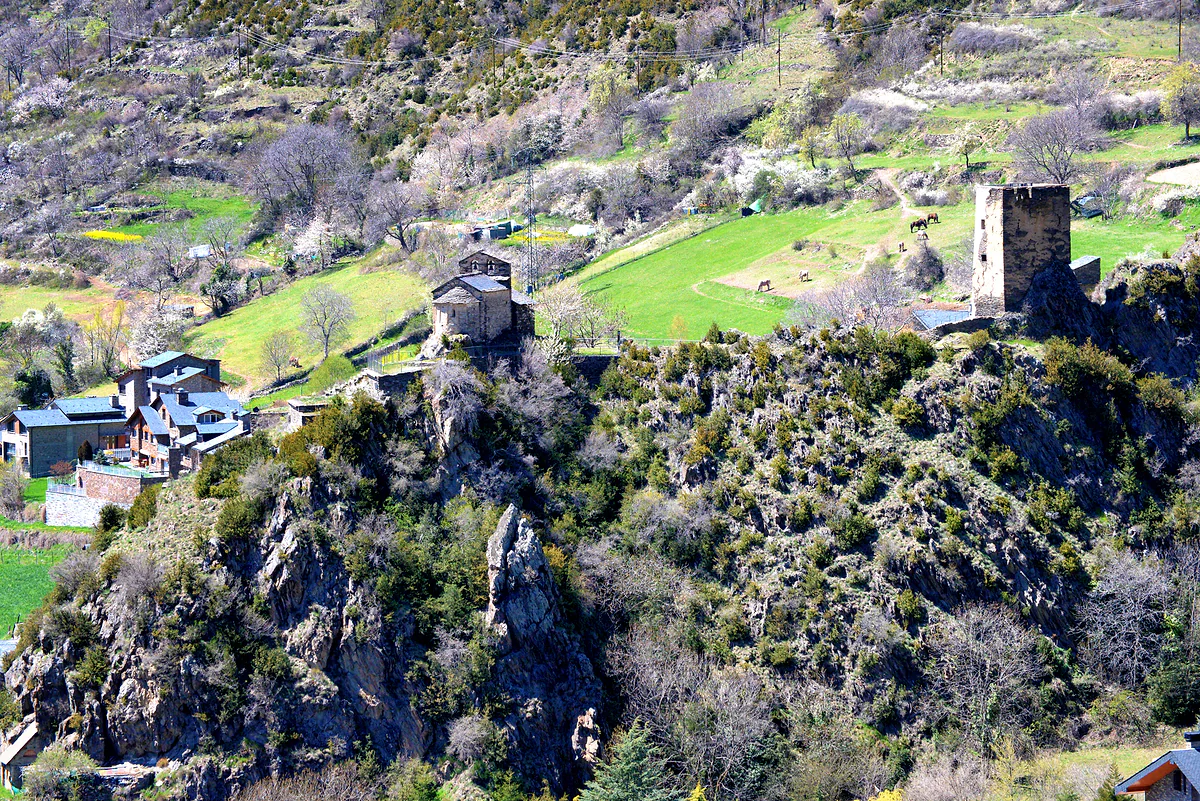
The Les Bons ensemble, with the church of Sant Romà and the Torre dels Moros on a rocky outcrop
The ten villages at a glance
| Village | Parish | What makes it special |
|---|---|---|
| Pal | La Massana | Above 1,500 m; Sant Climent with its three-storey tower |
| La Cortinada | Ordino | Cal Pal (1347), Sant Martí, the mill and sawmill |
| Llorts | Ordino | Wrought-iron balconies, Sant Serni and the Llorts mine |
| Les Bons | Encamp | Torre dels Moros, dovecotes and Sant Romà |
| Sispony | La Massana | Stone farmyards and the Casa Rull museum |
| Ransol | Canillo | Medieval houses and Sant Jaume, of pre-Romanesque origin |
| Fontaneda | Sant Julià de Lòria | Houses on one side of the road, facing the valley |
| Anyós | La Massana | 12th-century Sant Cristòfol on a hilltop |
| Santa Coloma | Andorra la Vella | Pre-Romanesque church and Torre dels Russos |
| Auvinyà | Sant Julià de Lòria | Pedestrian recreation of a medieval village |
Figures from the tourist board and the parish councils, checked on 28-09-2026. Church visits are free apart from Santa Coloma.
Test yourself
True or false?
0/4 Pick before you peek.
-
Auvinyà is a restored medieval village.
See the answer
False. The tourist board explains it's a recreation of a medieval village built in the 21st century, using materials and features from the country.
-
Sant Climent de Pal is Andorra's only church with a three-storey bell tower.
See the answer
True. So says the tourist board, which dates it to between the late 11th and early 12th centuries.
-
The Llorts mine is the only one in Andorra still intact.
See the answer
True. According to the tourist board it has about 30 metres of tunnels and marks the end of the Iron Route from La Cortinada.
-
Ordino has twelve official villages.
See the answer
False. The Comú d'Ordino lists eight, Ordino, Segudet, Sornàs, Llorts, La Cortinada, El Serrat, Arans and Ansalonga.
- Date of Cal Pal, the manor house in La Cortinada
- 1347
- Minimum altitude of Pal
- 1,500 m
- Official villages in the parish of Ordino
- 8
- Residents of Fontaneda, at most
- 150
0 of 269 Andorra guides
Your next stamp
- La Cortinada
- Ordino
- Towns and villages
- Pal
- Ransol
- Llorts
- Most beautiful places
- Places to visit
- Things to do
- Andorra la Vella
- UNESCO World Heritage
- Map
- Escaldes-Engordany
- Where is Andorra?
- Is Andorra a country?
- Parishes
- Casa de la Vall
- Margineda bridge
- Old town
- Santa Coloma church
- Population
- Size
- Mountains
- Language
- Andorra in one day
- Canillo
- Espai Columba
- History
- Margineda rock shelter
- Sant Esteve church
- Co-princes
- Soldeu
- Weekend break
- Andorra in 3 days
- El Tarter
- Political system
- Andorra in 4 days
- Flag
- A week in Andorra
- Facts
- Prats
- El Forn
- Public holidays
- Sant Julià de Lòria
- Currency and payments
- L'Aldosa de Canillo
- Els Plans
- EU and Schengen
- Bordes d'Envalira
- Entry requirements
- Prices and budget
- On a budget
- Sant Joan de Caselles
- Santa Coloma
- Ski holidays
- Tourist tax
- Mobile and roaming
- Sant Serni de Canillo
- Tourist information
- Healthcare
- Meritxell Sanctuary
- With a dog
- Packing list
- Safety
- How to get there
- Scams
- From Barcelona
- Bus from Barcelona
- Day trip from Barcelona
- From Madrid
- From Toulouse
- Encamp
- Flights
- La Margineda
- La Massana
- Roc del Quer viewpoint
- Romanesque churches
- Andorra-La Seu airport
- Canillo Tibetan bridge
- Museums in Andorra
- Pas de la Casa
- Arinsal
- Driving
- Grau Roig
- Mon(t) Magic
- Nearest airports
- By train
- Erts
- Les Bons
- Palau de Gel
- Road conditions
- Motorcycle Museum
- Parking
- Sispony
- Vila
- Anyós
- Incles valley
- La Mosquera
- Petrol
- El Tremat
- Getting around
- Juclar lakes
- L'Aldosa (La Massana)
- Buses
- Els Cortals d'Encamp
- Sant Climent de Pal
- Bus station
- Sant Cristòfol d'Anyós
- Casa Rull
- Shopping
- Farga Rossell
- Sant Vicenç d'Enclar
- Santa Eulàlia d'Encamp
- What to buy
- Customs allowances
- La Massana Còmic
- Sant Romà de les Bons
- Car Museum
- Cigarettes
- Comapedrosa
- Electronics
- Alcohol
- Casa Cristo
- Clothes and sports shops
- Iron Route
- Coll d'Ordino
- Perfume
- Sacred Art Museum
- Shopping centres
- Funicamp
- Supermarkets
- Avinguda Meritxell
- Encamp Tibetan bridge
- Avinguda Carlemany (Vivand)
- Envalira pass
- Auvinyà
- Bici Lab Andorra
- Skiing
- With kids
- Zip lines
- Fontaneda
- For couples
- Ski pass
- Via ferratas
- Climbing
- Nagol
- Nightlife
- Ski season
- El Serrat
- Grandvalira
- Horse riding
- Juberri
- Aixovall
- Mountain biking
- Pal Arinsal
- Sornàs
- Aixirivall
- Ansalonga
- Ordino Arcalís
- Road cycling
- Bixessarri
- Naturland
- Segudet
- Arans
- Llumeneres
- Tobotronc
- Casa d'Areny-Plandolit
- Cross-country skiing
- Miniature Museum
- Skiing with kids
- Cal Pal
- Free walking tour
- Pessons lakes
- Sant Serni de Nagol
- Ski lessons
- Where to stay
- Canòlich Sanctuary
- Hotels in Andorra la Vella
- Sant Martí de la Cortinada
- Ski hire
- Hotels in Escaldes
- Juberri Gardens
- Llorts iron mine
- Webcams
- Hotels in Soldeu
- Snow report
- Sorteny valley
- Hotels in El Tarter
- Tristaina lakes
- Hotels in Canillo
- Night skiing
- Tristaina solar viewpoint
- Freeride
- Hotels in Encamp
- Hotels in Pas de la Casa
- Ski touring
- Hotels in La Massana
- Snowshoeing
- Hotels in Arinsal and Pal
- Snow activities
- Après-ski
- Engordany
- Hotels in Ordino
- Medieval bridges
- Nature parks
- Els Vilars
- Hotels in Sant Julià de Lòria
- Lakes
- Sant Romà dels Vilars
- Viewpoints
- Where to eat
- Caldea
- Restaurants in Andorra la Vella
- Borda restaurants
- Inúu
- Cheap hotels
- Food
- Hiking
- Spas and thermal baths
- Weather and climate
- Engolasters lake
- Pas de la Casa weather
- Spa hotels
- Trinxat
- Events
- Luxury hotels
- Sant Miquel d'Engolasters
- Ski resort weather
- Wine
- Best time to visit
- Family hotels
- Madriu valley
- All inclusive
- Estany de l'Illa
- In winter
- Apartments
- Coronallacs
- In spring
- Ski World Cup
- Christmas
- Hostels
- In summer
- Mountain huts
- Camping and rural stays
- Easy walks
- In autumn
- New Year
- Family walks
- Festes majors
- In January
- GR11 and other GRs
- In February
- National day
- Around Andorra
- GRP round Andorra
- In March
- Midsummer fire festival
- Carnival
- In April
- In May
- Travessa d'Encamp
- In June
- In July
- In August
- In September
- In October
- In November
- In December
Frequently asked questions
What is the prettiest village in Andorra?
For me it's Pal in La Massana. It sits above 1,500 m, keeps its stone, timber and slate, and has Sant Climent from the late 11th century. The tourist board rates it among the best too.
Are there medieval villages in Andorra?
There are old quarters with 16th and 17th-century buildings, such as Les Bons, and medieval houses in Ransol. Auvinyà looks medieval, but the tourist board makes clear it's a 21st-century recreation.
Which villages should I visit near Andorra la Vella?
Santa Coloma, in the same parish, and Sispony and Anyós in La Massana, a few kilometres away. To the south, Auvinyà and Fontaneda in Sant Julià de Lòria.
Which parish has the prettiest villages?
Ordino, in my view. It has eight official villages, including La Cortinada, Llorts and El Serrat, and UNESCO made its valley a Biosphere Reserve in 2020.
Can you visit Andorra's villages by bus?
Mostly, yes. The national bus runs lines to La Massana, Ordino and Arinsal from Andorra la Vella, every 20 minutes to an hour. Smaller places like Fontaneda are easier by car.
By
Tourism graduate with a master’s in Tourism Management and Planning from the University of Málaga, who has travelled across Europe. He writes every guide from official sources and his own judgement.
Published on . Facts checked on .
Sources
Photos: Josep Maria Viñolas Esteva (CC BY-SA 4.0); Castellbo (CC BY-SA 4.0); Angela Llop (CC BY-SA 2.0); Pierre Bona (CC BY-SA 3.0), via Wikimedia Commons.