Medieval art centre in Santa Coloma
Espai Columba, the Romanesque murals that came home
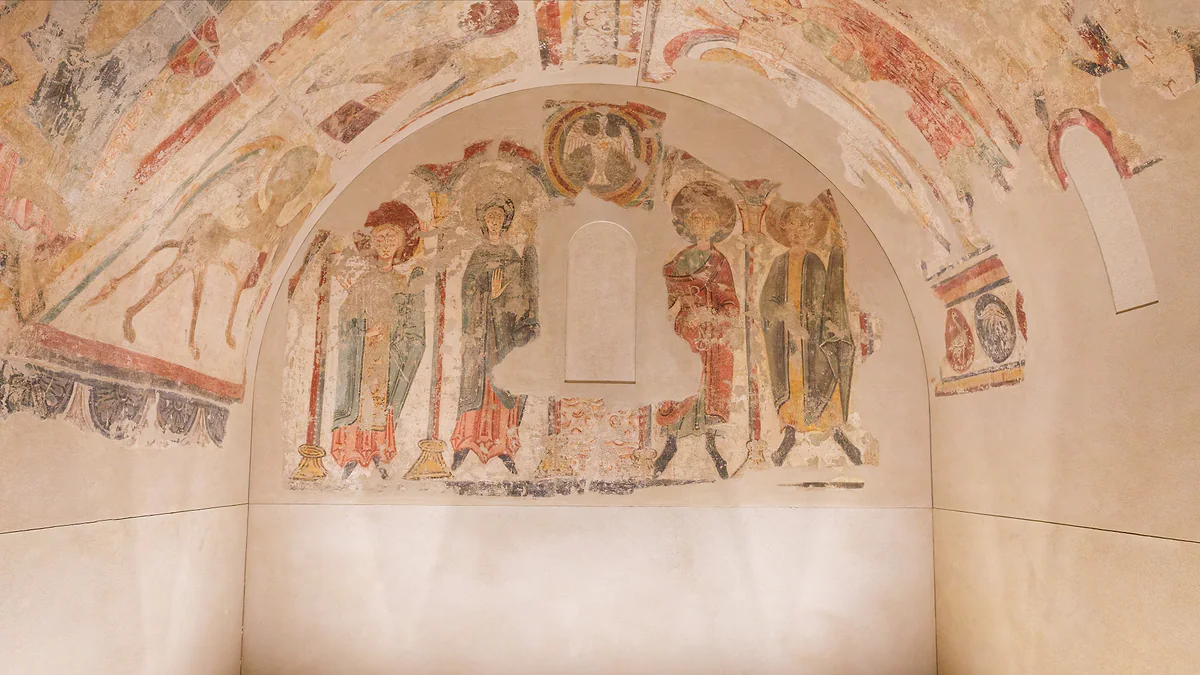
Espai Columba is the Andorran government's medieval art centre in Santa Coloma, Andorra la Vella, opened in 2018. It shows the 12th-century murals from Santa Coloma church, sold in 1933 and bought back in 2007, plus two fragments from Sant Esteve. A ticket costs €7 and includes the church, according to museus.ad on 28 September 2026.
In 30 seconds
Full read: 3 min
- Espai Columba is the Andorran government's medieval art centre in Santa Coloma, opened in 2018.
- It holds the 12th-century murals from Santa Coloma church, sold in 1933 and bought back in 2007.
- Entry, including the church, was €7 on museus.ad on 28 September 2026.
- From October to May it opens Tuesday to Saturday, 10:00 to 14:00 and 15:00 to 18:00.
For me it's the best museum in the capital, and not because of its size. It's one of the few places in Andorra where Romanesque art makes sense at a glance. Give it a good hour, and see it after the church projection, never before.

Before you go
What I would keep in mind
-
01 Most beautiful
Santa Coloma's murals at eye level
The 12th-century frescoes that once covered the church's east end, attributed to the Circle of the Master of Santa Coloma. In the apse they were high above you; here they're right in front of you.
Santa Coloma church -
02 Worth the splurge
Two fragments from Sant Esteve
The Kiss of Judas and The Flagellation of Christ came from the lower part of Sant Esteve's apse in the capital. The official listing places them in the 1200 style and stresses how exceptional they are.
Sant Esteve church in Andorra la Vella -
03 To save money
One ticket, two visits, plus PassMuseu
The €7 covers Santa Coloma church and its projection too. It's part of the PassMuseu, with 50% off three museums of your choice, and under-10s go free.
museums in Andorra -
04 My tip
Step-free, unlike the old church
The tourist board lists it as accessible for people with reduced mobility. It's a modern building a few metres from the church, with gardens in front.
What I would book
Most of Andorra’s museums show things that have always been here. Espai Columba shows something that left and came back. The Romanesque murals from Santa Coloma church left the country in the 1930s, travelled around wartime Europe and returned in 2007. This modern building, a few metres from the church, opened in 2018 to tell that story. Here’s how I’d approach it.
A museum built to explain the Romanesque
The government’s official listing describes it as a centre for preserving and displaying the wall paintings and liturgical objects of Andorra’s churches, and for explaining the country’s Romanesque and medieval painting in its architectural setting. In plain terms, you learn how Romanesque murals were made, something that’s hard to take in inside a dim mountain church with the paintings high above your head.
Better still, it looks beyond Santa Coloma. museus.ad sees Espai Columba as the hub of a network of Romanesque routes around Andorra and across the Pyrenees. If you’re planning to tour the Romanesque churches of Andorra, this is the place to start. Visits to those churches are free, and in July and August six of them get guided tours through Romànic de bat a bat, so seeing the art here first gives you a picture of what their bare walls once held.
What’s inside Espai Columba?
The centrepiece is the set of paintings from Santa Coloma church, made in the 12th century. They were long attributed to the Master of Santa Coloma, and the official listing prefers to talk of the Circle of the Master, a shared way of working among several workshops that spread the Lombard Roman tradition and waves of Byzantine influence on both sides of the Pyrenees. Seeing them at eye level, when they once sat high in the apse, is the whole point.
Next come two fragments from Sant Esteve church in Andorra la Vella, added later. Both scenes, the Flagellation and the kiss of Judas, once ran along the bottom of that apse, and the official text files them under the 1200 style for their unusual imagery. If you’ve been to Sant Esteve and wondered about the bare walls, here’s part of the answer.
The rest of the display is made up of liturgical objects from other churches. The tourist board mentions the oil lamps from Santa Eulàlia d’Encamp, the thorned cross from Sant Serni de Nagol and the Christ from Sant Martí de la Cortinada. They’re small pieces, and I’d take my time over them, because they give a sense of what those now near-empty churches once held.
One ticket for museum and church
Espai Columba and Santa Coloma church are visited together. One €7 ticket (€3.50 reduced, nothing for under-10s) covers both, per the government’s prices on 28-9-2026, and a booked guide adds €1.50. If you’d rather go it alone, the audio guide comes in English as well as Catalan, Spanish, French and German.
My order is church first. There, in showings capped at ten people, six minutes of projected light put the frescoes back on the walls. Then you cross to the museum and recognise them one by one. It works the other way round too, but you lose the surprise.
In the cooler months it closes on Sundays and Mondays and splits the other days into a morning and an afternoon session; in summer it adds Sunday mornings and later closing. The table has the detail. It’s one of the PassMuseu museums too, so if you’re also doing Casa de la Vall, the discount adds up.
In summer, with a bit of theatre
Last summer the Comú put on a costumed tour starting at Espai Columba, with an archaeologist hunting for supposedly lost frescoes, at €5.50 per adult. Ask in July 2027 whether it returns, and in which language. Out of season, the Arc Patrimonial takes you on foot from here to la Margineda, about five kilometres of paths, village lanes and bridges. I’d walk it straight after the museum, with the 12th century still in your head, because it finishes at the Margineda bridge and the rock shelter where Andorra’s first inhabitants lived.
One last practical point. The museum is step-free, unlike many of Andorra’s Romanesque churches, which makes it the best place to see medieval Andorran painting if someone in your group uses a wheelchair or a pushchair.
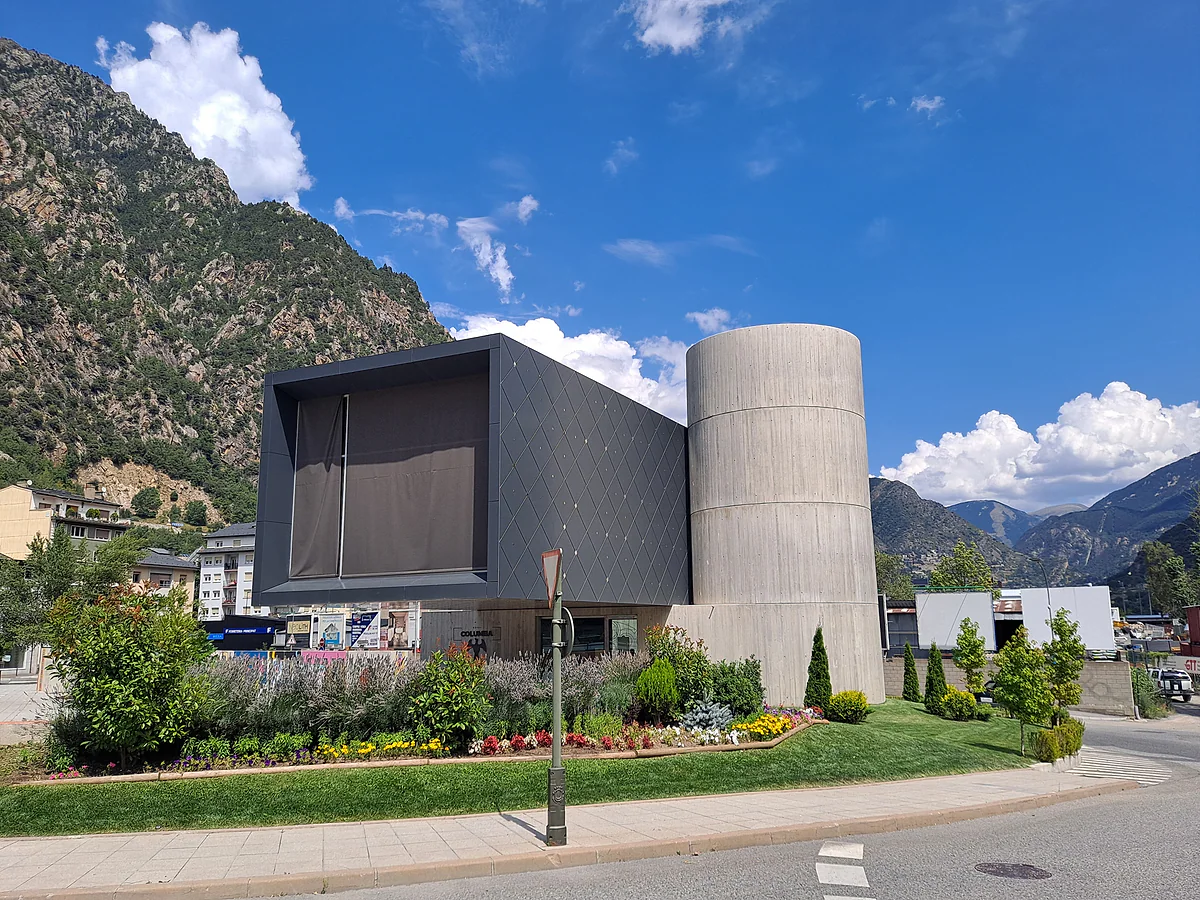
The modern Espai Columba building, a Romanesque art centre in Santa Coloma, with gardens in front
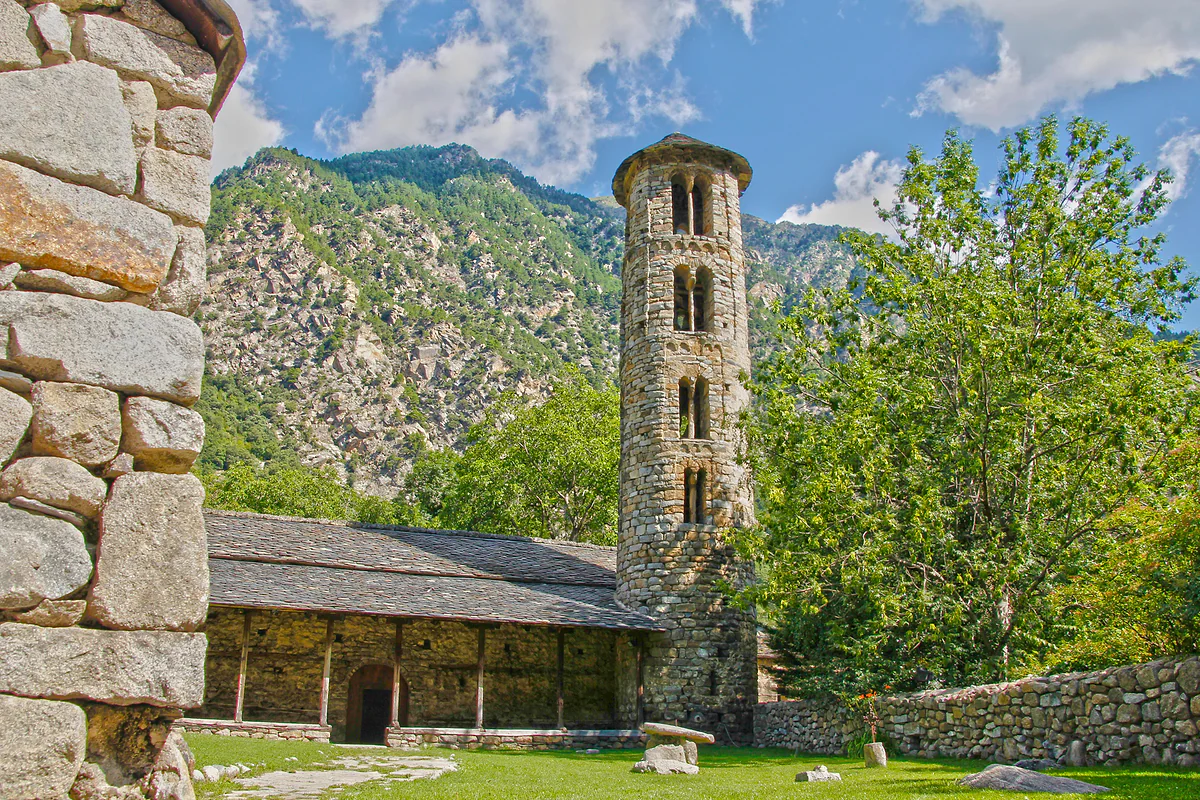
The pre-Romanesque church of Santa Coloma in Andorra la Vella, with its round four-storey bell tower
Espai Columba opening hours
| Months | Tuesday to Friday | Saturday | Sunday | Monday |
|---|---|---|---|---|
| January to May, October to December | 10:00-14:00 and 15:00-18:00 | 10:00-14:00 and 15:00-18:00 | Closed | Closed |
| June and September | 10:00-14:00 and 15:00-18:00 | 10:00-14:00 and 15:00-20:00 | 10:00-14:00 | Closed |
| July and August | 10:00-14:00 and 15:00-19:00 | 10:00-14:00 and 15:00-20:00 | 10:00-14:00 | Closed |
museus.ad, checked on 28-9-2026. Projections and church visits may change for services.
Prices (28-9-2026)
| Ticket | Price |
|---|---|
| Standard, including Santa Coloma church | €7 |
| Concession (over-65s, groups of more than 10, overseas students) | €3.50 |
| Under-10s, youth card holders, disabled visitors | Free |
| Guided tour supplement, booked ahead | €1.50 |
museus.ad (Andorran government). Bookings on +376 839 760.
Test yourself
True or false?
0/3 Pick before you peek.
-
Espai Columba opened in 2018.
See the answer
True. The tourist board says it opened to the public in 2018 to preserve and display the Santa Coloma paintings.
-
Espai Columba only shows paintings from Santa Coloma.
See the answer
False. It also displays two fragments from Sant Esteve in Andorra la Vella and objects such as the thorned cross of Sant Serni de Nagol and the Christ of Sant Martí de la Cortinada.
-
The Santa Coloma murals travelled around wartime Europe before coming back.
See the answer
True. The Andorra la Vella tourist office says that, once removed around 1930, they travelled through Second World War Europe before the government recovered them in 2007.
- Year it opened
- 2018
- Ticket with the church on 28-9-2026
- €7
- Date of the Santa Coloma murals
- 12th c.
Map
Where Espai Columba is
The dashed line is the border with France and Spain. The Valira valley runs down from Pas de la Casa to Sant Julià, with Ordino and La Massana in the northern valley. Every number opens its guide.
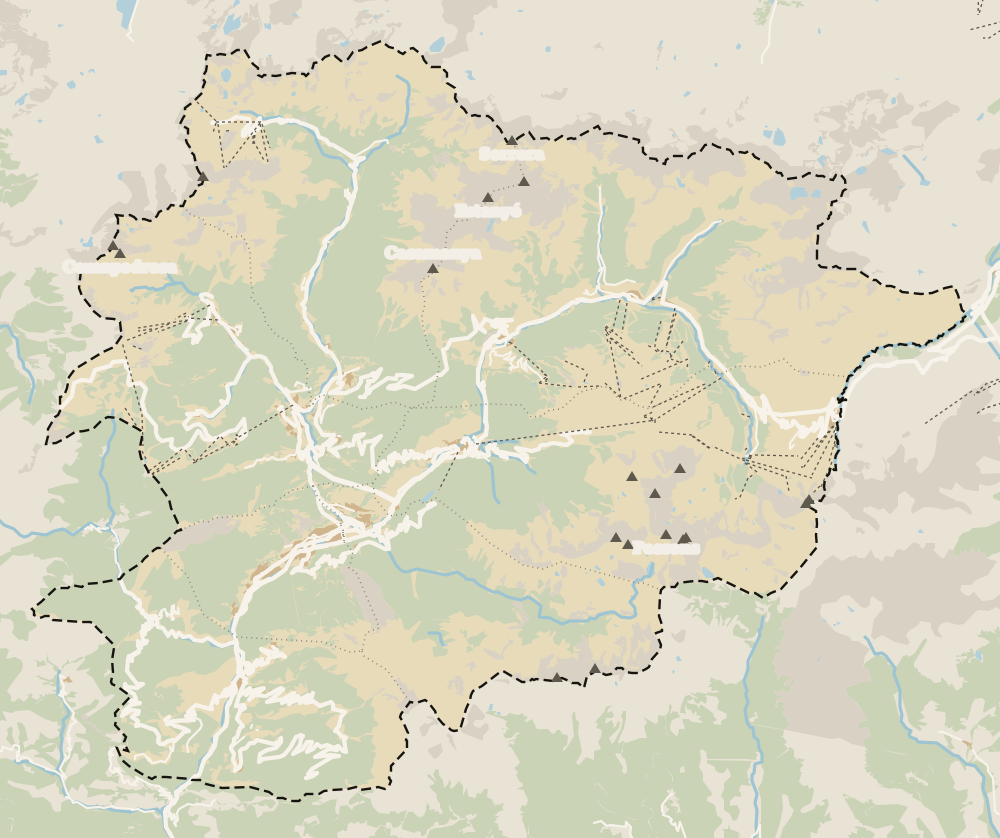
0 of 269 Andorra guides
Your next stamp
- Santa Coloma church
- Santa Coloma
- Sant Esteve church
- Sant Romà de les Bons
- Sant Martí de la Cortinada
- Romanesque churches
- Museums in Andorra
- Sant Joan de Caselles
- Places to visit
- Things to do
- Most beautiful places
- Prettiest villages
- Andorra la Vella
- UNESCO World Heritage
- Map
- Escaldes-Engordany
- Where is Andorra?
- Is Andorra a country?
- Parishes
- Casa de la Vall
- Margineda bridge
- Old town
- Towns and villages
- Population
- Size
- Mountains
- Language
- Andorra in one day
- Canillo
- History
- Margineda rock shelter
- Co-princes
- Soldeu
- Weekend break
- Andorra in 3 days
- El Tarter
- Political system
- Andorra in 4 days
- Flag
- Ransol
- A week in Andorra
- Facts
- Prats
- El Forn
- Public holidays
- Sant Julià de Lòria
- Currency and payments
- L'Aldosa de Canillo
- Els Plans
- EU and Schengen
- Bordes d'Envalira
- Entry requirements
- Prices and budget
- On a budget
- Ski holidays
- Tourist tax
- Mobile and roaming
- Sant Serni de Canillo
- Tourist information
- Healthcare
- Meritxell Sanctuary
- With a dog
- Packing list
- Safety
- How to get there
- Scams
- From Barcelona
- Bus from Barcelona
- Day trip from Barcelona
- From Madrid
- From Toulouse
- Encamp
- Flights
- La Margineda
- La Massana
- Roc del Quer viewpoint
- Andorra-La Seu airport
- Canillo Tibetan bridge
- Pal
- Pas de la Casa
- Arinsal
- Driving
- Grau Roig
- Mon(t) Magic
- Nearest airports
- By train
- Erts
- Les Bons
- Palau de Gel
- Road conditions
- Motorcycle Museum
- Parking
- Sispony
- Vila
- Anyós
- Incles valley
- La Mosquera
- Petrol
- El Tremat
- Getting around
- Juclar lakes
- L'Aldosa (La Massana)
- Buses
- Els Cortals d'Encamp
- Sant Climent de Pal
- Bus station
- Sant Cristòfol d'Anyós
- Casa Rull
- Shopping
- Farga Rossell
- Sant Vicenç d'Enclar
- Santa Eulàlia d'Encamp
- What to buy
- Customs allowances
- La Massana Còmic
- Car Museum
- Cigarettes
- Comapedrosa
- Electronics
- Alcohol
- Casa Cristo
- Clothes and sports shops
- Iron Route
- Coll d'Ordino
- Perfume
- Sacred Art Museum
- Shopping centres
- Funicamp
- Supermarkets
- Avinguda Meritxell
- Encamp Tibetan bridge
- Avinguda Carlemany (Vivand)
- Envalira pass
- Auvinyà
- Bici Lab Andorra
- Ordino
- Skiing
- With kids
- Zip lines
- Fontaneda
- For couples
- La Cortinada
- Ski pass
- Via ferratas
- Climbing
- Llorts
- Nagol
- Nightlife
- Ski season
- El Serrat
- Grandvalira
- Horse riding
- Juberri
- Aixovall
- Mountain biking
- Pal Arinsal
- Sornàs
- Aixirivall
- Ansalonga
- Ordino Arcalís
- Road cycling
- Bixessarri
- Naturland
- Segudet
- Arans
- Llumeneres
- Tobotronc
- Casa d'Areny-Plandolit
- Cross-country skiing
- Miniature Museum
- Skiing with kids
- Cal Pal
- Free walking tour
- Pessons lakes
- Sant Serni de Nagol
- Ski lessons
- Where to stay
- Canòlich Sanctuary
- Hotels in Andorra la Vella
- Ski hire
- Hotels in Escaldes
- Juberri Gardens
- Llorts iron mine
- Webcams
- Hotels in Soldeu
- Snow report
- Sorteny valley
- Hotels in El Tarter
- Tristaina lakes
- Hotels in Canillo
- Night skiing
- Tristaina solar viewpoint
- Freeride
- Hotels in Encamp
- Hotels in Pas de la Casa
- Ski touring
- Hotels in La Massana
- Snowshoeing
- Hotels in Arinsal and Pal
- Snow activities
- Après-ski
- Engordany
- Hotels in Ordino
- Medieval bridges
- Nature parks
- Els Vilars
- Hotels in Sant Julià de Lòria
- Lakes
- Sant Romà dels Vilars
- Viewpoints
- Where to eat
- Caldea
- Restaurants in Andorra la Vella
- Borda restaurants
- Inúu
- Cheap hotels
- Food
- Hiking
- Spas and thermal baths
- Weather and climate
- Engolasters lake
- Pas de la Casa weather
- Spa hotels
- Trinxat
- Events
- Luxury hotels
- Sant Miquel d'Engolasters
- Ski resort weather
- Wine
- Best time to visit
- Family hotels
- Madriu valley
- All inclusive
- Estany de l'Illa
- In winter
- Apartments
- Coronallacs
- In spring
- Ski World Cup
- Christmas
- Hostels
- In summer
- Mountain huts
- Camping and rural stays
- Easy walks
- In autumn
- New Year
- Family walks
- Festes majors
- In January
- GR11 and other GRs
- In February
- National day
- Around Andorra
- GRP round Andorra
- In March
- Midsummer fire festival
- Carnival
- In April
- In May
- Travessa d'Encamp
- In June
- In July
- In August
- In September
- In October
- In November
- In December
Frequently asked questions
What is Espai Columba?
An Andorran government centre for Romanesque and medieval painting, opened in Santa Coloma in 2018. It displays the murals from Santa Coloma church, two fragments from Sant Esteve and liturgical objects from other churches in the country.
How much does Espai Columba cost?
€7 standard and €3.50 concession, including Santa Coloma church, according to museus.ad on 28 September 2026. Under-10s go free and a guided tour is €1.50 extra.
What are Espai Columba's opening hours?
From October to May, Tuesday to Saturday, 10:00 to 14:00 and 15:00 to 18:00. From June to September it also opens on Sunday mornings, 10:00 to 14:00, and until 20:00 on Saturdays.
Is there an audio guide in English?
Yes. museus.ad lists self-guided visits with an audio guide in English, Catalan, Spanish, French and German.
What can you see at Espai Columba?
The 12th-century Santa Coloma murals, The Kiss of Judas and The Flagellation of Christ from Sant Esteve, the oil lamps from Santa Eulàlia d'Encamp, the thorned cross from Sant Serni de Nagol and the Christ from Sant Martí de la Cortinada, among others.
How long do you need at Espai Columba?
The official site doesn't say. I'd allow a good hour for the museum and the church with its six-minute projection, a bit more on a guided tour.
By
Tourism graduate with a master’s in Tourism Management and Planning from the University of Málaga, who has travelled across Europe. He writes every guide from official sources and his own judgement.
Published on . Facts checked on .
Sources
Photos: Marie-Lan Nguyen (Public domain); JosepBC (CC BY-SA 4.0); Ferran Llorens (CC BY-SA 2.0), via Wikimedia Commons.