Temporarily closed for repairs
Farga Rossell, the last forge in Andorra
Farga Rossell is a former iron forge in La Massana that worked from 1842 to 1876 and was rebuilt this century as the Iron Interpretation Centre. It explains how ore was turned into ingots for Catalan markets. On 29 September 2026, museus.ad listed it as temporarily closed for repairs, with no reopening date.
In 30 seconds
Full read: 3 min
- Farga Rossell was an iron forge in La Massana, working from 1842 to 1876.
- Since 2002 it has been the Iron Interpretation Centre, with a trip-hammer demonstration.
- On 29-9-2026 it was temporarily closed for repairs, with no reopening date.
- Meanwhile, the Iron Route and the Llorts mine tell the same story.
While it's shut, I wouldn't build a day around it or go just to see the outside. If the iron story interests you, walk the Iron Route and see the Llorts mine in summer, and save the forge for when museus.ad announces it has reopened.

Before you go
What I would keep in mind
-
01 My tip
Check its status before you go
museus.ad lists it as temporarily closed for repairs and Andorra Turisme as closed until further notice. Before heading over, ring +376 835 852 or check the museus.ad page.
-
02 My tip
The mine and the route are open
The Iron Route between La Cortinada and Llorts is waymarked and recommended from June to October, and the Llorts mine opens in summer. The best stand-in while the forge is closed.
the Iron Route -
03 To save money
When it reopens, use the PassMuseu
Standard entry is €5 and concessions €2.50, and the forge is part of the PassMuseu, which takes 50% off three museums of your choice.
museums in Andorra
What I would book
My ranking, scored
What I'd look for at the forge once it reopens
My marks out of 10 for what the forge itself and Andorra Turisme describe of the visit. Opinion, not an official rating.
0 of 4 seen
-
The trip-hammer demonstration
The big water-driven hammer in action, which museus.ad includes in the guided tour for a €1.50 supplement.
9.0 out of 10
-
The trompe and the furnace
The two devices that explain how air was blown in and ore reduced. Without them a Catalan forge makes no sense.
8.4 out of 10
-
The process film
From ore to ingot to the Catalan markets, in a short piece that puts everything else in order.
7.8 out of 10
-
The museum shop
Small, with publications on iron and Andorra's museums. Only if your curiosity has been sparked.
6.5 out of 10
I’ll say it up front so you don’t waste a morning. On 29 September 2026, Farga Rossell is closed. museus.ad, the government’s museums portal, lists it as temporarily closed for repairs, and Andorra Turisme as closed until further notice. It still deserves its own page, because it tells a story few people link with Andorra, the story of iron.
A country that lived off iron
museus.ad opens with a question, did you know Andorra was an iron-producing area between the 17th and 19th centuries? Farga Rossell is, the same portal says, one of the best-preserved witnesses of that ironworking past in the Pyrenees. Andorra Turisme counts it among the country’s last working forges, and the Comú’s tourism website adds that it closed in 1876 together with the Farga Areny, the last two. The legacy is still visible. The estripagecs, iron grilles once fixed over windows to keep thieves out, have become a symbol of the country, and Andorra Turisme notes that six of them now crown mountain summits such as Casamanya and the Serrera.
It worked for only three decades or so. The museus.ad iron itinerary says it was built between 1842 and 1846 and ran until 1876. Around 120 years after it closed, with the building abandoned, excavations began to restore it, and in 2002 it opened as the Iron Interpretation Centre. It stands on Avinguda del Través in La Massana, at the foot of the Valira del Nord, beside the river its hydraulic trompe depended on.
What is there to see when it’s open?
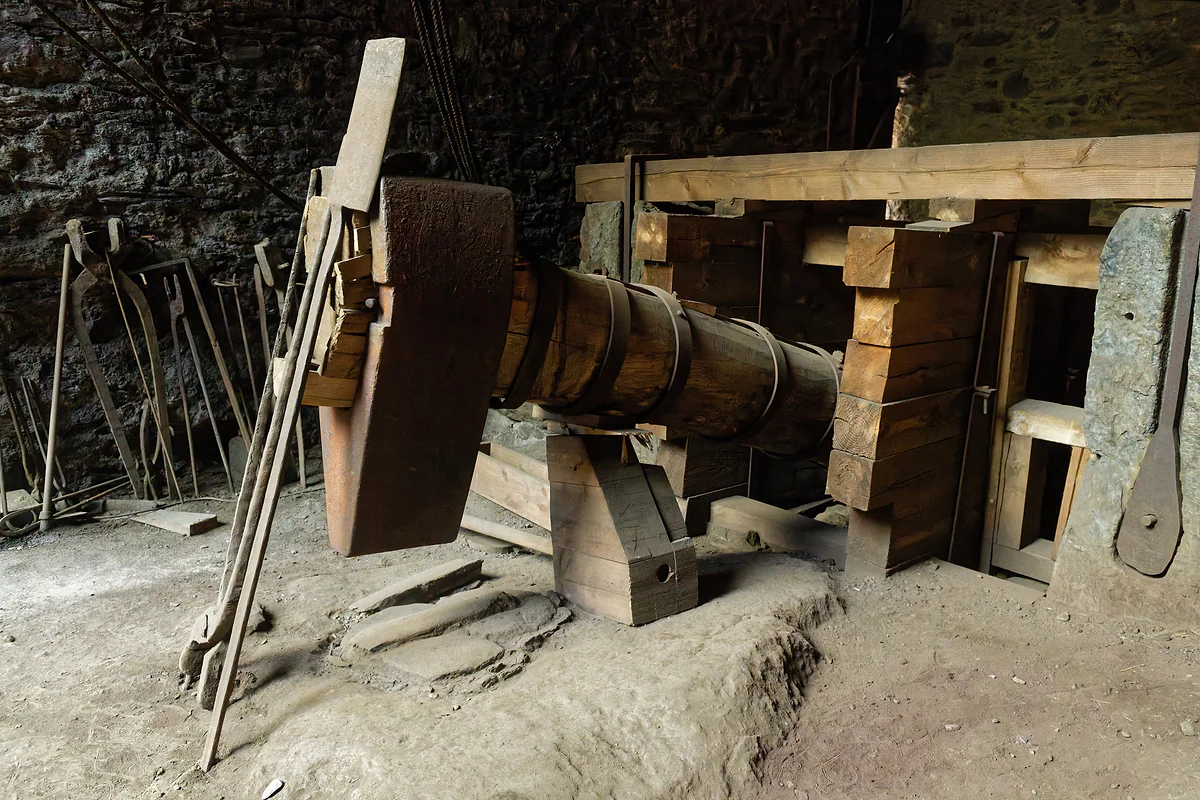
Through films and what museus.ad describes as an immersive set-up, with the noises and smells of the work, the visit explains how iron ore was turned into ingots and then sold in Catalan markets. Andorra Turisme highlights the forge’s machinery, such as the trompe, which blew air in, and the furnace.
What I wouldn’t miss is the trip-hammer demonstration, the great water-powered hammer, included in the guided tour for a €1.50 supplement. There’s also an audio guide in five languages, English included, a children’s corner, a small shop and step-free access throughout. The guided tour lasts an hour, must be booked, and is available in four languages, English among them, according to Andorra Turisme, which also mentions a multimedia room and school activities. For a school group or a family with curious children, it’s one of the most hands-on museums in the country.
Why it’s worth it once it reopens
Because it’s the piece that makes sense of the rest. museus.ad fits it into a route that crosses borders, the Iron Route of the Pyrenees, with sites spread across Catalonia, Aquitaine, Ariège and the Basque Country, and presents it as one of the best-preserved examples in the whole range. At the mine you see where the ore came from; here you see what it became. Without the forge, the story simply stops halfway through.
There’s also a detail I find telling. Among its themes, museus.ad devotes a section to women and the forges, a forgotten history. In a country usually told through its houses and its men, it’s a welcome angle.
Prices, for when it reopens
museus.ad still lists the prices, €5 standard and €2.50 concessions, with free entry for under-10s and other groups, and for Andorran residents every Wednesday, plus two Saturdays a month (the first and the third). It’s part of the PassMuseu, which I cover in museums in Andorra. To find out whether it has reopened, the forge’s number is +376 835 852 and the bookings line +376 839 760.
Iron in the meantime
The forge being shut doesn’t mean missing the story. The Comú’s website calls it the starting point of the Iron Route, and museus.ad gives about 10 km from here to the Llorts mine in Ordino for the full itinerary. The waymarked walking stretch, from Llorts to La Cortinada, takes a little over two hours there and back and is recommended from June to October. It’s all in the Iron Route.
There’s a third piece too. According to museus.ad, one of the most important forge-owning families lived at Casa d’Areny-Plandolit in Ordino. With the mine, the route and that house, the story of Andorran iron comes across well even while the forge is closed.
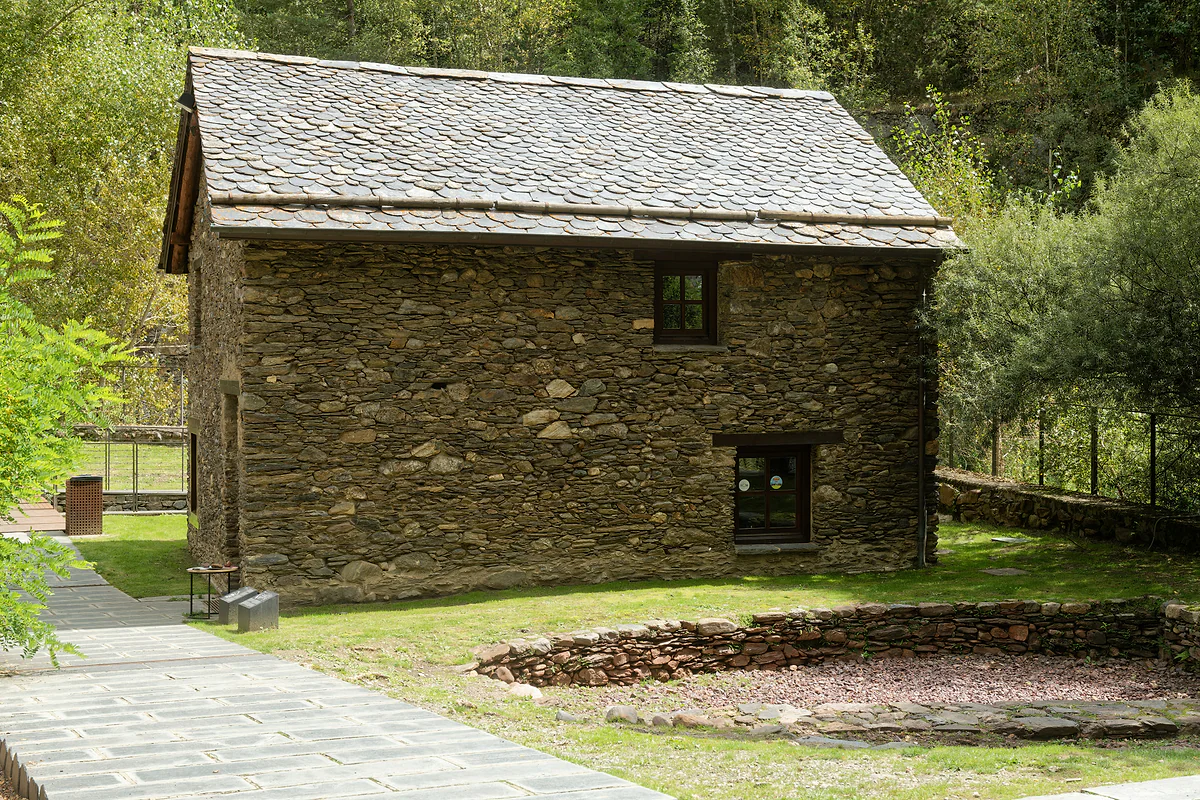
The stone and slate building of the Farga Rossell ironworks in La Massana, among the trees
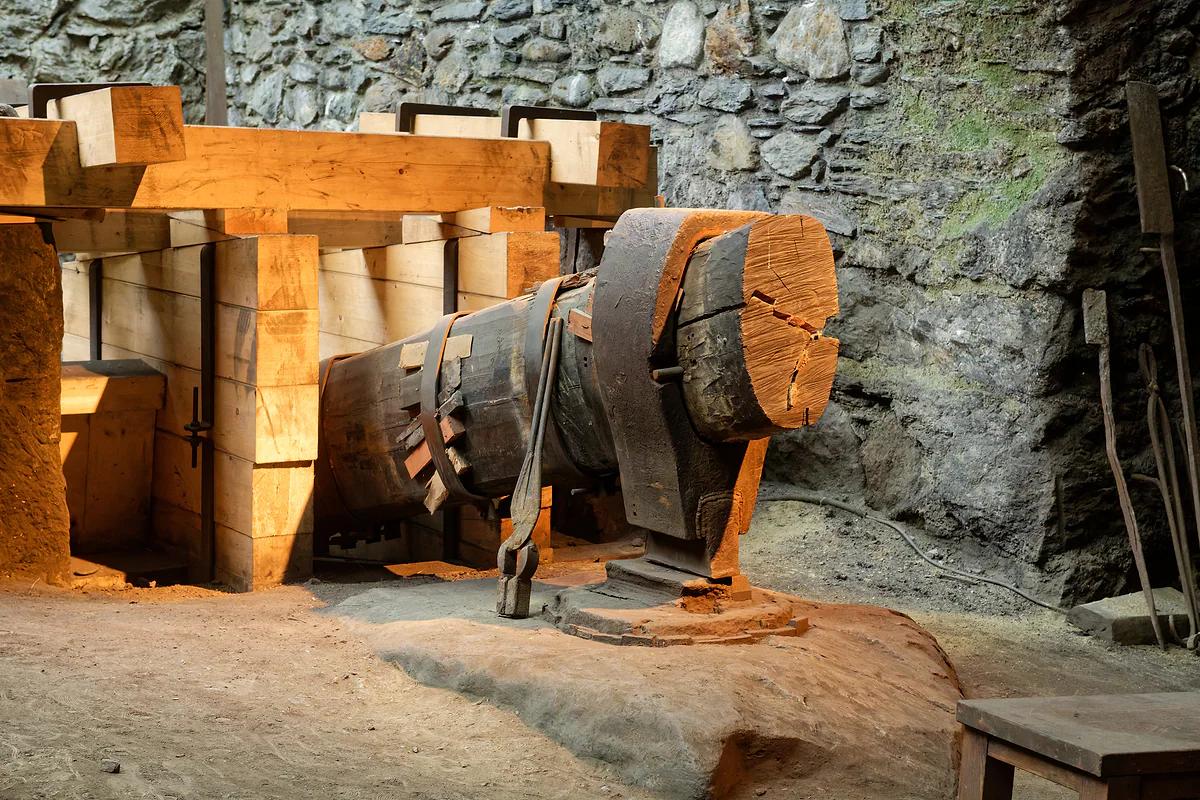
Close-up of the shaft and hammer at the Farga Rossell, the end point of La Massana's iron route
Farga Rossell through time
| Year | What happened | Source |
|---|---|---|
| 1842-1846 | The forge is built | museus.ad |
| 1876 | It closes, with the Farga Areny, the country's last | Comú de La Massana |
| About 120 years later | Excavations begin to restore it | Comú de La Massana |
| 2002 | Opens as the Iron Interpretation Centre | Comú de La Massana |
| 29-9-2026 | Temporarily closed for repairs | museus.ad |
Published prices (29-9-2026)
| Ticket | Price |
|---|---|
| Standard | €5 |
| Concession (over-65s, groups of more than 10, overseas students) | €2.50 |
| Under-10s and other groups | Free |
| Guided tour with trip-hammer demonstration | €1.50 extra |
museus.ad. Prices when open; there are no visits at present. Bookings on +376 839 760.
Test yourself
True or false?
0/3 Pick before you peek.
-
Farga Rossell worked for nearly two centuries.
See the answer
False. Only about three decades, from 1842 to 1876, according to museus.ad. With the Farga Areny it was among the last to close.
-
Andorra produced iron between the 17th and 19th centuries.
See the answer
True. museus.ad says so when introducing the forge, calling it one of the best-preserved witnesses of that past in the Pyrenees.
-
Farga Rossell is open as normal in autumn 2026.
See the answer
False. It was temporarily closed for repairs on 29 September 2026, according to museus.ad, with no reopening date.
- Construction begins
- 1842
- The forge closes
- 1876
- Opens as an interpretation centre
- 2002
- Standard entry, once it reopens
- €5
Map
Where Farga Rossell is
The dashed line is the border with France and Spain. The Valira valley runs down from Pas de la Casa to Sant Julià, with Ordino and La Massana in the northern valley. Every number opens its guide.
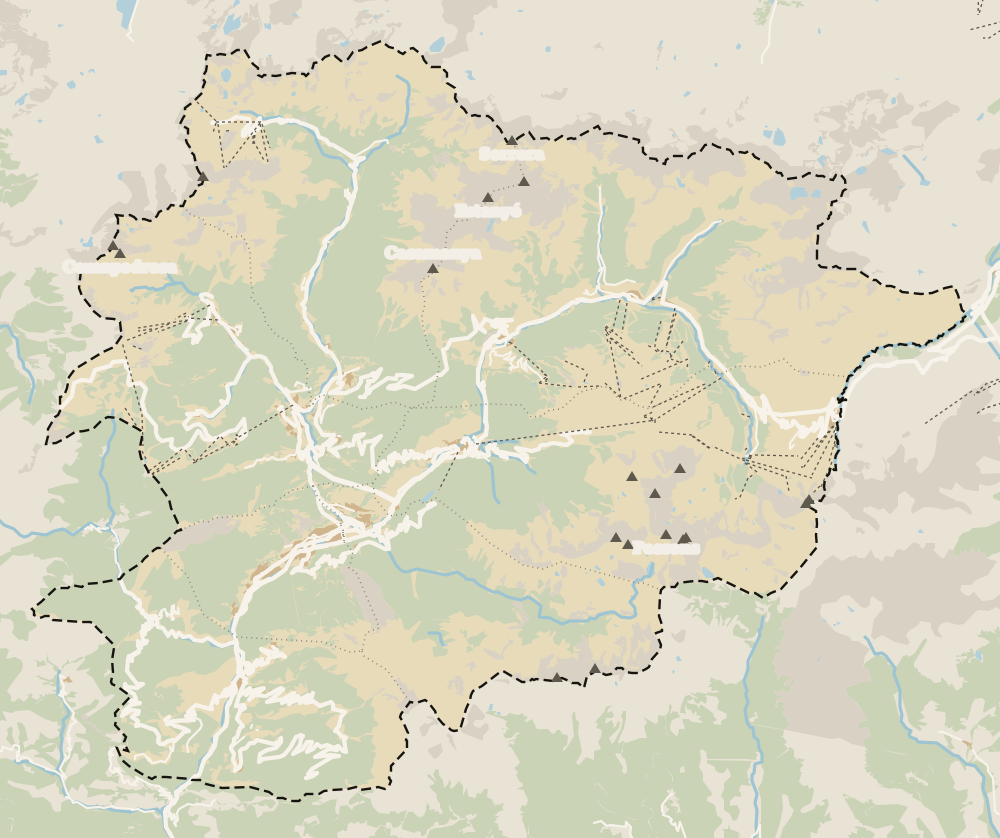 1La Massana 2Pal 3Arinsal 4Erts 5Sispony 6Anyós 7L'Aldosa (La Massana) 8Farga Rossell 9La Massana Còmic 10Comapedrosa
 Map data © OpenStreetMap contributors (ODbL)
- 1La MassanaParish 4 of 7, at 1,240 m
- 2PalHistoric village above 1,500 m
- 3ArinsalSki base and gateway to the natural park
- 4ErtsHalfway between La Massana and Arinsal
- 5SisponyOn record since 1162
- 6AnyósSouth slope of La Massana
- 7L'Aldosa (La Massana)Not to be confused with L'Aldosa de Canillo
- 8Farga RossellTemporarily closed for repairs
- 9La Massana CòmicJoan Pieras museum, free entry
- 10ComapedrosaA 15.42 km² natural park in La Massana
0 of 269 Andorra guides
Your next stamp
- Iron Route
- Llorts iron mine
- Margineda rock shelter
- Ski season
- Llorts
- Museums in Andorra
- Casa de la Vall
- History
- Places to visit
- Things to do
- Most beautiful places
- Prettiest villages
- Andorra la Vella
- UNESCO World Heritage
- Map
- Escaldes-Engordany
- Where is Andorra?
- Is Andorra a country?
- Parishes
- Margineda bridge
- Old town
- Santa Coloma church
- Towns and villages
- Population
- Size
- Mountains
- Language
- Andorra in one day
- Canillo
- Espai Columba
- Sant Esteve church
- Co-princes
- Soldeu
- Weekend break
- Andorra in 3 days
- El Tarter
- Political system
- Andorra in 4 days
- Flag
- Ransol
- A week in Andorra
- Facts
- Prats
- El Forn
- Public holidays
- Sant Julià de Lòria
- Currency and payments
- L'Aldosa de Canillo
- Els Plans
- EU and Schengen
- Bordes d'Envalira
- Entry requirements
- Prices and budget
- On a budget
- Sant Joan de Caselles
- Santa Coloma
- Ski holidays
- Tourist tax
- Mobile and roaming
- Sant Serni de Canillo
- Tourist information
- Healthcare
- Meritxell Sanctuary
- With a dog
- Packing list
- Safety
- How to get there
- Scams
- From Barcelona
- Bus from Barcelona
- Day trip from Barcelona
- From Madrid
- From Toulouse
- Encamp
- Flights
- La Margineda
- La Massana
- Roc del Quer viewpoint
- Romanesque churches
- Andorra-La Seu airport
- Canillo Tibetan bridge
- Pal
- Pas de la Casa
- Arinsal
- Driving
- Grau Roig
- Mon(t) Magic
- Nearest airports
- By train
- Erts
- Les Bons
- Palau de Gel
- Road conditions
- Motorcycle Museum
- Parking
- Sispony
- Vila
- Anyós
- Incles valley
- La Mosquera
- Petrol
- El Tremat
- Getting around
- Juclar lakes
- L'Aldosa (La Massana)
- Buses
- Els Cortals d'Encamp
- Sant Climent de Pal
- Bus station
- Sant Cristòfol d'Anyós
- Casa Rull
- Shopping
- Sant Vicenç d'Enclar
- Santa Eulàlia d'Encamp
- What to buy
- Customs allowances
- La Massana Còmic
- Sant Romà de les Bons
- Car Museum
- Cigarettes
- Comapedrosa
- Electronics
- Alcohol
- Casa Cristo
- Clothes and sports shops
- Coll d'Ordino
- Perfume
- Sacred Art Museum
- Shopping centres
- Funicamp
- Supermarkets
- Avinguda Meritxell
- Encamp Tibetan bridge
- Avinguda Carlemany (Vivand)
- Envalira pass
- Auvinyà
- Bici Lab Andorra
- Ordino
- Skiing
- With kids
- Zip lines
- Fontaneda
- For couples
- La Cortinada
- Ski pass
- Via ferratas
- Climbing
- Nagol
- Nightlife
- El Serrat
- Grandvalira
- Horse riding
- Juberri
- Aixovall
- Mountain biking
- Pal Arinsal
- Sornàs
- Aixirivall
- Ansalonga
- Ordino Arcalís
- Road cycling
- Bixessarri
- Naturland
- Segudet
- Arans
- Llumeneres
- Tobotronc
- Casa d'Areny-Plandolit
- Cross-country skiing
- Miniature Museum
- Skiing with kids
- Cal Pal
- Free walking tour
- Pessons lakes
- Sant Serni de Nagol
- Ski lessons
- Where to stay
- Canòlich Sanctuary
- Hotels in Andorra la Vella
- Sant Martí de la Cortinada
- Ski hire
- Hotels in Escaldes
- Juberri Gardens
- Webcams
- Hotels in Soldeu
- Snow report
- Sorteny valley
- Hotels in El Tarter
- Tristaina lakes
- Hotels in Canillo
- Night skiing
- Tristaina solar viewpoint
- Freeride
- Hotels in Encamp
- Hotels in Pas de la Casa
- Ski touring
- Hotels in La Massana
- Snowshoeing
- Hotels in Arinsal and Pal
- Snow activities
- Après-ski
- Engordany
- Hotels in Ordino
- Medieval bridges
- Nature parks
- Els Vilars
- Hotels in Sant Julià de Lòria
- Lakes
- Sant Romà dels Vilars
- Viewpoints
- Where to eat
- Caldea
- Restaurants in Andorra la Vella
- Borda restaurants
- Inúu
- Cheap hotels
- Food
- Hiking
- Spas and thermal baths
- Weather and climate
- Engolasters lake
- Pas de la Casa weather
- Spa hotels
- Trinxat
- Events
- Luxury hotels
- Sant Miquel d'Engolasters
- Ski resort weather
- Wine
- Best time to visit
- Family hotels
- Madriu valley
- All inclusive
- Estany de l'Illa
- In winter
- Apartments
- Coronallacs
- In spring
- Ski World Cup
- Christmas
- Hostels
- In summer
- Mountain huts
- Camping and rural stays
- Easy walks
- In autumn
- New Year
- Family walks
- Festes majors
- In January
- GR11 and other GRs
- In February
- National day
- Around Andorra
- GRP round Andorra
- In March
- Midsummer fire festival
- Carnival
- In April
- In May
- Travessa d'Encamp
- In June
- In July
- In August
- In September
- In October
- In November
- In December
Frequently asked questions
Is Farga Rossell open?
No. On 29 September 2026 museus.ad listed it as temporarily closed for repairs and Andorra Turisme as closed until further notice. No reopening date has been published.
What is Farga Rossell?
An iron forge in La Massana that worked from 1842 to 1876 and is now the Iron Interpretation Centre. It explains how ore was turned into ingots and sold in Catalan markets.
How much does Farga Rossell cost?
When open, €5 standard and €2.50 concessions, with the guided tour and trip-hammer demonstration €1.50 extra, according to museus.ad.
How is it linked to the Iron Route?
The Comú's tourism website presents it as the starting point of the Iron Route, and museus.ad gives about 10 km from the forge to the Llorts mine for the full itinerary.
Where is Farga Rossell?
On Avinguda del Través in La Massana, beside the Valira del Nord. By bus, museus.ad gives line L6, which runs through La Massana.
By
Tourism graduate with a master’s in Tourism Management and Planning from the University of Málaga, who has travelled across Europe. He writes every guide from official sources and his own judgement.
Published on . Facts checked on .
Sources
Photos: Marie-Lan Taÿ Pamart (CC BY 4.0); Marie-Lan Taÿ Pamart (CC BY 4.0); Marie-Lan Taÿ Pamart (CC BY 4.0), via Wikimedia Commons.