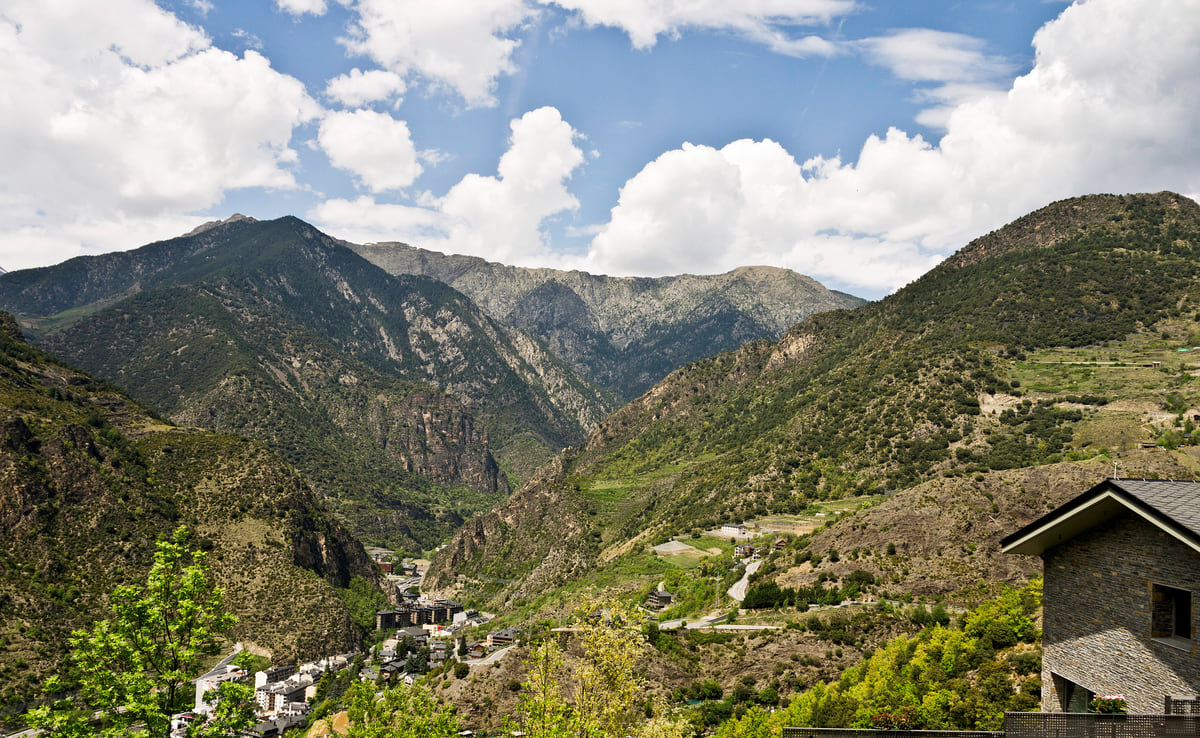
Plaça Major, Sant Julià de Lòria
Sant Julià i Sant Germà, Romanesque, Baroque and 21st-century mosaics

Sant Julià de Lòria's church is Sant Julià i Sant Germà, in the town centre and open for worship daily. Romanesque in origin, it keeps its three-storey Lombard bell tower, a 16th-century Christ of Grace and Baroque altarpieces, and since May 2019 it has had 200 m² of mosaics by Marko Ivan Rupnik. Guided visits on request cost €2, and access is step-free.
Is Sant Julià i Sant Germà worth visiting?
Yes
Yes, as a first stop when you enter from the south. It's central, step-free and pairs a Romanesque tower with contemporary mosaics you won't see in any other church in the country.
I'd pay the two euros for the guided visit, because the 2019 mosaics make far more sense when someone explains each scene. And I'd see it on arrival from Spain, as a first stop before heading further up.
Before you go to Sant Julià i Sant Germà
Before you go
What I would keep in mind
-
01 Most beautiful
A wall-to-wall Pantocrator
Rupnik's mosaics, from May 2019, cover the high altar with a Pantocrator filling the whole wall and Jesus surrounded by the Evangelists and the Virgin.
-
02 My tip
Our Lady of Canòlich in her chapel
The refurbishment gave a chapel of its own to Our Lady of Canòlich, the parish patron, a 12th-century carving kept here.
Canòlich Sanctuary -
03 To save money
A guided visit for €2
Guided visits run on request for €2 through the Sant Julià tourist office. The church is on the Ronda Laurediana route.
Andorra tourist office
Sant Julià i Sant Germà is an oddity among Andorra’s churches, because the most impressive thing inside isn’t medieval. It stands in central Sant Julià de Lòria, is the most important church in the parish and still holds services every day. Outside it’s Romanesque, inside Baroque, and since 2019 it has an altar covered in contemporary mosaics.
Sant Julià i Sant Germà, Lombard tower and 16th-century Christ
The church is Romanesque in origin, though restored and remodelled in modern times. It keeps its three-storey Lombard bell tower, square and solid, in neatly dressed stone with blind arcading and pilaster strips. Inside is a 16th-century carving of the Christ of Grace and the Baroque altarpieces of St Julian, the Immaculate Conception and St Germain, plus two 12th-century carvings, the Canòlich Virgin and the Virgin of Remedies.
What are the 2019 Rupnik mosaics like?
Since May 2019 the church has had 200 m² of mosaics by Marko Ivan Rupnik on the high altar and presbytery. They show a Pantocrator covering the whole wall and Jesus surrounded by the Evangelists, the Virgin and other figures from Christian iconography. The work also created a chapel for Our Lady of Canòlich, the patron saint, who has her own mountain shrine, the Canòlich sanctuary.
So you do not lose the morning at the ticket office, browse tickets and tours in Sant Julià i Sant Germà on GetYourGuide.
How to visit Sant Julià church
Access is adapted for people with reduced mobility, and guided visits run on request for €2 through the Sant Julià tourist office. It’s part of the Ronda Laurediana, the route through the village centre. To see more of the country’s churches, I have the Romanesque churches of Andorra.
Arriving in central Sant Julià by bus
The church stands in the heart of the town. Coming from Spain, Andorra Direct Bus makes its only intermediate stop in Sant Julià, and within the country the L1 and the Bus Exprés link the town with Andorra la Vella and Escaldes. From the central stops you walk.
If you would rather go at your own pace, see the car hire deals in Andorra la Vella: the earlier you book, the more cars are left to choose from.
What else to see in the parish
With the church done, the parish fills a whole day. Up the Nagol road stands Sant Serni de Nagol, whose consecration dates from 1055, with wall paintings found in 1978 and free entry. Higher still, the Juberri Gardens mix geometric beds and sculptures, and on the La Rabassa road, Naturland has the Tobotronc and zip lines for families.
Who I’d send inside
It’s a must for anyone crossing the southern border who wants more than shopping, and for anyone following the story of Our Lady of Canòlich. If you only care for pure Romanesque, you’ll find it too remodelled, and I’d head straight to Nagol. I find it interesting precisely for its mix of periods, which tells you a lot about how the parish has changed. I’d allow twenty minutes, and longer with the guided visit. You book the guided visit at the town’s tourist office, on Laurèdia square. It’s also fully accessible, which helps if you’re travelling with someone who has reduced mobility.
Before you fix your dates, compare train and coach tickets to Andorra la Vella: the same journey can cost very different amounts from one day to the next.
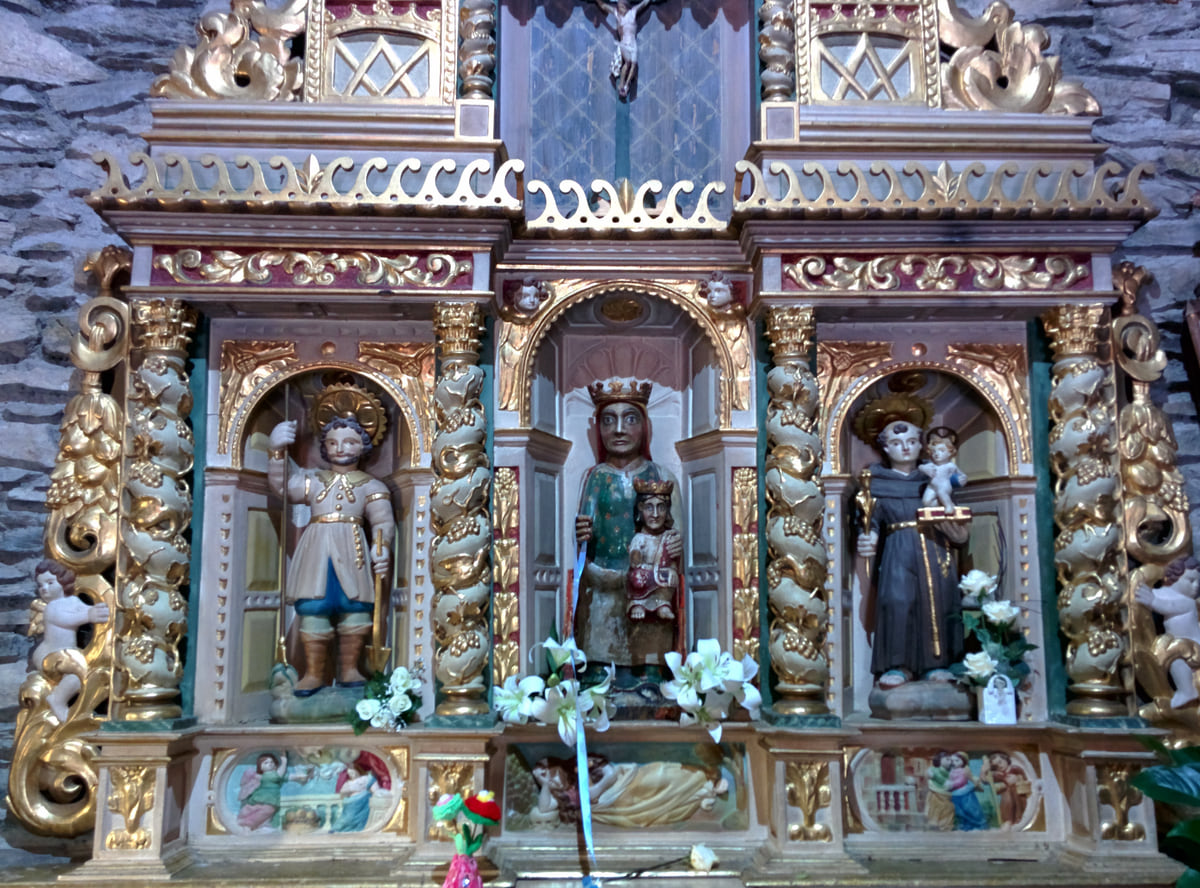
The gilded altarpiece of the Canòlich sanctuary, with the Virgin and Child flanked by two saints
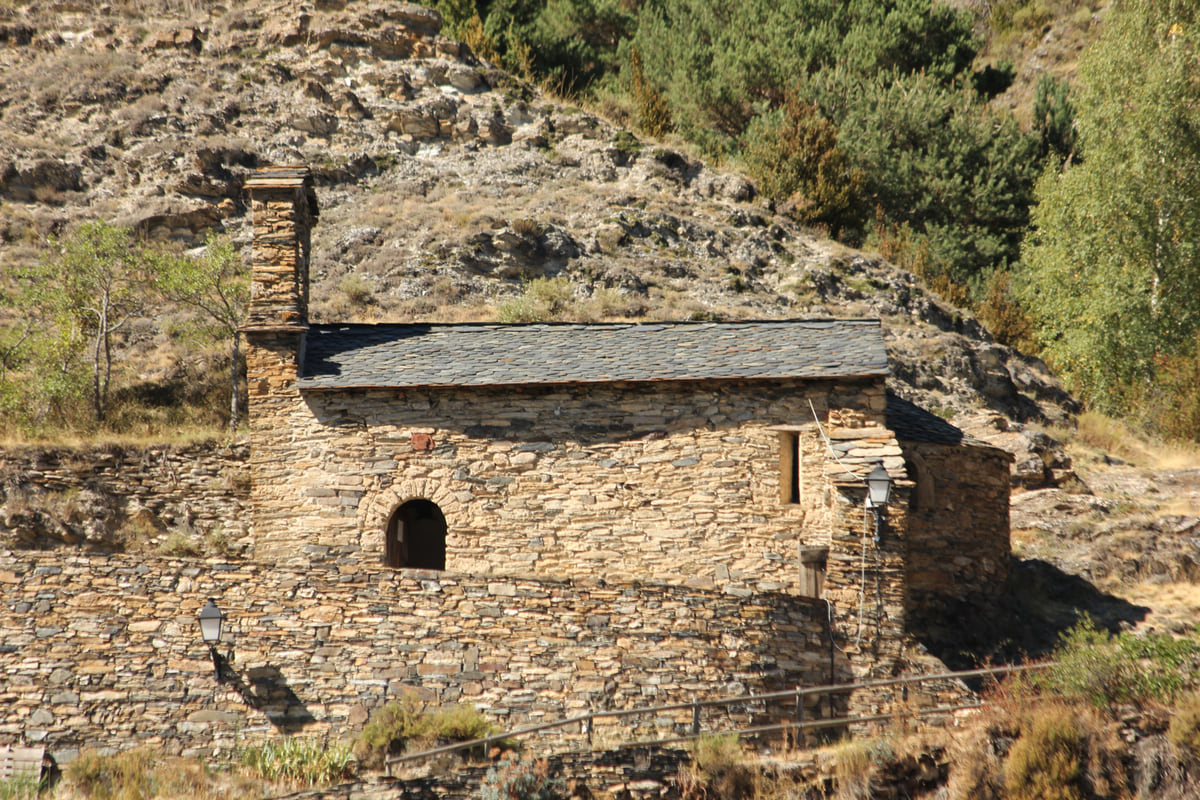
The Romanesque stone chapel of Sant Miquel de Fontaneda on a hillside with autumn trees
What to see inside
| Piece | Period |
|---|---|
| Three-storey Lombard bell tower, with blind arcading and pilaster strips | Romanesque |
| Christ of Grace | 16th century |
| Altarpieces of St Julian, the Immaculate Conception and St Germain | Baroque, the Immaculate one 18th century |
| Virgins of Canòlich and of Remedies | 12th century |
| Mosaics by Marko Ivan Rupnik | May 2019, 200 m² |
Andorra Turisme page checked on 04-10-2026.
Test yourself
How much do you know about Sant Julià i Sant Germà?
0/3 Pick before you peek.
-
The church's mosaics are medieval.
See the answer
False. They're by Marko Ivan Rupnik and were installed in May 2019.
-
The church holds Our Lady of Canòlich.
See the answer
True. A 12th-century carving, with its own chapel since the 2019 refurbishment.
-
The bell tower is Lombard, on three storeys.
See the answer
True. It's square and solid, with blind arcading and pilaster strips in neatly dressed stone.
Map
Where Sant Julià i Sant Germà is
The dashed line is the border with France and Spain. The Valira valley runs down from Pas de la Casa to Sant Julià, with Ordino and La Massana in the northern valley. Every number opens its guide.
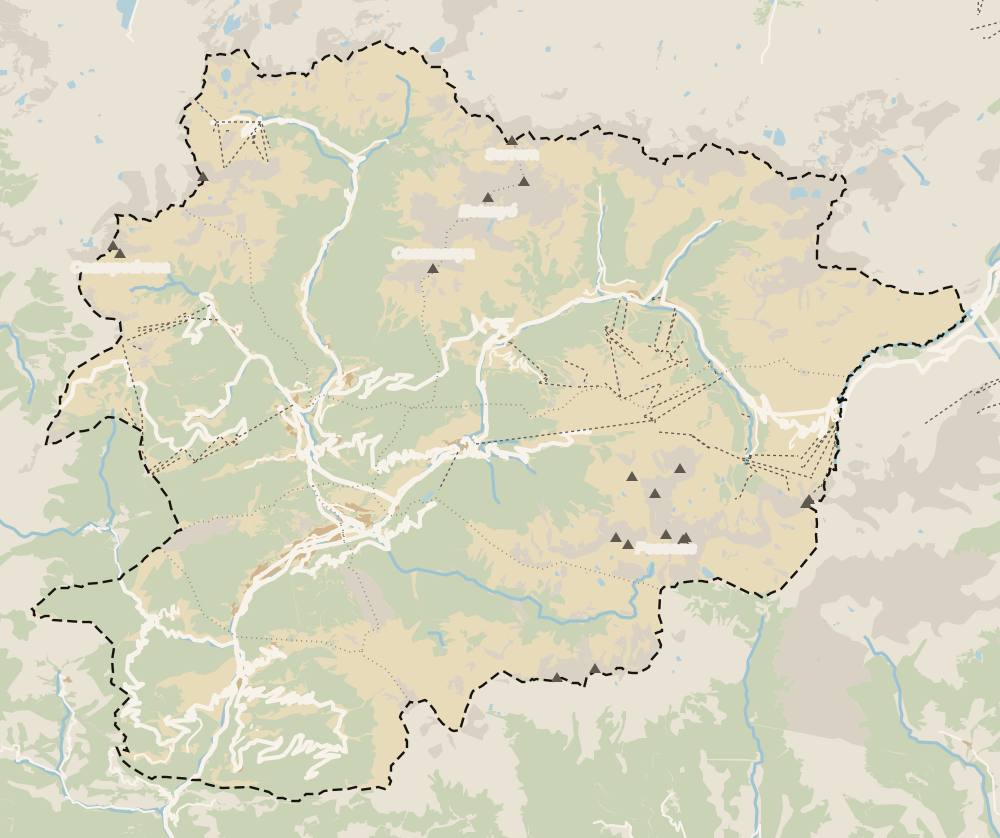 1Sant Julià de Lòria 2Auvinyà 3Fontaneda 4Nagol 5Juberri 6Aixovall 7Aixirivall 8Bixessarri 9Naturland 10Llumeneres 11Canòlich Sanctuary 12Sant Julià i Sant Germà
Map data © OpenStreetMap contributors (ODbL)
- 1Sant Julià de LòriaParish 6 of 7, on the Spanish border
- 2AuvinyàA pedestrian village above the Sant Julià valley
- 3FontanedaA small village in Sant Julià de Lòria
- 4NagolA hamlet on the eastern slope of Sant Julià de Lòria
- 5JuberriA village on the southern slope of Sant Julià de Lòria
- 6AixovallA Sant Julià de Lòria village beside the Gran Valira
- 7AixirivallA Sant Julià de Lòria village above the town
- 8BixessarriA Sant Julià de Lòria village on the CG-6
- 9NaturlandOpen all year in Sant Julià de Lòria
- 10LlumeneresA Sant Julià de Lòria village higher up than Nagol
- 11Canòlich SanctuarySanctuary of Our Lady of Canòlich, Sant Julià de Lòria
- 12Sant Julià i Sant GermàPlaça Major, Sant Julià de Lòria
0 of 290 Andorra guides
Your next stamp
- Sant Julià de Lòria
- Sant Serni de Nagol
- Santa Eulàlia d'Encamp
- Santa Coloma church
- Canòlich Sanctuary
- Juberri
- Sant Romà dels Vilars
- Sant Esteve church
- Places to visit
- Things to do
- Most beautiful places
- Prettiest villages
- Andorra la Vella
- UNESCO World Heritage
- Map
- Escaldes-Engordany
- Where is Andorra?
- Is Andorra a country?
- Parishes
- Casa de la Vall
- Margineda bridge
- Old town
- Towns and villages
- Population
- Size
- Mountains
- Language
- Andorra in one day
- Canillo
- Espai Columba
- History
- Margineda rock shelter
- Co-princes
- Soldeu
- Weekend break
- Andorra in 3 days
- El Tarter
- Political system
- Andorra in 4 days
- Flag
- Ransol
- A week in Andorra
- Facts
- Prats
- El Forn
- Public holidays
- Currency and payments
- L'Aldosa de Canillo
- Els Plans
- EU and Schengen
- Bordes d'Envalira
- Entry requirements
- Prices and budget
- On a budget
- Sant Joan de Caselles
- Santa Coloma
- Ski holidays
- Tourist tax
- Mobile and roaming
- Sant Serni de Canillo
- Tourist information
- Healthcare
- Meritxell Sanctuary
- With a dog
- Packing list
- Safety
- How to get there
- Scams
- From Barcelona
- Bus from Barcelona
- Day trip from Barcelona
- From Madrid
- From Toulouse
- Encamp
- Flights
- La Margineda
- La Massana
- Roc del Quer viewpoint
- Romanesque churches
- Andorra-La Seu airport
- Caldea deals
- Canillo Tibetan bridge
- Museums in Andorra
- Pal
- Pas de la Casa
- Arinsal
- Caldea restaurants
- Driving
- Grau Roig
- Mon(t) Magic
- Nearest airports
- By train
- Erts
- Les Bons
- Palau de Gel
- Road conditions
- Motorcycle Museum
- Parking
- Sispony
- Vila
- Anyós
- Incles valley
- La Mosquera
- Petrol
- El Tremat
- Getting around
- Juclar lakes
- L'Aldosa (La Massana)
- Buses
- Els Cortals d'Encamp
- Sant Climent de Pal
- Bus station
- Sant Cristòfol d'Anyós
- Casa Rull
- Shopping
- Farga Rossell
- Sant Vicenç d'Enclar
- What to buy
- Customs allowances
- La Massana Còmic
- Sant Romà de les Bons
- Car Museum
- Cigarettes
- Comapedrosa
- Electronics
- Alcohol
- Casa Cristo
- Clothes and sports shops
- Iron Route
- Coll d'Ordino
- Perfume
- Sacred Art Museum
- Shopping centres
- Funicamp
- Supermarkets
- Avinguda Meritxell
- Encamp Tibetan bridge
- Avinguda Carlemany (Vivand)
- Envalira pass
- Auvinyà
- Bici Lab Andorra
- Ordino
- Skiing
- With kids
- Zip lines
- Fontaneda
- For couples
- Hotel Grau Roig
- La Cortinada
- Ski pass
- Via ferratas
- Climbing
- Hotel Piolets Soldeu Centre
- Llorts
- Nagol
- Nightlife
- Ski season
- El Serrat
- Grandvalira
- Horse riding
- Hotel Himàlaia Soldeu
- Aixovall
- Mountain biking
- Pal Arinsal
- Sornàs
- Sport Hotel Hermitage & Spa
- Aixirivall
- Ansalonga
- Hotel Soldeu Maistre
- Ordino Arcalís
- Road cycling
- Bixessarri
- Hotel Les Closes
- Naturland
- Segudet
- Arans
- Hotel Espel
- Llumeneres
- Tobotronc
- Abba Ordino Babot Hotel
- Casa d'Areny-Plandolit
- Cross-country skiing
- Miniature Museum
- Skiing with kids
- Tarter Mountain Suites
- Cal Pal
- Free walking tour
- Pessons lakes
- Sant Corneli i Sant Cebrià
- Ski lessons
- Where to stay
- Hotels in Andorra la Vella
- Sant Iscle i Santa Victòria
- Sant Martí de la Cortinada
- Ski hire
- Hotels in Escaldes
- Juberri Gardens
- Llorts iron mine
- Webcams
- Hotels in Soldeu
- Sant Antoni de la Grella
- Snow report
- Sorteny valley
- Hotels in El Tarter
- Sant Andreu del Prat del Campanar
- Tristaina lakes
- Escaldes-Engordany Art Centre
- Hotels in Canillo
- Night skiing
- Tristaina solar viewpoint
- Espai Caldes
- Freeride
- Hotels in Encamp
- Espai Galobardes
- Hotels in Pas de la Casa
- Ski touring
- Casa de la Muntanya
- Hotels in La Massana
- Snowshoeing
- Government Exhibition Hall
- Hotels in Arinsal and Pal
- Snow activities
- Après-ski
- Engordany
- Hotels in Ordino
- Medieval bridges
- Nature parks
- Els Vilars
- Hotels in Sant Julià de Lòria
- Lakes
- Viewpoints
- Where to eat
- Caldea
- Restaurants in Andorra la Vella
- Borda restaurants
- Inúu
- Cheap hotels
- Food
- Hiking
- Spas and thermal baths
- Weather and climate
- Engolasters lake
- Pas de la Casa weather
- Spa hotels
- Trinxat
- Events
- Luxury hotels
- Sant Miquel d'Engolasters
- Ski resort weather
- Wine
- Best time to visit
- Family hotels
- Madriu valley
- All inclusive
- Estany de l'Illa
- In winter
- Apartments
- Coronallacs
- In spring
- Ski World Cup
- Christmas
- Hostels
- In summer
- Mountain huts
- Camping and rural stays
- Easy walks
- In autumn
- New Year
- Family walks
- Festes majors
- In January
- GR11 and other GRs
- In February
- National day
- Around Andorra
- GRP round Andorra
- In March
- Midsummer fire festival
- Carnival
- In April
- In May
- Travessa d'Encamp
- In June
- In July
- In August
- In September
- In October
- In November
- In December
Frequently asked questions
What is the main church in Sant Julià de Lòria?
Sant Julià i Sant Germà, in the centre of the village. It's the parish's most important church and still has daily services.
What are the church's mosaics?
200 m² of mosaics by Marko Ivan Rupnik, installed in May 2019 on the high altar and presbytery, with a large Pantocrator and a chapel for Our Lady of Canòlich.
Can I take a guided tour?
Yes, on request for €2, through the Sant Julià de Lòria tourist office.
Is it Romanesque?
Romanesque in origin, though restored and remodelled in modern times. It keeps the three-storey Lombard bell tower.
Is it accessible?
Yes, it has adapted access for people with reduced mobility.

Questions about Sant Julià i Sant Germà? Write to me
If you need something else to finish planning, write to me. I answer myself, no templates.
My email sergiolepone@gmail.com
By
Tourism graduate with a master’s in Tourism Management and Planning from the University of Málaga, who has travelled across Europe. He writes every guide from official sources and his own judgement.
Published on . Updated on . Facts checked on .
Sources
Some links in this guide are affiliate links: if you book through them, the site earns a commission at no extra cost to you. Affiliate disclosure
Photos: OhRel (CC BY-SA 3.0); Josep Maria Viñolas Esteva (CC BY-SA 4.0); Ferran Llorens (CC BY-SA 2.0), via Wikimedia Commons.