meteo.ad normals, 1991-2020
Andorra's weather and climate, from valley to summit

Andorra weather is Mediterranean high-mountain, with short, dry summers and long, cold, snowy winters, according to the tourist board. On the valley floor, at FEDA's station at 1,135 m, the normal mean runs from 3.1°C in January to 19.4°C in July, and it's much colder higher up. The official forecast is on meteo.ad, whose avalanche bulletin starts on 1 December 2026.
Normal mean temperature by month on the valley floor (1991-2020)
| Month | Normal mean | Latest published month |
|---|---|---|
| January | 3.1°C | 2.5°C (2026) |
| February | 4.1°C | 6.5°C (2026) |
| March | 6.8°C | 7.5°C (2026) |
| April | 8.8°C | 12.6°C (2026) |
| May | 12.4°C | 13.9°C (2026) |
| June | 16.5°C | 20.4°C (2026) |
| July | 19.4°C | 23.7°C (2026) |
| August | 19.2°C | 21.4°C (2026) |
| September | 15.2°C | 15.9°C (2025) |
| October | 11.4°C | 12.4°C (2025) |
| November | 6.3°C | 6.9°C (2025) |
| December | 3.7°C | 4.3°C (2025) |
FEDA hydroelectric plant station (Escaldes-Engordany, 1,135 m). Normal derived from each month's mean and its anomaly against 1991-2020 in meteo.ad's climate summaries. meteo.ad publishes no monthly rainfall normals or average highs and lows.
Andorra weather: the quick answer
Full read: 3 min
- Andorra has a Mediterranean high-mountain climate and more than 300 sunny days a year.
- On the valley floor the normal mean runs from 3.1°C in January to 19.4°C in July.
- Because of altitude, the ski resorts and lakes are considerably colder.
- Official forecasts and warnings are on meteo.ad.
What catches first-timers out is altitude. The same March afternoon can mean a café terrace in Andorra la Vella and a biting wind in Pas de la Casa, so I'd pack for both climates even if you only expect one.
Before you go
Before you go to Andorra, this
-
01 My tip
Read the warning, not the icon
meteo.ad issues weather warnings by level and forecasts by morning, afternoon and night. When deciding whether to head into the mountains, the warning matters more than the sun symbol.
Grandvalira weather -
02 Most beautiful
More than 300 days of sunshine
The tourist board talks of more than three hundred sunny days a year and low humidity, which makes winter cold easier to bear and summer heat less oppressive.
-
03 Getting there
Chains from 1 November to 15 May
Weather changes the roads. In Andorra you must carry snow chains or fit winter tyres during those months, and the Envalira pass is the most exposed stretch.
Pas de la Casa weather -
04 My tip
Quieter between the seasons
Winter belongs to skiing and summer to the mountains. For me, the quietest weeks fall between the lifts closing in April and the summer, and in November before the snow.
the best time to visit Andorra
What I would check before going
What I would book for Andorra
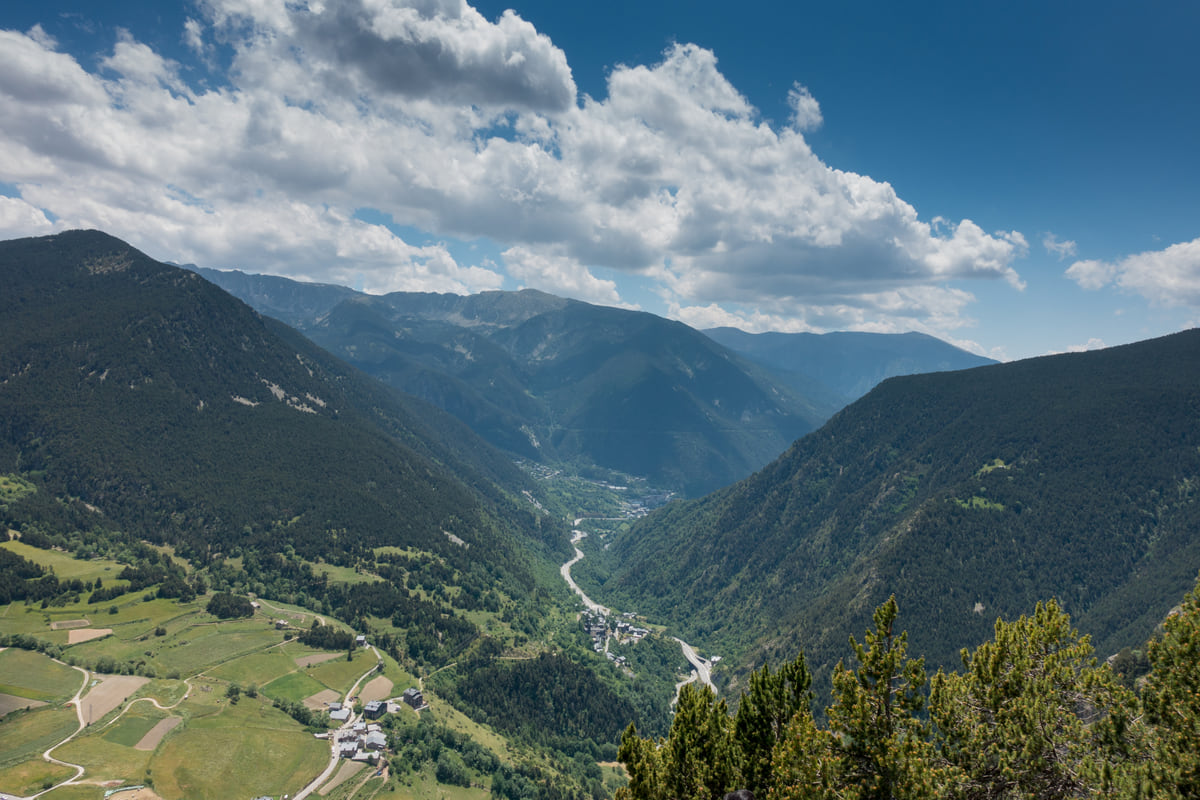
Talking about Andorra’s weather means talking about altitude. In a country with weather stations from 861 metres and peaks up to 2,942, there isn’t one climate but several, and the weather in a square in Andorra la Vella has little to do with a high mountain lake on the same day. Here’s what the climate is like, which temperatures are normal on the valley floor, where to find the official forecast and how everything changes as you climb.
What kind of climate Andorra has
The tourist board describes the country’s climate as Mediterranean high-mountain. Summers are short, hot and fairly dry, and winters long and very cold, with plenty of snow. The Mediterranean influence brings lots of light, more than three hundred sunny days a year, and low humidity, which makes the cold easier to take and the heat less heavy. The wettest seasons are summer and autumn.
Snow settles on the high mountains from about November to early June, and the heaviest falls come between December and February. That’s the calendar the ski season is built around, and in 2026-27 it opens on 4 December and ends on 4 April.
Average temperatures in Andorra, month by month
The government weather service, meteo.ad, doesn’t publish a table of monthly normals, but each of its climate summaries gives the month’s mean temperature at its reference station, the FEDA hydroelectric plant at 1,135 metres on the valley floor, together with its anomaly against the 1991-2020 average. Subtract one from the other and you get each month’s normal, which is what’s in the table.
In round numbers, January averages about 3°C and July and August about 19°C. December and February sit around 4°C, March at 7 and April at 9, May at 12, June at 17, September at 15, October at 11 and November at 6. In August, that station normally sees 19 days above 25°C and four above 30. These are day and night averaged together, so summer afternoons are warmer and winter mornings a lot colder.
2026 is running warm. June came in 3.9 degrees above normal, July 4.3 and April 3.8, according to the same summaries. What doesn’t exist is an official normal for rainfall or average highs and lows by month, which is why I don’t give them. I’d be wary of monthly rainfall tables that don’t say which station they come from.
Once your dates are set, check which hotels are still free in Andorra la Vella before prices climb.
From 861 to 2,681 metres, altitude rules
meteo.ad’s network runs from a station at 861 metres to one at 2,681, at Les Fonts d’Arinsal. In between are La Margineda at 950, Canillo at 1,526, Ransol at 1,641, the Coll d’Ordino at 1,901, Pas de la Casa at 2,120 and Sorteny at 2,271. Each station page shows live temperature, rainfall, wind and snow depth.
That’s why the weather in Canillo, Ordino or Sant Julià gives different answers. The south, around Sant Julià and Andorra la Vella, is the lowest and mildest, Canillo and Ordino are higher and cooler, while Pas de la Casa and the resorts are in another league. The mountains have their own pages, Pas de la Casa weather and Grandvalira weather.
Where to check the forecast
On meteo.ad. Its home page shows the current warning level, forecasts split into morning, afternoon and night for the next few days, and meteograms. The tourist board’s weather page sums up the next few days with highs, lows and wind. And mountain weather changes fast, as the tourist board itself points out, asking walkers to check reliable sources before setting out and to stay alert during the day.
So you do not pay over the odds, look at trains, coaches and flights to Andorra la Vella on Omio and pick the one that suits you.
How to pack for it
If you’re flying into Toulouse or Barcelona and hiring a car, the weather that matters most on arrival day is on the road up. From 1 November to 15 May chains or winter tyres are compulsory in Andorra, the UK Foreign Office reminds drivers, and Mobilitat’s live cameras and helpline on +376 1802 1802 show what the passes are doing before you commit.
My advice is to pack for two climates at once. Even in July, if you plan to walk up to a lake or a viewpoint, bring a warm layer and something waterproof. It’s all in what to pack for Andorra. And if you’re still choosing dates, weather is only part of the decision, which I go into in the best time to visit Andorra, with links to each month, starting with Andorra in January. November, with a 6.3 °C normal mean on the valley floor, is the changeover month before the snow, covered in Andorra in November.
If you would rather have a local show you round, book a guided tour in Andorra la Vella and choose by the reviews.
A car frees you from timetables: search car hire in Andorra la Vella on DiscoverCars and compare companies.
Once your dates are set, check which hotels are still free in Andorra la Vella before prices climb.
Altitude of selected meteo.ad stations
| Station | Altitude |
|---|---|
| La Margineda - FEDA | 950 m |
| FEDA (Central), reference | 1,135 m |
| Canillo | 1,526 m |
| Engolasters - FEDA | 1,638 m |
| Ransol - FEDA | 1,641 m |
| Coll d'Ordino | 1,901 m |
| El Pas de la Casa | 2,120 m |
| Sorteny | 2,271 m |
| Les Fonts d'Arinsal | 2,681 m |
meteo.ad station pages checked on 29 September 2026. The lowest station in the network is at 861 m and the highest at 2,681 m.
Test yourself
True or false?
0/4 Pick before you peek.
-
January is Andorra's coldest month.
See the answer
True. At FEDA's reference station its normal mean is 3.1°C, the lowest of the year, based on meteo.ad data.
-
It rains more in Andorra in winter than in summer.
See the answer
False. The tourist board says the wettest seasons are summer and autumn. Winter brings snow to the mountains.
-
Summer 2026 was warmer than normal in Andorra.
See the answer
True. At FEDA's station, June 2026 came in 3.9°C above normal and July 4.3°C above, according to meteo.ad's summaries.
-
All of Andorra's weather stations are above 1,000 m.
See the answer
False. meteo.ad's network has stations lower down, such as La Margineda at 950 m, and the lowest at 861 m.
- January normal mean in the valley
- 3.1°C
- July normal mean in the valley
- 19.4°C
- Sunny days a year
- 300+
- Between the lowest and highest stations
- 1,820 m
0 of 290 Andorra guides
Your next stamp
- In January
- In June
- In spring
- In July
- Packing list
- In autumn
- In February
- In October
- Places to visit
- Things to do
- Most beautiful places
- Prettiest villages
- Andorra la Vella
- UNESCO World Heritage
- Map
- Escaldes-Engordany
- Where is Andorra?
- Is Andorra a country?
- Parishes
- Casa de la Vall
- Margineda bridge
- Old town
- Santa Coloma church
- Towns and villages
- Population
- Size
- Mountains
- Language
- Andorra in one day
- Canillo
- Espai Columba
- History
- Margineda rock shelter
- Sant Esteve church
- Co-princes
- Soldeu
- Weekend break
- Andorra in 3 days
- El Tarter
- Political system
- Andorra in 4 days
- Flag
- Ransol
- A week in Andorra
- Facts
- Prats
- El Forn
- Public holidays
- Sant Julià de Lòria
- Currency and payments
- L'Aldosa de Canillo
- Els Plans
- EU and Schengen
- Bordes d'Envalira
- Entry requirements
- Prices and budget
- On a budget
- Sant Joan de Caselles
- Santa Coloma
- Ski holidays
- Tourist tax
- Mobile and roaming
- Sant Serni de Canillo
- Tourist information
- Healthcare
- Meritxell Sanctuary
- With a dog
- Safety
- How to get there
- Scams
- From Barcelona
- Bus from Barcelona
- Day trip from Barcelona
- From Madrid
- From Toulouse
- Encamp
- Flights
- La Margineda
- La Massana
- Roc del Quer viewpoint
- Romanesque churches
- Andorra-La Seu airport
- Caldea deals
- Canillo Tibetan bridge
- Museums in Andorra
- Pal
- Pas de la Casa
- Arinsal
- Caldea restaurants
- Driving
- Grau Roig
- Mon(t) Magic
- Nearest airports
- By train
- Erts
- Les Bons
- Palau de Gel
- Road conditions
- Motorcycle Museum
- Parking
- Sispony
- Vila
- Anyós
- Incles valley
- La Mosquera
- Petrol
- El Tremat
- Getting around
- Juclar lakes
- L'Aldosa (La Massana)
- Buses
- Els Cortals d'Encamp
- Sant Climent de Pal
- Bus station
- Sant Cristòfol d'Anyós
- Casa Rull
- Shopping
- Farga Rossell
- Sant Vicenç d'Enclar
- Santa Eulàlia d'Encamp
- What to buy
- Customs allowances
- La Massana Còmic
- Sant Romà de les Bons
- Car Museum
- Cigarettes
- Comapedrosa
- Electronics
- Alcohol
- Casa Cristo
- Clothes and sports shops
- Iron Route
- Coll d'Ordino
- Perfume
- Sacred Art Museum
- Shopping centres
- Funicamp
- Supermarkets
- Avinguda Meritxell
- Encamp Tibetan bridge
- Avinguda Carlemany (Vivand)
- Envalira pass
- Auvinyà
- Bici Lab Andorra
- Ordino
- Skiing
- With kids
- Zip lines
- Fontaneda
- For couples
- Hotel Grau Roig
- La Cortinada
- Ski pass
- Via ferratas
- Climbing
- Hotel Piolets Soldeu Centre
- Llorts
- Nagol
- Nightlife
- Ski season
- El Serrat
- Grandvalira
- Horse riding
- Hotel Himàlaia Soldeu
- Juberri
- Aixovall
- Mountain biking
- Pal Arinsal
- Sornàs
- Sport Hotel Hermitage & Spa
- Aixirivall
- Ansalonga
- Hotel Soldeu Maistre
- Ordino Arcalís
- Road cycling
- Bixessarri
- Hotel Les Closes
- Naturland
- Segudet
- Arans
- Hotel Espel
- Llumeneres
- Tobotronc
- Abba Ordino Babot Hotel
- Casa d'Areny-Plandolit
- Cross-country skiing
- Miniature Museum
- Skiing with kids
- Tarter Mountain Suites
- Cal Pal
- Free walking tour
- Pessons lakes
- Sant Corneli i Sant Cebrià
- Sant Serni de Nagol
- Ski lessons
- Where to stay
- Canòlich Sanctuary
- Hotels in Andorra la Vella
- Sant Iscle i Santa Victòria
- Sant Martí de la Cortinada
- Ski hire
- Hotels in Escaldes
- Juberri Gardens
- Llorts iron mine
- Sant Julià i Sant Germà
- Webcams
- Hotels in Soldeu
- Sant Antoni de la Grella
- Snow report
- Sorteny valley
- Hotels in El Tarter
- Sant Andreu del Prat del Campanar
- Tristaina lakes
- Escaldes-Engordany Art Centre
- Hotels in Canillo
- Night skiing
- Tristaina solar viewpoint
- Espai Caldes
- Freeride
- Hotels in Encamp
- Espai Galobardes
- Hotels in Pas de la Casa
- Ski touring
- Casa de la Muntanya
- Hotels in La Massana
- Snowshoeing
- Government Exhibition Hall
- Hotels in Arinsal and Pal
- Snow activities
- Après-ski
- Engordany
- Hotels in Ordino
- Medieval bridges
- Nature parks
- Els Vilars
- Hotels in Sant Julià de Lòria
- Lakes
- Sant Romà dels Vilars
- Viewpoints
- Where to eat
- Caldea
- Restaurants in Andorra la Vella
- Borda restaurants
- Inúu
- Cheap hotels
- Food
- Hiking
- Spas and thermal baths
- Engolasters lake
- Pas de la Casa weather
- Spa hotels
- Trinxat
- Events
- Luxury hotels
- Sant Miquel d'Engolasters
- Ski resort weather
- Wine
- Best time to visit
- Family hotels
- Madriu valley
- All inclusive
- Estany de l'Illa
- In winter
- Apartments
- Coronallacs
- Ski World Cup
- Christmas
- Hostels
- In summer
- Mountain huts
- Camping and rural stays
- Easy walks
- New Year
- Family walks
- Festes majors
- GR11 and other GRs
- National day
- Around Andorra
- GRP round Andorra
- In March
- Midsummer fire festival
- Carnival
- In April
- In May
- Travessa d'Encamp
- In August
- In September
- In November
- In December
Andorra weather: questions and answers
What is the weather like in Andorra?
It depends on altitude and season. On the valley floor the normal mean runs from about 3°C in January to about 19°C in July, and the peaks are considerably colder. For today and the coming days, the official forecast is on meteo.ad.
What kind of climate does Andorra have?
Mediterranean high-mountain, according to the tourist board, with short, hot, fairly dry summers and long, very cold winters with plenty of snow. It gets more than 300 days of sunshine and low humidity.
What is the coldest month in Andorra?
January. At FEDA's reference station, at 1,135 m, its normal mean temperature is 3.1°C. December, at 3.7°C, and February, at 4.1°C, are close behind.
When does it rain most in Andorra?
The tourist board says the wettest seasons are summer and autumn. meteo.ad doesn't publish an official table of normal monthly rainfall, so I don't give figures.
Does Andorra get hot in summer?
Warm rather than hot. On the valley floor July and August average around 19°C, and in August the reference station normally sees 19 days above 25°C and four above 30°C. Up in the mountains it's much cooler.
When does it snow in Andorra?
In the high mountains snow arrives around November and lasts until early June, with the heaviest falls from December to February, according to the tourist board.

Questions about Andorra? Write to me
If you need something else to finish planning, write to me. I answer myself, no templates.
My email sergiolepone@gmail.com
By
Tourism graduate with a master’s in Tourism Management and Planning from the University of Málaga, who has travelled across Europe. He writes every guide from official sources and his own judgement.
Published on . Updated on . Facts checked on .
Sources
Some links in this guide are affiliate links: if you book through them, the site earns a commission at no extra cost to you. Affiliate disclosure
Photos: Kent Wang (CC BY-SA 2.0), via Wikimedia Commons.