From 15 BC to 15 August 2026
The history of Liechtenstein, era by era
Liechtenstein was born in 1719, when the emperor merged the County of Vaduz and the Lordship of Schellenberg, bought by the Liechtenstein family in 1712 and 1699. Before that it was Roman territory from 15 BC and then two small medieval lordships. It has been sovereign since 1806, has had no army since 1868, has used the Swiss franc since 1924 and joined the UN in 1990.
In 30 seconds
Full read: 4 min
- Liechtenstein was Roman from 15 BC, then two lordships, Vaduz and Schellenberg, under one ruler from 1434-1437.
- The Liechtenstein family bought them in 1699 and 1712, and the principality was created in 1719.
- It has been sovereign since 1806, abolished its army in 1868 and has had its current constitution since 1921.
- Since 1924 it has shared the franc and customs with Switzerland; it joined the UN in 1990 and the EEA in 1995.
If you've only an hour for history, spend it in the LandesMuseum on the Städtle, which tells the whole story in a building that once housed the governor. If you've a car or fancy a walk, head afterwards to the church hill at Bendern, where loyalty was sworn to the new lord in 1699.

Before you go
What I would keep in mind
-
01 Most beautiful
The hill where the country began
On the church hill at Bendern an oath of loyalty to the prince was sworn on 16 March 1699. The official tourist board says the spot symbolises the start of today's Liechtenstein, and finds there go back to the Bronze Age.
Bendern and its 1699 oath hill -
02 My tip
A Roman fort in the middle of Schaan
The walls of a fourth-century Roman fort poke out beside St Peter's chapel in Schaan. It's the clearest trace of the days when this was the province of Raetia.
Schaan Roman fort and St Peter's -
03 To save money
The whole story on one pass
The ALL INCLUSIVE Erlebnispass gets you into the LandesMuseum, the Treasure Chamber and the Postage Stamp Museum for free, the three places where the country makes most sense.
the Liechtenstein National Museum (LandesMuseum)
What I would book
Liechtenstein’s history has a quirk that sets it apart from all its neighbours. The land was there for centuries, with its villages, castles and lords, but a country of that name didn’t exist until 1719, and it came about through a property deal. I break it into four eras, and with those in mind the trip makes far more sense.
Romans, counts and two lordships
The Romans conquered the area in 15 BC and folded it into the province of Raetia. The clearest trace is in Schaan, where the walls of a fourth-century fort poke out beside St Peter’s chapel, and I cover it on the page about the Roman fort in Schaan. Schaan sat where the road from Bregenz to Chur crossed another route, which is why it mattered even then.
In the Middle Ages the valley split in two. The County of Vaduz was created in 1342, and in 1396 it was confirmed as answerable to the emperor alone. To the north lay the Lordship of Schellenberg. The two came under one ruler between 1434 and 1437, and the division lives on in today’s Oberland and Unterland, still the country’s two electoral districts. These weren’t peaceful centuries. In the Swabian War of 1499 the Swiss Confederates destroyed Vaduz Castle, which was later rebuilt.
A family buys a country (1699-1806)
The Liechtensteins, rich and powerful in Austria and Moravia, needed land held directly from the emperor to earn a vote in the Imperial Diet. So the prince, Johann Adam Andreas, picked up Schellenberg first, in 1699, and Vaduz thirteen years later. In March 1699 an oath of fealty to the new lord was taken beside the church at Bendern, a place the tourist board presents as the country’s starting point.
In 1719 Charles VI merged the two holdings into a principality of the Empire named after their owners. The princes, mind you, stayed in Vienna. In 1806 it joined Napoleon’s Confederation of the Rhine, the step the princely house regards as the basis of its sovereignty. Then came the German Confederation in 1815 and a 19th century closely tied to Austria, with a customs union from 1852.
From Austria to Switzerland (1862-1945)
The 1862 constitution gave the people a voice through parliament, the Landtag, and in 1868 the country disbanded its tiny army, a story told on the Liechtenstein without an army page. In 1912 its first stamps appeared. The First World War changed everything. In 1919 Liechtenstein ended its customs union with Austria, in 1921 it adopted the constitution still in force, and on 1 January 1924 the customs union with Switzerland came into effect, with the Swiss franc as currency.
In 1938 Franz Joseph II settled in Vaduz, something no reigning prince had done before. He arrived after Germany annexed Austria, and the house credits him with keeping the country independent through the war. Liechtenstein declared its neutrality on 30 August 1939, though it lived alongside a local Nazi movement and in fear of invasion. The war’s last scene played out at Hinterschellenberg and the 1945 Russian crossing, in May 1945. You can read that chapter in Liechtenstein in the Second World War.
The country today (1950-2026)
The second half of the 20th century turned it into a strongly industrial country. Today industry accounts for 32% of jobs, a share the Office of Statistics calls exceptionally high by European standards. Its other reputation, as a place for secret accounts, began to change after the 2008 data scandal, which I cover in is Liechtenstein a tax haven? On the world stage it opened up step by step, joining the International Court of Justice in 1950, the Council of Europe in 1978, a currency treaty with Switzerland in 1980, the United Nations in 1990, the European Free Trade Association a year later and the EEA in 1995. Nationwide suffrage for women only came in 1984, and the margin in that men-only referendum was 119 votes.
Hans-Adam II came to the throne in 1989, the constitution was reformed in 2003 and since 2004 his son Alois has acted as regent. The country joined Schengen on 19 December 2011, marked its 300th anniversary in 2019, joined the International Monetary Fund in 2024 and in 2025 had Brigitte Haas take over as head of government. The latest chapter came on 15 August 2026, when the princely house decided that from now on the eldest child will reign, male or female.
How I’d read it on the ground
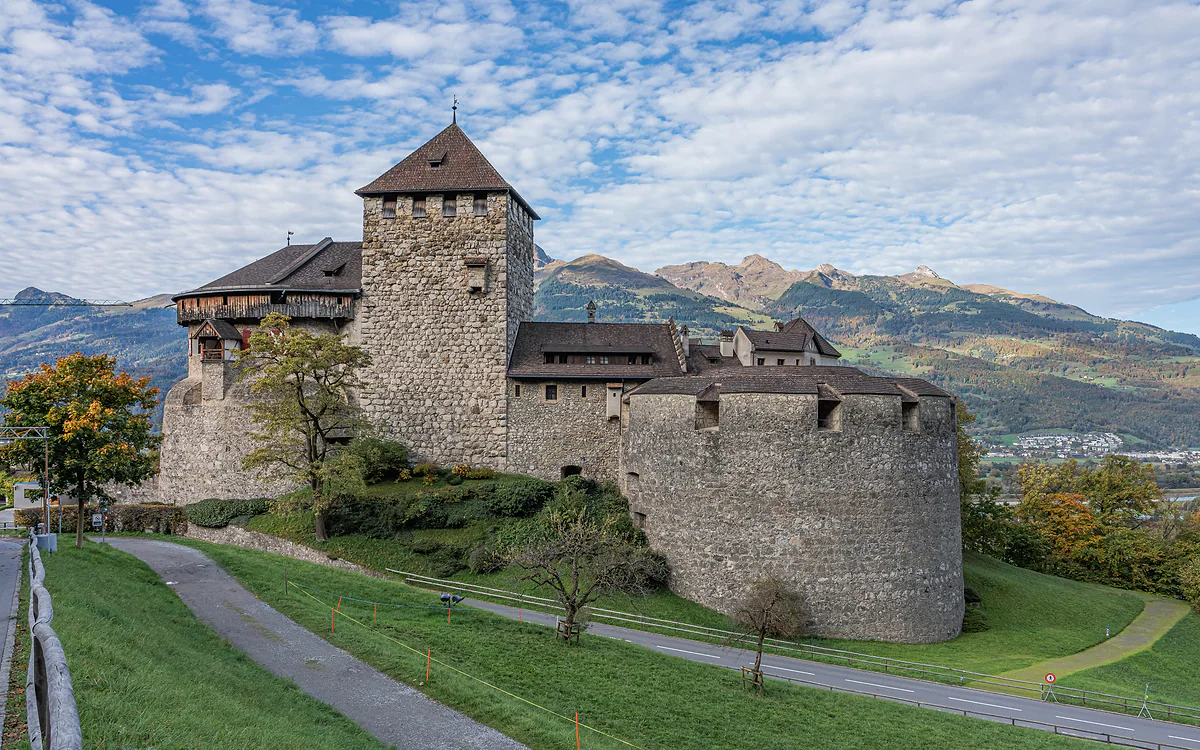
My advice is not to try to memorise dates. Hold on to the idea that Liechtenstein is the product of a purchase, a pact with Napoleon and a change of partner in 1924. With that in mind, Vaduz Castle, the hill at Bendern and the two ruined castles of Schellenberg stop being loose stones and start telling the same story. And if it rains, the LandesMuseum in Vaduz tells all of it indoors.
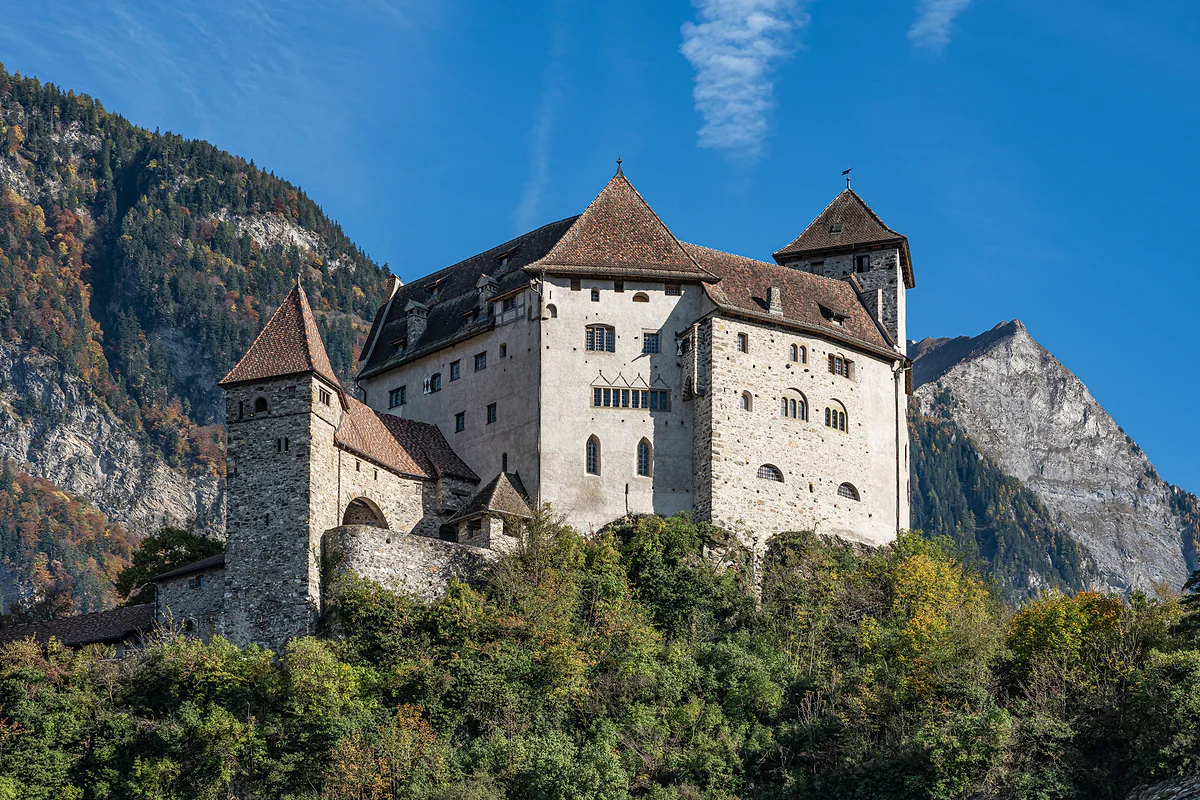
Gutenberg Castle in Balzers, with its towers and white walls on the wooded hill and a rocky peak behind.
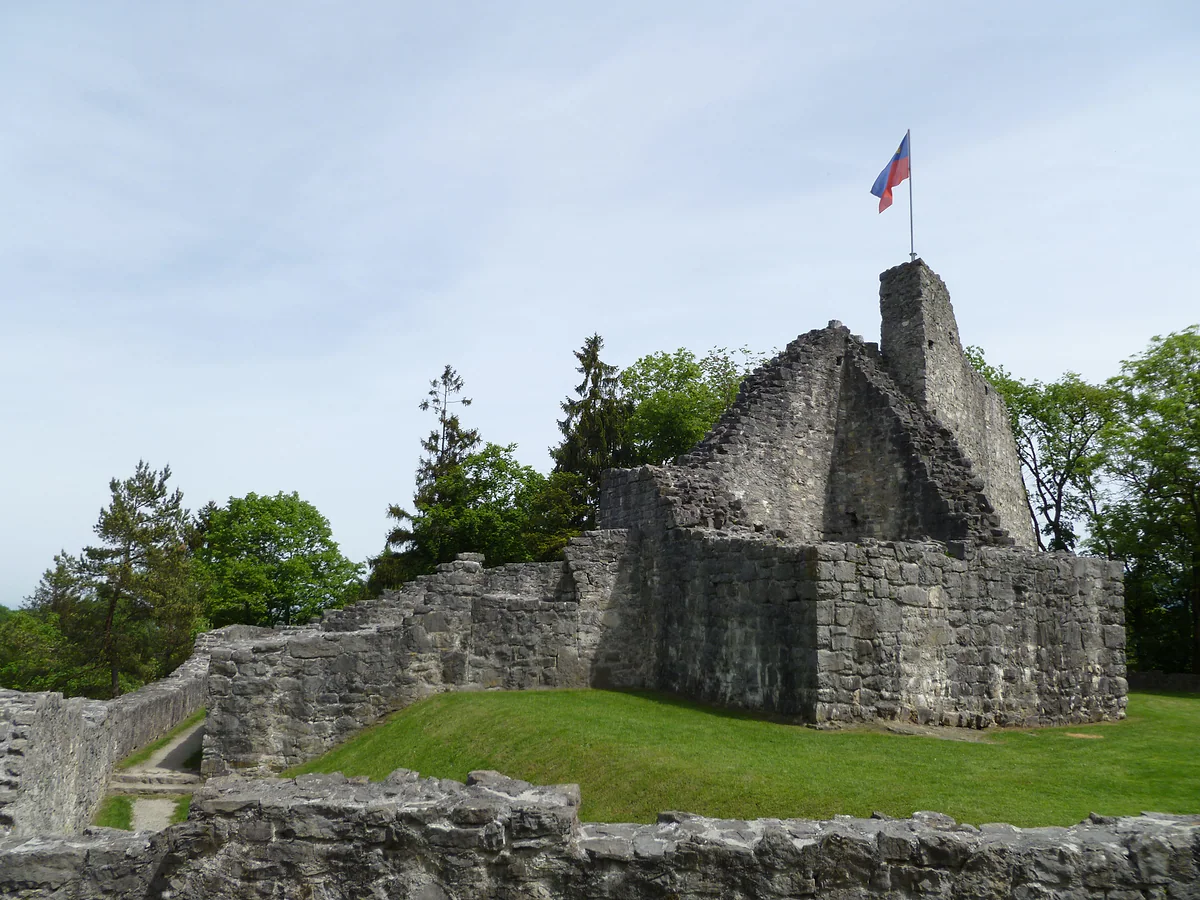
The stone ruins of the upper castle of Schellenberg, with the Liechtenstein flag on top of the tower.
Liechtenstein timeline
| Year | What happened |
|---|---|
| 15 BC | The Romans conquer the area, which joins the province of Raetia |
| 1342 | The County of Vaduz is created |
| 1434-1437 | The County of Vaduz (Oberland) and Lordship of Schellenberg (Unterland) come under one ruler |
| 1499 | In the Swabian War the Swiss Confederates destroy Vaduz Castle |
| 1699 and 1712 | Johann Adam Andreas of Liechtenstein buys Schellenberg and then Vaduz |
| 1719 | Emperor Charles VI unites them as the imperial principality of Liechtenstein |
| 1806 | Joins the Confederation of the Rhine, the basis of its sovereignty |
| 1852 | Customs treaty with Austria |
| 1862 | Constitution with parliament (Landtag) representing the people |
| 1868 | The army is abolished |
| 1912 | First Liechtenstein stamps |
| 1921 | Current constitution (5 October) |
| 1924 | Customs union with Switzerland and the Swiss franc |
| 1938 | Franz Joseph II becomes the first prince to live in the country |
| 1984 | Women win the vote |
| 1990 and 1995 | United Nations and European Economic Area |
| 2011 | Schengen (19 December) |
| 2026 | The princely house adopts absolute primogeniture for the future |
Sources: Office of Statistics (Liechtenstein in Zahlen 2026), the princely house, the official tourist board and the Historisches Lexikon.
Where to see the history
| Period | Place |
|---|---|
| Roman | Roman fort and St Peter's chapel, Schaan |
| Middle Ages | Gutenberg Castle (Balzers), the Schellenberg castles and Vaduz Castle (outside only) |
| 1699 | Church hill, Bendern |
| The whole sweep | LandesMuseum, Vaduz |
Sources: territory inventory (Lexikon, official tourist board and municipalities).
Test yourself
True or false?
0/4 Pick before you peek.
-
Liechtenstein has been a principality since the Middle Ages.
See the answer
False. It was created in 1719, when Emperor Charles VI merged the County of Vaduz and the Lordship of Schellenberg into an imperial principality.
-
The Romans were already in what is now Liechtenstein before the birth of Christ.
See the answer
True. They conquered the area in 15 BC and added it to the province of Raetia, according to the official tourist board.
-
Liechtenstein had a customs union with Austria before the one with Switzerland.
See the answer
True. It shared customs with Austria from 1852 to 1919. The union with Switzerland came into force on 1 January 1924.
-
Women in Liechtenstein have voted since the early 20th century.
See the answer
False. They won the national vote only in 1984, after a men-only referendum passed by 2,370 votes to 2,251.
- The principality of Liechtenstein is created
- 1719
- Foundation of sovereignty, says the princely house
- 1806
- Year the army was abolished
- 1868
- Women get the vote nationally
- 1984
0 of 168 Liechtenstein guides
Your next stamp
- Is it a country?
- Facts
- No army
- Second World War
- The princely house
- Political system
- Swiss invasions
- Hilti
- Things to do
- One day
- Two days
- Municipalities
- Oberland
- Unterland
- Map
- Vaduz
- Städtle
- Mitteldorf
- Vaduz Castle
- Vaduz Cathedral
- Parliament
- Government Building
- Vaduz Town Hall
- Red House
- Prince's Winery
- Old Rhine Bridge
- Schaan
- Schalun Castle Ruin
- Balzers
- Citytrain
- Triesen
- Triesenberg
- Walser Museum
- Planken
- Gutenberg Castle
- The Rhine
- Schaan Roman fort
- Dux
- St Mamertus chapel
- Lawena valley
- Mäls
- DoMuS
- TAK Theatre
- Castles
- Churches and chapels
- Viewpoints
- Mountains
- Museums
- Kunstmuseum
- Mountain huts
- Hilti Art Foundation
- Pfälzerhütte
- Gafadura hut
- National Museum
- Treasure Chamber
- Postage Stamp Museum
- Kunstraum Engländerbau
- Eschen
- Masescha
- Gaflei
- Nendeln
- Mauren
- Silum
- Rotenboden
- Schaanwald
- Gamprin
- Wangerberg
- Bendern
- Steg
- Ruggell
- Samina valley
- Schellenberg Farmhouse Museum
- Cross-country skiing at Steg
- Küefer-Martis-Huus
- Ruggeller Riet
- Schellenberg
- Hinterschellenberg
- Fürstensteig
- Liechtenstein Trail
- Malbun
- Schellenberg castles
- Eschnerberg
- Malbun in summer
- Population
- Stage 1: Balzers - Triesenberg
- Lakes
- Sareis
- Size
- Stage 2: Triesenberg - Vaduz
- Malbun Peace Chapel
- Stage 3: Vaduz - Nendeln
- Swimming pools
- Language
- Skiing in Malbun
- Stage 4: Nendeln - Ruggell
- Dialect
- Malbun ski pass
- Stage 5: Ruggell - Schaanwald
- Hotels in Malbun
- Stamps
- Princess Gina Trail
- Hut-to-hut Route 66
- Hiking
- Getting there
- In winter
- Weather
- Airport
- Best time to visit
- In summer
- Events
- With kids
- Zurich to Liechtenstein
- National day
- Sargans to Vaduz
- Christmas
- Feldkirch to Vaduz
- By train
- Traditions
- Carnival
- Getting around
- Buses
- Funken Sunday
- Alpine cattle drive
- Driving and vignette
- Parking
- Bike hire
- Cycling
- EU and Schengen
- Entry requirements
- Borders and customs
- The prince
- The flag
- The coat of arms
- The national anthem
- Why so rich?
- Banks and tax haven
- Where to stay
- Hotels in Vaduz
- False teeth
- Hostel and camping
- Rent the country?
- Where to eat
- Restaurants in Vaduz
- Bars and nightlife
- Food
- Käsknöpfle
- Wine
- Casinos
- Adventure Pass
- Rainy days
- Guided tours
- Tourist office
- Day trips
- Passport stamp
- Music festivals
- Phone and roaming
- Currency and payments
- Prices and budget
- Tipping
- Plugs and sockets
- Tap water
- Opening hours
- Public holidays
- Safety
- Accessibility
- With a dog
- Shopping and souvenirs
Frequently asked questions
What does the name Liechtenstein mean?
It's the name of a castle south of Vienna from which the princely family took its surname around 1136. According to the Historisches Lexikon, it refers to a pale rock or a castle hill. The country inherited the name from the family in 1719.
When did Liechtenstein become independent?
It was created as a principality of the Holy Roman Empire in 1719, and the princely house dates the foundation of its sovereignty to 1806, when Napoleon took it into the Confederation of the Rhine. It joined the German Confederation in 1815.
What was Liechtenstein before it became a principality?
Two separate territories, the County of Vaduz, created in 1342, and the Lordship of Schellenberg, under one ruler from 1434-1437. Earlier still it was Roman land, part of the province of Raetia from 15 BC.
When did Liechtenstein start using the Swiss franc?
With the customs treaty with Switzerland, which came into force on 1 January 1924. Before that it had a customs union with Austria, from 1852 until 1919.
When did women get the vote in Liechtenstein?
Only in 1984, at national level. The men-only referendum that year passed by 2,370 votes to 2,251, according to the Historisches Lexikon.
What happened to Liechtenstein in the Second World War?
It declared neutrality on 30 August 1939 and was never invaded, though it was under threat. In May 1945 it took in what was left of a Russian unit that had fought for Germany and refused to hand over to the USSR those who didn't want to return.
By
Tourism graduate with a master’s in Tourism Management and Planning from the University of Málaga, who has travelled across Europe. He writes every guide from official sources and his own judgement.
Published on . Facts checked on .
Sources
Photos: A.Savin (FAL); A.Savin (FAL); SchuetzeZH (CC BY-SA 4.0), via Wikimedia Commons.