Neutral from 30 August 1939
Liechtenstein in the Second World War, unarmed on Hitler's doorstep
Liechtenstein declared neutrality on 30 August 1939 and was never invaded, although German plans against Switzerland included occupying it and a local Nazi movement was active. It sat out the war inside the Swiss wartime economy. On the night of 2 to 3 May 1945, 494 members of a Russian army that had fought for Germany crossed in at Schellenberg, and those who refused to go home were not handed to the USSR.
In 30 seconds
Full read: 4 min
- Liechtenstein declared neutrality on 30 August 1939 and was never invaded.
- With no army since 1868, it relied on Switzerland, which never guaranteed its defence.
- A local Nazi movement tried and failed to bring about union with Germany.
- In May 1945 it interned 494 Russian soldiers of the Wehrmacht and refused to hand over about 130 who wouldn't go back.
If this chapter interests you, don't stop at Vaduz. Head up to Hinterschellenberg, where the Russians crossed in 1945 and where the Historisches Lexikon records a memorial stele from 1980, and call at the chapel at Dux, where the prince placed the country under the Virgin's protection in 1940.

Before you go
What I would keep in mind
-
01 Most beautiful
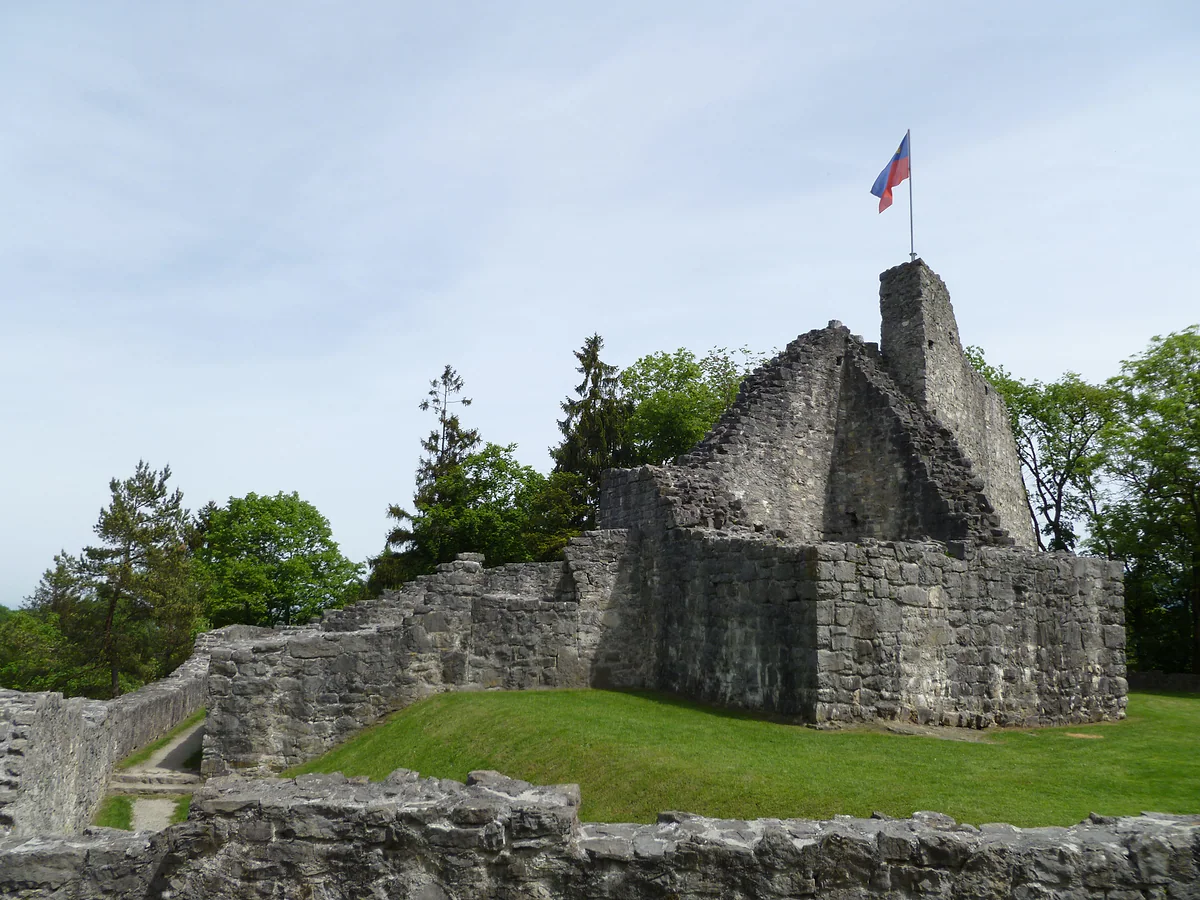
Where the Russians crossed, at Hinterschellenberg
The 494 members of Holmston's army walked from Nofels in Austria into Schellenberg on the night of 2 to 3 May 1945. A memorial stele was put up in Hinterschellenberg in 1980.
Hinterschellenberg and the 1945 Russian crossing -
02 My tip
The chapel where the prince entrusted the country
On 25 March 1940 Franz Joseph II placed Liechtenstein under the protection of the Virgin at the Maria zum Trost chapel at Dux, above Schaan. It looks out over the Rhine valley.
Dux chapel and lookout tower -
03 My tip
National day was born mid-war
15 August has been a state holiday since 1940, the eve of the prince's birthday, as a show of unity against National Socialism, according to the Historisches Lexikon.
Liechtenstein National Day on 15 August
What I would book
A country with no army since 1868, sharing a border with Nazi Germany once Austria had been annexed in 1938, with its own home-grown Nazi movement and no guarantee of defence from anyone. On paper, Liechtenstein had every reason to disappear. It came through untouched, and I find it one of the most gripping parts of the country’s story, not least because it has an ending Liechtenstein remembers fondly and a couple of awkward chapters it has since investigated itself.
Neutral, unarmed and in Switzerland’s shadow
On 30 August 1939, two days before Germany invaded Poland, Liechtenstein declared its neutrality. The Historisches Lexikon is clear about where the danger lay. If Germany attacked Switzerland, Liechtenstein was in the way, and secret German plans against Switzerland included marching through and occupying it. The tensest moment came in May and June 1940, when the government and the municipalities prepared to evacuate.
Switzerland promised nothing. The Federal Council repeated that there was no military guarantee, and the Swiss border guards, who under the customs treaty policed the frontier with Germany, were to withdraw if an attack came. Even so, being inside the Swiss economy was the best protection going. Liechtenstein took on Swiss rationing, nobody went hungry, and in 1941 its workers gained access to the Swiss labour market. From 1939 to 1948 the border with Switzerland couldn’t be crossed freely.
The enemy within
From 1940 a Nazi movement, the VDBL, was active in the country, pushing for union with Germany with its own newspaper, Hitler salutes and punch-ups with opponents. The government banned its marches, uniforms and flags, though it stopped short of dissolving it. A coup attempt aimed at annexation failed in 1939, and its leaders were jailed in 1946. Against them stood the prince, the government, parliament, the clergy, the scouts and the great majority of people.
Some of the gestures from those years are still on the map. On 25 March 1940 Franz Joseph II placed the country under the Virgin’s protection at the chapel at Dux, above Schaan. From that same year, 15 August became a state holiday as an affirmation of unity, which I explain on the page about Liechtenstein National Day.
The shadows the country looked into
It isn’t all heroic, and I think it’s only fair to say so. Just over a hundred Liechtensteiners volunteered for Germany, about 60 of them for the Waffen-SS, and at least six were killed. Some firms founded in 1941, Hilti and Presta among them, produced for the German arms industry; I tell Hilti’s story on my page about Hilti in Liechtenstein. And on estates belonging to the princely house, then inside the Reich, prisoners of war and, in 1944 and 1945, Jewish concentration camp prisoners were made to work.
Between 2001 and 2005 an independent commission of historians examined whether the country had been used to move Nazi loot. The Lexikon’s summary is that the suspicions weren’t borne out, because Liechtenstein was then too insignificant as a financial centre. Around 120 Jewish refugees lived in the country during the war; they couldn’t take jobs that competed with locals but were allowed to set up businesses.
May 1945, the ending people remember
The last days were the most intense. Within a few days more than 8,000 refugees crossed the border, including freed concentration camp prisoners, looked after by the authorities, the newly founded Red Cross and the scouts. Collaborators such as the former Vichy prime minister Pierre Laval were turned away.
On the night of 2 to 3 May 1945, the 494 remaining members of Arthur Holmston’s First Russian National Army, Russians who had fought with the Wehrmacht against the Soviet Union, crossed from Nofels in Vorarlberg into Schellenberg. Among them were 33 women and two children. Liechtenstein interned them. Half left for Vorarlberg to be repatriated and 104 went with a Soviet commission. About 130 refused to go back, and the government would not hand them over. They emigrated by 1948, mainly to Argentina. A memorial stele was put up in Hinterschellenberg in 1980.
What stays with me
What gets me is the sheer mismatch. A country with no soldiers and a police force of seven came through the entire war without being occupied and, at the end, said no to Stalin. Why it had no soldiers in the first place is explained in Liechtenstein’s army and the 80 soldiers. The Lexikon warns that the pride has hardened into a somewhat simplified myth, and that the repatriated men weren’t all shot, as was long believed, though most met a grim fate in Stalin’s labour camps. Even so, on a continent where almost nobody got to choose, it strikes me as a stand worth the trip out to Schellenberg.
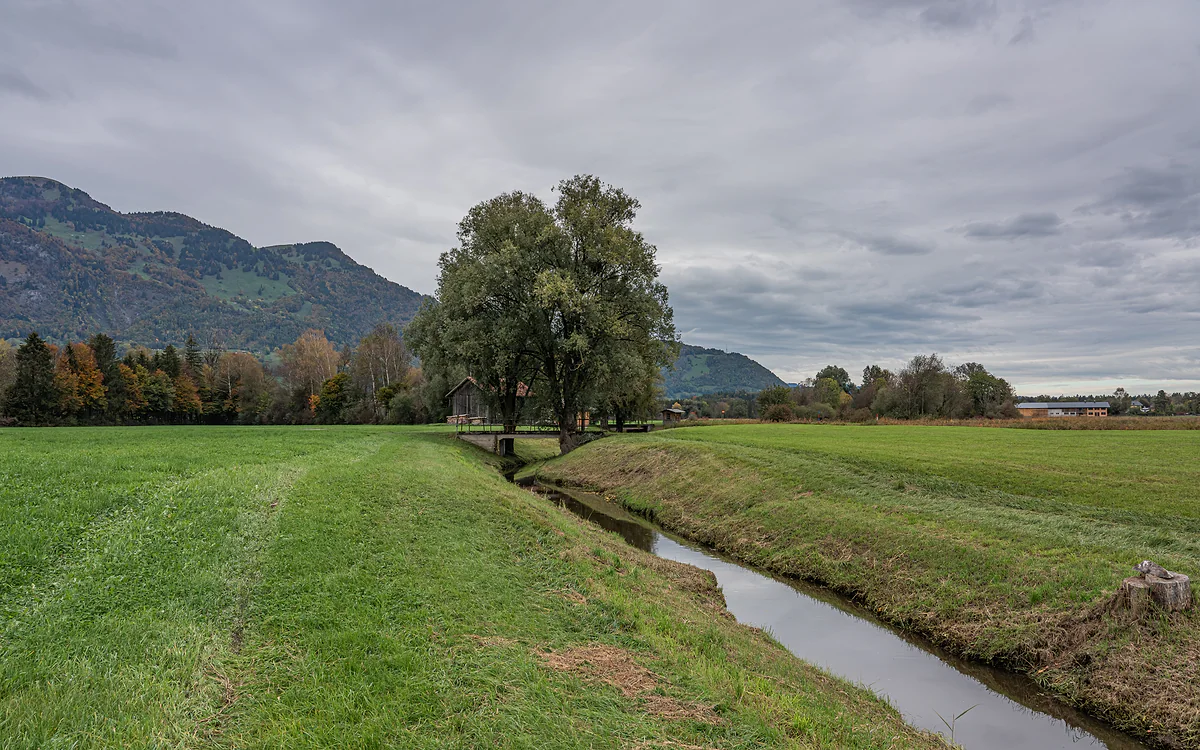
The Ruggeller Riet, with a ditch between meadows, a large tree and the mountains under a grey sky.
The war in Liechtenstein, date by date
| Date | What happened |
|---|---|
| 30 August 1939 | Liechtenstein declares its neutrality |
| 1939-1948 | The border with Switzerland can no longer be crossed freely |
| May-June 1940 | Moment of greatest danger; evacuations are prepared |
| 25 March 1940 | The prince entrusts the country to the Virgin at Dux |
| 1940 | 15 August becomes a state holiday |
| 5 November 1940 | Prince, government and parties commit to Switzerland in parliament |
| Autumn 1941 | Hilti, Presta and PAV founded, all metalworking firms |
| February 1945 | An American fighter pilot lands on a gravel bank in the Rhine |
| 2-3 May 1945 | 494 members of Holmston's Russian army cross the border |
Sources: Historisches Lexikon, 'Zweiter Weltkrieg' and 'Russische Nationalarmee'.
The war in numbers
| Item | Figure |
|---|---|
| Jewish refugees living in the country during the war | About 120 |
| Liechtensteiners who volunteered for Germany | Just over 100, about 60 in the Waffen-SS |
| Refugees crossing the border at the end | Over 8,000 in a few days |
| Russians who refused to return to the USSR | About 130 |
Source: Historisches Lexikon (text as of 2011).
Test yourself
True or false?
0/4 Pick before you peek.
-
Nazi Germany invaded Liechtenstein in 1940.
See the answer
False. It didn't. German plans against Switzerland included occupying Liechtenstein, but the attack on Switzerland never came and Liechtenstein stayed neutral.
-
Switzerland formally guaranteed Liechtenstein's military defence.
See the answer
False. The Swiss Federal Council repeatedly said there was no military guarantee. The protection was economic and informal, through the customs union.
-
Liechtenstein refused to hand over to the USSR the Russians who didn't want to return.
See the answer
True. Of the 494 interned in 1945, about 130 refused to go back and the government wouldn't surrender them. They emigrated by 1948, mostly to Argentina.
-
The 15 August national day predates the war.
See the answer
False. It has been a state holiday since 1940, mid-war, as a statement of national unity against National Socialism.
- Declaration of neutrality (30 August)
- 1939
- Refugees crossing the border in May 1945
- 8,000
- Russian army members who crossed at Schellenberg
- 494
- Russians Liechtenstein refused to hand to the USSR
- 130
0 of 168 Liechtenstein guides
Your next stamp
- No army
- History
- Swiss invasions
- Borders and customs
- Hilti
- Facts
- Political system
- Is it a country?
- Things to do
- One day
- Two days
- Municipalities
- Oberland
- Unterland
- Map
- Vaduz
- Städtle
- Mitteldorf
- Vaduz Castle
- Vaduz Cathedral
- Parliament
- Government Building
- Vaduz Town Hall
- Red House
- Prince's Winery
- Old Rhine Bridge
- Schaan
- Schalun Castle Ruin
- Balzers
- Citytrain
- Triesen
- Triesenberg
- Walser Museum
- Planken
- Gutenberg Castle
- The Rhine
- Schaan Roman fort
- Dux
- St Mamertus chapel
- Lawena valley
- Mäls
- DoMuS
- TAK Theatre
- Castles
- Churches and chapels
- Viewpoints
- Mountains
- Museums
- Kunstmuseum
- Mountain huts
- Hilti Art Foundation
- Pfälzerhütte
- Gafadura hut
- National Museum
- Treasure Chamber
- Postage Stamp Museum
- Kunstraum Engländerbau
- Eschen
- Masescha
- Gaflei
- Nendeln
- Mauren
- Silum
- Rotenboden
- Schaanwald
- Gamprin
- Wangerberg
- Bendern
- Steg
- Ruggell
- Samina valley
- Schellenberg Farmhouse Museum
- Cross-country skiing at Steg
- Küefer-Martis-Huus
- Ruggeller Riet
- Schellenberg
- Hinterschellenberg
- Fürstensteig
- Liechtenstein Trail
- Malbun
- Schellenberg castles
- Eschnerberg
- Malbun in summer
- Population
- Stage 1: Balzers - Triesenberg
- Lakes
- Sareis
- Size
- Stage 2: Triesenberg - Vaduz
- Malbun Peace Chapel
- Stage 3: Vaduz - Nendeln
- Swimming pools
- Language
- Skiing in Malbun
- Stage 4: Nendeln - Ruggell
- Dialect
- Malbun ski pass
- Stage 5: Ruggell - Schaanwald
- Hotels in Malbun
- Stamps
- Princess Gina Trail
- Hut-to-hut Route 66
- Hiking
- Getting there
- In winter
- Weather
- Airport
- Best time to visit
- In summer
- Events
- With kids
- Zurich to Liechtenstein
- National day
- Sargans to Vaduz
- Christmas
- Feldkirch to Vaduz
- By train
- Traditions
- Carnival
- Getting around
- Buses
- Funken Sunday
- Alpine cattle drive
- Driving and vignette
- Parking
- Bike hire
- Cycling
- EU and Schengen
- Entry requirements
- The prince
- The princely house
- The flag
- The coat of arms
- The national anthem
- Why so rich?
- Banks and tax haven
- Where to stay
- Hotels in Vaduz
- False teeth
- Hostel and camping
- Rent the country?
- Where to eat
- Restaurants in Vaduz
- Bars and nightlife
- Food
- Käsknöpfle
- Wine
- Casinos
- Adventure Pass
- Rainy days
- Guided tours
- Tourist office
- Day trips
- Passport stamp
- Music festivals
- Phone and roaming
- Currency and payments
- Prices and budget
- Tipping
- Plugs and sockets
- Tap water
- Opening hours
- Public holidays
- Safety
- Accessibility
- With a dog
- Shopping and souvenirs
Frequently asked questions
Was Liechtenstein invaded in World War 2?
No. It declared neutrality on 30 August 1939 and no army occupied it. The Historisches Lexikon notes that German operational plans against Switzerland did include marching through and occupying Liechtenstein.
Did Germany invade Liechtenstein?
Never. The danger peaked in May and June 1940, tied to a possible attack on Switzerland that didn't happen. The Lexikon credits its survival to neutrality, Switzerland's shelter and, in the end, the Allied victory.
Which side was Liechtenstein on in the Second World War?
Neither. It was neutral and leaned on Switzerland, whose wartime economy it was part of. Inside the country a Nazi movement, the VDBL, campaigned for union with Germany and failed.
What happened to the Russian army that entered Liechtenstein in 1945?
They were 494 people from Holmston's army, Russians who had fought with the Wehrmacht. Liechtenstein interned them; half left for Vorarlberg to be repatriated, 104 went with a Soviet commission and about 130 refused and were not handed over.
Did Switzerland defend Liechtenstein during the war?
There was no guarantee. The Swiss Federal Council repeatedly said it would give no military protection, and its border guards were to fall back into Switzerland if Germany attacked. Even so, the customs and economic union acted as a shield in practice.
Is there a war memorial in Liechtenstein?
A memorial stele to the Russians interned in 1945 was put up in Hinterschellenberg in 1980, according to the Historisches Lexikon. A Russian Orthodox memorial service was held there in 1995.
By
Tourism graduate with a master’s in Tourism Management and Planning from the University of Málaga, who has travelled across Europe. He writes every guide from official sources and his own judgement.
Published on . Facts checked on .
Sources
Photos: SchuetzeZH (CC BY-SA 4.0); A.Savin (FAL), via Wikimedia Commons.