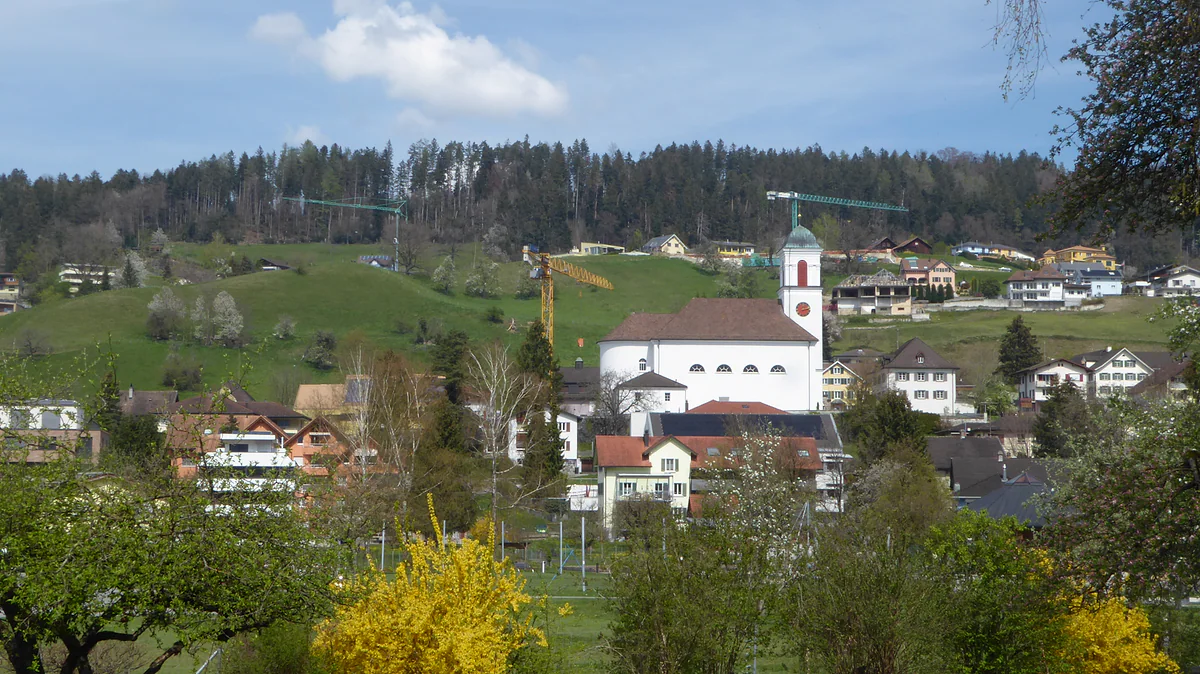
German by law, dialect by habit
What language they speak in Liechtenstein, and how you'll get by
The official language of Liechtenstein is German, under Article 6 of its constitution. In everyday life, though, almost everyone speaks an Alemannic dialect, with standard German kept for schools, courts and church. There's no official figure for English speakers, but the main museums and guided tours offer English.
In 30 seconds
Full read: 3 min
- Liechtenstein's official language is German, set by Article 6 of the constitution.
- People speak an Alemannic dialect that differs between the Oberland, the Unterland and Triesenberg.
- There are no official figures on English, but museums and guided tours offer it.
- In 2000, 12.3% of the population didn't have German as their mother tongue.
I wouldn't worry about language. Signs, menus and official websites are in German, but the big museums have English audio guides and Gutenberg Castle runs tours in English. If you have some school German, use it, even if the reply comes back in a dialect that sounds nothing like your textbook.

Before you go
What I would keep in mind
-
01 My tip
LandesMuseum audio guide in five languages
The LandesMuseum offers a free audio guide in German, English, French, Italian and Chinese. For British visitors, that covers it.
the Liechtenstein National Museum (LandesMuseum) -
02 My tip
Gutenberg tours in three languages
Gutenberg Castle in Balzers runs guided tours by appointment in German, English and French, lasting about 75 minutes with up to 20 people per guide.
Gutenberg Castle in Balzers -
03 Most beautiful
A village that speaks like the Valais
Triesenberg keeps the speech of the Walser, who arrived around 1280, and it's very different from the rest of the country. The Walser Museum explains it alongside their history.
the Liechtenstein dialect -
04 Getting there
The Vaduz road train, in 29 languages
The Vaduz Citytrain, which tours the Mitteldorf, the Red House and the Rhine embankment, provides commentary in 29 languages, according to the town council.
the Vaduz Citytrain
What I would book
The short answer is German, and that’s what the constitution says. The longer answer is more interesting, because hardly anyone in Liechtenstein speaks the German you learnt at school out on the street. What you hear is a dialect that shifts from village to village, and high on the mountain there’s even a form of speech brought over from the Swiss Valais more than seven centuries ago. Here’s what to expect and how you’ll get by.
What language is spoken in Liechtenstein?
Article 6 of the constitution is unambiguous. German is the language of the state and the official language. It’s the language of the laws, the road signs, the bus timetables and the restaurant menus. The tourist board sums it up in two sentences, saying the official language is German but people speak an Alemannic dialect.
That nuance matters. The Historisches Lexikon explains that spoken standard German plays a very minor role in daily life, and that dialect is used in practically every setting and by every social group. The exceptions are schools, courts and church, where standard German is preferred.
German on paper, dialect out loud
For visitors that means something quite specific. If you read German, you’ll understand everything written down. If you speak it, you’ll be understood perfectly, though the answer may come back in an accent that bears little resemblance to your textbook. The local dialect is Alemannic, from the same family as Swiss German, although the Lexikon places it in a different branch because of a detail of pronunciation, the initial k, which is aspirated here.
Nor is there just one. The Oberland and the Unterland speak differently, Balzers has quirks of its own and Triesenberg keeps the speech of the Walser, who arrived around 1280. I go through all of it, word by word, on the Liechtenstein dialect.
Is English spoken in Liechtenstein?
I have to be straight with you here. I haven’t found any official statistics on how many people speak English in the country, and I’m not going to invent a percentage. What is documented is the provision for visitors. The LandesMuseum offers a free audio guide in German, English, French, Italian and Chinese. Gutenberg Castle runs its guided tours in German, English and French. And the Vaduz road train provides commentary in 29 languages.
My practical rule is simple. In museums, the tourist office and hotels, I’d expect English to work. In a village restaurant or a mountain hut, I’d have a German phrase ready or a translation app open. The Liechtenstein National Museum audio guide is a good place to start if you want the country’s story in English.
Where the valley’s German came from
German wasn’t always the language here. The Lexikon relates that the area was part of the Raetian world and later took in Celtic peoples, who left their mark on names such as Bendern, Nendeln and Mäls. With the Romans, from 15 BC, came Latin, which eventually developed into a Romansh language. The Alemanni pushed in from the north, and by the end of the 13th century German had won out in what is now Liechtenstein.
A few stray words of Romance origin still survive in rural speech, and the Lexikon considers them endangered because the farming world that used them is disappearing. If that side interests you, the country’s timeline is set out in the history of Liechtenstein.
A few words I’d learn before going
You only need basic standard German, which everyone will understand. Thank you, please, good morning and the bill cover almost any exchange at a café or ticket desk. On the buses you won’t even need those, since you pay by card without speaking to anyone. And up in the mountains, where things are more village-like, a greeting in German opens more doors than flawless English ever will.
A country of many mother tongues
German may dominate, but Liechtenstein isn’t uniform. In the 2000 census, 12.3% of the population didn’t have German as their mother tongue, almost double the 1970 figure. Today 35.3% of residents are foreign nationals, though many of them are Swiss, Austrian and German. There’s no more recent mother-tongue figure, so I’ll leave it there rather than stretch the numbers. Who lives here and where they come from is covered on Liechtenstein’s population.
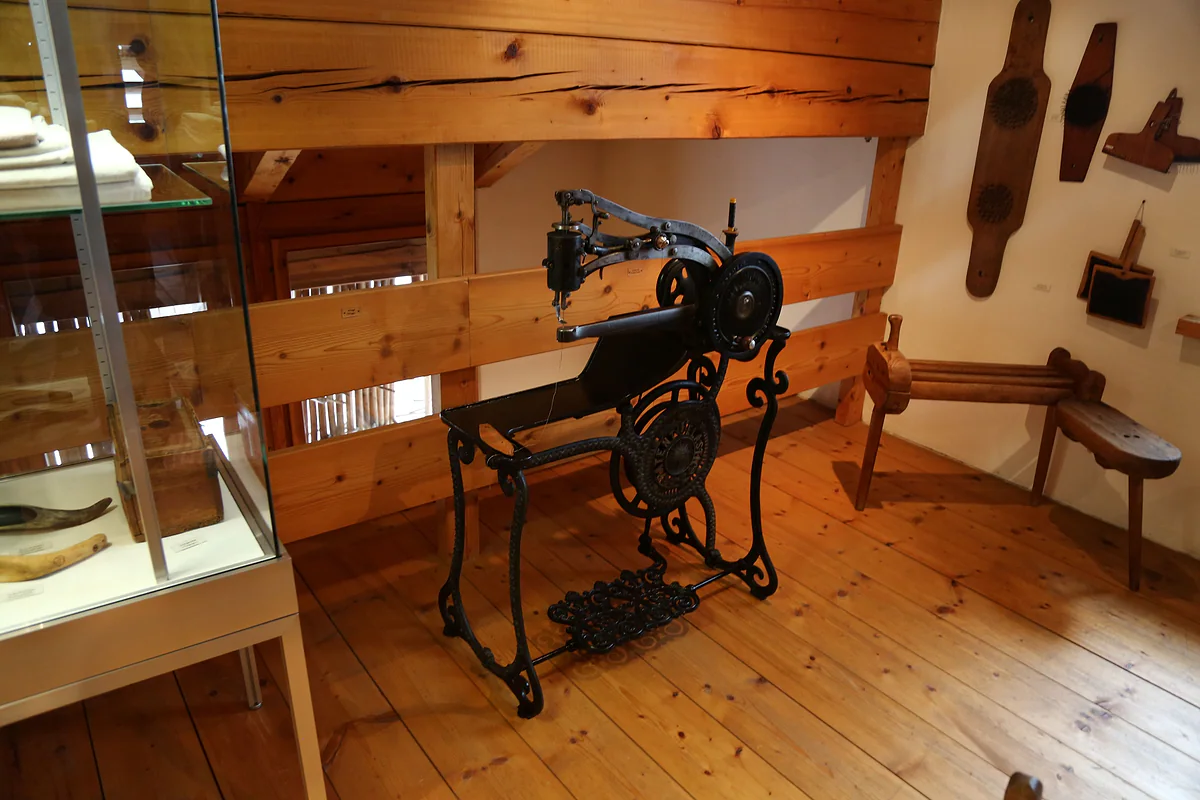
A room in the Walser Museum in Triesenberg, with wooden floor and walls, an old sewing machine and hanging tools.
Which language you'll meet where
| Where | Language | Source |
|---|---|---|
| Laws, administration and signs | Standard German | Constitution, art. 6 |
| Everyday conversation | Alemannic dialect | Tourist board and Historisches Lexikon |
| Schools, courts, church | Mostly standard German | Historisches Lexikon |
| LandesMuseum (audio guide) | German, English, French, Italian and Chinese | LandesMuseum |
| Gutenberg Castle (tours) | German, English and French | Trägerverein Burg Gutenberg |
| Vaduz Citytrain | Commentary in 29 languages | Vaduz town council |
Checked on 26-09-2026. I found no official statistics on how many people speak English in the country.
Test yourself
True or false?
0/4 Pick before you peek.
-
Liechtenstein's official language is German.
See the answer
True. Article 6 of the constitution states that German is the language of the state and the official language.
-
Liechtenstein has its own separate language, Liechtensteinish.
See the answer
False. No such official language exists. What people speak is an Alemannic dialect, with variations between the Oberland, the Unterland and Triesenberg.
-
Place names such as Bendern, Nendeln and Mäls carry traces of Celtic.
See the answer
True. The Historisches Lexikon cites those three names as traces of the Celtic peoples who reached the Rhine valley before the Romans.
-
Standard German is the everyday spoken language in Liechtenstein.
See the answer
False. According to the Historisches Lexikon, dialect dominates daily life, and standard German is mainly kept for schools, courts and church.
- Article of the constitution that sets German
- Art. 6
- Around when the Walser reached Triesenberg
- 1280
- Population without German as mother tongue in 2000
- 12.3%
- Commentary languages on the Vaduz Citytrain
- 29
0 of 168 Liechtenstein guides
Your next stamp
- Dialect
- Is it a country?
- Map
- Currency and payments
- Oberland
- The national anthem
- Borders and customs
- Things to do
- One day
- Two days
- Municipalities
- Unterland
- Vaduz
- Städtle
- Mitteldorf
- Vaduz Castle
- Vaduz Cathedral
- Parliament
- Government Building
- Vaduz Town Hall
- Red House
- Prince's Winery
- Old Rhine Bridge
- Schaan
- Schalun Castle Ruin
- Balzers
- Citytrain
- Triesen
- Triesenberg
- Walser Museum
- Planken
- Gutenberg Castle
- The Rhine
- Schaan Roman fort
- Dux
- St Mamertus chapel
- Lawena valley
- Mäls
- DoMuS
- TAK Theatre
- Castles
- Churches and chapels
- Viewpoints
- Mountains
- Museums
- Kunstmuseum
- Mountain huts
- Hilti Art Foundation
- Pfälzerhütte
- Gafadura hut
- National Museum
- Treasure Chamber
- Postage Stamp Museum
- Kunstraum Engländerbau
- Eschen
- Masescha
- Gaflei
- Nendeln
- Mauren
- Silum
- Rotenboden
- Schaanwald
- Gamprin
- Wangerberg
- Bendern
- Steg
- Ruggell
- Samina valley
- Schellenberg Farmhouse Museum
- Cross-country skiing at Steg
- Küefer-Martis-Huus
- Ruggeller Riet
- Schellenberg
- Hinterschellenberg
- Fürstensteig
- Liechtenstein Trail
- Malbun
- Schellenberg castles
- Eschnerberg
- Malbun in summer
- Population
- Stage 1: Balzers - Triesenberg
- Lakes
- Sareis
- Size
- Stage 2: Triesenberg - Vaduz
- Malbun Peace Chapel
- Political system
- Stage 3: Vaduz - Nendeln
- Swimming pools
- Skiing in Malbun
- Stage 4: Nendeln - Ruggell
- Malbun ski pass
- Stage 5: Ruggell - Schaanwald
- Hotels in Malbun
- Stamps
- Princess Gina Trail
- Hut-to-hut Route 66
- Hiking
- Getting there
- In winter
- Weather
- Airport
- Best time to visit
- In summer
- Events
- With kids
- Zurich to Liechtenstein
- National day
- Sargans to Vaduz
- Christmas
- Feldkirch to Vaduz
- By train
- Traditions
- Carnival
- Getting around
- Buses
- Funken Sunday
- Alpine cattle drive
- Driving and vignette
- Parking
- Bike hire
- Cycling
- EU and Schengen
- Entry requirements
- The prince
- The princely house
- The flag
- The coat of arms
- History
- Second World War
- No army
- Facts
- Why so rich?
- Banks and tax haven
- Where to stay
- Hilti
- Hotels in Vaduz
- False teeth
- Hostel and camping
- Rent the country?
- Where to eat
- Restaurants in Vaduz
- Swiss invasions
- Bars and nightlife
- Food
- Käsknöpfle
- Wine
- Casinos
- Adventure Pass
- Rainy days
- Guided tours
- Tourist office
- Day trips
- Passport stamp
- Music festivals
- Phone and roaming
- Prices and budget
- Tipping
- Plugs and sockets
- Tap water
- Opening hours
- Public holidays
- Safety
- Accessibility
- With a dog
- Shopping and souvenirs
Frequently asked questions
What language do they speak in Liechtenstein?
German is the official and state language, under Article 6 of the constitution. On the street people speak an Alemannic dialect that varies between the south, the north and Triesenberg.
Is English spoken in Liechtenstein?
There are no official figures on it. What is documented is that the LandesMuseum has an English audio guide, Gutenberg Castle runs tours in English and the tourist board publishes in English.
Do I need to speak German to visit Liechtenstein?
No. The main museums and tours have English options, and transport runs on apps and contactless cards. Still, signs, menus and timetables are in German, so a few words go a long way.
Is Liechtenstein German the same as Swiss German?
Close, but not identical. The local dialect is Alemannic, like Swiss German, but the Historisches Lexikon places it in a different branch because of the initial k, which is aspirated here, «Kind», where Swiss German says «Chind».
What is the official language of Liechtenstein?
German. Article 6 of the constitution states plainly that German is the language of the state and the official language.
How many people don't have German as their mother tongue?
In the 2000 census it was 12.3% of the population, against 6.8% in 1970 and 10% in 1990, according to the Historisches Lexikon. Today 35.3% of residents are foreign nationals, but there's no recent mother-tongue figure.
By
Tourism graduate with a master’s in Tourism Management and Planning from the University of Málaga, who has travelled across Europe. He writes every guide from official sources and his own judgement.
Published on . Facts checked on .
Sources
Photos: Plutowiki (CC0); Wikiolo (CC BY-SA 3.0), via Wikimedia Commons.