Free every Wednesday
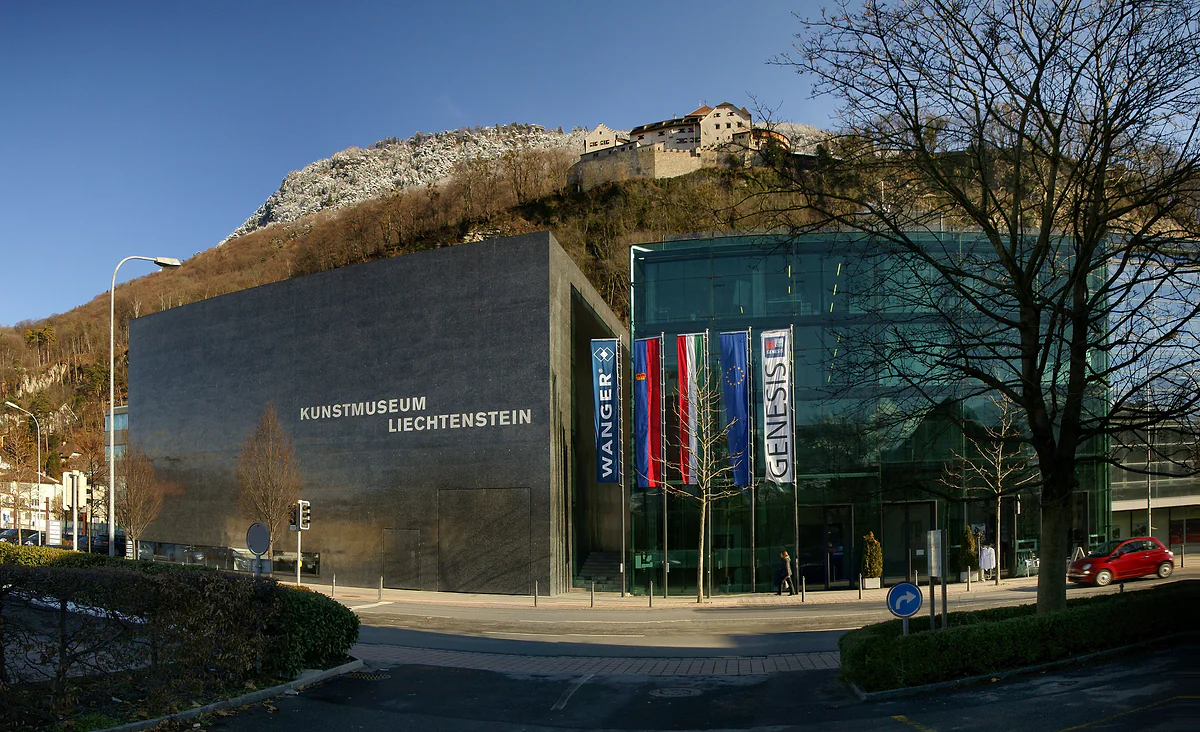
Kunstmuseum Liechtenstein, the black box on the Städtle
The Kunstmuseum Liechtenstein is the country's state museum of modern and contemporary art, at Städtle 32 in Vaduz. It opens Tuesday to Sunday from 10:00 to 17:00 (Thursday until 20:00), a ticket costs CHF 15 and covers the Hilti Art Foundation next door, and entry is free on Wednesdays. Under-16s never pay.
In 30 seconds
Full read: 4 min
- The Kunstmuseum Liechtenstein is the state museum of modern and contemporary art, at Städtle 32 in Vaduz.
- A ticket costs CHF 15, covers the Hilti Art Foundation and is free on Wednesdays.
- It opens Tuesday to Sunday from 10:00 to 17:00, and Thursday until 20:00.
- The collection isn't on permanent display but shown in exhibitions that change through the year.
I'd go on a Wednesday, when both buildings are free, and give the first hour to the Hilti Art Foundation and the second to whatever the Kunstmuseum has on. Don't expect a permanent hang of famous names in the same room every year, because everything here rotates.
On the calendar
The dates at a glance
-
Evi Kliemand. Übers Wasser gehen
Kunstmuseum Liechtenstein
-
Anna Jermolaewa. Radical Hope
Kunstmuseum Liechtenstein
Before you go
What I would keep in mind
-
01 To save money
Wednesdays cost nothing
Every Wednesday entry is free from 10:00 to 17:00, and so are that day's public events. The same ticket covers the Hilti Art Foundation, so on a Wednesday you get two museums for free.
the Hilti Art Foundation in Vaduz -
02 My tip
Thursday late opening until 20:00
If you reach Vaduz in the afternoon, Thursday is the day, with the galleries open until 20:00. The café stays open until 21:00 from Wednesday to Friday, so you can eat on the way out.
-
03 Most beautiful
The Botero outside the door is free
Fernando Botero's «Reclining Woman» sits in front of the side-lit gallery, one of 13 sculptures from the collection that the museum has placed outdoors around the country.
the Städtle, Vaduz's pedestrian centre -
04 Getting there
Take the bus to Vaduz, Post
The museum tells rail travellers to change at Sargans, Buchs or Feldkirch for the bus to the Vaduz, Post stop. The entrance faces the Städtle, the pedestrianised high street.
Liechtenstein's buses
My ranking, scored
What I'd prioritise at the Kunstmuseum
My own marks out of 10, for someone with one or two hours in Vaduz. They weigh what you can see in autumn 2026 and what doesn't depend on the current show.
0 of 5 seen
-
The building
A 60-metre cube of cement dyed black with basalt and Rhine pebbles, ground until it gleams. Inside it's the opposite, six white galleries around two staircases.
9.0 out of 10
-
Hilti Art Foundation, same ticket
You reach it by a staircase from the shared foyer. In 2026 it shows around 60 abstract works, with Kandinsky, Rothko and Carmen Herrera at the centre.
8.8 out of 10
-
Evi Kliemand. Übers Wasser gehen
Painting and poetry by a Vaduz artist, built from the museum's own collection, with listening stations. Until 10 January 2027.
7.6 out of 10
-
Anna Jermolaewa. Radical Hope
A big solo show with new work by the artist behind Austria's pavilion at the 2024 Venice Biennale. From 30 October 2026 to 29 March 2027.
7.5 out of 10
-
Kollabor for toddlers
Since 2023 the side-lit gallery has been an art space where small children can play, free during opening hours.
7.0 out of 10
The Kunstmuseum is the first thing you see as you walk down to the Städtle from the bus stop, a windowless dark block that looks as if it landed between the pale facades overnight. I think it’s the best introduction Vaduz could give itself. A country this small decided its national art museum would be modern and contemporary rather than trying to rival Vienna for old masters, and that tells you a lot.
A millennium gift with a riverbed for a facade
The story starts in 1967, when the state was given ten paintings. That led to a state art collection in 1968, which spent three decades on show in the Engländerbau a few doors along. The current building was paid for by private patrons, with the government and the municipality of Vaduz, and handed to the country in August 2000 as a millennium present. It opened on 11 November 2000.
The architects were Meinrad Morger and Heinrich Degelo, with Christian Kerez. The box is 60 metres long, almost 25 wide and 12 high, and the facade is cement dyed with soot and iron oxide, set with black basalt and river pebbles that catch the light in small flecks of colour. It was ground until it reflects a little, and I’d go right up and touch it. From across the street it looks like solid stone, and up close you can pick out the Rhine gravel.
Inside it flips. Six white galleries sit around two staircases running in opposite directions, four lit from above on the upper floor and two below. Only the side-lit gallery opens to the outside, through a wide window.
What you’ll see, and what you won’t
This is where people get caught out. There’s no permanent room of the museum’s greatest hits. The collection is shown in changing exhibitions and mixed with new work. Its strengths are Arte Povera and post-minimalism, thanks to the Ricke collection, bought in 2006 jointly with the Kunstmuseum St. Gallen and the MMK in Frankfurt, with pieces by Donald Judd, Richard Serra and Lee Lozano. It also holds the estate of the artist Anne Marie Jehle, more than 1,600 works, and since 2004 the estate of the Swiss artist André Thomkins on long-term loan.
Autumn 2026 has two dates worth noting. «Übers Wasser gehen», on the Vaduz painter and poet Evi Kliemand, runs until 10 January 2027, with listening points where you hear her writing. On 30 October «Radical Hope» opens, a large solo show by Anna Jermolaewa, who represented Austria at the 2024 Venice Biennale, and it stays until 29 March 2027. The Eleanor Antin retrospective closed on 27 September.
How much is it, and when is it free?
An adult ticket is CHF 15 and concessions CHF 10, and under-16s go free. The same ticket gets you into the Hilti Art Foundation, joined to the museum by a staircase from the foyer. Wednesdays are free from 10:00 to 17:00, and I’d plan a Vaduz day around a Wednesday for that alone.
Closing time is 17:00 except on Thursday, when it holds out until 20:00, and on Mondays it stays shut, apart from Easter and Whit Mondays. On 15 August it stays open until 20:00 without charging. Last entry is a quarter of an hour before closing. The All Inclusive Erlebnispass covers entry, and the Welcome pass that hotels hand out gives 20% off. I compare the two passes on my Liechtenstein adventure pass page.
Practical bits worth knowing
Lockers are free, and only bags up to A4 size are allowed in the galleries. Photos without flash are fine for private use, but no tripods or selfie sticks. You can’t eat in the galleries, though the side-lit room has a green picnic table where you’re welcome to have a snack you’ve brought. The shop doesn’t need a ticket.
The building is step-free, with several lifts and accessible toilets, and the desk lends out a wheelchair. Other step-free options around the country are gathered in Liechtenstein accessibility. The café closes at 21:00 from Wednesday to Friday and at 18:00 the rest of the week, and its menu is Japanese and vegetarian.
With toddlers, head for the side-lit gallery, which since 2023 has been the kollabor, a play space built around art and free during opening hours.
Art outside the walls
The collection doesn’t stay indoors. The museum has 13 sculptures placed outdoors across the country, and you meet the first without a ticket, as Fernando Botero’s «Reclining Woman» lies in front of the side-lit gallery. There are more in Vaduz, Bendern, Planken and at Gutenberg Castle, and in Schaan there’s the sculpture park at the Stein Egerta, started in 1995 by Georg Malin, the collection’s first curator.
If you want more, the rest of the street delivers. My guide to Liechtenstein’s museums sets out how I’d pair this one with the LandesMuseum and the PostMuseum, and the page on the Städtle covers what lies between them.
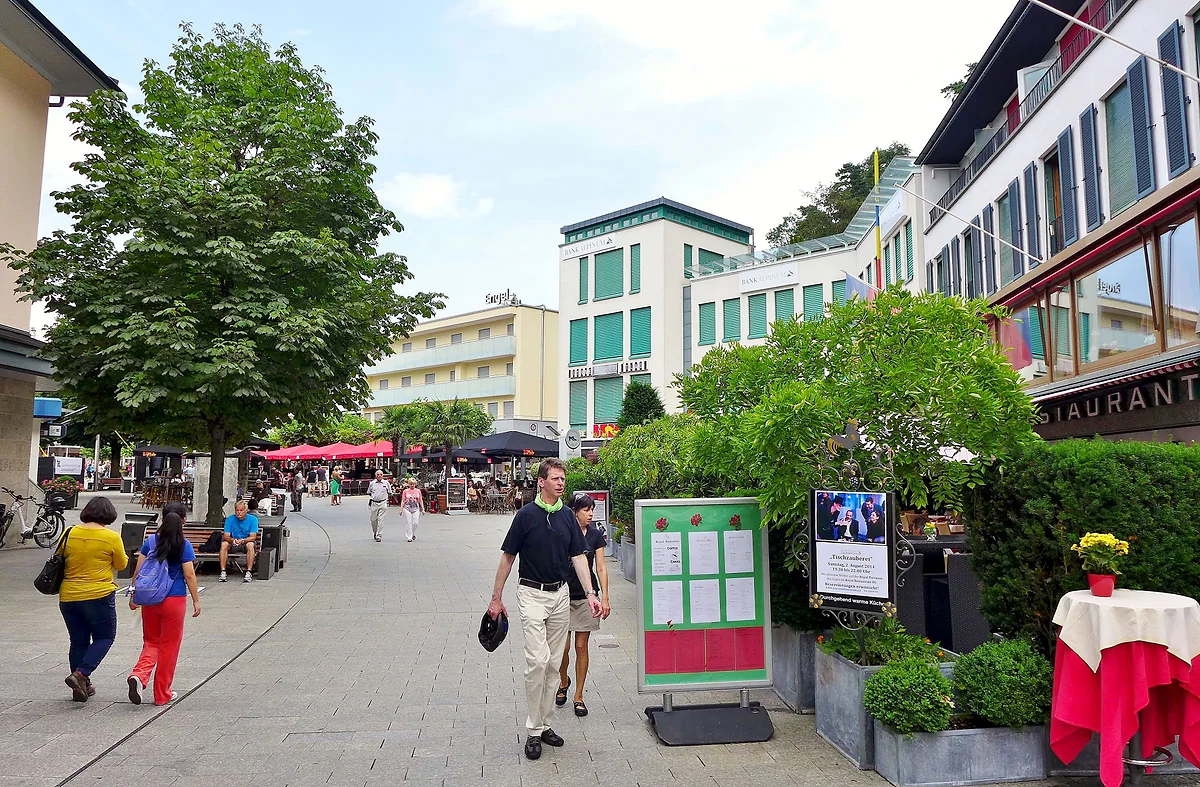
The pedestrian Städtle in Vaduz with strollers, trees, terraces and modern buildings at the foot of the slope.
Opening hours and prices 2026
| Item | Detail |
|---|---|
| Tuesday, Wednesday, Friday, Saturday, Sunday | 10:00-17:00 |
| Thursday | 10:00-20:00 |
| Monday | Closed (open Easter Monday and Whit Monday) |
| 15 August | 10:00-20:00, free entry |
| Closed | 24, 25 and 31 December and 1 January |
| Adult ticket | CHF 15 (includes the Hilti Art Foundation) |
| Concessions | CHF 10 (pensioners, students, apprentices, groups of 10+) |
| Under 16 | Free |
| Wednesday | Free from 10:00 to 17:00 |
Last entry 15 minutes before closing. Free lockers; only A4-size bags allowed in the galleries.
Exhibitions with dates
| Exhibition | Dates |
|---|---|
| Evi Kliemand. Übers Wasser gehen | 4 September 2026 to 10 January 2027 |
| Anna Jermolaewa. Radical Hope | 30 October 2026 to 29 March 2027 |
| Hilti Art Foundation. Abstract | 8 May 2026 to 17 May 2027 |
Test yourself
True or false?
0/4 Pick before you peek.
-
The Liechtenstein state paid for the Kunstmuseum building.
See the answer
False. A group of private patrons funded it, with the government and the municipality of Vaduz, and in August 2000 it was handed to the country as a millennium gift. The Lexikon puts the cost at 30 million francs.
-
A Kunstmuseum ticket also gets you into the Hilti Art Foundation.
See the answer
True. The two buildings are joined and share a foyer and ticket desk. One CHF 15 ticket covers both.
-
The black facade is polished marble.
See the answer
False. It's cement dyed with soot and iron oxide, mixed with black basalt and river pebbles, then ground to a surface that reflects a little light.
-
The collection began with a gift of ten paintings.
See the answer
True. In 1967 the state was given ten paintings, which led to the founding of the state art collection in 1968, the forerunner of the museum.
- Year it opened, on 11 November
- 2000
- Exhibition space
- 1,750 m²
- Ticket including the Hilti Art Foundation
- CHF 15
- Collection sculptures placed outdoors
- 13
Map
Where Kunstmuseum is
The dashed line is the border: Switzerland across the Rhine, Austria to the north and east. Every number opens its guide.
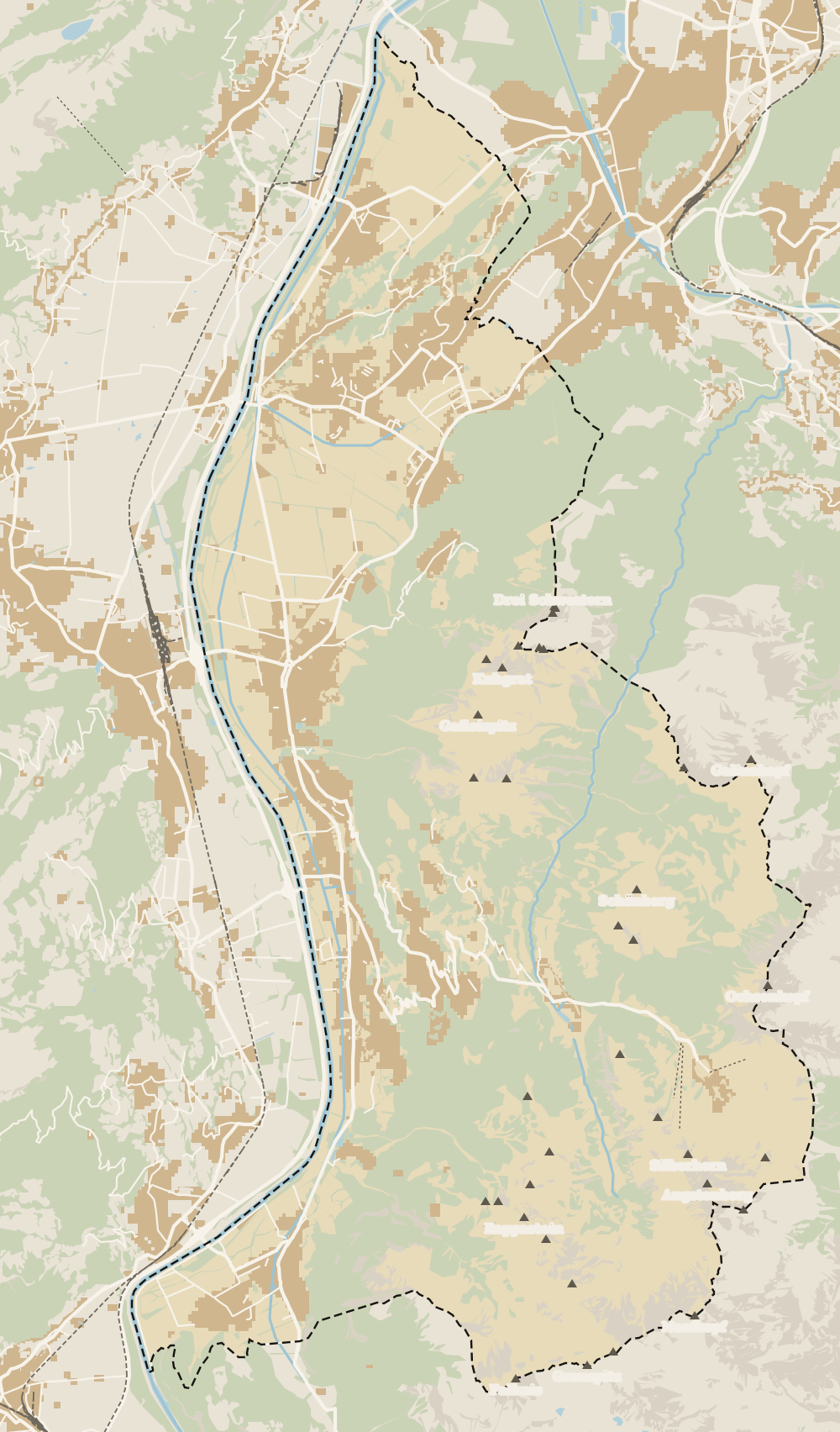 1Kunstmuseum 2Hilti Art Foundation 3National Museum 4Treasure Chamber 5Postage Stamp Museum 6Kunstraum Engländerbau
 Map data © OpenStreetMap contributors (ODbL)
0 of 168 Liechtenstein guides
Your next stamp
- Hilti Art Foundation
- National Museum
- Postage Stamp Museum
- Prices and budget
- Kunstraum Engländerbau
- Things to do
- Museums
- Rainy days
- One day
- Two days
- Municipalities
- Oberland
- Unterland
- Map
- Vaduz
- Städtle
- Mitteldorf
- Vaduz Castle
- Vaduz Cathedral
- Parliament
- Government Building
- Vaduz Town Hall
- Red House
- Prince's Winery
- Old Rhine Bridge
- Schaan
- Schalun Castle Ruin
- Balzers
- Citytrain
- Triesen
- Triesenberg
- Walser Museum
- Planken
- Gutenberg Castle
- The Rhine
- Schaan Roman fort
- Dux
- St Mamertus chapel
- Lawena valley
- Mäls
- DoMuS
- TAK Theatre
- Castles
- Churches and chapels
- Viewpoints
- Mountains
- Mountain huts
- Pfälzerhütte
- Gafadura hut
- Treasure Chamber
- Eschen
- Masescha
- Gaflei
- Nendeln
- Mauren
- Silum
- Rotenboden
- Schaanwald
- Gamprin
- Wangerberg
- Bendern
- Steg
- Ruggell
- Samina valley
- Schellenberg Farmhouse Museum
- Cross-country skiing at Steg
- Küefer-Martis-Huus
- Ruggeller Riet
- Schellenberg
- Hinterschellenberg
- Fürstensteig
- Is it a country?
- Liechtenstein Trail
- Malbun
- Schellenberg castles
- Eschnerberg
- Malbun in summer
- Population
- Stage 1: Balzers - Triesenberg
- Lakes
- Sareis
- Size
- Stage 2: Triesenberg - Vaduz
- Malbun Peace Chapel
- Political system
- Stage 3: Vaduz - Nendeln
- Swimming pools
- Language
- Skiing in Malbun
- Stage 4: Nendeln - Ruggell
- Dialect
- Malbun ski pass
- Stage 5: Ruggell - Schaanwald
- Hotels in Malbun
- Stamps
- Princess Gina Trail
- Hut-to-hut Route 66
- Hiking
- Getting there
- In winter
- Weather
- Airport
- Best time to visit
- In summer
- Events
- With kids
- Zurich to Liechtenstein
- National day
- Sargans to Vaduz
- Christmas
- Feldkirch to Vaduz
- By train
- Traditions
- Carnival
- Getting around
- Buses
- Funken Sunday
- Alpine cattle drive
- Driving and vignette
- Parking
- Bike hire
- Cycling
- EU and Schengen
- Entry requirements
- Borders and customs
- The prince
- The princely house
- The flag
- The coat of arms
- The national anthem
- History
- Second World War
- No army
- Facts
- Why so rich?
- Banks and tax haven
- Where to stay
- Hilti
- Hotels in Vaduz
- False teeth
- Hostel and camping
- Rent the country?
- Where to eat
- Restaurants in Vaduz
- Swiss invasions
- Bars and nightlife
- Food
- Käsknöpfle
- Wine
- Casinos
- Adventure Pass
- Guided tours
- Tourist office
- Day trips
- Passport stamp
- Music festivals
- Phone and roaming
- Currency and payments
- Tipping
- Plugs and sockets
- Tap water
- Opening hours
- Public holidays
- Safety
- Accessibility
- With a dog
- Shopping and souvenirs
Frequently asked questions
How much does the Kunstmuseum Liechtenstein cost?
An adult ticket is CHF 15 and concessions CHF 10, and it also gets you into the Hilti Art Foundation. Under-16s go free, and everyone gets in free on Wednesdays from 10:00 to 17:00.
Is the Kunstmuseum free on any day?
Yes, every Wednesday from 10:00 to 17:00, including that day's public events. It's also free on 15 August, the national day, when it stays open from 10:00 to 20:00.
What are the Kunstmuseum's opening hours?
Tuesday to Sunday from 10:00 to 17:00, and Thursday until 20:00. It's shut on Mondays except Easter Monday and Whit Monday, and on 24, 25 and 31 December and 1 January.
What's in the collection?
Modern and contemporary art, strongest in Arte Povera and post-minimalism thanks to the Ricke collection, shared with museums in St. Gallen and Frankfurt, plus the estates of Anne Marie Jehle and André Thomkins. There's no fixed room of masterpieces, as the collection is shown in changing exhibitions.
Can I take photos inside?
Yes, without flash and for private use, except in shows with their own rules. Tripods and selfie sticks aren't allowed.
Is the Kunstmuseum wheelchair accessible?
Yes. It's step-free, with several lifts and accessible toilets, and a wheelchair can be borrowed at the ticket desk. If you want to come in through the Parkhaus Zentrum car park in a wheelchair, ring ahead.
By
Tourism graduate with a master’s in Tourism Management and Planning from the University of Málaga, who has travelled across Europe. He writes every guide from official sources and his own judgement.
Published on . Facts checked on .
Sources
Photos: böhringer friedrich (CC BY-SA 2.5); Bahnfrend (CC BY-SA 4.0), via Wikimedia Commons.