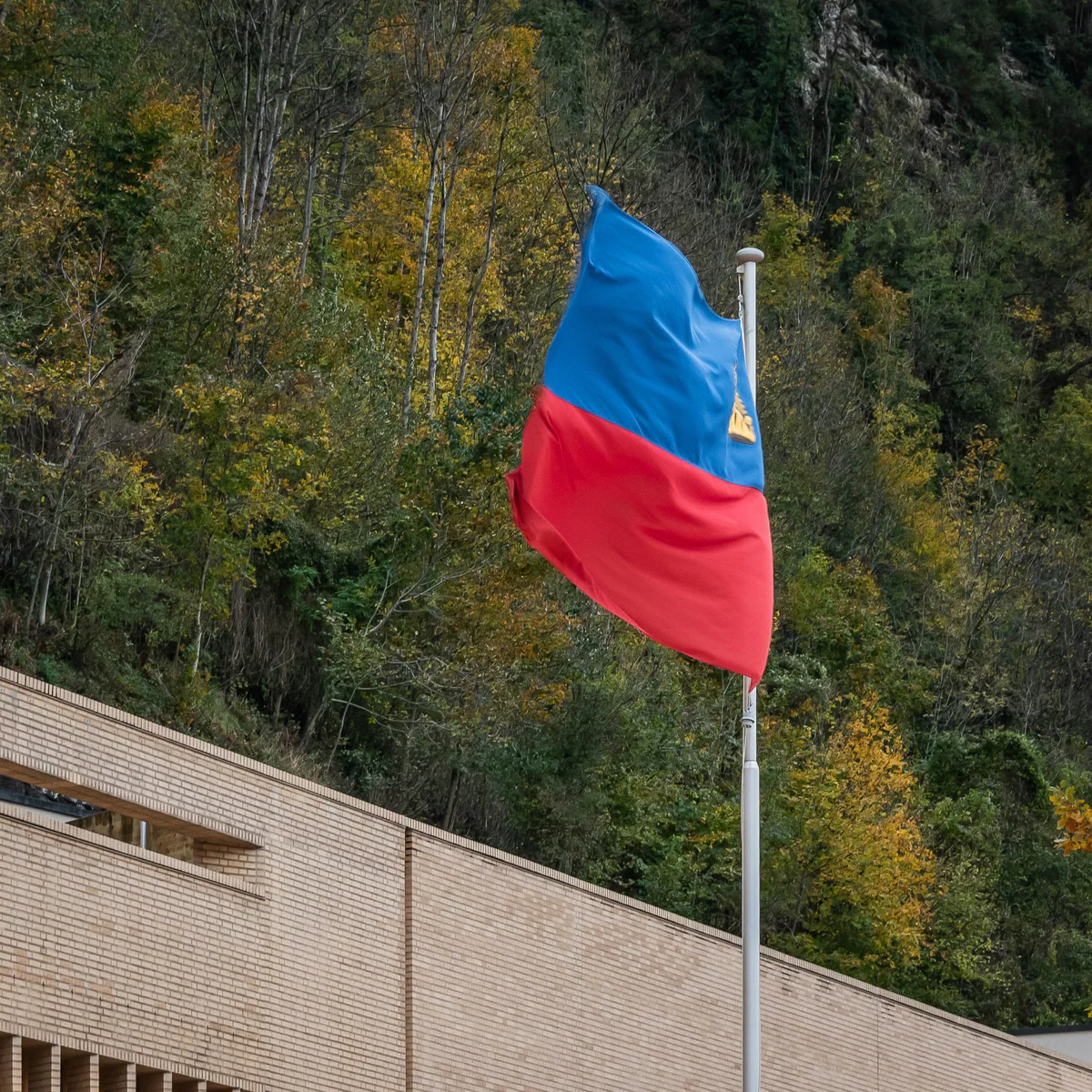
Outside the EU, inside Schengen
Liechtenstein and the European Union, what it is and isn't
Liechtenstein is not a member of the European Union. It joined EFTA in 1991, the European Economic Area on 1 May 1995 and the Schengen area on 19 December 2011. Its currency is the Swiss franc and it has shared a customs area with Switzerland since 1924. For a British visitor, that means Schengen passport rules and no fixed checks with its neighbours.
The way I'd put it for a British traveller, Liechtenstein behaves like the Schengen area when it comes to your passport, and like Switzerland when you pay or pass through customs. Keep that in mind and nothing will surprise you.

Before you go
What I would keep in mind
-
01 My tip
Schengen rules apply to your passport
gov.uk says Liechtenstein follows Schengen rules, so your 90 days in any 180 count here too, along with time spent in France, Switzerland or Austria on the same trip.
Liechtenstein entry requirements -
02 Money
Not the EU, so not the euro
The official currency has been the Swiss franc since 1924. The tourist board says euros are accepted in most places, but the bus, for one, takes no cash in any currency.
Liechtenstein's currency -
03 My tip
Schengen doesn't remove customs with Austria
Liechtenstein shares Switzerland's customs area. There's no fixed passport check between Liechtenstein and Austria, but there is a customs post at Schaanwald.
Liechtenstein borders and customs -
04 Getting there
EEA roaming helps EU tariffs, not necessarily yours
The EU extends roam-like-at-home to EEA countries including Liechtenstein. Since Brexit, UK networks set their own rules, so check your tariff before you go.
phone and roaming in Liechtenstein
What I would book
Liechtenstein isn’t in the European Union, yet in many ways it looks as if it were. It belongs to the European Economic Area and to Schengen, and still pays in Swiss francs and shares a customs area with Switzerland. It’s an odd arrangement with very real consequences for travellers, and a few of them matter more to a British visitor since Brexit.
Not the EU, but almost everything else
The Office of Statistics sums up the country’s European path in its yearbook. Council of Europe in 1978, EFTA in 1991 and the European Economic Area in 1995. The European Commission, for its part, counts it among the four non-EU countries in Schengen, alongside Iceland, Norway and Switzerland, in an area of 29 countries.
What it has never done is join the European Union. I haven’t found an explanation for that in the official sources I’ve read, so I won’t invent one. What you can see is a country choosing agreement by agreement, with Switzerland for customs and currency and with the EU for the single market through the EEA. If you’re still wondering whether it counts as a state at all, is Liechtenstein a country? gives the short answer.
Nor is it isolated. The Office of Statistics notes membership of the Council of Europe since 1978, the United Nations since 1990, where the tourist board adds that it joined as the 160th member, the World Trade Organization since 1995 and the International Monetary Fund since 2024. That’s quite a web of agreements for a country of 41,228 people.
It also explains a detail that matters to British travellers. Because Switzerland handles immigration and customs for Liechtenstein, gov.uk suggests contacting the Swiss Embassy in the UK if you’re unsure how the entry rules apply to you.
The EEA, and what it means for your phone
The European Economic Area came into force for Liechtenstein on 1 May 1995, after a second referendum passed with 55.9% in favour. There’s an irony there, because Switzerland, its customs partner, had turned the EEA down in 1992. According to the Historisches Lexikon, Liechtenstein negotiated a special arrangement allowing it to limit immigration.
For EU phone contracts, the EEA brings roam-like-at-home, as the EU extends it to Iceland, Liechtenstein and Norway. For a UK contract the picture is different, because since Brexit British networks set their own roaming terms, and no official source I’ve found lists them. Check with your provider before you go, and watch out near the Rhine, where your phone can latch on to a Swiss mast. I cover it in phone and roaming in Liechtenstein.
Schengen since December 2011
Full application of Schengen in Liechtenstein began on 19 December 2011, following an EU Council decision of 13 December. Since then there’s been no fixed passport control with Switzerland or Austria.
For a British visitor, that has a practical side. gov.uk says Liechtenstein follows Schengen rules, so every day you spend there counts towards your 90 days in any 180-day period, together with any days in France, Switzerland or Austria on the same trip. Your passport also has to pass the Schengen date checks, set out in Liechtenstein entry requirements.
Switzerland for money and customs
This is the part that confuses people most. In 1923 Liechtenstein signed its customs treaty with Switzerland, in force from 1924, and that same year adopted the Swiss franc as its official currency. There has been no customs border between the two ever since, and in 1980 a currency treaty was added.
In practice that means two things. First, you pay in francs rather than euros, although the tourist board says euros are accepted in most places; how to pay without losing out is in currency and payments in Liechtenstein. Second, the border with Austria is a customs frontier between the EU and the Swiss customs area, so at the Schaanwald crossing your luggage may be checked, as detailed in Liechtenstein borders and customs.
So what changes for a British visitor?
You arrive with a passport that meets the Schengen rules, your days count towards the 90, and crossing to Switzerland or Austria involves no fixed check, although you should always carry your passport. You pay in francs, or euros where accepted, and roaming depends on your UK network rather than on the EEA. For me it’s the neatest example of how little Europe’s political map resembles the practical map a traveller actually needs.
Liechtenstein in Europe, date by date
| Organisation | Since | What it means for visitors |
|---|---|---|
| Customs union with Switzerland | 1924 | No customs with Switzerland, Swiss franc as currency |
| Council of Europe | 1978 | Nothing day to day |
| Currency treaty with Switzerland | 1980 | The Swiss franc remains the currency |
| EFTA | 1991 | Nothing day to day |
| European Economic Area | 1 May 1995 | EU roaming rules for EU tariffs |
| Schengen | 19 December 2011 | No fixed passport control with Switzerland or Austria |
| European Union | Not a member | No euro, customs at the Austrian border |
Dates from the Office of Statistics, the Historisches Lexikon and Council Decision 2011/842/EU.
Test yourself
True or false?
0/4 Pick before you peek.
-
Liechtenstein is a member of the European Union.
See the answer
False. It isn't. It's been in the European Economic Area since 1995 and Schengen since 2011, but outside the EU.
-
Liechtenstein is in the EEA even though Switzerland isn't.
See the answer
True. Switzerland rejected the EEA in 1992, and Liechtenstein joined on 1 May 1995 after a second referendum.
-
Days spent in Liechtenstein don't count towards a Briton's 90 Schengen days.
See the answer
False. gov.uk says Liechtenstein follows Schengen rules, so time there counts towards the 90 days in any 180.
-
Liechtenstein has used the Swiss franc since the 1920s.
See the answer
True. The customs treaty with Switzerland took effect in 1924, introducing the Swiss franc as the official currency.
0 of 168 Liechtenstein guides
Your next stamp
- Phone and roaming
- Currency and payments
- Entry requirements
- Is it a country?
- Borders and customs
- Banks and tax haven
- Things to do
- One day
- Two days
- Municipalities
- Oberland
- Unterland
- Map
- Vaduz
- Städtle
- Mitteldorf
- Vaduz Castle
- Vaduz Cathedral
- Parliament
- Government Building
- Vaduz Town Hall
- Red House
- Prince's Winery
- Old Rhine Bridge
- Schaan
- Schalun Castle Ruin
- Balzers
- Citytrain
- Triesen
- Triesenberg
- Walser Museum
- Planken
- Gutenberg Castle
- The Rhine
- Schaan Roman fort
- Dux
- St Mamertus chapel
- Lawena valley
- Mäls
- DoMuS
- TAK Theatre
- Castles
- Churches and chapels
- Viewpoints
- Mountains
- Museums
- Kunstmuseum
- Mountain huts
- Hilti Art Foundation
- Pfälzerhütte
- Gafadura hut
- National Museum
- Treasure Chamber
- Postage Stamp Museum
- Kunstraum Engländerbau
- Eschen
- Masescha
- Gaflei
- Nendeln
- Mauren
- Silum
- Rotenboden
- Schaanwald
- Gamprin
- Wangerberg
- Bendern
- Steg
- Ruggell
- Samina valley
- Schellenberg Farmhouse Museum
- Cross-country skiing at Steg
- Küefer-Martis-Huus
- Ruggeller Riet
- Schellenberg
- Hinterschellenberg
- Fürstensteig
- Liechtenstein Trail
- Malbun
- Schellenberg castles
- Eschnerberg
- Malbun in summer
- Population
- Stage 1: Balzers - Triesenberg
- Lakes
- Sareis
- Size
- Stage 2: Triesenberg - Vaduz
- Malbun Peace Chapel
- Political system
- Stage 3: Vaduz - Nendeln
- Swimming pools
- Language
- Skiing in Malbun
- Stage 4: Nendeln - Ruggell
- Dialect
- Malbun ski pass
- Stage 5: Ruggell - Schaanwald
- Hotels in Malbun
- Stamps
- Princess Gina Trail
- Hut-to-hut Route 66
- Hiking
- Getting there
- In winter
- Weather
- Airport
- Best time to visit
- In summer
- Events
- With kids
- Zurich to Liechtenstein
- National day
- Sargans to Vaduz
- Christmas
- Feldkirch to Vaduz
- By train
- Traditions
- Carnival
- Getting around
- Buses
- Funken Sunday
- Alpine cattle drive
- Driving and vignette
- Parking
- Bike hire
- Cycling
- The prince
- The princely house
- The flag
- The coat of arms
- The national anthem
- History
- Second World War
- No army
- Facts
- Why so rich?
- Where to stay
- Hilti
- Hotels in Vaduz
- False teeth
- Hostel and camping
- Rent the country?
- Where to eat
- Restaurants in Vaduz
- Swiss invasions
- Bars and nightlife
- Food
- Käsknöpfle
- Wine
- Casinos
- Adventure Pass
- Rainy days
- Guided tours
- Tourist office
- Day trips
- Passport stamp
- Music festivals
- Prices and budget
- Tipping
- Plugs and sockets
- Tap water
- Opening hours
- Public holidays
- Safety
- Accessibility
- With a dog
- Shopping and souvenirs
Frequently asked questions
Is Liechtenstein in the European Union?
No. Liechtenstein is not an EU member. It has belonged to the European Economic Area since 1995 and to the Schengen area since 19 December 2011.
Is Liechtenstein in Schengen?
Yes. The European Commission lists it among the four non-EU countries in Schengen, alongside Iceland, Norway and Switzerland. Full application began on 19 December 2011.
Is Liechtenstein in the EEA?
Yes, since 1 May 1995, after a second referendum with 55.9% in favour. Switzerland, its customs partner, had rejected the EEA in 1992.
Why isn't Liechtenstein in the EU?
The sources I've read don't give an official reason. What they do show is its path, customs and currency union with Switzerland, EFTA in 1991 and the EEA in 1995, with a special arrangement allowing it to limit immigration.
Does Liechtenstein use the euro?
No. Its official currency has been the Swiss franc since 1924. According to the tourist board, euros are accepted in most places.
Is Liechtenstein in the EU for VAT?
As it isn't an EU member and shares a customs area with Switzerland, it's outside the EU customs territory. I haven't found an official source on VAT refunds for visitors, so I wouldn't count on one.
By
Tourism graduate with a master’s in Tourism Management and Planning from the University of Málaga, who has travelled across Europe. He writes every guide from official sources and his own judgement.
Published on . Facts checked on .
Sources
Photos: Tournasol7 (CC BY 4.0), via Wikimedia Commons.