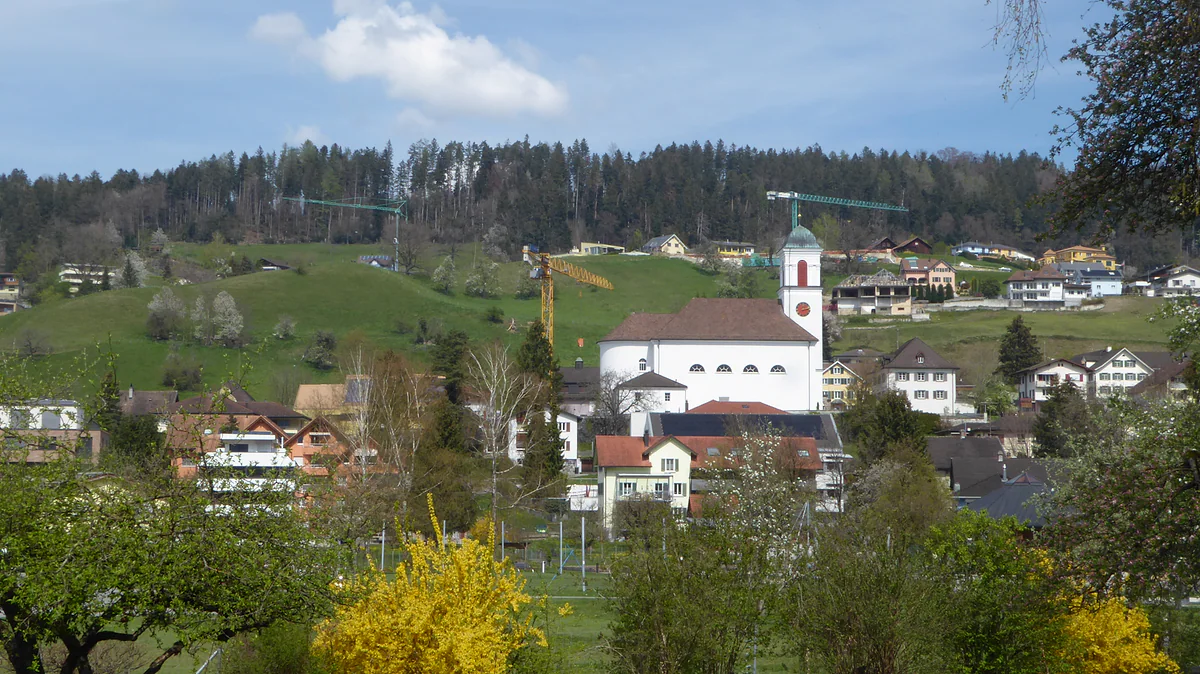
Mauren's hamlet on the Austrian border
Schaanwald, Liechtenstein's doorway to Austria
Schaanwald is a hamlet in the municipality of Mauren, in Liechtenstein's Unterland, right on the border with Feldkirch in Austria. Since 1924 its customs post has been staffed by Swiss officers, because Liechtenstein shares a customs area with Switzerland. It had a Roman villa with baths, excavated in 1928, and the final stage of the Liechtenstein Trail ends here.
In 30 seconds
Full read: 4 min
- Schaanwald is a hamlet of Mauren on the border with Feldkirch, Austria.
- Its customs post has been staffed by Swiss officers since 1924.
- A Roman bath from around AD 100 was excavated here in 1928.
- The final stage of the Liechtenstein Trail ends at the customs post.
Schaanwald isn't somewhere I'd travel to on purpose. What I would do is finish the Liechtenstein Trail here, stop for a moment at the customs post to take in how odd it is that it's run by the Swiss, then catch the bus back towards Vaduz or nip across to Feldkirch for dinner.
Before you go
What I would keep in mind
-
01 My tip
The customs post is Swiss, even in Liechtenstein
Since 1924 Swiss officers have staffed the Schaanwald customs post, under the customs treaty between the two countries. There is a customs border with Austria, even though both are in Schengen.
Liechtenstein borders and customs -
02 Getting there
Your way in by car from Austria
The LandesMuseum suggests taking the Austrian A14 to exit 41 Feldkirch-Frastanz and carrying on through Schaanwald to Vaduz. By bus, route 13 passes through Schaanwald on its way to Feldkirch.
Feldkirch to Vaduz -
03 Most beautiful
A Roman bath with hot water
In 1928 a private bath house of around 13 by 10 metres was uncovered here, with a changing room and cold, warm and hot rooms. It belonged to an estate beside the road from Milan to Augsburg.
-
04 To save money
Birka, an easy outing with children
The Birka bird reserve, with its wetland and playground, lies in Schaanwald on the last stage of the Liechtenstein Trail. It makes a relaxed afternoon.
stage 5 of the Liechtenstein Trail, Ruggell to Schaanwald
What I would book
Schaanwald is the kind of place that explains Liechtenstein better than a museum does. A roadside hamlet on the Austrian border, where the customs post is run by officers from another country, where there were Roman baths, and where in 1945 local Girl Guides fed hundreds of refugees a day. I’m covering it because hardly anyone stops, and it’s worth at least knowing what you’re driving through.
A hamlet born in the 19th century
Schaanwald belongs to the municipality of Mauren and sits at the foot of the Maurerberg, cut off from the village by the Maurer Riet. Its name turns up from 1390 in boundary descriptions between the lordships of Jagdberg, Feldkirch and Schellenberg, but the village itself is young. The Historisches Lexikon says that in the mid-19th century there was only a mill with an inn, two houses, a carriers’ depot and the customs house.
It grew once a general building ban was lifted in the 1840s and a coloured-weaving mill opened in 1866 in Tisis, just over the border. By 1900 it had 27 houses strung along the road, and in 1899 it got its own school. St Theresa’s church, the building that catches your eye from the road, went up between 1936 and 1939 thanks to a villagers’ association and was consecrated in 1939. Its stained glass is by Johannes Troyer.
Why is the customs post run by the Swiss?
Because of the country’s monetary and customs history. The post moved from Nendeln to Schaanwald in 1808, vanished while Liechtenstein was in a customs union with Austria between 1852 and 1919, and came back afterwards. Since the 1924 customs treaty with Switzerland it has been staffed by Swiss officers, and the Lexikon records its official title, the Swiss customs office of Schaanwald in the Principality of Liechtenstein. A fair number of Protestant families settled with them, and in 1939 about 50 of Schaanwald’s 241 residents belonged to customs staff households.
For a traveller the practical point is simple. There’s no customs border between Switzerland and Liechtenstein, but here you do cross into Austria. I go into the detail on Liechtenstein’s borders and customs.
The Roman bath
Long before the customs post, the Roman road from Milan to Augsburg ran past here, and beside it stood an estate with baths. The bath house was excavated in 1928, a single-storey building about 13 metres wide and 10 deep, built of flysch and tufa and reached along a paved path. At the front were the changing room and cold bath, and from the changing room you passed into the warm room and the hot room, which had an apse and two tubs. The boiler room that heated the floor sat in the south-west corner.
It’s thought to have been built around AD 100 and abandoned in the 3rd or 4th century. In 1929 two farm buildings and a stretch of the Roman road came to light, and the finds included a brooch shaped like a peacock. If this period interests you, the Unterland’s other major Roman site is at Nendeln.
Refugees in 1945
The Schaanwald border saw its hardest days at the end of the war. In April and May 1945 thousands of refugees gathered on the Austrian side, and the Lexikon says Liechtenstein’s Girl Guides fed between 800 and 1,000 admitted people in Schaanwald every day. In the same days, in the early hours of 3 May, a small Russian army crossed a few kilometres to the north, the story told in Hinterschellenberg and the 1945 Russian crossing. For the background, see Liechtenstein in the Second World War.
Getting in and out
By car, the LandesMuseum advises anyone coming from Austria to leave the A14 at exit 41 Feldkirch-Frastanz and carry on through Schaanwald to Vaduz. It’s a busy road, and as far back as 2011 the Lexikon put traffic at around 15,000 vehicles a day. By bus, route 13 passes through Schaanwald towards Feldkirch, and there’s a LIEbike station. The hamlet also gives its name to the Casino Schaanwald, one of the four in my guide to casinos in Liechtenstein.
Trains are another matter. The Lexikon says Schaanwald had a stop from 1902, but the 2025-26 ÖBB timetable lists just three stops in the country, Nendeln, Forst Hilti and Schaan-Vaduz, so don’t count on one.
The end of the trail
If you’re walking the Liechtenstein Trail, this is where you finish. The fifth stage leaves Ruggell, crosses the Ruggeller Riet, climbs to the Schellenberg ruins, passes Mauren’s herb garden and the Birka bird reserve, which lies in Schaanwald, and ends at the customs post after 19.4 km. The full route, with climbs, is on stage 5 of the Liechtenstein Trail.
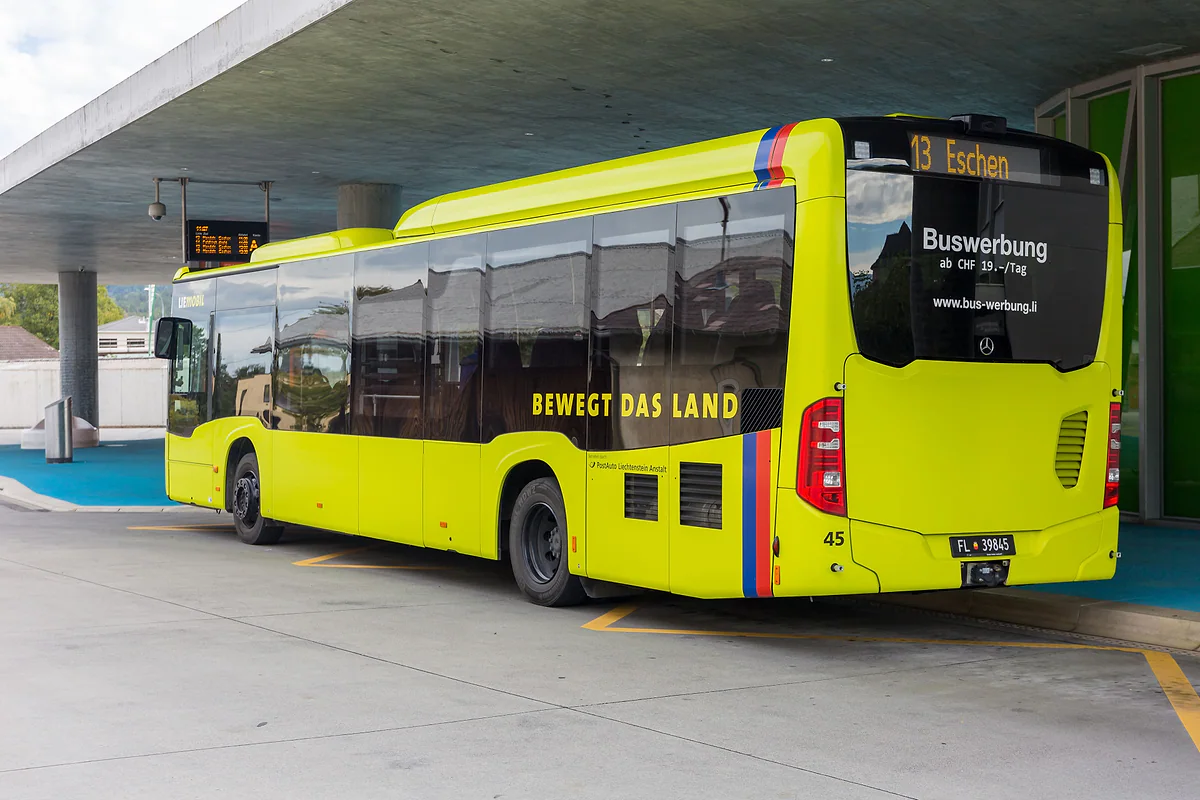
A lime-green LIEmobil bus at Schaan bus station, showing line 13 to Eschen on its front destination display.
The Schaanwald border through time
| Date | What happened |
|---|---|
| Around AD 100 | The Roman bath is probably built |
| 1390 | The name appears in boundary descriptions |
| 1808 | The customs post moves from Nendeln to Schaanwald |
| 1852-1919 | Customs union with Austria, no post here |
| 1924 | Customs treaty with Switzerland; Swiss officers in Schaanwald |
| 1928-1929 | The Roman bath is excavated |
| 1936-1939 | St Theresa's church is built |
| April-May 1945 | Thousands of refugees gather on the Austrian side |
Historisches Lexikon, entries «Schaanwald», «Römische Villen» and «Kapelle St. Theresia von Lisieux».
Test yourself
True or false?
0/4 Pick before you peek.
-
The Schaanwald customs post is staffed by Liechtenstein officers.
See the answer
False. Since 1924 the officers have been Swiss, under the customs treaty between Switzerland and Liechtenstein.
-
Schaanwald was already a village in the Middle Ages.
See the answer
False. The Lexikon says the village only grew up in the 19th century. In the mid-1800s there was just a mill with an inn, two houses, a carriers' depot and the customs house.
-
Schaanwald had a Roman bath house.
See the answer
True. It was dug up in 1928, with a changing room and cold, warm and hot rooms heated by a hypocaust.
-
Refugees reached the Schaanwald border in 1945.
See the answer
True. In April and May thousands gathered on the Austrian side, and Liechtenstein's Girl Guides fed between 800 and 1,000 admitted people every day.
- Swiss officers take over customs
- 1924
- Footprint of the Roman bath
- 13 × 10 m
- Final stage of the Liechtenstein Trail
- 19.4 km
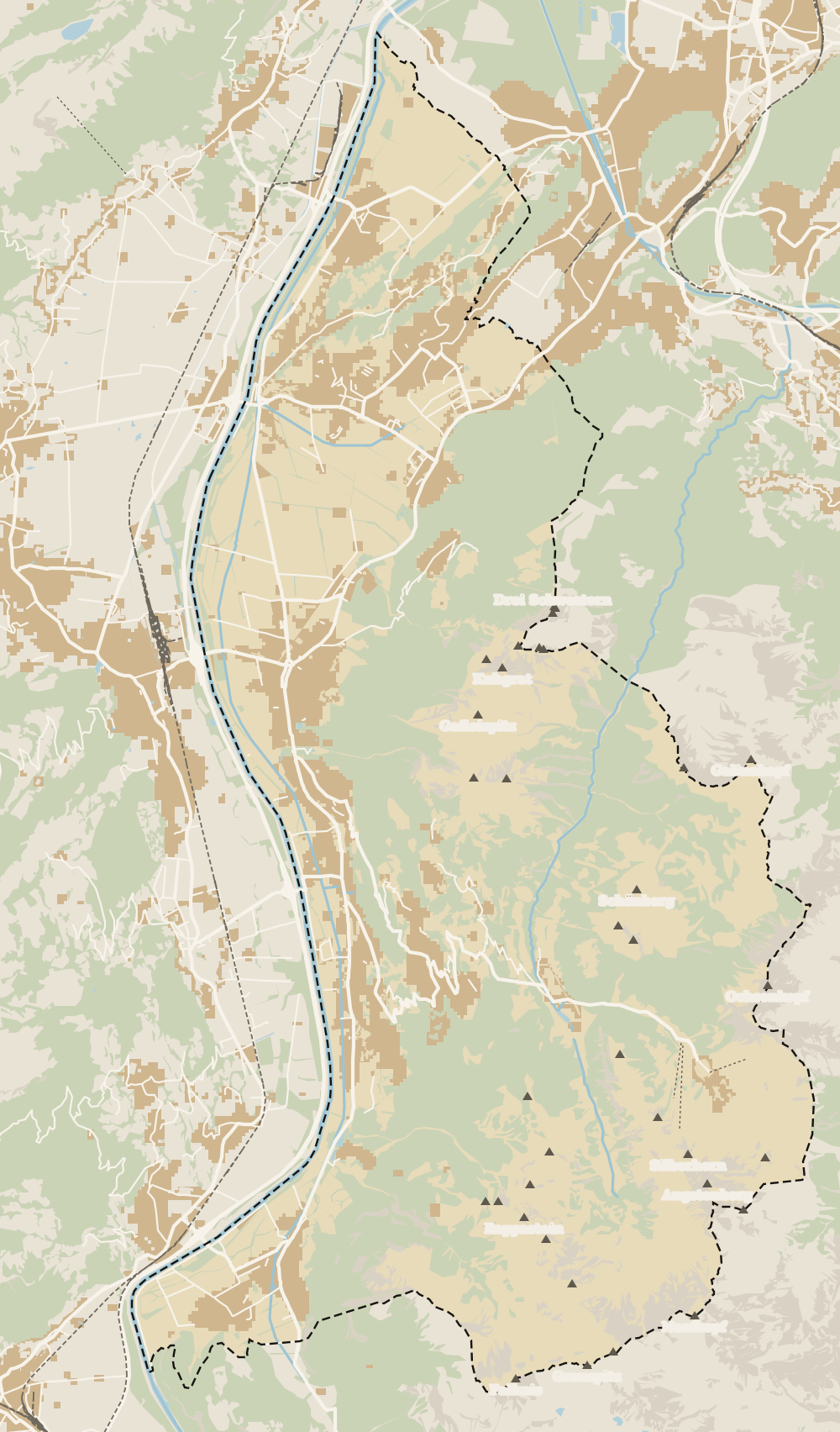
Map
Where Schaanwald is
The dashed line is the border: Switzerland across the Rhine, Austria to the north and east. Every number opens its guide.
0 of 168 Liechtenstein guides
Your next stamp
- Borders and customs
- Stage 5: Ruggell - Schaanwald
- Feldkirch to Vaduz
- Liechtenstein Trail
- Hilti
- The Rhine
- Hostel and camping
- Schaan
- Things to do
- One day
- Two days
- Municipalities
- Oberland
- Unterland
- Map
- Vaduz
- Städtle
- Mitteldorf
- Vaduz Castle
- Vaduz Cathedral
- Parliament
- Government Building
- Vaduz Town Hall
- Red House
- Prince's Winery
- Old Rhine Bridge
- Schalun Castle Ruin
- Balzers
- Citytrain
- Triesen
- Triesenberg
- Walser Museum
- Planken
- Gutenberg Castle
- Schaan Roman fort
- Dux
- St Mamertus chapel
- Lawena valley
- Mäls
- DoMuS
- TAK Theatre
- Castles
- Churches and chapels
- Viewpoints
- Mountains
- Museums
- Kunstmuseum
- Mountain huts
- Hilti Art Foundation
- Pfälzerhütte
- Gafadura hut
- National Museum
- Treasure Chamber
- Postage Stamp Museum
- Kunstraum Engländerbau
- Eschen
- Masescha
- Gaflei
- Nendeln
- Mauren
- Silum
- Rotenboden
- Gamprin
- Wangerberg
- Bendern
- Steg
- Ruggell
- Samina valley
- Schellenberg Farmhouse Museum
- Cross-country skiing at Steg
- Küefer-Martis-Huus
- Ruggeller Riet
- Schellenberg
- Hinterschellenberg
- Fürstensteig
- Is it a country?
- Malbun
- Schellenberg castles
- Eschnerberg
- Malbun in summer
- Population
- Stage 1: Balzers - Triesenberg
- Lakes
- Sareis
- Size
- Stage 2: Triesenberg - Vaduz
- Malbun Peace Chapel
- Political system
- Stage 3: Vaduz - Nendeln
- Swimming pools
- Language
- Skiing in Malbun
- Stage 4: Nendeln - Ruggell
- Dialect
- Malbun ski pass
- Hotels in Malbun
- Stamps
- Princess Gina Trail
- Hut-to-hut Route 66
- Hiking
- Getting there
- In winter
- Weather
- Airport
- Best time to visit
- In summer
- Events
- With kids
- Zurich to Liechtenstein
- National day
- Sargans to Vaduz
- Christmas
- By train
- Traditions
- Carnival
- Getting around
- Buses
- Funken Sunday
- Alpine cattle drive
- Driving and vignette
- Parking
- Bike hire
- Cycling
- EU and Schengen
- Entry requirements
- The prince
- The princely house
- The flag
- The coat of arms
- The national anthem
- History
- Second World War
- No army
- Facts
- Why so rich?
- Banks and tax haven
- Where to stay
- Hotels in Vaduz
- False teeth
- Rent the country?
- Where to eat
- Restaurants in Vaduz
- Swiss invasions
- Bars and nightlife
- Food
- Käsknöpfle
- Wine
- Casinos
- Adventure Pass
- Rainy days
- Guided tours
- Tourist office
- Day trips
- Passport stamp
- Music festivals
- Phone and roaming
- Currency and payments
- Prices and budget
- Tipping
- Plugs and sockets
- Tap water
- Opening hours
- Public holidays
- Safety
- Accessibility
- With a dog
- Shopping and souvenirs
Frequently asked questions
Where is Schaanwald?
In north-east Liechtenstein, in the municipality of Mauren, at the foot of the Maurerberg and on the border with Feldkirch. The Maurer Riet, a wet stretch of flatland, separates it from Mauren village.
Who runs the customs post at Schaanwald?
Swiss officers, since 1924. The Historisches Lexikon gives its official name, the Swiss customs office of Schaanwald in the Principality of Liechtenstein.
Do trains stop at Schaanwald?
The 2025-26 ÖBB timetable lists only three stops in the country, Nendeln, Forst Hilti and Schaan-Vaduz. To reach Schaanwald I'd take bus route 13.
What is left of the Roman bath at Schaanwald?
It was excavated in 1928 and 1929. It was a single-storey building of about 13 by 10 metres with four bathing rooms and a boiler room, part of an estate with two farm buildings.
Where does the Liechtenstein Trail end?
The fifth and final stage, 19.4 km from Ruggell, finishes at the Schaanwald customs post on the Austrian border.
By
Tourism graduate with a master’s in Tourism Management and Planning from the University of Málaga, who has travelled across Europe. He writes every guide from official sources and his own judgement.
Published on . Facts checked on .
Sources
Photos: Plutowiki (CC0); Matti Blume (CC BY-SA 4.0), via Wikimedia Commons.