A country 24.7 km from end to end
Getting around Liechtenstein without wasting your time
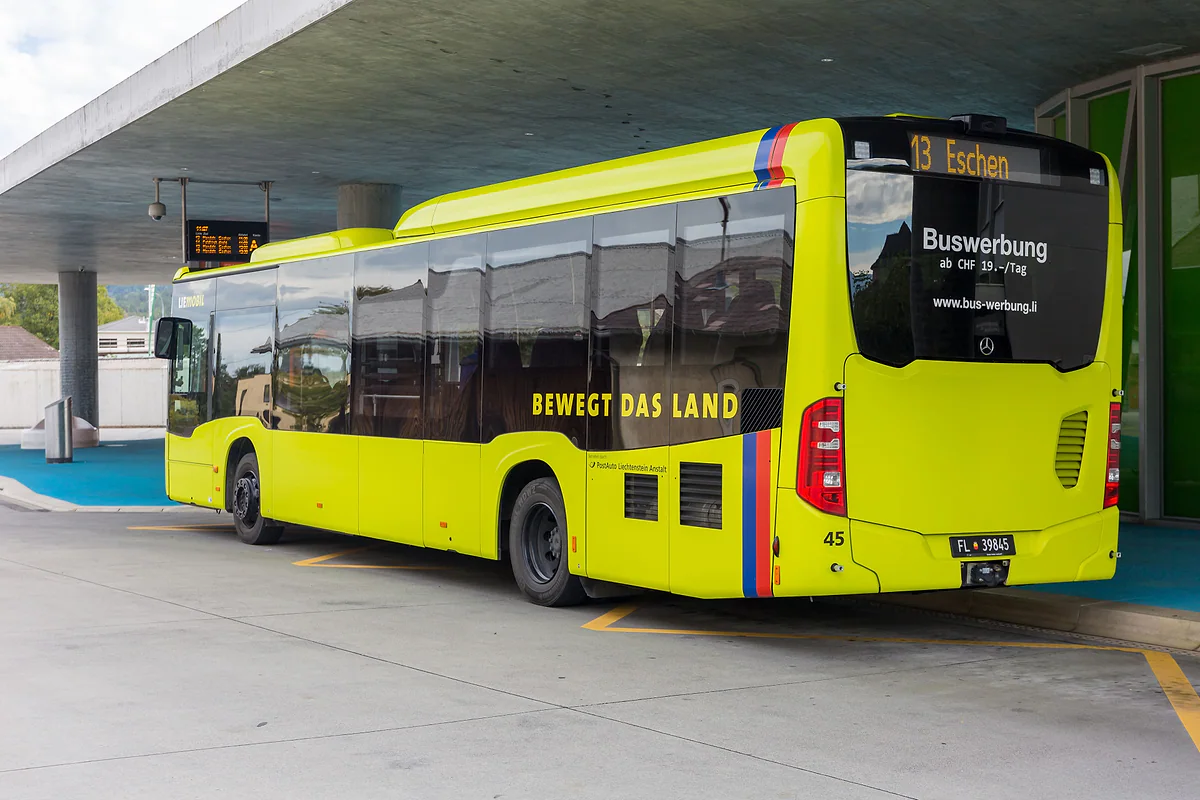
To get around Liechtenstein, the LIEmobil bus is all you need, reaching all 11 municipalities and climbing to Malbun all year. The country is 24.7 km long and 12.4 km wide, so no journey is long. A car gives freedom in the mountains, cyclists have over 220 km of routes and taxis run day and night.
For a one or two-day visit I wouldn't hire a car. The bus goes everywhere, you pay with the card on your phone, and in the mountains it saves me hunting for a space in Malbun, which is where parking really gets awkward.

Before you go
What I would keep in mind
-
01 To save money
A full day of buses for CHF 9
LIEmobil's day ticket for three or more zones costs CHF 9 and covers the whole country. If you're heading up to Malbun and back via Schaan, it beats three singles.
Liechtenstein's buses -
02 Money
Card on the bus, coins at the meter
It's the contrast that trips people up. LIEmobil buses take no cash, while Vaduz parking meters want cash or the parkingpay.ch app.
parking in Vaduz -
03 Worth the splurge
An e-bike for the Rhine valley
There are over 220 km of cycle routes, and the Rhine route is part of EuroVelo. A LIEbike costs CHF 2 per half hour, and for the mountains the Liechtenstein Center hires out e-bikes.
bike hire in Liechtenstein -
04 My tip
In summer, your bike rides the bus uphill
Buses on routes 21 (to Malbun) and 22 (to Gaflei) carry bike racks in summer, according to LIEmobil. Ride up by bus, pedal back down.
-
05 To save money
The visitor pass with buses built in
The All Inclusive Erlebnispass, from CHF 25 a day, covers every bus and museum entry. The Welcome pass, free if your accommodation issues it, includes the bus too.
the Liechtenstein Adventure Pass
What I would book
My ranking, scored
How I'd get around, in order
My own scores out of 10 for a one to three-day sightseeing trip. I weigh cost, what each option lets you see and how much hassle it adds. It's different if you're skiing with kit or tackling long hikes.
0 of 5 seen
-
LIEmobil bus
Reaches all 11 municipalities and Malbun, takes contactless cards, and the day ticket is CHF 9 at most. It's what I'd use for almost everything.
9.2 out of 10
-
On foot
The Städtle in Vaduz is pedestrianised and the Liechtenstein Trail crosses the country in about 75 km of stages. Walking is the best way to see the valley.
8.7 out of 10
-
E-bike
Over 220 km of routes and LIEbikes across valley and Unterland villages. Not for steep climbs, as LIEbike itself warns.
8.3 out of 10
-
Car
Freedom to reach Gaflei or Steg on your own schedule. It means a vignette if you arrive by motorway and cash for parking meters in Vaduz.
7.2 out of 10
-
Taxi
The tourist board says they're available round the clock. I have no official fares, so I'd keep them for late nights or when the buses have stopped.
5.8 out of 10
Liechtenstein is 24.7 km long and 12.4 km wide, according to the Office of Statistics. At that size, getting around shouldn’t worry you much, and it doesn’t. What’s worth doing is picking the right mode for each leg, because the valley and the mountains work very differently.
The bus handles nearly everything
The LIEmobil network is the country’s backbone. It reaches all 11 municipalities, runs out to the Swiss and Austrian border stations and climbs into the mountains, with route 21 serving Malbun all year and route 22 heading up to Gaflei. In 2024 it carried 6,162,000 passengers, a huge figure for a country of 41,228 people, and you notice it in the frequency.
The practical side is simple. No cash on board, you pay by contactless card or with the SBB Mobile and Fairtiq apps, and the dearest day ticket, covering three or more zones, is CHF 9. Routes, zones and fares are in Liechtenstein’s buses.
To give you a feel for distances in bus time, Vaduz to Malbun takes half an hour on route 21, the 12E covers Vaduz to Sargans station in 23 minutes, and the slow way north, route 11 to Feldkirch, needs 45. Those are about the longest rides you’ll take. Most hops between neighbouring villages in the valley are over in ten or fifteen minutes, which is why I wouldn’t fret over a timetable before leaving a museum in the Städtle.
Do you need a car to see the country?
For a short visit, I’d say not. Liechtenstein is a car country, with around 780 cars per thousand residents according to the Office of Statistics, among the highest in Europe, but that describes the people who live there rather than someone coming to see Vaduz and ride up to Malbun.
A car does make sense in three cases. If you’re taking ski or climbing kit into the mountains, if you’re combining Liechtenstein with Switzerland and Austria on the same trip, or if there’s a group of you. Then think about two things, the vignette for Swiss or Austrian motorways and parking in Vaduz, where the first hour is free. I explain the vignette in driving in Liechtenstein and the vignette and the car parks in parking in Vaduz.
Cycling the Rhine valley
The valley is flat and has over 220 km of cycle routes, according to the tourist board, with the Rhine route forming part of the European EuroVelo network. For hopping between villages there’s LIEbike, LIEmobil’s shared e-bike scheme, with stands across the valley and the Unterland. It costs CHF 2 per half hour and CHF 20 for a full day.
LIEbike itself warns that its bikes aren’t suited to very steep routes, so for Triesenberg or Malbun I’d look elsewhere. How to register, and where to hire an e-bike for the hills, is in bike hire in Liechtenstein.
On foot, more than you’d think
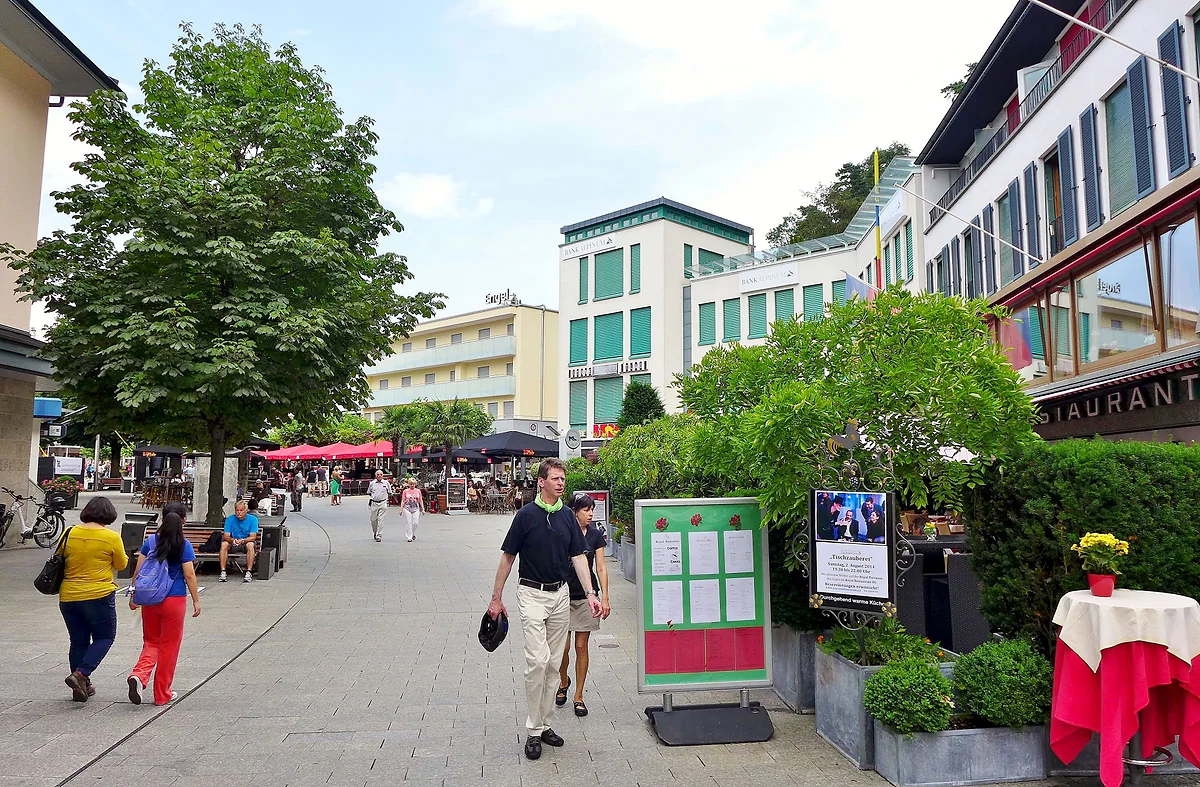
Central Vaduz, the Städtle, is a pedestrian zone, with vehicles let in solely for loading, in the early morning from Monday to Saturday. The museums, Parliament and the cathedral are a few minutes’ walk from one another.
Beyond the capital, walking is the loveliest way to see the country. The Liechtenstein Trail crosses it in about 75 km over five stages, from Balzers to Schaanwald, and each one starts and ends in a village with a bus stop. That makes it easy to walk a stage and ride the bus back to your hotel.
Taxis, for late nights and not much else
The tourist board describes taxis as a complement to the bus, available 24 hours a day. I haven’t found official fares, so I won’t quote prices. I’d keep them for getting back from dinner once the route you need has stopped, or for a trip with plenty of luggage. On weekend nights, before calling a cab, I’d check the N1 and N2 night buses.
The pass that bundles in the bus
If you’ll use the bus a lot and visit museums, look at the Erlebnispass. The All Inclusive version costs CHF 25 for one adult day and CHF 17 for children aged 6 to 15, covering every LIEmobil bus, entry to the Städtle museums and the ride up to Sareis. The Welcome version is free and includes the bus as well, but only if your accommodation chooses to issue it. I compare the two in Liechtenstein’s adventure pass.
What to use for each trip
| Journey | My choice | Why |
|---|---|---|
| Sargans or Feldkirch to Vaduz | Bus 12E or 11 | Straight from the station, no cash needed |
| Vaduz to Malbun | Bus 21 | 30 min, hourly; bike racks in summer |
| Vaduz to Schaan and the Unterland | Bus 11, 12 or 14 | Several routes with frequent departures |
| Exploring the Rhine valley | LIEbike or on foot | Flat ground and bike stands in several villages |
| Gaflei and the Triesenberg viewpoints | Bus 22 or car | Mountain route with a change at Triesenberg |
Data from LIEmobil and transport.opendata.ch (Vaduz to Malbun, checked for 6 October 2026).
Test yourself
True or false?
0/4 Pick before you peek.
-
You can pay cash on Liechtenstein's buses.
See the answer
False. LIEmobil takes no cash on board. You pay by contactless card or with the SBB Mobile and Fairtiq apps.
-
Parking meters in Vaduz take cash or an app.
See the answer
True. The municipality's website says you pay in cash at the meter or through the parkingpay.ch app, the opposite of the bus.
-
Liechtenstein has more than 200 km of cycle routes.
See the answer
True. The tourist board mentions over 220 km of cycle routes, with the Rhine route part of the EuroVelo network.
-
The bus to Malbun only runs in the ski season.
See the answer
False. Bergbahnen Malbun says route 21 serves Malbun all year round, and in summer it carries bike racks.
What to see
What to see in Getting around
0 of 168 Liechtenstein guides
Your next stamp
- Cycling
- Liechtenstein Trail
- Getting there
- Buses
- Hiking
- Size
- By train
- Day trips
- Things to do
- One day
- Two days
- Municipalities
- Oberland
- Unterland
- Map
- Vaduz
- Städtle
- Mitteldorf
- Vaduz Castle
- Vaduz Cathedral
- Parliament
- Government Building
- Vaduz Town Hall
- Red House
- Prince's Winery
- Old Rhine Bridge
- Schaan
- Schalun Castle Ruin
- Balzers
- Citytrain
- Triesen
- Triesenberg
- Walser Museum
- Planken
- Gutenberg Castle
- The Rhine
- Schaan Roman fort
- Dux
- St Mamertus chapel
- Lawena valley
- Mäls
- DoMuS
- TAK Theatre
- Castles
- Churches and chapels
- Viewpoints
- Mountains
- Museums
- Kunstmuseum
- Mountain huts
- Hilti Art Foundation
- Pfälzerhütte
- Gafadura hut
- National Museum
- Treasure Chamber
- Postage Stamp Museum
- Kunstraum Engländerbau
- Eschen
- Masescha
- Gaflei
- Nendeln
- Mauren
- Silum
- Rotenboden
- Schaanwald
- Gamprin
- Wangerberg
- Bendern
- Steg
- Ruggell
- Samina valley
- Schellenberg Farmhouse Museum
- Cross-country skiing at Steg
- Küefer-Martis-Huus
- Ruggeller Riet
- Schellenberg
- Hinterschellenberg
- Fürstensteig
- Is it a country?
- Malbun
- Schellenberg castles
- Eschnerberg
- Malbun in summer
- Population
- Stage 1: Balzers - Triesenberg
- Lakes
- Sareis
- Stage 2: Triesenberg - Vaduz
- Malbun Peace Chapel
- Political system
- Stage 3: Vaduz - Nendeln
- Swimming pools
- Language
- Skiing in Malbun
- Stage 4: Nendeln - Ruggell
- Dialect
- Malbun ski pass
- Stage 5: Ruggell - Schaanwald
- Hotels in Malbun
- Stamps
- Princess Gina Trail
- Hut-to-hut Route 66
- In winter
- Weather
- Airport
- Best time to visit
- In summer
- Events
- With kids
- Zurich to Liechtenstein
- National day
- Sargans to Vaduz
- Christmas
- Feldkirch to Vaduz
- Traditions
- Carnival
- Funken Sunday
- Alpine cattle drive
- Driving and vignette
- Parking
- Bike hire
- EU and Schengen
- Entry requirements
- Borders and customs
- The prince
- The princely house
- The flag
- The coat of arms
- The national anthem
- History
- Second World War
- No army
- Facts
- Why so rich?
- Banks and tax haven
- Where to stay
- Hilti
- Hotels in Vaduz
- False teeth
- Hostel and camping
- Rent the country?
- Where to eat
- Restaurants in Vaduz
- Swiss invasions
- Bars and nightlife
- Food
- Käsknöpfle
- Wine
- Casinos
- Adventure Pass
- Rainy days
- Guided tours
- Tourist office
- Passport stamp
- Music festivals
- Phone and roaming
- Currency and payments
- Prices and budget
- Tipping
- Plugs and sockets
- Tap water
- Opening hours
- Public holidays
- Safety
- Accessibility
- With a dog
- Shopping and souvenirs
Frequently asked questions
How do you get around Liechtenstein without a car?
On LIEmobil buses, which reach all 11 municipalities, Malbun and Gaflei. You pay by contactless card or app, and a day ticket for the whole country costs CHF 9.
Is public transport in Liechtenstein good?
Yes. The country is 24.7 km long and the bus network covers all of it. Buses carried 6,162,000 passengers in 2024, according to the Office of Statistics.
Are there taxis in Liechtenstein?
Yes. The tourist board presents them as a complement to the bus, available 24 hours a day. I haven't found official fares, so ask the price before you get in.
Is it worth hiring a car in Liechtenstein?
For one or two days, I don't think so. It makes sense if you're heading into the mountains with kit, combining Switzerland and Austria, or travelling as a group. Within the country the bus goes everywhere.
Can you walk around Liechtenstein?
Yes. The Liechtenstein Trail crosses the country in about 75 km split into five stages, and central Vaduz, the Städtle, is pedestrianised.
How long does it take to cross Liechtenstein?
Route 11 runs the length of the country from Sargans to Feldkirch with many stops, and Vaduz to Feldkirch alone takes 45 minutes on it. By road, the country is 24.7 km long.
By
Tourism graduate with a master’s in Tourism Management and Planning from the University of Málaga, who has travelled across Europe. He writes every guide from official sources and his own judgement.
Published on . Facts checked on .
Sources
Photos: Matti Blume (CC BY-SA 4.0), via Wikimedia Commons.