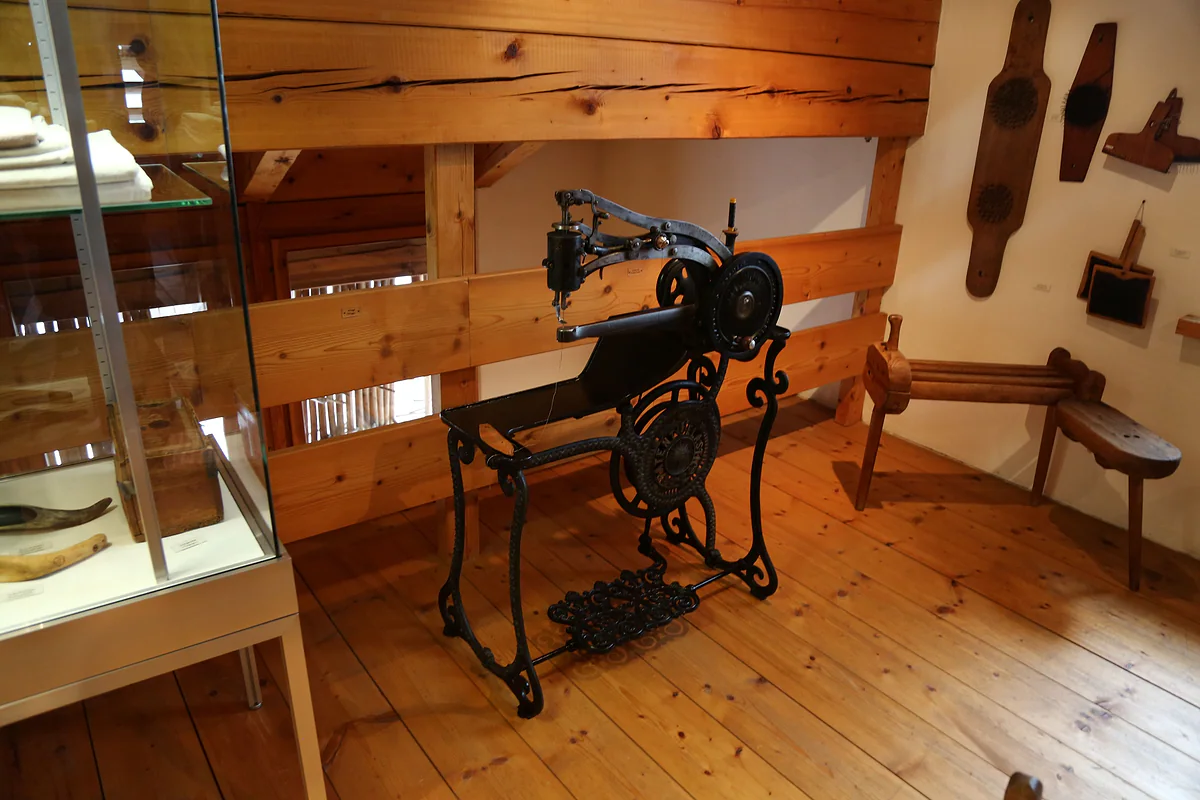
Closed from 12:00 to 15:00
The Walser Museum, the mountainside settled from the Valais
The Walser Museum in Triesenberg, at Schlossstrasse 5, tells the story of the Walser, settlers from the Swiss Valais who made their home here in the 13th century. It opens Monday to Friday from 08:00 to 12:00 and 15:00 to 18:00, and on Saturday from 08:00 to 11:00. Tickets are CHF 5, and children up to 15 go free.
In 30 seconds
Full read: 3 min
- The Walser Museum in Triesenberg tells the story of the Walser, settlers from the Valais who arrived in the 13th century.
- It opens Monday to Friday from 08:00 to 12:00 and 15:00 to 18:00, and Saturday from 08:00 to 11:00.
- Admission is CHF 5; under-16s go free.
- The Walserhaus, a 400-year-old house nearby, can only be seen on a guided tour.
I'd go first thing, before heading on to Malbun or Steg, because it opens at 08:00 and shuts for three hours at lunchtime. And I'd book the guided tour with the Walserhaus, which is where you really grasp how hard life was up here.

Before you go
What I would keep in mind
-
01 My tip
The museum shuts from 12:00 to 15:00
On weekdays it opens in two sessions, 08:00 to 12:00 and 15:00 to 18:00, and on Saturday only from 08:00 to 11:00. Arrive mid-morning and you'll have little time before it closes.
-
02 To save money
Covered by the Erlebnispass
A ticket is CHF 5. With the All Inclusive Erlebnispass you pay nothing, and the Welcome pass that hotels hand out takes 20% off.
the Liechtenstein Adventure Pass -
03 Most beautiful
A 400-year-old house 200 metres away
The Walserhaus in the Hag shows how a family lived in the 19th century, with a smoke-blackened kitchen and a clay stove. It's only open on guided tours and reached on foot.
-
04 Getting there
Bus 21 climbs from Vaduz
LIEmobil route 21 runs from Vaduz to Triesenberg and on to Malbun, hourly. On the same bus you can combine the museum and the mountains in a day.
Triesenberg, the Walser mountain village
My ranking, scored
What I'd see at the Walser Museum
My marks out of 10, for someone spending a morning in Triesenberg who wants to understand the Walser without being a specialist.
0 of 5 seen
-
The Walserhaus in the Hag
A 400-year-old log house with an open hearth, a smoke-black kitchen and little light. Guided tours only, 200 metres from the museum.
9.0 out of 10
-
The 25-minute multivision show
Film and images of village life, in German, English, French or Italian. The best introduction if you know nothing about the Walser.
8.2 out of 10
-
The exhibition over three floors
How they made almost everything themselves, from food to cloth and light, and how each family took its own cattle to the alp.
7.8 out of 10
-
The old maiensäss hut at Steg
A mid-mountain log barn with a cheese room and milk cellar, next to the Steg chapel. Guided visits only too.
7.4 out of 10
-
The WalserSagenWeg
A trail lined with figures from Walser legends, play equipment and barbecue spots, with fine views. Free and self-guided.
7.0 out of 10
You can’t make sense of Triesenberg without the Walser, and you can’t make sense of the Walser without this museum. If you’re climbing from Vaduz on your way to Malbun, it’s worth a stop, not least because it explains why people in this village clinging to the slope speak differently from the valley below.
Who were the Walser?
In the 13th century settlers from the Valais, in Switzerland, came to Triesenberg. They settled the mountainside with special rights that the bonded peasants down in the valley lacked. According to the museum, they could marry freely, paid no dues or taxes, and held their land on a hereditary lease, so they could swap it, pledge it or pass it to their children.
They lived in isolation and made almost everything themselves, from food to cloth and light. Each family took its own cattle up to the alp and produced its own milk and cheese, a system so complicated that it was given up only after stiff resistance. And they spoke, as many still do, a very old Alemannic dialect related to the one in the Upper Valais, explained in more depth in my notes on the Liechtenstein dialect.
Inside the museum
The museum opened in 1961 and was the country’s first local museum, according to the Historisches Lexikon. The collection was gathered from the 1940s by Engelbert Bucher, and in 1981 it moved to larger rooms in the village centre. Today it fills three floors at Schlossstrasse 5.
The best way in, to my mind, is the multivision show, 25 minutes of film and images of village life, which you can watch in German, English, French or Italian. Then come the rooms on the Walser arrival, their language, their rights, how they worked the land, religion and the cult of the dead. Among the objects the museum mentions for its themed displays are memorial cards made with real human hair, and the first floor currently has an exhibition on 100 years of the Schlossstrasse.
The Walserhaus and the hut at Steg
This, to my mind, is the heart of the visit. Two hundred metres from the museum, in the Hag, stands the Walserhaus, a log house of about 400 years on a stone base. It shows how a large family lived in the 19th century, with an open fire, a kitchen blackened by smoke, a clay stove and hardly any light. Visits are by guided tour only, and the last stretch is on foot.
The other piece is further off, at Steg, beside the chapel where the lanes to Steg and Kleinsteg part. That’s where the museum’s old maiensäss hut stands, a barn of round logs to which a cheese room and milk cellar were added in 1896. In 2009 it was moved and listed. During the weeks on the mid-mountain pasture, a farmer needed a hut with a cheese room and a byre, always under one roof, and here you see why. It’s also shown on guided tours, and if you’re going to Steg it’s on your way.
Hours and prices, with a warning
The museum closes at lunchtime, and that catches people out. On weekdays it opens from 08:00 to 12:00 and 15:00 to 18:00, on Saturday only from 08:00 to 11:00, and on Sundays and public holidays it only takes booked groups. I’d arrive early.
Admission is CHF 5 and under-16s go free. Guided tours, in German, English or French, must be booked by email, phone or at the desk, and cost CHF 90 plus admission with the multivision show included. The multivision with an unguided visit is CHF 60 plus admission. Tours can also run outside opening hours. With the All Inclusive Erlebnispass, entry is free.
The multivision room, ground floor and first floor have a lift, there’s coach parking, and public toilets are in the administration building next door. Large groups are split and take turns between the film and the tour, so sharing the morning with a coach party shouldn’t spoil your visit.
Fitting it into your day
Bus 21 climbs from Vaduz to Triesenberg and carries on to Malbun, so the museum slots neatly into a mountain day. My plan would be the museum at 08:00, the Walserhaus with a guide, then on to Masescha, the first Walser hamlet, with its chapel of St Theodul. Everything else in the village is in my guide to Triesenberg.
To see how this museum fits with the ones in the valley, there’s my guide to Liechtenstein’s museums.
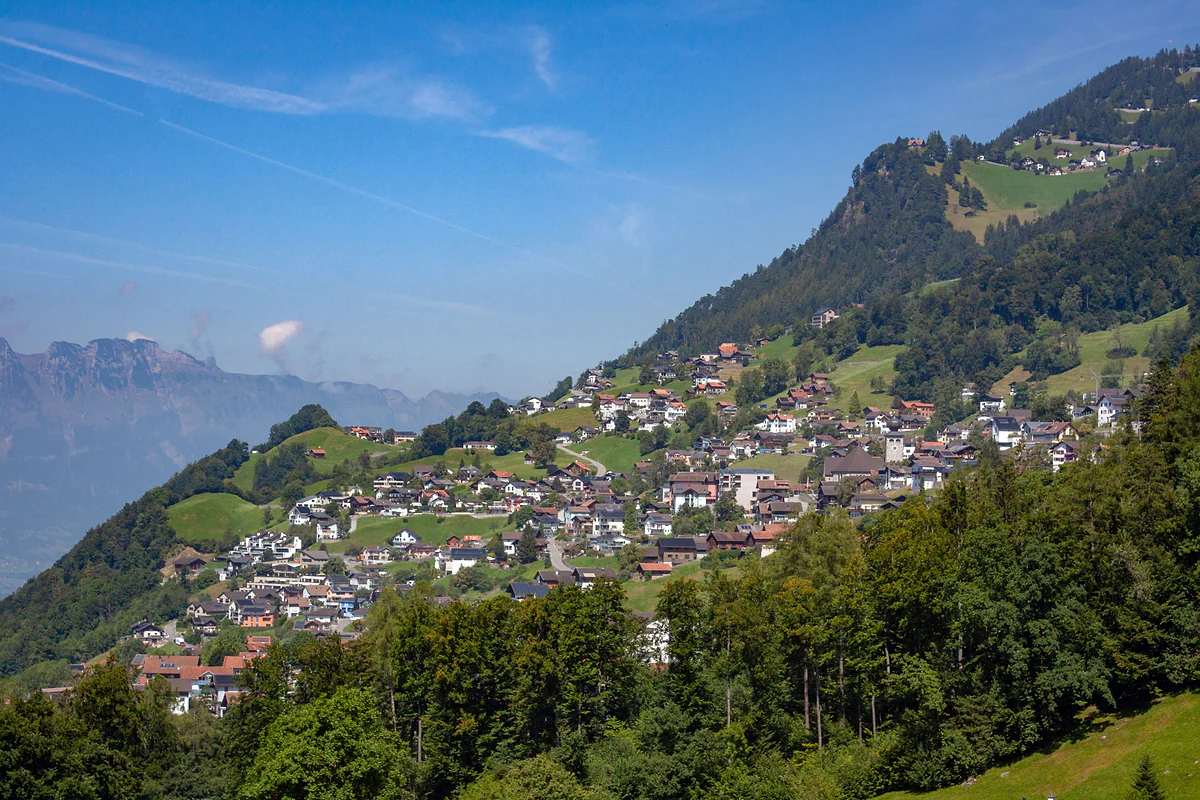
The houses of Triesenberg scattered across the green hillside above the Rhine valley, under a blue sky.
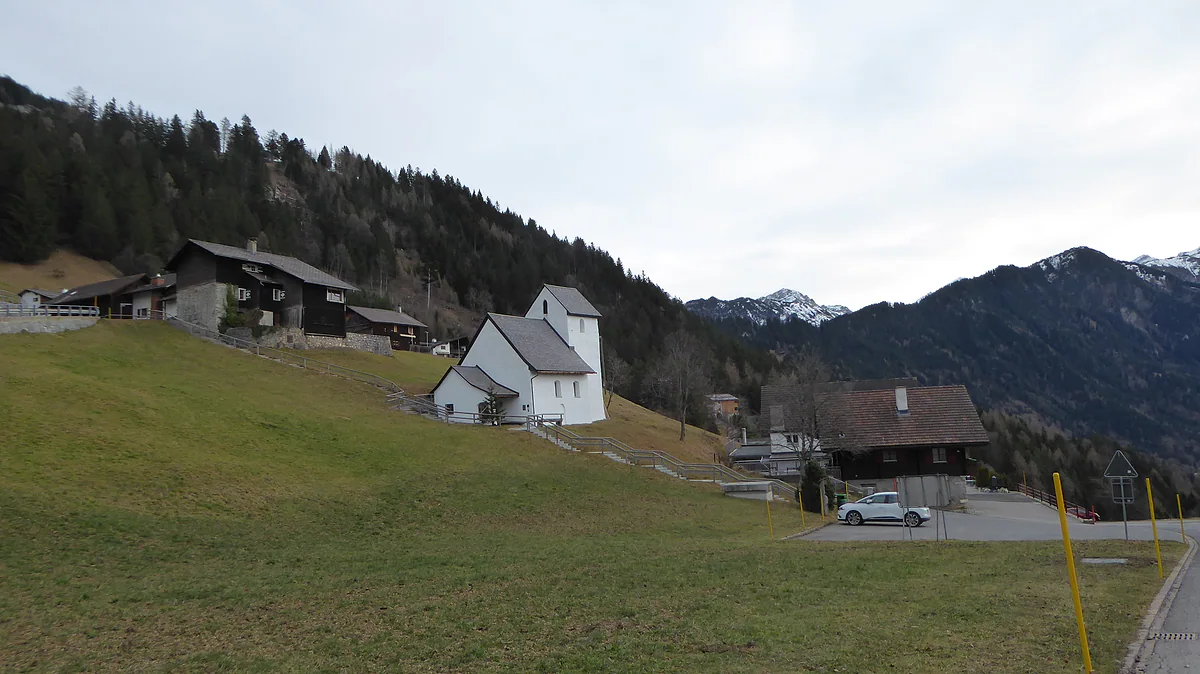
The white chapel of St Theodul in Masescha, on the sloping meadow, next to the mountain inn and the forest.
Walser Museum hours and prices
| Item | Detail |
|---|---|
| Monday to Friday | 08:00-12:00 and 15:00-18:00 |
| Saturday | 08:00-11:00 |
| Sundays and public holidays | Booked group tours only |
| Adults | CHF 5 |
| Up to 15 | Free |
| Groups | CHF 4 (10-20 people), CHF 3 (21+) |
| Guided tour with multivision | CHF 90 plus admission |
| Multivision and unguided visit | CHF 60 plus admission |
Guided tours in German, English and French, booked ahead, for groups of up to 25; also outside opening hours.
Test yourself
True or false?
0/4 Pick before you peek.
-
The Walser Museum stays open all day without a break.
See the answer
False. On weekdays it closes from 12:00 to 15:00, and on Saturday it only opens from 08:00 to 11:00.
-
It was Liechtenstein's first local museum.
See the answer
True. It opened in 1961, and the Historisches Lexikon describes it as the country's first local museum. It began inside the Walserhaus itself.
-
The Walser paid the same dues as the farmers down in the valley.
See the answer
False. According to the museum, they were free of dues and taxes and of restrictions on marriage, unlike the bonded peasants in the valley.
-
Each Walser family took its own cattle up to the alp.
See the answer
True. They practised the Einzelsennerei, in which each family looked after its own animals on the alp and made its own milk products and cheese.
- Year opened, the country's first local museum
- 1961
- Adult ticket
- CHF 5
- Length of the multivision show
- 25 min
- Age in years of the Walserhaus in the Hag
- 400
Map
Where Walser Museum is
The dashed line is the border: Switzerland across the Rhine, Austria to the north and east. Every number opens its guide.
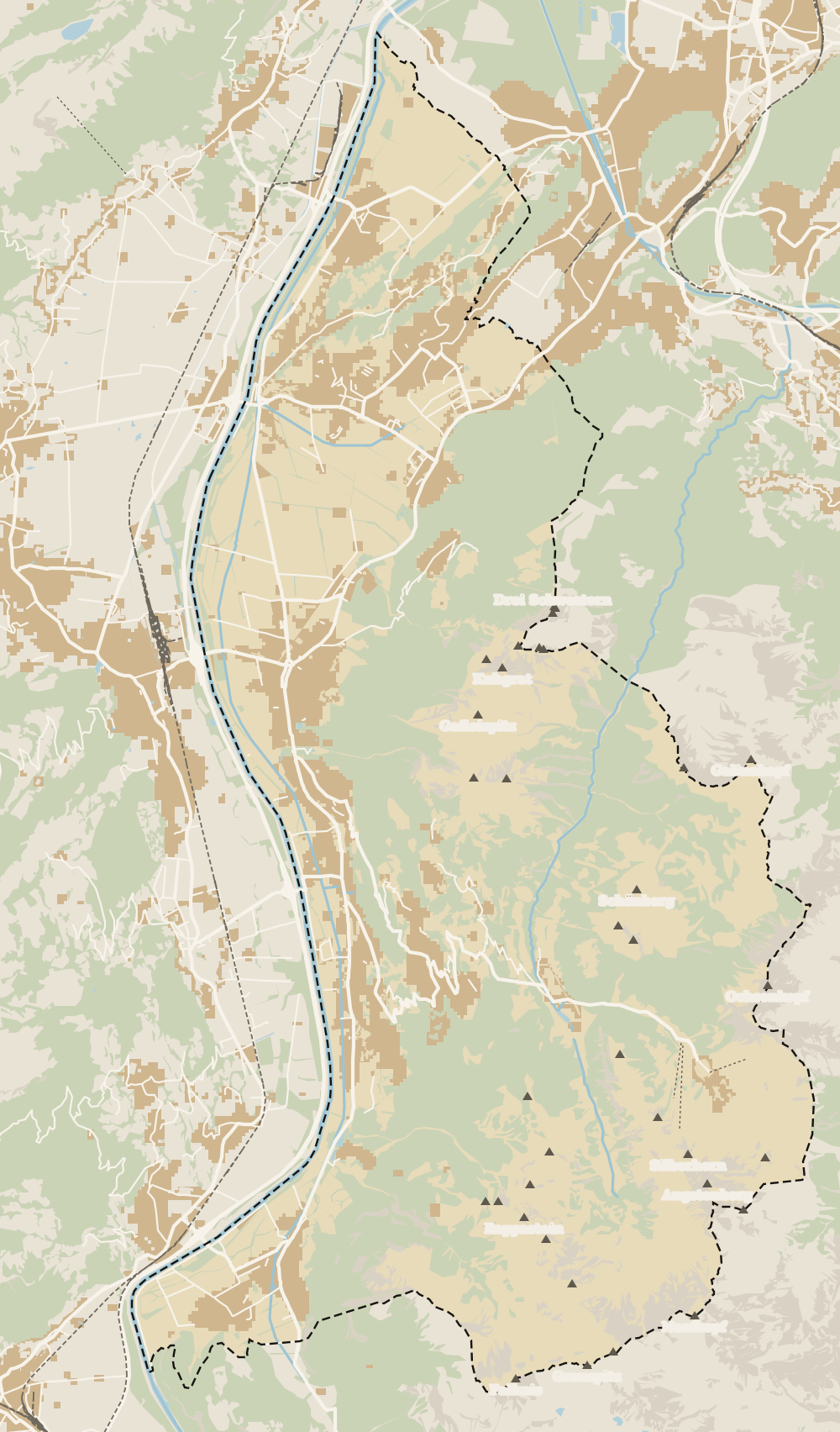 1Triesenberg 2Walser Museum 3Masescha 4Gaflei 5Silum 6Rotenboden 7Wangerberg 8Steg 9Samina valley 10Malbun
 Map data © OpenStreetMap contributors (ODbL)
- 1TriesenbergLargest and highest municipality in the country
- 2Walser MuseumClosed from 12:00 to 15:00
- 3MaseschaTriesenberg hamlet at 1,250 m
- 4GafleiHome of the country's first spa hotel, in 1875
- 5SilumWalser alp between 1,400 and 1,700 m
- 6RotenbodenTriesenberg hamlet, Rotaboda in dialect
- 7WangerbergTriesenberg hamlet, Wangerbärg in dialect
- 8StegTriesenberg summer pasture at about 1,300 m
- 9Samina valleyThe inner valley behind the Kulm ridge
- 10MalbunAt 1,600 m, with an hourly bus from Vaduz
0 of 168 Liechtenstein guides
Your next stamp
- Triesenberg
- Kunstmuseum
- National Museum
- Things to do
- Stage 2: Triesenberg - Vaduz
- Postage Stamp Museum
- Two days
- Tourist office
- One day
- Municipalities
- Oberland
- Unterland
- Map
- Vaduz
- Städtle
- Mitteldorf
- Vaduz Castle
- Vaduz Cathedral
- Parliament
- Government Building
- Vaduz Town Hall
- Red House
- Prince's Winery
- Old Rhine Bridge
- Schaan
- Schalun Castle Ruin
- Balzers
- Citytrain
- Triesen
- Planken
- Gutenberg Castle
- The Rhine
- Schaan Roman fort
- Dux
- St Mamertus chapel
- Lawena valley
- Mäls
- DoMuS
- TAK Theatre
- Castles
- Churches and chapels
- Viewpoints
- Mountains
- Museums
- Mountain huts
- Hilti Art Foundation
- Pfälzerhütte
- Gafadura hut
- Treasure Chamber
- Kunstraum Engländerbau
- Eschen
- Masescha
- Gaflei
- Nendeln
- Mauren
- Silum
- Rotenboden
- Schaanwald
- Gamprin
- Wangerberg
- Bendern
- Steg
- Ruggell
- Samina valley
- Schellenberg Farmhouse Museum
- Cross-country skiing at Steg
- Küefer-Martis-Huus
- Ruggeller Riet
- Schellenberg
- Hinterschellenberg
- Fürstensteig
- Is it a country?
- Liechtenstein Trail
- Malbun
- Schellenberg castles
- Eschnerberg
- Malbun in summer
- Population
- Stage 1: Balzers - Triesenberg
- Lakes
- Sareis
- Size
- Malbun Peace Chapel
- Political system
- Stage 3: Vaduz - Nendeln
- Swimming pools
- Language
- Skiing in Malbun
- Stage 4: Nendeln - Ruggell
- Dialect
- Malbun ski pass
- Stage 5: Ruggell - Schaanwald
- Hotels in Malbun
- Stamps
- Princess Gina Trail
- Hut-to-hut Route 66
- Hiking
- Getting there
- In winter
- Weather
- Airport
- Best time to visit
- In summer
- Events
- With kids
- Zurich to Liechtenstein
- National day
- Sargans to Vaduz
- Christmas
- Feldkirch to Vaduz
- By train
- Traditions
- Carnival
- Getting around
- Buses
- Funken Sunday
- Alpine cattle drive
- Driving and vignette
- Parking
- Bike hire
- Cycling
- EU and Schengen
- Entry requirements
- Borders and customs
- The prince
- The princely house
- The flag
- The coat of arms
- The national anthem
- History
- Second World War
- No army
- Facts
- Why so rich?
- Banks and tax haven
- Where to stay
- Hilti
- Hotels in Vaduz
- False teeth
- Hostel and camping
- Rent the country?
- Where to eat
- Restaurants in Vaduz
- Swiss invasions
- Bars and nightlife
- Food
- Käsknöpfle
- Wine
- Casinos
- Adventure Pass
- Rainy days
- Guided tours
- Day trips
- Passport stamp
- Music festivals
- Phone and roaming
- Currency and payments
- Prices and budget
- Tipping
- Plugs and sockets
- Tap water
- Opening hours
- Public holidays
- Safety
- Accessibility
- With a dog
- Shopping and souvenirs
Frequently asked questions
What are the Walser Museum's opening hours?
Monday to Friday from 08:00 to 12:00 and 15:00 to 18:00, and Saturday from 08:00 to 11:00. On Sundays and public holidays it only opens for groups who have booked.
How much is the Walser Museum?
CHF 5 for adults, and children up to 15 go free. A guided tour including the multivision show costs CHF 90 plus admission, and the All Inclusive Erlebnispass covers entry.
Who were the Walser?
Settlers from the Valais in Switzerland who made their home in Triesenberg in the 13th century. They had special rights, such as marrying freely, paying no dues and holding their land by hereditary lease, and they spoke a very old Alemannic dialect still heard in the village.
Can you visit the Walserhaus?
Yes, but only on a guided tour. It's a 400-year-old house in the Hag, 200 metres from the museum, reachable only on foot.
Are tours available in English?
Yes. Guided tours run in German, English and French, always booked ahead, and the multivision show is in German, English, French and Italian.
Is the museum accessible?
The multivision room, the ground floor and the first floor are reached by lift. Public toilets are in the municipal administration building next door.
By
Tourism graduate with a master’s in Tourism Management and Planning from the University of Málaga, who has travelled across Europe. He writes every guide from official sources and his own judgement.
Published on . Facts checked on .
Sources
Photos: Wikiolo (CC BY-SA 3.0); Lucas Kendall (CC BY-SA 4.0); Plutowiki (CC0), via Wikimedia Commons.