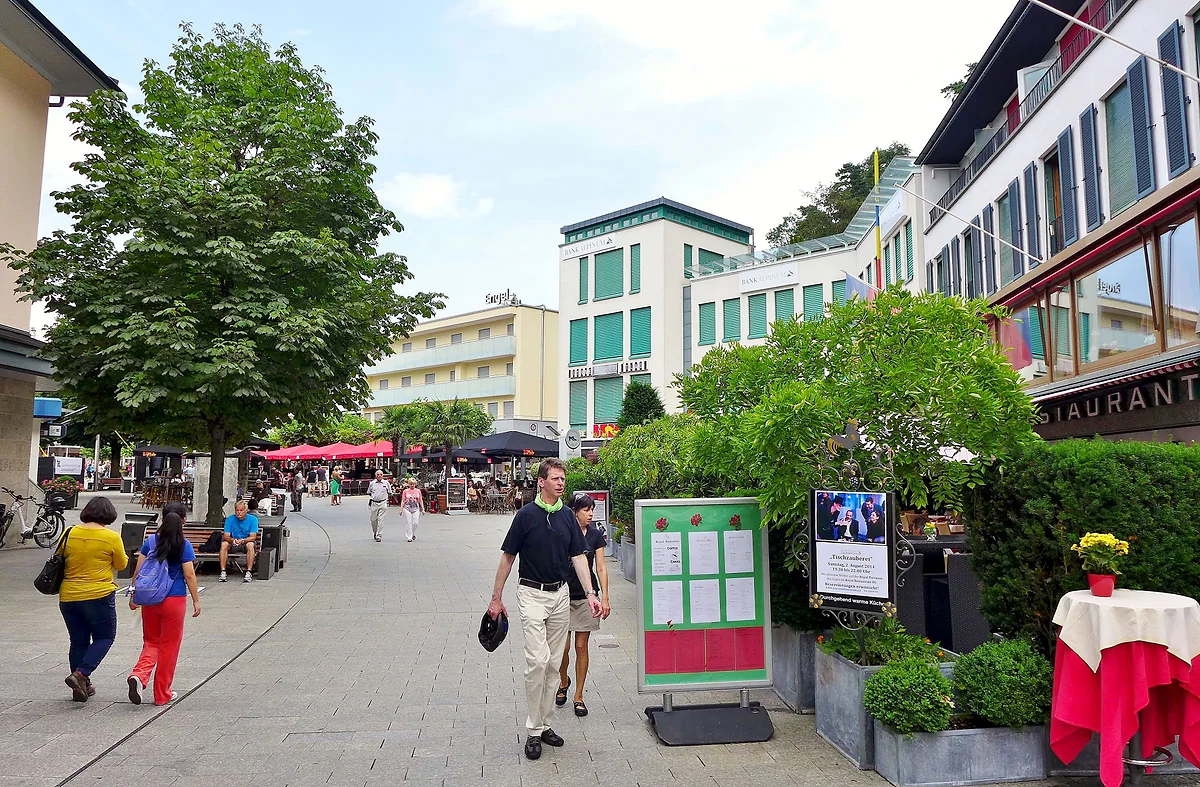
The Swiss franc since 1924
Liechtenstein's currency, and how to pay without losing out
Liechtenstein's currency is the Swiss franc (CHF), official since its customs treaty with Switzerland took effect in 1924. It doesn't use the euro or have a currency of its own, although the tourist board says euros are accepted in most places, at the seller's rate. Cards work almost everywhere, with two exceptions worth knowing, Vaduz parking meters and the mountain huts.
I'd use a card for nearly everything and carry a few francs for a parking meter or a mountain hut. Paying in euros works, but it means accepting someone else's exchange rate, and at Swiss prices that adds up.

Before you go
What I would keep in mind
-
01 Money
Pay in euros and your change comes in francs
Malbun's lift company puts it in writing. You can pay in euros, but change is given in Swiss francs at their rate. It's the one case I've seen spelled out, and it's telling.
-
02 Watch out
When the card machine offers you pounds
If a terminal asks whether to charge your UK card in pounds or francs, I'd choose francs. Pick pounds and the shop's provider sets the rate rather than your card issuer.
-
03 My tip
The bus won't take your coins
LIEmobil buses accept no cash in any currency. You pay by contactless debit or credit card, or through the SBB Mobile or Fairtiq apps.
Liechtenstein's buses -
04 To save money
Take francs up the mountain
The Pfälzerhütte and Gafadurahütte take cash only, in francs or in euros at the day's rate. If you're eating or sleeping up there, get francs in the valley first.
mountain huts in Liechtenstein
What I would book
Liechtenstein has one foot in Europe and the other in Switzerland, and nowhere shows it more than paying for things. It’s in the European Economic Area yet uses the Swiss franc, takes euros in plenty of places, and still runs buses that won’t accept a single coin. Here’s how I’d sort my money out.
The Swiss franc, since 1924
The official currency is the Swiss franc, code CHF. Liechtenstein’s Office of Statistics dates it to 1924, when the customs treaty with Switzerland took effect and the franc became the official currency, with a monetary treaty added in 1980. Before that, from 1852 to 1919, the country was in a customs union with Austria, and breaking away from it is why Liechtenstein looks to Switzerland for its money today. The other money question people search for, is Liechtenstein a tax haven?, has an answer that has little to do with the franc.
There’s no Liechtenstein currency for everyday use. What there is, confusingly, is a long line of Liechtenstein postage stamps, which is a separate story. How the country fits with the EU, the EEA and Schengen without the euro is covered in Liechtenstein, the EU and Schengen.
Can you pay in euros?
In many places, yes. According to the tourist board, most places take euros, but nobody publishes the rate you’ll get. The one concrete example I’ve found is Malbun’s lift company, which accepts euros but gives change in francs, at a rate it reserves the right to adjust.
A neat illustration is the souvenir passport stamp, priced at CHF 3 or €3.30. Paying in euros is hardly a scandal, but it seldom works in your favour, and paying in pounds isn’t an option I’ve seen offered anywhere official.
Why I’d pay by card
I’d pay for nearly everything by card. Malbun’s lifts list a remarkable range, from Visa and Mastercard to Maestro, Amex and UnionPay, and the indoor pool in Eschen takes francs, euro notes or cards.
Here’s where people get caught out. With a UK card, a terminal will sometimes offer to charge you in pounds. I’d always choose francs. Choose pounds and the conversion rate is set by the shop’s payment provider rather than your own card issuer, which is the easiest way to overpay without noticing.
Two places your card won’t help
The first is parking in Vaduz. The municipality charges CHF 1.50 an hour in the centre, with the first hour free, and the meters take cash only, paid in advance. The alternative is an app such as parkingpay or EasyPark, or TWINT. Details are in parking in Vaduz and Liechtenstein.
The second is the mountains. The Pfälzerhütte takes cash only and converts euros at the day’s rate, and the Gafadurahütte states plainly that it doesn’t accept cards and takes francs or euros. If you’re heading up to eat or stay, bring cash from the valley. After a long climb, finding that your card is useless at the counter is the last thing you want. The huts and their prices are in Liechtenstein’s mountain huts.
And the buses?
The opposite story. LIEmobil accepts no cash on any bus. You pay the driver by contactless debit or credit card, or use the SBB Mobile or Fairtiq apps. Turn up at Sargans with coins and no card and you’re stuck. That’s one reason I rate the Liechtenstein Adventure Pass so highly, since it removes paying for every ride.
The cost nobody budgets for
There’s one expense no budget includes until you need it. gov.uk now lists Liechtenstein as a place where a GHIC or EHIC works for medically necessary state treatment, but it warns that the card won’t pay for things like repatriation, private clinics or changes to your plans. For hiking or skiing it also advises insurance that covers mountain rescue and helicopters. I wouldn’t travel without that cover, and the wider picture is in is Liechtenstein safe.
How much cash I’d carry
Very little. A few francs for a parking meter if you’re driving, and a bit more if you plan to eat or sleep at a hut, where a tip also has to go in cash (the custom is explained in tipping in Liechtenstein). Everything else on a card. And if you end up with francs left over, they’re the same Swiss francs used across the border, so nothing is wasted if Switzerland is your next stop. If you want to see what things actually cost, from museum tickets to ski passes, it’s all in Liechtenstein prices and budget.
What works where
| Place | Card | Cash | Euros |
|---|---|---|---|
| LIEmobil buses | Yes, contactless, or app | No | No |
| Vaduz parking meters | No (yes by app) | Yes | Not stated |
| Malbun lifts | Yes, most cards | Yes | Yes, change in francs |
| Pfälzerhütte and Gafadurahütte | No | Yes | Yes, at the day's rate |
| Eschen indoor pool | Yes | Yes | Euro notes, yes |
| Souvenir passport stamp | Not stated | Yes | €3.30 against CHF 3 |
From LIEmobil, Vaduz municipality, Bergbahnen Malbun, the Alpine Club, Eschen pool and the tourist board. 'Not stated' means the source doesn't say.
Liechtenstein's currency in dates
| Year | What happened |
|---|---|
| 1852 | Customs treaty with Austria |
| 1919 | Liechtenstein ends the Austrian treaty |
| 1924 | Customs treaty with Switzerland, Swiss franc becomes official |
| 1980 | Monetary treaty with Switzerland |
Test yourself
True or false?
0/4 Pick before you peek.
-
Liechtenstein uses the euro because it's in the European Economic Area.
See the answer
False. Its currency has been the Swiss franc since 1924. Joining the EEA in 1995 didn't change that.
-
You can pay cash on Liechtenstein's buses.
See the answer
False. LIEmobil accepts no cash, only contactless debit and credit cards or ticket apps.
-
Vaduz parking meters take cash only, unless you pay by app.
See the answer
True. The municipality says fees are paid in advance in cash at the meter, or through apps such as parkingpay.
-
The Alpine Club's mountain huts take card payments.
See the answer
False. The Pfälzerhütte and Gafadurahütte accept cash only, in francs or euros.
0 of 168 Liechtenstein guides
Your next stamp
- Prices and budget
- Tipping
- EU and Schengen
- Is it a country?
- Driving and vignette
- Borders and customs
- Passport stamp
- Things to do
- One day
- Two days
- Municipalities
- Oberland
- Unterland
- Map
- Vaduz
- Städtle
- Mitteldorf
- Vaduz Castle
- Vaduz Cathedral
- Parliament
- Government Building
- Vaduz Town Hall
- Red House
- Prince's Winery
- Old Rhine Bridge
- Schaan
- Schalun Castle Ruin
- Balzers
- Citytrain
- Triesen
- Triesenberg
- Walser Museum
- Planken
- Gutenberg Castle
- The Rhine
- Schaan Roman fort
- Dux
- St Mamertus chapel
- Lawena valley
- Mäls
- DoMuS
- TAK Theatre
- Castles
- Churches and chapels
- Viewpoints
- Mountains
- Museums
- Kunstmuseum
- Mountain huts
- Hilti Art Foundation
- Pfälzerhütte
- Gafadura hut
- National Museum
- Treasure Chamber
- Postage Stamp Museum
- Kunstraum Engländerbau
- Eschen
- Masescha
- Gaflei
- Nendeln
- Mauren
- Silum
- Rotenboden
- Schaanwald
- Gamprin
- Wangerberg
- Bendern
- Steg
- Ruggell
- Samina valley
- Schellenberg Farmhouse Museum
- Cross-country skiing at Steg
- Küefer-Martis-Huus
- Ruggeller Riet
- Schellenberg
- Hinterschellenberg
- Fürstensteig
- Liechtenstein Trail
- Malbun
- Schellenberg castles
- Eschnerberg
- Malbun in summer
- Population
- Stage 1: Balzers - Triesenberg
- Lakes
- Sareis
- Size
- Stage 2: Triesenberg - Vaduz
- Malbun Peace Chapel
- Political system
- Stage 3: Vaduz - Nendeln
- Swimming pools
- Language
- Skiing in Malbun
- Stage 4: Nendeln - Ruggell
- Dialect
- Malbun ski pass
- Stage 5: Ruggell - Schaanwald
- Hotels in Malbun
- Stamps
- Princess Gina Trail
- Hut-to-hut Route 66
- Hiking
- Getting there
- In winter
- Weather
- Airport
- Best time to visit
- In summer
- Events
- With kids
- Zurich to Liechtenstein
- National day
- Sargans to Vaduz
- Christmas
- Feldkirch to Vaduz
- By train
- Traditions
- Carnival
- Getting around
- Buses
- Funken Sunday
- Alpine cattle drive
- Parking
- Bike hire
- Cycling
- Entry requirements
- The prince
- The princely house
- The flag
- The coat of arms
- The national anthem
- History
- Second World War
- No army
- Facts
- Why so rich?
- Banks and tax haven
- Where to stay
- Hilti
- Hotels in Vaduz
- False teeth
- Hostel and camping
- Rent the country?
- Where to eat
- Restaurants in Vaduz
- Swiss invasions
- Bars and nightlife
- Food
- Käsknöpfle
- Wine
- Casinos
- Adventure Pass
- Rainy days
- Guided tours
- Tourist office
- Day trips
- Music festivals
- Phone and roaming
- Plugs and sockets
- Tap water
- Opening hours
- Public holidays
- Safety
- Accessibility
- With a dog
- Shopping and souvenirs
Frequently asked questions
What currency does Liechtenstein use?
The Swiss franc (CHF). It has been the official currency since 1924, when the customs treaty with Switzerland came into force, and a monetary treaty followed in 1980.
Does Liechtenstein use the euro?
No, although the tourist board says euros are accepted in most places. The rate is set by whoever takes your money, and change usually comes back in francs.
Does Liechtenstein have its own currency?
No, it uses the Swiss franc. What it does have is its own postage stamps, issued since 1912, which sometimes get mixed up with this.
Can I pay by card in Liechtenstein?
Almost everywhere. Buses take only cards or apps. The exceptions are Vaduz parking meters, which take cash or payment by app, and the mountain huts, which take cash only.
What is the Liechtenstein currency to GBP rate?
It's simply the Swiss franc to pound rate, since Liechtenstein uses the franc. I don't quote rates because they move daily; check your bank or card provider on the day.
Do I need cash in Liechtenstein?
A little. Enough for a parking meter if you're driving and not using the app, and for the mountain huts, which don't accept cards.
By
Tourism graduate with a master’s in Tourism Management and Planning from the University of Málaga, who has travelled across Europe. He writes every guide from official sources and his own judgement.
Published on . Facts checked on .
Sources
Photos: Bahnfrend (CC BY-SA 4.0), via Wikimedia Commons.