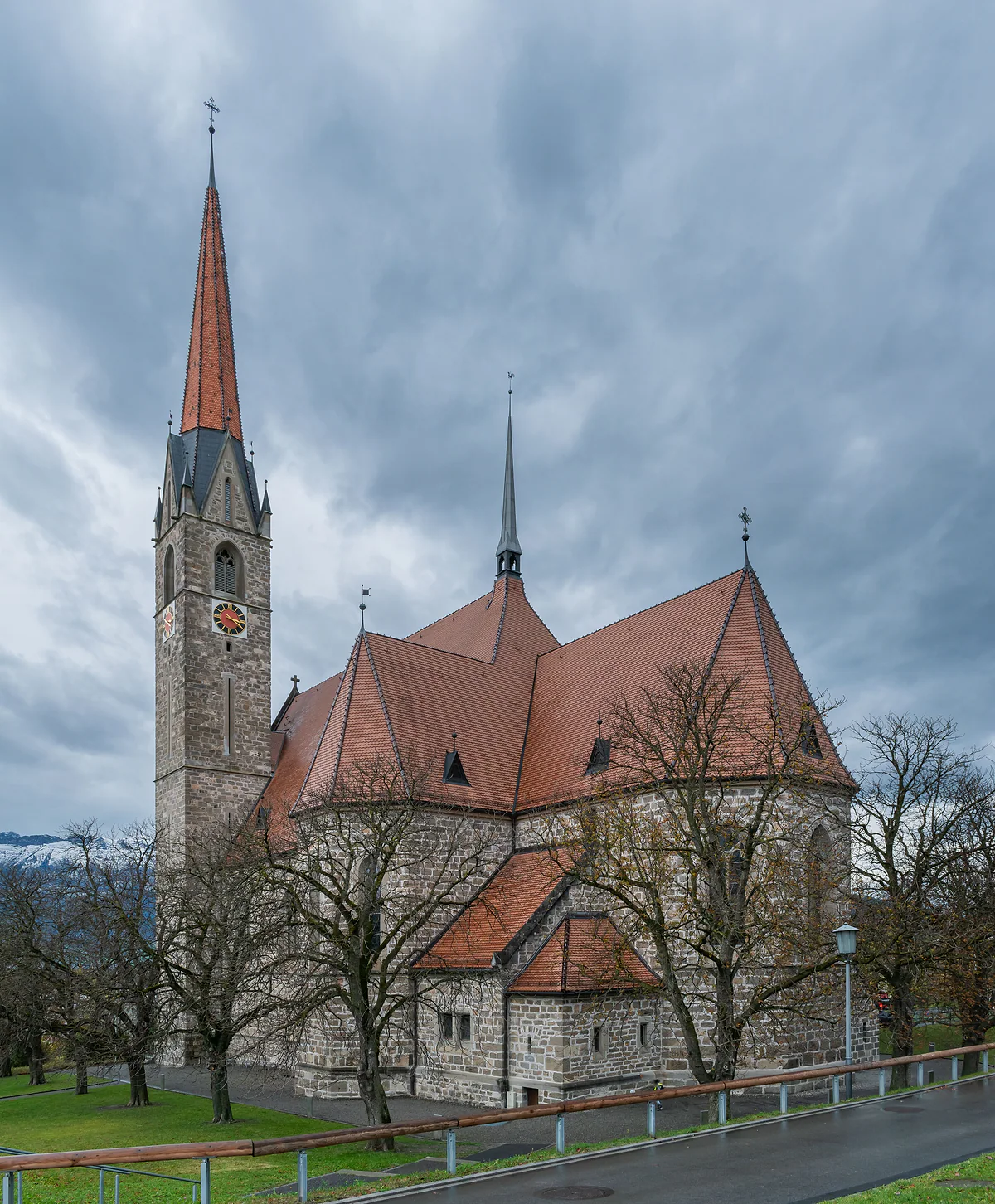
Ivoclar, in Schaan since 1933
Liechtenstein and false teeth, separating fact from legend
Liechtenstein's reputation as the land of false teeth comes from Ivoclar, a firm that moved to Schaan in 1933 as a porcelain teeth factory, lured by cheap land and five years without tax. Today it's a dental group with around 3,700 staff and sales in about 130 countries. What I couldn't verify is the claim that the country is the world's biggest exporter of dentures.
In 30 seconds
Full read: 3 min
- The reputation comes from Ivoclar, which moved to Schaan in 1933 as a porcelain teeth factory.
- The government lured it with cheap land and five tax-free years.
- Today it's a dental group with about 3,700 staff, 56 subsidiaries and sales in around 130 countries.
- The claim that Liechtenstein is the world's top exporter of false teeth is unproven.
Don't come looking for a false-teeth factory tour, because I haven't found any open to the public. Take the story home instead, which is a good one, and use it to see Schaan differently. That industrial town is the country's economic engine.

Before you go
What I would keep in mind
-
01 My tip
Five tax-free years to land a factory
In the depths of the 1930s slump, the government offered the Ramco teeth factory cheap land in Schaan and five years without tax. That's how the future Ivoclar arrived in 1933.
Schaan, Liechtenstein's biggest town -
02 My tip
Dental products, a key industry
The Office of Statistics lists dental products among the country's main industrial branches, alongside machinery, equipment and vehicles.
why Liechtenstein is so rich -
03 Watch out
The claim everyone repeats and no one proves
That Liechtenstein is the world's largest exporter of false teeth gets repeated endlessly, but it isn't in the official statistics or the Historisches Lexikon. Don't take it as fact.
Liechtenstein facts
What I would book
Among the Liechtenstein facts doing the rounds online, one always grabs attention, that it’s the land of false teeth. There’s something real in it and a fair bit of embroidery. The real part is a Schaan company with almost a century of history. The embroidery is the line about it being the world’s biggest exporter, which I haven’t been able to confirm in any reliable source.
A teeth factory that came for the tax breaks
The story starts in Zurich in 1923, with the ‘Zahnfabrik Ramsperger & Co. AG’. In 1933 it moved to Schaan under the name Zahnfabrik Ramco AG. The Historisches Lexikon is quite plain about why. In the middle of the world economic crisis, Liechtenstein’s government wanted new businesses and offered the firm cheap land on the site it still occupies, plus five years without paying tax.
At the time it was, in the Lexikon’s words, a small works making porcelain teeth. In 1937 it employed 102 people, 93 of them women, which tells you a lot about what it meant for families in what was then a farming village. In 1951 it became Ivoclar AG, in 1956 Vivadent was founded, and in 2001 the two merged. The company kept growing at home for decades. It had 223 staff in Liechtenstein alone in 1957, 524 in 1970, 685 in 1990 and 716 in 2008, when the whole group counted 2,258 people and turned over CHF 631 million. The Lexikon dates those figures to 2011, so I read them as history rather than the present. To place the town, see my guide to Schaan, the country’s most populous municipality.
From porcelain teeth to a dental group
Bit by bit the company stopped being just a teeth factory. The Lexikon lists three lines, namely prosthetics such as artificial teeth, tooth-coloured filling materials, and prevention products such as caries-risk tests and fissure sealants. It grew at home, with plants at Triesenberg and Schellenberg from 1967, and abroad, with its own factories from 1954 and acquisitions such as a dental alloy maker in Buffalo in 1986.
Today Ivoclar describes itself as a family business headquartered in Liechtenstein with more than a hundred years of history. It employs around 3,700 people, has 56 subsidiaries and branches, manufactures in Liechtenstein, Austria, Italy, the United States and the Philippines, and ships to about 130 countries. Research and training are concentrated in Schaan, where a centre opened in 2000 trains thousands of dentists and technicians a year.
Is it the world’s biggest exporter of false teeth?
This is where I have to be careful. The claim turns up on plenty of fact lists, but I haven’t found it in Liechtenstein’s official statistics, in the Historisches Lexikon or on Ivoclar’s own website. So I’m not treating it as true, and I’d suggest you don’t repeat it as fact either. I’d rather lose a catchy anecdote than tell you something I can’t stand behind.
What the Office of Statistics does say is that dental products are one of the important branches of the country’s industry, alongside machinery, equipment, vehicles and food. And that industry provides 32% of all jobs, which is extraordinary in Europe. Where all that industrial weight comes from is analysed in why Liechtenstein is so rich.
What it says about the country
The Ivoclar story interests me more than the anecdote, because it shows how Liechtenstein got rich. A small, poor country goes looking for industry in the 1930s with tax incentives and ends up with two global companies in Schaan. It wasn’t a one-off. The Historisches Lexikon describes how in the 1920s the government also courted foreign capital with low taxes, a liberal company law of 1926 and a trust law of 1928, the roots of today’s financial sector. Factories and finance grew from the same instinct, a tiny state making itself attractive to outsiders. The other is Hilti, founded in 1941, whose story is on Hilti in Liechtenstein.
For visitors there’s no teeth factory to tour, or at least none I’ve found open to the public. What you can do is pass through Schaan knowing that this town, which most visitors only pass through, is where much of the country’s economy is decided. And if you like this kind of thing, I’ve got a whole sourced list of Liechtenstein facts.
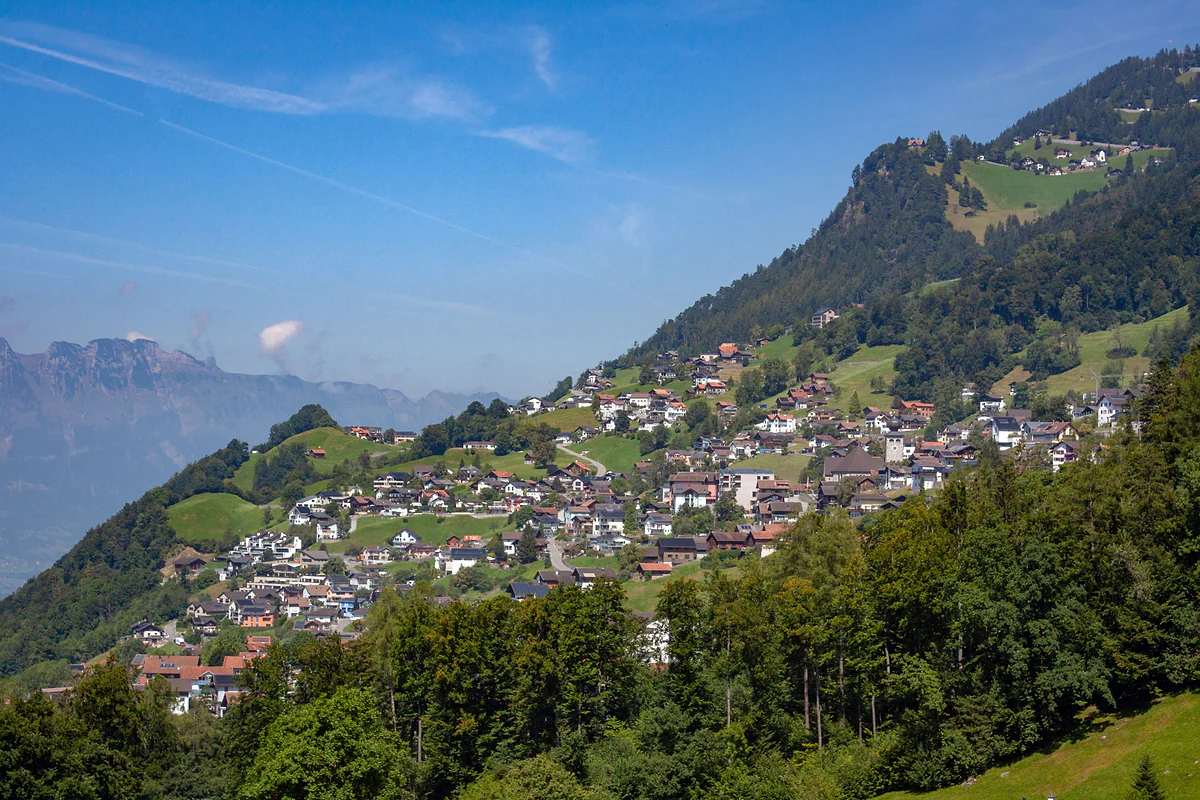
The houses of Triesenberg scattered across the green hillside above the Rhine valley, under a blue sky.
From Ramco to Ivoclar
| Year | What happened |
|---|---|
| 1923 | The 'Zahnfabrik Ramsperger & Co. AG' is founded in Zurich |
| 1933 | It moves to Schaan as the 'Zahnfabrik Ramco AG' |
| 1937 | It employs 102 people, 93 of them women |
| 1951 | Renamed Ivoclar AG |
| 1956 | Vivadent is founded |
| 1967 | New plants at Triesenberg and Schellenberg |
| 2000 | Training centre for dentists and dental technicians opens in Schaan |
| 2001 | Ivoclar and Vivadent merge into one company |
Source: Historisches Lexikon, 'Ivoclar Vivadent AG' (text as of 2011).
Ivoclar today
| Item | Figure |
|---|---|
| Headquarters | Liechtenstein (Schaan) |
| Staff | About 3,700 people |
| Subsidiaries and branches | 56 |
| Factories | Liechtenstein, Austria, Italy, the US and the Philippines |
| Markets | About 130 countries |
Source: ivoclar.com, 'About us'.
Test yourself
True or false?
0/4 Pick before you peek.
-
Ivoclar was founded in Liechtenstein.
See the answer
False. It was founded in Zurich in 1923 as Zahnfabrik Ramsperger and moved to Schaan in 1933 under the name Ramco.
-
The Schaan teeth factory's early workforce was mostly female.
See the answer
True. In 1937 it employed 102 people, 93 of whom were women, according to the Historisches Lexikon.
-
It's proven that Liechtenstein is the world's biggest exporter of false teeth.
See the answer
False. It isn't in the official statistics or the Historisches Lexikon. What's documented is that dental products are an important industrial branch.
-
Ivoclar has factories outside Liechtenstein.
See the answer
True. It manufactures in Liechtenstein, Austria, Italy, the United States and the Philippines, according to the company.
- The teeth factory arrives in Schaan
- 1933
- Women among the 102 staff in 1937
- 93
- Staff worldwide today
- 3,700
- Countries it ships to
- 130
0 of 168 Liechtenstein guides
Your next stamp
- Hilti
- Facts
- Is it a country?
- Stamps
- Banks and tax haven
- History
- Lakes
- Things to do
- One day
- Two days
- Municipalities
- Oberland
- Unterland
- Map
- Vaduz
- Städtle
- Mitteldorf
- Vaduz Castle
- Vaduz Cathedral
- Parliament
- Government Building
- Vaduz Town Hall
- Red House
- Prince's Winery
- Old Rhine Bridge
- Schaan
- Schalun Castle Ruin
- Balzers
- Citytrain
- Triesen
- Triesenberg
- Walser Museum
- Planken
- Gutenberg Castle
- The Rhine
- Schaan Roman fort
- Dux
- St Mamertus chapel
- Lawena valley
- Mäls
- DoMuS
- TAK Theatre
- Castles
- Churches and chapels
- Viewpoints
- Mountains
- Museums
- Kunstmuseum
- Mountain huts
- Hilti Art Foundation
- Pfälzerhütte
- Gafadura hut
- National Museum
- Treasure Chamber
- Postage Stamp Museum
- Kunstraum Engländerbau
- Eschen
- Masescha
- Gaflei
- Nendeln
- Mauren
- Silum
- Rotenboden
- Schaanwald
- Gamprin
- Wangerberg
- Bendern
- Steg
- Ruggell
- Samina valley
- Schellenberg Farmhouse Museum
- Cross-country skiing at Steg
- Küefer-Martis-Huus
- Ruggeller Riet
- Schellenberg
- Hinterschellenberg
- Fürstensteig
- Liechtenstein Trail
- Malbun
- Schellenberg castles
- Eschnerberg
- Malbun in summer
- Population
- Stage 1: Balzers - Triesenberg
- Sareis
- Size
- Stage 2: Triesenberg - Vaduz
- Malbun Peace Chapel
- Political system
- Stage 3: Vaduz - Nendeln
- Swimming pools
- Language
- Skiing in Malbun
- Stage 4: Nendeln - Ruggell
- Dialect
- Malbun ski pass
- Stage 5: Ruggell - Schaanwald
- Hotels in Malbun
- Princess Gina Trail
- Hut-to-hut Route 66
- Hiking
- Getting there
- In winter
- Weather
- Airport
- Best time to visit
- In summer
- Events
- With kids
- Zurich to Liechtenstein
- National day
- Sargans to Vaduz
- Christmas
- Feldkirch to Vaduz
- By train
- Traditions
- Carnival
- Getting around
- Buses
- Funken Sunday
- Alpine cattle drive
- Driving and vignette
- Parking
- Bike hire
- Cycling
- EU and Schengen
- Entry requirements
- Borders and customs
- The prince
- The princely house
- The flag
- The coat of arms
- The national anthem
- Second World War
- No army
- Why so rich?
- Where to stay
- Hotels in Vaduz
- Hostel and camping
- Rent the country?
- Where to eat
- Restaurants in Vaduz
- Swiss invasions
- Bars and nightlife
- Food
- Käsknöpfle
- Wine
- Casinos
- Adventure Pass
- Rainy days
- Guided tours
- Tourist office
- Day trips
- Passport stamp
- Music festivals
- Phone and roaming
- Currency and payments
- Prices and budget
- Tipping
- Plugs and sockets
- Tap water
- Opening hours
- Public holidays
- Safety
- Accessibility
- With a dog
- Shopping and souvenirs
Frequently asked questions
Does Liechtenstein really make false teeth?
Yes. Ivoclar started in Schaan in 1933 as a small porcelain teeth factory, and prosthetics such as artificial teeth are still among its products. Today it's a dental group with factories in five countries.
Is Liechtenstein the world's largest exporter of false teeth?
It's a widely repeated claim, but I haven't found it in the official statistics or the Historisches Lexikon, so I don't treat it as fact. What is documented is that dental products are an important branch of its industry.
Which dental company is based in Liechtenstein?
Ivoclar, headquartered in Schaan. It began in Zurich in 1923 as Ramsperger, moved to Schaan in 1933 as Ramco, took the Ivoclar name in 1951 and now employs around 3,700 people.
Why did a false-teeth factory set up in Liechtenstein?
Because during the 1930s depression the government wanted to attract industry and offered it cheap land in Schaan plus five years without tax, according to the Historisches Lexikon.
Can you tour the Ivoclar factory?
I haven't found any tours open to the public. Its training centre in Schaan, opened in 2000, is for dentists and dental technicians, thousands of whom train there each year.
By
Tourism graduate with a master’s in Tourism Management and Planning from the University of Málaga, who has travelled across Europe. He writes every guide from official sources and his own judgement.
Published on . Facts checked on .
Sources
Photos: Tournasol7 (CC BY 4.0); Lucas Kendall (CC BY-SA 4.0), via Wikimedia Commons.