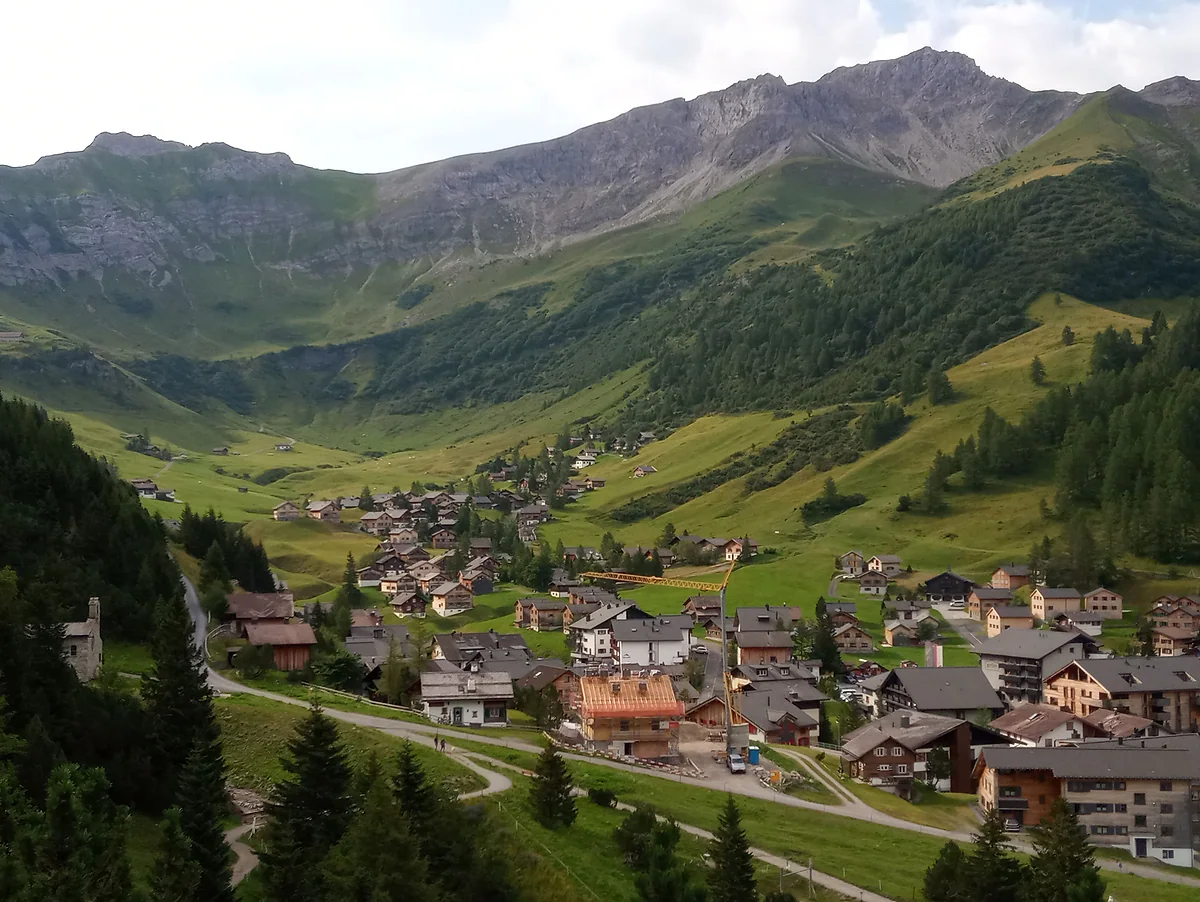
Triesenberg is Liechtenstein's largest municipality at 29.7 km² and its highest, with the parish church at 886 m. It had 2,742 residents on 31 December 2025, spread across hamlets on the slope above Vaduz and Triesen. Walser settlers arrived around 1300, their dialect is still spoken, and it's the gateway to Masescha, Gaflei, Steg and Malbun.
In 30 seconds
Full read: 4 min
Triesenberg is Liechtenstein's largest municipality at 29.7 km², and its highest.
It had 2,742 residents on 31 December 2025, spread over hamlets on the hillside.
Walser settlers arrived around 1300 and their dialect survives; the Walser Museum explains it.
Masescha, Gaflei, Steg and Malbun all belong to Triesenberg.
Route 21 climbs from Vaduz in about 15 minutes and route 22 carries on to Gaflei.
I'd take the 21 up from Vaduz, do the Walser Museum in the morning and hop on the 22 to Gaflei to look down on the capital. If you only have half a day in Liechtenstein's hills, that pairing tells you more about the country than any street in the valley.
Sergio LeponeMy advice
Before you go
What I would keep in mind
01 Most beautiful
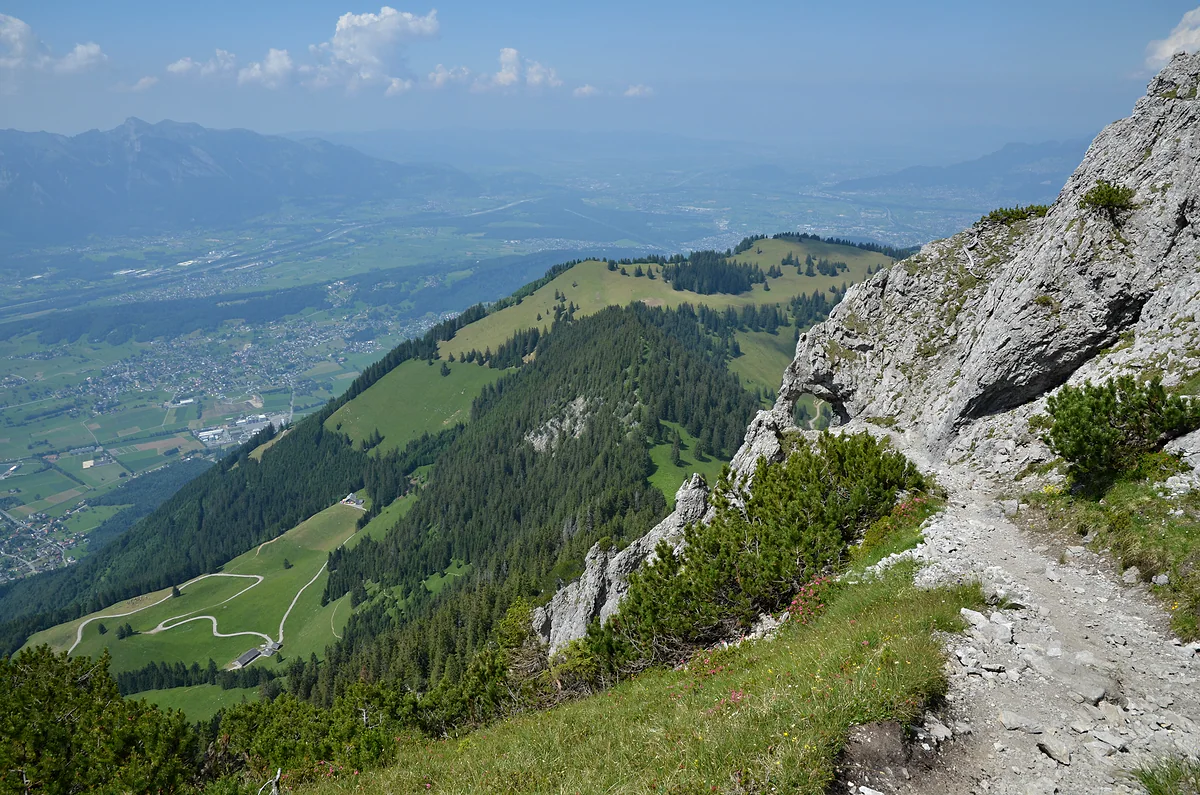
Gaflei, with Vaduz spread out below
Bus 22 climbs from the village centre to Gaflei in 12 or 13 minutes. The viewing tower there, which the tourist board says has a spectacular view over Vaduz, costs nothing.
It opens Monday to Friday from 08:00 to 12:00 and 15:00 to 18:00, and Saturday from 08:00 to 11:00. On Sundays and bank holidays there are only booked group tours, so don't save it for the end of a weekend.
The 21 runs from Vaduz to Triesenberg centre in about 15 minutes and carries on to Steg and Malbun. The 22 links the centre with Masescha and Gaflei. LIEmobil buses take cards or the app, never cash.
The ALL INCLUSIVE Erlebnispass includes the Walser Museum and every bus. The WELCOME pass, free if you stay overnight in the country, gives 20% off the museum.
Berggasthaus Masescha holds 13 Gault-Millau points and is on the tourist board's list of places to try Käsknöpfle. It's where I'd treat myself in Triesenberg.
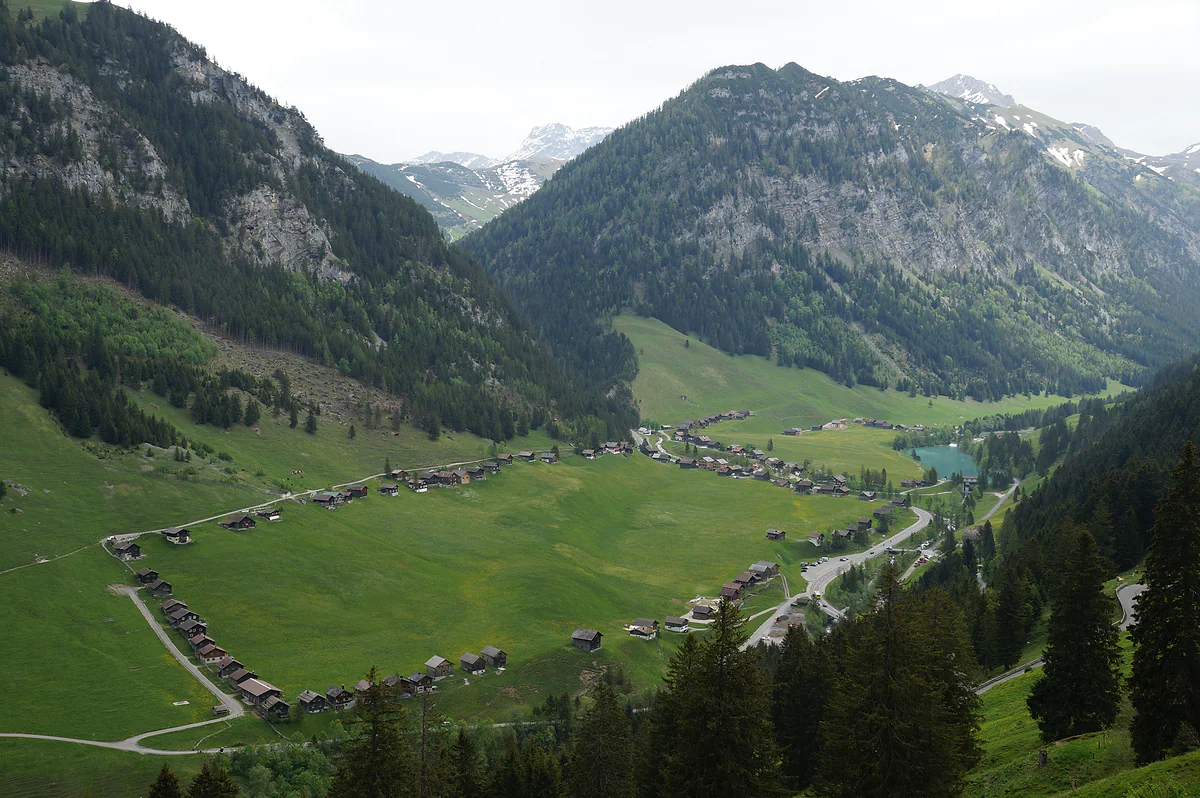
A mountain settlement where the huts enclose the hay meadow like a fence, a layout the Lexikon explains by how the hay was shared out.
8.2 out of 10
5
WalserSagenWeg
A trail of legend and animal figures with play equipment and barbecue spots. Built with children in mind.
7.4 out of 10
6
St Joseph's parish church
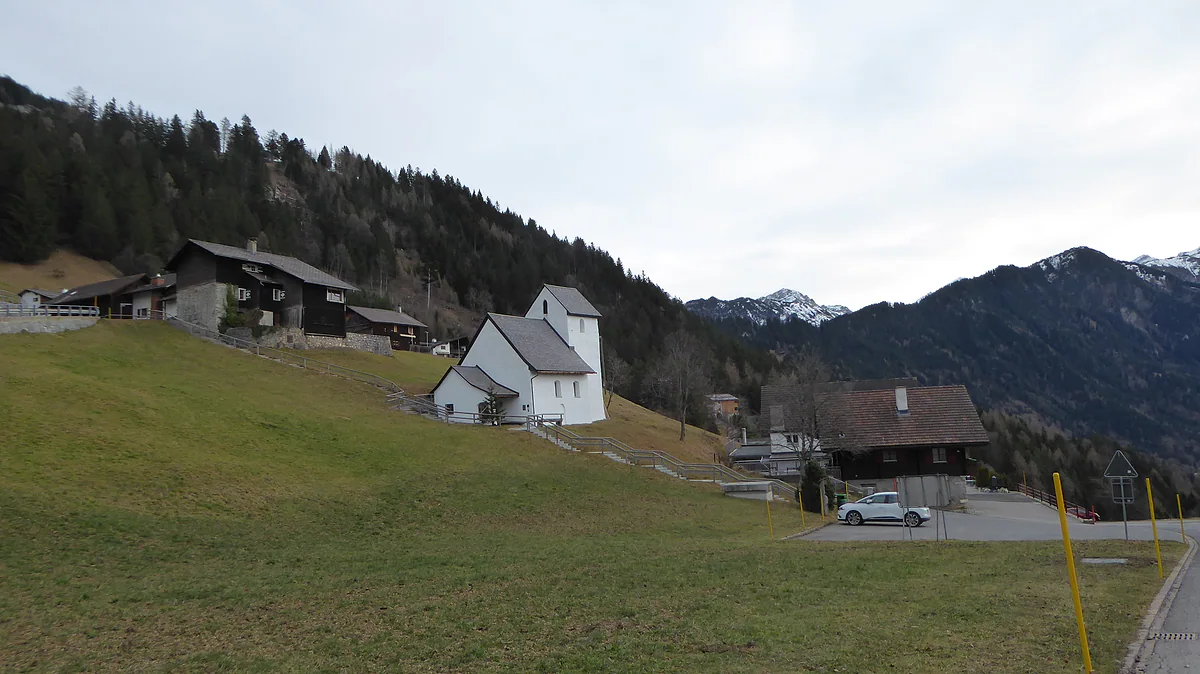
A 1938-1939 church in the centre. Worth a glance on the way to the museum.
6.8 out of 10
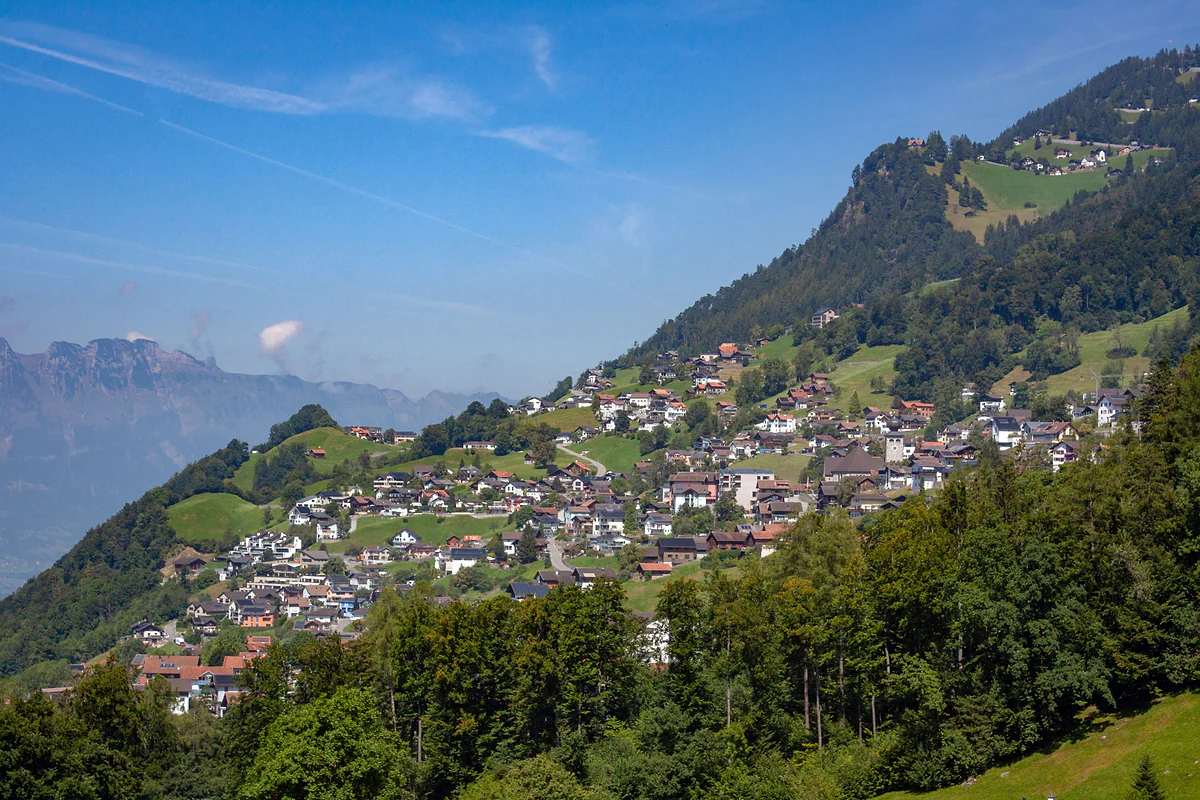
Look up from Vaduz and Triesenberg is that green slope dotted with houses above the castle. For me it’s the municipality that best explains Liechtenstein, because one hillside gives you the Walser, the widest views of the valley and the way into all of the country’s mountains. Here’s how I’d use it.
Big, high and scattered
On 31 December 2025 Triesenberg had 2,742 residents. At 29.7 km² it’s the largest municipality in the country, and with its parish church at 886 m it’s also the highest. The Historisches Lexikon explains that the Rhine-side village sits on a terrace left by a huge landslide between 9,500 and 14,000 years ago, and that the slope is still creeping.
What throws first-time visitors is that there’s no compact village. Triesenberg is a string of hamlets between 700 and 1,250 m, centred on Üenaboda by the church, with Fromahus, Rotenboden (Rotaboda), Steinort (Steinord), Litzi, Wangerberg (Wangerbärg) and, higher still, Masescha around it. Cross the Kulm ridge and you’re in another world, with Steg and Malbun in the Samina valley, both part of the same municipality. The southern end of the slope, Wangerberg, the Triesenberg hamlet above Triesen, went down to Triesen for Mass until 1768.
Who were the Walser, and why do they matter here?
Around 1300, German-speaking settlers arrived from the Swiss Valais. The Lexikon finds them in Triesenberg in a document of 1355, though it reckons they’d been there a good while already. According to the Walser Museum, they were free of marriage restrictions and dues, could leave when they liked and could pass on the land they farmed. Those freedoms were whittled away in the 16th and 17th centuries, but the identity stuck. The village still speaks Walser, an Alpine variety that sounds nothing like the valley’s Alemannic, and I cover it on my page about Liechtenstein’s dialect.
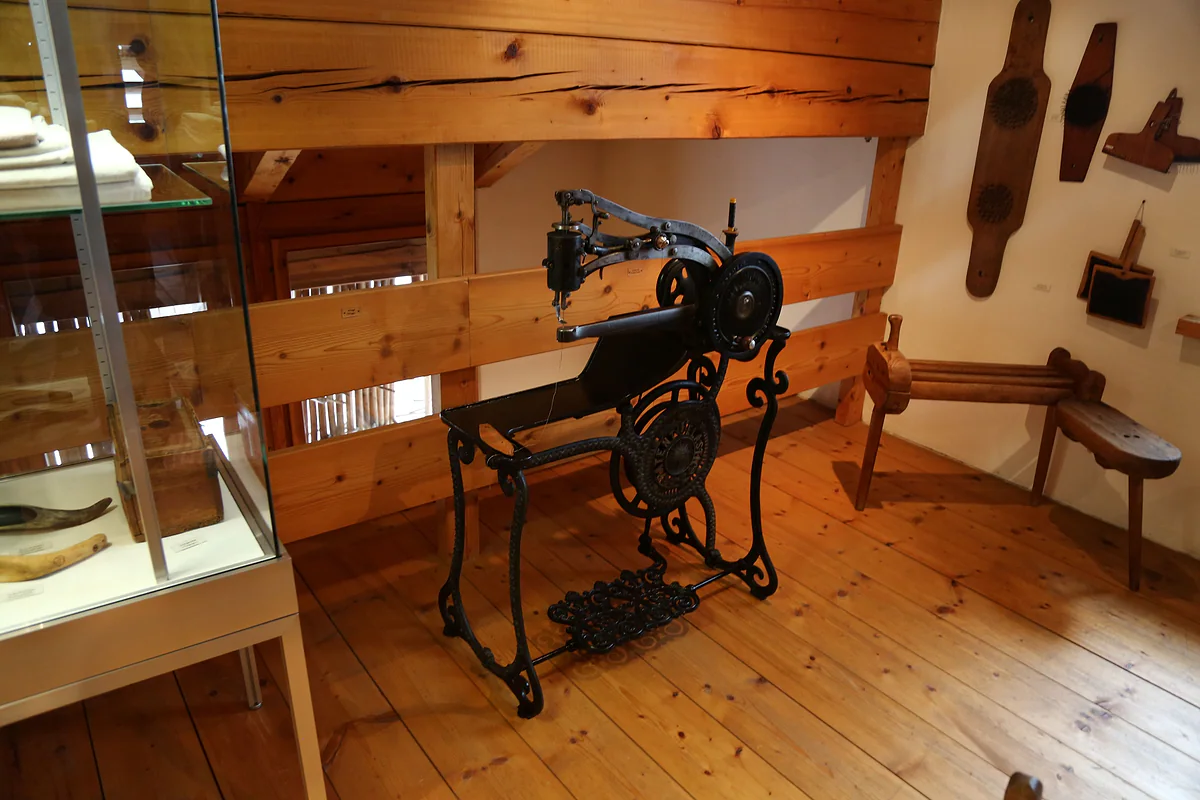
To make sense of it I’d start at the village’s Walser Museum, which opened in 1961 as the country’s first local museum. Entry is CHF 5 and under-15s go free. A guided visit adds the Walserhaus, a log house 200 m away with a soot-black kitchen and an open hearth, and, 5.5 km off by the chapel at Steg, an old summer-pasture hut that was moved and listed in 2009.
A hard-won hillside
Life up here wasn’t easy. The Walser lived off their cattle on a calendar the Lexikon sets out in detail. In late May they moved up to the middle pastures at Silum or Steg, three weeks later to the high alps, then came down in stages until the herd was back in the home barn around Christmas. I tell the story of one of those middle pastures, Silum, the alp above Masescha, which later sheltered Hutterite refugees in the 1930s. Plenty of men had to go abroad every summer to earn money. In 1679 and 1680 the witch trials executed ten people from the village, seven of them women, a shocking toll for a place of its size.
Visitors changed everything. From 1875 spa guesthouses opened at Gaflei, Masescha, Sücka and Silum, and in 1911, the Lexikon says, 13,385 of the 15,159 hotel nights recorded in the whole country were spent in Triesenberg. It’s still near the top. In 2025 the Triesenberg area, counting Malbun and Steg, clocked up 51,991 hotel nights, more than anywhere else, according to the national statistics office.
My day in Triesenberg
I’d spend the morning at the Walser Museum and wander the centre, where St Joseph’s parish church dates from 1938-1939. Then I’d head up to Masescha, the hamlet where the Walser built their first chapel, and on to Gaflei, whose viewing tower has what the tourist board calls a spectacular view over Vaduz. If you’ve got mountain experience, the Fürstensteig starts at Gaflei, and that’s a different league altogether.
In autumn, keep an eye out for the Triesenberger Wochen. The tourist board says they run every year from mid-October to mid-November, with Walser menus in the village restaurants such as Chääs-Chnöpfli or venison stew with spätzli. For lunch with a view, Berggasthaus Masescha has 13 Gault-Millau points.
Getting up there, and where to stay
LIEmobil route 21 leaves Vaduz, Post and reaches Triesenberg centre in about 15 minutes. On weekday mornings there’s one every half hour, and once an hour it carries on to Steg and Malbun. From the centre, route 22 climbs to Masescha and Gaflei in 12 or 13 minutes. Drivers have two roads, the old Schlossstrasse past Vaduz Castle and the one that climbs from Triesen.
Where to sleep depends on the plan. In summer 2025 an average of eight hotels were open in the Triesenberg area, the statistics office says, most of them geared to the mountains; if you’d rather have more choice for dinner, Vaduz is a quarter of an hour away. The Liechtenstein Trail comes through too, because stage 1 finishes in the Walser village and stage 2 starts here for the descent to the capital.
A room in the Walser Museum in Triesenberg, with wooden floor and walls, an old sewing machine and hanging tools.
Triesenberg in numbers
Fact
Figure
Source
Residents on 31 Dec 2025
2,742
Amt für Statistik
Area
29.7 km²
Liechtenstein in Zahlen 2026
Reference altitude
886 m
Liechtenstein in Zahlen 2026
Density (2024)
91 per km²
Liechtenstein in Zahlen 2026
Hotel nights 2025, incl. Malbun and Steg
51,991
Amt für Statistik, Tourismus 2025
The Triesenberg area, including Malbun and Steg, logged more hotel nights than any other part of the country in 2025.
Walser Museum (Schlossstrasse 5)
What
Detail
Monday to Friday
08:00-12:00 and 15:00-18:00
Saturday
08:00-11:00
Sundays and bank holidays
Booked groups only
Adults
CHF 5
Children up to 15
Free
Hours and prices from the Walser Museum website, checked on 27 September 2026.
Test yourself
True or false?
0/4Pick before you peek.
Triesenberg is the most populous municipality in Liechtenstein.
See the answer
False. It's the largest by area, 29.7 km², but had 2,742 residents at the end of 2025. The most populous is Schaan, with 6,294.
Malbun and Steg belong to the municipality of Triesenberg.
See the answer
True. They lie beyond the Kulm ridge in the Samina valley, but the Historisches Lexikon places both inside Triesenberg's territory.
Triesenberg's Walser came from the Valais in Switzerland.
See the answer
True. They were German-speaking settlers from the Valais. The Lexikon dates their arrival to around 1300 and records them in Triesenberg in 1355.
In 1911 most of Liechtenstein's hotel nights were spent in Triesenberg.
See the answer
True. According to the Historisches Lexikon, 13,385 of the country's 15,159 overnight stays were in Triesenberg, mostly in its mountain spa hotels.
The largest municipality in the country
29.7 km²
Altitude of the parish church
886 m
Residents on 31 December 2025
2,742
First written record of the Walser in Triesenberg
1355
Map
Where Triesenberg is
The dashed line is the border: Switzerland across the Rhine, Austria to the north and east. Every number opens its guide.
What is there to do in Triesenberg, Liechtenstein?
The Walser Museum and the old Walserhaus, St Theodul's chapel at Masescha, the viewing tower at Gaflei and, over the Kulm ridge, the ring of huts at Steg and the resort of Malbun. In autumn, the Triesenberger Wochen bring Walser menus to local restaurants.
How do I get from Vaduz to Triesenberg?
Take LIEmobil route 21 from Vaduz, Post; it reaches Triesenberg centre in about 15 minutes and runs every half hour on weekday mornings. Drivers can go up the Schlossstrasse past the castle or via Triesen.
What language do they speak in Triesenberg?
German, but the local speech is Walser, an Alpine variety the Walser Museum places in the highest Alemannic group, the one still spoken in the Upper Valais. It sounds quite different from the valley dialect.
Is Malbun part of Triesenberg?
Yes. Malbun and Steg sit on the far side of the Kulm ridge in the Samina valley, but they belong to Triesenberg, as do Masescha, Silum and Rotenboden.
How many people live in Triesenberg?
2,742 residents on 31 December 2025, according to the national statistics office. It's the largest municipality at 29.7 km² but one of the least dense, with 91 people per km² in 2024.
Is it worth staying in Triesenberg?
If your trip is about the mountains, yes, because Gaflei, Steg and Malbun are on the doorstep. If you want more choice for dinner, I'd stay in Vaduz, about 15 minutes away by bus.
Tourism graduate with a master’s in Tourism Management and Planning from the University of Málaga, who has travelled across Europe. He writes every guide from official sources and his own judgement.

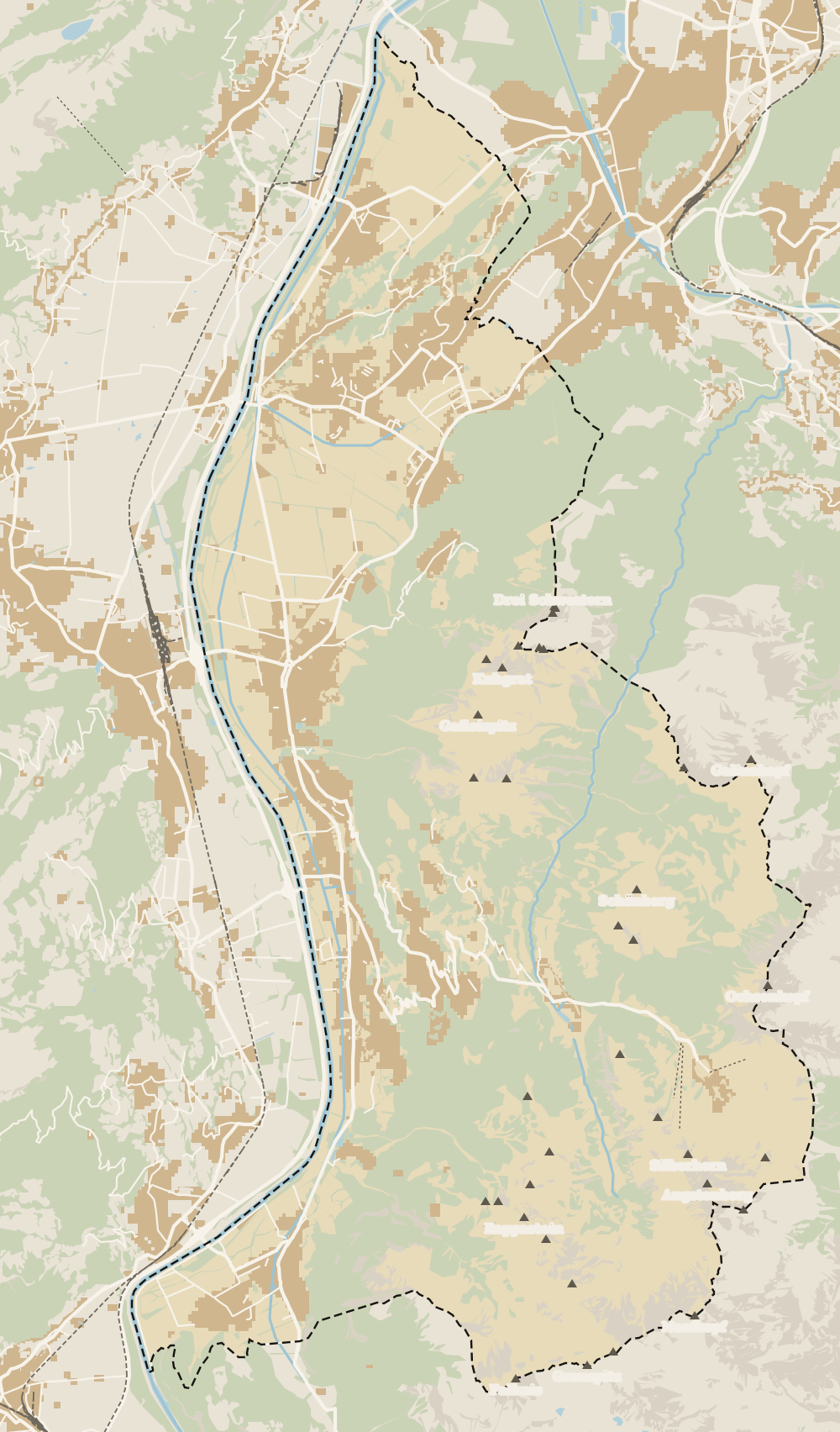 1Triesenberg 2Walser Museum 3Masescha 4Gaflei 5Silum 6Rotenboden 7Wangerberg 8Steg 9Samina valley 10Malbun