Eight centuries on one rock
History of Monaco, from a Genoese rock to Albert II's country
The history of Monaco begins in 1215, when the Genoese build a fortress on the Rock, and takes its big turn on 8 January 1297, when François Grimaldi seizes it disguised as a friar. Then come the Spanish and French protectorates, the loss of 90% of the territory in 1861, the founding of Monte-Carlo in 1866 and the modern country of Rainier III and Albert II.
In 30 seconds
Full read: 5 min
- Monaco began as a Genoese fortress, whose first stone was laid on 10 June 1215.
- On 8 January 1297 François Grimaldi took the fortress disguised as a friar, and his family still reigns.
- It passed through Spanish (1524-1641), French (1641-1793) and Sardinian (from 1815) protection.
- In 1861 it lost Menton and Roquebrune, 90% of the country, and in 1866 it named Monte-Carlo to pull through.
- Rainier III enlarged it by reclaiming land from the sea, and Albert II has reigned since 2005.
If I had to keep one date, it would be 1861. Monaco lost Menton and Roquebrune, was left with a tenth of its territory and, instead of sinking, invented Monte-Carlo. Nearly everything you will see, from the casino to the districts reclaimed from the sea, grows out of that response.

Before you go
What I would keep in mind
-
01 Most beautiful
The statue of the friar who started it all
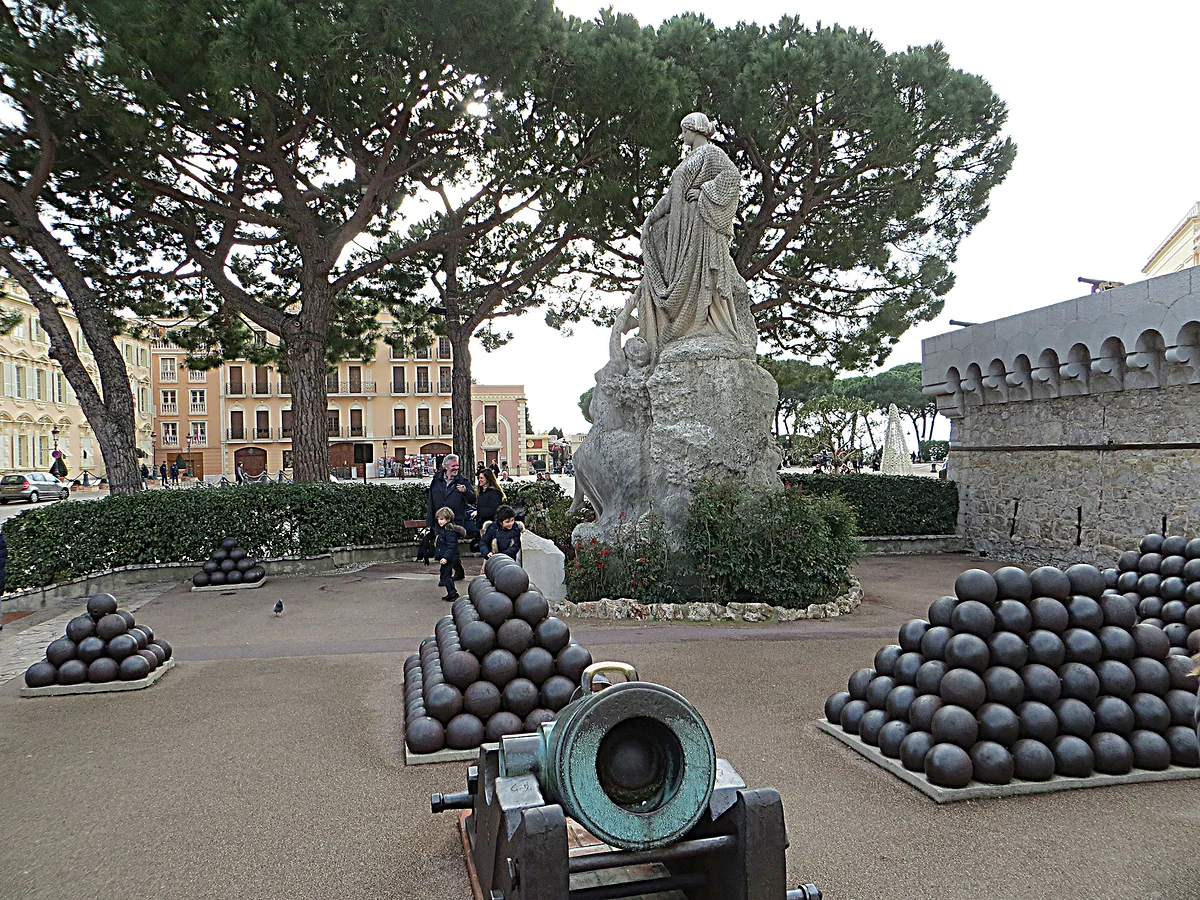
In Palace Square stands the statue of François Grimaldi, who took the fortress in 1297 dressed as a friar. For me it is the best spot to understand where the family came from, and it costs nothing.
Prince's Palace of Monaco -
02 My tip
The Palace still follows the outline of 1215
The Genoese built four square towers joined by a curtain wall about 8 metres high, and that almost triangular footprint still marks the edge of the Palace. Look at it from the square before you go in.
Monaco-Ville, the old town on the Rock -
03 To save money
The Rock's story, free and closed on Mondays
The Museum of Old Monaco, on the Rock, covers the old town's streets, language and traditions, and entry is free. It opens every day except Monday, from 10:30 to 17:00.
museums in Monaco -
04 Worth the splurge
Stepping into the rooms where history was made
The Palace State Apartments, with the Hercules Gallery and the Throne Room, open from 30 March to 15 October 2026 and cost €13. I would pay it if this page has whetted your appetite.
Prince's Palace of Monaco
What I would book
- Tours and ticketsGetYourGuide A guided walk round the Rock If history is what draws you, a guide puts a name to every corner of Monaco-Ville in a couple of hours. I would do it on the first day.
- Places to stayBooking.com Sleeping at the foot of the Rock From La Condamine you walk up to the Palace in about ten minutes by the Rampe Major, and can be at the top before the groups.
Monaco’s history makes more sense as a string of gambles than as a list of rulers. An exiled family grabs a rock by surprise, survives for centuries by switching protectors, loses almost the whole country in a treaty and reinvents itself with a casino. I tell it in order, with the dates given by the Palace, the government and the statistics institute, and the full timeline sits in the table. If you are planning to visit, the starting point is my guide to Monaco.
A rock that Genoa wanted to fortify
Monaco starts out as Genoa’s concern. In 1162 Frederick Barbarossa recognises Genoese rule over the Ligurian coast as far as Monaco, and in 1191 the Emperor grants them the Rock, its harbour and the surrounding land, with permission to fortify it. They buy the ground from the consuls of Peille and the abbey of Saint-Pons and, on 10 June 1215, lay the first stone.
That fortress had four square towers joined by a curtain wall about eight metres high, and its almost triangular outline still traces the edge of the Prince’s Palace today. It is my favourite fact from this century, because when you look at the Palace from the square you are looking, in plan, at the Genoese work of 1215.
How did the Grimaldis end up with Monaco?
In the dead of night on 8 January 1297, François Grimaldi, known as Malizia, from a Guelph family thrown out of Genoa, turns up at the fortress dressed as a Franciscan. His weapons are hidden, and he takes the place from the Ghibellines by cunning. The Grimaldis lost it several times in the years that followed and only held it for good some thirty years later. The first Lord of Monaco was Charles I, in the first half of the fourteenth century.
From there the family adds piece after piece. Charles I also takes Menton and Roquebrune, and in 1458 Lambert Grimaldi foils a conspiracy, secures the loyalty of all three towns and leaves the house its motto, Deo Juvante. In 1997 Monaco celebrated seven hundred years of the dynasty. Who the Grimaldis are today I cover in the Grimaldi family.
Three centuries of changing protectors
What strikes me as cleverest in this story is how such a small lordship survived between great powers. It held out against a Genoese siege in 1506 and 1507, and in 1512 got Louis XII of France to recognise its sovereignty. In 1523 Lucien Grimaldi is murdered, and his brother Augustin, disillusioned with France, turns to Charles V. The Treaty of Burgos is signed on 7 June 1524 and opens more than a century of Spanish protection. The Emperor himself stays in Monaco in August 1529, on his way to his coronation in Bologna.
With the Spanish inside comes the princely title. In 1612 Honoré II adopts it to assert his authority over a Spain that had run Monaco while he was a minor. And in 1641 he changes sides. Under the Treaty of Péronne, signed on 14 September, Monaco passes to French protection, with a French garrison under the prince’s authority, and Honoré II receives the Duchy of Valentinois and the Marquisate of Les Baux, among other titles. The title of Marquis of Les Baux is held today by the hereditary prince, Jacques.
Revolution, Sardinia and the treaty that changed everything
The French Revolution ends the lordship for the first time. French troops cross the border in 1792, and on 14 February 1793 Monaco is joined to France as an ordinary municipality of the Alpes-Maritimes. The Palace is looted, its collections sold off, and the building becomes a military hospital and later a poorhouse. The Treaty of Paris of 1814 restores the Grimaldis’ rights, and in 1815 protection passes to the King of Piedmont-Sardinia, which in practice clips the prince’s wings considerably.
Then comes the hardest blow. In 1848 Menton and Roquebrune declare themselves free towns and Sardinia occupies them. When the County of Nice passes to France in 1860, Charles III negotiates and, on 2 February 1861, gives up both towns in exchange for four million francs and the promise of a road and a railway. Monaco loses 90% of its territory and is left with 145 hectares. In return, according to IMSEE, it regains full and lasting independence. Why that makes it a full country is the subject of is Monaco a country?.
From ruin to roulette, the century that invented Monte-Carlo
With the country shrunk to a rock and a strip of coast, Charles III bet on sea bathing and gambling. The concession was granted in 1856, but the business only took off in 1863, when François Blanc took it on, fresh from his success with the casino at Homburg and later nicknamed the wizard of Monte-Carlo. The terms obliged his company to provide public services, from water and gas to roads and transport links with Nice and Menton. The promised railway arrived in 1868, when the Paris-Lyon-Méditerranée line reached Monaco, as the Palace itself recalls. The Hôtel de Paris had already opened in 1864, and in 1866 the new town on the Spélugues plateau took the prince’s name, Monte-Carlo. Today it is the district of the Monte-Carlo Casino.
The rest of the century keeps up that momentum. The customs agreement with France follows in 1865, the flag in 1881, the first stamps in 1885 and a diocese of its own in 1887. Albert I, who led 28 oceanographic expeditions, founds the Oceanographic Museum in 1910 and grants the first Constitution on 5 January 1911. His son Louis II reigns from 1922, sees the first Grand Prix on 14 April 1929 and spends the Second World War with the country occupied, first by Italy from November 1942 and then by Germany from September 1943.
Rainier III and Albert II, the country you know
Rainier III comes to the throne on 9 May 1949 and reigns for almost 56 years. He was called the builder prince because he enlarged the territory by a fifth, reclaiming land from the sea at Le Portier, Larvotto and, above all, Fontvieille, between 1966 and 1973. His reign brings the wedding to Grace Kelly in 1956, the current Constitution of 1962, the stand-off with de Gaulle’s government, which went as far as imposing border checks, and UN membership on 28 May 1993.
Albert II succeeds him on 6 April 2005. On his watch Monaco has signed its monetary agreement with the EU, seen its heirs born in 2014 and unveiled a whole district on the sea, Mareterra, on 4 December 2024. On 28 March 2026 it also welcomed Leo XIV, the first papal visit of modern times. The previous pope received on the Rock had been Paul III, in 1538.
Monaco timeline
| Date | What happened |
|---|---|
| 1191 | The Emperor grants Genoa the Rock, its harbour and the surrounding land |
| 10 June 1215 | The Genoese lay the first stone of the fortress |
| 8 January 1297 | François Grimaldi, disguised as a Franciscan, takes the fortress |
| 14th century | Charles I, first Lord of Monaco |
| 1458 | Lambert Grimaldi foils a conspiracy; his motto is Deo Juvante |
| 1512 | Louis XII recognises Monaco's sovereignty |
| 7 June 1524 | Treaty of Burgos, opening the Spanish protectorate |
| 1612 | Honoré II takes the title of prince |
| 14 September 1641 | Treaty of Péronne, placing Monaco under French protection |
| 14 February 1793 | Monaco joins revolutionary France as an ordinary municipality |
| 30 May 1814 | The Treaty of Paris restores the Grimaldis' rights |
| 1815 | Protectorate of the Kingdom of Piedmont-Sardinia |
| 2 February 1861 | Charles III gives up Menton and Roquebrune for 4 million francs |
| 1863 | François Blanc takes over gaming and sea bathing |
| 1866 | The new town on the Spélugues is named Monte-Carlo |
| 5 January 1911 | First Constitution, under Albert I |
| 14 April 1929 | First Monaco Grand Prix |
| 9 May 1949 | Rainier III comes to the throne |
| 17 December 1962 | Current Constitution |
| 1966-1973 | Fontvieille reclaimed from the sea |
| 28 May 1993 | Monaco joins the United Nations |
| 6 April 2005 | Albert II succeeds his father |
| 4 December 2024 | Mareterra is inaugurated |
Dates from the Palace, the Government of Monaco (gouv.mc) and IMSEE. Official sources disagree on the exact year Charles I became Lord of Monaco (1331 or 1341), hence the 14th century. The Sardinian protectorate lasted until 1860 or 1861, depending on how you count.
Monaco's protectors
| Period | Who | How it began |
|---|---|---|
| 1524-1641 | Spain | Treaty of Burgos with Charles V |
| 1641-1793 | France | Treaty of Péronne with Louis XIII |
| 1793-1814 | Annexed by France | The Revolution overthrows the prince |
| 1815-1860/61 | Piedmont-Sardinia | Second Treaty of Paris |
| From 1861 | Lasting independence | Treaty with France |
Since 2005 the 2002 treaty with France has applied, under which France guarantees Monaco's defence.
Test yourself
True or false?
0/4 Pick before you peek.
-
The Grimaldis took Monaco with an army that besieged the fortress.
See the answer
False. François Grimaldi slipped in at night on 8 January 1297, disguised as a Franciscan friar with his weapons hidden. It was a ruse, not a siege.
-
Monaco was a Spanish protectorate for more than a century.
See the answer
True. The Monegasque government dates Spanish protection from 1524, with the Treaty of Burgos signed with Charles V, to 1641.
-
In 1861 Monaco lost about 90% of its territory.
See the answer
True. Charles III gave up Menton and Roquebrune in exchange for four million francs. The government describes it as the loss of 90% of the territory.
-
The rulers of Monaco have always been called princes.
See the answer
False. The first to take the title was Honoré II, in 1612, to assert himself against Spain. Before that the Grimaldis were Lords of Monaco.
Map
Where History is
The dashed line is the border with France. Every number opens its guide.
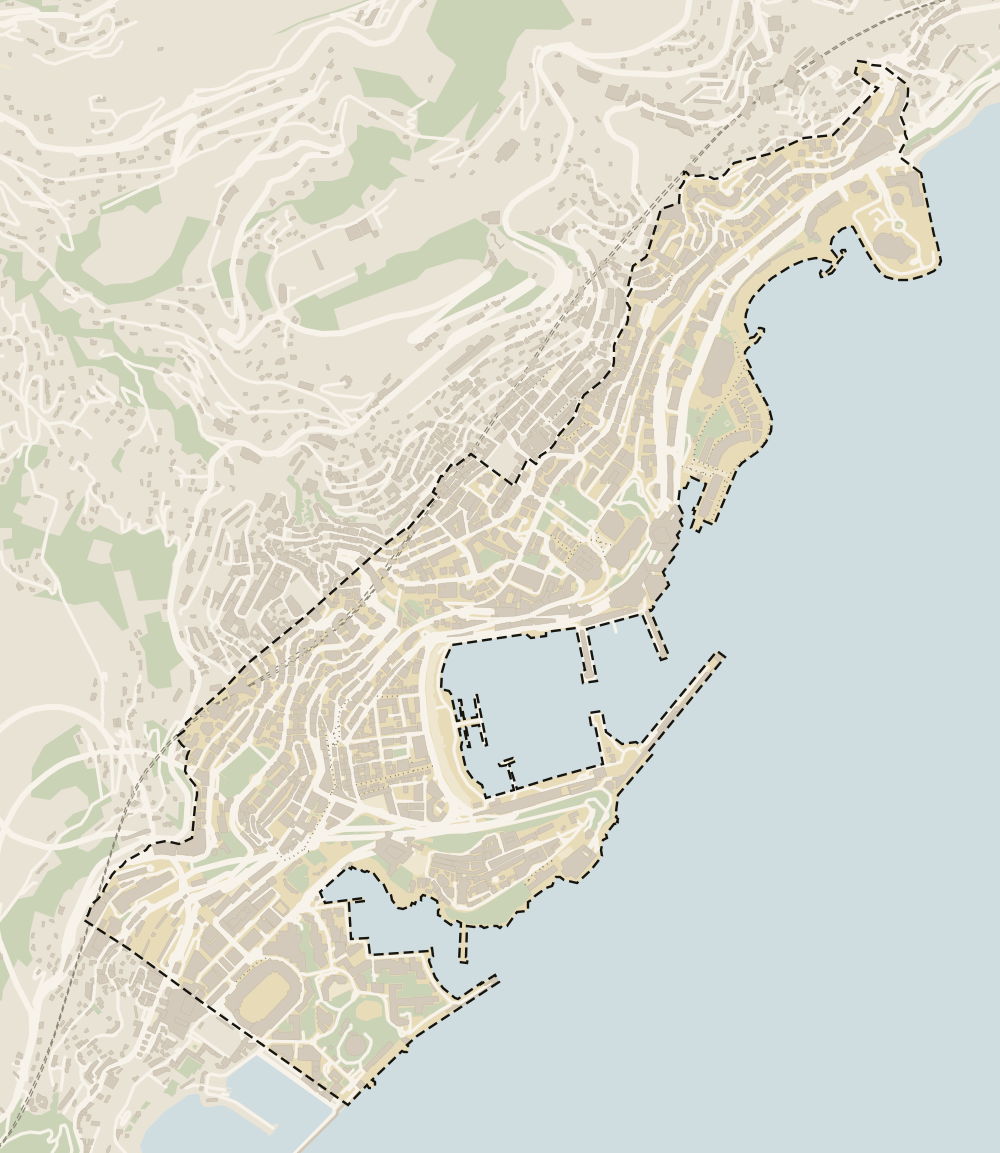 1Monaco-Ville 2Monte Carlo Casino 3Prince's Palace 4Changing of the guard 5Cathedral 6Port Hercule 7Oceanographic Museum 8Museums 9Prince's Car Collection 10Stade Louis II 11Beaches 12Exotic Garden 13Japanese Garden 14Monte-Carlo 15La Condamine 16Fontvieille 17Larvotto 18Monaco circuit 19Moneghetti 20La Rousse-Saint-Roman 21Les Moulins 22Fort Antoine 23Villa Paloma 24Casino Square 25Viewpoints 26Yacht Club de Monaco 27Fontvieille harbour 28Train station 29Helicopter from Nice 30Le Méridien Beach Plaza 31Port Palace 32Hotel Ambassador 33Hotel Miramar 34Hôtel de Paris 35Hôtel Hermitage 36Map 37Café de Paris 38Monte-Carlo Bay 39Fairmont Monte Carlo 40Hôtel Métropole 41Le Louis XV 42Novotel Monte-Carlo 43Buddha-Bar Monte-Carlo 44Columbus Monte-Carlo 45Jimmy'z Monte-Carlo 46Twiga Monte Carlo 47Nikki Beach Monte Carlo 48Sporting Monte-Carlo 49Cipriani Monte Carlo 50Circus Festival 51Maya Bay Monaco 52COYA Monte-Carlo 53Les Ballets de Monte-Carlo 54Monte Carlo Opera 55Beefbar Monaco 56Top Marques 57Diamond League (Herculis) 58Sainte-Dévote church 59Sass Café 60Jazz Festival 61Mareterra 62Monaco beer 63National Day 64Rainier III swimming pool 65Grimaldi Forum 66Saint-Martin Gardens 67Princess Grace Rose Garden 68Princess Antoinette Park 69La Condamine Market 70Museum of Old Monaco 71Chapel of Mercy 72Zoological Garden 73Metropole shopping centre
 Map data © OpenStreetMap contributors (ODbL)
- 1Monaco-VilleThe old quarter, perched on the Rock
- 2Monte Carlo CasinoVisits 10:00 to 13:00, gaming from 14:00
- 3Prince's PalaceOpen inside from 30 March to 15 October 2026
- 4Changing of the guardDaily, five minutes before noon
- 5CathedralFree entry, 08:15 to 18:00
- 6Port Hercule760 berths and cruise ships up to 300 metres
- 7Oceanographic MuseumHanging off the cliff since 1910
- 8MuseumsFrom free to €20.50
- 9Prince's Car CollectionAt Port Hercule since July 2022
- 10Stade Louis IIGuided tours until 30 September
- 11BeachesOne public beach, no smoking and no dogs
- 12Exotic GardenOpen again since 30 March 2026
- 13Japanese GardenFree, and open 365 days a year
- 14Monte-CarloTen stops with scores, four of them free
- 15La CondamineMarket in kiosks until early 2027
- 16FontvieilleGrace's rose garden never closes
- 17LarvottoA beach, a Zen garden and a museum under wraps
- 18Monaco circuitFree and ticketless, it's the town's own streets
- 19Moneghetti11.5 hectares of lifts and locals
- 20La Rousse-Saint-RomanEnd of the line for buses 1 and 4
- 21Les MoulinsA daily market from 07:00
- 22Fort AntoineFree theatre in July, booking required
- 23Villa PalomaFree on Sundays and for under-26s
- 24Casino SquareFree, at any hour
- 25ViewpointsTen views, six of them free
- 26Yacht Club de Monaco2,500 members from 82 nationalities
- 27Fontvieille harbour275 berths below the Rock
- 28Train stationFour exits, three of them with lifts
- 29Helicopter from NiceFrom €195 a seat, about 7 minutes
- 30Le Méridien Beach Plaza398 rooms on Larvotto beach
- 31Port Palace50 rooms, every one facing the harbour
- 32Hotel AmbassadorBreakfast included, the station yards away
- 33Hotel MiramarBreakfast on the roof, above the yachts
- 34Hôtel de ParisOn Casino Square since 1864
- 35Hôtel HermitageAn Eiffel dome over the Winter Garden
- 36Map3,344 metres from end to end
- 37Café de ParisOpen 08:00 to 01:00, every day of the week
- 38Monte-Carlo BayA sandy lagoon and pools at 28°C all year
- 39Fairmont Monte CarloTerraces over the Grand Prix hairpin
- 40Hôtel MétropoleIn the Carré d'Or since 1886
- 41Le Louis XVThree Michelin stars, lunch from €230
- 42Novotel Monte-CarloThree minutes on foot from the trains
- 43Buddha-Bar Monte-CarloMonday to Saturday, 18:00 to 3:00
- 44Columbus Monte-Carlo181 rooms facing the Princess Grace Rose Garden
- 45Jimmy'z Monte-CarloFriday and Saturday, 23:30 to 5:00
- 46Twiga Monte CarloTuesday to Sunday, dinner then club until 5:00
- 47Nikki Beach Monte CarloSummer only, pool open 11:00 to 20:00
- 48Sporting Monte-CarloSummer dinner concerts from €120
- 49Cipriani Monte CarloOpen every day, all year round
- 50Circus Festival22 to 31 January 2027
- 51Maya Bay MonacoEvery day, 12:00 to 23:00 without a break
- 52COYA Monte-CarloOpen until 24 October 2026
- 53Les Ballets de Monte-CarloRomeo and Juliet turns 30
- 54Monte Carlo OperaSalle Garnier seats from €60
- 55Beefbar MonacoOn Quai Jean-Charles Rey since 2005
- 56Top Marques5 to 9 May 2027
- 57Diamond League (Herculis)Part of the Diamond League since 2010
- 58Sainte-Dévote churchDaily Mass at 18:00
- 59Sass CaféEvery night from 20:30
- 60Jazz Festival18 to 29 November 2026
- 61MareterraInaugurated on 4 December 2024
- 62Monaco beerOpen every day from 12:00 to 2:00
- 63National DayThursday 19 November 2026, a public holiday
- 64Rainier III swimming poolSeawater at 27 °C, 2026 season 1 May to 7 October
- 65Grimaldi ForumAround 100 events a year on Avenue Princesse Grace
- 66Saint-Martin GardensFree, and public since 1816
- 67Princess Grace Rose GardenNo hedge and no night-time closing since 2014
- 68Princess Antoinette Park18-hole mini golf for €5, booking only
- 69La Condamine MarketIn kiosks on Place d'Armes until 2027
- 70Museum of Old MonacoFree, Tuesday to Sunday, 10:30 to 17:00
- 71Chapel of MercyHome to a brotherhood founded in 1639
- 72Zoological GardenClosed in 2026 for works
- 73Metropole shopping centreMonday to Saturday, 10:00 to 19:30
0 of 139 Monaco guides
Your next stamp
- Grimaldi family
- One day
- Monaco in films
- Monaco-Ville
- Two days
- Facts
- Traditions
- Things to do
- Monte Carlo Casino
- Prince's Palace
- Changing of the guard
- Cathedral
- Port Hercule
- Oceanographic Museum
- Museums
- Prince's Car Collection
- Stade Louis II
- Beaches
- Exotic Garden
- Japanese Garden
- Monte-Carlo
- La Condamine
- Fontvieille
- Gardens and parks
- Larvotto
- Monaco Grand Prix
- Grand Prix tickets
- Monaco circuit
- Moneghetti
- La Rousse-Saint-Roman
- Monte Carlo Masters
- Events
- Les Moulins
- Best time to visit
- Fort Antoine
- Villa Paloma
- Weather
- With kids
- Casino Square
- Viewpoints
- Sculpture trail
- Yacht Club de Monaco
- Churches
- Fontvieille harbour
- Getting there
- Flights to Monaco
- Nice to Monaco
- Getting around
- Paris to Monaco
- Parking in Monaco
- Phone and roaming
- Public lifts
- Train station
- Helicopter from Nice
- Money
- Nightlife
- Scams and safety
- Shopping
- Accessible travel
- Cruise port
- Tours
- Where to stay
- Cheap hotels
- Where to eat
- Food
- Grand Prix hotels
- Le Méridien Beach Plaza
- Luxury experiences
- Free and cheap
- Port Palace
- Day trips
- Hotel Ambassador
- Hotel Miramar
- Hôtel de Paris
- Is it a country?
- Hôtel Hermitage
- Map
- Café de Paris
- Flag
- Monte-Carlo Bay
- Fairmont Monte Carlo
- Hôtel Métropole
- Grace Kelly
- Le Louis XV
- Novotel Monte-Carlo
- Buddha-Bar Monte-Carlo
- Columbus Monte-Carlo
- Euro coins
- Jimmy'z Monte-Carlo
- Twiga Monte Carlo
- Nikki Beach Monte Carlo
- Sporting Monte-Carlo
- Cipriani Monte Carlo
- Michelin restaurants
- Monte Carlo Rally
- Circus Festival
- Historic Grand Prix
- Maya Bay Monaco
- COYA Monte-Carlo
- Les Ballets de Monte-Carlo
- Monaco Yacht Show
- Monte Carlo Opera
- Beefbar Monaco
- Christmas
- Top Marques
- Diamond League (Herculis)
- Sainte-Dévote church
- Sass Café
- Jazz Festival
- Mareterra
- Monaco beer
- Monaco E-Prix
- National Day
- Yacht and boat charter
- Rainier III swimming pool
- Grimaldi Forum
- Saint-Martin Gardens
- Princess Grace Rose Garden
- Princess Antoinette Park
- La Condamine Market
- Museum of Old Monaco
- Chapel of Mercy
- Language
- Monegasques
- Opening hours and holidays
- Time zone
- Dialling code
- Entry requirements
- Prison
- Tax
- Number plates
- MonaBike, bike hire
- Post office and postcode
- Cannes to Monaco
- Sanremo to Monaco
- Car hire
- Zoological Garden
- Metropole shopping centre
Frequently asked questions
When was Monaco founded?
There is no single date. The Genoese laid the first stone of the fortress on the Rock on 10 June 1215, and the Grimaldis arrived on 8 January 1297. If you mean the independent state as it is today, the key date is the 1861 treaty with France.
How did the Grimaldi family come to rule Monaco?
By a trick. On the night of 8 January 1297, François Grimaldi, from a Guelph family exiled from Genoa, turned up at the fortress dressed as a Franciscan friar with weapons hidden and took it by surprise. The family lost it several times and only held it for good some thirty years later.
Why is Monaco a principality?
Because in 1612 Honoré II took the title of prince to assert his authority over Spain, which had run Monaco while he was a minor. Until then the Grimaldis had been Lords of Monaco. Ever since, the head of state has been a prince.
What happened to Monaco in the Second World War?
Louis II was on the throne. Monaco was occupied by Italy from November 1942 and by Germany from September 1943, when the SS arrived. The official sources I have read go no further, so neither will I.
Why did Monaco lose Menton and Roquebrune?
The two towns declared themselves free in 1848 and were occupied by Sardinia. When the County of Nice passed to France in 1860, Charles III signed them away in 1861 for four million francs and the promise of a road and a railway. Monaco lost 90% of its territory.
When was the Monte-Carlo Casino built?
The gaming concession was granted in 1856 and passed in 1863 to François Blanc, the man who made the business a success. In 1866 the new town took the name Monte-Carlo. I have not found the opening date of the present building in an official source.
By
Tourism graduate with a master’s in Tourism Management and Planning from the University of Málaga, who has travelled across Europe. He writes every guide from official sources and his own judgement.
Published on . Facts checked on .
Sources