From the Neolithic to 2016
Kosovo's history, from Ulpiana to independence, in dates
The history you can actually see in Kosovo runs from the Roman city of Ulpiana through the 14th-century Orthodox monasteries and the Ottoman centuries to the war of 1998-1999, UN Resolution 1244 and the declaration of independence on 17 February 2008. This page sets out those events by date, each with the official source that records it.
On this page every date has a source and no sentence has an adjective. If you're after who was to blame, I'm the wrong guide; if you want to understand what you'll be looking at, read on.

Before you go
What I would keep in mind
-
01 Most beautiful
Rome is on Pristina's doorstep
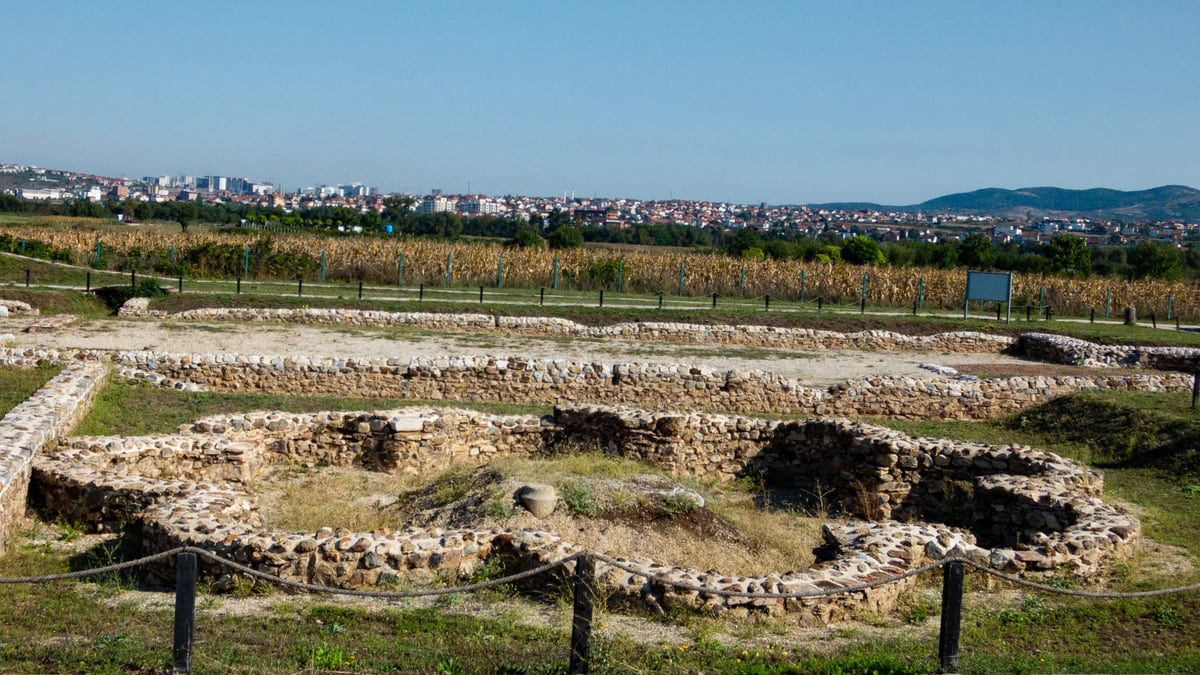
Ulpiana, by Gračanica, was a Roman city from the 2nd century, was renamed Justiniana Secunda in the 6th and was abandoned after an earthquake in 518, according to Pristina municipality's tourist brochure.
Ulpiana -
02 My tip
The 14th century, in four monasteries
Gračanica (1321), Dečani (mid-14th century), the Patriarchate of Peć and Our Lady of Ljeviš make up the UNESCO site, on the List in Danger since 2006.
UNESCO sites in Kosovo -
03 My tip
What 1999 left in the hills
Gov.uk warns that landmines and unexploded weapons from the 1999 conflict remain along the Albanian border, around the Dulje Pass and in the mountains between Kosovo, Albania and Montenegro. Stay on cleared roads and tracks.
is Kosovo safe
In the UK, “Kosovo war” is searched more than anything else about the place, and I understand why. It’s within living memory, and many people’s first image of Kosovo is from the news in 1999. I’ve written this page by one rule. Every event has a date and the institution that records it, and nothing gets an adjective. You won’t find causes, blame or casualty figures, because none of my official sources gives them in a form I can cite, and on this subject I’d rather say less. What you will find is the thread that explains most of what you’ll see.
Before the medieval Balkans
Pristina municipality’s tourist brochure says the area was inhabited in the Neolithic, and that since 1999 the city’s symbol has been the Goddess on the Throne, a terracotta figure about 6,000 years old found nearby. The Roman city of Ulpiana, on the edge of Gračanica, dates from the 2nd century, was renamed Justiniana Secunda under Justinian and was abandoned after an earthquake in 518. Few visitors make it there, and I think it’s the visit that puts everything else in context; see Ulpiana. The Ministry of Culture’s DTK register traces Prizren’s fortress back to the 4th century, in Roman times.
The monastery centuries
The 14th century is the century of the great Orthodox monasteries. The brochure gives 1321 for Gračanica church, built on a 6th-century one. UNESCO dates Dečani to the mid-14th century, as the mausoleum of the Serbian king Stefan Dečanski, and the frescoes of Our Lady of Ljeviš in Prizren to the early 14th. The four form a single World Heritage site, inscribed in 2004 and extended in 2006, on the List in Danger since 2006; details in UNESCO sites in Kosovo.
In 1342, according to the same brochure, the Byzantine emperor John VI Kantakouzenos first mentioned Pristina by name. The Battle of Kosovo was fought in 1389, which the brochure treats as the start of the Ottoman period in the city. Its memorial, Gazimestan, in Obiliq municipality, is one of the places given a Special Protective Zone by Law 03/L-039.
If you are staying the night, see the best hotel deals in Pristina for your dates: the well-placed rooms go fast.
The Ottoman centuries, in stone
The Ottoman layer is what you’ll walk on most. In Pristina, work on the Stone Mosque began in 1392, and the Sultan’s or Imperial Mosque dates from 1461. Ottoman registers of 1477 describe Pristina as 9 neighbourhoods and 351 houses. In Prizren, the DTK dates the Sinan Pasha Mosque to the 17th century and the Gazi Mehmed Pasha hammam to the 16th. By the 19th century Pristina had its first railway station (1874), was capital of the Kosovo Vilayet from 1883 to 1897, and gained the building that now houses the Kosovo Museum, put up in 1885-1886 for the Ottoman garrison.
What happened in 1998 and 1999?
The Spanish foreign ministry’s Serbia profile states that a conflict over Kosovo broke out in 1998 between Serbs and Kosovo Albanians, and that NATO bombing followed in March 1999. The Kumanovo Agreement was signed on 9 June 1999, according to the municipal brochure, and the next day the UN Security Council adopted Resolution 1244, by 14 votes with China abstaining, putting international civil and security presences in Kosovo.
For a visitor today, the most practical trace is the one gov.uk flags. Landmines and unexploded weapons from that conflict remain along the Albanian border, around the Dulje Pass and in the mountains between Kosovo, Albania and Montenegro, so keep to cleared roads and paths there. More in is Kosovo safe.
So you do not lose the morning at the ticket office, browse tickets and tours in Pristina on GetYourGuide.
From 2008 to now
Kosovo declared independence on 17 February 2008 and its Constitution took effect on 15 June. On 22 July 2010 the International Court of Justice found the declaration did not violate international law. The European Commission dates the end of supervised independence to 10 September 2012 and the entry into force of the EU-Kosovo Stabilisation and Association Agreement to 1 April 2016. Who recognises Kosovo, and why it matters at the Serbian border, is in is Kosovo a country.
Where to see it for yourself
To take these dates in order, start in the museum. The Kosovo Museum in central Pristina occupies the Ottoman building of 1885 and has been a museum since 1980. From there, Ulpiana, Gračanica and Gazimestan are on the outskirts, and Prizren and Dečani are a day’s drive.
If you are staying the night, see the best hotel deals in Pristina for your dates: the well-placed rooms go fast.
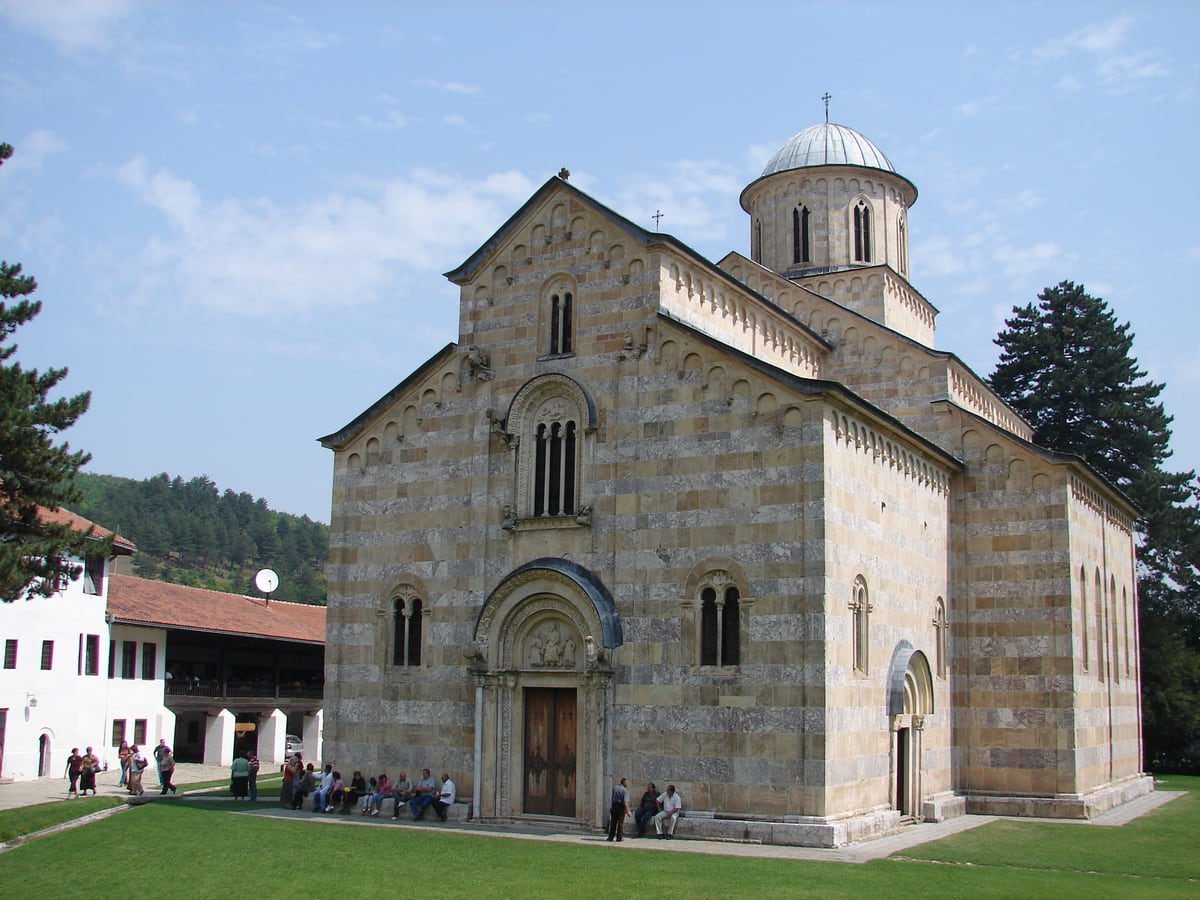
The church of Visoki Dečani Monastery, in pale banded marble, among trees and whitewashed monastery buildings
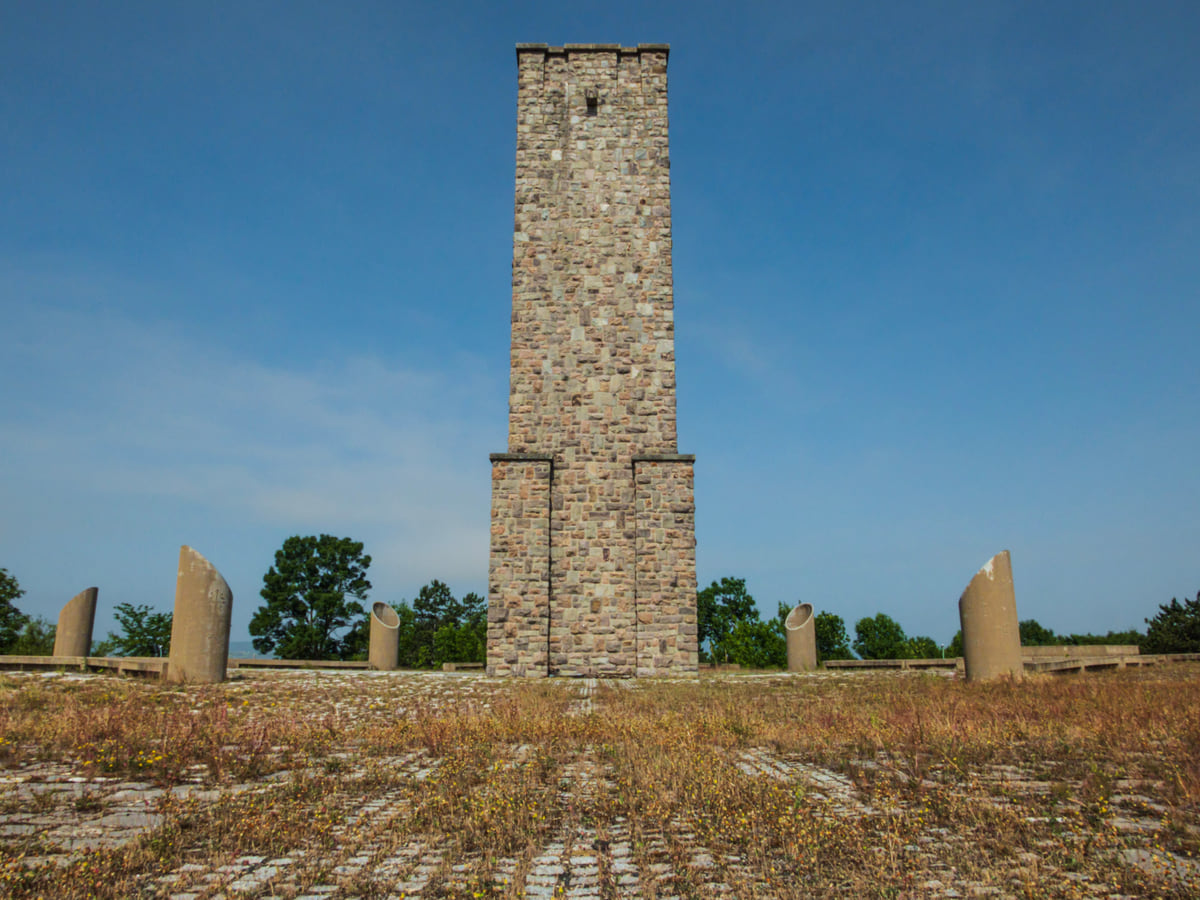
The stone tower of the Gazimestan memorial near Pristina, surrounded by bollards shaped like cannon barrels
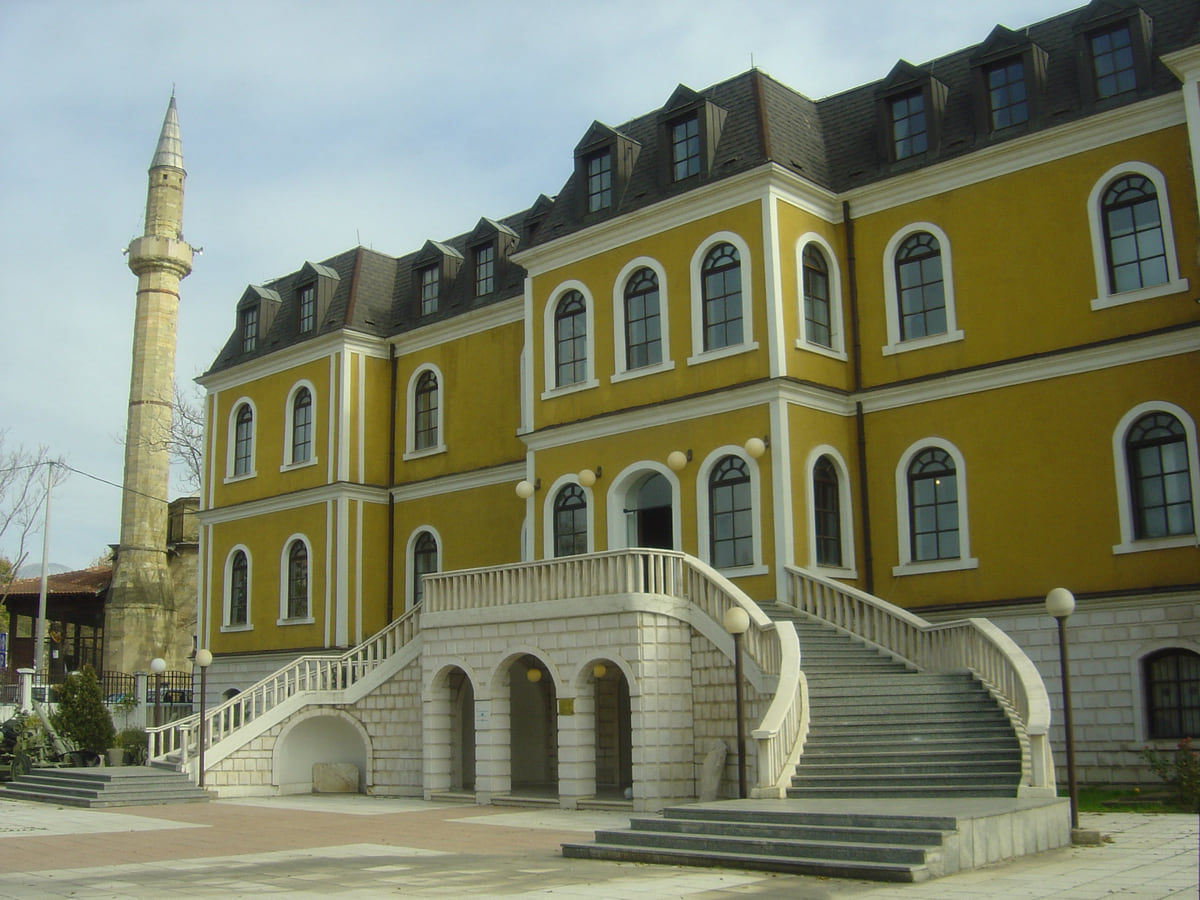
The yellow building of the Kosovo Museum in Pristina, with its white double staircase and a minaret rising behind it
Kosovo by date
| Date | Event | Source |
|---|---|---|
| 2nd century | Roman city of Ulpiana founded | Pristina municipality |
| 518 | Earthquake after which Ulpiana is abandoned | Pristina municipality |
| 1321 | Gračanica church, on the ruins of a 6th-century one | Pristina municipality |
| 1342 | Pristina first mentioned by that name | Pristina municipality |
| 1389 | Battle of Kosovo | Pristina municipality |
| 1461 | Sultan's (Imperial) Mosque, Pristina | Pristina municipality |
| 1477 | Ottoman registers list Pristina with 9 neighbourhoods and 351 houses | Pristina municipality |
| 1998 | Armed conflict begins | Spanish foreign ministry |
| March 1999 | NATO bombing | Spanish foreign ministry |
| 10 Jun 1999 | UN Security Council Resolution 1244 | UN |
| 17 Feb 2008 | Declaration of independence | ICJ |
| 15 Jun 2008 | Constitution takes effect | European Commission |
| 22 Jul 2010 | ICJ advisory opinion | ICJ |
| 10 Sep 2012 | End of supervised independence | European Commission |
Sources: Pristina municipality tourist brochure, Spanish foreign ministry's Serbia profile (April 2026), UN, ICJ and European Commission.
Test yourself
True or false?
0/3 Pick before you peek.
-
Ulpiana was abandoned after an earthquake in 518.
See the answer
True. That's the account in Pristina municipality's brochure, which dates the city from the 2nd to the 7th century.
-
UN Resolution 1244 dates from 2008.
See the answer
False. It was adopted on 10 June 1999, almost nine years before the declaration of independence.
-
Pristina had a railway station before 1900.
See the answer
True. The municipality's brochure says the city got its first station in 1874.
- Earthquake that emptied Ulpiana
- 518
- Gračanica church
- 1321
- Pristina first named
- 1342
- Independence declared
- 2008
0 of 208 Kosovo guides
Your next stamp
- Facts
- Is it a country?
- Flag
- Mosques in Kosovo
- Places to visit
- Gjakova Grand Bazaar
- Gjeravica
- Pristina region
- Visoki Dečani Monastery
- Bjeshkët e Nemuna National Park
- Hadum Mosque
- Mitrovica Region
- Things to do
- Most beautiful places
- Sheh Danjolli tekke
- Prettiest villages
- Tailors' Bridge
- Rugova Canyon
- UNESCO sites
- Gjakova
- Map
- Where is Kosovo
- Regions
- Municipalities
- Cities
- Gračanica Monastery
- Mitrovica
- Patriarchate of Peć
- Pristina
- Prizren
- Rugova via ferrata
- Fushë Kosovë
- Population
- Vushtrri
- Podujeva
- Radavc Cave
- Size
- Bajrakli Mosque
- Devič Monastery
- Gazimestan
- Ibar Bridge
- Istog
- One day in Pristina
- Peja
- Prizren region
- Ulpiana
- Vushtrri Stone Bridge
- Gadime Cave
- Klina
- Name
- Vushtrri Fortress
- Deçan
- Isa Boletini Complex
- Novo Brdo Fortress
- Junik
- Lake Batllava
- Zvečan Fortress
- Banjska Monastery
- Ferizaj region
- Languages
- Rahovec
- Ferizaj
- Religion
- Sokolica Monastery
- Currency
- Lake Gazivoda
- Štrpce
- Brezovica
- EU membership
- Entry requirements
- Skiing in Kosovo
- Kaçanik
- Serbian border
- Gračanica
- Guesthouses in Rugova
- Hotels in Peja
- Kaçanik fortress
- Newborn monument
- North Mitrovica
- One day in Prizren
- Peja bazaar
- Peja region
- Public holidays
- Velika Hoča
- Gjakova region
- Hani i Elezit
- Hotels in Gjakova
- National Library
- Obiliq
- Zočište Monastery
- Drenas
- Mother Teresa Cathedral
- Shtime
- Skënderaj
- Lipjan
- Mother Teresa Boulevard
- Zvečan
- Kosovo Museum
- Leposavić
- Novo Brdo
- Emin Gjiku Ethnological Museum
- Janjevo
- Zubin Potok
- Imperial Mosque
- Pristina Clock Tower
- Pristina Old Bazaar
- Great Hammam of Pristina
- Bogë
- Germia Park
- Getting there
- Lake Radoniq
- Prizren Fortress
- Bear Sanctuary Prishtina
- Drelaj
- Flights
- Sinan Pasha Mosque
- Hotels in Pristina
- Pristina airport
- Prizren stone bridge
- Buses
- Grand Hotel Pristina
- Our Lady of Ljeviš
- Prizren hammam
- Swiss Diamond Hotel
- Tirana to Pristina
- League of Prizren
- Restaurants in Pristina
- Skopje to Pristina
- Belgrade to Pristina
- Prizren Archaeological Museum
- Balkans itinerary
- St George's Cathedral
- Church of the Holy Saviour
- Getting around
- Holy Archangels Monastery
- Trains
- Car hire
- Day trips
- Marash
- Driving
- Sharr National Park
- Taxis
- Distances
- Prevalla
- Dragash
- Road trip
- Brod
- Prices and budget
- On a budget
- Restelica
- Free things to do
- Mirusha waterfalls
- Malisheva
- Safety
- Mamusha
- Scams
- Healthcare
- National parks in Kosovo
- Nightlife
- Suhareka
- Mobile and roaming
- Mountains in Kosovo
- Mushtisht
- Hiking in Kosovo
- Korisha
- Packing list
- DokuFest
- Peaks of the Balkans
- With kids
- Holidays
- Hotels in Prizren
- Kosovo lakes
- 3 days
- Caves and waterfalls
- Restaurants in Prizren
- 5 days
- One week
- Gjilan region
- Kosovo food
- Sunny Hill Festival
- Gjilan
- Rahovec wine
- Atik Mosque, Gjilan
- Kosovo beer
- Draganac Monastery
- Where to eat in Kosovo
- Kamenica
- Where to stay in Kosovo
- Kllokot
- Weather in Kosovo
- Best time to visit Kosovo
- Partesh
- Kosovo in winter
- Ranillug
- Kosovo in spring
- Viti
- Kosovo in summer
- Letnica
- Binač Monastery
- Kosovo in autumn
- Events in Kosovo
- Independence Day
- Kosovo monasteries
- Kullas in Kosovo
- Castles in Kosovo
- Museums in Kosovo
- Bazaars in Kosovo
Frequently asked questions
When was the Kosovo war?
The Spanish foreign ministry's Serbia profile dates the start of the conflict to 1998 and the NATO bombing to March 1999. The UN Security Council adopted Resolution 1244 on 10 June 1999.
How did the Kosovo war end?
The official sources I use cite the Kumanovo Agreement, signed on 9 June 1999, followed the next day by Resolution 1244, which deployed international civil and security presences under the UN.
How many people died in the Kosovo war?
I don't give figures, because none of the official sources I rely on for this guide publishes them in a form I can cite. On a subject like this I'd rather say less than repeat numbers I can't back up.
When did Kosovo gain independence?
It declared independence on 17 February 2008, and its Constitution took effect on 15 June that year. The European Commission dates the end of supervised independence to 10 September 2012.
Is Kosovo part of the former Yugoslavia?
Yes. The Spanish foreign ministry's Serbia profile describes it, when the 1998 conflict began, as the autonomous region of Kosovo, within what was then Yugoslavia. Since 2008 it has defined itself as an independent state.
What was the Battle of Kosovo in 1389?
A battle that Pristina municipality's brochure treats as the start of the Ottoman period in the city. Its memorial, Gazimestan, is just outside Pristina and has a Special Protective Zone under Kosovo law.
By
Tourism graduate with a master’s in Tourism Management and Planning from the University of Málaga, who has travelled across Europe. He writes every guide from official sources and his own judgement.
Published on . Facts checked on .
Sources
Some links in this guide are affiliate links: if you book through them, the site earns a commission at no extra cost to you. Affiliate disclosure
Photos: Julianruizp (CC BY-SA 4.0); a.dombrowski (CC BY-SA 2.0); Julianruizp (CC BY-SA 4.0); DIMSFIKAS (CC BY-SA 3.0), via Wikimedia Commons.