Law No. 03/L-038, 2008
The flag of Kosovo, its coat of arms and its anthem
Kosovo's Constitution names flag, coat of arms and anthem as its three state symbols and says they reflect its multi-ethnic character. Law No. 03/L-038, adopted on 20 February 2008, governs their use: the flag must fly at border crossings and on official holidays, and every community may also fly its own national flag.
If you see Kosovo's flag and Albania's in the same street, or Serbia's in other municipalities, it isn't a statement you need to decode. The symbols law lets every community fly its own, and I'd read nothing more into it.

Before you go
What I would keep in mind
-
01 My tip
Other flags are legal too
Article 6 of the symbols law gives citizens of every community the right to use their national flags, individually or as a community, as long as they aren't worn or damaged.
Kosovo population -
02 Getting there
You'll see it at every border crossing
The law says the flag always flies at the seats of the President, Assembly and Government, at Kosovo's embassies and at border crossing points, and on official holidays.
Kosovo entry requirements -
03 Most beautiful
17 February is flag day in all but name
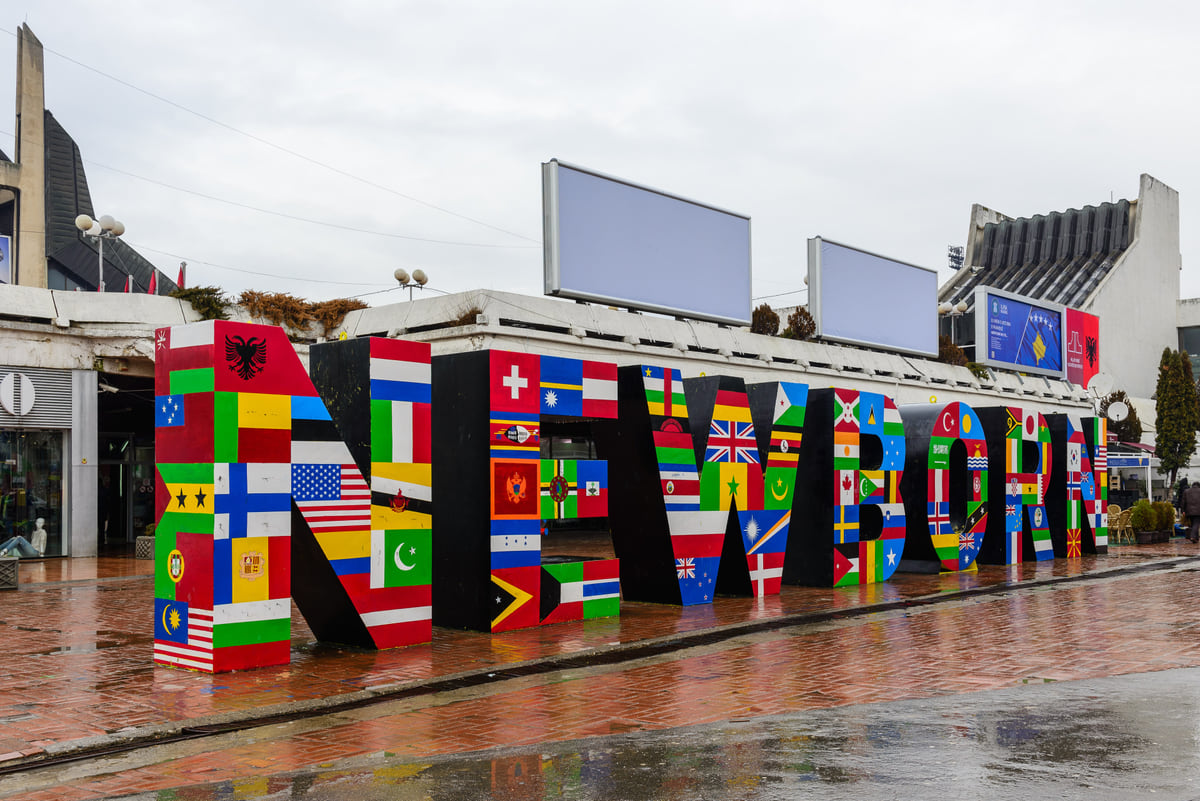
Official holidays are one of the occasions when the flag must fly, and Independence Day is the big one. It's also the day Pristina's Newborn monument gets repainted.
Kosovo public holidays
“Kosovo flag” is searched far more in the UK than almost anything else about the place except the war and its status, so let me be upfront about what you won’t find here. I’m not going to explain what each part of the design stands for. Plenty of sites will, but the law on state symbols hands the design and colours to an Assembly decision I haven’t been able to read, and I won’t pass on second-hand meanings. What I can give you, article by article, is what the Constitution and Law No. 03/L-038 say, and that turns out to be more useful on a trip.
Three symbols, one stated idea
Under Article 6 of the Constitution, flag, coat of arms and anthem are the state symbols and reflect Kosovo’s multi-ethnic character, with their appearance, use and protection set by law. That law is No. 03/L-038, passed by the Assembly on 20 February 2008, three days after independence was declared, and published in the Official Gazette on 2 June. Under Article 3, the Assembly fixes the shape and proportions of the flag and coat of arms and the words and score of the anthem, and the originals are kept in its archive. The name those laws use, Republika e Kosovës, is explained alongside the demonym in the Kosovan name.
Where you’ll definitely see it
The flag must always fly at the seats of the President, the Assembly and the Government, at Kosovo’s embassies and at border crossing points, and on official holidays. On days of official mourning it goes to half-mast. Alongside other flags it can’t be smaller than them, and a worn or damaged flag can’t be displayed in public. The border crossing rule is the one you’ll notice first if you arrive overland; what you’ll be asked for there is in Kosovo entry requirements.
The day you’ll see the most flags is 17 February, Independence Day, one of the dates in Kosovo public holidays.
If you are staying the night, see the best hotel deals in Pristina for your dates: the well-placed rooms go fast.
Why are there other flags in the street?
This is what most visitors actually wonder. Article 6 of the law gives citizens of every community the right to use their national flags, individually or as a community. So other flags flying next to the state one are perfectly legal, and which ones you see depends on who lives where. The communities counted in the 2024 census are in Kosovo population.
The coat of arms and the anthem
The coat of arms is for state bodies only. It goes at the entrance to institutions, on official documents and seals, on personal documents and diplomas, and on border markings.
For the anthem, the law sets out how it’s played. At formal ceremonies only the first verse and refrain are performed, everyone stands, and it can’t be played in a public place without the flag present, except on radio and television. Every resident has the right to sing it, but it can’t be used for marketing. When it’s played with another country’s anthem on an official visit, the guest’s anthem goes first.
So you do not lose the morning at the ticket office, browse tickets and tours in Pristina on GetYourGuide.
The fines, for completeness
Individuals who use the flag or coat of arms in a form the law doesn’t allow, display them worn or damaged, or misuse the anthem face fines of €150 to €300; companies, €500 to €1,000. Not something a normal visitor will run into. If you want a flag as a souvenir, buy one and pack it, and you’re fine.
The reason a symbol not yet twenty years old draws so many searches is Kosovo’s status, which I set out without taking sides in is Kosovo a country.
If you are staying the night, see the best hotel deals in Pristina for your dates: the well-placed rooms go fast.
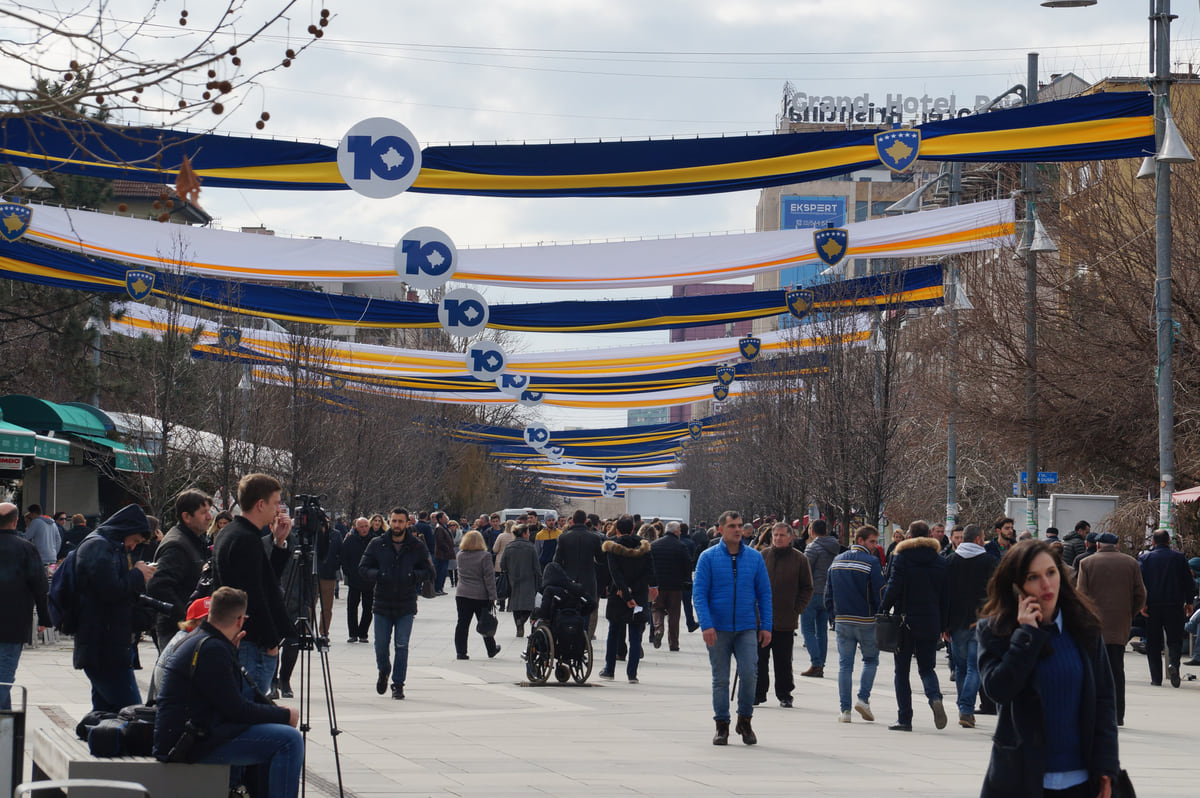
Pristina's pedestrianised Mother Teresa Boulevard busy with walkers, with strings of coloured bunting hung above the street
Where and when the flag flies, under Law 03/L-038
| Case | What the law says |
|---|---|
| President, Assembly, Government | Always |
| Border crossing points | Always |
| Kosovo's embassies abroad | Always |
| Official holidays | Always |
| Days of official mourning | At half-mast |
| Worn or damaged flags | Banned from public display |
Articles 7 and 8 of Law No. 03/L-038 on the use of state symbols, Official Gazette of Kosovo.
Test yourself
True or false?
0/3 Pick before you peek.
-
Kosovo's law bans other countries' flags in public.
See the answer
False. The reverse. Article 6 lets citizens of every community use their national flags, provided they're not worn or damaged.
-
The Kosovo flag must always fly at border crossings.
See the answer
True. Article 7 of Law 03/L-038 lists border crossing points among the places where it always flies.
-
You could use Kosovo's anthem in a TV advert.
See the answer
False. Article 15 of the law expressly bans playing the anthem for marketing or advertising purposes.
0 of 208 Kosovo guides
Your next stamp
- Facts
- History
- Is it a country?
- Mobile and roaming
- Gjakova Grand Bazaar
- Gjeravica
- Places to visit
- Pristina region
- Visoki Dečani Monastery
- Bjeshkët e Nemuna National Park
- Hadum Mosque
- Mitrovica Region
- Things to do
- Most beautiful places
- Sheh Danjolli tekke
- Prettiest villages
- Tailors' Bridge
- Rugova Canyon
- UNESCO sites
- Gjakova
- Map
- Where is Kosovo
- Regions
- Municipalities
- Cities
- Gračanica Monastery
- Mitrovica
- Patriarchate of Peć
- Pristina
- Prizren
- Rugova via ferrata
- Fushë Kosovë
- Population
- Vushtrri
- Podujeva
- Radavc Cave
- Size
- Bajrakli Mosque
- Devič Monastery
- Gazimestan
- Ibar Bridge
- Istog
- One day in Pristina
- Peja
- Prizren region
- Ulpiana
- Vushtrri Stone Bridge
- Gadime Cave
- Klina
- Name
- Vushtrri Fortress
- Deçan
- Isa Boletini Complex
- Novo Brdo Fortress
- Junik
- Lake Batllava
- Zvečan Fortress
- Banjska Monastery
- Ferizaj region
- Languages
- Rahovec
- Ferizaj
- Religion
- Sokolica Monastery
- Currency
- Lake Gazivoda
- Štrpce
- Brezovica
- EU membership
- Entry requirements
- Skiing in Kosovo
- Kaçanik
- Serbian border
- Gračanica
- Guesthouses in Rugova
- Hotels in Peja
- Kaçanik fortress
- Newborn monument
- North Mitrovica
- One day in Prizren
- Peja bazaar
- Peja region
- Public holidays
- Velika Hoča
- Gjakova region
- Hani i Elezit
- Hotels in Gjakova
- National Library
- Obiliq
- Zočište Monastery
- Drenas
- Mother Teresa Cathedral
- Shtime
- Skënderaj
- Lipjan
- Mother Teresa Boulevard
- Zvečan
- Kosovo Museum
- Leposavić
- Novo Brdo
- Emin Gjiku Ethnological Museum
- Janjevo
- Zubin Potok
- Imperial Mosque
- Pristina Clock Tower
- Pristina Old Bazaar
- Great Hammam of Pristina
- Bogë
- Germia Park
- Getting there
- Lake Radoniq
- Prizren Fortress
- Bear Sanctuary Prishtina
- Drelaj
- Flights
- Sinan Pasha Mosque
- Hotels in Pristina
- Pristina airport
- Prizren stone bridge
- Buses
- Grand Hotel Pristina
- Our Lady of Ljeviš
- Prizren hammam
- Swiss Diamond Hotel
- Tirana to Pristina
- League of Prizren
- Restaurants in Pristina
- Skopje to Pristina
- Belgrade to Pristina
- Prizren Archaeological Museum
- Balkans itinerary
- St George's Cathedral
- Church of the Holy Saviour
- Getting around
- Holy Archangels Monastery
- Trains
- Car hire
- Day trips
- Marash
- Driving
- Sharr National Park
- Taxis
- Distances
- Prevalla
- Dragash
- Road trip
- Brod
- Prices and budget
- On a budget
- Restelica
- Free things to do
- Mirusha waterfalls
- Malisheva
- Safety
- Mamusha
- Scams
- Healthcare
- National parks in Kosovo
- Nightlife
- Suhareka
- Mountains in Kosovo
- Mushtisht
- Hiking in Kosovo
- Korisha
- Packing list
- DokuFest
- Peaks of the Balkans
- With kids
- Holidays
- Hotels in Prizren
- Kosovo lakes
- 3 days
- Caves and waterfalls
- Restaurants in Prizren
- 5 days
- One week
- Gjilan region
- Kosovo food
- Sunny Hill Festival
- Gjilan
- Rahovec wine
- Atik Mosque, Gjilan
- Kosovo beer
- Draganac Monastery
- Where to eat in Kosovo
- Kamenica
- Where to stay in Kosovo
- Kllokot
- Weather in Kosovo
- Best time to visit Kosovo
- Partesh
- Kosovo in winter
- Ranillug
- Kosovo in spring
- Viti
- Kosovo in summer
- Letnica
- Binač Monastery
- Kosovo in autumn
- Events in Kosovo
- Independence Day
- Kosovo monasteries
- Mosques in Kosovo
- Kullas in Kosovo
- Castles in Kosovo
- Museums in Kosovo
- Bazaars in Kosovo
Frequently asked questions
What does the Kosovo flag represent?
The Constitution says the flag, coat of arms and anthem reflect Kosovo's multi-ethnic character. The meaning of each element isn't in the symbols law, which leaves the design and colours to an Assembly decision I haven't been able to read, so I won't repeat second-hand explanations.
When was the Kosovo flag adopted?
The law on the use of state symbols, No. 03/L-038, was passed by the Assembly on 20 February 2008, three days after the declaration of independence, and published in the Official Gazette on 2 June 2008.
Why do people in Kosovo fly the Albanian flag?
Because the symbols law lets citizens of every community use their national flags, individually or collectively. The state flag is Kosovo's own; the others are community flags, and they are legal.
Does Kosovo have a coat of arms?
Yes, it's one of the three state symbols. Its use is reserved for state bodies, and it appears on official documents, seals, personal documents, diplomas and at border crossings.
What are the rules for Kosovo's anthem?
At formal ceremonies only the first verse and the refrain are played, everyone present stands, and it can't be played in public places without the flag, except on TV or radio. It can't be used for advertising.
By
Tourism graduate with a master’s in Tourism Management and Planning from the University of Málaga, who has travelled across Europe. He writes every guide from official sources and his own judgement.
Published on . Facts checked on .
Sources
Some links in this guide are affiliate links: if you book through them, the site earns a commission at no extra cost to you. Affiliate disclosure
Photos: Arild Vågen (CC BY-SA 3.0); Albinfo (CC0), via Wikimedia Commons.