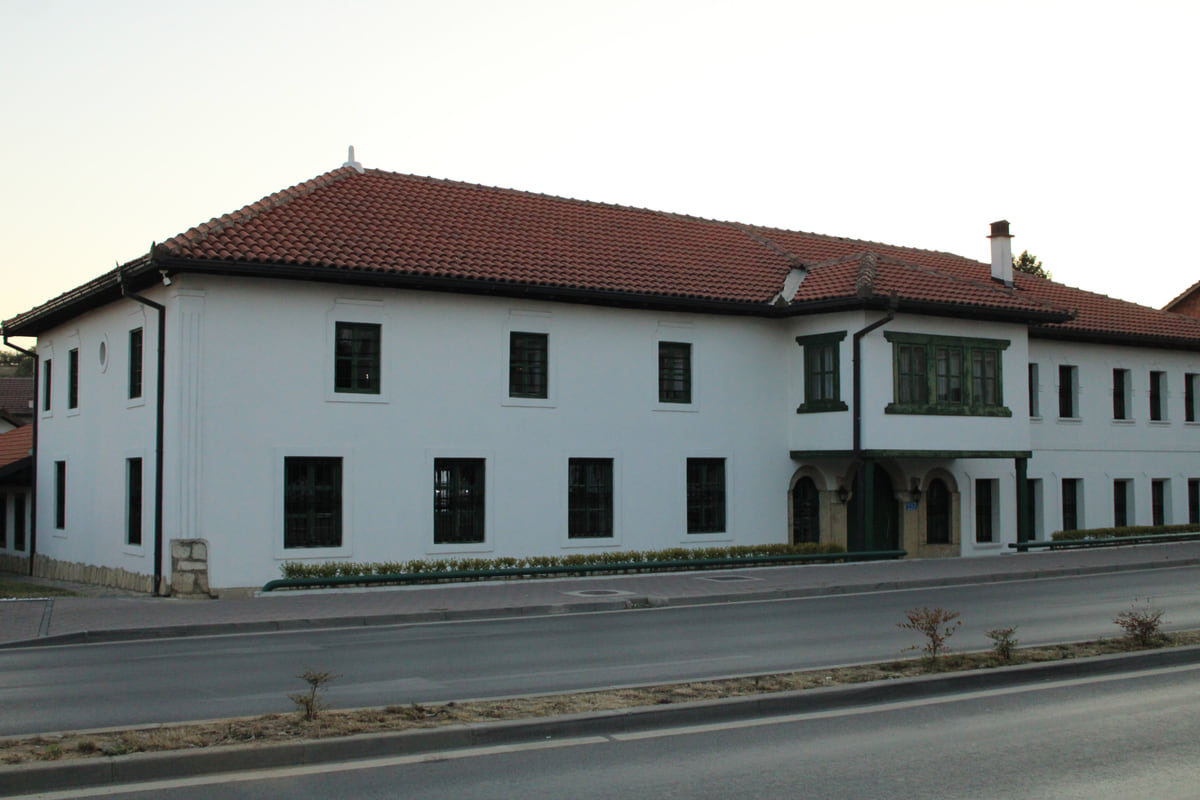
19th-century Sufi lodge
The Sheh Danjolli tekke and Gjakova's other Sufi lodges
The Sheh Danjolli tekke (Teqeja e Sheh Danjollit) is a 19th-century Sufi lodge in Gjakova, on the road into town from Peja. According to the Culture Ministry's heritage database, it belongs to the Rifa'i order, has a ceremonial hall decorated with wall paintings and a mausoleum with tombs, and has been permanently protected since 1978.
In 30 seconds
Full read: 2 min
- The Sheh Danjolli tekke is a 19th-century Sufi lodge in Gjakova.
- It belongs to the Rifa'i order and has a ceremonial hall with wall paintings.
- It has been permanently protected since 1978.
- Gjakova has other protected tekkes, such as Sheh Emin's in the bazaar.
A tekke is not a museum. If you want to see inside, ask politely whoever is there and accept a no. What you can always do is look at the building from the street.

Before you go
What I would keep in mind
-
01 Most beautiful
Wall paintings in the hall
The ceremonial hall is square and decorated with geometric figures and Koranic quotations from the time it was built, according to the DTK.
mosques in Kosovo -
02 My tip
Not the town's only tekke
The DTK also protects the 18th-century Sheh Emin tekke of the Sadi order, inside the Grand Bazaar, plus those of Babe Ali and Shejh Ban.
Gjakova Grand Bazaar -
03 Getting there
On the Peja road
It stands on the main road into town from Peja, so if you drive in from the north it is the first thing you will see of Gjakova.
Gjakova
What I would book
Gjakova shows something few towns in Kosovo display so openly, the mark of the Sufi orders. Their lodges, the tekkes, are scattered round the centre, and the Culture Ministry’s heritage database protects four of them. The best known is Sheh Danjolli’s, and to my eye the most photogenic.
What it is and when it was built
The Sheh Danjolli tekke (Teqeja e Sheh Danjollit) stands on the main road into Gjakova from Peja. Its DTK record says Sheh Danjolli himself built it in the 19th century, which is why it still bears his name, and that it belongs to the Rifa’i order. It has been under permanent protection since 15 May 1978.
According to the same record, the complex has three parts. The main hall, the samahane, where the dervishes hold their ceremonies; a mausoleum (tyrbe) with the graves of notable local people; and the lodge’s own rooms.
The painted hall
What interests me most is inside. The samahane is square in plan and decorated with wall paintings, geometric figures and Koranic quotations that the DTK dates to the period of construction. The load-bearing walls rest on an arch and were built of fired brick, adobe and lime mortar; the roof is traditional tile.
No official source publishes opening times or rules. It is a working religious site, so my advice is what I would do myself. Look from outside, ask respectfully if you would like to step in, and do not press the point.
If you are staying the night, see the best hotel deals in Gjakova for your dates: the well-placed rooms go fast.
How a tekke works
The DTK records help explain each part. The samahane is where the dervishes hold the zikr, the ceremony of recitation, and where they gather; the mausoleum holds the tombs of the sheikhs and notable members of the community; and the rest of the building houses the lodge itself. For Sheh Emin’s, the record also mentions a timber dome over the hall and decorated walls and ceilings.
It is not only a Gjakova phenomenon. In Rahovec, on the east side of the region, the DTK protects the large Halveti tekke of 1732, with its library of manuscripts, and the Melami tekke of 1887.
Gjakova’s other tekkes
The DTK protects three more in town. Sheh Emin’s, 18th century and of the Sadi order, is in the Kryepazar, the upper part of the Gjakova Grand Bazaar; its founder, Sheh Emin, had been a kadi (a judge) educated in Turkey, according to its record, and it still works as a tekke. Babe Ali’s and Shejh Ban’s are 19th century, under provisional protection. OpenStreetMap marks further lodges of this kind around town.
If you are interested in Kosovo’s Islamic heritage as a whole, starting with the Hadum Mosque, I go through it in mosques in Kosovo. For a British visitor, the closest comparison I can offer is a chapter house rather than a church, a place for a community’s own gatherings.
So you do not lose the morning at the ticket office, browse tickets and tours in Sheh Danjolli tekke on GetYourGuide.
If you are staying the night, see the best hotel deals in Gjakova for your dates: the well-placed rooms go fast.
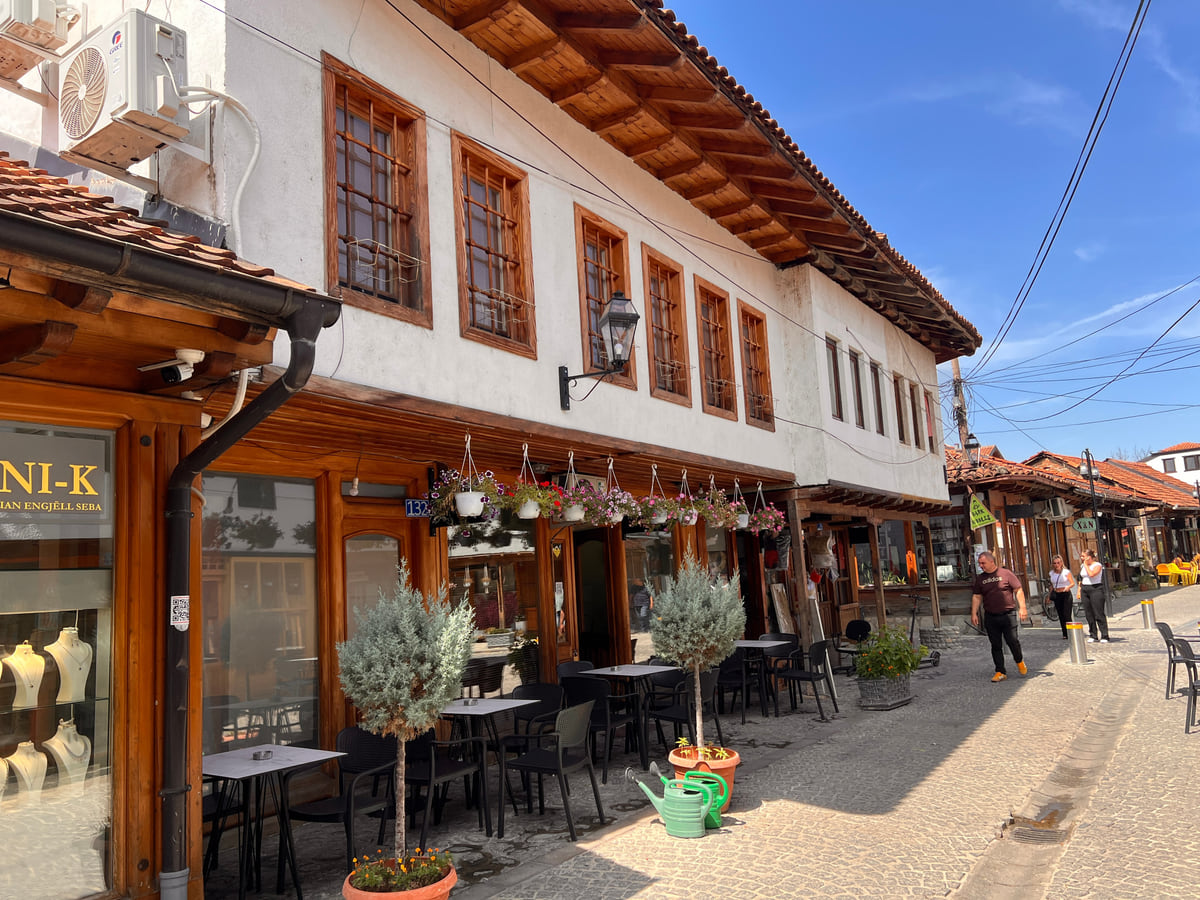
A street in the Grand Bazaar of Gjakova lined with two-storey timber houses, café terraces and potted olive trees
Gjakova's tekkes in the Culture Ministry database
| Tekke | Period | Protection |
|---|---|---|
| Sheh Danjolli (Rifa'i order) | 19th century | Permanent since 1978 |
| Sheh Emin (Sadi order) | 18th century | Permanent since 1958 |
| Babe Ali | 19th century | Provisional |
| Shejh Ban | 19th century | Provisional |
Source: DTK, Kosovo Cultural Heritage database. Opening times and visiting rules: no official figure.
Test yourself
True or false?
0/3 Pick before you peek.
-
The Sheh Danjolli tekke dates from the 19th century.
See the answer
True. The Culture Ministry heritage database places it in the 19th century and says Sheh Danjolli himself built it.
-
All of Gjakova's tekkes belong to the same Sufi order.
See the answer
False. Sheh Danjolli's is Rifa'i according to the DTK, while Sheh Emin's, in the Grand Bazaar, is of the Sadi order.
-
The tekke's ceremonial hall has wall paintings.
See the answer
True. The DTK describes painted geometric figures and Koranic quotations inside, dating from the time of construction.
- Permanent protection
- 1978
- Century built
- 19th c.
- Gjakova tekkes in the DTK
- 4
Map
Where Sheh Danjolli tekke is
The Bjeshkët e Nemuna mountains close off the west and the Sharr the south; in the middle lies the Pristina plain. Every number opens its guide.
 1Gjakova Grand Bazaar 2Hadum Mosque 3Sheh Danjolli tekke 4Tailors' Bridge 5Gjakova
 Map data © OpenStreetMap contributors (ODbL)
0 of 208 Kosovo guides
Your next stamp
- Gjakova
- Gjakova Grand Bazaar
- Rahovec
- UNESCO sites
- Places to visit
- Mosques in Kosovo
- Kosovo monasteries
- Hadum Mosque
- Gjeravica
- Pristina region
- Visoki Dečani Monastery
- Bjeshkët e Nemuna National Park
- Mitrovica Region
- Things to do
- Most beautiful places
- Prettiest villages
- Tailors' Bridge
- Rugova Canyon
- Map
- Where is Kosovo
- Regions
- Municipalities
- Cities
- Gračanica Monastery
- Mitrovica
- Patriarchate of Peć
- Pristina
- Prizren
- Rugova via ferrata
- Fushë Kosovë
- Population
- Vushtrri
- Podujeva
- Radavc Cave
- Size
- Bajrakli Mosque
- Devič Monastery
- Gazimestan
- Ibar Bridge
- Is it a country?
- Istog
- One day in Pristina
- Peja
- Prizren region
- Ulpiana
- Vushtrri Stone Bridge
- Gadime Cave
- Klina
- Name
- Vushtrri Fortress
- Deçan
- Flag
- Isa Boletini Complex
- Novo Brdo Fortress
- History
- Junik
- Lake Batllava
- Zvečan Fortress
- Banjska Monastery
- Ferizaj region
- Languages
- Ferizaj
- Religion
- Sokolica Monastery
- Currency
- Lake Gazivoda
- Štrpce
- Brezovica
- EU membership
- Entry requirements
- Skiing in Kosovo
- Kaçanik
- Serbian border
- Gračanica
- Guesthouses in Rugova
- Hotels in Peja
- Kaçanik fortress
- Newborn monument
- North Mitrovica
- One day in Prizren
- Peja bazaar
- Peja region
- Public holidays
- Velika Hoča
- Facts
- Gjakova region
- Hani i Elezit
- Hotels in Gjakova
- National Library
- Obiliq
- Zočište Monastery
- Drenas
- Mother Teresa Cathedral
- Shtime
- Skënderaj
- Lipjan
- Mother Teresa Boulevard
- Zvečan
- Kosovo Museum
- Leposavić
- Novo Brdo
- Emin Gjiku Ethnological Museum
- Janjevo
- Zubin Potok
- Imperial Mosque
- Pristina Clock Tower
- Pristina Old Bazaar
- Great Hammam of Pristina
- Bogë
- Germia Park
- Getting there
- Lake Radoniq
- Prizren Fortress
- Bear Sanctuary Prishtina
- Drelaj
- Flights
- Sinan Pasha Mosque
- Hotels in Pristina
- Pristina airport
- Prizren stone bridge
- Buses
- Grand Hotel Pristina
- Our Lady of Ljeviš
- Prizren hammam
- Swiss Diamond Hotel
- Tirana to Pristina
- League of Prizren
- Restaurants in Pristina
- Skopje to Pristina
- Belgrade to Pristina
- Prizren Archaeological Museum
- Balkans itinerary
- St George's Cathedral
- Church of the Holy Saviour
- Getting around
- Holy Archangels Monastery
- Trains
- Car hire
- Day trips
- Marash
- Driving
- Sharr National Park
- Taxis
- Distances
- Prevalla
- Dragash
- Road trip
- Brod
- Prices and budget
- On a budget
- Restelica
- Free things to do
- Mirusha waterfalls
- Malisheva
- Safety
- Mamusha
- Scams
- Healthcare
- National parks in Kosovo
- Nightlife
- Suhareka
- Mobile and roaming
- Mountains in Kosovo
- Mushtisht
- Hiking in Kosovo
- Korisha
- Packing list
- DokuFest
- Peaks of the Balkans
- With kids
- Holidays
- Hotels in Prizren
- Kosovo lakes
- 3 days
- Caves and waterfalls
- Restaurants in Prizren
- 5 days
- One week
- Gjilan region
- Kosovo food
- Sunny Hill Festival
- Gjilan
- Rahovec wine
- Atik Mosque, Gjilan
- Kosovo beer
- Draganac Monastery
- Where to eat in Kosovo
- Kamenica
- Where to stay in Kosovo
- Kllokot
- Weather in Kosovo
- Best time to visit Kosovo
- Partesh
- Kosovo in winter
- Ranillug
- Kosovo in spring
- Viti
- Kosovo in summer
- Letnica
- Binač Monastery
- Kosovo in autumn
- Events in Kosovo
- Independence Day
- Kullas in Kosovo
- Castles in Kosovo
- Museums in Kosovo
- Bazaars in Kosovo
Frequently asked questions
What is a tekke?
The lodge where a Sufi order, a mystical brotherhood within Islam, meets. Sheh Danjolli's has, according to its record, a hall for the dervishes' ceremonies, a mausoleum and the lodge's own rooms.
Where is the Sheh Danjolli tekke?
On the main road into Gjakova from Peja, north of the Grand Bazaar.
Can you visit the Gjakova tekke?
No official source gives opening times or visiting rules. It is a religious site; look from outside and, if you would like to go in, ask respectfully.
How many tekkes are there in Gjakova?
The Culture Ministry's heritage database protects four in town, Sheh Danjolli, Sheh Emin, Babe Ali and Shejh Ban. OpenStreetMap marks a few more.
What is the Sheh Danjolli tekke built of?
Fired brick and adobe with lime mortar, under a traditional tiled roof, according to the DTK. The load-bearing walls rest on an arch.
By
Tourism graduate with a master’s in Tourism Management and Planning from the University of Málaga, who has travelled across Europe. He writes every guide from official sources and his own judgement.
Published on . Facts checked on .
Sources
Some links in this guide are affiliate links: if you book through them, the site earns a commission at no extra cost to you. Affiliate disclosure
Photos: Arianit (CC BY-SA 4.0); Bdx (CC0), via Wikimedia Commons.