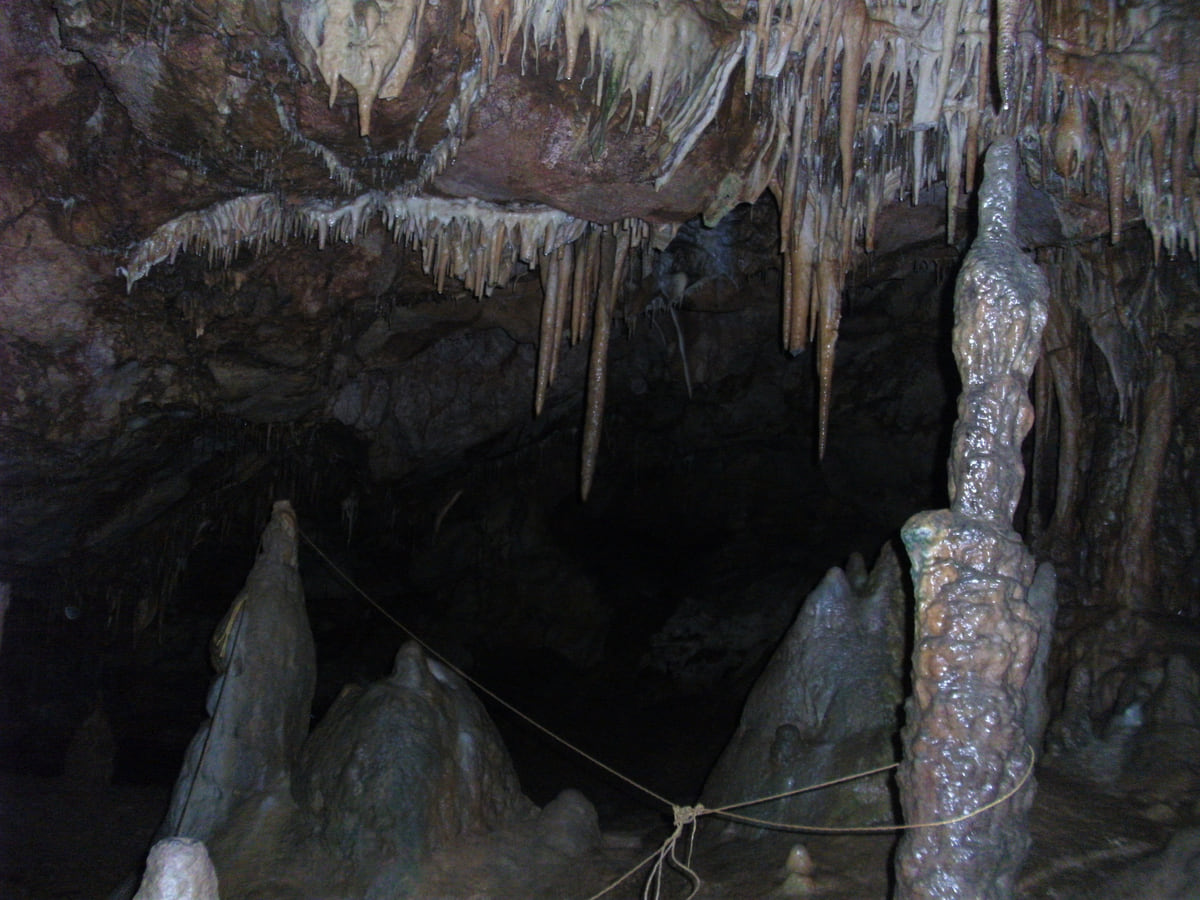
Karst, water and natural monuments
Caves and waterfalls in Kosovo, the landscape underground
Kosovo's best-known caves are Gadime, in Lipjan, with about 1,500 m of passages of which 1,300 can be visited according to the archived government tourism portal, and Radavc, near Peja. The Mirusha waterfalls, 12 falls and 16 pools according to their official plan, and Gadime Cave are the two natural monuments of special importance run by the environment agency.
In 30 seconds
Full read: 2 min
- Gadime Cave in Lipjan runs to about 1,500 m, 1,300 of them open to visitors.
- Gadime and the Mirusha waterfalls are natural monuments of special importance.
- Mirusha strings together 12 falls and 16 pools, according to its official plan.
- Radavc Cave and the White Drin spring, near Peja, have been a natural monument since 1983.
If you only do one cave, make it Gadime, in Lipjan next door to Pristina, with 1,300 m open to visitors. Save the Mirusha waterfalls for spring or early summer, when there is real force in the water.

Before you go
What I would keep in mind
-
01 Most beautiful
Gadime, the cave of formations
The archived government tourism portal gives it about 1,500 m, 1,300 of them open to visitors, and 13°C inside in summer. Bring a layer even on a hot day.
Gadime Cave -
02 Most beautiful
Mirusha, twelve falls in a row
The 2013 spatial plan for the natural monument counts 12 waterfalls and 16 pools strung along the Mirusha river canyon.
Mirusha waterfalls -
03 My tip
Radavc, cave and spring in one morning
Radavc Cave and the source of the White Drin have been a natural monument since 1983 and lie about 11 km from Peja.
Radavc Cave -
04 Worth the splurge
Gryka e Madhe, for cavers only
Its entrance was found in May 1992, 50 to 60 m above the river in the Rugova Canyon. It is not a show cave.
Rugova Canyon
What I would book
- Tours and ticketsGetYourGuide Trip to Gadime Cave With transport arranged from Pristina you are not relying on buses or taxis to get to Lipjan.
- Tours and ticketsGetYourGuide Trip to the Mirusha waterfalls They are a long way from the towns with most places to stay, so an organised day out saves a lot of time.
The study behind Bjeshkët e Nemuna National Park says almost every karst feature turns up in that range, from sinkholes to caves, and in central Kosovo the Mirusha river drops through its canyon in a series of falls. So there are caves full of formations, rivers springing straight from the rock and waterfalls one after another. It is not a world-class caving destination, but for a traveller with a free day it offers plenty, and nearly all of it is close to Pristina or Peja.
Gadime, the cave to see
Gadime Cave lies at Gadime e Epërme, in Lipjan municipality south of Pristina, and is one of the two natural monuments of special importance run by Kosovo’s environment agency (AMMK). The government tourism portal, in its archived copy, gives it about 1,500 m of passages, 1,300 of which can be visited, and a temperature of 13°C in summer. I found no official opening hours or prices, so check them before you set off. On a city break in Pristina, it is the easiest piece of Kosovo’s natural side to slot in, which is exactly why I would put it first. Further west, in Drenas, the environment agency has protected the Baica and Gllanasella caves since 1987, though its list doesn’t say whether they can be visited.
Radavc and the source of the White Drin
About 11 km from Peja, Radavc Cave and the spring of the White Drin together form a natural monument dating from 1983, according to the 2003 study for Bjeshkët e Nemuna park. That study describes a main channel branching into passages, chambers and small pools, most of it hung with stalactites and stalagmites. Peja’s tourism site, a secondary source, calls it the Sleeping Beauty and says it is open all year. Right beside it, the White Drin waterfall drops about 30 m, according to the same website.
To sleep close to everything, search places to stay in Peja on Expedia and filter by area before price.
Gryka e Madhe and the canyon caves
The limestone walls of the Rugova Canyon are riddled with caves. The serious one is Gryka e Madhe, whose entrance five Slovak cavers located in May 1992, 50 to 60 m above the river, according to the archived tourism portal. It is not a show cave, and I would not go in without a local caving club.
Mirusha, the waterfall of waterfalls
The Mirusha waterfalls are the AMMK’s other natural monument of special importance. The spatial plan drawn up in 2013 by the Institute for Spatial Planning counts 12 waterfalls and 16 pools strung along the Mirusha river canyon, between 340 and 600 m above sea level, and records the 2012 government decision that declared it a monument covering 598.4 hectares. Nearby, the archived tourism portal mentions Dush cave, 180 m long, or 260 with its side passages. I would go in spring or early summer, when the falls carry real water, and remember that the FCDO singles out the Malisheva area for Crimean-Congo haemorrhagic fever in summer, so pack tick repellent.
To sleep close to everything, search places to stay in Peja on Booking.com and filter by area before price.
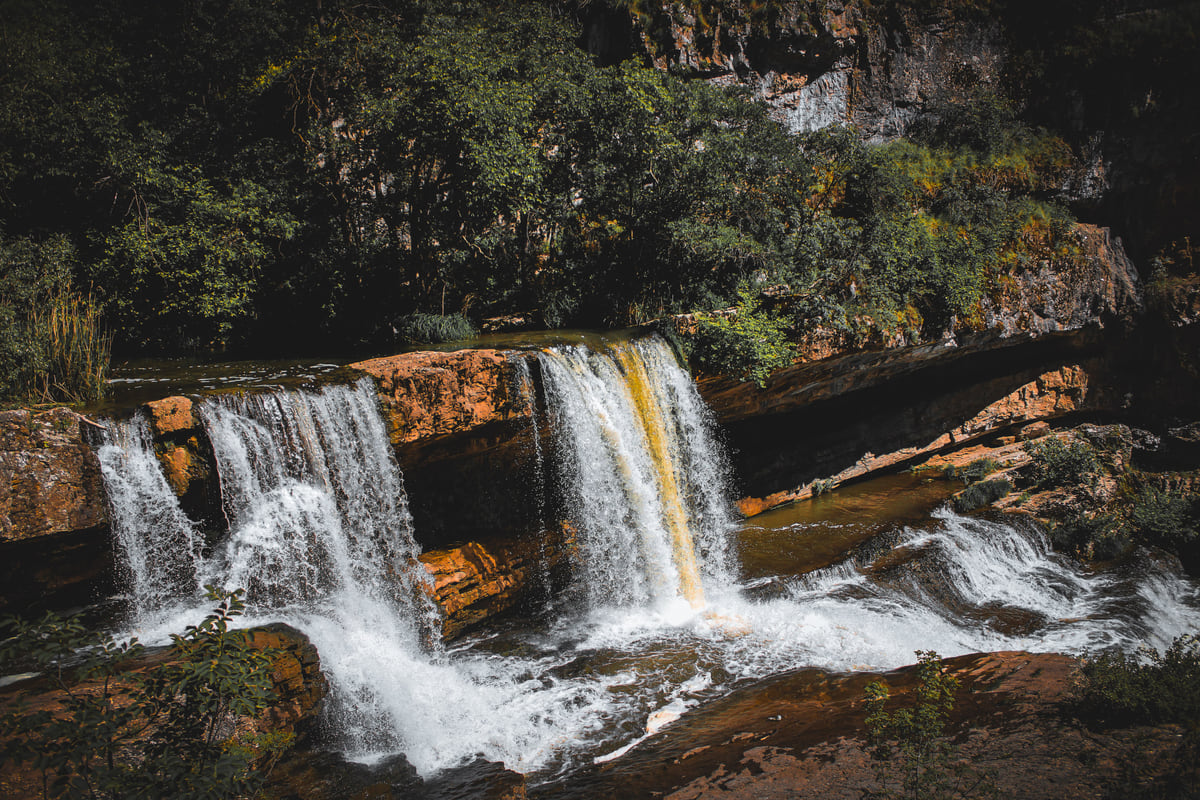
One of the Mirusha waterfalls tumbling over rock ledges among trees, with the water blurred in motion
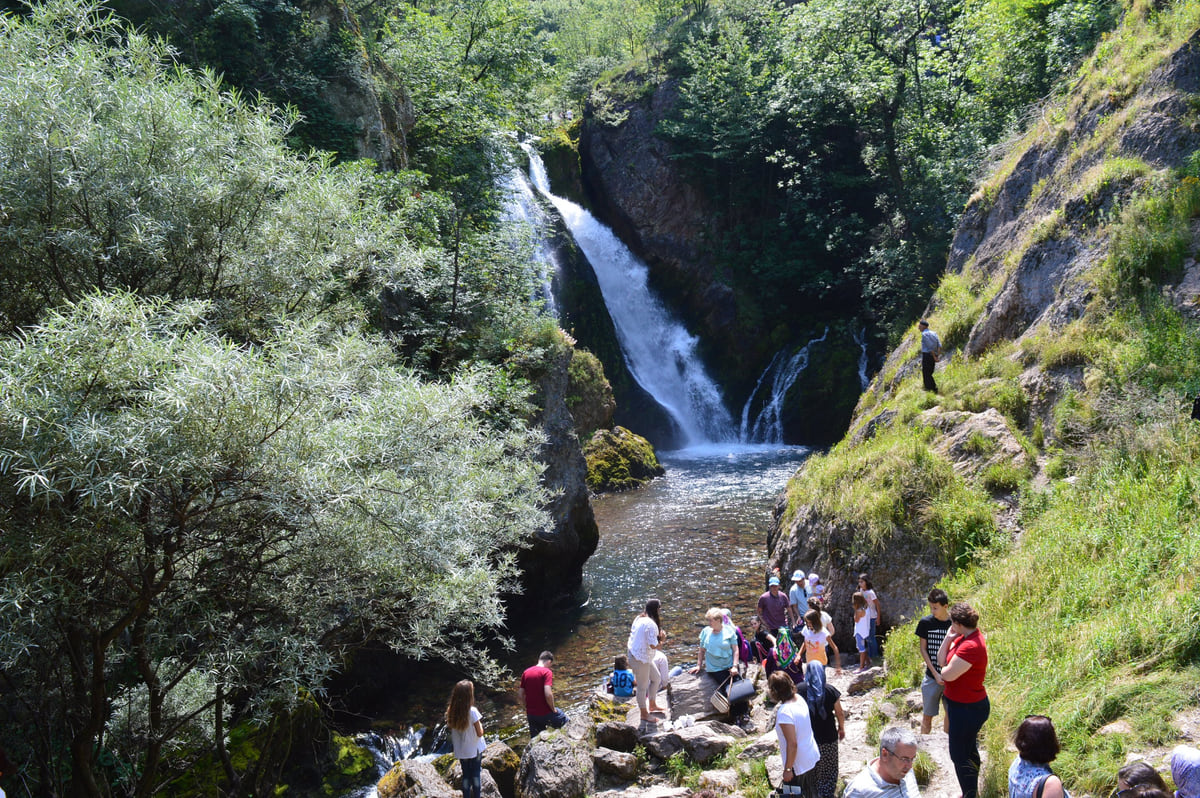
Water from the source of the White Drin at Radavc falling down the rock among trees, with visitors below
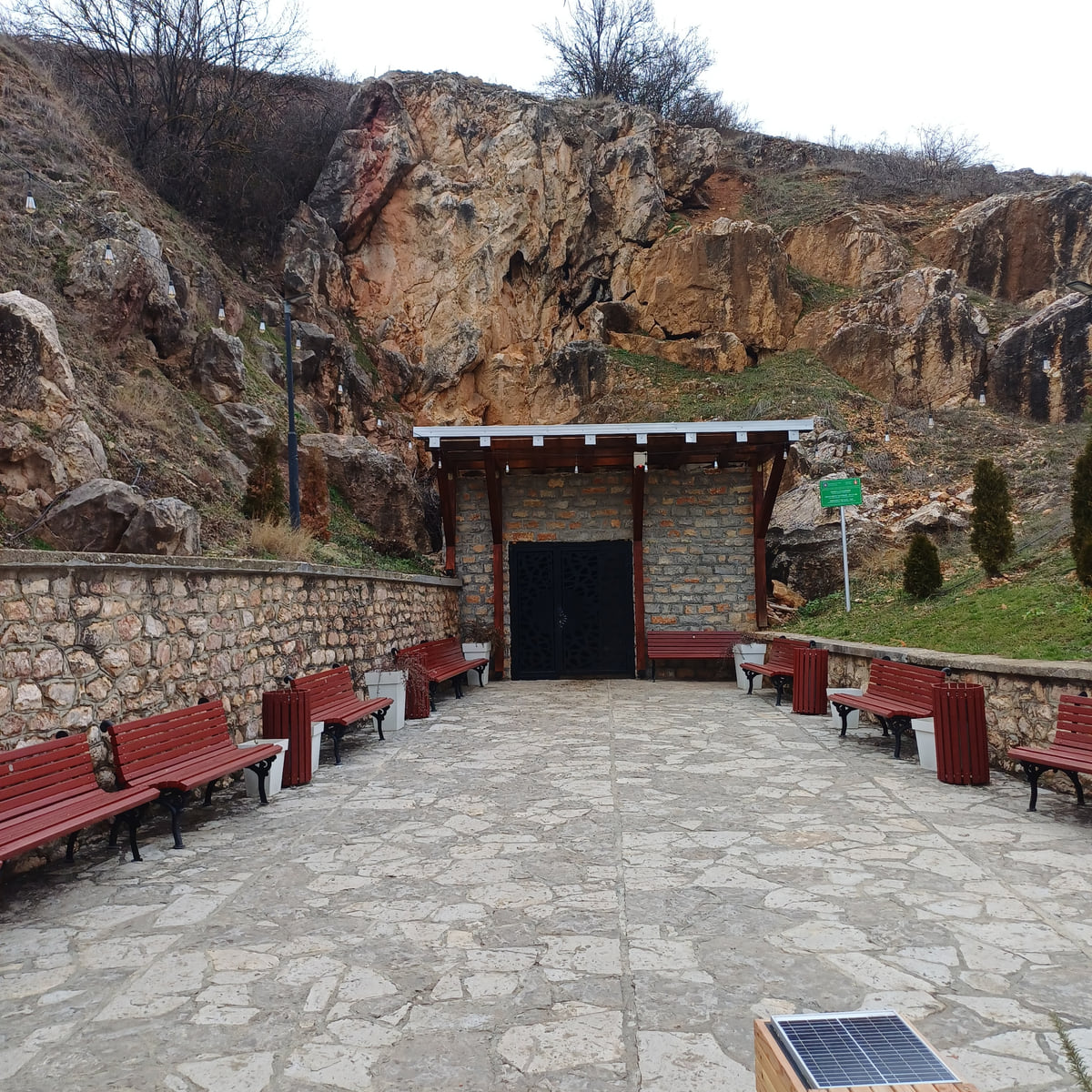
The entrance to the Marble Cave at Gadime, with red benches in front and the rock face rising above it
Caves with published figures
| Cave | Where | Figure | Source |
|---|---|---|---|
| Gadime | Gadime e Epërme, Lipjan | About 1,500 m, 1,300 open to visitors; 13°C in summer | Archived tourism portal; AMMK |
| Radavc | Radavc, about 11 km from Peja | Passages, chambers and pools with stalactites and stalagmites | Park study (2003); archived tourism portal |
| Gryka e Madhe | Rugova Canyon | Entrance found in May 1992 by five Slovak cavers | Archived tourism portal |
| Dush cave | Mirusha | 180 m, 260 including side passages | Archived tourism portal |
No official opening hours or prices published for Gadime Cave. The government tourism portal (visitkosovo.rks-gov.net) is being rebuilt; its archive.org copy is cited.
Waterfalls with published figures
| Waterfall | Where | Figure | Source |
|---|---|---|---|
| Mirusha | Klina, Malisheva and Rahovec | 12 falls and 16 pools; natural monument of 598.4 ha (2012) | 2013 spatial plan (Environment Ministry) |
| White Drin | Radavc, Peja | About 30 m; natural monument since 1983 | pejatourism.org; park study (2003) |
pejatourism.org is Peja's tourism website, with no named publisher (secondary source).
Test yourself
True or false?
0/3 Pick before you peek.
-
Every metre of Gadime Cave is open to visitors.
See the answer
False. The archived government tourism portal gives it about 1,500 m, of which 1,300 can be visited.
-
The Mirusha waterfalls are a protected natural monument.
See the answer
True. A 2012 government decision declared them a natural monument of special importance covering 598.4 ha, and the AMMK manages them.
-
Radavc Cave has only been protected since 2012.
See the answer
False. Together with the White Drin spring it has been a natural monument since 1983, according to the 2003 park study.
- Open to visitors at Gadime
- 1,300 m
- Mirusha waterfalls
- 12
- Mirusha pools
- 16
- Radavc, natural monument
- 1983
What to see
What to see in Caves and waterfalls
0 of 208 Kosovo guides
Your next stamp
- Mirusha waterfalls
- Most beautiful places
- Gadime Cave
- Malisheva
- Free things to do
- Places to visit
- One week
- Kosovo lakes
- Gjakova Grand Bazaar
- Gjeravica
- Pristina region
- Visoki Dečani Monastery
- Bjeshkët e Nemuna National Park
- Hadum Mosque
- Mitrovica Region
- Things to do
- Sheh Danjolli tekke
- Prettiest villages
- Tailors' Bridge
- Rugova Canyon
- UNESCO sites
- Gjakova
- Map
- Where is Kosovo
- Regions
- Municipalities
- Cities
- Gračanica Monastery
- Mitrovica
- Patriarchate of Peć
- Pristina
- Prizren
- Rugova via ferrata
- Fushë Kosovë
- Population
- Vushtrri
- Podujeva
- Radavc Cave
- Size
- Bajrakli Mosque
- Devič Monastery
- Gazimestan
- Ibar Bridge
- Is it a country?
- Istog
- One day in Pristina
- Peja
- Prizren region
- Ulpiana
- Vushtrri Stone Bridge
- Klina
- Name
- Vushtrri Fortress
- Deçan
- Flag
- Isa Boletini Complex
- Novo Brdo Fortress
- History
- Junik
- Lake Batllava
- Zvečan Fortress
- Banjska Monastery
- Ferizaj region
- Languages
- Rahovec
- Ferizaj
- Religion
- Sokolica Monastery
- Currency
- Lake Gazivoda
- Štrpce
- Brezovica
- EU membership
- Entry requirements
- Skiing in Kosovo
- Kaçanik
- Serbian border
- Gračanica
- Guesthouses in Rugova
- Hotels in Peja
- Kaçanik fortress
- Newborn monument
- North Mitrovica
- One day in Prizren
- Peja bazaar
- Peja region
- Public holidays
- Velika Hoča
- Facts
- Gjakova region
- Hani i Elezit
- Hotels in Gjakova
- National Library
- Obiliq
- Zočište Monastery
- Drenas
- Mother Teresa Cathedral
- Shtime
- Skënderaj
- Lipjan
- Mother Teresa Boulevard
- Zvečan
- Kosovo Museum
- Leposavić
- Novo Brdo
- Emin Gjiku Ethnological Museum
- Janjevo
- Zubin Potok
- Imperial Mosque
- Pristina Clock Tower
- Pristina Old Bazaar
- Great Hammam of Pristina
- Bogë
- Germia Park
- Getting there
- Lake Radoniq
- Prizren Fortress
- Bear Sanctuary Prishtina
- Drelaj
- Flights
- Sinan Pasha Mosque
- Hotels in Pristina
- Pristina airport
- Prizren stone bridge
- Buses
- Grand Hotel Pristina
- Our Lady of Ljeviš
- Prizren hammam
- Swiss Diamond Hotel
- Tirana to Pristina
- League of Prizren
- Restaurants in Pristina
- Skopje to Pristina
- Belgrade to Pristina
- Prizren Archaeological Museum
- Balkans itinerary
- St George's Cathedral
- Church of the Holy Saviour
- Getting around
- Holy Archangels Monastery
- Trains
- Car hire
- Day trips
- Marash
- Driving
- Sharr National Park
- Taxis
- Distances
- Prevalla
- Dragash
- Road trip
- Brod
- Prices and budget
- On a budget
- Restelica
- Safety
- Mamusha
- Scams
- Healthcare
- National parks in Kosovo
- Nightlife
- Suhareka
- Mobile and roaming
- Mountains in Kosovo
- Mushtisht
- Hiking in Kosovo
- Korisha
- Packing list
- DokuFest
- Peaks of the Balkans
- With kids
- Holidays
- Hotels in Prizren
- 3 days
- Restaurants in Prizren
- 5 days
- Gjilan region
- Kosovo food
- Sunny Hill Festival
- Gjilan
- Rahovec wine
- Atik Mosque, Gjilan
- Kosovo beer
- Draganac Monastery
- Where to eat in Kosovo
- Kamenica
- Where to stay in Kosovo
- Kllokot
- Weather in Kosovo
- Best time to visit Kosovo
- Partesh
- Kosovo in winter
- Ranillug
- Kosovo in spring
- Viti
- Kosovo in summer
- Letnica
- Binač Monastery
- Kosovo in autumn
- Events in Kosovo
- Independence Day
- Kosovo monasteries
- Mosques in Kosovo
- Kullas in Kosovo
- Castles in Kosovo
- Museums in Kosovo
- Bazaars in Kosovo
Frequently asked questions
Which caves can you visit in Kosovo?
The one set up for visitors is Gadime, in Lipjan, and Radavc near Peja, which the town's tourism website says opens all year. Gryka e Madhe in Rugova is cavers' territory.
How big is Gadime Cave?
About 1,500 m, of which 1,300 can be visited, according to the archived copy of the government tourism portal. The same source gives 13°C inside in summer.
Where are the Mirusha waterfalls?
In the Mirusha river canyon in central Kosovo, shortly before it joins the White Drin. The natural monument's spatial plan spreads it across Klina, Malisheva and Rahovec and counts 12 falls and 16 pools.
What is the Sleeping Beauty Cave in Kosovo?
It is the name Peja's tourism website uses for Radavc Cave, which OpenStreetMap lists as Shpella e Radacit (Bukuroshja e Fjetur). It is about 11 km from Peja.
Is there a waterfall near Peja?
Yes, the White Drin waterfall at Radavc, about 30 m high according to Peja's tourism website, right by the river's spring and the cave. Together they have been a natural monument since 1983.
By
Tourism graduate with a master’s in Tourism Management and Planning from the University of Málaga, who has travelled across Europe. He writes every guide from official sources and his own judgement.
Published on . Facts checked on .
Sources
Some links in this guide are affiliate links: if you book through them, the site earns a commission at no extra cost to you. Affiliate disclosure
Photos: Flamur Murati (CC BY-SA 3.0); Berishasinan (CC0); Fjolle Ramadani (CC BY-SA 4.0); Edukatori (CC BY-SA 4.0), via Wikimedia Commons.