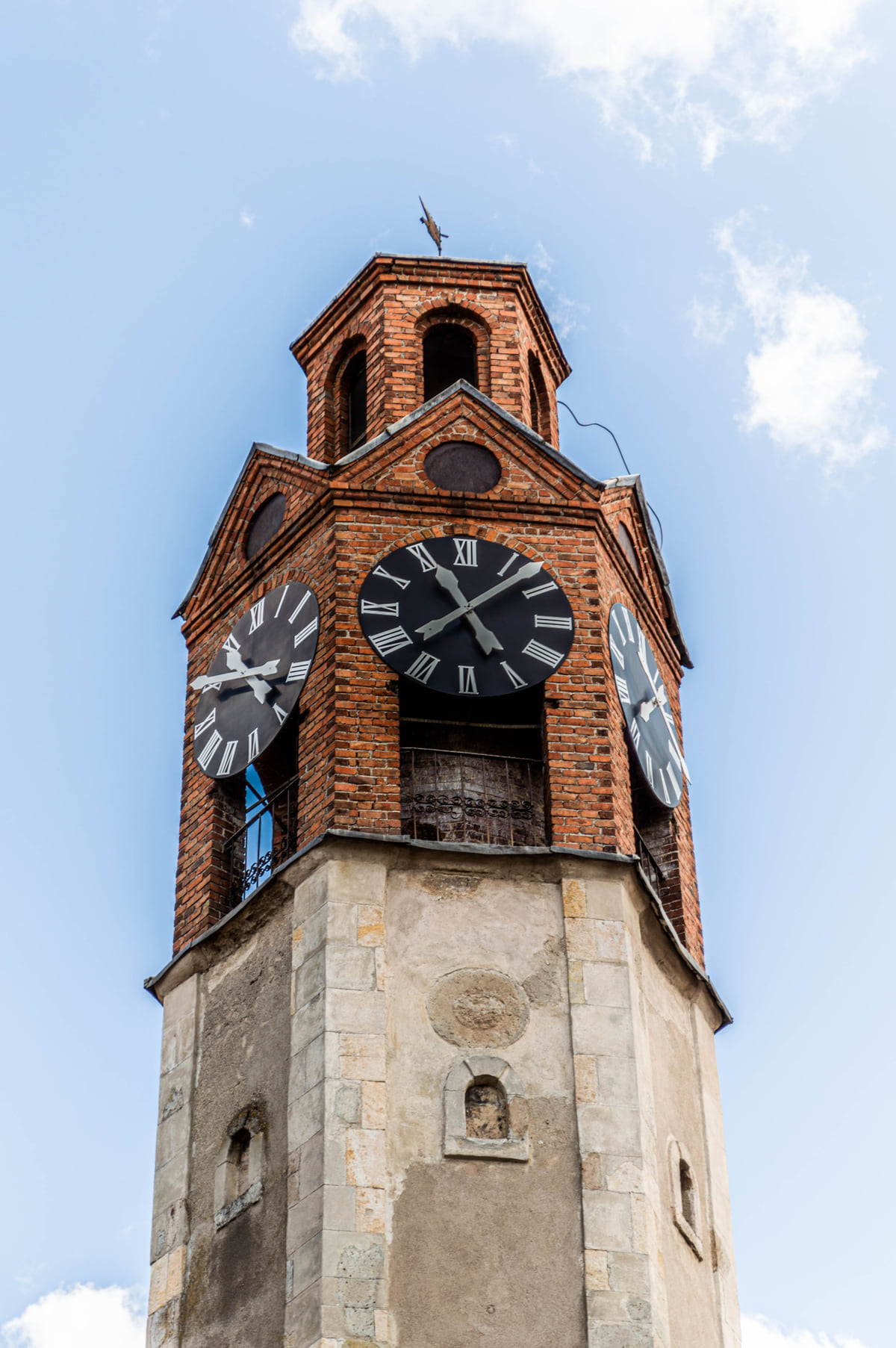
Sahat Kulla, late 19th century
Pristina's clock tower and the bell that kept moving
Pristina's clock tower (Sahat Kulla) went up in the late 19th century in the old town, next to the Imperial Mosque. According to Kosovo's Ministry of Culture it stands 26 m tall on a hexagonal base, in stone up to 16.5 m and brick above, and has kept time with a digital clock since 2002, after the mechanism and bell were stolen in 2001.
In 30 seconds
Full read: 3 min
- Pristina's clock tower dates from the late 19th century and is 26 m tall on a hexagonal base.
- It's stone up to 16.5 m and brick above, with a timber roof covered in lead.
- The clock has been digital since 2002, after the mechanism and bell were stolen in 2001.
- You see it free from the street, next to the Imperial Mosque and the Great Hammam.
It isn't a monument to spend an hour on, but it repays a proper two-minute look, because the facade tells you how it was built. Look for the point, 16.5 metres up, where the stone gives way to brick. That line is the trace of two separate building phases.

Before you go
What I would keep in mind
-
01 Most beautiful
The line where the material changes
Up to 16.5 m the tower is stone, and above that it rises in solid brick, says the Ministry of Culture. Inside it's the same story, with stone-slab steps below and timber ones above, a sign the upper part came later.
-
02 My tip
See it from the Imperial Mosque grounds
The tower stands a few steps from the Imperial Mosque and the Great Hammam. From around the mosque you get the whole height in view, lead cap included, and three centuries of the city in one glance.
Imperial Mosque in Pristina -
03 To save money
Free, like most of the old town
There's no ticket office and no published opening hours, so you see it from the street. It slots into a morning on foot with the old bazaar and the Ethnological Museum, and costs you nothing beyond a coffee.
Pristina's old bazaar -
04 Getting there
The bell came from Vushtrri
The old bell reached Pristina from Vushtrri on the orders of Jashar Pasha. Vushtrri lies north of the capital on the road to Mitrovica and still has its own medieval stone bridge and fortress.
Vushtrri
The clock tower is the shape you spot above the rooftops of Pristina’s old town. It isn’t the city’s oldest building or its tallest, but it’s one of the few pieces of the old bazaar still standing, and its story beats that of many grander monuments. Here it is, told from the Ministry of Culture’s heritage record, which is the fullest source there is.
A late 19th-century tower beside an older one
The Ministry of Culture dates the present tower to the late 19th century and explains that it was built near the site of an earlier clock tower. That first tower stood in the courtyard of the building that now holds the Kosovo Museum, according to the museum’s own record. Today’s tower ended up at the heart of the old town, in the courtyard of a school building and very close to the Imperial Mosque.
The record calls it one of the most important works of practical, everyday architecture in Pristina, and that makes sense. In an Ottoman town, the clock tower set the hours for traders and daily life in the bazaar, which is why it sat right next to the mosques and the markets.
How it’s built
It’s a hexagonal tower 26 metres high. Up to 16.5 metres it’s built of stone, and from there in solid brick, finished with a timber roof clad in lead. The corners are dressed stone set in lime mortar, while the panels between them are rough stone, also in lime. Small arched openings pierce every face.
Inside there’s a spiral staircase. In the stone section the steps are slabs about 3 centimetres thick; in the brick section they turn to timber. The Ministry reads that change as proof that the brick part was added later, and for me it’s the most telling detail of the whole tower. You can see it from the street too, because the colour shifts exactly where the stone stops.
To sleep close to everything, search places to stay in Pristina on Expedia and filter by area before price.
The bell that came from Vushtrri
This is the best bit. The old bell carried a Romanian inscription in 2-centimetre letters running round its whole surface, recording that it was made for Voivode Jan Moldovan in 1764, and it was decorated with motifs like beech leaves. According to the Ministry, the Ottomans carried it off as booty from their wars in Moldavia and Wallachia, hung it in the tower at Vushtrri and, on the orders of Jashar Pasha, it ended up in Pristina. Despite the journey, the record says it was in good condition.
The ending is less romantic. The clock mechanism worked until the 1970s and then stood idle. In 2001 the works and the bell were stolen, and since 2002 the tower has told the time with a digital clock.
Is it worth stopping for?
Yes, even if only in passing. The tower is protected as part of the old bazaar ensemble, first listed by the authorities in 1967 and now under temporary protection, and it’s free to look at from the street. I found no official source saying you can climb it, so I’d treat it for what it is, a monument you admire from below.
I’d fit it into the first hour of the morning, between the Imperial Mosque and the Great Hammam of Pristina, which are right beside it. Carry on south and you reach Pristina’s old bazaar, with the Stone Mosque and the marble fountain, and all of it features in one day in Pristina. Bring a few euros in change for a coffee nearby; Kosovo uses the euro, so there’s no need to hunt for another currency once you’ve changed your pounds.
If you are short on time, see the best tours in Pristina Clock Tower and pick one that fits your day.
To sleep close to everything, search places to stay in Pristina on Booking.com and filter by area before price.
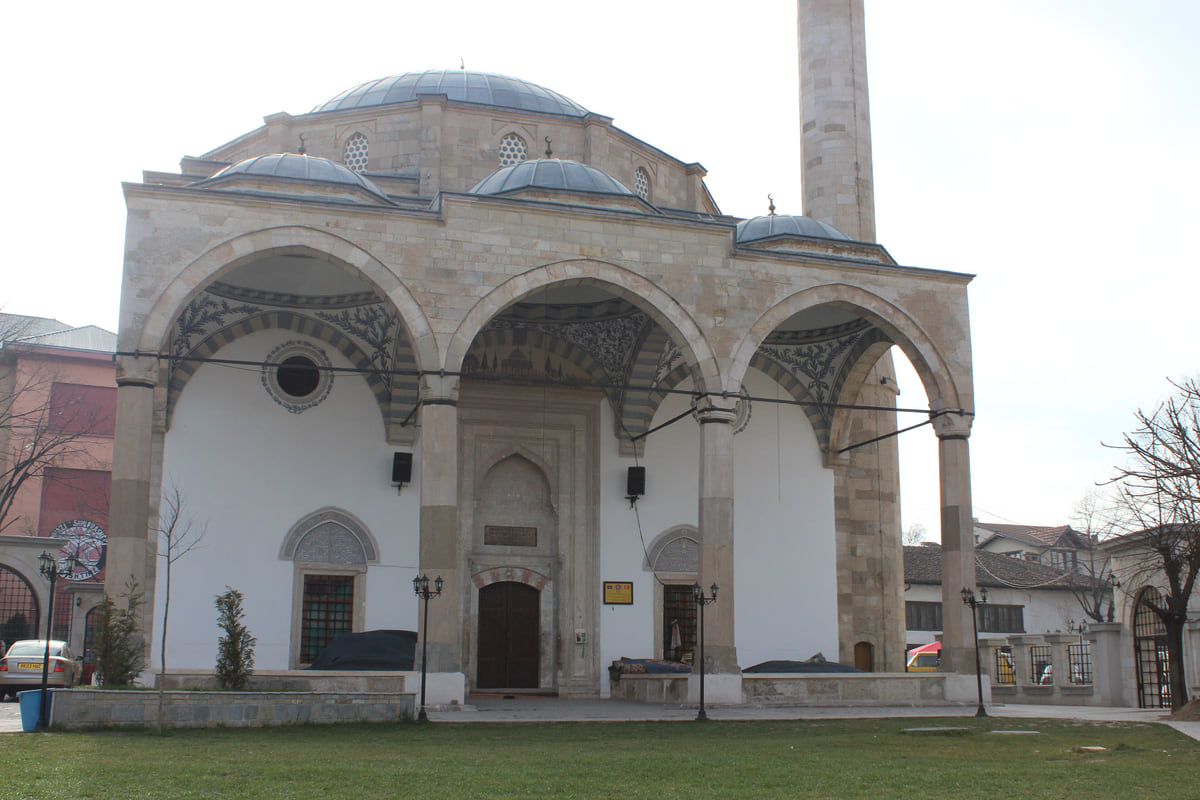
The Imperial Mosque in Pristina with its three-arched portico, grey lead domes and stone minaret rising above the lawn
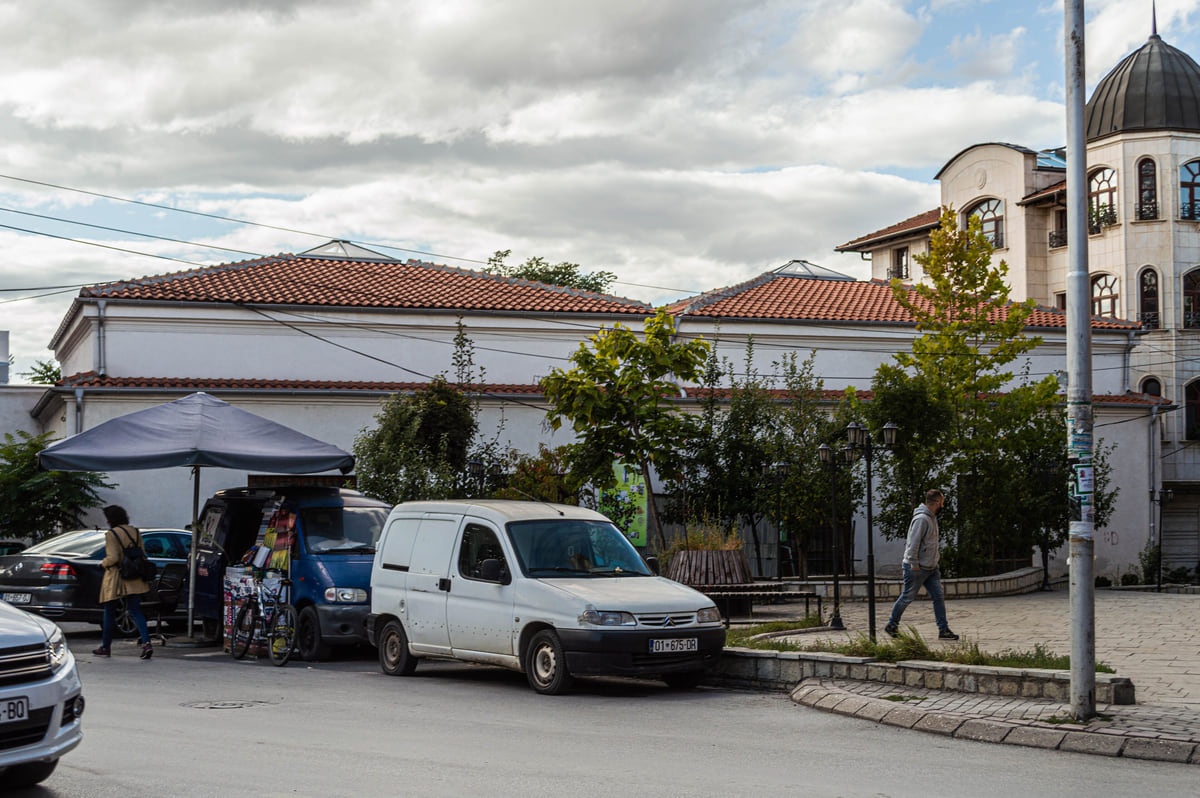
The Great Hammam of Pristina, a low whitewashed building with a red tiled roof on a street in the historic centre
The clock tower at a glance
| Detail | Value |
|---|---|
| Albanian name | Sahat Kulla |
| Built | Late 19th century, near an earlier tower |
| Total height | 26 m |
| Stone section | Up to 16.5 m |
| Upper section | Solid brick |
| Roof | Timber covered in lead |
| Mechanical clock | Worked until the 1970s |
| Mechanism and bell stolen | 2001 |
| Digital clock | Since 2002 |
| Old bell inscription | 1764, in Romanian |
Kosovo Ministry of Culture heritage database (dtk.rks-gov.net, record 8620), checked on 10 October 2026. It gives no opening hours or interior access.
Test yourself
True or false?
0/3 Pick before you peek.
-
Pristina's clock tower is built entirely of stone.
See the answer
False. According to the Ministry of Culture, the stone reaches 16.5 m and the rest, up to 26 m, is solid brick.
-
The tower's old bell had an inscription in Romanian.
See the answer
True. The Ministry of Culture records a 1764 inscription dedicated to Voivode Jan Moldovan, in 2 cm letters running all the way round the bell.
-
The original mechanical clock still keeps time.
See the answer
False. It stopped in the 1970s, the mechanism was stolen in 2001 and the tower has had a digital clock since 2002.
Map
Where Pristina Clock Tower is
The Bjeshkët e Nemuna mountains close off the west and the Sharr the south; in the middle lies the Pristina plain. Every number opens its guide.
 1Pristina 2Newborn monument 3National Library 4Mother Teresa Cathedral 5Mother Teresa Boulevard 6Kosovo Museum 7Emin Gjiku Ethnological Museum 8Imperial Mosque 9Pristina Clock Tower 10Pristina Old Bazaar 11Great Hammam of Pristina 12Germia Park 13Bear Sanctuary Prishtina 14Restaurants in Pristina
 Map data © OpenStreetMap contributors (ODbL)
- 1PristinaCapital of Kosovo under its Constitution
- 2Newborn monumentTypographic sculpture for 17 February 2008
- 3National LibraryAndrija Mutnjaković, 1974-1981
- 4Mother Teresa CathedralCatholic cathedral with a lookout tower
- 5Mother Teresa BoulevardThe pedestrian heart of central Pristina
- 6Kosovo MuseumA museum since 1949, in this building since 1980
- 7Emin Gjiku Ethnological MuseumThe Kosovo Museum's ethnological branch
- 8Imperial MosqueSultan Mehmed Fatih Mosque, 15th century
- 9Pristina Clock TowerSahat Kulla, late 19th century
- 10Pristina Old BazaarProtected old town, 14th to 19th centuries
- 11Great Hammam of PristinaHamami i Madh, 14th-15th century
- 12Germia ParkProtected nature park since 1987
- 13Bear Sanctuary PrishtinaFour Paws, at Mramor, since 2013
- 14Restaurants in PristinaOver twenty places on the Municipality's map
0 of 208 Kosovo guides
Your next stamp
- One day in Pristina
- Pristina Old Bazaar
- Mother Teresa Cathedral
- Vushtrri Fortress
- Pristina
- Prizren Archaeological Museum
- Imperial Mosque
- Gjakova Grand Bazaar
- Gjeravica
- Places to visit
- Pristina region
- Visoki Dečani Monastery
- Bjeshkët e Nemuna National Park
- Hadum Mosque
- Mitrovica Region
- Things to do
- Most beautiful places
- Sheh Danjolli tekke
- Prettiest villages
- Tailors' Bridge
- Rugova Canyon
- UNESCO sites
- Gjakova
- Map
- Where is Kosovo
- Regions
- Municipalities
- Cities
- Gračanica Monastery
- Mitrovica
- Patriarchate of Peć
- Prizren
- Rugova via ferrata
- Fushë Kosovë
- Population
- Vushtrri
- Podujeva
- Radavc Cave
- Size
- Bajrakli Mosque
- Devič Monastery
- Gazimestan
- Ibar Bridge
- Is it a country?
- Istog
- Peja
- Prizren region
- Ulpiana
- Vushtrri Stone Bridge
- Gadime Cave
- Klina
- Name
- Deçan
- Flag
- Isa Boletini Complex
- Novo Brdo Fortress
- History
- Junik
- Lake Batllava
- Zvečan Fortress
- Banjska Monastery
- Ferizaj region
- Languages
- Rahovec
- Ferizaj
- Religion
- Sokolica Monastery
- Currency
- Lake Gazivoda
- Štrpce
- Brezovica
- EU membership
- Entry requirements
- Skiing in Kosovo
- Kaçanik
- Serbian border
- Gračanica
- Guesthouses in Rugova
- Hotels in Peja
- Kaçanik fortress
- Newborn monument
- North Mitrovica
- One day in Prizren
- Peja bazaar
- Peja region
- Public holidays
- Velika Hoča
- Facts
- Gjakova region
- Hani i Elezit
- Hotels in Gjakova
- National Library
- Obiliq
- Zočište Monastery
- Drenas
- Shtime
- Skënderaj
- Lipjan
- Mother Teresa Boulevard
- Zvečan
- Kosovo Museum
- Leposavić
- Novo Brdo
- Emin Gjiku Ethnological Museum
- Janjevo
- Zubin Potok
- Great Hammam of Pristina
- Bogë
- Germia Park
- Getting there
- Lake Radoniq
- Prizren Fortress
- Bear Sanctuary Prishtina
- Drelaj
- Flights
- Sinan Pasha Mosque
- Hotels in Pristina
- Pristina airport
- Prizren stone bridge
- Buses
- Grand Hotel Pristina
- Our Lady of Ljeviš
- Prizren hammam
- Swiss Diamond Hotel
- Tirana to Pristina
- League of Prizren
- Restaurants in Pristina
- Skopje to Pristina
- Belgrade to Pristina
- Balkans itinerary
- St George's Cathedral
- Church of the Holy Saviour
- Getting around
- Holy Archangels Monastery
- Trains
- Car hire
- Day trips
- Marash
- Driving
- Sharr National Park
- Taxis
- Distances
- Prevalla
- Dragash
- Road trip
- Brod
- Prices and budget
- On a budget
- Restelica
- Free things to do
- Mirusha waterfalls
- Malisheva
- Safety
- Mamusha
- Scams
- Healthcare
- National parks in Kosovo
- Nightlife
- Suhareka
- Mobile and roaming
- Mountains in Kosovo
- Mushtisht
- Hiking in Kosovo
- Korisha
- Packing list
- DokuFest
- Peaks of the Balkans
- With kids
- Holidays
- Hotels in Prizren
- Kosovo lakes
- 3 days
- Caves and waterfalls
- Restaurants in Prizren
- 5 days
- One week
- Gjilan region
- Kosovo food
- Sunny Hill Festival
- Gjilan
- Rahovec wine
- Atik Mosque, Gjilan
- Kosovo beer
- Draganac Monastery
- Where to eat in Kosovo
- Kamenica
- Where to stay in Kosovo
- Kllokot
- Weather in Kosovo
- Best time to visit Kosovo
- Partesh
- Kosovo in winter
- Ranillug
- Kosovo in spring
- Viti
- Kosovo in summer
- Letnica
- Binač Monastery
- Kosovo in autumn
- Events in Kosovo
- Independence Day
- Kosovo monasteries
- Mosques in Kosovo
- Kullas in Kosovo
- Castles in Kosovo
- Museums in Kosovo
- Bazaars in Kosovo
Frequently asked questions
How tall is Pristina clock tower?
26 metres, according to the heritage database of Kosovo's Ministry of Culture. It's stone up to 16.5 metres and solid brick for the rest, on a hexagonal plan.
How old is the clock tower in Pristina?
It dates from the late 19th century. The Ministry of Culture says it was built near the spot where an earlier clock tower stood, in the courtyard of the building that now houses the Kosovo Museum.
Does the clock still work?
Yes, though not the original one. The mechanism ran until the 1970s, then stood still until 2001, when the works and the bell were stolen. A digital clock has been in place since 2002.
Can you climb Pristina clock tower?
I haven't found any official source saying you can, nor any opening hours. The Ministry describes the staircase inside, but that doesn't mean it's open to visitors, so I'd treat it as something you admire from outside.
Where is the clock tower in Pristina?
In the old town, in the courtyard of a school building and a few steps from the Imperial Mosque and the Great Hammam, inside the protected old bazaar ensemble.
What's special about its bell?
The old bell carried a Romanian inscription from 1764 dedicated to Voivode Jan Moldovan. The Ministry of Culture says the Ottomans took it as war booty from Moldavia or Wallachia, hung it in Vushtrri, and Jashar Pasha later had it brought to Pristina.
By
Tourism graduate with a master’s in Tourism Management and Planning from the University of Málaga, who has travelled across Europe. He writes every guide from official sources and his own judgement.
Published on . Facts checked on .
Sources
Some links in this guide are affiliate links: if you book through them, the site earns a commission at no extra cost to you. Affiliate disclosure
Photos: Arnisa Kryeziu, Agron Berisha (CC BY-SA 4.0); Eraalickaj (CC BY-SA 3.0); Agron Berisha (CC BY-SA 4.0), via Wikimedia Commons.