Kalaja e Kaçanikut
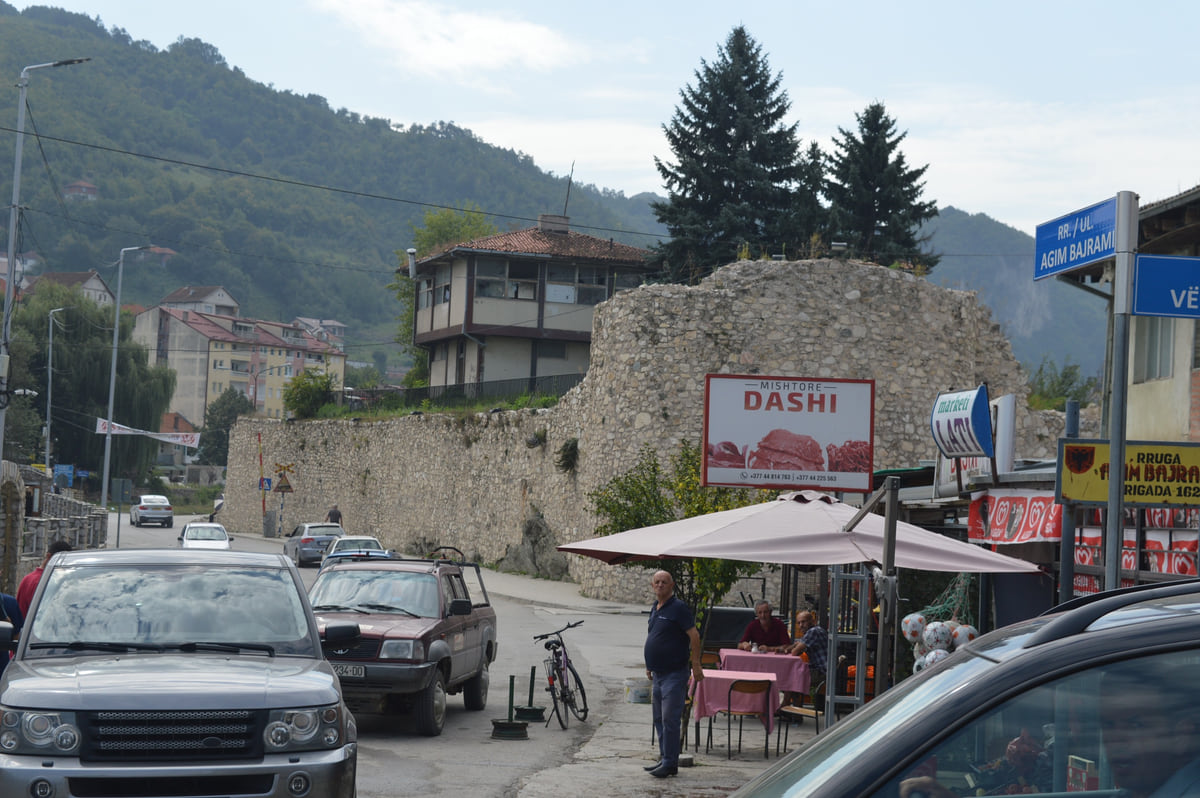
Kaçanik fortress, a town wall between houses and parked cars
Kaçanik fortress (Kalaja e Kaçanikut) stands in the centre of Kaçanik, in southern Kosovo. The Ministry of Culture heritage database lists it as an archaeological site from the Late Middle Ages, 16th century, on the provisional protection list of 1 October 2014. No opening times, entry price or visitor centre are published.
In 30 seconds
Full read: 3 min
- Kaçanik fortress stands in the centre of Kaçanik, in southern Kosovo.
- The heritage database lists it as a 16th-century archaeological site.
- The record shows permanent protection in 1967 and the provisional list of 1 October 2014.
- No opening times or prices are published; the walls are visible from the street.
It isn't a fortress to spend a morning on, but one to stop at for half an hour on the way to Skopje. What makes it interesting is exactly that, it isn't on some remote hilltop but tucked into the town, with daily life going on beside it.

Before you go
What I would keep in mind
-
01 Most beautiful
Walls and a tower right on the street
Photos on Commons show its stone walls and a round tower beside the streets of the centre, with shops and parked cars in front.
Kaçanik -
02 Getting there
Just over 500 metres from the station
Measured on OpenStreetMap, the walls are just over 500 m from Kaçanik station, so you could arrive by train and walk.
trains in Kosovo -
03 My tip
There's a second fort in the municipality
The heritage database also lists the Llanishtë fort, at a spot called Vranjak, from Late Antiquity. It's older, but there's no access information.
castles in Kosovo
Some fortresses you climb and some you walk past. Kaçanik’s is the second kind. It doesn’t crown a hill above the valley but sits in the middle of town, its walls right up against the pavements and a round tower between shops and parked cars. That, to me, is what makes it worth a look.
What the official record says
The Ministry of Culture’s cultural heritage database (DTK) lists it as «Kalaja e Kaçanikut», in the municipality and settlement of Kaçanik. It classes it as an archaeological site rather than an architectural one and places it in the Late Middle Ages, in the 16th century. The record shows permanent protection in 1967 and then places it on the provisional protection lists of 2012 and 1 October 2014. Its address is given as Agim Bajrami street, the one that runs past the walls.
The archaeological label tells you something useful. What survives are remains, not a building in use. The basic record gives no plan, dimensions or history, and I’m not going to pad it out with claims nobody can back up. If you want to see what’s there, the photos on Commons are the most reliable guide, showing tall stone walls, a round tower and an archway leading inside.
A fortress inside the town
OpenStreetMap marks it as town walls in the very centre of Kaçanik, and the photo on this page bears that out. In front of the walls there’s a street, pavements and parked cars. It isn’t a fenced-off site reached down a track but part of the town’s everyday scenery, a bit like stumbling on a stretch of medieval wall in an English market town.
That keeps the visit simple. You see it from outside, walk around it and can peer through the archway. No opening times, price or visitor centre are published as of 10 October 2026, so I won’t promise you an interior to explore or information panels. I’ll only ask the obvious, don’t climb on the walls, which are protected heritage.
Once your dates are set, check which hotels are still free in Ferizaj before prices climb.
A second fort in the same municipality
The DTK lists a second site in the municipality, the fort at Llanishtë, at a spot called Vranjak, from Late Antiquity, on the same 2014 list. Its record puts it about 1 km south of Kaçanik, at 684 m, where what survives is a wall roughly 1.7 m thick. It’s older than the one in town, but I have no access details, so I wouldn’t recommend it as a visit. If fortifications are your thing, from late antique to 16th century, I gather them in castles in Kosovo, and the most spectacular of all is Prizren fortress.
Getting there and fitting it in
Kaçanik station, on the railway that runs down from Ferizaj to the border, is just over 500 m from the walls on OpenStreetMap. I couldn’t get a timetable out of the Trainkos website, so in practice you’ll come by car, keeping right.
The way I’d fit it in is as a stop on the road between Pristina and Skopje. Half an hour in Kaçanik, a coffee, then on to the Hani i Elezit crossing. Since the FCDO expects delays at that border in high season and over holidays, I’d rather stop before crossing than find myself short of time later.
If you would rather have a local show you round, book a guided tour in Kaçanik fortress and choose by the reviews.
Once your dates are set, check which hotels are still free in Ferizaj before prices climb.
The fortress in the heritage database
| Item | Detail |
|---|---|
| Name | Kalaja e Kaçanikut |
| Municipality and settlement | Kaçanik |
| Class | Archaeological site |
| Period | Late Middle Ages, 16th century |
| Protection | Permanent in 1967; provisional on the 2012 and 1 October 2014 lists |
| Record | dtk.rks-gov.net, heritageId=655 |
Opening times, price and visiting rules: no official data as of 10 October 2026.
Test yourself
True or false?
0/3 Pick before you peek.
-
Kaçanik fortress sits on a mountaintop away from the town.
See the answer
False. It's in the town itself. OpenStreetMap places it by the central streets and photos show it surrounded by houses.
-
The heritage database classes it as an archaeological site.
See the answer
True. Its record lists it as an archaeological site from the Late Middle Ages, 16th century.
-
Kaçanik municipality has only one listed fortress.
See the answer
False. The database also lists the late antique fort at Llanishtë.
Map
Where Kaçanik fortress is
The Bjeshkët e Nemuna mountains close off the west and the Sharr the south; in the middle lies the Pristina plain. Every number opens its guide.

0 of 208 Kosovo guides
Your next stamp
- Kaçanik
- Prizren Fortress
- Castles in Kosovo
- Zvečan Fortress
- Vushtrri Fortress
- Novo Brdo Fortress
- Prizren
- Gjakova Grand Bazaar
- Gjeravica
- Places to visit
- Pristina region
- Visoki Dečani Monastery
- Bjeshkët e Nemuna National Park
- Hadum Mosque
- Mitrovica Region
- Things to do
- Most beautiful places
- Sheh Danjolli tekke
- Prettiest villages
- Tailors' Bridge
- Rugova Canyon
- UNESCO sites
- Gjakova
- Map
- Where is Kosovo
- Regions
- Municipalities
- Cities
- Gračanica Monastery
- Mitrovica
- Patriarchate of Peć
- Pristina
- Rugova via ferrata
- Fushë Kosovë
- Population
- Vushtrri
- Podujeva
- Radavc Cave
- Size
- Bajrakli Mosque
- Devič Monastery
- Gazimestan
- Ibar Bridge
- Is it a country?
- Istog
- One day in Pristina
- Peja
- Prizren region
- Ulpiana
- Vushtrri Stone Bridge
- Gadime Cave
- Klina
- Name
- Deçan
- Flag
- Isa Boletini Complex
- History
- Junik
- Lake Batllava
- Banjska Monastery
- Ferizaj region
- Languages
- Rahovec
- Ferizaj
- Religion
- Sokolica Monastery
- Currency
- Lake Gazivoda
- Štrpce
- Brezovica
- EU membership
- Entry requirements
- Skiing in Kosovo
- Serbian border
- Gračanica
- Guesthouses in Rugova
- Hotels in Peja
- Newborn monument
- North Mitrovica
- One day in Prizren
- Peja bazaar
- Peja region
- Public holidays
- Velika Hoča
- Facts
- Gjakova region
- Hani i Elezit
- Hotels in Gjakova
- National Library
- Obiliq
- Zočište Monastery
- Drenas
- Mother Teresa Cathedral
- Shtime
- Skënderaj
- Lipjan
- Mother Teresa Boulevard
- Zvečan
- Kosovo Museum
- Leposavić
- Novo Brdo
- Emin Gjiku Ethnological Museum
- Janjevo
- Zubin Potok
- Imperial Mosque
- Pristina Clock Tower
- Pristina Old Bazaar
- Great Hammam of Pristina
- Bogë
- Germia Park
- Getting there
- Lake Radoniq
- Bear Sanctuary Prishtina
- Drelaj
- Flights
- Sinan Pasha Mosque
- Hotels in Pristina
- Pristina airport
- Prizren stone bridge
- Buses
- Grand Hotel Pristina
- Our Lady of Ljeviš
- Prizren hammam
- Swiss Diamond Hotel
- Tirana to Pristina
- League of Prizren
- Restaurants in Pristina
- Skopje to Pristina
- Belgrade to Pristina
- Prizren Archaeological Museum
- Balkans itinerary
- St George's Cathedral
- Church of the Holy Saviour
- Getting around
- Holy Archangels Monastery
- Trains
- Car hire
- Day trips
- Marash
- Driving
- Sharr National Park
- Taxis
- Distances
- Prevalla
- Dragash
- Road trip
- Brod
- Prices and budget
- On a budget
- Restelica
- Free things to do
- Mirusha waterfalls
- Malisheva
- Safety
- Mamusha
- Scams
- Healthcare
- National parks in Kosovo
- Nightlife
- Suhareka
- Mobile and roaming
- Mountains in Kosovo
- Mushtisht
- Hiking in Kosovo
- Korisha
- Packing list
- DokuFest
- Peaks of the Balkans
- With kids
- Holidays
- Hotels in Prizren
- Kosovo lakes
- 3 days
- Caves and waterfalls
- Restaurants in Prizren
- 5 days
- One week
- Gjilan region
- Kosovo food
- Sunny Hill Festival
- Gjilan
- Rahovec wine
- Atik Mosque, Gjilan
- Kosovo beer
- Draganac Monastery
- Where to eat in Kosovo
- Kamenica
- Where to stay in Kosovo
- Kllokot
- Weather in Kosovo
- Best time to visit Kosovo
- Partesh
- Kosovo in winter
- Ranillug
- Kosovo in spring
- Viti
- Kosovo in summer
- Letnica
- Binač Monastery
- Kosovo in autumn
- Events in Kosovo
- Independence Day
- Kosovo monasteries
- Mosques in Kosovo
- Kullas in Kosovo
- Museums in Kosovo
- Bazaars in Kosovo
Frequently asked questions
Where is Kaçanik fortress?
In the centre of Kaçanik, in southern Kosovo, between Ferizaj and the border with North Macedonia. OpenStreetMap shows it alongside the town-centre streets.
How old is Kaçanik fortress?
The Ministry of Culture heritage database places it in the Late Middle Ages and dates it to the 16th century.
Can you visit Kaçanik fortress?
No opening times or prices are published by an official source as of 10 October 2026. The walls can be seen from the street, as the photos show.
How long do you need there?
Half an hour is enough to walk round the walls and see the tower from outside. It's a stop on the way, not a half-day visit.
What other fortresses are nearby?
In the same municipality, the late antique fort at Llanishtë. Further afield, Prizren fortress, which the heritage database dates to the 4th century.
By
Tourism graduate with a master’s in Tourism Management and Planning from the University of Málaga, who has travelled across Europe. He writes every guide from official sources and his own judgement.
Published on . Facts checked on .
Sources
Some links in this guide are affiliate links: if you book through them, the site earns a commission at no extra cost to you. Affiliate disclosure
Photos: Fjolle Ramadani (CC BY-SA 4.0), via Wikimedia Commons.