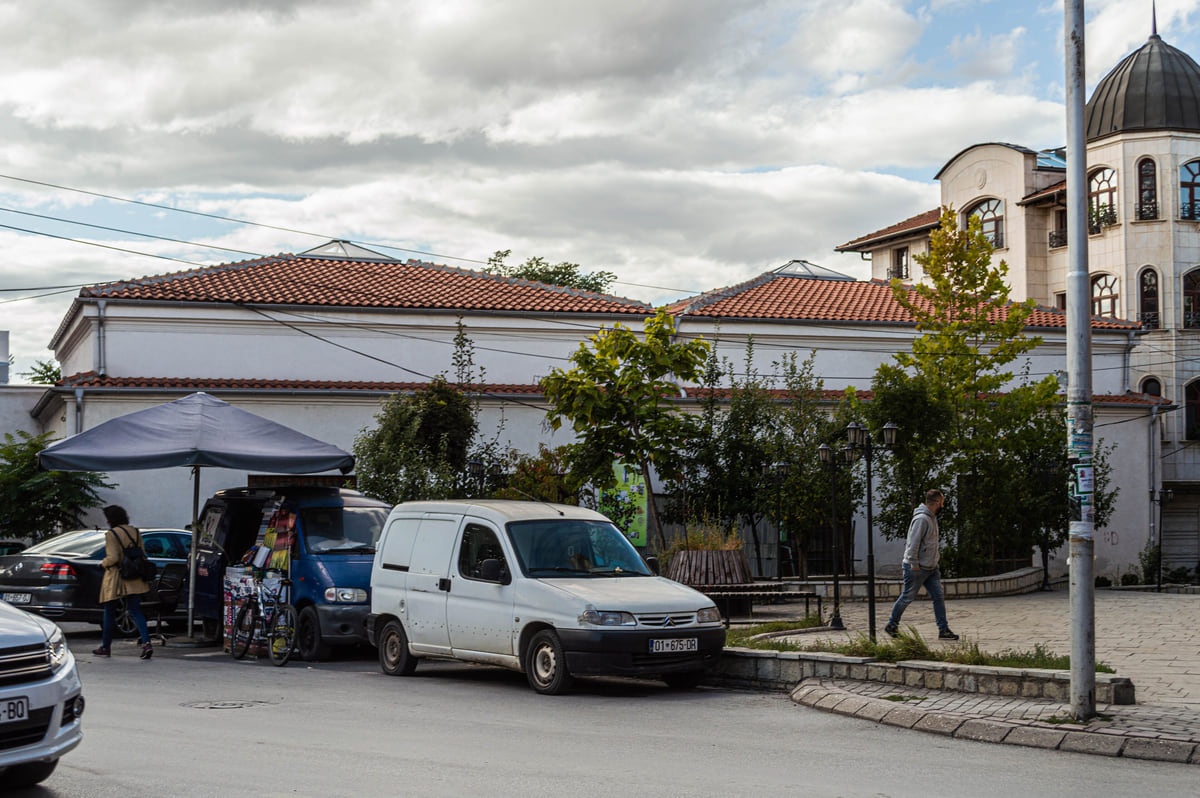
Hamami i Madh, 14th-15th century
The Great Hammam of Pristina, a double bath awaiting its second life
The Great Hammam of Pristina (Hamami i Madh) is the Ottoman bathhouse in the old town, beside the Imperial Mosque. Kosovo's Ministry of Culture dates it to the 14th or 15th century and says it was a double hammam, used by men and women at once, with a hot room under 18 domes. It stopped working as a bath in 1960 and has been under restoration since 2009.
In 30 seconds
Full read: 2 min
- The Great Hammam of Pristina is a 14th-15th-century Ottoman bathhouse beside the Imperial Mosque.
- It was a double hammam, for men and women at once, with its hot room under 18 domes.
- It stopped working as a bath in 1960 and has been under restoration since 2009, with no reopening date published.
Don't pack your swimming things, because this hammam hasn't worked as one since 1960. I'd look at it from outside on the same loop as the Imperial Mosque and the clock tower, and if Ottoman baths are your thing, add the 16th-century one in Prizren to your list.

Before you go
What I would keep in mind
-
01 My tip
It was a double bath
The Ministry of Culture describes it as a “çift” hammam, used at the same time by men and women in two wings. That's the key to why the building is so long and low.
-
02 Most beautiful
Three centuries in a hundred metres
The hammam, the 1461 Imperial Mosque and the 19th-century clock tower sit side by side. It's the corner where the Ottoman Pristina that survived is easiest to read.
Imperial Mosque in Pristina -
03 Getting there
The other great Ottoman hammam is in Prizren
The hammam of Gazi Mehmed Pasha, in the centre of Prizren, dates from the 16th century according to the Ministry of Culture and is also protected. Pristina and Prizren pair well on a short trip.
Prizren hammam -
04 To save money
Free to see from outside
While restoration continues there's no published entry or opening time. Walking round it costs nothing and fits with the old bazaar and the Ethnological Museum, a few minutes away.
Pristina's old bazaar
The Great Hammam is the part of Pristina’s old town that most people walk straight past. It’s a low building hard by the Imperial Mosque that hasn’t worked for decades and has been a building site for years. Yet it’s one of the oldest monuments in the city and, for me, one of those that best explains how daily life ran in Ottoman Pristina. Here’s what the Ministry of Culture says about it and what to expect if you wander over.
A bathhouse from the 14th or 15th century
Nobody knows exactly when it was built. Working from the surviving records, the Ministry of Culture places it between the 14th and 15th centuries and says whole generations of locals used it. It stands on Vasil Andoni street, in a cluster the record considers as important as the building itself, with three historic mosques, the Pristina clock tower, several protected houses and a market around it.
Its grandest neighbour is the Imperial Mosque, dated 1461. Mosque and bathhouse went together in the Ottoman town, and here they still stand a few metres apart.
What was it like inside?
It was a double hammam, what Turkish calls “çift”, with two sections so men and women could use it at the same time. According to the Ministry, it followed the classic layout the Ottomans inherited from Roman baths. There was a central anteroom that served as the changing room, a warm room you passed through and the hot room, with a boiler for the water, roofed with 18 domes.
The building has changed a great deal, especially on its main and eastern fronts, but the record stresses that the original plan and most of the structure survive. That’s why the Ministry rates it so highly, for its history, its social role and even its spiritual one, because the bath was a meeting place for the town and not just somewhere to wash.
If you are staying the night, see the best hotel deals in Pristina for your dates: the well-placed rooms go fast.
From bathhouse to storeroom to building site
The recent history is less kind. The hammam stopped working as a bath in 1960 and was partly used afterwards as a storeroom and a shop. From 1989 it had no maintenance at all, even though it counts as one of Pristina’s most important monuments. In 2007 money started going into a conservation and restoration plan, the plan was finished in 2009 and work began that same year, still ongoing according to the record.
No official source I checked gives a reopening date or says what the building will be used for once the work is done. So I won’t promise you anything I don’t know.
Is it worth a detour?
Yes, if you’re in the old town anyway, because it’s right beside what you’ll be seeing regardless. Walk round it, notice how long it is, which is the trace of the two wings, and look up at the domes on the roof. If Ottoman baths interest you, add the Prizren hammam, the bath of Gazi Mehmed Pasha, dated by the Ministry of Culture to the 16th century.
I’d fit it into the first loop of the morning, with the mosque and the tower, then carry on to Pristina’s old bazaar and the Ethnological Museum, a few minutes away. It’s the route I suggest for one day in Pristina.
So you do not lose the morning at the ticket office, browse tickets and tours in Great Hammam of Pristina on GetYourGuide.
If you are staying the night, see the best hotel deals in Pristina for your dates: the well-placed rooms go fast.
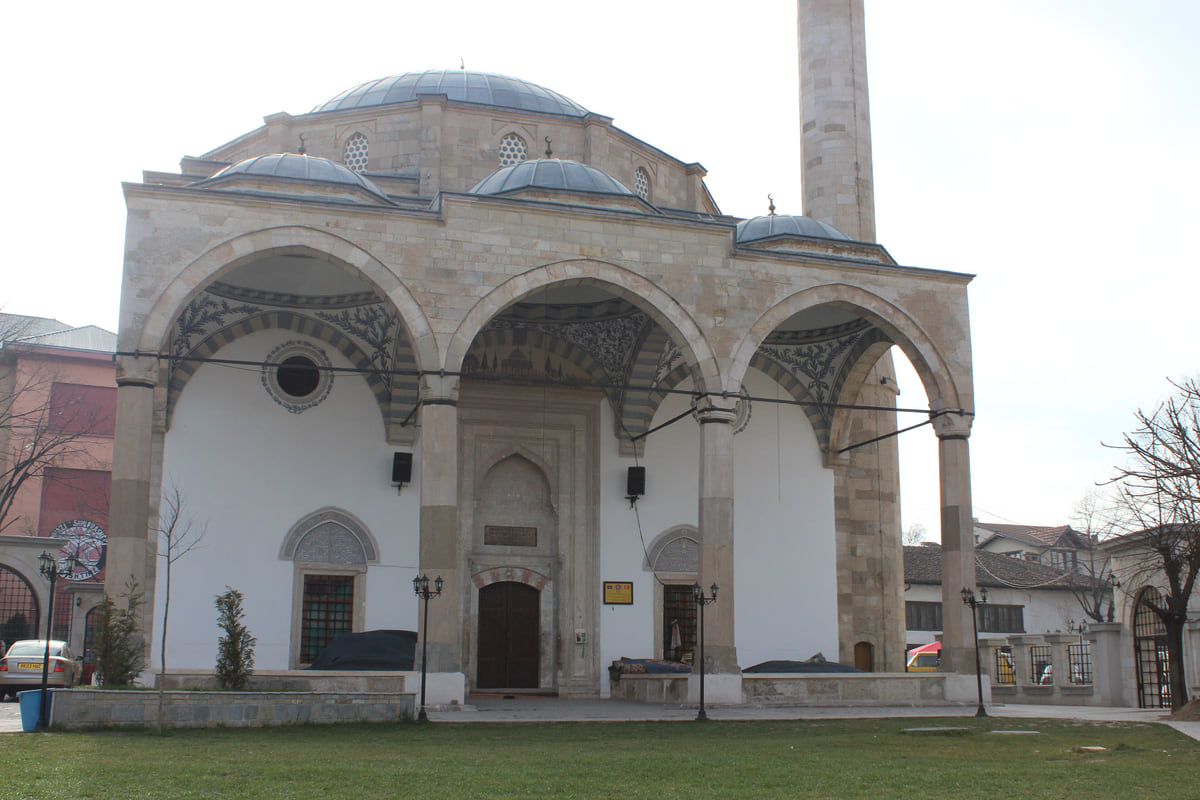
The Imperial Mosque in Pristina with its three-arched portico, grey lead domes and stone minaret rising above the lawn
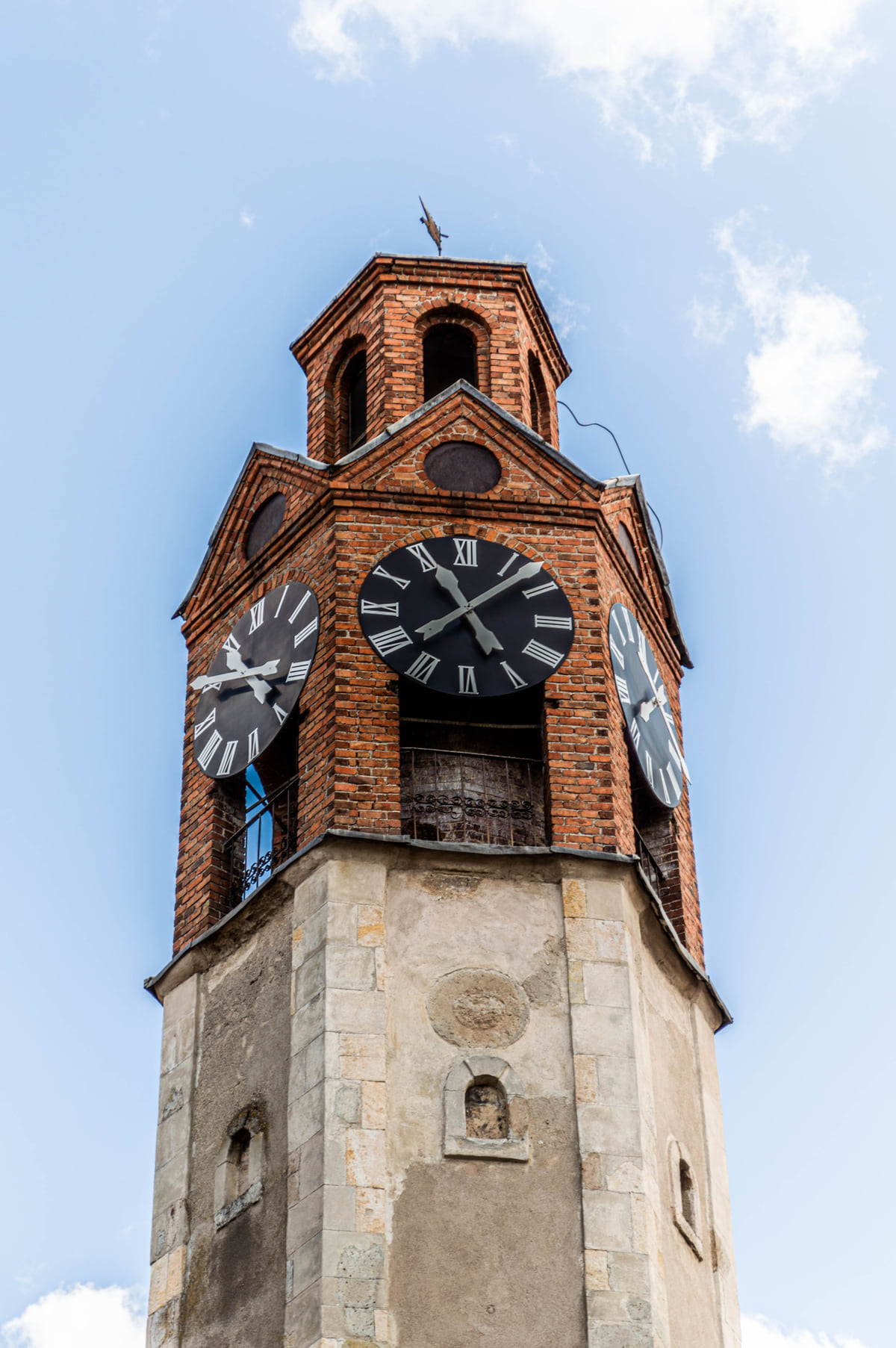
The brick clock tower of Pristina with white clock faces and an iron lantern on top, seen from below against a clear sky
The Great Hammam at a glance
| Detail | Value |
|---|---|
| Date | 14th-15th century (exact year unknown) |
| Type | Double, for men and women at the same time |
| Rooms | Central changing room, warm room and hot room with a boiler |
| Domes over the hot room | 18 |
| Stopped working as a bath | 1960 |
| No maintenance | From 1989 |
| Conservation plan | Prepared 2007-2009 |
| Restoration | Began 2009, ongoing according to the record |
| Street | Vasil Andoni |
Kosovo Ministry of Culture heritage database (dtk.rks-gov.net, record 8632), checked on 10 October 2026. No reopening date, opening hours or price published.
Test yourself
True or false?
0/3 Pick before you peek.
-
You can still have a Turkish bath at the Great Hammam of Pristina.
See the answer
False. The Ministry of Culture says it stopped working as a bath in 1960. It has been under restoration since 2009.
-
Men and women used the hammam at the same time.
See the answer
True. It was a double, or “çift”, hammam with two wings so men and women could bathe at once, according to the Ministry of Culture.
-
The hot room was roofed with 18 domes.
See the answer
True. The Ministry of Culture's record describes the caldarium, with a boiler for the water, covered by 18 domes.
Map
Where Great Hammam of Pristina is
The Bjeshkët e Nemuna mountains close off the west and the Sharr the south; in the middle lies the Pristina plain. Every number opens its guide.
 1Pristina 2Newborn monument 3National Library 4Mother Teresa Cathedral 5Mother Teresa Boulevard 6Kosovo Museum 7Emin Gjiku Ethnological Museum 8Imperial Mosque 9Pristina Clock Tower 10Pristina Old Bazaar 11Great Hammam of Pristina 12Germia Park 13Bear Sanctuary Prishtina 14Restaurants in Pristina
 Map data © OpenStreetMap contributors (ODbL)
- 1PristinaCapital of Kosovo under its Constitution
- 2Newborn monumentTypographic sculpture for 17 February 2008
- 3National LibraryAndrija Mutnjaković, 1974-1981
- 4Mother Teresa CathedralCatholic cathedral with a lookout tower
- 5Mother Teresa BoulevardThe pedestrian heart of central Pristina
- 6Kosovo MuseumA museum since 1949, in this building since 1980
- 7Emin Gjiku Ethnological MuseumThe Kosovo Museum's ethnological branch
- 8Imperial MosqueSultan Mehmed Fatih Mosque, 15th century
- 9Pristina Clock TowerSahat Kulla, late 19th century
- 10Pristina Old BazaarProtected old town, 14th to 19th centuries
- 11Great Hammam of PristinaHamami i Madh, 14th-15th century
- 12Germia ParkProtected nature park since 1987
- 13Bear Sanctuary PrishtinaFour Paws, at Mramor, since 2013
- 14Restaurants in PristinaOver twenty places on the Municipality's map
0 of 208 Kosovo guides
Your next stamp
- Prizren hammam
- Pristina Old Bazaar
- Imperial Mosque
- Grand Hotel Pristina
- Pristina
- Gračanica Monastery
- National Library
- Kosovo Museum
- Gjakova Grand Bazaar
- Gjeravica
- Places to visit
- Pristina region
- Visoki Dečani Monastery
- Bjeshkët e Nemuna National Park
- Hadum Mosque
- Mitrovica Region
- Things to do
- Most beautiful places
- Sheh Danjolli tekke
- Prettiest villages
- Tailors' Bridge
- Rugova Canyon
- UNESCO sites
- Gjakova
- Map
- Where is Kosovo
- Regions
- Municipalities
- Cities
- Mitrovica
- Patriarchate of Peć
- Prizren
- Rugova via ferrata
- Fushë Kosovë
- Population
- Vushtrri
- Podujeva
- Radavc Cave
- Size
- Bajrakli Mosque
- Devič Monastery
- Gazimestan
- Ibar Bridge
- Is it a country?
- Istog
- One day in Pristina
- Peja
- Prizren region
- Ulpiana
- Vushtrri Stone Bridge
- Gadime Cave
- Klina
- Name
- Vushtrri Fortress
- Deçan
- Flag
- Isa Boletini Complex
- Novo Brdo Fortress
- History
- Junik
- Lake Batllava
- Zvečan Fortress
- Banjska Monastery
- Ferizaj region
- Languages
- Rahovec
- Ferizaj
- Religion
- Sokolica Monastery
- Currency
- Lake Gazivoda
- Štrpce
- Brezovica
- EU membership
- Entry requirements
- Skiing in Kosovo
- Kaçanik
- Serbian border
- Gračanica
- Guesthouses in Rugova
- Hotels in Peja
- Kaçanik fortress
- Newborn monument
- North Mitrovica
- One day in Prizren
- Peja bazaar
- Peja region
- Public holidays
- Velika Hoča
- Facts
- Gjakova region
- Hani i Elezit
- Hotels in Gjakova
- Obiliq
- Zočište Monastery
- Drenas
- Mother Teresa Cathedral
- Shtime
- Skënderaj
- Lipjan
- Mother Teresa Boulevard
- Zvečan
- Leposavić
- Novo Brdo
- Emin Gjiku Ethnological Museum
- Janjevo
- Zubin Potok
- Pristina Clock Tower
- Bogë
- Germia Park
- Getting there
- Lake Radoniq
- Prizren Fortress
- Bear Sanctuary Prishtina
- Drelaj
- Flights
- Sinan Pasha Mosque
- Hotels in Pristina
- Pristina airport
- Prizren stone bridge
- Buses
- Our Lady of Ljeviš
- Swiss Diamond Hotel
- Tirana to Pristina
- League of Prizren
- Restaurants in Pristina
- Skopje to Pristina
- Belgrade to Pristina
- Prizren Archaeological Museum
- Balkans itinerary
- St George's Cathedral
- Church of the Holy Saviour
- Getting around
- Holy Archangels Monastery
- Trains
- Car hire
- Day trips
- Marash
- Driving
- Sharr National Park
- Taxis
- Distances
- Prevalla
- Dragash
- Road trip
- Brod
- Prices and budget
- On a budget
- Restelica
- Free things to do
- Mirusha waterfalls
- Malisheva
- Safety
- Mamusha
- Scams
- Healthcare
- National parks in Kosovo
- Nightlife
- Suhareka
- Mobile and roaming
- Mountains in Kosovo
- Mushtisht
- Hiking in Kosovo
- Korisha
- Packing list
- DokuFest
- Peaks of the Balkans
- With kids
- Holidays
- Hotels in Prizren
- Kosovo lakes
- 3 days
- Caves and waterfalls
- Restaurants in Prizren
- 5 days
- One week
- Gjilan region
- Kosovo food
- Sunny Hill Festival
- Gjilan
- Rahovec wine
- Atik Mosque, Gjilan
- Kosovo beer
- Draganac Monastery
- Where to eat in Kosovo
- Kamenica
- Where to stay in Kosovo
- Kllokot
- Weather in Kosovo
- Best time to visit Kosovo
- Partesh
- Kosovo in winter
- Ranillug
- Kosovo in spring
- Viti
- Kosovo in summer
- Letnica
- Binač Monastery
- Kosovo in autumn
- Events in Kosovo
- Independence Day
- Kosovo monasteries
- Mosques in Kosovo
- Kullas in Kosovo
- Castles in Kosovo
- Museums in Kosovo
- Bazaars in Kosovo
Frequently asked questions
Can you visit the Great Hammam of Pristina?
From outside, yes. The Ministry of Culture says restoration began in 2009 and was still going on when its record was written, and no official source gives opening hours, a price or a reopening date, so don't count on getting in.
Is the Pristina hammam still a working Turkish bath?
No. According to the Ministry of Culture it stopped working as a bath in 1960 and was then partly used as a storeroom and a shop.
How old is the Great Hammam of Pristina?
Nobody knows the exact year. The Ministry of Culture places it between the 14th and 15th centuries, based on the records that survive.
Where is the hammam in Pristina?
In the old town, on Vasil Andoni street, next to the Imperial Mosque and a few steps from the clock tower and the old bazaar.
What does a double hammam mean?
It had two sections so that men and women could bathe at the same time. The Ministry of Culture calls it a “çift” hammam, Turkish for a pair.
By
Tourism graduate with a master’s in Tourism Management and Planning from the University of Málaga, who has travelled across Europe. He writes every guide from official sources and his own judgement.
Published on . Facts checked on .
Sources
Some links in this guide are affiliate links: if you book through them, the site earns a commission at no extra cost to you. Affiliate disclosure
Photos: Agron Berisha (CC BY-SA 4.0); Eraalickaj (CC BY-SA 3.0); Arnisa Kryeziu, Agron Berisha (CC BY-SA 4.0), via Wikimedia Commons.