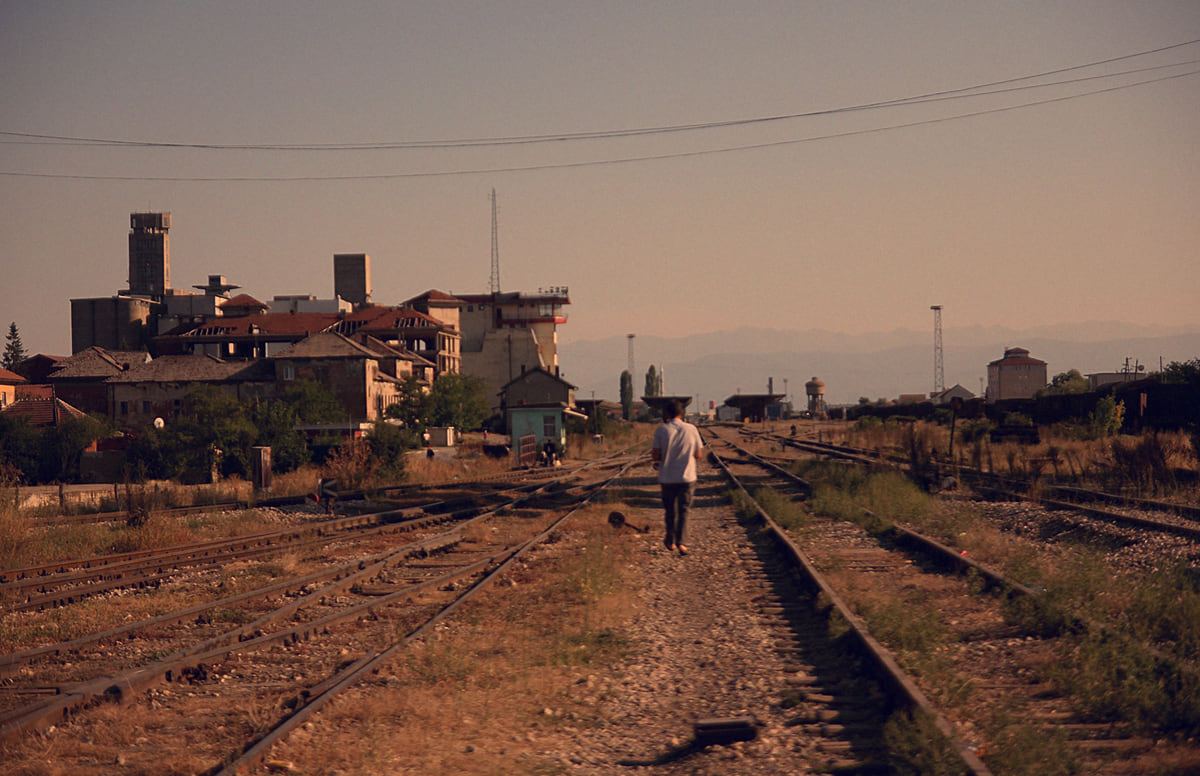
Pristina region, 63,949 people in 2024
Fushë Kosovë, Pristina's railway neighbour
Fushë Kosovë (Kosovo Polje in Serbian) is the municipality on Pristina's western edge, about 7 km from the capital's centre. It had 63,949 inhabitants in 2024, almost twice the 2011 figure, according to the Kosovo Agency of Statistics. It has Kosovo's main railway station and, near the airport, the 4th to 6th-century fortress of Harilaq.
In 30 seconds
Full read: 3 min
- Fushë Kosovë is the municipality on Pristina's western edge, about 7 km from the capital's centre.
- Its population almost doubled between 2011 and 2024, to 63,949.
- It has Kosovo's main railway station and the late Roman fortress of Harilaq, near the airport.
Fushë Kosovë isn't a place to stay or stroll, and I won't pretend otherwise. I treat it as the railway hub and the town on the airport road. If you've a spare afternoon before your flight home and like archaeology, the hill fort at Harilaq is what I'd go and look at.

Before you go
What I would keep in mind
-
01 Getting there
Kosovo's main railway station
The OSCE's 2018 municipal profile places the main station in this municipality, with trains to Skopje and other towns. Trainkos, the rail operator, is also headquartered in Fushë Kosovë.
trains in Kosovo -
02 Most beautiful
A fortress from Justinian's time
Harilaq sits on a hill of up to 766 m roughly two kilometres from the airport. Digs between 2005 and 2010 uncovered the walls with towers and a three-aisled church, according to the Ministry of Culture.
-
03 My tip
Traffic on the airport road
The OSCE notes that the road from Pristina to the airport runs straight through the town and that jams are common. If you're cutting it fine for a flight, allow for it.
Pristina airport -
04 To save money
Stay in Pristina, it's next door
With the capital about 7 km away as the crow flies, according to OpenStreetMap, I see no reason to book a room here unless you're catching a dawn train or flight.
Pristina
Few towns in Kosovo have changed as fast. In 2011 Fushë Kosovë was a municipality of 34,827 people; by 2024 it had 63,949, and the town alone went from 12,919 residents to 40,962. In practice it’s Pristina spilling west. I’m not going to tell you it’s pretty, because that isn’t why you’d come, but plenty of visitors pass through without realising.
Where it is and why you’ll end up here
Fushë Kosovë (Kosovo Polje in Serbian, which translates as the Kosovo field) lies in the Pristina region, its centre roughly 7 km from the capital’s as the crow flies, according to OpenStreetMap. The OSCE’s 2018 municipal profile puts its area at about 83 km² and points out something every visitor notices. The road from Pristina to the airport cuts through the town, and jams are a regular thing. If your flight home is early morning or at rush hour, I’d leave with time in hand.
The statistics agency counts 16 settlements in the municipality. After the town come Bresje, with 7,606 people, then Bardh i Madh, Nakaradë and Sllatinë e Madhe. Nearly all the growth is in the town and Bresje, which fits the picture of a commuter suburb for the capital.
The railway hub
According to the OSCE, Kosovo’s main railway station is here, with lines to Skopje and to other towns in Kosovo. Trainkos, the rail operator, has its head office on Sheshi i Lirisë square too. A reliable timetable is the one thing I can’t give you, because the Trainkos website shows a search box that won’t let the routes be read as text. My advice is to ask at the station the day before and keep a bus as plan B. There’s more in my guide to trains in Kosovo.
If you’re flying in from London, the sensible order is simple. Get from Pristina Airport into the capital by road, and only head out to Fushë Kosovë if you want to catch a train.
If you are staying the night, see the best hotel deals in Pristina for your dates: the well-placed rooms go fast.
Harilaq, the hill I’d climb
The heritage of Fushë Kosovë fits into three Ministry of Culture records, and one of them is worth the detour. Harilaq fortress stands on the hill known as Gradina, west of Harilaq village, at up to 766 metres above sea level and about two kilometres from the airport. Its walls enclose roughly 1.3 hectares.
Excavations started in 2005 and ran until 2010 over six seasons, with work to consolidate the walls. They exposed the outer face of the circuit wall with its towers, a three-aisled church with a sacristy and two ring-shaped structures belonging to a religious complex, along with tools, jewellery, coins, bricks and glass. The Ministry dates the site to the 4th to 6th centuries and singles out the reign of Justinian, the same emperor who rebuilt Ulpiana on the far side of Pristina. It is permanently protected.
Two more digs for the curious
At Bardh i Madh, on a hill with the Drenica river at its foot and Mount Çiçavica to the north, the Ministry protects a prehistoric fort with a trapezoid plan and an inner enclosure of 70 by 50 metres. Its decorated pottery is typical of the Iron Age Dardanians, and the site is dated from the 8th to the 5th century BC. A geomagnetic survey in 2011 picked up buried structures that have yet to be dug.
Near Graboc i Poshtëm, some 10 km west of the town and also beside the Drenica, an early medieval cemetery came to light in 2004, with dozens of graves, bronze rings and bracelets and granulated earrings. Fair warning, these are sites for people who already know what they’re looking for. No official source mentions a visitor centre or opening times.
So you do not lose the morning at the ticket office, browse tickets and tours in Pristina on GetYourGuide.
Worth an overnight stay?
Not in my book. There’s little to see in the town itself and Pristina is right next door with far more choice. For me Fushë Kosovë is a piece of the journey, the place you catch a train or drive through on the way to the airport, and an excuse to walk up to Harilaq if late Roman archaeology is your thing.
One more detail for nature lovers. The Environmental Protection Agency lists a special bird protection zone of 109.5 hectares, designated in 2014 and shared between Fushë Kosovë, Graçanicë and Lipjan. The list doesn’t name it or say whether there’s visitor access, so I can’t recommend it any more specifically than that.
If you are staying the night, see the best hotel deals in Pristina for your dates: the well-placed rooms go fast.
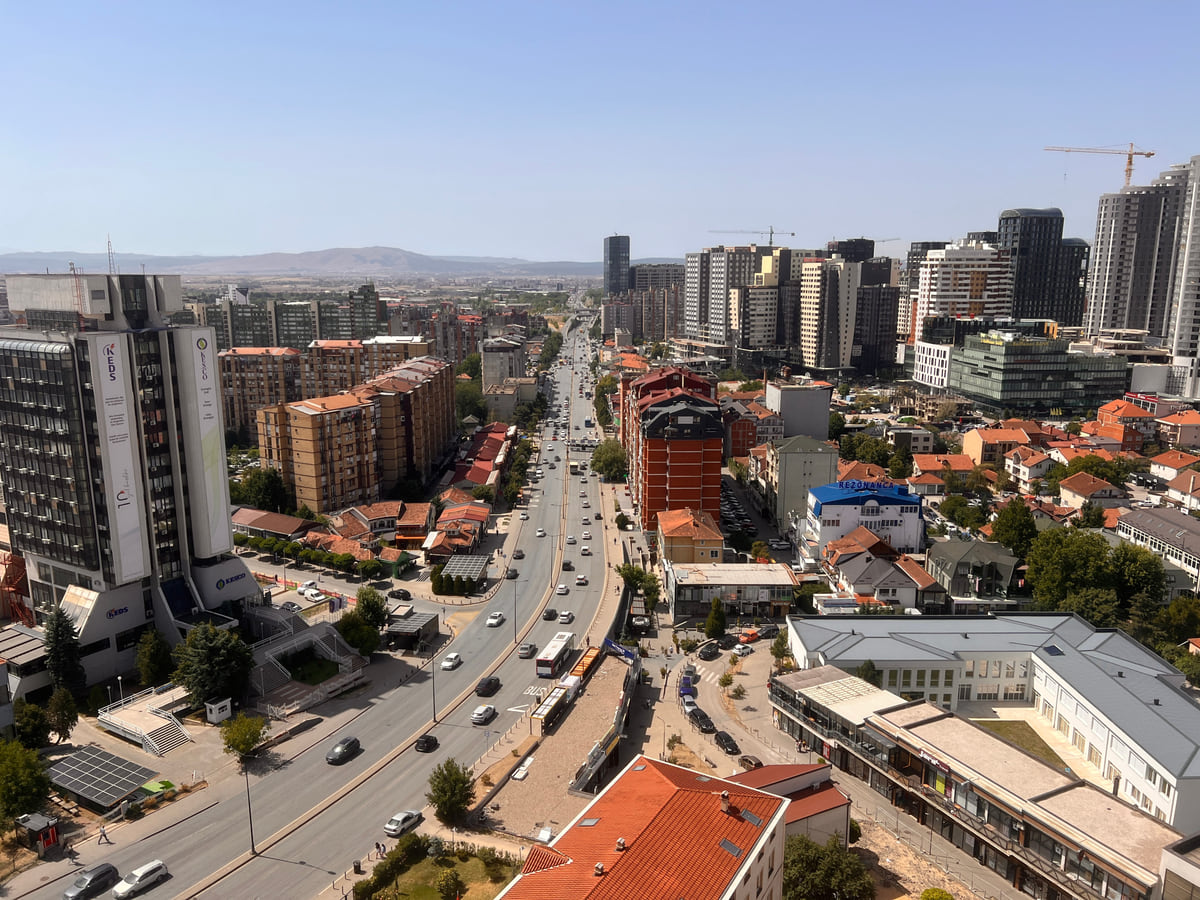
Pristina from the cathedral tower, looking down Bill Clinton Boulevard to tower blocks and green hills beyond
Fushë Kosovë's largest settlements
| Settlement | 2024 | 2011 |
|---|---|---|
| Fushë Kosovë | 40,962 | 12,919 |
| Bresje | 7,606 | 5,596 |
| Bardh i Madh | 2,434 | 2,750 |
| Nakaradë | 2,336 | 1,506 |
| Sllatinë e Madhe | 1,608 | 1,839 |
| Miradi e Poshtme | 1,579 | 1,647 |
| Municipality total (16 settlements) | 63,949 | 34,827 |
Kosovo Agency of Statistics (ASK), 2024 census, population by settlement. Names in Albanian, as ASK publishes them.
Fushë Kosovë in the Ministry of Culture's heritage database
| Site | Settlement | Period | Protection |
|---|---|---|---|
| Harilaq fortress | Harilaq | 4th-6th century | Permanent |
| Bellaçec prehistoric fort | Bardh i Madh | 8th-5th century BC | Temporary |
| Medieval cemetery | Graboc i Poshtëm | Early Middle Ages | Temporary |
Kosovo Ministry of Culture cultural heritage database (records 2384, 2399 and 2375), checked on 10 October 2026. No opening hours or admission charges published.
Test yourself
True or false?
0/3 Pick before you peek.
-
Fushë Kosovë town more than tripled in size between 2011 and 2024.
See the answer
True. It went from 12,919 to 40,962 inhabitants, according to the Kosovo Agency of Statistics census figures by settlement.
-
Harilaq fortress dates from the Ottoman period.
See the answer
False. The Ministry of Culture dates it to between the 4th and 6th centuries, with finds pointing mainly to the age of Justinian.
-
Trainkos, the rail operator, is headquartered in Fushë Kosovë.
See the answer
True. The footer of the Trainkos website gives its address in Fushë Kosovë, on Sheshi i Lirisë square.
Map
Where Fushë Kosovë is
The Bjeshkët e Nemuna mountains close off the west and the Sharr the south; in the middle lies the Pristina plain. Every number opens its guide.
 1Pristina region 2Pristina 3Fushë Kosovë 4Podujeva 5Gračanica 6Obiliq 7Drenas 8Lipjan 9Novo Brdo
 Map data © OpenStreetMap contributors (ODbL)
- 1Pristina regionOne of Kosovo's seven statistical regions
- 2PristinaCapital of Kosovo under its Constitution
- 3Fushë KosovëPristina region, 63,949 people in 2024
- 4PodujevaPristina region, 70,975 people in 2024
- 5GračanicaPristina region, 18,486 people in 2024
- 6ObiliqPristina region, 22,815 people in 2024
- 7DrenasPristina region, 48,079 people in 2024
- 8LipjanPristina region, 55,044 people in 2024
- 9Novo BrdoPristina region, 4,493 people in 2024
0 of 208 Kosovo guides
Your next stamp
- Ferizaj
- Cities
- Pristina
- Prizren
- Distances
- Podujeva
- Getting around
- Gjakova Grand Bazaar
- Gjeravica
- Places to visit
- Pristina region
- Visoki Dečani Monastery
- Bjeshkët e Nemuna National Park
- Hadum Mosque
- Mitrovica Region
- Things to do
- Most beautiful places
- Sheh Danjolli tekke
- Prettiest villages
- Tailors' Bridge
- Rugova Canyon
- UNESCO sites
- Gjakova
- Map
- Where is Kosovo
- Regions
- Municipalities
- Gračanica Monastery
- Mitrovica
- Patriarchate of Peć
- Rugova via ferrata
- Population
- Vushtrri
- Radavc Cave
- Size
- Bajrakli Mosque
- Devič Monastery
- Gazimestan
- Ibar Bridge
- Is it a country?
- Istog
- One day in Pristina
- Peja
- Prizren region
- Ulpiana
- Vushtrri Stone Bridge
- Gadime Cave
- Klina
- Name
- Vushtrri Fortress
- Deçan
- Flag
- Isa Boletini Complex
- Novo Brdo Fortress
- History
- Junik
- Lake Batllava
- Zvečan Fortress
- Banjska Monastery
- Ferizaj region
- Languages
- Rahovec
- Religion
- Sokolica Monastery
- Currency
- Lake Gazivoda
- Štrpce
- Brezovica
- EU membership
- Entry requirements
- Skiing in Kosovo
- Kaçanik
- Serbian border
- Gračanica
- Guesthouses in Rugova
- Hotels in Peja
- Kaçanik fortress
- Newborn monument
- North Mitrovica
- One day in Prizren
- Peja bazaar
- Peja region
- Public holidays
- Velika Hoča
- Facts
- Gjakova region
- Hani i Elezit
- Hotels in Gjakova
- National Library
- Obiliq
- Zočište Monastery
- Drenas
- Mother Teresa Cathedral
- Shtime
- Skënderaj
- Lipjan
- Mother Teresa Boulevard
- Zvečan
- Kosovo Museum
- Leposavić
- Novo Brdo
- Emin Gjiku Ethnological Museum
- Janjevo
- Zubin Potok
- Imperial Mosque
- Pristina Clock Tower
- Pristina Old Bazaar
- Great Hammam of Pristina
- Bogë
- Germia Park
- Getting there
- Lake Radoniq
- Prizren Fortress
- Bear Sanctuary Prishtina
- Drelaj
- Flights
- Sinan Pasha Mosque
- Hotels in Pristina
- Pristina airport
- Prizren stone bridge
- Buses
- Grand Hotel Pristina
- Our Lady of Ljeviš
- Prizren hammam
- Swiss Diamond Hotel
- Tirana to Pristina
- League of Prizren
- Restaurants in Pristina
- Skopje to Pristina
- Belgrade to Pristina
- Prizren Archaeological Museum
- Balkans itinerary
- St George's Cathedral
- Church of the Holy Saviour
- Holy Archangels Monastery
- Trains
- Car hire
- Day trips
- Marash
- Driving
- Sharr National Park
- Taxis
- Prevalla
- Dragash
- Road trip
- Brod
- Prices and budget
- On a budget
- Restelica
- Free things to do
- Mirusha waterfalls
- Malisheva
- Safety
- Mamusha
- Scams
- Healthcare
- National parks in Kosovo
- Nightlife
- Suhareka
- Mobile and roaming
- Mountains in Kosovo
- Mushtisht
- Hiking in Kosovo
- Korisha
- Packing list
- DokuFest
- Peaks of the Balkans
- With kids
- Holidays
- Hotels in Prizren
- Kosovo lakes
- 3 days
- Caves and waterfalls
- Restaurants in Prizren
- 5 days
- One week
- Gjilan region
- Kosovo food
- Sunny Hill Festival
- Gjilan
- Rahovec wine
- Atik Mosque, Gjilan
- Kosovo beer
- Draganac Monastery
- Where to eat in Kosovo
- Kamenica
- Where to stay in Kosovo
- Kllokot
- Weather in Kosovo
- Best time to visit Kosovo
- Partesh
- Kosovo in winter
- Ranillug
- Kosovo in spring
- Viti
- Kosovo in summer
- Letnica
- Binač Monastery
- Kosovo in autumn
- Events in Kosovo
- Independence Day
- Kosovo monasteries
- Mosques in Kosovo
- Kullas in Kosovo
- Castles in Kosovo
- Museums in Kosovo
- Bazaars in Kosovo
Frequently asked questions
Where is Fushe Kosovo?
Immediately west of Pristina, in the Pristina statistical region. Its centre is about 7 km from the capital's as the crow flies, according to OpenStreetMap, and the road from Pristina to the airport runs through the town.
Is Fushe Kosovo the same as Kosovo Polje?
Yes. Kosovo Polje is the Serbian name and Fushë Kosovë (also written Fushë Kosova) the Albanian one used by the Kosovo Agency of Statistics. OpenStreetMap shows both.
What is the population of Fushe Kosovo?
The municipality had 63,949 people in the 2024 census and 34,827 in 2011, according to the Kosovo Agency of Statistics. The town itself grew from 12,919 to 40,962 over those thirteen years.
Is there a train station in Fushe Kosovo?
Yes. The OSCE's 2018 municipal profile says Kosovo's main railway station is in this municipality, with lines to Skopje and other towns. Trainkos is based here, but its website doesn't show readable timetables, so check at the station.
What is there to see in Fushe Kosovo?
The highlight is the 4th to 6th-century fortress of Harilaq, near the airport. The Ministry of Culture also protects a prehistoric hill fort at Bardh i Madh and an early medieval cemetery at Graboc i Poshtëm.
By
Tourism graduate with a master’s in Tourism Management and Planning from the University of Málaga, who has travelled across Europe. He writes every guide from official sources and his own judgement.
Published on . Facts checked on .
Sources
- Kosovo Agency of Statistics, Fushë Kosovë population by settlement
- Kosovo Agency of Statistics, population by municipality
- Kosovo Ministry of Culture, Kalaja e Harilaqit
- Kosovo Ministry of Culture, Fortesa parahistorike e Bellaçecit
- OSCE Mission in Kosovo, municipal profiles 2018
- Trainkos, Kosovo's rail operator
Some links in this guide are affiliate links: if you book through them, the site earns a commission at no extra cost to you. Affiliate disclosure
Photos: Mr Itsaku (CC BY-SA 3.0); Bdx (CC0), via Wikimedia Commons.