Pristina (Prishtinë in Albanian, Priština in Serbian) is Kosovo's capital under Article 13 of its Constitution, with 143,469 residents in the 2024 census and 227,466 across the municipality. The old quarter keeps 15th-century mosques, a clock tower and the Kosovo Museum, and the 79-domed National Library is less than a kilometre away.
In 30 seconds
Full read: 3 min
Pristina is Kosovo's capital under its Constitution and had 143,469 residents in 2024.
The oldest buildings are in the old bazaar: the Stone Mosque, begun in 1392, and the Imperial Mosque of 1461.
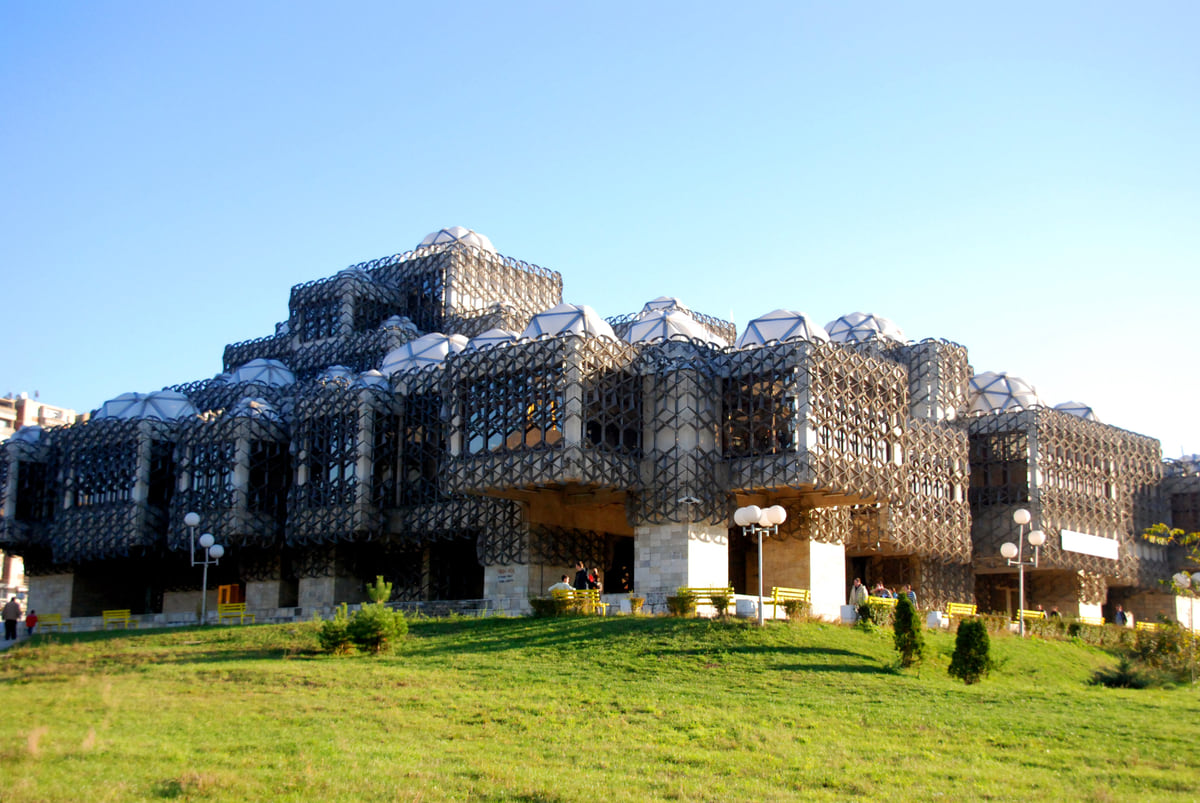
The 1974-81 National Library, with 79 domes, is the building everyone photographs.
One day on foot covers the city, and it's a handy base for Gračanica, Ulpiana and Gadime.
I'd stay in the centre, somewhere between Mother Teresa Boulevard and the old bazaar, and do the city in one long day on foot. What I wouldn't do is book three nights for Pristina alone. It works far better as a base for Gračanica, Ulpiana and the bear sanctuary, all within about 20 km.
Sergio LeponeMy advice
Before you go
What I would keep in mind
01 Most beautiful
The National Library beats any postcard
Seventy-nine domes and a skin of concrete cubes make it the most photographed building in town. Croatian architect Andrija Mutnjaković designed it, and it went up between 1974 and 1981, says the Ministry of Culture.
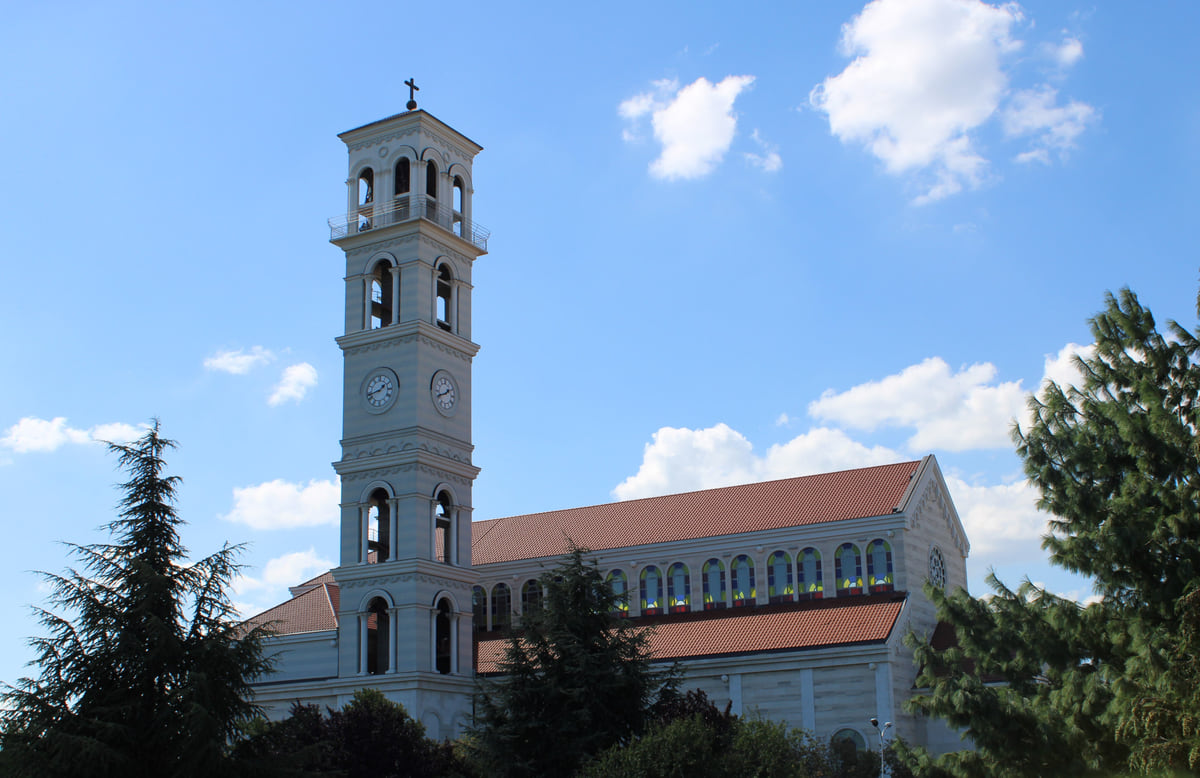
The Municipality's tourist map says the bell tower of the Mother Teresa Cathedral opened in 2014 and gives a 360-degree view over the city, with the sunset to the west.
The FCDO warns that taxis touting for fares on the street are often unofficial and can overcharge. Registered firms have regulated fares and are booked by phone or local app. International ride-hailing apps don't operate.
Kosovo uses the euro without an agreement with the EU, according to the European Commission. The FCDO suggests using ATMs inside banks and keeping your card in sight when you pay.
My own scores out of 10. They weigh how much each place tells you about the city, what you can actually see today (no published opening hours costs points) and what you won't find in any other Balkan capital.
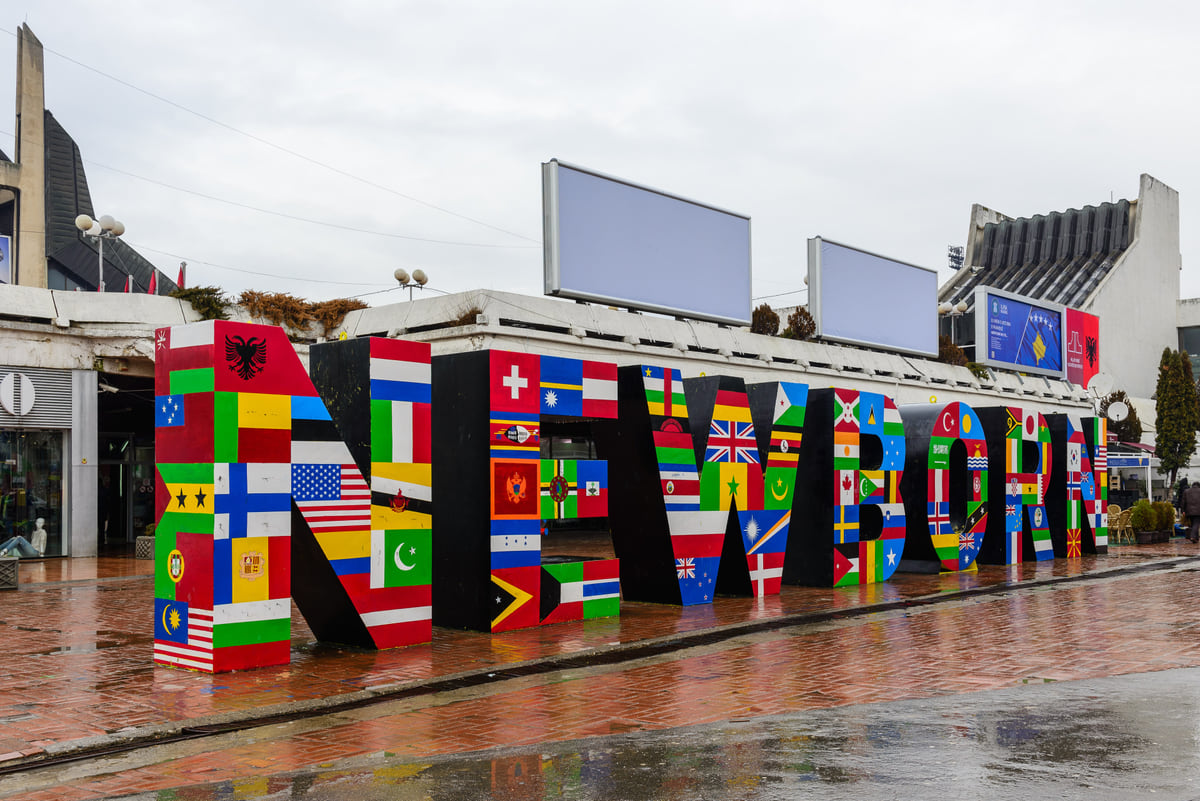
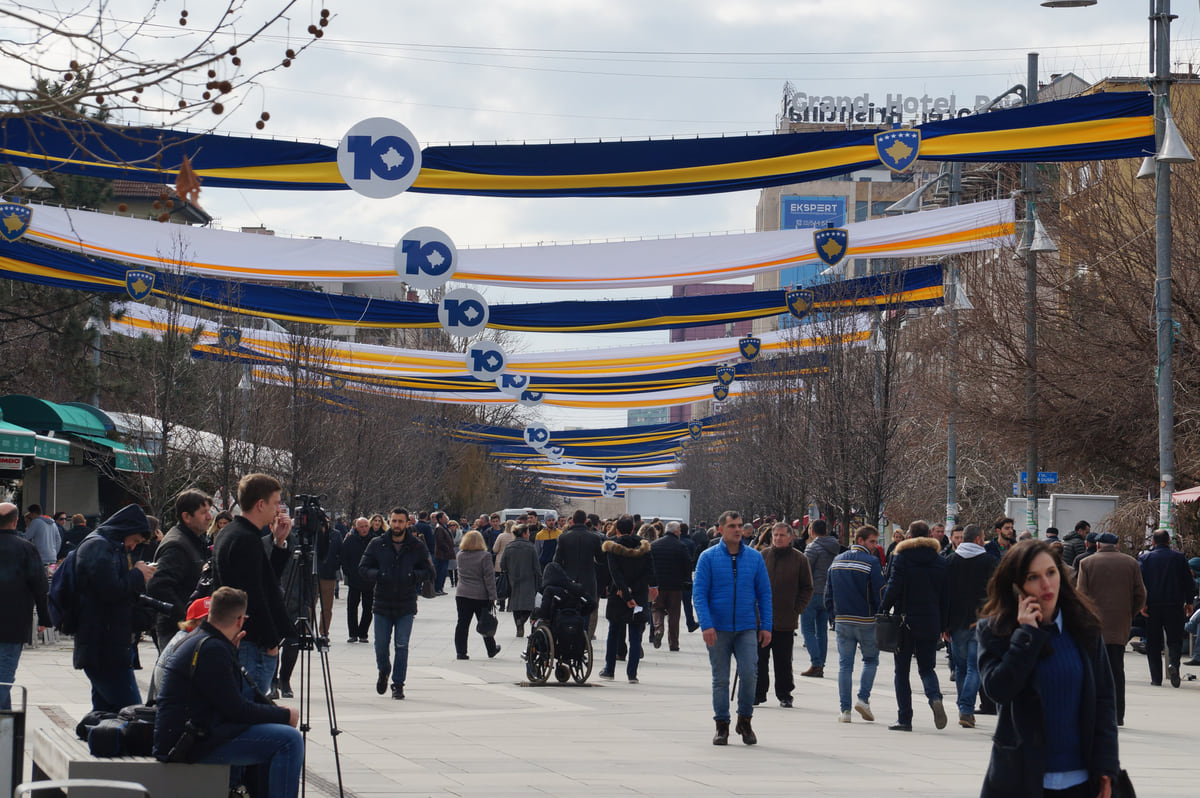
The 2008 letters outside the Youth and Sports Palace. Five minutes is plenty, and they change colour every 17 February.
7.0 out of 10
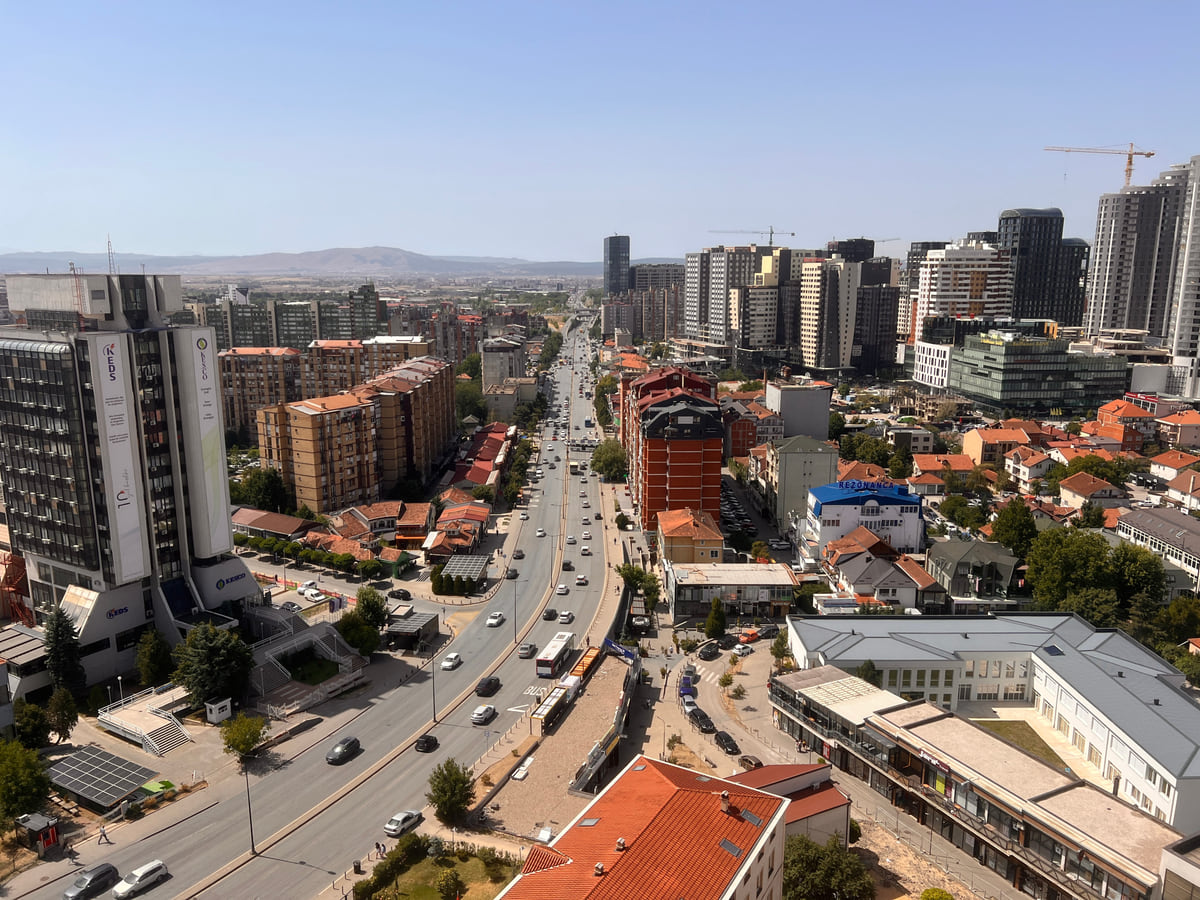
I’ll be straight with you, Pristina isn’t love at first sight. It’s a concrete capital with traffic and building sites, and most of it was built after 1950. What it does have is rare for a city this size, an Ottoman core with 15th-century mosques a short walk from a brutalist library that looks like it landed from space. Read it that way and a day here flies by.
Small enough to walk
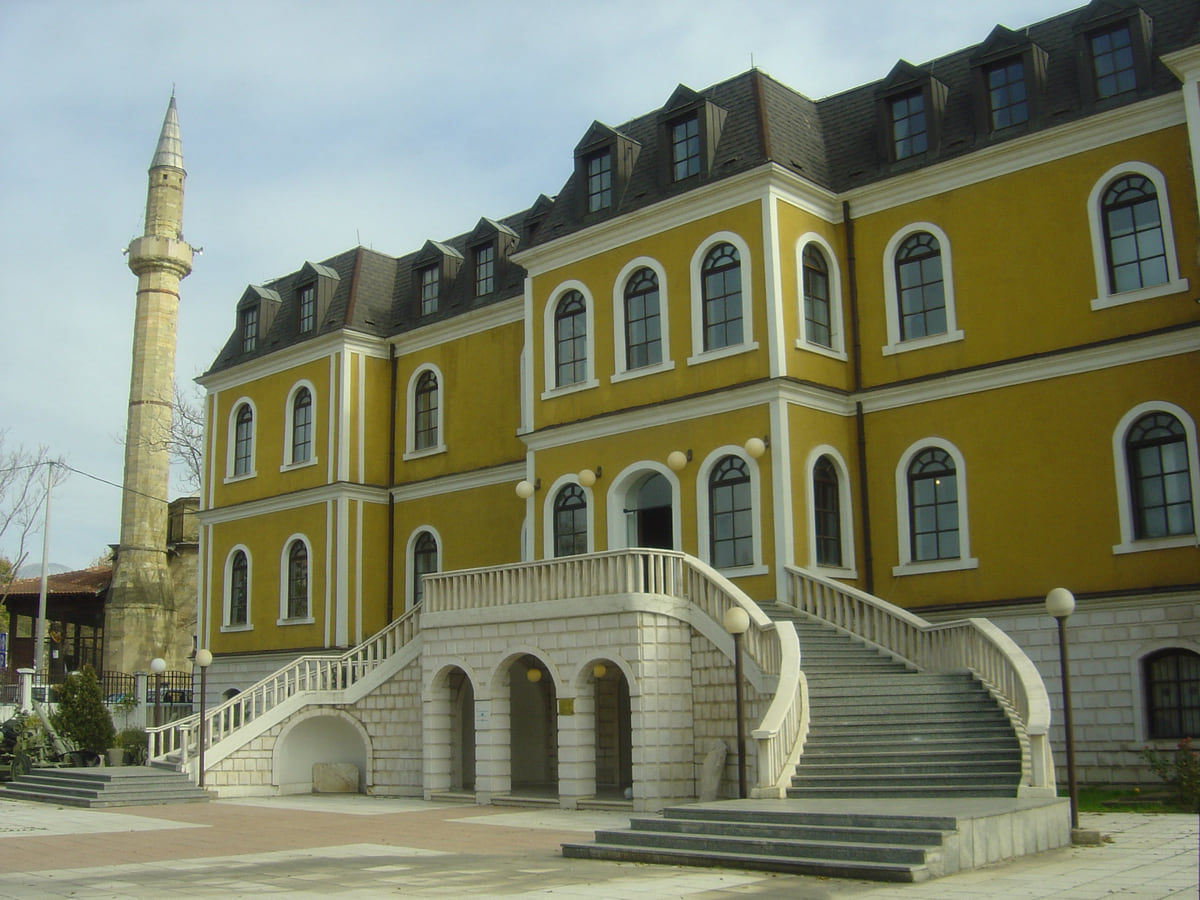
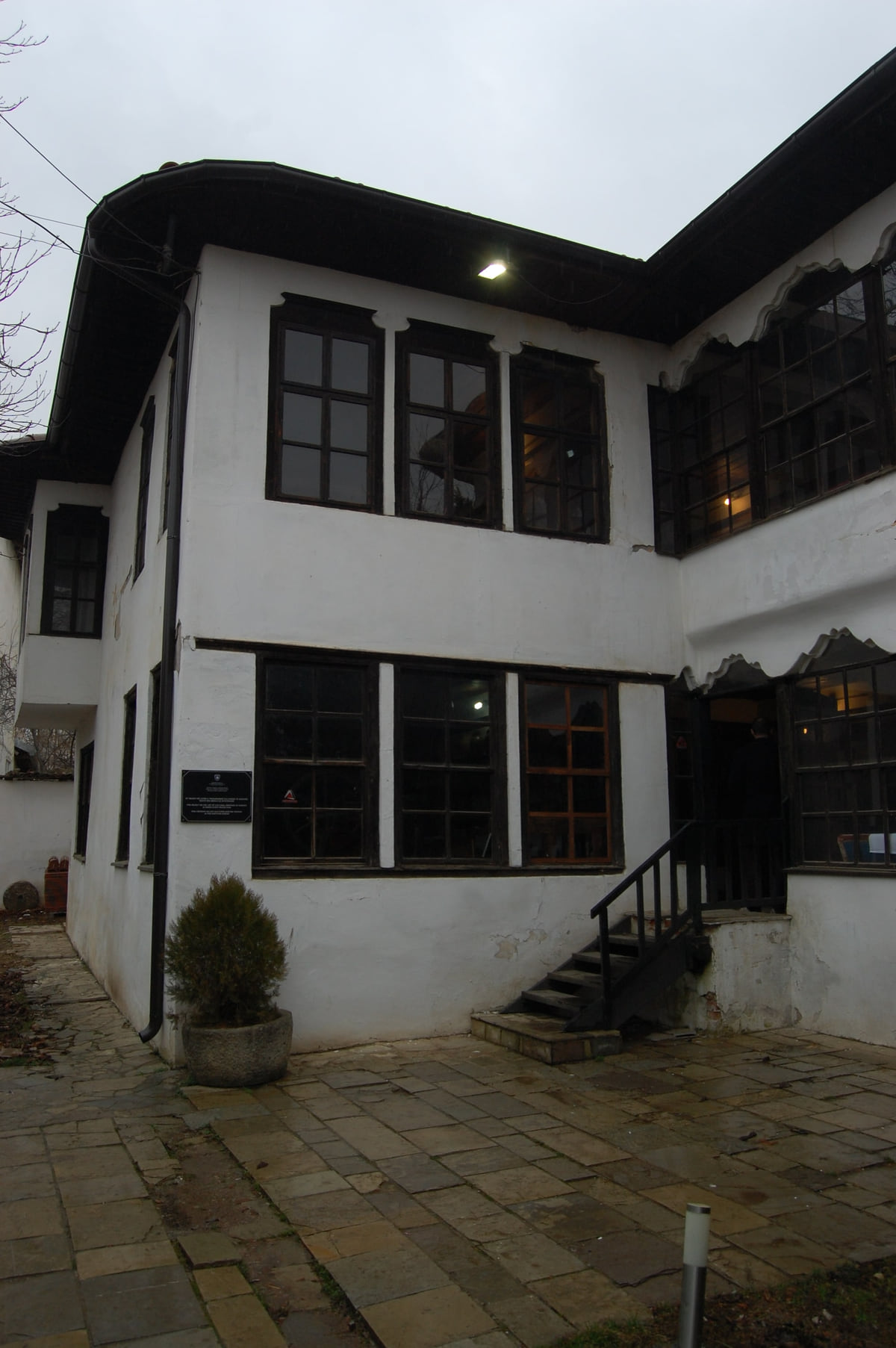
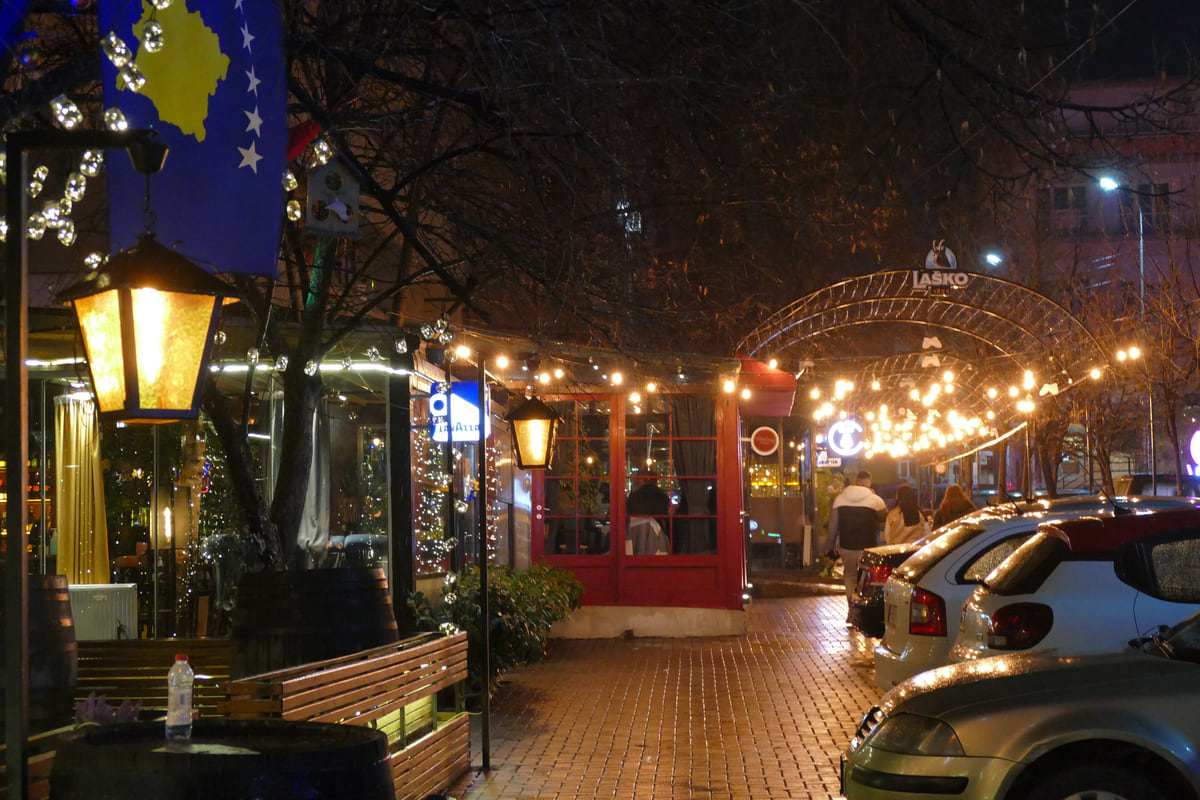
The part you’ll want is compact. To the north is the historic centre, with the old bazaar, the Imperial Mosque, the clock tower, the Kosovo Museum and the Emin Gjiku complex. South of it runs Mother Teresa Boulevard, pedestrianised since the mid-2000s according to the Municipality, and at the far end, in the Qyteza Pejton district by the university campus, you’ll find the Mother Teresa Cathedral and the National Library. OpenStreetMap puts the two ends a little over a kilometre apart, so you’ll barely need transport.
For anything further out, the Municipality’s tourist map lists 15 city bus lines linking the centre with the suburbs and villages. Otherwise, use a registered taxi firm as the FCDO recommends, and ignore drivers who approach you on the street.
What’s left of Ottoman Pristina
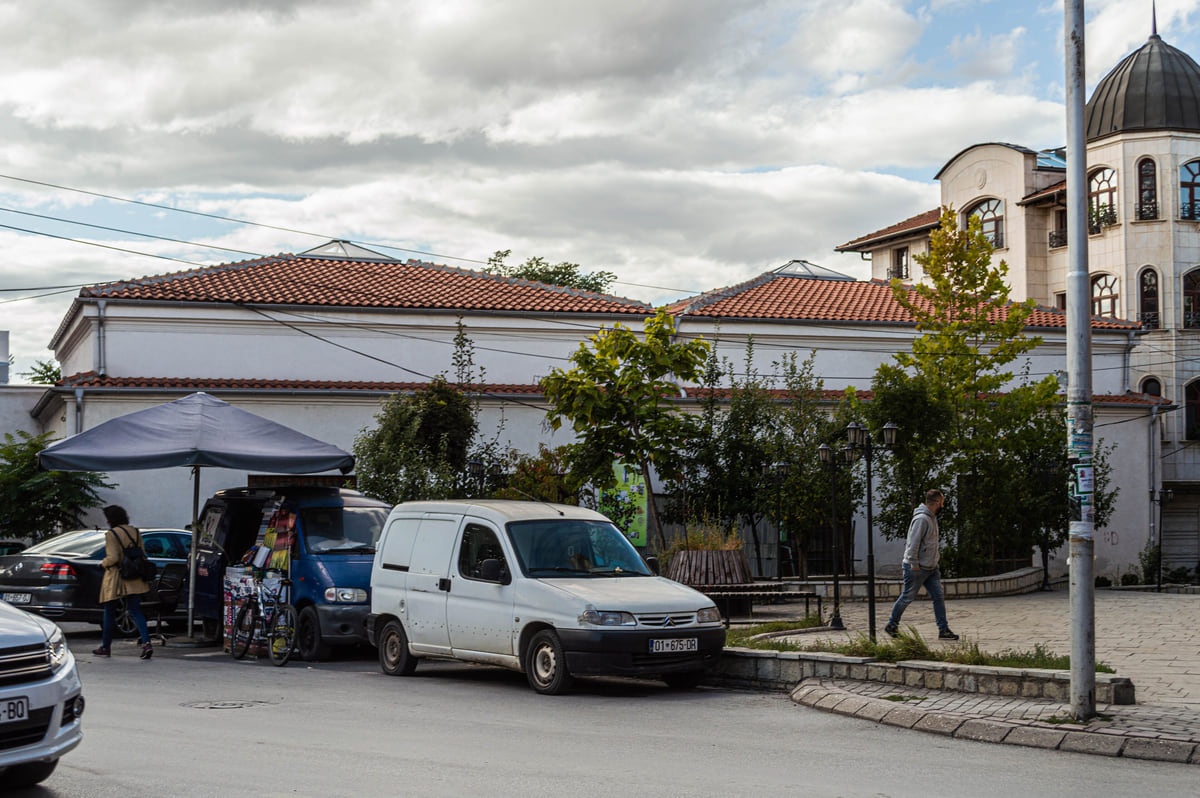
This is the bit that explains the city. In 1662, according to a text quoted in the Ministry of Culture’s heritage database, Pristina already had a covered market, a bazaar, a hammam, 11 inns and around 300 shops. Almost all of it vanished between the 1950s and the 1970s, when whole neighbourhoods were cleared for apartment blocks, offices and squares. The Municipality’s own leaflet quotes the slogan of the 1953 urban plan, which was about destroying the old to build the new.
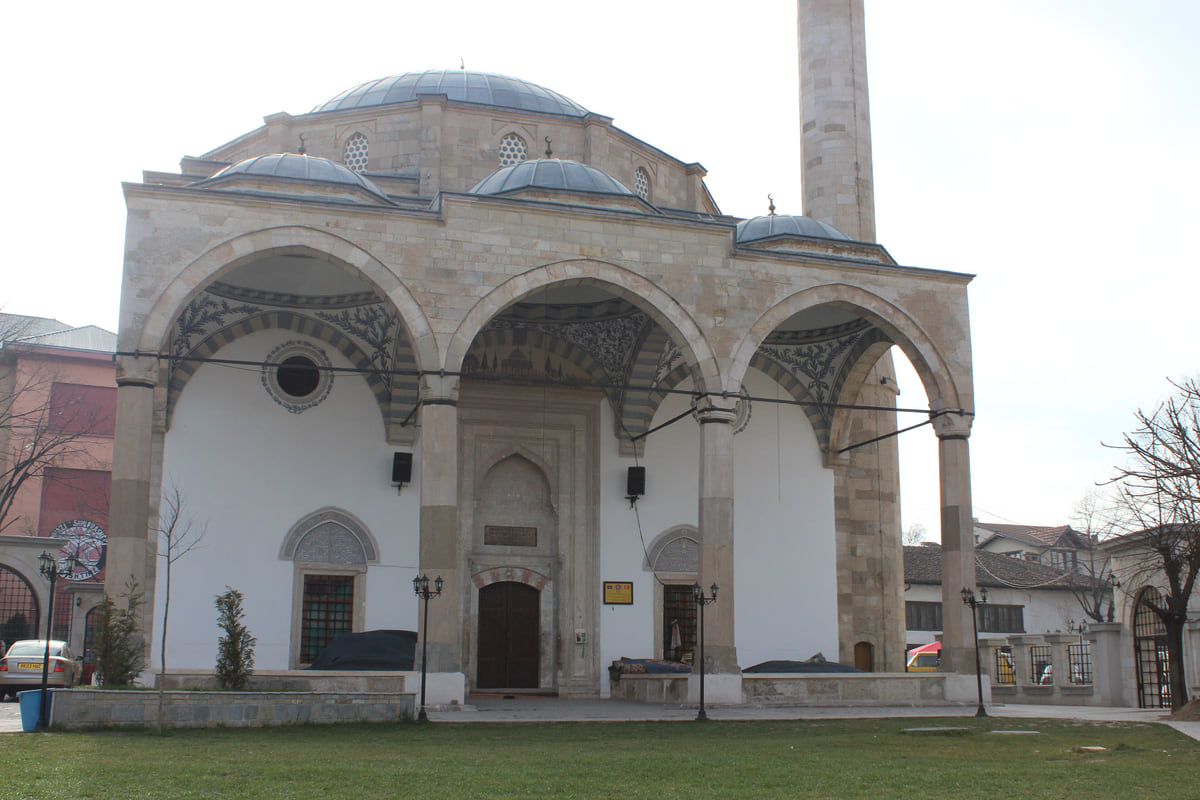
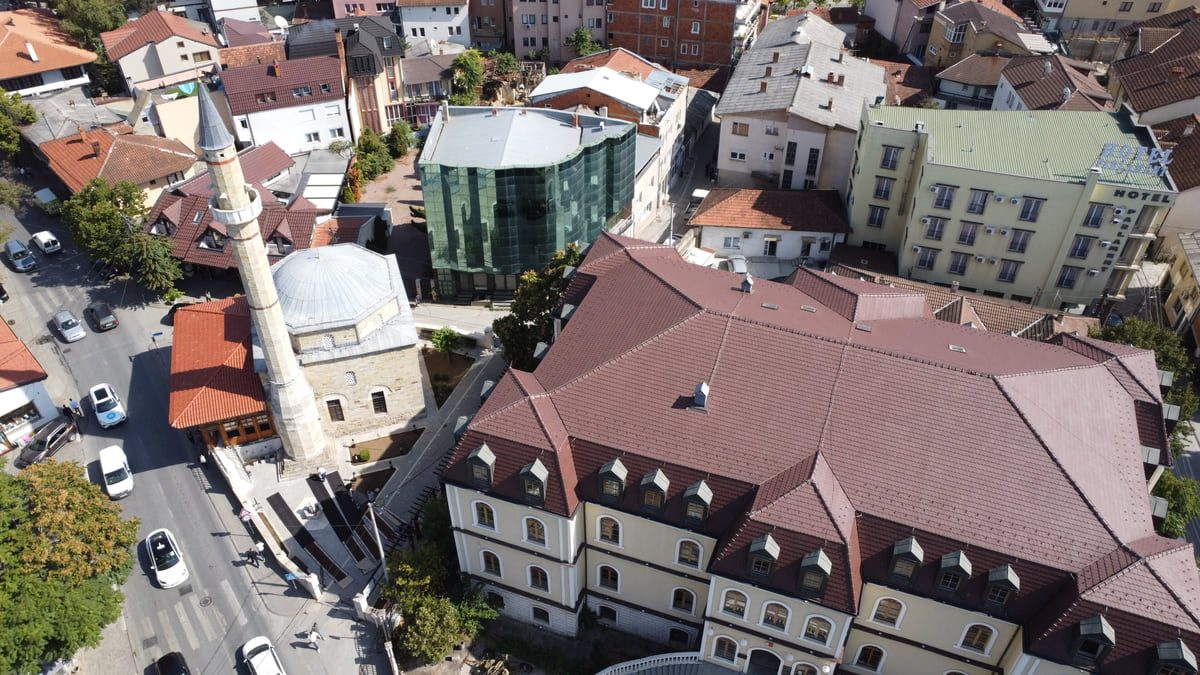
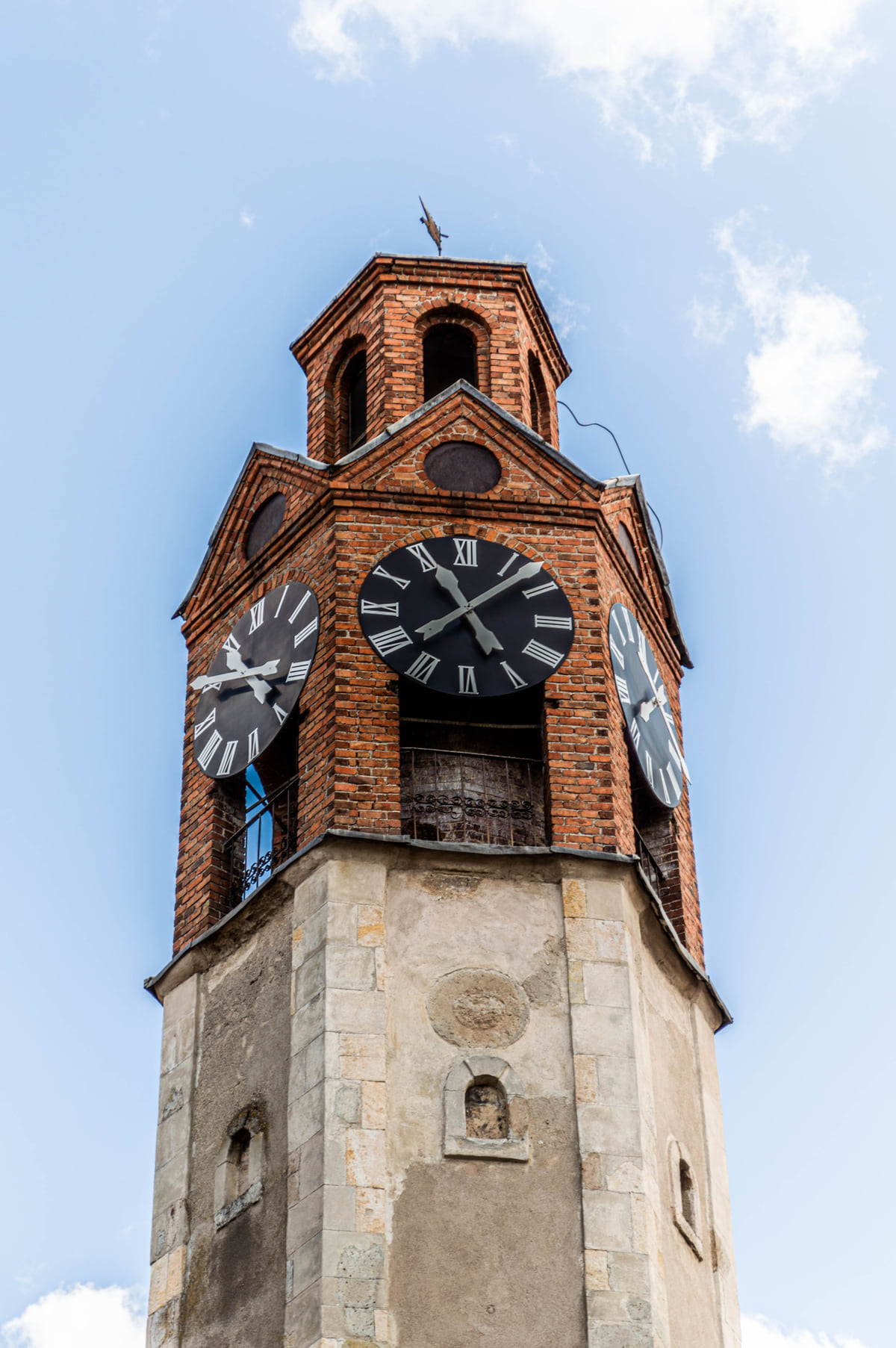
What survived sits in a handful of streets and is protected as the historic centre. Start with Pristina’s old bazaar, where the Stone Mosque, begun in 1392 according to the Municipality, still stands alongside the Jashar Pasha Mosque and a marble fountain from the late 17th or early 18th century. Next door is the Imperial Mosque, dated 1461 by the inscription over its entrance and, for me, the finest piece of Ottoman architecture in town. The 26-metre clock tower and the Great Hammam complete the set.
The other half of the city is the one built after Pristina became the capital, in 1947 according to the Municipality. From that era come the Youth and Sports Palace (1977), the Grand Hotel, which the Municipality calls the most important landmark of 1980s architecture in Kosovo, and above all the National Library of Kosovo with its 79 domes. In front of the Youth Palace stands the Newborn monument, put up in ten days for 17 February 2008 and repainted on that date every year.
That mix is exactly what makes Pristina interesting to me. On one afternoon walk you go from an Ottoman dome to a concrete one, and both tell you about the same city.
How long do you need in Pristina?
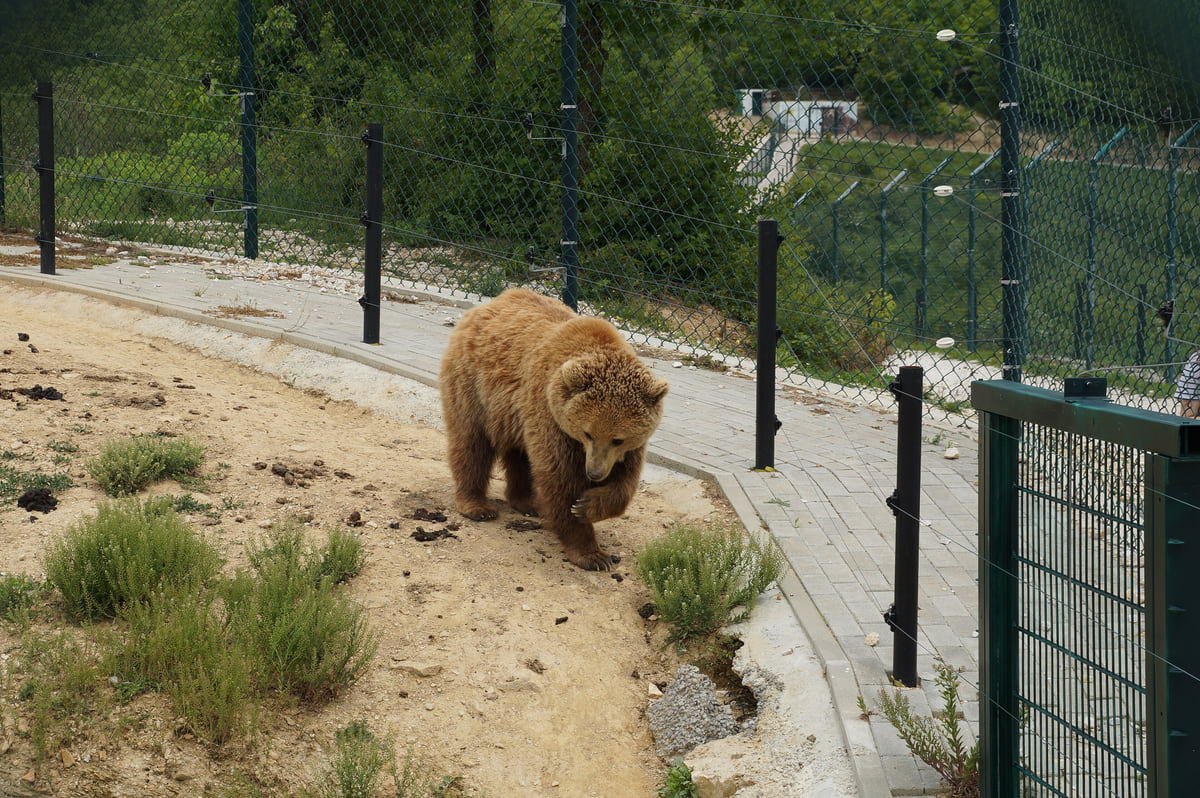
For the city itself, one day. There’s an hour-by-hour plan in one day in Pristina, starting at the bazaar early and finishing with the view from the cathedral tower. I would stay an extra night or two and use the capital as a base, though. The Ministry of Culture puts Ulpiana some 12 km from the centre, Gračanica monastery is less than a kilometre from it, and the Four Paws bear sanctuary at Mramor is around 20 km out. They’re all in my list of day trips from Pristina.
If you’re touring the whole of Kosovo, Pristina is the natural place to start, as the international airport bears its name.
ASK counted 261,110 overnight guests in the Pristina region in 2025 and 176 establishments with 6,206 beds, so there’s no shortage of rooms. I’d book in the centre rather than on the outskirts; the areas are compared in hotels in Pristina.
You’ll pay in euros, so change your pounds or use a card that doesn’t charge foreign transaction fees. The FCDO suggests ATMs inside banks and keeping your card in view when paying. It also flags high air pollution in Pristina, worth knowing in winter if you have breathing problems. And remember the GHIC isn’t valid here, so travel insurance with medical cover is a must. If a crowd gathers in the evening, as the FCDO noted in September 2026, take another street.
Pristina was first recorded under its present name in 1342.
See the answer
True. The Municipality's tourist map dates the first mention to 1342, in a text by the Byzantine emperor John VI Kantakouzenos.
Pristina's old bazaar has survived more or less intact.
See the answer
False. The Ministry of Culture records that the bazaar was knocked down in the 1960s for a new administrative district. Three mosques, the hammams, the clock tower and a few houses remain.
The GHIC covers emergency treatment in Kosovo.
See the answer
False. The FCDO says the GHIC is not valid in Kosovo. You need travel insurance with medical cover.
Pristina had a railway station as early as 1874.
See the answer
True. According to the Municipality's tourist map, the city's first railway station dates from 1874.
City residents in the 2024 census
143,469
First recorded under its current name
1342
Date of the Imperial Mosque
1461
Domes on the National Library
79
Map
Where Pristina is
The Bjeshkët e Nemuna mountains close off the west and the Sharr the south; in the middle lies the Pristina plain. Every number opens its guide.
Pristina. Article 13 of Kosovo's Constitution, in force since 15 June 2008, names it as the capital. It's spelt Prishtinë in Albanian and Priština in Serbian.
Is Pristina in Kosovo or Serbia?
Pristina is the capital under Kosovo's Constitution. Not every state recognises Kosovo, and what that means for your trip, mainly the rule on travelling on to Serbia, is on my page about whether Kosovo is a country.
What is the population of Pristina?
The city had 143,469 residents in the 2024 census and the whole municipality, with its 43 settlements, 227,466, according to the Kosovo Agency of Statistics. In 2011 the municipality had 198,897.
What are the things to do in Pristina?
Walk the old bazaar with the Imperial Mosque and the clock tower, visit the Emin Gjiku Ethnological Museum, stroll Mother Teresa Boulevard, climb the cathedral bell tower and see the National Library. It all fits into a day.
Is Pristina safe for British travellers?
The FCDO calls the political situation generally stable and says protests in Pristina are usually peaceful. It advises pre-booked taxis, care with bags on public transport and staying away from crowds, which in September 2026 gathered in the evenings.
Can I use my GHIC in Pristina?
No. The FCDO says the GHIC isn't valid in Kosovo, so take out travel insurance that covers medical treatment. Public healthcare asks for a small cash payment, and the FCDO rates private clinics as better quality.
Tourism graduate with a master’s in Tourism Management and Planning from the University of Málaga, who has travelled across Europe. He writes every guide from official sources and his own judgement.

 1Pristina region 2Pristina 3Fushë Kosovë 4Podujeva 5Gračanica 6Obiliq 7Drenas 8Lipjan 9Novo Brdo