Two official languages, three local ones
What language is spoken in Kosovo, and what will you need?
Kosovo has two official languages, Albanian and Serbian, under Article 5 of its Constitution, and Turkish, Bosnian and Romani have official status at municipal level. In the 2024 census 1,485,170 people had Albanian as their mother tongue and 55,168 Serbian, according to the Kosovo Agency of Statistics (ASK).
Albanian gets you through most of Kosovo, but not all of it. I'd adjust a greeting to where I am rather than assume the whole territory speaks one language, and default to English when unsure.

Before you go
What I would keep in mind
-
01 My tip
English where it matters most
Gov.uk says Pristina's registered taxi firms usually have operators with reasonable English, and the FCDO keeps a list of medical facilities where some staff speak it. Beyond that there's no official data.
taxis in Kosovo -
02 Most beautiful
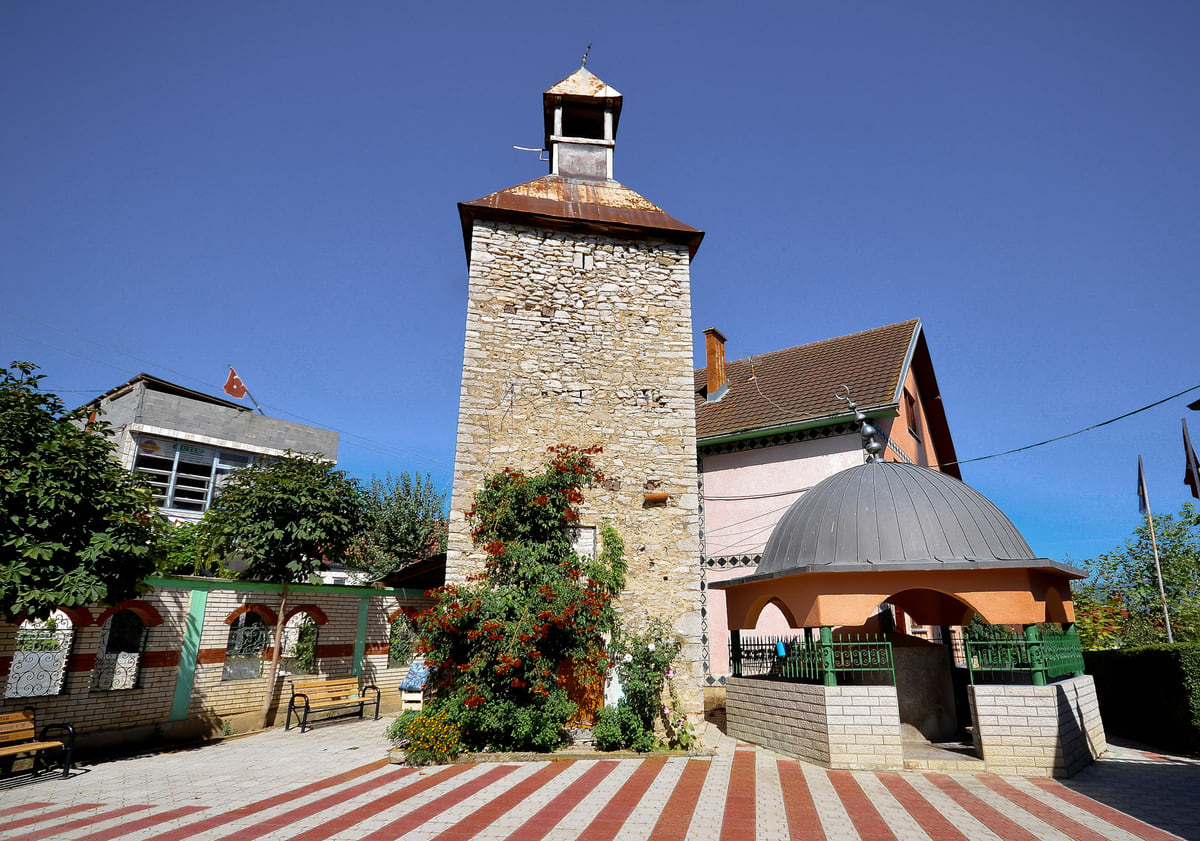
Mamusha, with a Turkish name
In the 2024 census 18,748 people had Turkish as their mother tongue. Mamusha (Mamuşa in Turkish), north of Prizren, is a one-settlement municipality of 5,607 people.
Mamusha -
03 Getting there
Two names for every town
With two official languages, most towns have an Albanian and a Serbian form. Pristina is Prishtinë and Priština; Peja is Pejë and Peć.
Kosovan, Kosovar and the name Kosova
“What language do they speak in Kosovo?” is one of the most common UK searches about the place, and the short answer is Albanian. The longer answer is more interesting, and more useful if you’re travelling, because the Constitution recognises five languages at different levels and they aren’t spread evenly.
Two official languages everywhere
Article 5 of Kosovo’s Constitution makes Albanian and Serbian the official languages. That’s why nearly every town has two names, and why on this site I give both on first mention, as explained in Kosovo’s name and demonym. The same article lets Turkish, Bosnian and Romani be official languages at municipal level. You can see it in the Official Gazette’s website, which runs in Albanian, Serbian, English, Turkish and Bosnian.
Who speaks what, by the 2024 census
The Kosovo Agency of Statistics (ASK) is clear. Out of 1,602,515 people, including its estimate for the north, 1,485,170 have Albanian as their mother tongue. Well behind come Serbian with 55,168, Bosnian with 28,854, Turkish with 18,748 and Romani with 5,597. Another 8,978 have a different mother tongue. By my arithmetic, that puts Albanian at roughly 93% of the population and Serbian at under 4%, which is why Albanian is the language you will hear almost everywhere you go.
Those numbers line up with the communities counted in the census, which I set out in Kosovo population, but you can’t simply add them up, because the language table uses the population with ASK’s estimate and the community table uses the population actually counted.
If you are staying the night, see the best hotel deals in Prizren for your dates: the well-placed rooms go fast.
Which language would I use?
Albanian covers the vast majority of the territory, and a word or two learned before you go is always appreciated. But I wouldn’t assume it’s everyone’s language. Over 55,000 people have Serbian as their mother tongue and nearly 19,000 Turkish, and they don’t live evenly across the map. My rule is to adapt the greeting to the place and, if in doubt, start in English. Maps and bookings may also switch between the Albanian and Serbian forms of a town, so it pays to know both.
Do they speak English in Kosovo?
There are no official figures, so I’ll stick to what a reliable source says. Gov.uk notes that the registered taxi firms in Pristina usually have operators with reasonable English, and the FCDO keeps a list of medical facilities in Kosovo where some staff speak it. To book a cab without surprises, read taxis in Kosovo first. Beyond that, I won’t promise anything I can’t back up.
So you do not lose the morning at the ticket office, browse tickets and tours in Prizren on GetYourGuide.
The other languages on the map
For Turkish, look south. The municipality of Mamusha, north of Prizren, is a single settlement of 5,607 people in 2024, and its Turkish name, Mamuşa, is the one OpenStreetMap gives for its council. To see where each municipality sits, the Kosovo map shows all 38.
If you are staying the night, see the best hotel deals in Prizren for your dates: the well-placed rooms go fast.
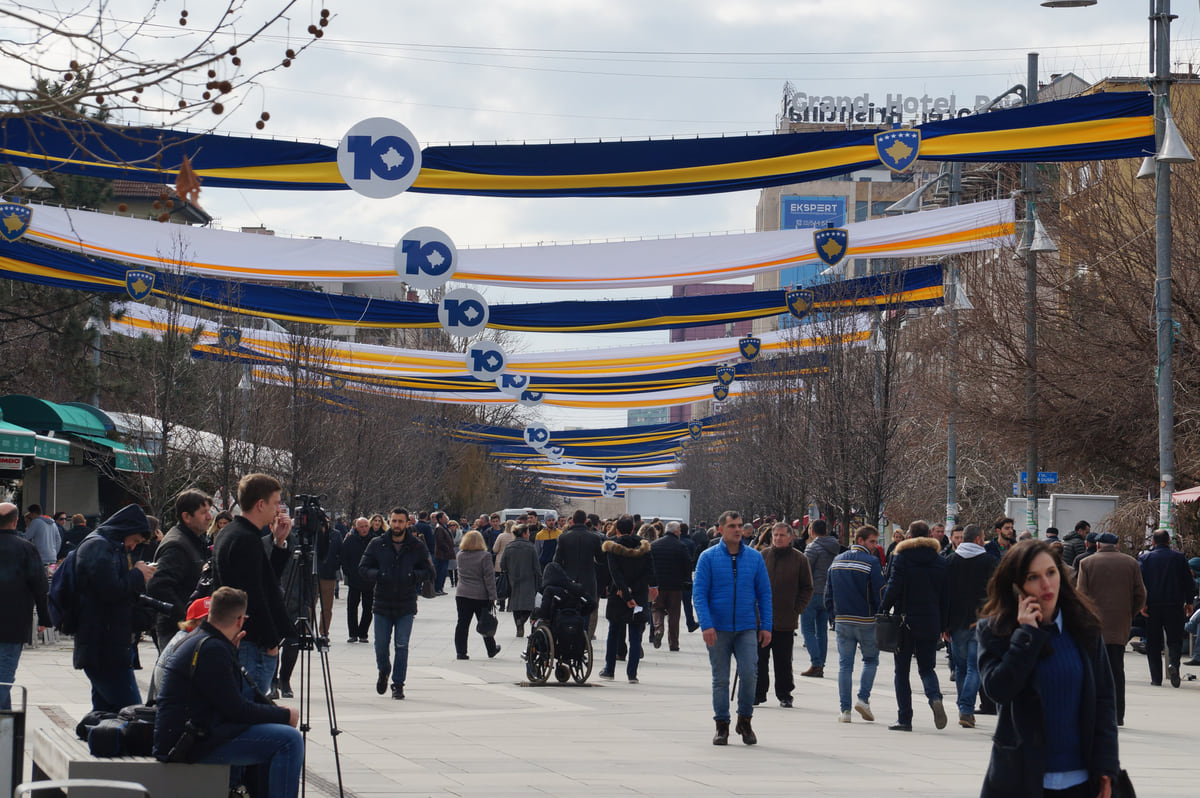
Pristina's pedestrianised Mother Teresa Boulevard busy with walkers, with strings of coloured bunting hung above the street
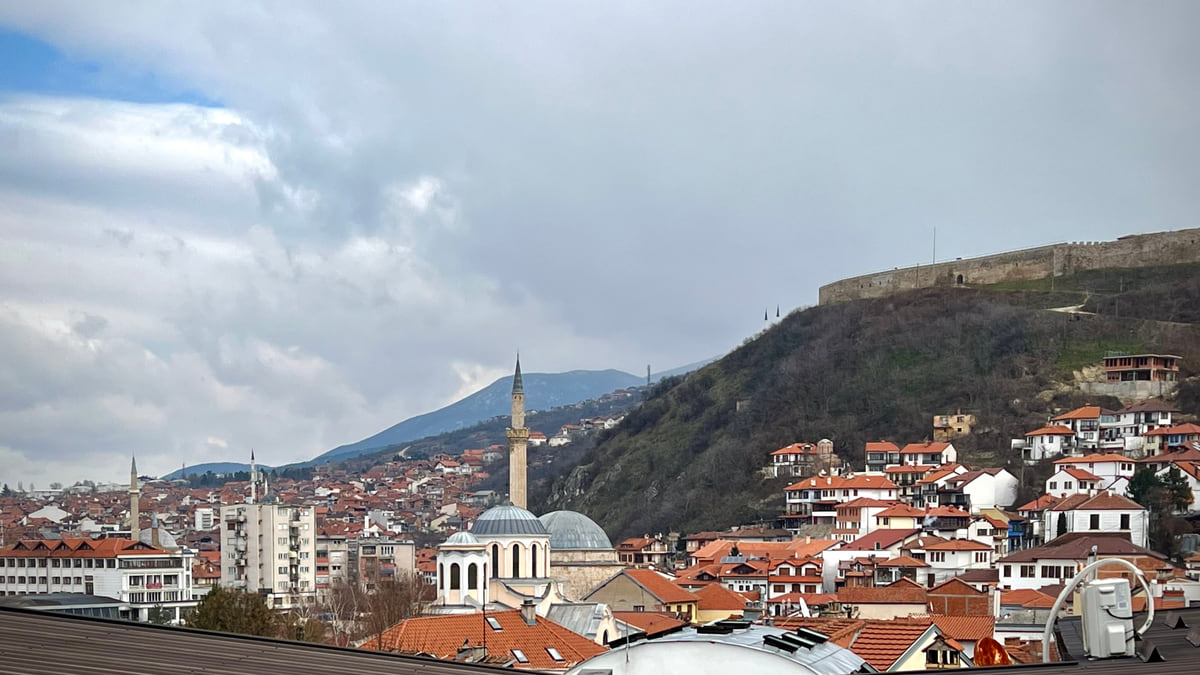
The centre of Prizren with a mosque's dome and minaret in front and the fortress hill rising behind
Mother tongue in the 2024 census
| Language | People | Legal status |
|---|---|---|
| Albanian | 1,485,170 | Official |
| Serbian | 55,168 | Official |
| Bosnian | 28,854 | Official in municipalities |
| Turkish | 18,748 | Official in municipalities |
| Romani | 5,597 | Official in municipalities |
| Other | 8,978 | - |
Out of 1,602,515, the population including ASK's estimate. Sources: ASK mother tongue table, 2024 census; Constitution of Kosovo, Article 5.
Test yourself
True or false?
0/3 Pick before you peek.
-
Turkish is an official language in some Kosovo municipalities.
See the answer
True. The Constitution gives Turkish, Bosnian and Romani official status at municipal level, alongside Albanian and Serbian everywhere.
-
Kosovo has its own Kosovan language.
See the answer
False. There's no official language by that name. The official ones are Albanian and Serbian.
-
More people in Kosovo have Bosnian than Turkish as their mother tongue.
See the answer
True. In the 2024 census, 28,854 people named Bosnian and 18,748 Turkish.
0 of 208 Kosovo guides
Your next stamp
- Name
- Municipalities
- Population
- Where is Kosovo
- Religion
- Holidays
- Gjakova Grand Bazaar
- Gjeravica
- Places to visit
- Pristina region
- Visoki Dečani Monastery
- Bjeshkët e Nemuna National Park
- Hadum Mosque
- Mitrovica Region
- Things to do
- Most beautiful places
- Sheh Danjolli tekke
- Prettiest villages
- Tailors' Bridge
- Rugova Canyon
- UNESCO sites
- Gjakova
- Map
- Regions
- Cities
- Gračanica Monastery
- Mitrovica
- Patriarchate of Peć
- Pristina
- Prizren
- Rugova via ferrata
- Fushë Kosovë
- Vushtrri
- Podujeva
- Radavc Cave
- Size
- Bajrakli Mosque
- Devič Monastery
- Gazimestan
- Ibar Bridge
- Is it a country?
- Istog
- One day in Pristina
- Peja
- Prizren region
- Ulpiana
- Vushtrri Stone Bridge
- Gadime Cave
- Klina
- Vushtrri Fortress
- Deçan
- Flag
- Isa Boletini Complex
- Novo Brdo Fortress
- History
- Junik
- Lake Batllava
- Zvečan Fortress
- Banjska Monastery
- Ferizaj region
- Rahovec
- Ferizaj
- Sokolica Monastery
- Currency
- Lake Gazivoda
- Štrpce
- Brezovica
- EU membership
- Entry requirements
- Skiing in Kosovo
- Kaçanik
- Serbian border
- Gračanica
- Guesthouses in Rugova
- Hotels in Peja
- Kaçanik fortress
- Newborn monument
- North Mitrovica
- One day in Prizren
- Peja bazaar
- Peja region
- Public holidays
- Velika Hoča
- Facts
- Gjakova region
- Hani i Elezit
- Hotels in Gjakova
- National Library
- Obiliq
- Zočište Monastery
- Drenas
- Mother Teresa Cathedral
- Shtime
- Skënderaj
- Lipjan
- Mother Teresa Boulevard
- Zvečan
- Kosovo Museum
- Leposavić
- Novo Brdo
- Emin Gjiku Ethnological Museum
- Janjevo
- Zubin Potok
- Imperial Mosque
- Pristina Clock Tower
- Pristina Old Bazaar
- Great Hammam of Pristina
- Bogë
- Germia Park
- Getting there
- Lake Radoniq
- Prizren Fortress
- Bear Sanctuary Prishtina
- Drelaj
- Flights
- Sinan Pasha Mosque
- Hotels in Pristina
- Pristina airport
- Prizren stone bridge
- Buses
- Grand Hotel Pristina
- Our Lady of Ljeviš
- Prizren hammam
- Swiss Diamond Hotel
- Tirana to Pristina
- League of Prizren
- Restaurants in Pristina
- Skopje to Pristina
- Belgrade to Pristina
- Prizren Archaeological Museum
- Balkans itinerary
- St George's Cathedral
- Church of the Holy Saviour
- Getting around
- Holy Archangels Monastery
- Trains
- Car hire
- Day trips
- Marash
- Driving
- Sharr National Park
- Taxis
- Distances
- Prevalla
- Dragash
- Road trip
- Brod
- Prices and budget
- On a budget
- Restelica
- Free things to do
- Mirusha waterfalls
- Malisheva
- Safety
- Mamusha
- Scams
- Healthcare
- National parks in Kosovo
- Nightlife
- Suhareka
- Mobile and roaming
- Mountains in Kosovo
- Mushtisht
- Hiking in Kosovo
- Korisha
- Packing list
- DokuFest
- Peaks of the Balkans
- With kids
- Hotels in Prizren
- Kosovo lakes
- 3 days
- Caves and waterfalls
- Restaurants in Prizren
- 5 days
- One week
- Gjilan region
- Kosovo food
- Sunny Hill Festival
- Gjilan
- Rahovec wine
- Atik Mosque, Gjilan
- Kosovo beer
- Draganac Monastery
- Where to eat in Kosovo
- Kamenica
- Where to stay in Kosovo
- Kllokot
- Weather in Kosovo
- Best time to visit Kosovo
- Partesh
- Kosovo in winter
- Ranillug
- Kosovo in spring
- Viti
- Kosovo in summer
- Letnica
- Binač Monastery
- Kosovo in autumn
- Events in Kosovo
- Independence Day
- Kosovo monasteries
- Mosques in Kosovo
- Kullas in Kosovo
- Castles in Kosovo
- Museums in Kosovo
- Bazaars in Kosovo
Frequently asked questions
What language do they speak in Kosovo?
Mainly Albanian, the mother tongue of 1,485,170 people in the 2024 census. Serbian is the other official language, and Turkish, Bosnian and Romani are official in some municipalities.
What is the official language of Kosovo?
There are two, Albanian and Serbian, under Article 5 of the Constitution. The same article gives Turkish, Bosnian and Romani official status at municipal level.
Do they speak English in Kosovo?
There's no official figure. Gov.uk does say that operators at Pristina's registered taxi firms usually speak reasonable English, and the FCDO lists medical facilities with English-speaking staff.
Is there a Kosovan language?
No. The Constitution doesn't mention one; the official languages are Albanian and Serbian, plus three with municipal status.
Do people in Kosovo speak Serbian?
Yes, it's an official language. In the 2024 census 55,168 people had Serbian as their mother tongue, including ASK's estimate for the north.
By
Tourism graduate with a master’s in Tourism Management and Planning from the University of Málaga, who has travelled across Europe. He writes every guide from official sources and his own judgement.
Published on . Facts checked on .
Sources
Some links in this guide are affiliate links: if you book through them, the site earns a commission at no extra cost to you. Affiliate disclosure
Photos: Bujar I Gashi (CC BY-SA 4.0); Albinfo (CC0); Sharon Hahn Darlin (CC BY 2.0), via Wikimedia Commons.