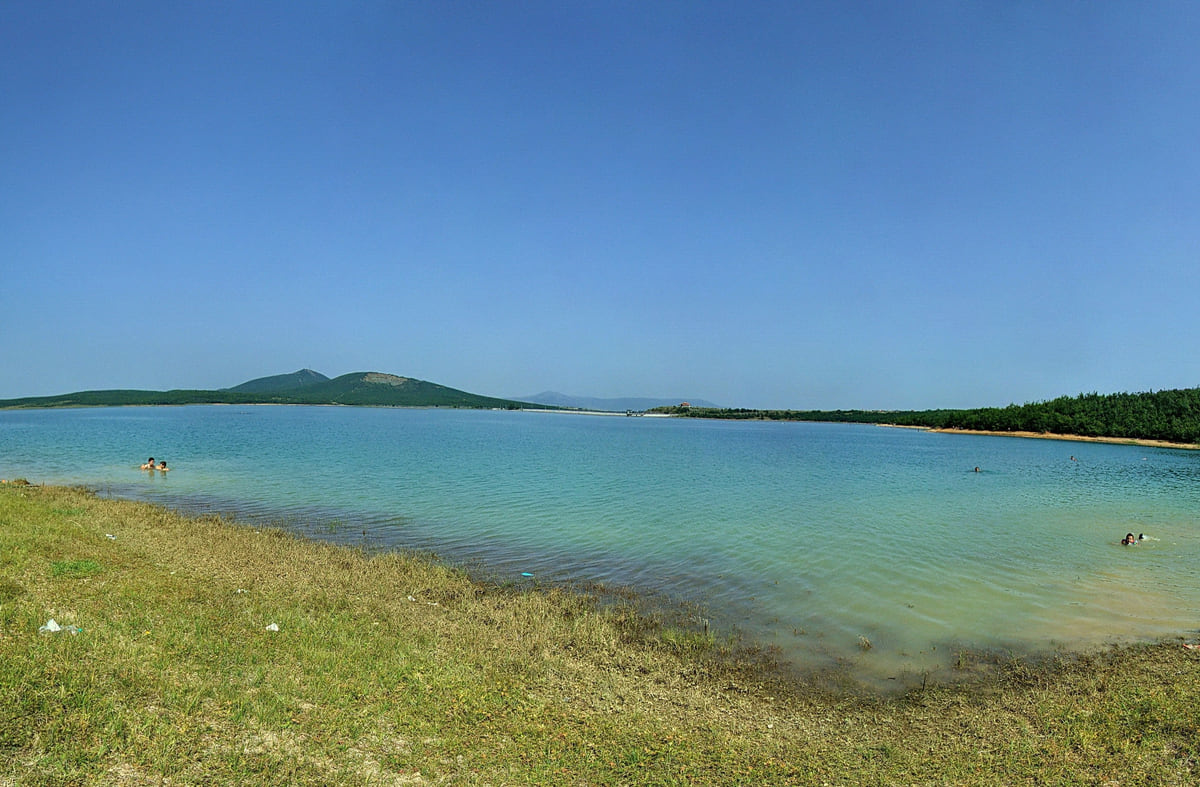
Artificial lake in Gjakova municipality
Lake Radoniq, the great reservoir of the west
Lake Radoniq (Liqeni i Radoniqit) is a reservoir in Gjakova municipality created in the 1980s. It covers 5.96 km² according to ASK, making it Kosovo's second largest lake after Gazivoda, and according to the government tourism portal it supplies water to some 214,000 people in Gjakova and Rahovec and irrigates 10,500 hectares.
In 30 seconds
Full read: 2 min
- Lake Radoniq is a 1980s reservoir in Gjakova municipality.
- At 5.96 km² it is Kosovo's second largest lake according to ASK.
- It supplies water to some 214,000 people and irrigates 10,500 hectares.
- No official swimming rules are published.
I see it as a scenic stop, not a beach destination. It is drinking water for half the region, so before swimming or fishing I would ask locally what is allowed.

Before you go
What I would keep in mind
-
01 Most beautiful
Kosovo's second lake
At 5.96 km², only Gazivoda in the north is larger among the lakes ASK measures. Batllava and Badoc come next.
lakes in Kosovo -
02 My tip
A village that vanished
The government tourism portal says the lake took the name of the village that disappeared when it was built. ASK records Radoniq with no residents today.
Gjakova region -
03 Getting there
Between Gjakova and Deçan
It lies north of Gjakova on the way to Deçan and Junik, so it fits into the same day as the monastery.
Gjakova
What I would book
Radoniq does not feature on many sightseeing lists, and I am not going to sell it as something it is not. It is a large reservoir with mountains behind it that supplies water to half the region. But if you are driving from Gjakova to Deçan it is worth a detour, because it is Kosovo’s second lake and the landscape repays the stop.
A reservoir named after a village
Visit Kosovo, the official tourism portal, in the version archive.org kept in 2022, describes it as an artificial lake in Gjakova municipality created in the 1980s. According to that text it took the name of the village that disappeared when it was built. That fits the census, since ASK records the settlement of Radoniq with no residents in both 2011 and 2024.
ASK, the Kosovo Agency of Statistics, gives it 5.96 km². In its list of main lakes only Gazivoda, in the north, with 9.1 km² inside Kosovo, is larger; Batllava (3.27 km²) and Badoc (2.57 km²) come after it. The government portal says 5.62 km², and I go with the statistics office.
Water for half the region
Radoniq’s real importance is not tourism. According to the same portal it supplies water to some 214,000 people in Gjakova, Rahovec and their villages, irrigates 10,500 hectares, and its dam holds 113 million cubic metres, enough to keep supplies going all year.
That has a practical consequence. I found no official rules on swimming, fishing or boating, and since this is the area’s drinking-water reservoir, I would ask locally what is and is not permitted before getting in.
If you are staying the night, see the best hotel deals in Gjakova for your dates: the well-placed rooms go fast.
How to see it
On OpenStreetMap the lake sits north of Gjakova, by the settlements of Rakoc and Radoniq. With a car of your own, I would fit it into the drive to Deçan, Junik or Visoki Dečani Monastery, all in the Gjakova region. I have no official source for specific viewpoints or access points, so I will not make them up; check the map before you set off, respect any closed access and keep to marked tracks around the shore. Driving a rental? Your green card is useless in Kosovo, so local cover bought at the border is compulsory.
Kosovo’s other reservoirs
Radoniq is no exception, as almost all of the territory’s large lakes are man-made. According to the same portal, Batllava was built in the 1970s in Podujeva municipality to supply Pristina; Badovc is another drinking-water reservoir about 5 km from the capital, fed by the Gračanica river; and Gazivoda, in the north, was formed by damming the Ibar and covers 11.9 km², of which 9.2 lie within Kosovo.
If you are interested in the other reservoirs and Rugova’s mountain lakes, I compare them in Kosovo’s lakes.
So you do not lose the morning at the ticket office, browse tickets and tours in Lake Radoniq on GetYourGuide.
If you are staying the night, see the best hotel deals in Gjakova for your dates: the well-placed rooms go fast.
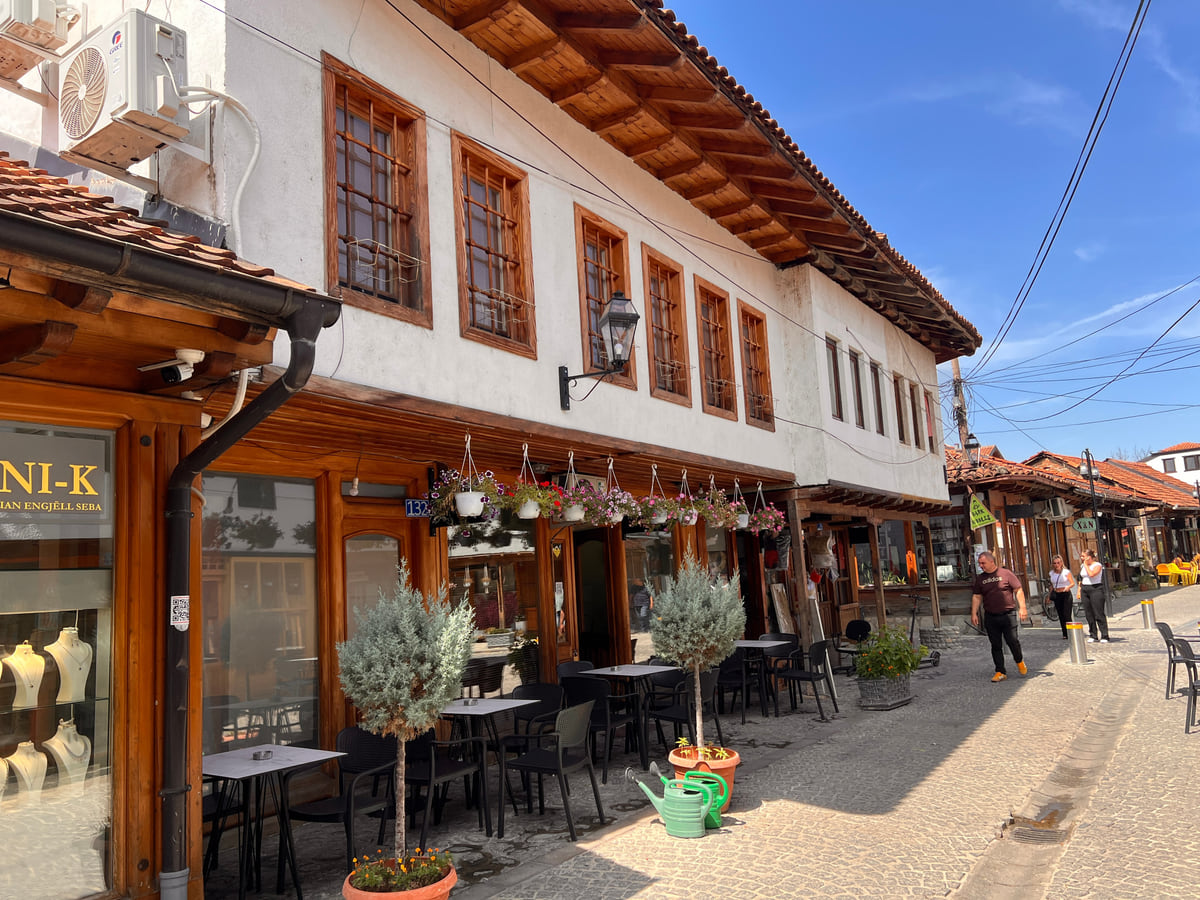
A street in the Grand Bazaar of Gjakova lined with two-storey timber houses, café terraces and potted olive trees
Kosovo's largest lakes
| Lake | Area |
|---|---|
| Gazivoda | 9.1 km² |
| Radoniq | 5.96 km² |
| Batllava | 3.27 km² |
| Badoc | 2.57 km² |
Source: ASK, main lakes in Kosovo. The government tourism portal gives 5.62 km² for Radoniq; the ASK figure is used here.
What the reservoir is for
| Use | Figure |
|---|---|
| Drinking water | About 214,000 people in Gjakova, Rahovec and their villages |
| Irrigation | 10,500 hectares |
| Dam capacity | 113 million m³ |
Source: Visit Kosovo, the government tourism portal, 2022 archive.org copy.
Test yourself
True or false?
0/3 Pick before you peek.
-
Lake Radoniq is a natural lake.
See the answer
False. It is a reservoir created in the 1980s, according to the government tourism portal.
-
Radoniq is Kosovo's second largest lake.
See the answer
True. ASK gives it 5.96 km²; only Gazivoda, with 9.1 km² inside Kosovo, is larger.
-
The reservoir supplies water to Gjakova and Rahovec.
See the answer
True. The government tourism portal mentions about 214,000 people in the two towns and their villages.
- Area (ASK)
- 5.96 km²
- People supplied
- 214,000
- Area irrigated
- 10,500 ha
- Dam capacity
- 113 hm³
Map
Where Lake Radoniq is
The Bjeshkët e Nemuna mountains close off the west and the Sharr the south; in the middle lies the Pristina plain. Every number opens its guide.
 1Gjakova 2Deçan 3Junik 4Rahovec 5Gjakova region 6Lake Radoniq
 Map data © OpenStreetMap contributors (ODbL)
0 of 208 Kosovo guides
Your next stamp
- Kosovo lakes
- Lake Gazivoda
- Lake Batllava
- Gjakova region
- Gjeravica
- Caves and waterfalls
- Hiking in Kosovo
- Drelaj
- Gjakova Grand Bazaar
- Places to visit
- Pristina region
- Visoki Dečani Monastery
- Bjeshkët e Nemuna National Park
- Hadum Mosque
- Mitrovica Region
- Things to do
- Most beautiful places
- Sheh Danjolli tekke
- Prettiest villages
- Tailors' Bridge
- Rugova Canyon
- UNESCO sites
- Gjakova
- Map
- Where is Kosovo
- Regions
- Municipalities
- Cities
- Gračanica Monastery
- Mitrovica
- Patriarchate of Peć
- Pristina
- Prizren
- Rugova via ferrata
- Fushë Kosovë
- Population
- Vushtrri
- Podujeva
- Radavc Cave
- Size
- Bajrakli Mosque
- Devič Monastery
- Gazimestan
- Ibar Bridge
- Is it a country?
- Istog
- One day in Pristina
- Peja
- Prizren region
- Ulpiana
- Vushtrri Stone Bridge
- Gadime Cave
- Klina
- Name
- Vushtrri Fortress
- Deçan
- Flag
- Isa Boletini Complex
- Novo Brdo Fortress
- History
- Junik
- Zvečan Fortress
- Banjska Monastery
- Ferizaj region
- Languages
- Rahovec
- Ferizaj
- Religion
- Sokolica Monastery
- Currency
- Štrpce
- Brezovica
- EU membership
- Entry requirements
- Skiing in Kosovo
- Kaçanik
- Serbian border
- Gračanica
- Guesthouses in Rugova
- Hotels in Peja
- Kaçanik fortress
- Newborn monument
- North Mitrovica
- One day in Prizren
- Peja bazaar
- Peja region
- Public holidays
- Velika Hoča
- Facts
- Hani i Elezit
- Hotels in Gjakova
- National Library
- Obiliq
- Zočište Monastery
- Drenas
- Mother Teresa Cathedral
- Shtime
- Skënderaj
- Lipjan
- Mother Teresa Boulevard
- Zvečan
- Kosovo Museum
- Leposavić
- Novo Brdo
- Emin Gjiku Ethnological Museum
- Janjevo
- Zubin Potok
- Imperial Mosque
- Pristina Clock Tower
- Pristina Old Bazaar
- Great Hammam of Pristina
- Bogë
- Germia Park
- Getting there
- Prizren Fortress
- Bear Sanctuary Prishtina
- Flights
- Sinan Pasha Mosque
- Hotels in Pristina
- Pristina airport
- Prizren stone bridge
- Buses
- Grand Hotel Pristina
- Our Lady of Ljeviš
- Prizren hammam
- Swiss Diamond Hotel
- Tirana to Pristina
- League of Prizren
- Restaurants in Pristina
- Skopje to Pristina
- Belgrade to Pristina
- Prizren Archaeological Museum
- Balkans itinerary
- St George's Cathedral
- Church of the Holy Saviour
- Getting around
- Holy Archangels Monastery
- Trains
- Car hire
- Day trips
- Marash
- Driving
- Sharr National Park
- Taxis
- Distances
- Prevalla
- Dragash
- Road trip
- Brod
- Prices and budget
- On a budget
- Restelica
- Free things to do
- Mirusha waterfalls
- Malisheva
- Safety
- Mamusha
- Scams
- Healthcare
- National parks in Kosovo
- Nightlife
- Suhareka
- Mobile and roaming
- Mountains in Kosovo
- Mushtisht
- Korisha
- Packing list
- DokuFest
- Peaks of the Balkans
- With kids
- Holidays
- Hotels in Prizren
- 3 days
- Restaurants in Prizren
- 5 days
- One week
- Gjilan region
- Kosovo food
- Sunny Hill Festival
- Gjilan
- Rahovec wine
- Atik Mosque, Gjilan
- Kosovo beer
- Draganac Monastery
- Where to eat in Kosovo
- Kamenica
- Where to stay in Kosovo
- Kllokot
- Weather in Kosovo
- Best time to visit Kosovo
- Partesh
- Kosovo in winter
- Ranillug
- Kosovo in spring
- Viti
- Kosovo in summer
- Letnica
- Binač Monastery
- Kosovo in autumn
- Events in Kosovo
- Independence Day
- Kosovo monasteries
- Mosques in Kosovo
- Kullas in Kosovo
- Castles in Kosovo
- Museums in Kosovo
- Bazaars in Kosovo
Frequently asked questions
Where is Lake Radoniq?
In Gjakova municipality, north of the town, according to the government tourism portal. On OpenStreetMap it appears beside Rakoc and Radoniq.
Is Lake Radoniq natural?
No. It is a reservoir created in the 1980s, according to the government tourism portal, and it took the name of the village of Radoniq.
How big is Lake Radoniq?
5.96 km² according to ASK, the Kosovo Agency of Statistics. It is the territory's second largest lake after Gazivoda.
Can you swim in Lake Radoniq?
I found no official swimming rules. As it is the reservoir supplying drinking water to Gjakova and Rahovec, I would ask locally before going in.
Is Lake Radoniq worth a visit?
As a scenic stop between Gjakova and Deçan, yes. For a whole day, the area has more to offer, such as the Grand Bazaar or Visoki Dečani Monastery.
By
Tourism graduate with a master’s in Tourism Management and Planning from the University of Málaga, who has travelled across Europe. He writes every guide from official sources and his own judgement.
Published on . Facts checked on .
Sources
Some links in this guide are affiliate links: if you book through them, the site earns a commission at no extra cost to you. Affiliate disclosure
Photos: Shkumbin Saneja (CC BY 2.0); Bdx (CC0), via Wikimedia Commons.