Pristina region, 22,815 people in 2024
Obiliq, home of Gazimestan and Sultan Murad's tomb
Obiliq (Obilić in Serbian) is a municipality north-west of Pristina with 22,815 inhabitants in the 2024 census and 20 settlements, according to the Kosovo Agency of Statistics. For visitors it matters for two protected monuments a few kilometres from the capital, the Gazimestan memorial, a Special Zone by law, and the 14th-century tomb of Sultan Murad I.
In 30 seconds
Full read: 2 min
- Obiliq is a municipality north-west of Pristina with 22,815 people in 2024 and 20 settlements.
- It holds the Gazimestan memorial, a Special Protective Zone, and the 14th-century tomb of Sultan Murad I.
- Both can be seen in a morning from Pristina.
Obiliq isn't a destination in itself, but Sultan Murad's tomb is one of those short visits that says a lot. I'd pair it with Gazimestan for a morning out of Pristina and not look for anything else in the municipality.

Before you go
What I would keep in mind
-
01 Most beautiful
One of the oldest Ottoman buildings in the Balkans
That's how the Ministry of Culture describes the 14th-century tomb of Sultan Murad I at Mazgit, with a carved marble doorway of plant motifs and Arabic inscriptions.
-
02 Getting there
Gazimestan, two kilometres away
The Gazimestan memorial and the standard-bearer's tomb form a Special Protective Zone under Law 03/L-039. You can see them on the same outing as Murad's tomb.
Gazimestan -
03 My tip
Two settlements with no residents
In the 2024 census, two of Obiliq's 20 settlements, Dobrosellë and Minjerë e Kosovës, had nobody living in them, according to the statistics agency. The same was true in 2011.
Obiliq doesn’t make many travel lists, and there’s a reason. It’s a small municipality hugging Pristina to the north-west, with little to see beyond two monuments. But those two are just a few kilometres from the capital and tell an important part of the area’s history, so it’s worth a morning.
The municipality in numbers
Obiliq (Obilić in Serbian) is in the Pristina region. In the 2024 census it had 22,815 inhabitants, slightly up on 21,549 in 2011, spread over 20 settlements according to the statistics agency. Obiliq town had 7,634, followed by Mazgit with 2,906, then Plemetin and Miloshevë. Two settlements, Dobrosellë and Minjerë e Kosovës, had no registered residents in either 2011 or 2024.
OpenStreetMap puts the town roughly 8 km in a straight line from central Pristina, and the monuments are even closer to the capital, around Mazgit.
The tomb of Sultan Murad I
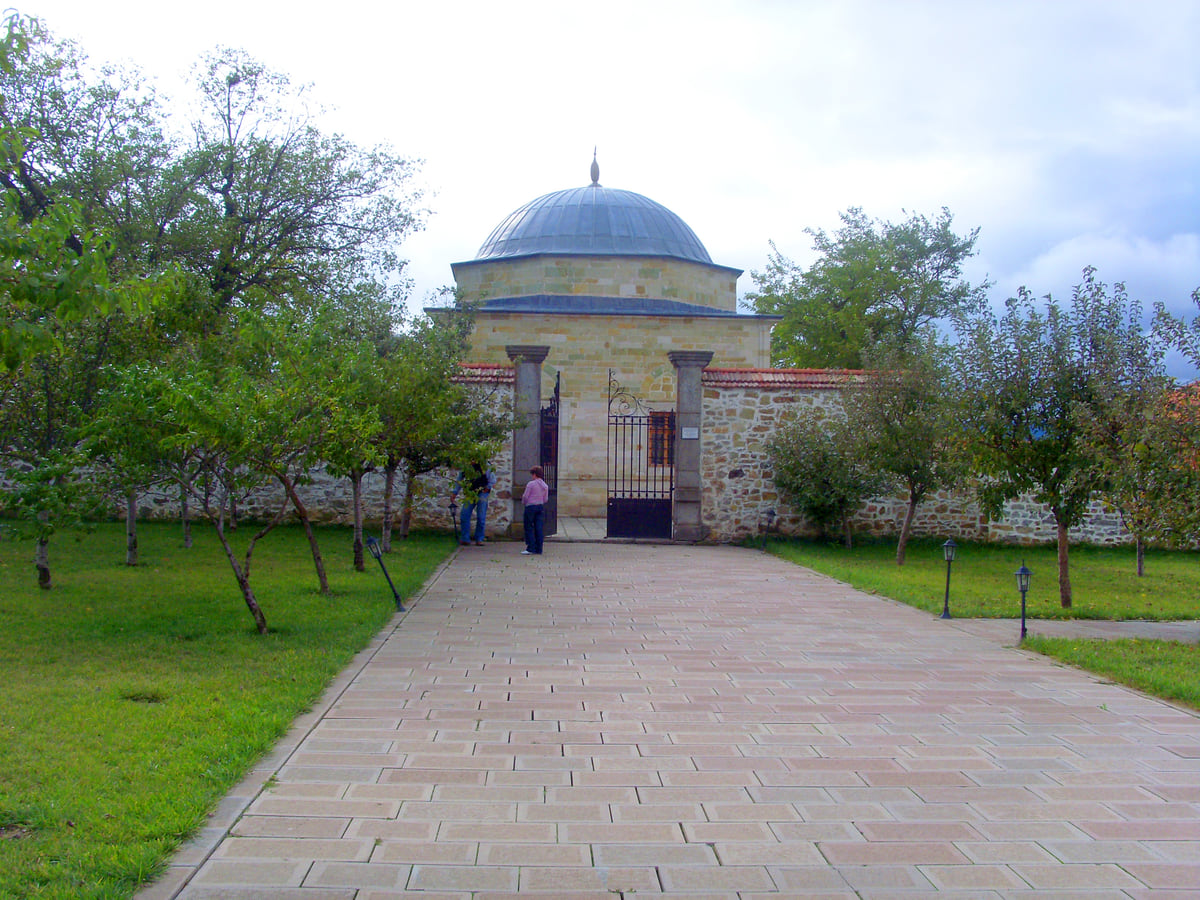
In the village of Mazgit, the Ministry of Culture protects the tomb of Sultan Murad I, built in the 14th century, who according to its record died in 1389. The Ministry counts it among the oldest works of Ottoman architecture in the Balkans. Inside is the grave, a wooden casket surrounded by the graves of those who guarded it for decades.
The building has a square plan and a brick dome, with a porch under a small dome resting on four stone columns. The walls mix brick and sandstone blocks, with eight windows, and the entrance has carved marble decoration of plant motifs and inscriptions in Arabic script.
The record traces its history in detail. In 1660 the traveller Evliya Çelebi found it neglected; in 1845 Hurshid Pasha had it repaired; in 1866 a fountain was added to the courtyard; in 1896 a two-storey guesthouse for visitors was finished; and in 1907 it was renovated on the orders of Abdul Hamid II. In 2005 it was restored over eight months with funding from Turkish institutions, in 2009 the guesthouse became a cultural centre and in 2011 it received 8,000 visitors, making it one of the most visited places in Kosovo that year.
To sleep close to everything, search places to stay in Pristina on Expedia and filter by area before price.
Gazimestan
About two kilometres away as the crow flies, on the Mazgit plateau, is the Gazimestan memorial, shielded by Law 03/L-039 as a Special Zone along with the standard-bearer’s tomb, another 14th-century Ottoman tomb. I cover it on its own page, sticking to the facts in the law and the Ministry of Culture’s records.
How to visit
No official source publishes opening hours or prices for these monuments. I’d go in the morning from Pristina, by car or booked taxi, see Murad’s tomb first and then Gazimestan, and be back for lunch. It’s one of the short outings in my day trips from Pristina. gov.uk recommends booking taxis through registered firms, which have regulated fares.
If you are short on time, see the best tours in Pristina and pick one that fits your day.
To sleep close to everything, search places to stay in Pristina on Booking.com and filter by area before price.
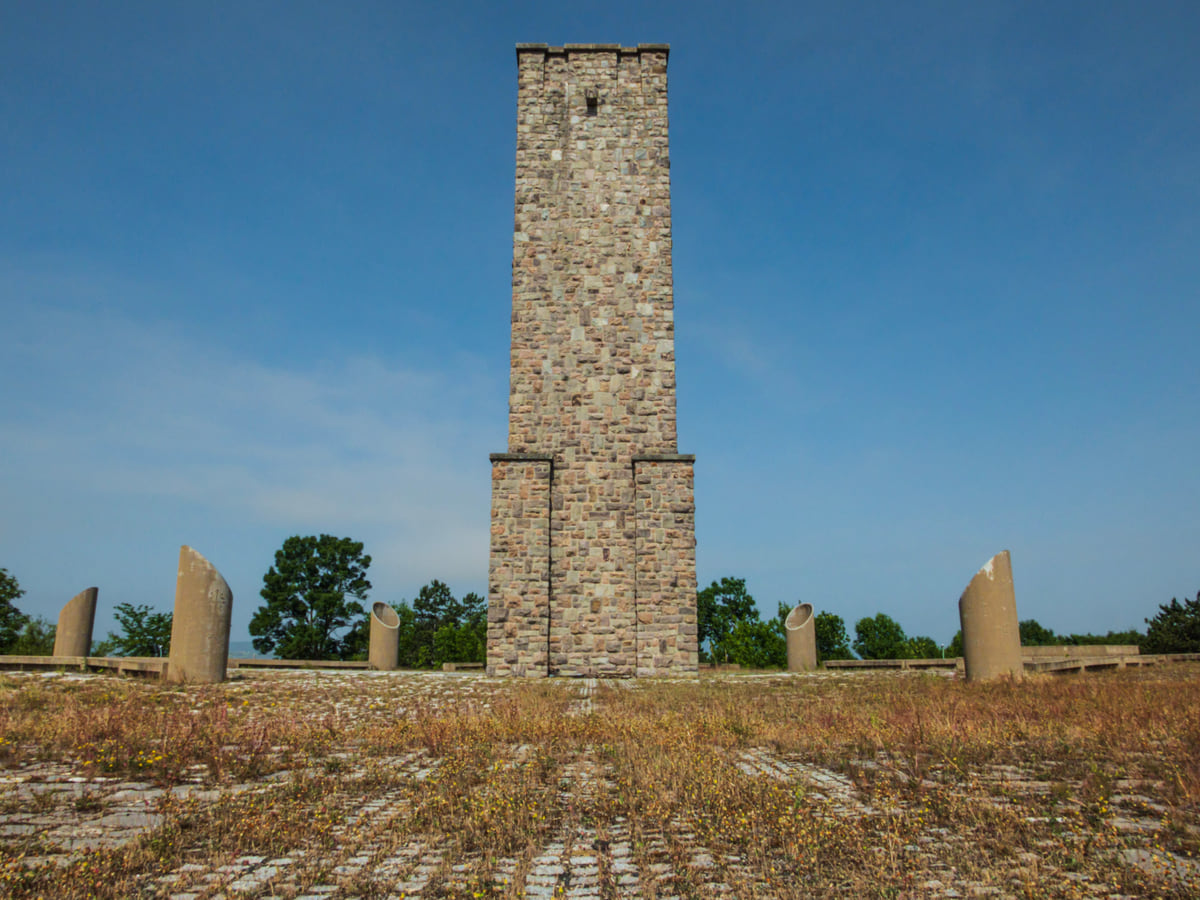
The stone tower of the Gazimestan memorial near Pristina, surrounded by bollards shaped like cannon barrels
Obiliq's largest settlements (2024)
| Settlement | 2024 | 2011 |
|---|---|---|
| Obiliq | 7,634 | 6,864 |
| Mazgit | 2,906 | 2,886 |
| Plemetin | 2,425 | 1,381 |
| Miloshevë | 2,196 | 1,819 |
| Breznicë | 964 | 1,302 |
| Babimoc | 963 | 392 |
| Municipality total (20 settlements) | 22,815 | 21,549 |
Kosovo Agency of Statistics (ASK), 2024 census, population by settlement. Names in Albanian, as ASK publishes them.
The tomb of Sultan Murad I, according to the Ministry of Culture
| Year | Event |
|---|---|
| 14th century | The tomb is built |
| 1660 | Evliya Çelebi visits and finds it neglected |
| 1845 | Repaired on the orders of Hurshid Pasha |
| 1866 | A fountain is built in the courtyard |
| 1896 | Two-storey guesthouse completed |
| 1907 | Renovated on the orders of Abdul Hamid II |
| 2005 | Eight-month restoration funded by Turkish institutions |
| 2011 | 8,000 visitors |
Kosovo Ministry of Culture heritage database, record 8970, checked on 10 October 2026. No opening hours or price published.
Test yourself
True or false?
0/3 Pick before you peek.
-
The tomb of Sultan Murad I dates from the 14th century.
See the answer
True. The Ministry of Culture dates it to the 14th century and counts it among the oldest Ottoman buildings in the Balkans.
-
Obiliq lost population between 2011 and 2024.
See the answer
False. It went from 21,549 to 22,815 people, according to the Kosovo Agency of Statistics.
-
Gazimestan and the standard-bearer's tomb are in separate protected zones.
See the answer
False. Law 03/L-039 places them in the same Special Protective Zone.
Map
Where Obiliq is
The Bjeshkët e Nemuna mountains close off the west and the Sharr the south; in the middle lies the Pristina plain. Every number opens its guide.
 1Pristina region 2Pristina 3Fushë Kosovë 4Podujeva 5Gračanica 6Obiliq 7Drenas 8Lipjan 9Novo Brdo
 Map data © OpenStreetMap contributors (ODbL)
- 1Pristina regionOne of Kosovo's seven statistical regions
- 2PristinaCapital of Kosovo under its Constitution
- 3Fushë KosovëPristina region, 63,949 people in 2024
- 4PodujevaPristina region, 70,975 people in 2024
- 5GračanicaPristina region, 18,486 people in 2024
- 6ObiliqPristina region, 22,815 people in 2024
- 7DrenasPristina region, 48,079 people in 2024
- 8LipjanPristina region, 55,044 people in 2024
- 9Novo BrdoPristina region, 4,493 people in 2024
What to see
What to see in Obiliq
0 of 208 Kosovo guides
Your next stamp
- Gazimestan
- Gračanica
- Pristina
- Cities
- Pristina region
- Places to visit
- Day trips
- Gjakova Grand Bazaar
- Gjeravica
- Visoki Dečani Monastery
- Bjeshkët e Nemuna National Park
- Hadum Mosque
- Mitrovica Region
- Things to do
- Most beautiful places
- Sheh Danjolli tekke
- Prettiest villages
- Tailors' Bridge
- Rugova Canyon
- UNESCO sites
- Gjakova
- Map
- Where is Kosovo
- Regions
- Municipalities
- Gračanica Monastery
- Mitrovica
- Patriarchate of Peć
- Prizren
- Rugova via ferrata
- Fushë Kosovë
- Population
- Vushtrri
- Podujeva
- Radavc Cave
- Size
- Bajrakli Mosque
- Devič Monastery
- Ibar Bridge
- Is it a country?
- Istog
- One day in Pristina
- Peja
- Prizren region
- Ulpiana
- Vushtrri Stone Bridge
- Gadime Cave
- Klina
- Name
- Vushtrri Fortress
- Deçan
- Flag
- Isa Boletini Complex
- Novo Brdo Fortress
- History
- Junik
- Lake Batllava
- Zvečan Fortress
- Banjska Monastery
- Ferizaj region
- Languages
- Rahovec
- Ferizaj
- Religion
- Sokolica Monastery
- Currency
- Lake Gazivoda
- Štrpce
- Brezovica
- EU membership
- Entry requirements
- Skiing in Kosovo
- Kaçanik
- Serbian border
- Guesthouses in Rugova
- Hotels in Peja
- Kaçanik fortress
- Newborn monument
- North Mitrovica
- One day in Prizren
- Peja bazaar
- Peja region
- Public holidays
- Velika Hoča
- Facts
- Gjakova region
- Hani i Elezit
- Hotels in Gjakova
- National Library
- Zočište Monastery
- Drenas
- Mother Teresa Cathedral
- Shtime
- Skënderaj
- Lipjan
- Mother Teresa Boulevard
- Zvečan
- Kosovo Museum
- Leposavić
- Novo Brdo
- Emin Gjiku Ethnological Museum
- Janjevo
- Zubin Potok
- Imperial Mosque
- Pristina Clock Tower
- Pristina Old Bazaar
- Great Hammam of Pristina
- Bogë
- Germia Park
- Getting there
- Lake Radoniq
- Prizren Fortress
- Bear Sanctuary Prishtina
- Drelaj
- Flights
- Sinan Pasha Mosque
- Hotels in Pristina
- Pristina airport
- Prizren stone bridge
- Buses
- Grand Hotel Pristina
- Our Lady of Ljeviš
- Prizren hammam
- Swiss Diamond Hotel
- Tirana to Pristina
- League of Prizren
- Restaurants in Pristina
- Skopje to Pristina
- Belgrade to Pristina
- Prizren Archaeological Museum
- Balkans itinerary
- St George's Cathedral
- Church of the Holy Saviour
- Getting around
- Holy Archangels Monastery
- Trains
- Car hire
- Marash
- Driving
- Sharr National Park
- Taxis
- Distances
- Prevalla
- Dragash
- Road trip
- Brod
- Prices and budget
- On a budget
- Restelica
- Free things to do
- Mirusha waterfalls
- Malisheva
- Safety
- Mamusha
- Scams
- Healthcare
- National parks in Kosovo
- Nightlife
- Suhareka
- Mobile and roaming
- Mountains in Kosovo
- Mushtisht
- Hiking in Kosovo
- Korisha
- Packing list
- DokuFest
- Peaks of the Balkans
- With kids
- Holidays
- Hotels in Prizren
- Kosovo lakes
- 3 days
- Caves and waterfalls
- Restaurants in Prizren
- 5 days
- One week
- Gjilan region
- Kosovo food
- Sunny Hill Festival
- Gjilan
- Rahovec wine
- Atik Mosque, Gjilan
- Kosovo beer
- Draganac Monastery
- Where to eat in Kosovo
- Kamenica
- Where to stay in Kosovo
- Kllokot
- Weather in Kosovo
- Best time to visit Kosovo
- Partesh
- Kosovo in winter
- Ranillug
- Kosovo in spring
- Viti
- Kosovo in summer
- Letnica
- Binač Monastery
- Kosovo in autumn
- Events in Kosovo
- Independence Day
- Kosovo monasteries
- Mosques in Kosovo
- Kullas in Kosovo
- Castles in Kosovo
- Museums in Kosovo
- Bazaars in Kosovo
Frequently asked questions
Where is Obiliq?
North-west of Pristina, in the Pristina statistical region. Obiliq town is about 8 km from the capital's centre as the crow flies, according to OpenStreetMap.
What is the population of Obiliq?
The municipality had 22,815 people in the 2024 census and 21,549 in 2011, according to the Kosovo Agency of Statistics. Obiliq town had 7,634.
What is there to see in Obiliq?
The Gazimestan memorial, which Law 03/L-039 protects as a Special Zone together with the standard-bearer's tomb, and the 14th-century tomb of Sultan Murad I at Mazgit.
What is Sultan Murad's tomb?
A 14th-century mausoleum in the village of Mazgit built for Sultan Murad I, who died in 1389, according to the Ministry of Culture. It has a square plan, a brick dome and a carved marble doorway, and was restored in 2005.
What is Obiliq called in Serbian?
Obilić. The statistics agency uses the Albanian form, Obiliq, and OpenStreetMap shows both.
By
Tourism graduate with a master’s in Tourism Management and Planning from the University of Málaga, who has travelled across Europe. He writes every guide from official sources and his own judgement.
Published on . Facts checked on .
Sources
Some links in this guide are affiliate links: if you book through them, the site earns a commission at no extra cost to you. Affiliate disclosure
Photos: Arianselmani (CC BY-SA 3.0); Julianruizp (CC BY-SA 4.0), via Wikimedia Commons.