Over 7,000 years on 316 km²
A history of Malta by date, from the temples to the euro
Malta has more than 7,000 years of human history. Its people built stone temples in the fourth and third millennia BC, and the islands passed through Phoenician, Roman and Arab hands before Charles V gave them to the Knights of St John in 1530. Napoleon ended the Knights' rule in 1798, Britain ruled from 1800 to 1964, and Malta became a republic in 1974.
In 30 seconds
Full read: 4 min
- Malta has over 7,000 years of human history and stone temples from the fourth and third millennia BC.
- Charles V handed Malta to the Knights of St John in 1530; they held it through the Great Siege of 1565 until Napoleon arrived in 1798.
- Britain ruled from 1800 to 1964, and George VI awarded the George Cross to Malta on 15 April 1942.
- Malta became a republic in 1974, the last British base closed in 1979, and it joined the EU in 2004.
I'd start Malta's story at the National Museum of Archaeology in Valletta, which costs €5 and puts the millennia in order before you see the temples themselves. Get that framework first and the rest of the trip makes twice as much sense.

Before you go
What I would keep in mind
-
01 My tip
Do the €5 museum before the temples
The National Museum of Archaeology, in the Auberge de Provence, covers the Maltese Neolithic (5900-2500 BC) with the Venus of Malta and the Sleeping Lady. Seeing it first gives meaning to Ħaġar Qim, Tarxien and Ġgantija.
National Museum of Archaeology in Valletta -
02 Most beautiful
The Great Siege, painted in the Grandmaster's Palace
The palace holds the cycle of the 1565 Great Siege painted by Matteo Perez d'Aleccio. It's the most direct way to see how the Knights wanted their victory remembered.
Grandmaster's Palace in Valletta -
03 To save money
One pass for most of the timeline
Heritage Malta's Multisite Pass (€60, 30 days) covers temples, catacombs, forts and Valletta's museums. If you follow the story end to end, it pays for itself after five or six sites.
Heritage Malta Multisite Pass -
04 Worth the splurge
The Hypogeum, the oldest chapter and the priciest
For €35, booked ahead, you go down into the Ħal Saflieni burial complex, in use from around 4000 BC. Only 10 people are allowed in at a time, and to me it's the best money you can spend in Malta.
the Ħal Saflieni Hypogeum
What I would book
Malta fits into 316 km², and yet its history is one of the most tightly packed in Europe. What gets me is the density. In a single morning you can go from a temple that’s over five millennia old to a 1943 bunker without getting in a car. Here’s the history of Malta by date, with where to see each chapter today.
Before anything was written down
The cave at Għar Dalam holds bones of Ice Age elephants, hippos and red deer, some more than 160,000 years old, from before any humans reached the islands. People arrived much later. Heritage Malta dates the Maltese Neolithic to 5900-2500 BC, and that’s when the temples went up.
UNESCO places them in the fourth and third millennia BC and ranks them among the first free-standing stone buildings raised anywhere on earth. There are six inscribed complexes (seven temples), and the sequence I’d follow is set out in the megalithic temples of Malta. The Ħal Saflieni Hypogeum belongs to the same world, a burial site cut into the rock and in use from around 4000 BC, where UNESCO estimates some 7,000 people were laid to rest.
Phoenicians, Romans, Arabs and a famous shipwreck
UNESCO lists Phoenicians, Greeks, Carthaginians, Romans, Byzantines and Arabs before the Knights. The best place to see those layers on top of each other is Tas-Silġ in Marsaxlokk, which Heritage Malta calls the site with the longest history of use in the islands. It began as a prehistoric temple and became a Phoenician sanctuary of Astarte, then a Roman one, then a Christian basilica and finally an Arab-period cemetery.
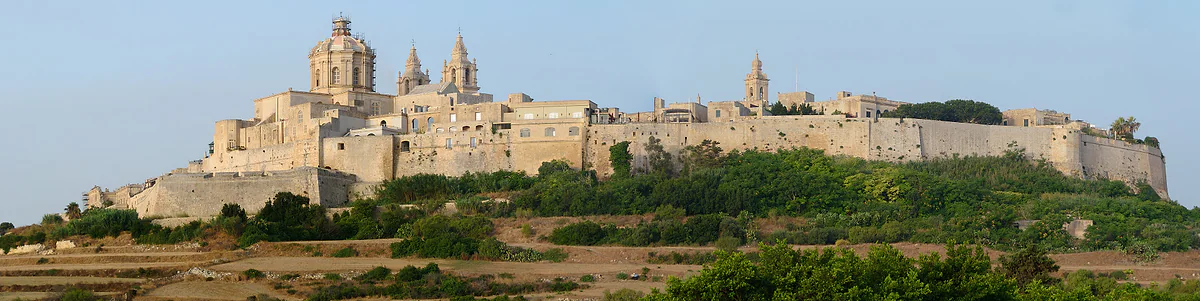
The Romans called the town that’s now Mdina and Rabat Melite. Tradition has St Paul shipwrecked here around AD 60, and outside Melite’s walls lie the earliest archaeological traces of Christianity in Malta, which I cover in Malta’s catacombs. VisitMalta dates the Arab conquest to 870 and credits it with a lasting mark on the language, the living legacy you hear in every street.
From Sicily to the Knights of St John
Until 1530, says VisitMalta, Malta was an extension of Sicily, ruled by the Normans, the Aragonese and whoever else held the bigger island. Then Charles V granted it to the Order of St John, who had been driven out of Rhodes by Suleiman the Magnificent. Spain’s foreign ministry adds a lovely detail, the rent. It was one falcon a year, sent to the Viceroy of Sicily on All Saints’ Day.
The Knights stayed 268 years. Who they were, and what they left behind on almost every street corner, is in the Knights of Malta.
1565 and the city built after the siege
The episode that changed everything was the Great Siege. In May 1565 an Ottoman fleet surrounded the islands. Fort St Elmo held out for a month and fell on 23 June, and the rest of the summer was fought around Fort St Angelo and Birgu. On 8 September the Ottomans gave up. UNESCO says the siege captured the European imagination and mobilised the resources to build a new city, Valletta, founded in 1566 on a grid plan. I’ve told the full story with numbers and places in the Great Siege of Malta.
The two centuries that followed belong to Baroque Malta. The Inquisition arrived in 1574 with Pietro Dusina and lasted over 224 years, although Heritage Malta points out it resorted to torture in under 1% of its cases.
How did Malta end up British?
In 1798 Napoleon took Malta on his way to Egypt and the Knights left. The French didn’t last long. The Maltese turned to Britain for help, and the islands were blockaded in 1800. No official source I’ve read gives the exact day the French left, so I won’t invent one.
British rule lasted until 1964, and VisitMalta notes that the Maltese adopted Britain’s systems of public administration, education and law. You’ll feel it in small ways, like the three-pin plugs. My favourite trace is the Main Guard facing the Grandmaster’s Palace, a guardhouse the British used from 1814, where soldiers painted the walls right up to 1972. In 1919 came the Sette Giugno riots, which Heritage Malta links to scarce, expensive bread and new taxes, and in 1921 the palace hosted Malta’s first constitutional parliament.
The war, independence and the euro
Between 1940 and 1942 Malta was one of the places hit hardest by bombing anywhere in the world, according to Heritage Malta, and the second siege ended in Allied victory in September 1943. On 15 April 1942 George VI awarded the George Cross to Malta, and the Constitution requires it on the flag. There’s more in Malta in the Second World War.
Then come the dates that are now national holidays. Independence on 21 September 1964. The republic on 13 December 1974. The closure of the last British base on 31 March 1979, Freedom Day. The EU adds the other two, membership on 1 May 2004 and the euro on 1 January 2008.
Reading the story without a book
If I had five stops to walk through Malta’s past, they’d be these. The National Museum of Archaeology for prehistory, the Rabat catacombs for the Roman era, the Grandmaster’s Palace for the Knights, Fort St Elmo for both wars and the Inquisitor’s Palace in Birgu for everyday life under the Order. Heritage Malta’s Multisite Pass gets you into all of them for €60, and I can’t think of a better use of a rainy day in Malta.
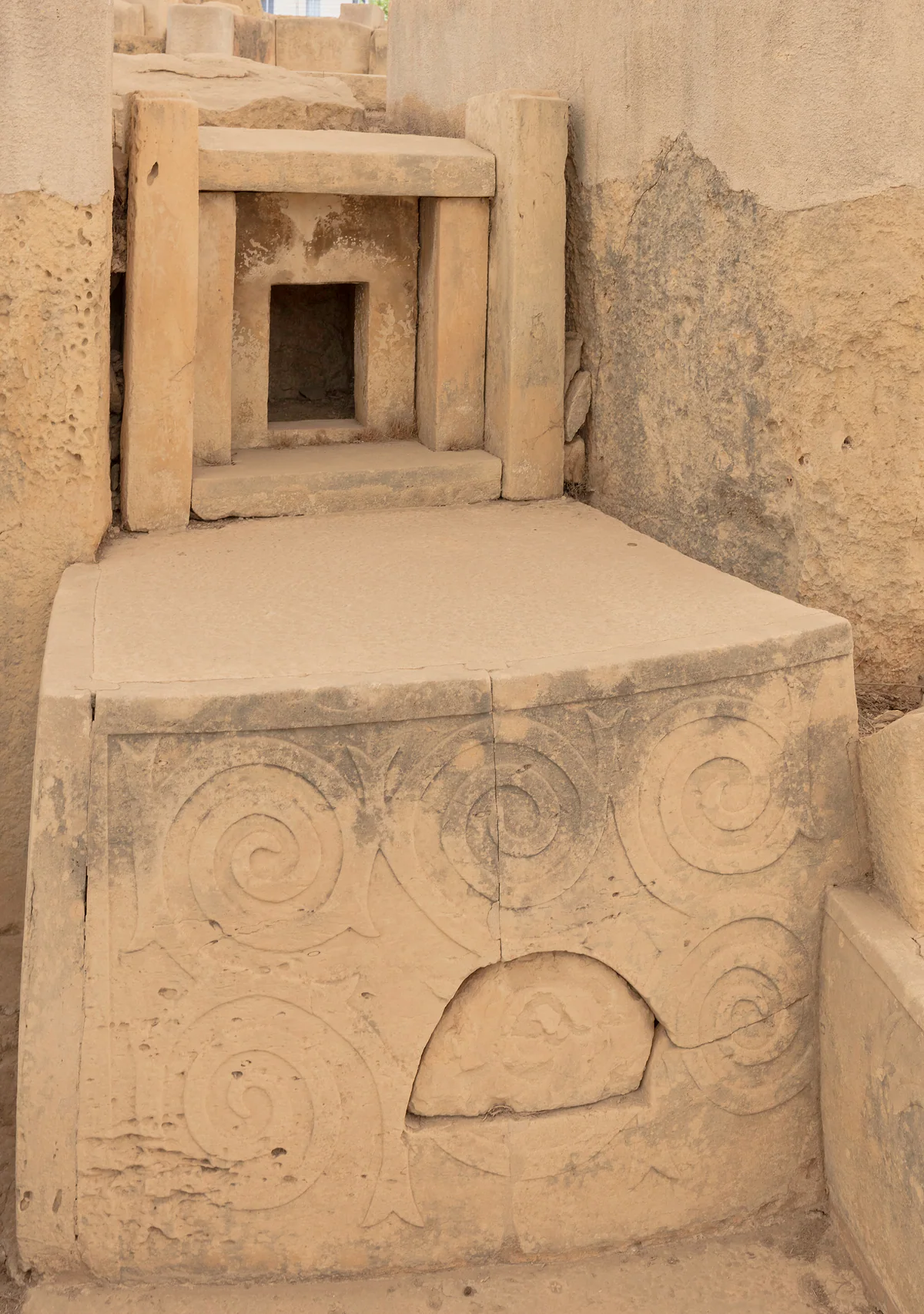
An altar in the Tarxien Temples decorated with spirals carved into the stone, in front of a lintelled niche at the back of the shrine.
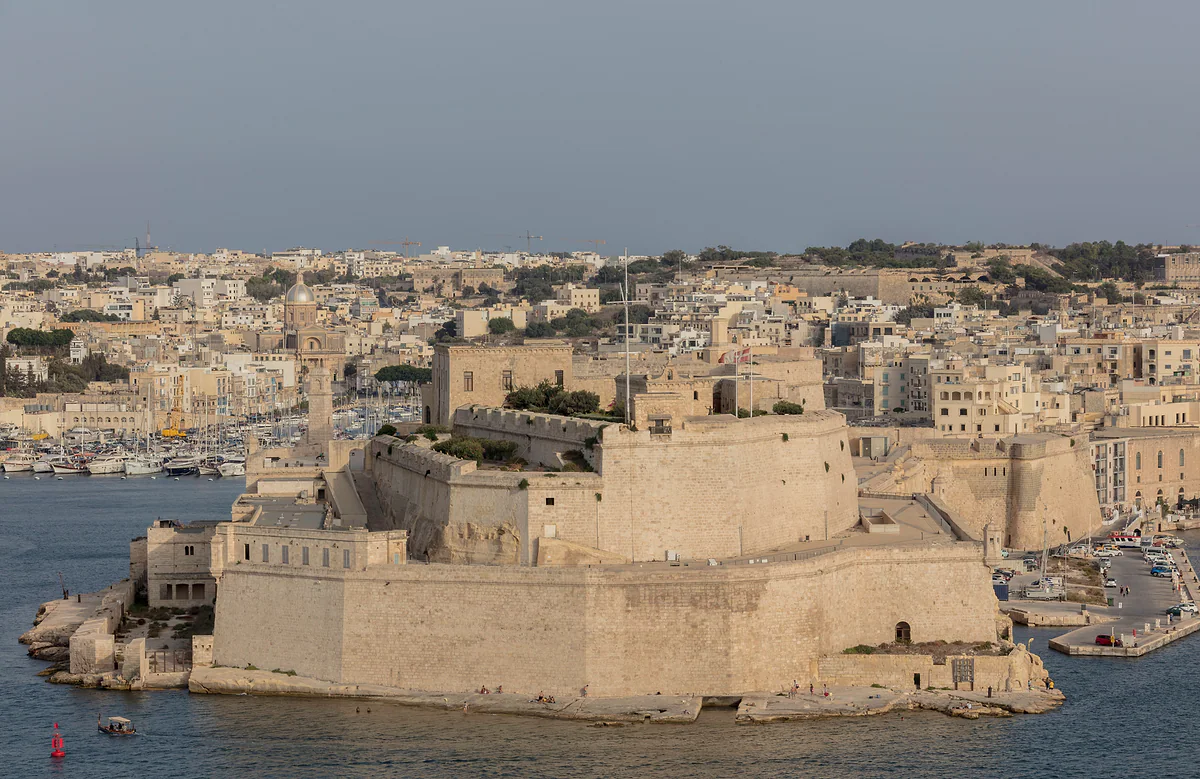
Fort St Angelo on the tip of Birgu, its stone bastions rising from the Grand Harbour with the houses of the Three Cities behind.
Malta's history in 20 dates
| Date | What happened | Where to see it |
|---|---|---|
| Over 160,000 years ago | Ice Age elephants and hippos, before any humans | Għar Dalam |
| 5900-2500 BC | The Maltese Neolithic | National Museum of Archaeology |
| 4th and 3rd millennia BC | Megalithic temples, among the earliest free-standing stone buildings in the world | Ġgantija, Ħaġar Qim, Mnajdra, Tarxien |
| From around 4000 BC | The Ħal Saflieni underground burial site | The Hypogeum, Paola |
| 8th-3rd centuries BC | Phoenician sanctuary of Astarte | Tas-Silġ, Marsaxlokk |
| Around AD 60 | St Paul's shipwreck, according to tradition | San Pawl Milqi, Burmarrad |
| 3rd-7th centuries | Catacombs outside Roman Melite | St Paul's Catacombs, Rabat |
| 870 | Arab conquest | The Maltese language |
| 1530 | Charles V grants Malta to the Order of St John | Fort St Angelo, Birgu |
| 1565 | The Great Siege, May to 8 September | Fort St Elmo and Fort St Angelo |
| 1566 | Valletta founded | Valletta |
| 1798 | Napoleon takes Malta; the Knights leave | Inquisitor's Palace, Birgu |
| 1800 | British blockade, then British rule | Main Guard, Valletta |
| 1814-1972 | British soldiers paint the Main Guard's walls | Main Guard, Valletta |
| 1919 | The Sette Giugno riots | National day, 7 June |
| 1921 | First constitutional parliament | Grandmaster's Palace |
| 15 April 1942 | George VI awards the George Cross | The national flag |
| 21 September 1964 | Independence | National day |
| 13 December 1974 and 31 March 1979 | Republic, then the last British base closes | National days |
| 1 May 2004 and 1 January 2008 | EU membership, then the euro | Your wallet |
Dates from UNESCO, Heritage Malta, VisitMalta, europa.eu, the European Commission and the Constitution of Malta, checked on 28-09-2026.
Test yourself
True or false?
0/4 Pick before you peek.
-
Malta became independent from Britain in 1974.
See the answer
False. Independence came on 21 September 1964. Malta became a republic in 1974, and the last British base closed in 1979.
-
British soldiers painted the walls of Valletta's Main Guard for over 150 years.
See the answer
True. Heritage Malta says the Main Guard was used by the British from 1814 and that soldiers painted its walls between 1814 and 1972.
-
The Knights of St John ruled Malta until the British arrived.
See the answer
False. Napoleon ended their rule in 1798. The British came afterwards, when the Maltese asked them for help against the French and they blockaded the islands in 1800.
-
Malta's temples are over 3,000 years older than the Arab conquest.
See the answer
True. UNESCO dates the temples to the fourth and third millennia BC, and VisitMalta puts the Arab conquest in AD 870.
- Years of human history, per the Government of Malta
- 7,000
- Years of British rule, 1800-1964
- 164
- Year of the George Cross
- 1942
- Year of independence
- 1964
What to see
What to see in History
0 of 279 Malta guides
Your next stamp
- Knights of Malta
- Is Malta a country?
- Second World War
- Great Siege of 1565
- Forts and fortifications
- Malta facts
- Victoria Lines
- Things to do in Malta
- Gozo
- Most beautiful places
- Comino
- Prettiest villages
- UNESCO World Heritage Sites
- Where is Malta
- The Maltese islands
- Towns and villages
- Island of Malta
- Blue Lagoon
- Fort Rinella
- Fort St Angelo
- Gardjola Gardens
- Ħal Saflieni Hypogeum
- Popeye Village
- Tarxien Temples
- Things to do in Gozo
- Valletta
- Esplora
- Golden Bay
- Gozo day trip
- Inquisitor's Palace
- Population
- St John's Co-Cathedral
- St Mary's Tower
- Grandmaster's Palace
- How big is Malta
- Maritime Museum
- Mellieħa Bay
- Fort St Elmo
- Language
- Malta at War Museum
- Paradise Bay
- Barrakka Gardens
- Red Tower
- Religion
- Malta government
- Saluting Battery
- MUŻA
- National Museum of Archaeology
- Underground Valletta
- Lascaris War Rooms
- Casa Rocca Piccola
- Malta in one day
- Three Cities
- Victoria
- Birgu
- Manoel Theatre
- Weekend in Malta
- Xagħra
- City Gate and Parliament
- Malta in three days
- Nadur
- Senglea
- Cospicua
- Malta in four days
- Qala
- Valletta Waterfront
- Għajnsielem
- Kalkara
- Malta in five days
- Malta in a week
- Paola
- Xewkija
- Sannat
- Tarxien
- Munxar
- Żabbar
- Fgura
- Fontana
- Kerċem
- Luqa
- Floriana
- Marsa
- Mellieħa
- The Citadel, Gozo
- Żebbuġ (Gozo)
- Ġgantija Temples
- Marsalforn
- Santa Luċija
- Ramla Bay
- San Lawrenz
- Xgħajra
- Xwejni salt pans
- Calypso's Cave
- Għarb
- Żejtun
- Għasri
- Gudja
- San Blas Bay
- Għaxaq
- Ħondoq Bay
- Marsaxlokk
- Kirkop
- Marsaxlokk Fish Market
- Mqabba
- St Peter's Pool
- Marsaskala
- Qrendi
- Żurrieq
- Beaches
- Comino ferry
- EU, Schengen and the euro
- Ħaġar Qim and Mnajdra
- Mdina
- Mġarr (Gozo)
- Blue Grotto
- Diving
- Entry requirements
- Mdina Cathedral
- Xewkija Rotunda
- Birżebbuġa
- Money and payments
- Palazzo Falson
- Safi
- Shipwrecks
- Ta' Ċenċ Cliffs
- Għar Dalam
- Mdina Dungeons
- Mġarr ix-Xini
- Prices and budget
- Snorkelling
- Boat trips
- Malta on a budget
- Playmobil FunPark
- Rabat (Malta)
- Xlendi
- Dwejra
- Gozo beaches
- Siġġiewi
- St Paul's Catacombs
- Tipping
- Azure Window
- Domvs Romana
- Għar Lapsi
- Plugs
- Limestone Heritage Park
- St Paul's Grotto
- Ta' Pinu Basilica
- Time zone
- Buskett Gardens
- Mobile and roaming
- Wied il-Għasri
- Dingli
- Maltese cross
- Dingli Cliffs
- Flag
- Żebbuġ
- Coat of arms
- Mtarfa
- Balzan
- National anthem
- Lija
- Game of Thrones
- Iklin
- Attard
- Film locations
- San Anton Gardens
- Ta' Qali Crafts Village
- Megalithic temples
- Catacombs
- Museums
- Where to eat
- Where to stay
- Churches
- Hotels in Valletta
- Restaurants in Valletta
- Hotels in Sliema
- Maltese food
- Restaurants in Marsaxlokk
- Viewpoints
- Hotels in St Julian's
- Pastizzi
- Walking and hiking
- Hotels in Buġibba and Qawra
- Maltese rabbit stew
- Safety
- Hotels in Mellieħa
- Kinnie and Cisk
- Scams
- Gozo hotels
- Nightlife
- Tap water
- Boat parties
- Holiday packages
- Tourist tax
- All inclusive
- Gay Malta
- Sightseeing passes
- Apartments
- Malta with kids
- Public holidays
- How to get there
- Luxury
- Malta for couples
- Taxis and ride-hailing
- Weather
- Best time to visit
- Cycling
- English schools
- Flights
- Flights from Madrid
- Sea temperature
- Shopping and souvenirs
- Airport
- Free walking tours
- In winter
- Airport transfers
- Day trips and tours
- In summer
- Ferry from Sicily
- In January
- Cruise stop
- In February
- In March
- In April
- In May
- Getting around
- In June
- Buses
- July
- August
- Hop on hop off
- Gozo ferry
- September
- Gozo fast ferry
- October
- November
- Valletta ferries
- Car hire
- December
- Driving
- Events
- St Paul's Bay
- Village feasts
- Buġibba
- Christmas
- Easter
- Qawra
- Carnival
- Xemxija
- Fireworks festival
- Malta National Aquarium
- Isle of MTV
- St Paul's Islands
- Mosta
- Mosta Rotunda
- Naxxar
- Palazzo Parisio
- Għargħur
- Mġarr (Malta)
- Sliema
- Ta' Ħaġrat and Skorba Temples
- Għajn Tuffieħa Bay
- Tigné Point
- Ġnejna Bay
- St Julian's
- Paceville
- St George's Bay
- Gżira
- Msida
- Ta' Xbiex
- Pietà
- Pembroke
- Swieqi
- San Ġwann
- Birkirkara
- Ħamrun
- Santa Venera
- Qormi
Frequently asked questions
How long was Malta under British rule?
From 1800, when the British blockaded the French out at the Maltese people's request, until independence on 21 September 1964. British forces stayed on after that, and the last base closed on 31 March 1979, now Freedom Day.
Is Malta still British?
No. Malta has been independent since 1964 and became a republic within the Commonwealth in 1974, with its own president. It joined the EU in 2004 and the eurozone in 2008.
Who ruled Malta before the British?
The Knights of St John from 1530 to 1798, then the French under Napoleon for a short spell. Before the Knights, Malta was governed as an extension of Sicily, and UNESCO lists Phoenicians, Greeks, Carthaginians, Romans, Byzantines and Arabs among its earlier rulers.
Why did Malta get the George Cross?
George VI awarded it to Malta on 15 April 1942 for the islanders' bravery during the Second World War. Malta was the first Commonwealth country to receive it, and it has featured on the flag since 1943.
How old is Malta's history?
Over 7,000 years of human history, the figure used by the Government and VisitMalta. Heritage Malta sometimes says 8,000, so 'over 7,000' is the safe way to put it.
What happened in Malta in 1565?
The Great Siege. An Ottoman force of some 40,000 men, according to VisitMalta, failed to take the islands from the Knights and the Maltese. It ended on 8 September, still a public holiday, and Valletta was founded the following year.
By
Tourism graduate with a master’s in Tourism Management and Planning from the University of Málaga, who has travelled across Europe. He writes every guide from official sources and his own judgement.
Published on . Facts checked on .
Sources
Photos: Tranceliner (CC BY-SA 4.0); Diego Delso (CC BY-SA 4.0); Diego Delso (CC BY-SA 4.0), via Wikimedia Commons.