268 years in Malta, 1530 to 1798
The Knights of Malta, from the Order of St John to the Order today
The Knights of Malta are the Order of St John of Jerusalem, founded around a hospital for pilgrims and recognised by the Pope in 1113. They moved through Cyprus and Rhodes, ruled Malta from 1530 until Napoleon threw them out in 1798, and have been based in Rome since 1834. Today the Order has more than 13,500 knights, dames and chaplains and works in 130 countries.
In 30 seconds
Full read: 3 min
- The Knights of Malta are the Order of St John of Jerusalem, recognised by the Pope in 1113.
- They ruled Malta from 1530 to 1798, survived the Great Siege of 1565 and founded Valletta.
- Napoleon forced them out in 1798; since 1834 the Order has been based in Rome.
- Today it has over 13,500 members and projects in 130 countries, according to its website.
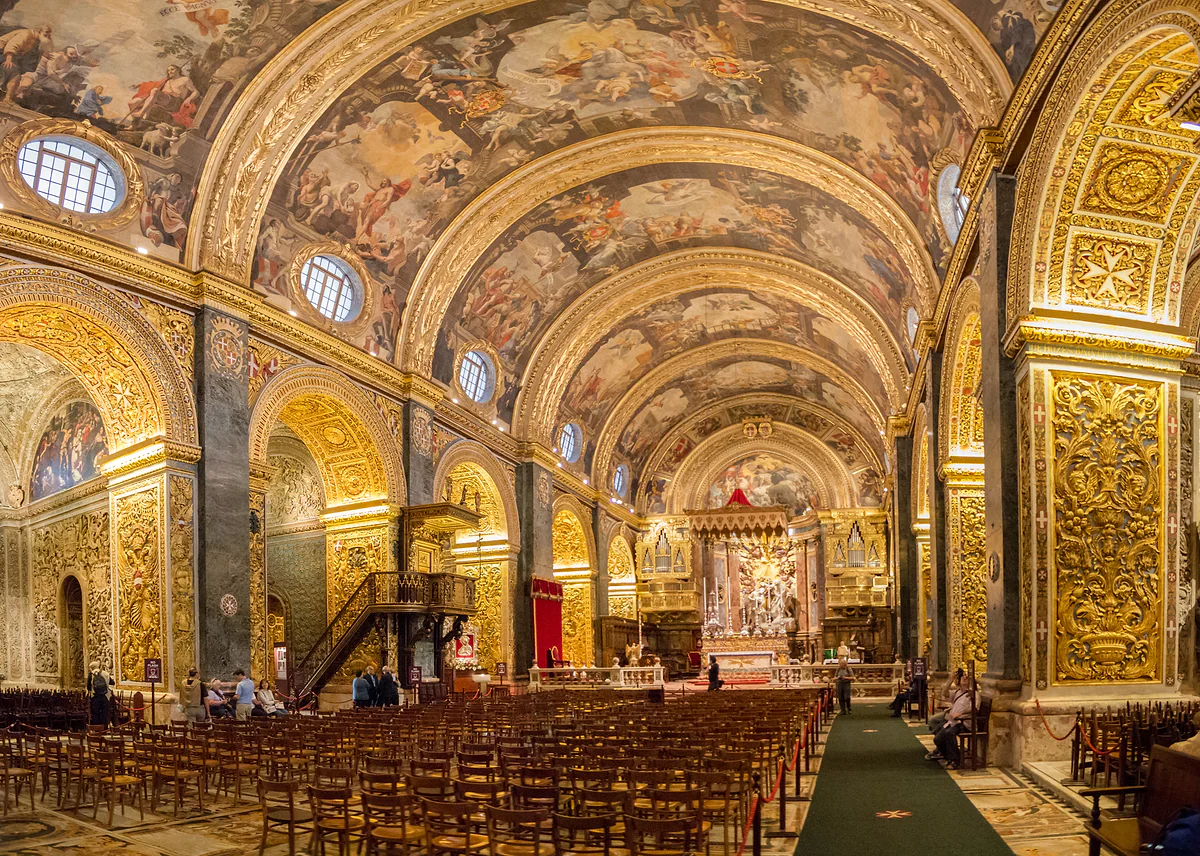
If you want to understand the Knights in a single visit, go to St John's Co-Cathedral, their conventual church. It's €15, and every Grand Master left his mark there, so it reads almost like a history of the Order in marble.

Before you go
What I would keep in mind
-
01 Most beautiful
The church every Grand Master added to
St John's was finished in 1577 to an austere design by Gironimo Cassar. Grand Masters and knights kept donating works until it became what you see today, including two Caravaggios.
St John's Co-Cathedral in Valletta -
02 My tip
At Fort St Angelo, the Order still has a say
Under an agreement with the Sovereign Order of Malta, Heritage Malta opens the upper fort, with the Magistral Palace, the Keep and the Chapel of St Anne. It's one corner of Malta where the Order is still present.
Fort St Angelo in Birgu -
03 To save money
Palace, forts and Inquisitor on one pass
Heritage Malta's Multisite Pass (€60, 30 days) covers the Grandmaster's Palace, Fort St Elmo, Fort St Angelo and the Inquisitor's Palace. St John's isn't included, as its own foundation runs it.
Heritage Malta Multisite Pass
What I would book
My ranking, scored
Where to find the Knights of St John in Malta
My score out of 10 weighs how much each site explains about the Order and how strong an impression it leaves, with 2026 adult prices. These are my opinions, not an official ranking.
0 of 5 seen
-
St John's Co-Cathedral, Valletta
The Order's conventual church, finished in 1577 and embellished for two centuries by Grand Masters and knights. With the Caravaggios in the Oratory, it's the fullest visit of all.
9.6 out of 10
-
Grandmaster's Palace, Valletta
The Knights' first building in the new capital, with the Armoury, the suits of armour of Wignacourt and La Valette, and the Great Siege cycle.
9.1 out of 10
-
Fort St Angelo, Birgu
The Order's headquarters from 1530 and the heart of the 1565 defence. Its upper part opens under an agreement with the Sovereign Order of Malta.
8.8 out of 10
-
Fort St Elmo, Valletta
The 1552 star fort that held for a month in the Great Siege. It also houses the National War Museum.
8.4 out of 10
-
Inquisitor's Palace, Birgu
Seat of the law courts from 1543 and of the Inquisition from 1574. It shows daily life under the Order better than any state room.
7.7 out of 10
When people search for the Knights of Malta, they can mean two quite different things, and it helps to separate them from the start. One is the Order that ruled the island from 1530 to 1798 and filled it with forts, churches and palaces. The other is the institution that exists today in Rome, its direct heir. Here are both, with what they left in Malta and where to see it.
From a Jerusalem hospital to the island of Rhodes
The Order tells its own origin story precisely. In the second half of the 11th century, merchants from Amalfi got permission from the Caliph of Egypt to build a church, convent and hospital in Jerusalem, dedicated to St John the Baptist, to care for pilgrims. Under Blessed Gerard the community became a lay religious order, and Pope Paschal II recognised it in a bull of 15 February 1113.
The military role came later, when the Kingdom of Jerusalem charged it with protecting the sick, pilgrims and the main roads. After losing the Holy Land in 1291 it moved to Cyprus, and in 1310 to Rhodes. There the knights were grouped by langue, seven at first, including England with Scotland and Ireland, and eight from 1462, when Castile and Portugal broke away from Aragon. Each langue had its own auberge, first on Rhodes and then on Malta. In 1523, after a six-month siege by Suleiman the Magnificent, they left Rhodes with military honours.
How did the Knights end up in Malta?
Charles V gave it to them. The Order records that in 1530 Grand Master Philippe de Villiers de l’Isle Adam took possession of Malta, granted by the Emperor with Pope Clement VII’s approval, on condition that the Order stayed neutral in any war between Christian nations. Spain’s foreign ministry adds the rent, a single falcon a year, delivered to Sicily’s viceroy every 1 November.
They stayed 268 years and transformed the island. First they dug in at Birgu, around the old sea castle they renamed Fort St Angelo, and after the Great Siege of 1565 they built a new city on the peninsula opposite, Valletta, founded in 1566 and named after the Grand Master who defended it.
What they left, besides the walls
The obvious legacy is the fortifications, which I cover in the forts of Malta. What interests me more is the rest. The Order built a large new hospital, which it describes as one of the best organised in the world, opened a school of anatomy followed by a faculty of medicine, and says it played a part in developing ophthalmology and pharmacology. Its fleet fought at Lepanto on 7 October 1571 with the Holy League.
Then there’s the art. St John’s was finished in 1577, and Grand Masters and knights kept embellishing it until it became a treasure house. UNESCO lists the langues’ auberges in Valletta, those of Castile and León, Provence, Italy and Aragon, plus the 18th-century Auberge de Bavière. Two are museums today, the Auberge de Provence as the National Museum of Archaeology and the Auberge d’Italie as MUŻA.
Do the Knights of Malta still exist?
They do, and this is what surprises most people. In 1798 Napoleon seized Malta en route to Egypt, and the Knights departed, partly because their code forbade them to take up arms against other Christians, according to the Order. After a turbulent spell, with Tsar Paul I acting as Grand Master, it moved through Messina, Catania and Ferrara before settling in Rome in 1834.
Its full name is now the Sovereign Military Hospitaller Order of St John of Jerusalem of Rhodes and of Malta. It has its Magistral Palace on Via dei Condotti, has had 81 Grand Masters from Blessed Gerard to Fra’ John Dunlap, and counts over 13,500 knights, dames and chaplains, with projects in 130 countries. The British association was founded in 1875. Its emblem is still the eight-pointed Maltese cross.
Following the Knights around Malta
My order would be the ranking above. I’d start with St John’s Co-Cathedral, carry on to the Grandmaster’s Palace and cross to Birgu for Fort St Angelo. There’s a detail there that few visitors know about. Under an agreement with the Sovereign Order of Malta, the upper part of the fort, including the Magistral Palace, the Keep and St Anne’s Chapel, is open to the public. More than two centuries on, the Order is still present in the same fort where it settled in 1530.
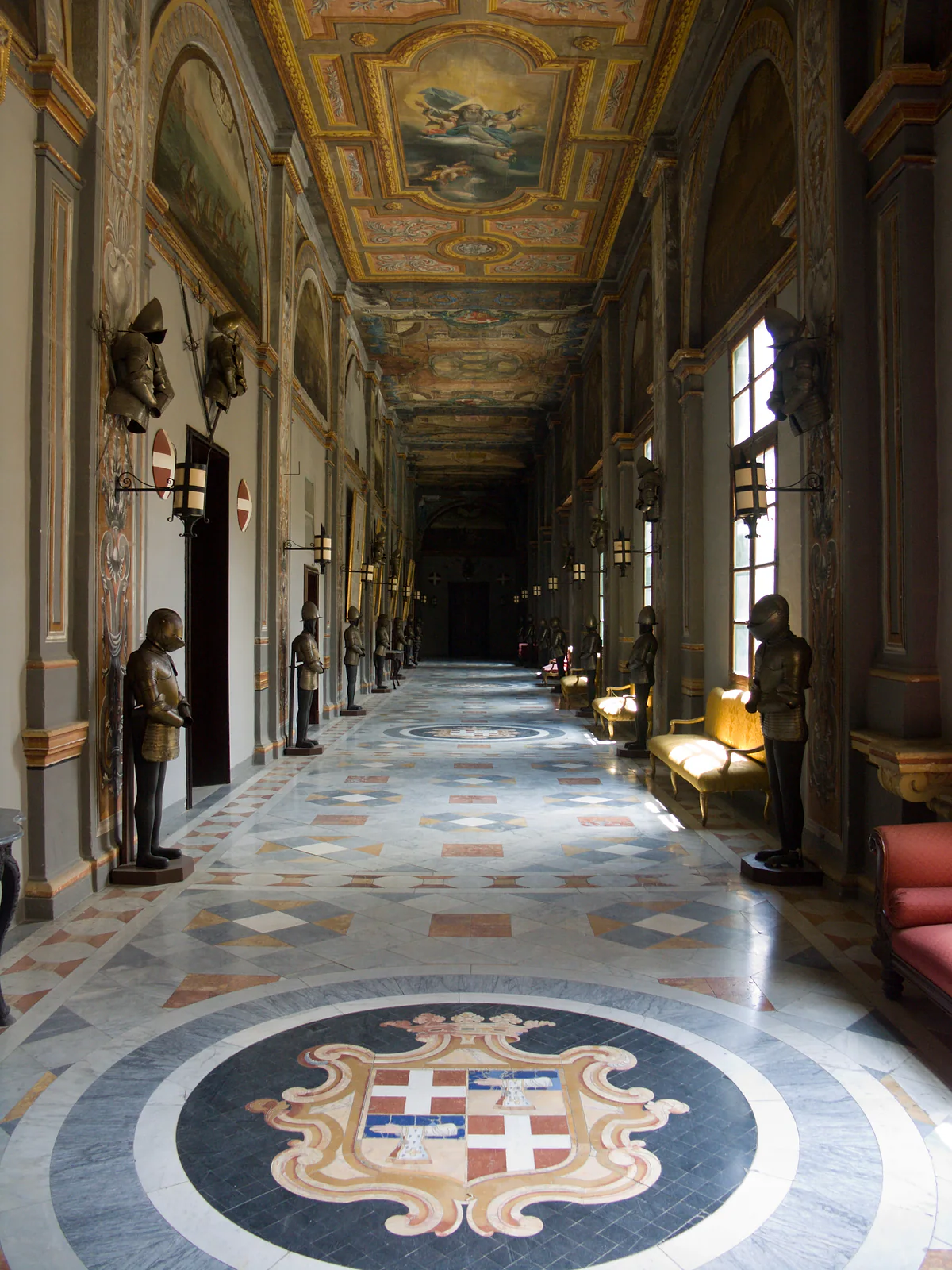
A corridor in the Grandmaster's Palace in Valletta, lined with suits of armour, with painted ceilings and the Order's arms in the marble floor.
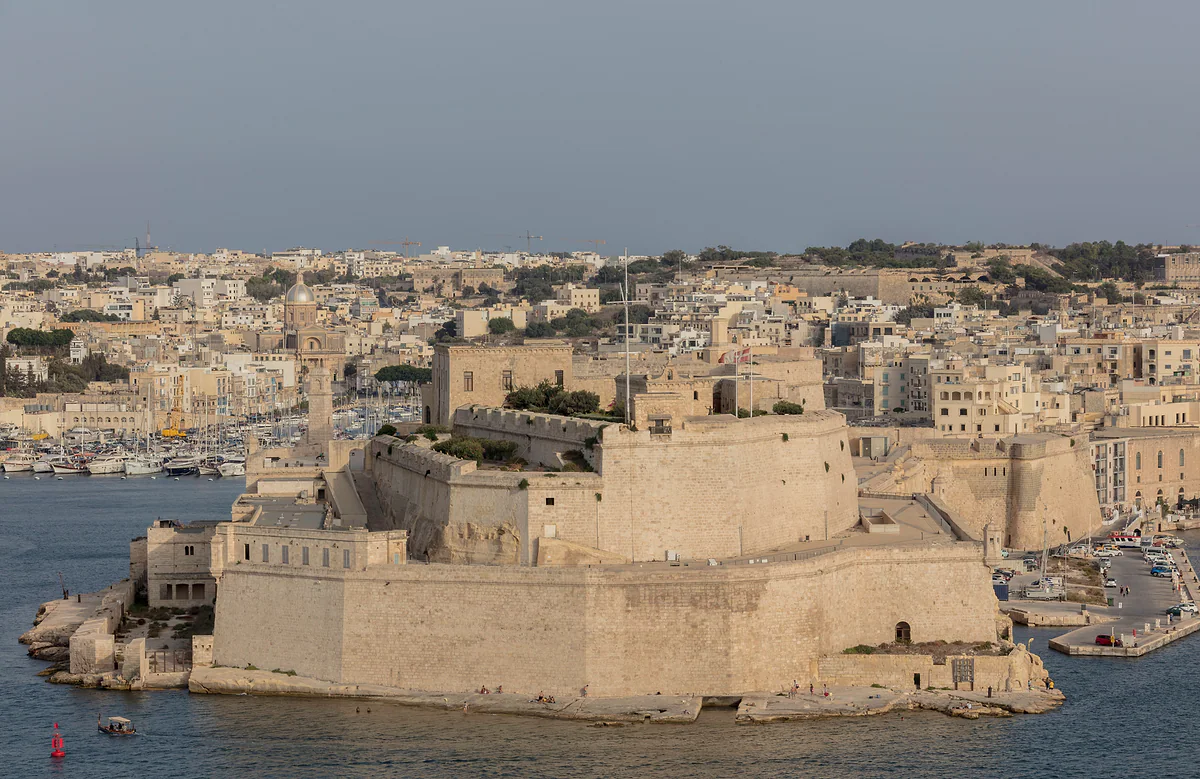
Fort St Angelo on the tip of Birgu, its stone bastions rising from the Grand Harbour with the houses of the Three Cities behind.
The Order of St John by date
| Date | What happened |
|---|---|
| Second half of the 11th century | Merchants from Amalfi found a pilgrims' hospital in Jerusalem, dedicated to St John the Baptist |
| 15 February 1113 | Pope Paschal II's bull recognises the Order of St John |
| 1310 | After losing the Holy Land and a spell in Cyprus, the Order settles on Rhodes |
| 1462 | Castile and Portugal split from Aragon to form the eighth langue |
| 1530 | Charles V, with Pope Clement VII's approval, grants Malta to the Order |
| 1565 | The Great Siege, under Grand Master Jean de la Valette |
| 1566 | Valletta founded |
| 7 October 1571 | The Order's fleet fights at Lepanto with the Holy League |
| 1798 | Napoleon occupies Malta and the Knights leave |
| 1834 | The Order settles permanently in Rome |
| 1875 | The British association of the Order is founded |
Dates from the official website of the Sovereign Order of Malta (orderofmalta.int), checked on 28-09-2026.
Test yourself
True or false?
0/4 Pick before you peek.
-
The Order of Malta was founded in Malta.
See the answer
False. It began in Jerusalem in the 11th century, around a hospital for pilgrims. It reached Malta in 1530, after Cyprus and Rhodes, and only there did its cross become the Maltese cross.
-
The Knights left Malta partly because their code banned fighting other Christians.
See the answer
True. The Order explains that in 1798 the Knights had to leave in the face of Napoleon, partly because their code forbade them to take up arms against fellow Christians.
-
The Order's fleet fought at the Battle of Lepanto.
See the answer
True. According to the Order, its fleet under Fra' Pietro Giustiniani joined the Holy League and helped win the battle on 7 October 1571.
-
The Order of Malta still has a military role.
See the answer
False. It ceased to be military when it lost Malta in 1798. Today it keeps only its historical military traditions and focuses on medical and humanitarian work.
- Year of the bull recognising the Order
- 1113
- Years the Order ruled Malta
- 268
- Grand Masters in its whole history
- 81
- Knights, dames and chaplains today
- 13,500
What to see
What to see in Knights of Malta
0 of 279 Malta guides
Your next stamp
- History
- Forts and fortifications
- Birgu
- Churches
- Great Siege of 1565
- Maltese cross
- Fort St Angelo
- Victoria Lines
- Things to do in Malta
- Gozo
- Most beautiful places
- Comino
- Prettiest villages
- UNESCO World Heritage Sites
- Where is Malta
- The Maltese islands
- Towns and villages
- Island of Malta
- Blue Lagoon
- Fort Rinella
- Gardjola Gardens
- Ħal Saflieni Hypogeum
- Is Malta a country?
- Popeye Village
- Tarxien Temples
- Things to do in Gozo
- Valletta
- Esplora
- Golden Bay
- Gozo day trip
- Inquisitor's Palace
- Population
- St John's Co-Cathedral
- St Mary's Tower
- Grandmaster's Palace
- How big is Malta
- Maritime Museum
- Mellieħa Bay
- Fort St Elmo
- Language
- Malta at War Museum
- Paradise Bay
- Barrakka Gardens
- Red Tower
- Religion
- Malta government
- Saluting Battery
- MUŻA
- National Museum of Archaeology
- Underground Valletta
- Lascaris War Rooms
- Casa Rocca Piccola
- Malta in one day
- Three Cities
- Victoria
- Manoel Theatre
- Weekend in Malta
- Xagħra
- City Gate and Parliament
- Malta in three days
- Nadur
- Senglea
- Cospicua
- Malta in four days
- Qala
- Valletta Waterfront
- Għajnsielem
- Kalkara
- Malta in five days
- Malta in a week
- Paola
- Xewkija
- Sannat
- Tarxien
- Munxar
- Żabbar
- Fgura
- Fontana
- Kerċem
- Luqa
- Floriana
- Marsa
- Mellieħa
- The Citadel, Gozo
- Żebbuġ (Gozo)
- Ġgantija Temples
- Marsalforn
- Santa Luċija
- Ramla Bay
- San Lawrenz
- Xgħajra
- Xwejni salt pans
- Calypso's Cave
- Għarb
- Żejtun
- Għasri
- Gudja
- San Blas Bay
- Għaxaq
- Ħondoq Bay
- Marsaxlokk
- Kirkop
- Marsaxlokk Fish Market
- Mqabba
- St Peter's Pool
- Marsaskala
- Qrendi
- Żurrieq
- Beaches
- Comino ferry
- EU, Schengen and the euro
- Ħaġar Qim and Mnajdra
- Mdina
- Mġarr (Gozo)
- Blue Grotto
- Diving
- Entry requirements
- Mdina Cathedral
- Xewkija Rotunda
- Birżebbuġa
- Money and payments
- Palazzo Falson
- Safi
- Shipwrecks
- Ta' Ċenċ Cliffs
- Għar Dalam
- Mdina Dungeons
- Mġarr ix-Xini
- Prices and budget
- Snorkelling
- Boat trips
- Malta on a budget
- Playmobil FunPark
- Rabat (Malta)
- Xlendi
- Dwejra
- Gozo beaches
- Siġġiewi
- St Paul's Catacombs
- Tipping
- Azure Window
- Domvs Romana
- Għar Lapsi
- Plugs
- Limestone Heritage Park
- Second World War
- St Paul's Grotto
- Ta' Pinu Basilica
- Time zone
- Buskett Gardens
- Mobile and roaming
- Wied il-Għasri
- Dingli
- Dingli Cliffs
- Flag
- Żebbuġ
- Coat of arms
- Mtarfa
- Balzan
- National anthem
- Lija
- Malta facts
- Game of Thrones
- Iklin
- Attard
- Film locations
- San Anton Gardens
- Ta' Qali Crafts Village
- Megalithic temples
- Catacombs
- Museums
- Where to eat
- Where to stay
- Hotels in Valletta
- Restaurants in Valletta
- Hotels in Sliema
- Maltese food
- Restaurants in Marsaxlokk
- Viewpoints
- Hotels in St Julian's
- Pastizzi
- Walking and hiking
- Hotels in Buġibba and Qawra
- Maltese rabbit stew
- Safety
- Hotels in Mellieħa
- Kinnie and Cisk
- Scams
- Gozo hotels
- Nightlife
- Tap water
- Boat parties
- Holiday packages
- Tourist tax
- All inclusive
- Gay Malta
- Sightseeing passes
- Apartments
- Malta with kids
- Public holidays
- How to get there
- Luxury
- Malta for couples
- Taxis and ride-hailing
- Weather
- Best time to visit
- Cycling
- English schools
- Flights
- Flights from Madrid
- Sea temperature
- Shopping and souvenirs
- Airport
- Free walking tours
- In winter
- Airport transfers
- Day trips and tours
- In summer
- Ferry from Sicily
- In January
- Cruise stop
- In February
- In March
- In April
- In May
- Getting around
- In June
- Buses
- July
- August
- Hop on hop off
- Gozo ferry
- September
- Gozo fast ferry
- October
- November
- Valletta ferries
- Car hire
- December
- Driving
- Events
- St Paul's Bay
- Village feasts
- Buġibba
- Christmas
- Easter
- Qawra
- Carnival
- Xemxija
- Fireworks festival
- Malta National Aquarium
- Isle of MTV
- St Paul's Islands
- Mosta
- Mosta Rotunda
- Naxxar
- Palazzo Parisio
- Għargħur
- Mġarr (Malta)
- Sliema
- Ta' Ħaġrat and Skorba Temples
- Għajn Tuffieħa Bay
- Tigné Point
- Ġnejna Bay
- St Julian's
- Paceville
- St George's Bay
- Gżira
- Msida
- Ta' Xbiex
- Pietà
- Pembroke
- Swieqi
- San Ġwann
- Birkirkara
- Ħamrun
- Santa Venera
- Qormi
Frequently asked questions
Who were the Knights of Malta?
The Order of St John of Jerusalem, a lay religious order that grew out of a pilgrims' hospital in Jerusalem and was recognised by the Pope in 1113. They ruled Malta from 1530 to 1798, which is how they came to be called the Knights of Malta.
Do the Knights of Malta still exist?
Yes. The Order has over 13,500 knights, dames and chaplains, 100,000 volunteers and 60,000 employees, according to its own website. Most members are lay people, and admission is by invitation.
Was there an English langue in the Knights of Malta?
Yes. The Order grouped its knights by langue, and England (with Scotland and Ireland) was one of the original seven. The langues ended when Malta was lost in 1798, and a British association of the Order was founded in 1875.
Where are the Knights of Malta based now?
In Rome, at the Magistral Palace on Via dei Condotti and the Magistral Villa on the Aventine. Both have extraterritorial status, according to the Order.
Why did the Knights leave Malta?
Napoleon occupied Malta in 1798 on his way to Egypt. The Order says the Knights had to leave, partly because their code forbade them to take up arms against fellow Christians.
Is the Order of Malta a country?
It has no territory, but it describes itself as a subject of international law recognised by more than 100 states and the EU, exchanging ambassadors with them. The Republic of Malta is an entirely separate country.
By
Tourism graduate with a master’s in Tourism Management and Planning from the University of Málaga, who has travelled across Europe. He writes every guide from official sources and his own judgement.
Published on . Facts checked on .
Sources
Photos: Pedro J Pacheco (CC BY-SA 4.0); Jean-Christophe BENOIST (CC BY 2.5); Diego Delso (CC BY-SA 4.0), via Wikimedia Commons.