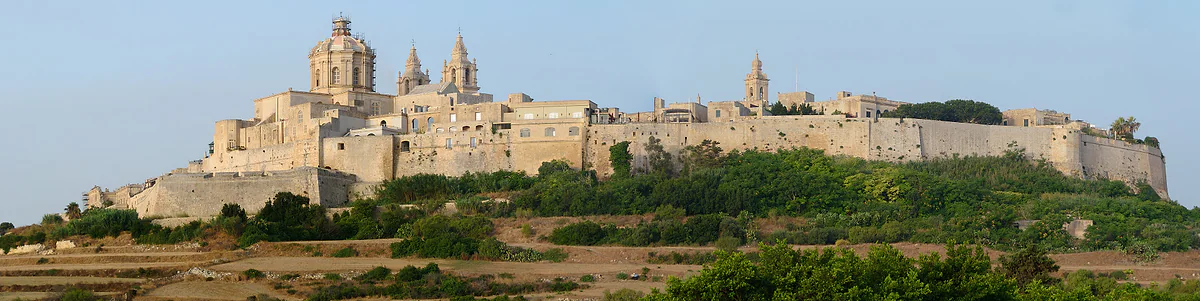
On the left, like home, but in km/h
Driving in Malta, for a British driver
Malta and Gozo drive on the left, so a British driver is on familiar ground. Speed limits are 80 km/h on open roads and 50 km/h in built-up areas, road signs are in English, and gov.uk says a UK photocard licence is accepted. The same gov.uk advice warns that some roads are in poor condition and local driving standards are poor, and Transport Malta runs free public car parks.
In 30 seconds
Full read: 3 min
- Malta and Gozo drive on the left, like the UK.
- Limits are 80 km/h on open roads and 50 km/h in built-up areas.
- A UK photocard licence is accepted and road signs are in English.
- Transport Malta runs free public car parks; tipping the attendant is optional.
The side of the road won't trouble you, the roads and the other drivers might. I'd drive on Gozo and in the west without a second thought, and leave the Sliema and St Julian's seafront to the buses and the ferry.

Before you go
What I would keep in mind
-
01 My tip
Think in kilometres, not miles
Everything feels like home until you read a sign. The limits are 80 km/h on open roads and 50 km/h in built-up areas, roughly 50 mph and 31 mph, so it's easy to creep over without noticing.
-
02 Watch out
Nothing on show in the car
gov.uk says crime against tourists is rare but lists theft from parked cars among the incidents. At beach and viewpoint car parks, I'd leave nothing visible.
is Malta safe -
03 To save money
Free public car parks
Transport Malta runs public car parks on Malta and Gozo that cost nothing to use, with attendants you can tip if you wish.
-
04 Money
Go for comprehensive cover
Malta's tourism authority advises comprehensive insurance for anyone renting or driving in Malta. With the road warnings on gov.uk, I think it's money well spent.
car hire in Malta -
05 Getting there
Park and carry on by bus
Pembroke has a Park and Ride with a tallinja Bike station. For the busiest areas, leaving the car outside can be the smarter move.
Malta buses
What I would book
My ranking, scored
Where driving is easiest and hardest, in my view
My own scores out of 10 for how pleasant each area is to drive for a visitor. I weigh traffic, parking and what the car adds. Opinion, not an official rating.
0 of 4 seen
-
Gozo
Less traffic, short distances and scattered sights where a car really earns its keep.
9.0 out of 10
-
The west and south of Malta
Dingli, Buskett and the temples link up nicely by car, and traffic is easier than on the coast.
8.0 out of 10
-
The north, towards Mellieħa and Ċirkewwa
Handy for the Gozo ferry and the beaches, busier in summer.
7.2 out of 10
-
Valletta, Sliema and St Julian's
Heavy traffic, little parking and better alternatives, such as the ferry and buses.
3.0 out of 10
Driving in Malta comes with one pleasant surprise for a British driver. Traffic keeps to the left, just like at home, so the hardest adjustment most visitors face simply isn’t there for you. What you do need to adjust to is everything else, and that’s what I’d focus on.
Familiar side, unfamiliar units
On Malta and Gozo you drive on the left, and Malta’s tourism authority adds that all road signs are in English. The difference you’ll notice first is on the signs themselves. Limits are 80 km/h on open roads and 50 km/h in built-up areas unless signed otherwise, roughly 50 mph and 31 mph. After years of thinking in miles it’s easy to drift over, so I’d keep an eye on the speedometer for the first day.
Valletta’s cruise port reminds drivers that seat belts are compulsory for all occupants and that speed limits are strictly enforced, particularly in built-up and historic areas.
Licence and paperwork
According to gov.uk, a UK photocard licence is all you need to drive in Malta. Holders of an old paper licence may have to swap it for a photocard or add the right international driving permit, which is a job for before you travel, not at the hire desk. If you’re bringing your own car, which means driving to Sicily and taking the Virtu ferry from Pozzallo, gov.uk also says to check if you need a UK sticker.
Is driving in Malta difficult?
Not because of the side of the road. The honest answer from gov.uk is that the state of some roads is poor, and so is the standard of local driving. Spain’s foreign ministry adds that signage is poor. None of that is a reason not to drive, but it’s a reason to drive defensively, keep a navigation app running and not rely on a sign appearing in time.
Where I’d drive and where I wouldn’t
Gozo is, for me, the best place to have a car. There’s less traffic, the distances are short and the places worth seeing are spread across the island. On the main island, the west and south, with the Dingli Cliffs, Buskett and the temples, link up nicely by car. Where I wouldn’t bother is Valletta, Sliema and St Julian’s, with dense traffic, little room and better options such as the Sliema to Valletta ferry.
Car, scooter or bike?
Malta’s tourism authority mentions scooter, motorbike and bicycle hire too, but warns that cycle lanes on major roads are rather limited. Given what gov.uk says about local driving, I wouldn’t get on a motorbike for the first time here. For short hops around Valletta, Sliema and St Julian’s, the shared tallinja Bike e-bikes cost €3 for the first half hour, and on the Valletta Waterfront you can also rent electric cars, scooters and e-bikes.
Spare a thought for pedestrians as well. The cruise port asks walkers to use marked crossings and obey the signals, and in narrow village streets I’d always take it slowly.
Parking
Here’s some good news. Transport Malta runs public car parks on Malta and Gozo that are free to use, staffed by attendants you can tip if you wish. On the Valletta Waterfront, by the cruise port, there’s free and flat-rate parking, and Pembroke has a Park and Ride with a tallinja Bike station.
For viewpoints and beaches, such as Dingli, I’d arrive early just in case. And gov.uk’s warning about theft from parked cars is one I’d apply especially in those places, with nothing left on show.
Insurance and the Gozo ferry
The key point for anyone driving a hire car across is the insurance, more than the ferry fare itself. Read that clause before you pick up the keys, not at the port.
For anyone hiring or driving, Malta’s tourism authority recommends comprehensive cover, and I agree. If you’re crossing to Gozo, check that the cover includes damage on the ferry and on the island. A car and driver costs €15.70 return on Gozo Channel. What to look for in the contract, and when hiring makes sense, is in car hire in Malta.
If you decide not to drive after all, the island works well by bus and boat, as I explain in getting around Malta.
Driving rules in Malta at a glance
| Rule | What the source says | Source |
|---|---|---|
| Side of the road | Left, on Malta and Gozo | Visit Malta |
| Open-road limit | 80 km/h unless signed otherwise | Visit Malta |
| Built-up limit | 50 km/h unless signed otherwise | Visit Malta |
| Licence | UK photocard accepted; paper licence may need an IDP | gov.uk |
| Seat belts | Compulsory for all occupants | Valletta Cruise Port |
| Transport Malta car parks | Free, optional tip for attendants | Visit Malta (2023) |
Visit Malta, archive.org copies from 2023 and 2024; gov.uk, updated 11 August 2026; Valletta Cruise Port, the port operator's website. Mph figures are my own conversion.
Test yourself
True or false?
0/3 Pick before you peek.
-
Malta's speed limits are posted in miles per hour.
See the answer
False. They're in kilometres per hour, 80 km/h on open roads and 50 km/h in built-up areas.
-
Transport Malta's public car parks charge by the hour.
See the answer
False. The tourism authority says they're free to use, with an optional tip for the attendants.
-
Road signs in Malta are in English.
See the answer
True. Malta's tourism authority says all road signs are in English.
0 of 279 Malta guides
Your next stamp
- Car hire
- Apartments
- Entry requirements
- Getting around
- Cycling
- English schools
- Malta in a week
- Things to do in Malta
- Gozo
- Most beautiful places
- Comino
- Prettiest villages
- UNESCO World Heritage Sites
- Where is Malta
- The Maltese islands
- Towns and villages
- Island of Malta
- Blue Lagoon
- Fort Rinella
- Fort St Angelo
- Gardjola Gardens
- Ħal Saflieni Hypogeum
- Is Malta a country?
- Popeye Village
- Tarxien Temples
- Things to do in Gozo
- Valletta
- Esplora
- Golden Bay
- Gozo day trip
- Inquisitor's Palace
- Population
- St John's Co-Cathedral
- St Mary's Tower
- Grandmaster's Palace
- How big is Malta
- Maritime Museum
- Mellieħa Bay
- Fort St Elmo
- Language
- Malta at War Museum
- Paradise Bay
- Barrakka Gardens
- Red Tower
- Religion
- Malta government
- Saluting Battery
- MUŻA
- National Museum of Archaeology
- Underground Valletta
- Lascaris War Rooms
- Casa Rocca Piccola
- Malta in one day
- Three Cities
- Victoria
- Birgu
- Manoel Theatre
- Weekend in Malta
- Xagħra
- City Gate and Parliament
- Malta in three days
- Nadur
- Senglea
- Cospicua
- Malta in four days
- Qala
- Valletta Waterfront
- Għajnsielem
- Kalkara
- Malta in five days
- Paola
- Xewkija
- Sannat
- Tarxien
- Munxar
- Żabbar
- Fgura
- Fontana
- Kerċem
- Luqa
- Floriana
- Marsa
- Mellieħa
- The Citadel, Gozo
- Żebbuġ (Gozo)
- Ġgantija Temples
- Marsalforn
- Santa Luċija
- Ramla Bay
- San Lawrenz
- Xgħajra
- Xwejni salt pans
- Calypso's Cave
- Għarb
- Żejtun
- Għasri
- Gudja
- San Blas Bay
- Għaxaq
- Ħondoq Bay
- Marsaxlokk
- Kirkop
- Marsaxlokk Fish Market
- Mqabba
- St Peter's Pool
- Marsaskala
- Qrendi
- Żurrieq
- Beaches
- Comino ferry
- EU, Schengen and the euro
- Ħaġar Qim and Mnajdra
- Mdina
- Mġarr (Gozo)
- Blue Grotto
- Diving
- Mdina Cathedral
- Xewkija Rotunda
- Birżebbuġa
- Money and payments
- Palazzo Falson
- Safi
- Shipwrecks
- Ta' Ċenċ Cliffs
- Għar Dalam
- Mdina Dungeons
- Mġarr ix-Xini
- Prices and budget
- Snorkelling
- Boat trips
- Malta on a budget
- Playmobil FunPark
- Rabat (Malta)
- Xlendi
- Dwejra
- Gozo beaches
- History
- Siġġiewi
- St Paul's Catacombs
- Tipping
- Azure Window
- Domvs Romana
- Għar Lapsi
- Great Siege of 1565
- Plugs
- Limestone Heritage Park
- Second World War
- St Paul's Grotto
- Ta' Pinu Basilica
- Time zone
- Buskett Gardens
- Knights of Malta
- Mobile and roaming
- Wied il-Għasri
- Dingli
- Maltese cross
- Dingli Cliffs
- Flag
- Żebbuġ
- Coat of arms
- Mtarfa
- Balzan
- National anthem
- Lija
- Malta facts
- Game of Thrones
- Iklin
- Attard
- Film locations
- Forts and fortifications
- San Anton Gardens
- Ta' Qali Crafts Village
- Victoria Lines
- Megalithic temples
- Catacombs
- Museums
- Where to eat
- Where to stay
- Churches
- Hotels in Valletta
- Restaurants in Valletta
- Hotels in Sliema
- Maltese food
- Restaurants in Marsaxlokk
- Viewpoints
- Hotels in St Julian's
- Pastizzi
- Walking and hiking
- Hotels in Buġibba and Qawra
- Maltese rabbit stew
- Safety
- Hotels in Mellieħa
- Kinnie and Cisk
- Scams
- Gozo hotels
- Nightlife
- Tap water
- Boat parties
- Holiday packages
- Tourist tax
- All inclusive
- Gay Malta
- Sightseeing passes
- Malta with kids
- Public holidays
- How to get there
- Luxury
- Malta for couples
- Taxis and ride-hailing
- Weather
- Best time to visit
- Flights
- Flights from Madrid
- Sea temperature
- Shopping and souvenirs
- Airport
- Free walking tours
- In winter
- Airport transfers
- Day trips and tours
- In summer
- Ferry from Sicily
- In January
- Cruise stop
- In February
- In March
- In April
- In May
- In June
- Buses
- July
- August
- Hop on hop off
- Gozo ferry
- September
- Gozo fast ferry
- October
- November
- Valletta ferries
- December
- Events
- St Paul's Bay
- Village feasts
- Buġibba
- Christmas
- Easter
- Qawra
- Carnival
- Xemxija
- Fireworks festival
- Malta National Aquarium
- Isle of MTV
- St Paul's Islands
- Mosta
- Mosta Rotunda
- Naxxar
- Palazzo Parisio
- Għargħur
- Mġarr (Malta)
- Sliema
- Ta' Ħaġrat and Skorba Temples
- Għajn Tuffieħa Bay
- Tigné Point
- Ġnejna Bay
- St Julian's
- Paceville
- St George's Bay
- Gżira
- Msida
- Ta' Xbiex
- Pietà
- Pembroke
- Swieqi
- San Ġwann
- Birkirkara
- Ħamrun
- Santa Venera
- Qormi
Frequently asked questions
Do they drive on the left in Malta?
Yes, on both Malta and Gozo, as in the UK. Malta's tourism authority also notes that all road signs are in English.
Can I drive in Malta with a UK licence?
Yes. gov.uk says you can use a UK photocard driving licence. If you still have a paper licence, you may need to update it or get the correct international driving permit as well.
What are the speed limits in Malta?
80 km/h on open roads and 50 km/h in built-up areas unless signs say otherwise, according to Malta's tourism authority. That's roughly 50 mph and 31 mph.
Is driving in Malta difficult?
Not because of the side of the road. gov.uk warns that some roads are in poor condition and local driving standards are poor, and Spain's foreign ministry calls the signage poor. Drive defensively and avoid rush hour.
Where can I park in Malta?
Transport Malta runs free public car parks on Malta and Gozo, with attendants you can tip. The Valletta Waterfront has free and flat-rate parking, and there's a Park and Ride at Pembroke.
Can I drive my own car to Malta from the UK?
Only via Italy and the Virtu car ferry from Pozzallo. gov.uk says to check if you need a UK sticker to drive your car outside the UK.
By
Tourism graduate with a master’s in Tourism Management and Planning from the University of Málaga, who has travelled across Europe. He writes every guide from official sources and his own judgement.
Published on . Facts checked on .
Sources
Photos: Tranceliner (CC BY-SA 4.0), via Wikimedia Commons.