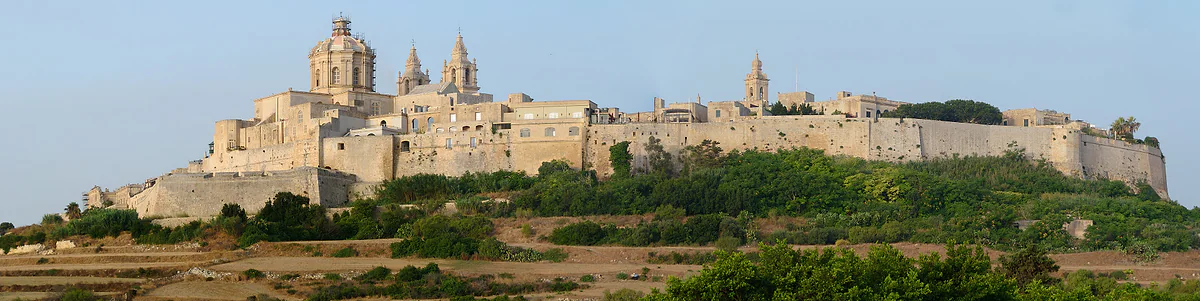
Palazzo Vilhena, Mdina, a museum since 1973
National Museum of Natural History, wild Malta inside a Baroque palace
Malta's National Museum of Natural History is in Palazzo Vilhena, a Baroque palace in Mdina dating from 1724. It opened on 22 June 1973 and holds over 10,000 mineral and geological items, 12,000 birds and mammals and hundreds of thousands of shells, insects and fossils. Adult entry is €5 and it opens Tuesday to Sunday.
I'd fold it into the same day as Mdina and the Rabat catacombs, using the Rabat combo ticket, and give it an hour. For a curious child on a rainy day it's one of the best stops on the island.

Before you go
What I would keep in mind
-
01 Most beautiful
A Grand Master's palace full of fossils
Grand Master Antonio Manoel de Vilhena commissioned the building in 1724 from the French architect Charles François de Mondion. The courtyard and staircase alone are worth the ticket.
Mdina -
02 To save money
Better value with the Rabat combo
Heritage Malta sells a combined ticket for the Domvs Romana, this museum and St Paul's Catacombs at €14 for adults, against €17 if you buy the three separately.
Heritage Malta Multisite Pass -
03 My tip
The islets you can't visit, indoors
The Joe Sultana Hall covers the ecology of Filfla, Fungus Rock, St Paul's Islands and Comino. It's the closest look you'll get at life on places where nobody lands.
the Maltese islands
What I would book
People come to Mdina for the streets and walk straight past one of its finest palaces. That’s a shame, because Palazzo Vilhena houses the National Museum of Natural History, and for me it’s the clearest proof that Malta is about more than stone and knights. There are Ice Age fossils, minerals, birds from across the world and a whole hall on islets hardly anyone ever sets foot on.
A Baroque palace with a hospital past
The building has more history than many museums on the island. Grand Master Antonio Manoel de Vilhena commissioned it in 1724 and the French architect Charles François de Mondion designed it in a Parisian-inspired Baroque. It then changed jobs several times. During the 1837 cholera outbreak it served as a makeshift hospital; from 1860 the British used it as a sanatorium for their troops, and it ended up as a TB clinic until it shut in January 1956. The museum opened on 22 June 1973.
That past shows in the way the rooms wrap around a courtyard, and it’s why I’d go in even if minerals leave you cold. It’s one of the most elegant palaces in Mdina, and the ticket is one of Heritage Malta’s cheapest.
What’s inside?
The collection is big for such a small country. By Heritage Malta’s count the holdings run to some 12,000 bird and mammal specimens, just over 10,000 minerals and geological samples, and hundreds of thousands of shells, insects and fossils. The halls are arranged by theme, from palaeontology to marine biology, and each one is named after a Maltese naturalist who studied the islands.
Two stand out for me. The Joe Sultana Hall is about life on the islets, from Filfla and Fungus Rock to St Paul’s Islands and Comino, places where landing is rare or not allowed at all. The ornithology hall, named after Giuseppe Despott, Malta’s first natural history curator, lays out birds from around the world by family. The Lewis Mizzi Hall shows much of his historic mineral collection.
If prehistory is your thing, this museum pairs well with the cave at Għar Dalam, where bones of Ice Age elephants and hippos turned up. There you see the site; here you get the wider story of the islands’ wildlife.
If you are short on time, see the best tours in Natural History Museum and pick one that fits your day.
Tickets and combos
On its own it costs €5 (€3.50 for seniors and students, €2.50 for children), but I wouldn’t buy it that way if you’re spending the day nearby. Heritage Malta sells a combo with the Domvs Romana and St Paul’s Catacombs for €14 per adult, while the three separately add up to €17. I explain this and the other passes in Malta’s sightseeing passes.
Mondays are closed, and until 3 January 2027 the other six days run from nine to five. In January and February 2027 Wednesday becomes a second day off. Calendar closures are those of the whole Heritage Malta network (the first of January, Good Friday and the three big December dates, the 24th, 25th and 31st), and there’s no entry in the final half hour.
Fitting it into Mdina and Rabat
My order would be this. Walk into Mdina through the main gate, see this museum first, then wander the streets towards Mdina Cathedral. After that, head down to Rabat for the Domvs Romana and the catacombs. On an unhurried day the combo covers the lot.
One thing to know if you’re travelling with someone with limited mobility. Heritage Malta warns that parts of the museum aren’t fully accessible, which is no surprise in an 18th-century palace. Ask at the ticket desk before you pay.
Where the bus does not go, a car does: compare car hire in Valletta before you arrive rather than at the desk.
If you still need a way in, check the best ticket deals to Malta from where you are.
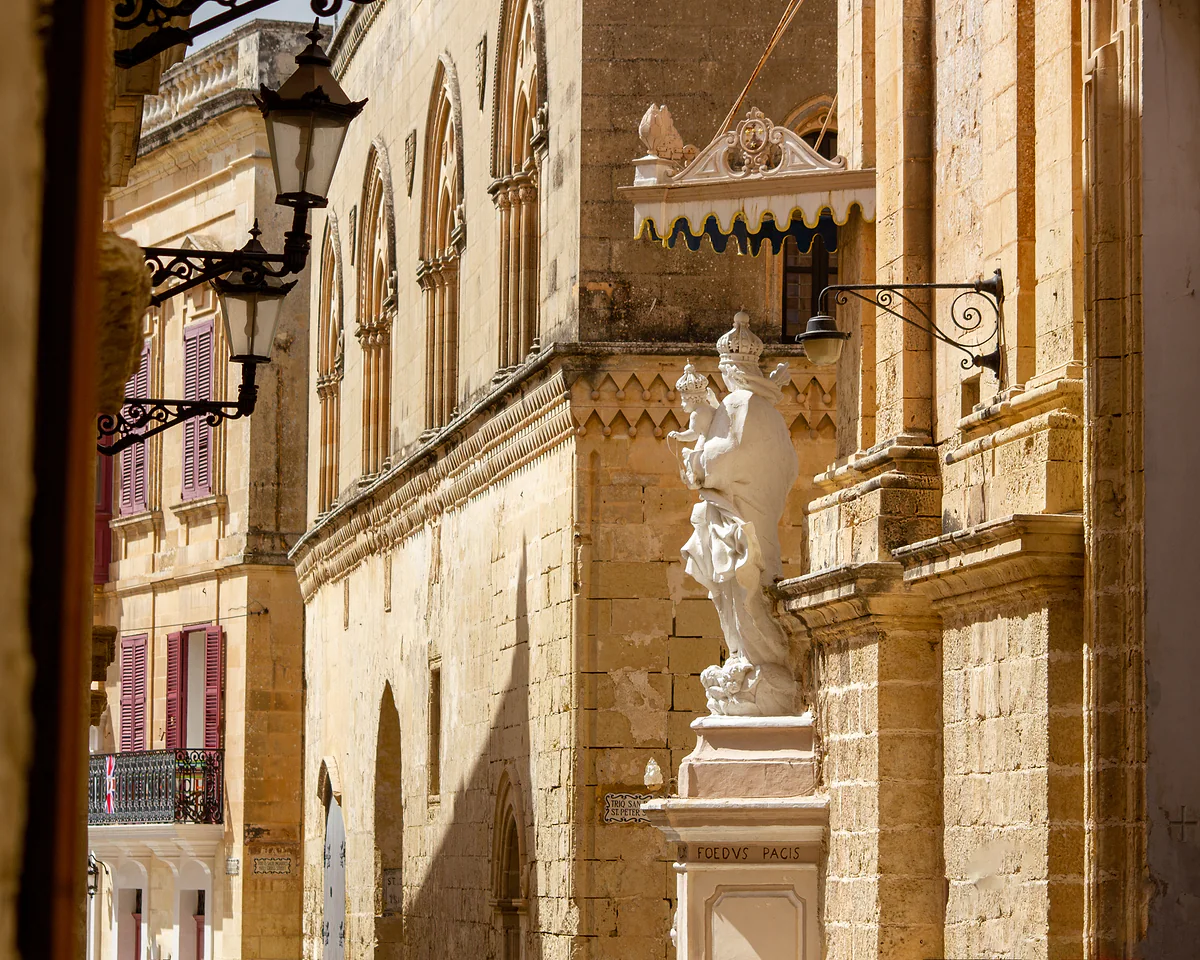
A street in Mdina with golden stone façades, wrought-iron lanterns, balconies and a Baroque statue on the corner of a palazzo.
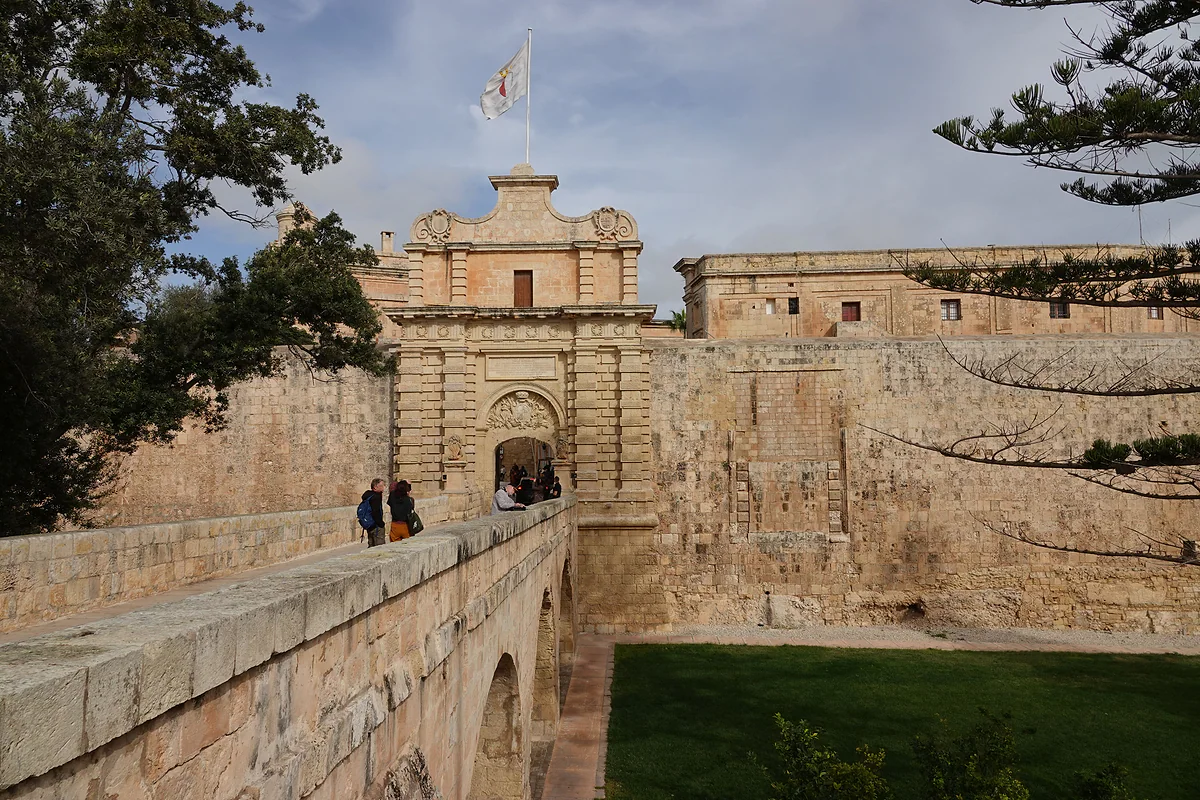
The Baroque main gate of Mdina at the end of the stone bridge over the grassed ditch, with a flag on top and the walls on either side.
Tickets and opening hours
| Item | Price or hours |
|---|---|
| Adult | €5 |
| Seniors and students | €3.50 |
| Children | €2.50 |
| Rabat combo (Domvs Romana, this museum and St Paul's Catacombs) | €14 adult, €10 senior or student, €8 child |
| Until 3-1-2027 | 9am to 5pm, Tuesday to Sunday |
| 4-1 to 28-2-2027 | 9am to 5pm, Tuesday, Thursday, Friday, Saturday and Sunday |
Heritage Malta prices and hours checked on 04-10-2026. Closed on 1 January, Good Friday and 24, 25 and 31 December; last entry half an hour before closing.
Test yourself
True or false?
0/3 Pick before you peek.
-
Palazzo Vilhena was built as a museum.
See the answer
False. It was Grand Master Vilhena's palace, then a hospital, a military sanatorium and a tuberculosis clinic. It has only been a museum since 1973.
-
The museum holds over 10,000 mineral and geological items.
See the answer
True. Heritage Malta cites more than 10,000 mineral and geological items and around 12,000 bird and mammal specimens.
-
One hall is devoted to Malta's islets, such as Filfla.
See the answer
True. The Joe Sultana Hall covers the ecology of Filfla, Fungus Rock, St Paul's Islands and Comino.
Map
Where Natural History Museum is
Gozo lies to the north-west, across the channel the ferry crosses from Ċirkewwa, with Comino between the two islands. Every number opens its guide.
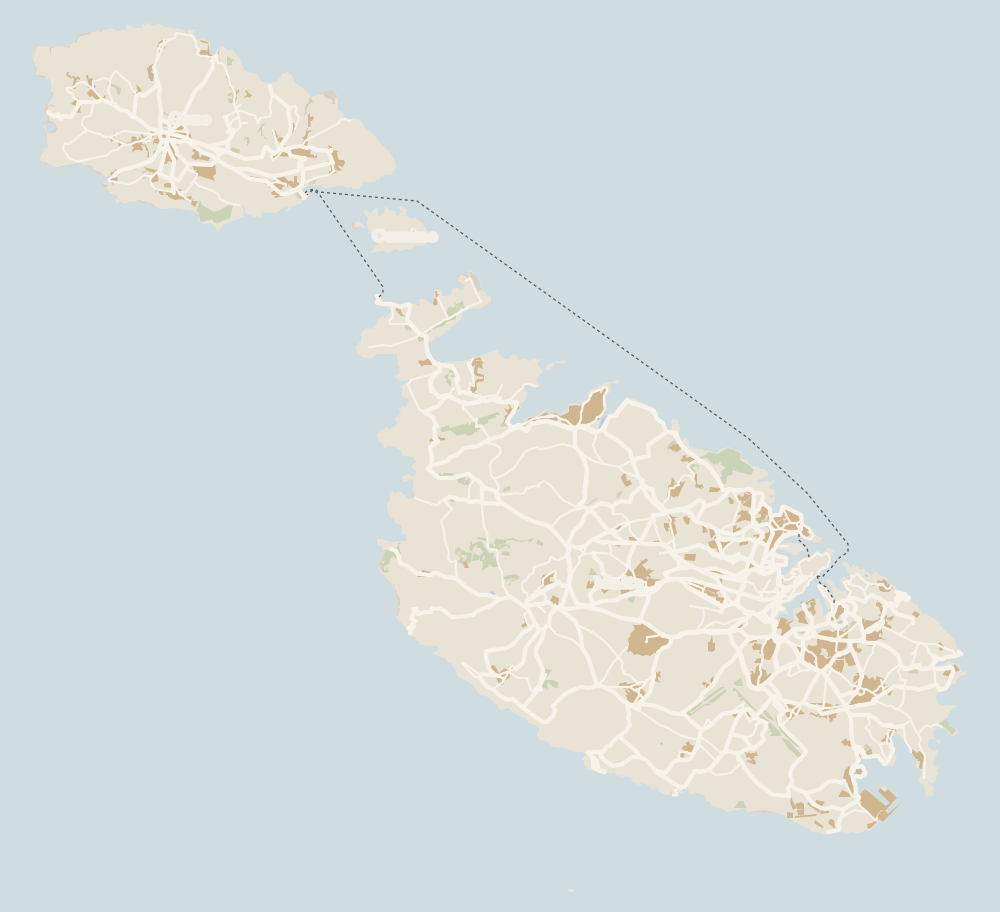 1Mdina 2Mdina Cathedral 3Palazzo Falson 4Mdina Dungeons 5Natural History Museum
 Map data © OpenStreetMap contributors (ODbL)
0 of 294 Malta guides
Your next stamp
- Museums
- Mdina
- Palazzo Falson
- Mdina Cathedral
- National Museum of Archaeology
- Buskett Gardens
- Għar Dalam
- Things to do in Malta
- Gozo
- Most beautiful places
- Comino
- Prettiest villages
- UNESCO World Heritage Sites
- Where is Malta
- The Maltese islands
- Towns and villages
- Island of Malta
- Blue Lagoon
- Fort Rinella
- Fort St Angelo
- Gardjola Gardens
- Ħal Saflieni Hypogeum
- Is Malta a country?
- Popeye Village
- Tarxien Temples
- Things to do in Gozo
- Valletta
- Esplora
- Golden Bay
- Gozo day trip
- Inquisitor's Palace
- Population
- St John's Co-Cathedral
- St Mary's Tower
- Grandmaster's Palace
- How big is Malta
- Maritime Museum
- Mellieħa Bay
- Fort St Elmo
- Language
- Malta at War Museum
- Paradise Bay
- Barrakka Gardens
- Red Tower
- Religion
- Malta government
- Saluting Battery
- MUŻA
- Underground Valletta
- Lascaris War Rooms
- Casa Rocca Piccola
- Malta in one day
- Three Cities
- Victoria
- Birgu
- Manoel Theatre
- Weekend in Malta
- Xagħra
- City Gate and Parliament
- Malta in three days
- Nadur
- Senglea
- Cospicua
- Malta in four days
- Qala
- Valletta Waterfront
- Għajnsielem
- Kalkara
- Malta in five days
- Malta in a week
- Paola
- Xewkija
- Sannat
- Tarxien
- Munxar
- Żabbar
- Fgura
- Fontana
- Kerċem
- Luqa
- Floriana
- Marsa
- Mellieħa
- The Citadel, Gozo
- Żebbuġ (Gozo)
- Ġgantija Temples
- Marsalforn
- Santa Luċija
- Ramla Bay
- San Lawrenz
- Xgħajra
- Xwejni salt pans
- Calypso's Cave
- Għarb
- Żejtun
- Għasri
- Gudja
- San Blas Bay
- Għaxaq
- Ħondoq Bay
- Marsaxlokk
- Kirkop
- Marsaxlokk Fish Market
- Mqabba
- St Peter's Pool
- Marsaskala
- Qrendi
- Żurrieq
- Beaches
- Comino ferry
- EU, Schengen and the euro
- Ħaġar Qim and Mnajdra
- Mġarr (Gozo)
- Blue Grotto
- Diving
- Entry requirements
- Xewkija Rotunda
- Birżebbuġa
- Money and payments
- Safi
- Shipwrecks
- Ta' Ċenċ Cliffs
- Mdina Dungeons
- Mġarr ix-Xini
- Prices and budget
- Snorkelling
- Boat trips
- Malta on a budget
- Playmobil FunPark
- Rabat (Malta)
- Xlendi
- Dwejra
- Gozo beaches
- History
- Siġġiewi
- St Paul's Catacombs
- Tipping
- Azure Window
- Domvs Romana
- Għar Lapsi
- Great Siege of 1565
- Plugs
- Limestone Heritage Park
- Second World War
- St Paul's Grotto
- Ta' Pinu Basilica
- Time zone
- Knights of Malta
- Mobile and roaming
- Wied il-Għasri
- Dingli
- Maltese cross
- Dingli Cliffs
- Flag
- Żebbuġ
- Coat of arms
- Mtarfa
- Balzan
- National anthem
- Lija
- Malta facts
- Game of Thrones
- Iklin
- Attard
- Film locations
- Forts and fortifications
- San Anton Gardens
- Ta' Qali Crafts Village
- Victoria Lines
- Megalithic temples
- Catacombs
- Where to eat
- Where to stay
- Churches
- Hotels in Valletta
- Restaurants in Valletta
- Hotels in Sliema
- Maltese food
- Restaurants in Marsaxlokk
- Viewpoints
- Hotels in St Julian's
- Pastizzi
- Walking and hiking
- Hotels in Buġibba and Qawra
- Maltese rabbit stew
- Safety
- Hotels in Mellieħa
- Kinnie and Cisk
- Scams
- Gozo hotels
- Nightlife
- Ramla Bay Resort
- Tap water
- Boat parties
- Holiday packages
- Sliema Marina Hotel
- Tourist tax
- All inclusive
- Gay Malta
- Qawra Palace
- Sightseeing passes
- Apartments
- Malta with kids
- Novotel Malta Sliema
- Public holidays
- How to get there
- Luxury
- Malta for couples
- Taxis and ride-hailing
- Weather
- Best time to visit
- Cycling
- English schools
- Flights
- Fort Delimara
- Flights from Madrid
- Sea temperature
- Shopping and souvenirs
- Tas-Silġ
- Airport
- Free walking tours
- In winter
- Ta' Bistra Catacombs
- Airport transfers
- Day trips and tours
- Gran Castello Historic House
- In summer
- Ferry from Sicily
- In January
- Old Prison, Gozo
- Cruise stop
- In February
- Ta' Kola Windmill
- In March
- Kordin III
- In April
- Villa Frere
- In May
- Villa Guardamangia
- Getting around
- In June
- Roman Baths
- Buses
- July
- August
- Hop on hop off
- Gozo ferry
- September
- Gozo fast ferry
- October
- November
- Valletta ferries
- Car hire
- December
- Driving
- Events
- St Paul's Bay
- Village feasts
- Buġibba
- Christmas
- Easter
- Qawra
- Carnival
- Xemxija
- Fireworks festival
- Malta National Aquarium
- Isle of MTV
- St Paul's Islands
- Mosta
- Mosta Rotunda
- Naxxar
- Palazzo Parisio
- Għargħur
- Mġarr (Malta)
- Sliema
- Ta' Ħaġrat and Skorba Temples
- Għajn Tuffieħa Bay
- Tigné Point
- Ġnejna Bay
- St Julian's
- Paceville
- St George's Bay
- Gżira
- Msida
- Ta' Xbiex
- Pietà
- Pembroke
- Swieqi
- San Ġwann
- Birkirkara
- Ħamrun
- Santa Venera
- Qormi
Frequently asked questions
Where is the Natural History Museum in Malta?
In Palazzo Vilhena, on St Publius Square in Mdina, the walled city in the middle of the island. Heritage Malta puts the nearest bus stop about five minutes' walk away.
How much is entry?
€5 for adults, €3.50 for seniors and students and €2.50 for children. If you're also seeing the Domvs Romana and St Paul's Catacombs, the Rabat combo costs €14 for an adult.
What is there to see?
Themed halls on local biodiversity, geology and palaeontology, minerals, human evolution, marine life, skeletons, insects, shells and birds. Each hall is named after a Maltese naturalist.
Is it wheelchair accessible?
Only partly. Heritage Malta warns that some areas aren't fully accessible to people with reduced mobility, so it's worth asking first.
What was Palazzo Vilhena used for before?
A temporary hospital during the 1837 cholera outbreak, a sanatorium for British service personnel from 1860 and a tuberculosis clinic until it closed in January 1956. A museum since 1973.
By
Tourism graduate with a master’s in Tourism Management and Planning from the University of Málaga, who has travelled across Europe. He writes every guide from official sources and his own judgement.
Published on . Facts checked on .
Sources
Some links in this guide are affiliate links: if you book through them, the site earns a commission at no extra cost to you. Affiliate disclosure
Photos: Tranceliner (CC BY-SA 4.0); Kikku33 (CC BY-SA 4.0); Nenea hartia (CC BY-SA 4.0), via Wikimedia Commons.