The largest of the Three Cities
Cospicua, the dockyard town whose walls outlasted the Blitz
Cospicua, Bormla in Maltese, is the largest of the Three Cities, with 4,785 residents at the end of 2025. It's where the ferry from Valletta docks (€3 single), and it has the Collegiate Church of the Immaculate Conception and the Margherita Lines, which the MTA says are the only part of old Cospicua to survive the Second World War.
In 30 seconds
Full read: 3 min
- Cospicua, Bormla in Maltese, is the largest of the Three Cities, with 4,785 residents.
- The ferry from Valletta docks here, at €3 single by day.
- It has the Collegiate Church of the Immaculate Conception and the Margherita Lines.
- Its shoreline is the old dockyard, now being turned into a marina.
For me Cospicua is the way in rather than the destination. I'd arrive by ferry, give the church and the walls half an hour, and move on to Birgu or Senglea, where the heavier hitters are.

Before you go
What I would keep in mind
-
01 Getting there
The Valletta ferry docks here
Valletta Ferry Services runs the Three Cities route as Cospicua-Valletta-Cospicua. By day it's €3 single and €5 return, rising to €3.50 single after 19:30.
Sliema to Valletta ferry -
02 My tip
Walking on to Esplora
Esplora's own website suggests coming into Bormla by water and walking 20 to 30 minutes round the Cottonera harbours, or hopping on bus 3.
Esplora, Malta's science centre -
03 Most beautiful
The Margherita Lines
Part of the Three Cities' landward defences, and according to the MTA the only part of old Cospicua that made it through the Second World War.
the forts of Malta
What I would book
Of the Three Cities, Cospicua is the one people walk through and forget. The Valletta ferry docks here, so anyone crossing by boat steps onto its quays, and I suspect plenty head straight for Birgu without a second look. I’d give it half an hour at least, because it shows something the other two don’t quite manage, that this was a dockyard town.
Bormla, a name earned in 1565
The Maltese call it Bormla, which is also the official name of its local council. According to the Malta Tourism Authority, the Knights of St John renamed it Cospicua for the conspicuous part its people played in the Great Siege of 1565. The whole story of that summer is on the Great Siege of Malta.
It’s the largest of the three. The NSO counted 4,785 residents at the end of 2025, more than Birgu and Senglea put together, 695 of them foreign nationals. Even so, the MTA points out that the Second World War did huge damage and that, rebuilt as it is, the town still has fewer people than in the years before the war.
A waterfront that was a dockyard
Most of Cospicua’s shoreline is taken up by the old dockyard, which the MTA describes as being restored and developed into a marina. For me that’s the most interesting thing about the place, because it reminds you the Grand Harbour wasn’t just a stage for sieges but where the people of these towns earned their living.
The MTA sums up modern Cospicua as an important market centre in the heart of the docklands. It isn’t pretty in the postcard sense, and I don’t think it’s trying to be. I’d rather see a town that still works for a living than one polished purely for visitors, and that’s what Cospicua is.
What to see in Cospicua
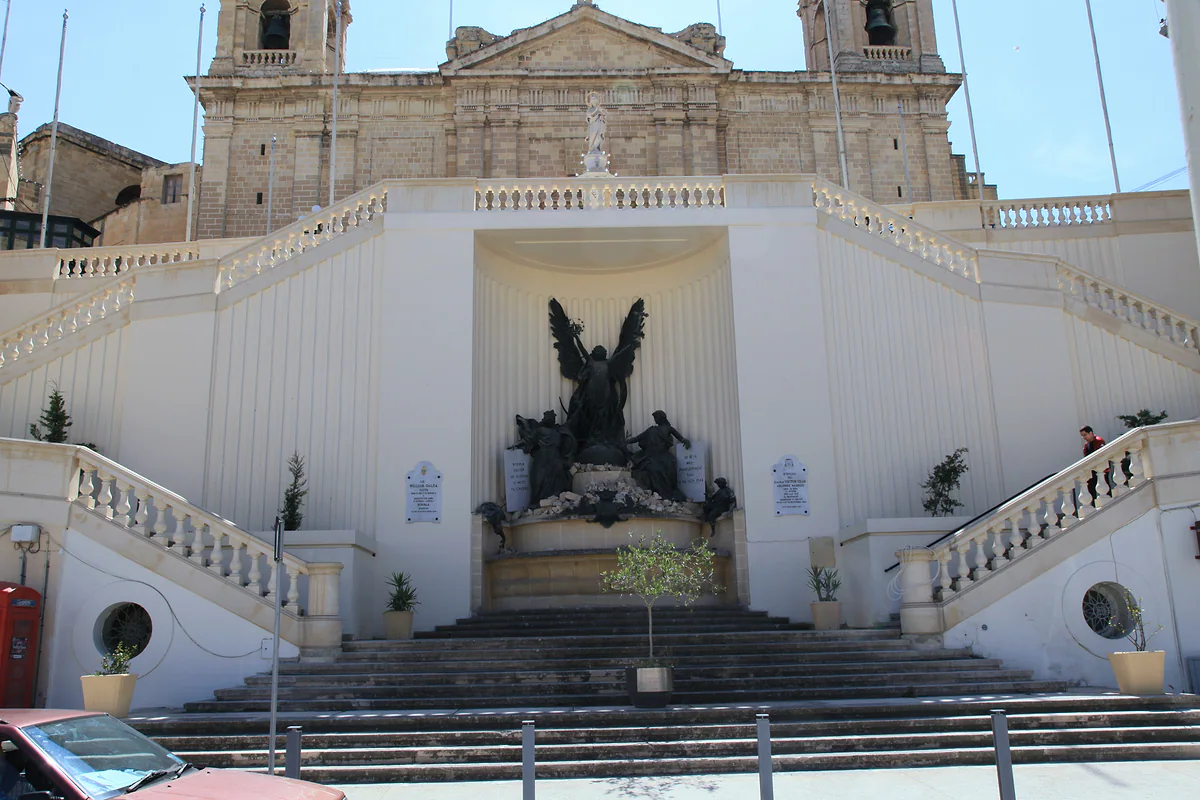
The building the MTA singles out is the Collegiate Church of the Immaculate Conception, which it calls rich in exquisite works of art. It’s the church in the photo on this page, with the double flight of steps. No official source gives its opening times, so I’ll leave them out rather than guess.
The rest is walls. The Firenzuola fortifications of 1638 and the Margherita Lines are part of the Three Cities’ landward defences. The MTA says the Margherita Lines are the only part of old Cospicua that survived the Second World War, which tells you how the rest fared. If the Knights’ defences as a whole interest you, I’ve pulled them together in Malta’s forts and fortifications.
The MTA also mentions that Bormla was among the first places included in a 2011 tourism ministry project mapping walking routes through towns off the usual tourist trail. It’s a fair clue to what a visitor who comes here on purpose is after.
Is Cospicua worth a stop?
My short answer is yes, briefly. It has no museum open with an official source and no paid-entry landmark, so I wouldn’t build a day round it. What it offers is context. You see the harbour as a place of work rather than a postcard, and you see what the war did to a whole town, since the MTA says only the Margherita Lines survived of old Cospicua. That alone makes the half-hour worthwhile for anyone interested in how Malta came through 1940 to 1943.
There’s a second reason if you’re travelling in spring. The MTA highlights the Three Cities’ Easter processions, when statues of the Risen Christ are run through packed streets. I have no sourced route or time for Cospicua’s own, so I’d check with the parish before planning around it.
Getting there and where next
The Valletta ferry to the Three Cities ends here. It sails every 15 minutes on weekdays, costs €3 single by day and €5 return, and on the way back you get a free ticket for the Upper Barrakka lift. Timetables are on the Valletta ferries page. By bus, routes 3 and 4 leave from Valletta terminus.
From Cospicua you’ve two obvious choices, Birgu and its fort or Senglea and its point. With children in tow, Esplora’s website suggests walking 20 to 30 minutes round the Cottonera harbours to the science centre in Kalkara, or taking bus 3. For a full day’s plan, see the Three Cities of Malta.
Cospicua in numbers (NSO)
| Figure | Value |
|---|---|
| Population, 31-12-2025 | 4,785 |
| Maltese nationals | 4,090 |
| Foreign residents | 695 |
| Population, 31-12-2024 | 4,780 |
| Density in 2025 | 5,271 per km² |
The most populous of the Three Cities. Birgu has 2,262 residents and Senglea 2,407.
Valletta to Cospicua ferry fares
| Ticket | Adult | Child |
|---|---|---|
| Single, daytime | €3 | €1 |
| Return, daytime | €5 | €1.50 |
| Single, night (from 19:30) | €3.50 | Not published |
| Return, night | €5.20 | Not published |
Sundays and public holidays, 09:00 to 18:15 from 1 November to 31 May and 09:00 to 00:00 from 1 June to 31 October. Weekdays, a sailing every 15 minutes. Fares from the operator's website.
Test yourself
True or false?
0/3 Pick before you peek.
-
Cospicua has the fewest residents of the Three Cities.
See the answer
False. It has the most, with 4,785, against 2,262 in Birgu and 2,407 in Senglea.
-
The name Cospicua comes from its people's role in the Great Siege.
See the answer
True. The Knights renamed it for the conspicuous part its people played in 1565.
-
Cospicua has more residents today than before the Second World War.
See the answer
False. The MTA says it was rebuilt after heavy war damage but has fewer inhabitants than in the pre-war years.
- Residents at the end of 2025
- 4,785
- Year of the Firenzuola fortifications
- 1638
- Daytime single ferry from Valletta
- €3
Map
Where Cospicua is
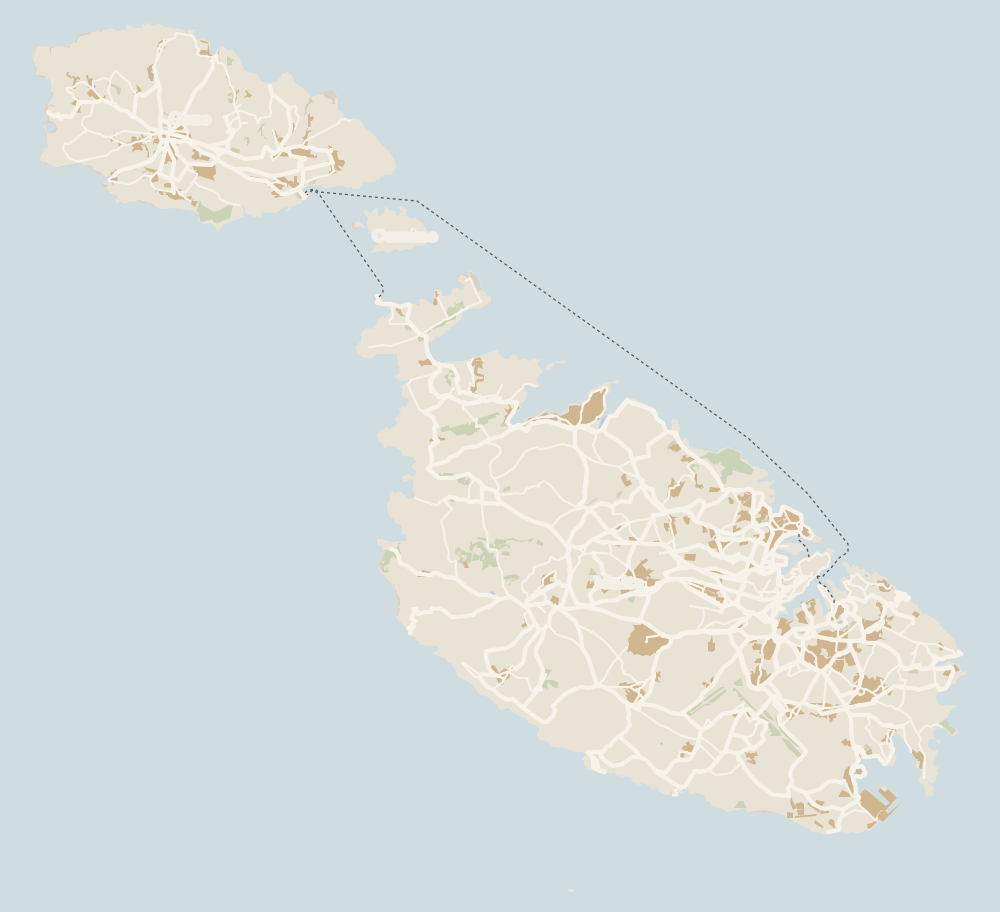
Gozo lies to the north-west, across the channel the ferry crosses from Ċirkewwa, with Comino between the two islands. Every number opens its guide.
0 of 279 Malta guides
Your next stamp
- Three Cities
- Valletta ferries
- Mosta
- Valletta
- Żurrieq
- Siġġiewi
- Kalkara
- Senglea
- Things to do in Malta
- Gozo
- Most beautiful places
- Comino
- Prettiest villages
- UNESCO World Heritage Sites
- Where is Malta
- The Maltese islands
- Towns and villages
- Island of Malta
- Blue Lagoon
- Fort Rinella
- Fort St Angelo
- Gardjola Gardens
- Ħal Saflieni Hypogeum
- Is Malta a country?
- Popeye Village
- Tarxien Temples
- Things to do in Gozo
- Esplora
- Golden Bay
- Gozo day trip
- Inquisitor's Palace
- Population
- St John's Co-Cathedral
- St Mary's Tower
- Grandmaster's Palace
- How big is Malta
- Maritime Museum
- Mellieħa Bay
- Fort St Elmo
- Language
- Malta at War Museum
- Paradise Bay
- Barrakka Gardens
- Red Tower
- Religion
- Malta government
- Saluting Battery
- MUŻA
- National Museum of Archaeology
- Underground Valletta
- Lascaris War Rooms
- Casa Rocca Piccola
- Malta in one day
- Victoria
- Birgu
- Manoel Theatre
- Weekend in Malta
- Xagħra
- City Gate and Parliament
- Malta in three days
- Nadur
- Malta in four days
- Qala
- Valletta Waterfront
- Għajnsielem
- Malta in five days
- Malta in a week
- Paola
- Xewkija
- Sannat
- Tarxien
- Munxar
- Żabbar
- Fgura
- Fontana
- Kerċem
- Luqa
- Floriana
- Marsa
- Mellieħa
- The Citadel, Gozo
- Żebbuġ (Gozo)
- Ġgantija Temples
- Marsalforn
- Santa Luċija
- Ramla Bay
- San Lawrenz
- Xgħajra
- Xwejni salt pans
- Calypso's Cave
- Għarb
- Żejtun
- Għasri
- Gudja
- San Blas Bay
- Għaxaq
- Ħondoq Bay
- Marsaxlokk
- Kirkop
- Marsaxlokk Fish Market
- Mqabba
- St Peter's Pool
- Marsaskala
- Qrendi
- Beaches
- Comino ferry
- EU, Schengen and the euro
- Ħaġar Qim and Mnajdra
- Mdina
- Mġarr (Gozo)
- Blue Grotto
- Diving
- Entry requirements
- Mdina Cathedral
- Xewkija Rotunda
- Birżebbuġa
- Money and payments
- Palazzo Falson
- Safi
- Shipwrecks
- Ta' Ċenċ Cliffs
- Għar Dalam
- Mdina Dungeons
- Mġarr ix-Xini
- Prices and budget
- Snorkelling
- Boat trips
- Malta on a budget
- Playmobil FunPark
- Rabat (Malta)
- Xlendi
- Dwejra
- Gozo beaches
- History
- St Paul's Catacombs
- Tipping
- Azure Window
- Domvs Romana
- Għar Lapsi
- Great Siege of 1565
- Plugs
- Limestone Heritage Park
- Second World War
- St Paul's Grotto
- Ta' Pinu Basilica
- Time zone
- Buskett Gardens
- Knights of Malta
- Mobile and roaming
- Wied il-Għasri
- Dingli
- Maltese cross
- Dingli Cliffs
- Flag
- Żebbuġ
- Coat of arms
- Mtarfa
- Balzan
- National anthem
- Lija
- Malta facts
- Game of Thrones
- Iklin
- Attard
- Film locations
- Forts and fortifications
- San Anton Gardens
- Ta' Qali Crafts Village
- Victoria Lines
- Megalithic temples
- Catacombs
- Museums
- Where to eat
- Where to stay
- Churches
- Hotels in Valletta
- Restaurants in Valletta
- Hotels in Sliema
- Maltese food
- Restaurants in Marsaxlokk
- Viewpoints
- Hotels in St Julian's
- Pastizzi
- Walking and hiking
- Hotels in Buġibba and Qawra
- Maltese rabbit stew
- Safety
- Hotels in Mellieħa
- Kinnie and Cisk
- Scams
- Gozo hotels
- Nightlife
- Tap water
- Boat parties
- Holiday packages
- Tourist tax
- All inclusive
- Gay Malta
- Sightseeing passes
- Apartments
- Malta with kids
- Public holidays
- How to get there
- Luxury
- Malta for couples
- Taxis and ride-hailing
- Weather
- Best time to visit
- Cycling
- English schools
- Flights
- Flights from Madrid
- Sea temperature
- Shopping and souvenirs
- Airport
- Free walking tours
- In winter
- Airport transfers
- Day trips and tours
- In summer
- Ferry from Sicily
- In January
- Cruise stop
- In February
- In March
- In April
- In May
- Getting around
- In June
- Buses
- July
- August
- Hop on hop off
- Gozo ferry
- September
- Gozo fast ferry
- October
- November
- Car hire
- December
- Driving
- Events
- St Paul's Bay
- Village feasts
- Buġibba
- Christmas
- Easter
- Qawra
- Carnival
- Xemxija
- Fireworks festival
- Malta National Aquarium
- Isle of MTV
- St Paul's Islands
- Mosta Rotunda
- Naxxar
- Palazzo Parisio
- Għargħur
- Mġarr (Malta)
- Sliema
- Ta' Ħaġrat and Skorba Temples
- Għajn Tuffieħa Bay
- Tigné Point
- Ġnejna Bay
- St Julian's
- Paceville
- St George's Bay
- Gżira
- Msida
- Ta' Xbiex
- Pietà
- Pembroke
- Swieqi
- San Ġwann
- Birkirkara
- Ħamrun
- Santa Venera
- Qormi
Frequently asked questions
What is there to see in Cospicua, Malta?
The Collegiate Church of the Immaculate Conception, which the MTA says is rich in works of art, the 1638 Firenzuola fortifications and the Margherita Lines. And the old dockyard waterfront.
Are Cospicua and Bormla the same place?
Yes. Bormla is the older Maltese name and the official name of the local council. The Knights renamed it Cospicua for its people's conspicuous role in the Great Siege of 1565.
How do I get to Cospicua from Valletta?
By the Valletta Ferry Services boat from the quay below Upper Barrakka, at €3 single, or on bus 3 or 4 from Valletta terminus.
How many people live in Cospicua?
4,785 at the end of 2025, according to the NSO, making it the biggest of the Three Cities. The MTA notes it still has fewer residents than before the war.
Do you get a free lift ride with the Cospicua ferry?
Yes. Malta Public Transport says passengers arriving in Valletta from Cospicua receive a ticket for the Upper Barrakka lift, which climbs from the quay to the gardens.
By
Tourism graduate with a master’s in Tourism Management and Planning from the University of Málaga, who has travelled across Europe. He writes every guide from official sources and his own judgement.
Published on . Facts checked on .
Sources
Photos: Frank Vincentz (CC BY-SA 3.0), via Wikimedia Commons.