From 11 June 1940 to September 1943
Malta in World War 2, the island's second siege and where it still shows
Malta's Second World War was its second siege. The first air raid hit Fort St Elmo on 11 June 1940, the islands took 17,000 tonnes of bombs and were among the most heavily bombed places in the world between 1940 and 1942. George VI awarded Malta the George Cross on 15 April 1942, and the siege ended in Allied victory in September 1943.
In 30 seconds
Full read: 3 min
- The first air raid on Malta hit Fort St Elmo on 11 June 1940.
- Heritage Malta counts 17,000 tonnes of bombs and over 50,000 naval mines in 1942.
- George VI awarded Malta the George Cross on 15 April 1942, and it has been on the flag since 1943.
- The second siege ended in Allied victory in September 1943.
If I only had time for one war site, it would be Lascaris, 150 feet below the Upper Barrakka Gardens, because the air war was run from there and the landings in Sicily were planned there. It's €20, but nothing else explains as well how Malta held on.

Before you go
What I would keep in mind
-
01 To save money
A €50 pass for the Wirt Artna sites
The Fondazzjoni Wirt Artna Heritage Pass gives one entry each, over a week, to Lascaris, the Saluting Battery, the War H.Q. Tunnels, the Malta at War Museum and Fort Rinella, among others. It's €50 per person or €95 for a family.
Lascaris War Rooms in Valletta -
02 My tip
Underground Valletta needs booking and proper shoes
Heritage Malta turns away high heels, sandals and flip-flops, and under-sixes can't go in. You must book ahead and be at MUŻA, the meeting point, 30 minutes before your slot.
Underground Valletta tunnels tour -
03 Most beautiful
The bomb that came through Mosta's dome
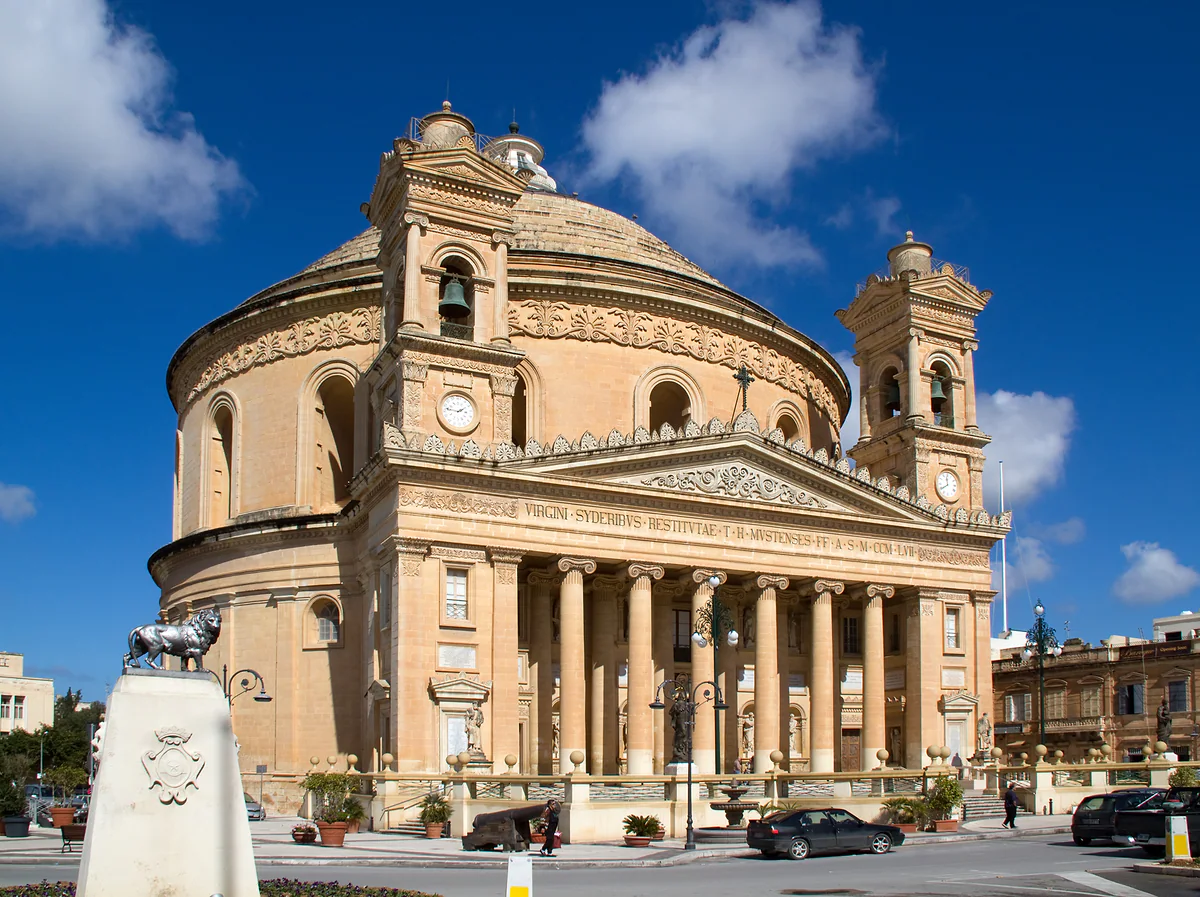
In 1942 a bomb pierced the dome of the Mosta Rotunda and landed on the church floor without going off. The parish shows a replica and the air-raid shelter on its €8 visit.
Mosta Rotunda -
04 Worth the splurge
The wartime HQ tunnels, on a guided tour
The War H.Q. Tunnels opened in 1940 as a combined headquarters, and NATO used them until 1977. You see them on a guided tour from the Saluting Battery for €17 per adult.
Saluting Battery in Valletta
What I would book
In 1565 Malta survived a four-month siege. Between 1940 and 1943 it survived another lasting more than three years, and Heritage Malta calls it just that, the second siege of Malta. For a British visitor this is the chapter that feels closest to home, and for me it’s the most moving part of Maltese history because you can still touch it. The shelters are still under Valletta’s streets, and the Mosta bomb has its replica in the sacristy.
It started at Fort St Elmo on 11 June 1940
Heritage Malta dates the first air raid on the islands to 11 June 1940, and the target was Fort St Elmo, the same fort that fell in 1565. Italy’s air offensive began that day. The fort now houses the National War Museum, laid out in seven sections with the Second World War as the best-represented conflict. That’s where you’ll find the Gloster Sea Gladiator ‘Faith’, Roosevelt’s jeep ‘Husky’ and the George Cross itself. More in Fort St Elmo.
Heritage Malta’s figures give the scale. Seventeen thousand tonnes of bombs on Malta and more than 50,000 naval mines in its waters in 1942. By that same institution’s reckoning, few places on earth were bombed as heavily as these islands between 1940 and 1942.
A city that moved underground
When the bombs came, Valletta’s people went below ground. Heritage Malta describes the population moving into a dense network of rock-cut shelters, alongside tunnels already used for moving troops, storing grain and carrying water. That network is now open as Underground Valletta, by booking only, with four tours a day on three days a week.
It isn’t the only trace. The Royal Opera House took a direct hit on the evening of 7 April 1942, and its ruins are now the open-air Pjazza Teatru Rjal. In Rabat, St Augustine’s Catacombs served as a shelter, and scratched by the doorway you can still see a Union Jack, a swastika and a note of when one air-raid alarm sounded. It’s one of the strangest traces of the whole war.
The Mosta bomb and the George Cross
The story everyone tells is Mosta’s. In 1942 a bomb came through the dome of the Rotunda and landed on the church floor without exploding. The parish puts it plainly, it didn’t go off, nobody died and the church wasn’t destroyed. The replica bomb and the air-raid shelter are both part of the visit to the Mosta Rotunda.
Recognition followed that same year. On 15 April 1942 George VI awarded Malta the George Cross, a date written into the Constitution. According to the European Commission, no Commonwealth country had received it before, since it is normally awarded to individuals, and the cross has flown on the flag since 1943. I think that says more about what the siege meant to Maltese identity than any monument.
Where was Malta’s war run from?
From beneath the Upper Barrakka Gardens. The Lascaris War Rooms sit 150 feet underground and were Britain’s war headquarters, including the RAF fighter control room. The Spitfires arrived in March 1942, according to Heritage Malta, and Wirt Artna volunteers have been restoring the rooms since 2009.
The high point came that summer. The Lascaris website says that in July 1943 Eisenhower, with Cunningham, Montgomery and Tedder, ran Operation Husky, the invasion of Sicily, from these rooms as a forward headquarters. In September 1943 the second siege ended in Allied victory, and on the 8th Italy’s surrender was made public, which Malta marks on the same day as the end of the Great Siege.
How I’d see the war in two days
Day one in Valletta. Lascaris first thing, open Monday to Saturday from 09:30, then Fort St Elmo, open daily. If you’ve booked, Underground Valletta runs four morning tours, hourly from 10:00 to 13:00, on Mondays, Wednesdays and Sundays, meeting at MUŻA half an hour beforehand.
Day two across the harbour. The Malta at War Museum in Birgu, with its shelters, then the bus to Mosta for the Rotunda. If you dive, Heritage Malta manages wartime wrecks such as the submarine HMS Olympus and a Spitfire off Qala as underwater heritage, visited with authorised centres. And if Wirt Artna runs more than one site on your list, buy its €50 pass on day one, as it’s valid for a week from first use.
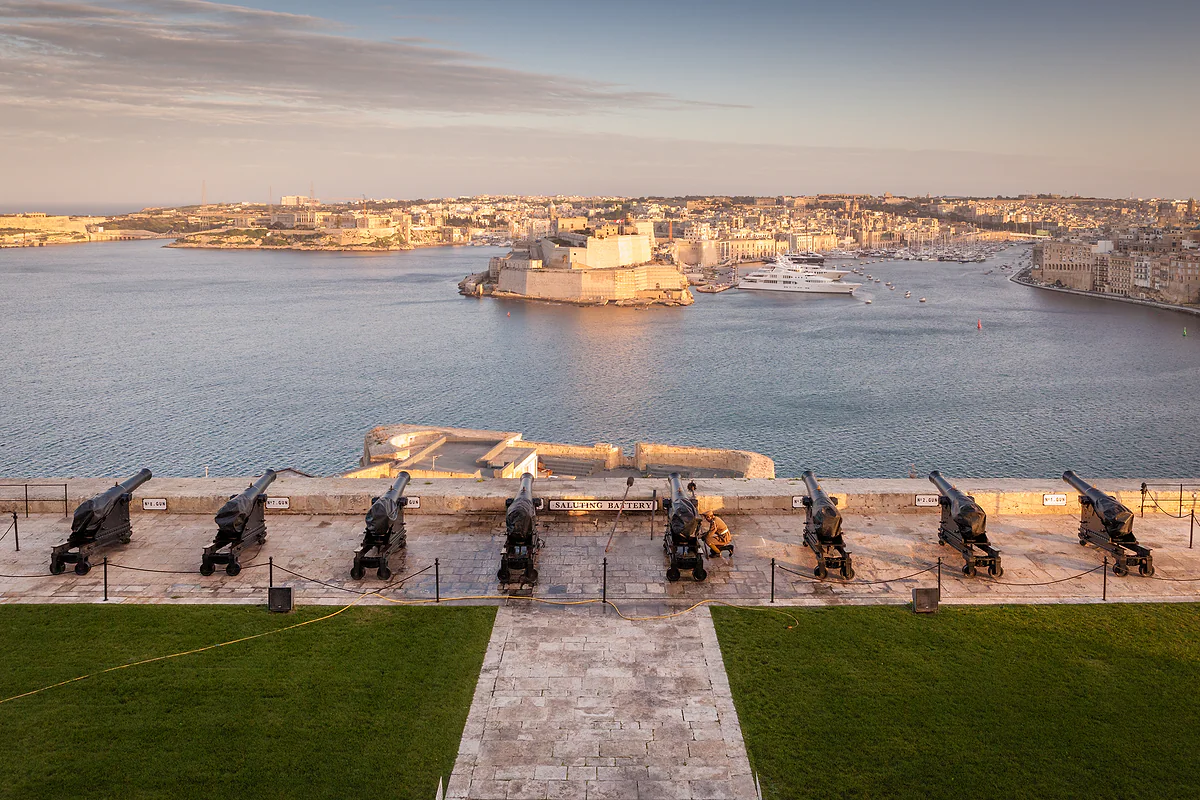
The row of cannons at the Saluting Battery in Valletta at sunset, with Fort St Angelo and Birgu across the Grand Harbour.
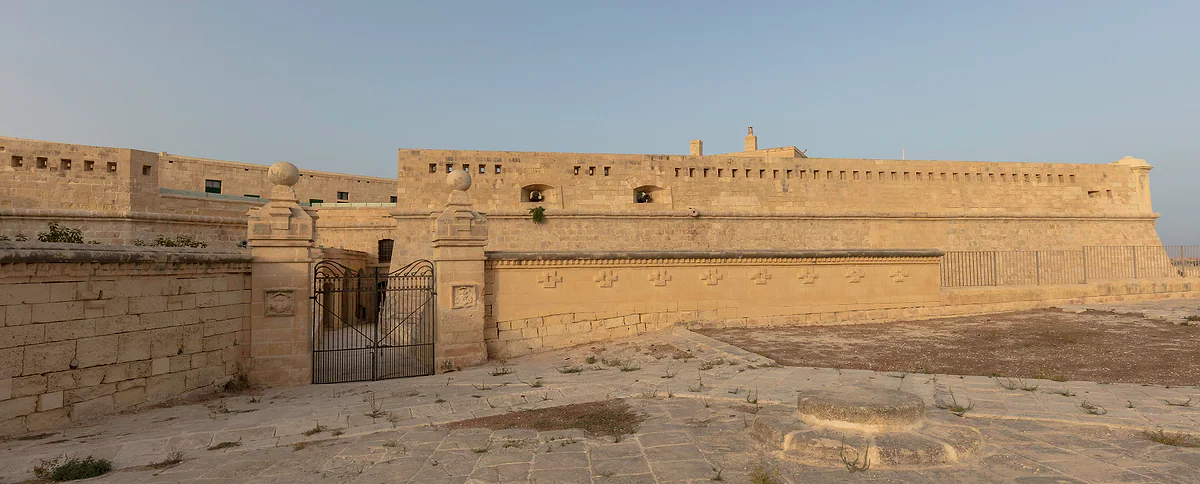
The walls and gateway of Fort St Elmo, at the tip of the Valletta peninsula, glowing in golden evening light under a clear sky.
Malta's war, by date
| Date | What happened | Source |
|---|---|---|
| 11 June 1940 | First air raid on the islands, on Fort St Elmo; Italy's air offensive begins | Heritage Malta |
| 1940 | The war headquarters tunnels open under the Saluting Battery | Wirt Artna |
| March 1942 | The Spitfires arrive | Heritage Malta |
| 1942 | Over 50,000 naval mines in Maltese waters | Heritage Malta |
| 7 April 1942 | A bomb hits Valletta's Royal Opera House | Grand Harbour Regeneration Corporation |
| 1942 | A bomb pierces Mosta's dome and fails to explode | Mosta parish |
| 15 April 1942 | George VI awards the George Cross to Malta | Constitution of Malta |
| July 1943 | Eisenhower uses Lascaris as advance HQ for the invasion of Sicily | Lascaris War Rooms |
| September 1943 | The siege ends in Allied victory; Italy's surrender announced on the 8th | Heritage Malta |
War sites you can visit
| Site | Run by | Adult |
|---|---|---|
| Lascaris War Rooms, Valletta | Fondazzjoni Wirt Artna | €20 |
| Fort St Elmo and National War Museum | Heritage Malta | €10 |
| Underground Valletta (booking only) | Heritage Malta | €15 |
| Malta at War Museum, Birgu | Fondazzjoni Wirt Artna | €14 |
| War H.Q. Tunnels (guided tour) | Fondazzjoni Wirt Artna | €17 |
| Mosta Rotunda (full visit) | Mosta parish | €8 |
Official prices checked on 28-09-2026. The Wirt Artna sites are card-only.
Test yourself
True or false?
0/3 Pick before you peek.
-
The George Cross is normally awarded to individuals rather than countries.
See the answer
True. The European Commission makes the point when noting that Malta was the first Commonwealth country to receive it, in 1942, for an award usually given to individuals.
-
The bomb that fell into the Mosta Rotunda killed several worshippers.
See the answer
False. According to the parish, it pierced the dome in 1942, landed on the church floor and didn't explode. Nobody died and the church wasn't destroyed.
-
Eisenhower planned the Sicily landings from a bunker in Valletta.
See the answer
True. According to the Lascaris War Rooms, in July 1943 Eisenhower and his commanders used the rooms as their advance HQ for Operation Husky.
- Tonnes of bombs dropped on Malta, per Heritage Malta
- 17,000
- Naval mines in Maltese waters in 1942
- 50,000
- Year of the George Cross
- 1942
- Feet underground at the Lascaris War Rooms
- 150
0 of 279 Malta guides
Your next stamp
- Great Siege of 1565
- Fort St Elmo
- History
- Mosta
- Mosta Rotunda
- Malta at War Museum
- Flag
- Forts and fortifications
- Things to do in Malta
- Gozo
- Most beautiful places
- Comino
- Prettiest villages
- UNESCO World Heritage Sites
- Where is Malta
- The Maltese islands
- Towns and villages
- Island of Malta
- Blue Lagoon
- Fort Rinella
- Fort St Angelo
- Gardjola Gardens
- Ħal Saflieni Hypogeum
- Is Malta a country?
- Popeye Village
- Tarxien Temples
- Things to do in Gozo
- Valletta
- Esplora
- Golden Bay
- Gozo day trip
- Inquisitor's Palace
- Population
- St John's Co-Cathedral
- St Mary's Tower
- Grandmaster's Palace
- How big is Malta
- Maritime Museum
- Mellieħa Bay
- Language
- Paradise Bay
- Barrakka Gardens
- Red Tower
- Religion
- Malta government
- Saluting Battery
- MUŻA
- National Museum of Archaeology
- Underground Valletta
- Lascaris War Rooms
- Casa Rocca Piccola
- Malta in one day
- Three Cities
- Victoria
- Birgu
- Manoel Theatre
- Weekend in Malta
- Xagħra
- City Gate and Parliament
- Malta in three days
- Nadur
- Senglea
- Cospicua
- Malta in four days
- Qala
- Valletta Waterfront
- Għajnsielem
- Kalkara
- Malta in five days
- Malta in a week
- Paola
- Xewkija
- Sannat
- Tarxien
- Munxar
- Żabbar
- Fgura
- Fontana
- Kerċem
- Luqa
- Floriana
- Marsa
- Mellieħa
- The Citadel, Gozo
- Żebbuġ (Gozo)
- Ġgantija Temples
- Marsalforn
- Santa Luċija
- Ramla Bay
- San Lawrenz
- Xgħajra
- Xwejni salt pans
- Calypso's Cave
- Għarb
- Żejtun
- Għasri
- Gudja
- San Blas Bay
- Għaxaq
- Ħondoq Bay
- Marsaxlokk
- Kirkop
- Marsaxlokk Fish Market
- Mqabba
- St Peter's Pool
- Marsaskala
- Qrendi
- Żurrieq
- Beaches
- Comino ferry
- EU, Schengen and the euro
- Ħaġar Qim and Mnajdra
- Mdina
- Mġarr (Gozo)
- Blue Grotto
- Diving
- Entry requirements
- Mdina Cathedral
- Xewkija Rotunda
- Birżebbuġa
- Money and payments
- Palazzo Falson
- Safi
- Shipwrecks
- Ta' Ċenċ Cliffs
- Għar Dalam
- Mdina Dungeons
- Mġarr ix-Xini
- Prices and budget
- Snorkelling
- Boat trips
- Malta on a budget
- Playmobil FunPark
- Rabat (Malta)
- Xlendi
- Dwejra
- Gozo beaches
- Siġġiewi
- St Paul's Catacombs
- Tipping
- Azure Window
- Domvs Romana
- Għar Lapsi
- Plugs
- Limestone Heritage Park
- St Paul's Grotto
- Ta' Pinu Basilica
- Time zone
- Buskett Gardens
- Knights of Malta
- Mobile and roaming
- Wied il-Għasri
- Dingli
- Maltese cross
- Dingli Cliffs
- Żebbuġ
- Coat of arms
- Mtarfa
- Balzan
- National anthem
- Lija
- Malta facts
- Game of Thrones
- Iklin
- Attard
- Film locations
- San Anton Gardens
- Ta' Qali Crafts Village
- Victoria Lines
- Megalithic temples
- Catacombs
- Museums
- Where to eat
- Where to stay
- Churches
- Hotels in Valletta
- Restaurants in Valletta
- Hotels in Sliema
- Maltese food
- Restaurants in Marsaxlokk
- Viewpoints
- Hotels in St Julian's
- Pastizzi
- Walking and hiking
- Hotels in Buġibba and Qawra
- Maltese rabbit stew
- Safety
- Hotels in Mellieħa
- Kinnie and Cisk
- Scams
- Gozo hotels
- Nightlife
- Tap water
- Boat parties
- Holiday packages
- Tourist tax
- All inclusive
- Gay Malta
- Sightseeing passes
- Apartments
- Malta with kids
- Public holidays
- How to get there
- Luxury
- Malta for couples
- Taxis and ride-hailing
- Weather
- Best time to visit
- Cycling
- English schools
- Flights
- Flights from Madrid
- Sea temperature
- Shopping and souvenirs
- Airport
- Free walking tours
- In winter
- Airport transfers
- Day trips and tours
- In summer
- Ferry from Sicily
- In January
- Cruise stop
- In February
- In March
- In April
- In May
- Getting around
- In June
- Buses
- July
- August
- Hop on hop off
- Gozo ferry
- September
- Gozo fast ferry
- October
- November
- Valletta ferries
- Car hire
- December
- Driving
- Events
- St Paul's Bay
- Village feasts
- Buġibba
- Christmas
- Easter
- Qawra
- Carnival
- Xemxija
- Fireworks festival
- Malta National Aquarium
- Isle of MTV
- St Paul's Islands
- Naxxar
- Palazzo Parisio
- Għargħur
- Mġarr (Malta)
- Sliema
- Ta' Ħaġrat and Skorba Temples
- Għajn Tuffieħa Bay
- Tigné Point
- Ġnejna Bay
- St Julian's
- Paceville
- St George's Bay
- Gżira
- Msida
- Ta' Xbiex
- Pietà
- Pembroke
- Swieqi
- San Ġwann
- Birkirkara
- Ħamrun
- Santa Venera
- Qormi
Frequently asked questions
What happened to Malta in World War 2?
It lived through an air and naval siege from 1940 to 1943, known as the second siege of Malta. Heritage Malta counts 17,000 tonnes of bombs and places the islands among the most heavily bombed regions in the world between 1940 and 1942. It ended in Allied victory in September 1943.
Why was Malta awarded the George Cross?
George VI awarded it to the island and its people on 15 April 1942 for their bravery during the war. The European Commission notes that Malta was the first Commonwealth country to receive it, and it has been on the flag since 1943.
Where is the George Cross kept in Malta?
Heritage Malta lists it among the highlights of the National War Museum at Fort St Elmo in Valletta, alongside the Gloster Sea Gladiator 'Faith' and Roosevelt's jeep 'Husky'. Entry is €10.
What is the Mosta bomb story?
In 1942 a bomb pierced the dome of the Mosta Rotunda and landed on the church floor without exploding. The parish says no one died and the church wasn't destroyed, and there's a replica in the sacristy.
Was Lascaris used by Eisenhower?
Yes. According to the Lascaris War Rooms, in July 1943 Eisenhower, Cunningham, Montgomery and Tedder used them as their advance Allied HQ for Operation Husky, the invasion of Sicily.
Can you dive on Second World War wrecks in Malta?
Yes, with authorised dive centres. Heritage Malta manages wartime wrecks as underwater heritage, including the submarine HMS Olympus off Valletta and a Spitfire off Qala in Gozo.
By
Tourism graduate with a master’s in Tourism Management and Planning from the University of Málaga, who has travelled across Europe. He writes every guide from official sources and his own judgement.
Published on . Facts checked on .
Sources
Photos: Tony Hisgett from Birmingham, UK (CC BY 2.0); Anton Zelenov (CC BY-SA 4.0); Diego Delso (CC BY-SA 4.0), via Wikimedia Commons.