Independent since 21 September 1964
Is Malta a country, or part of Britain or Italy?
Yes, Malta is a sovereign country. It became independent from the UK on 21 September 1964, a republic on 13 December 1974, and joined the EU on 1 May 2004. It isn't part of Britain or Italy, though it was British until 1964 and tied to Sicily until 1530. The state is made up of three inhabited islands.
In 30 seconds
Full read: 3 min
- Malta is a sovereign country, independent from the UK since 21 September 1964.
- It became a republic on 13 December 1974 and stayed in the Commonwealth.
- It isn't part of Italy; it was tied to Sicily until 1530.
- It has been in the EU since 2004, Schengen since 2007 and the euro since 2008.
- The country is made up of three inhabited islands: Malta, Gozo and Comino.
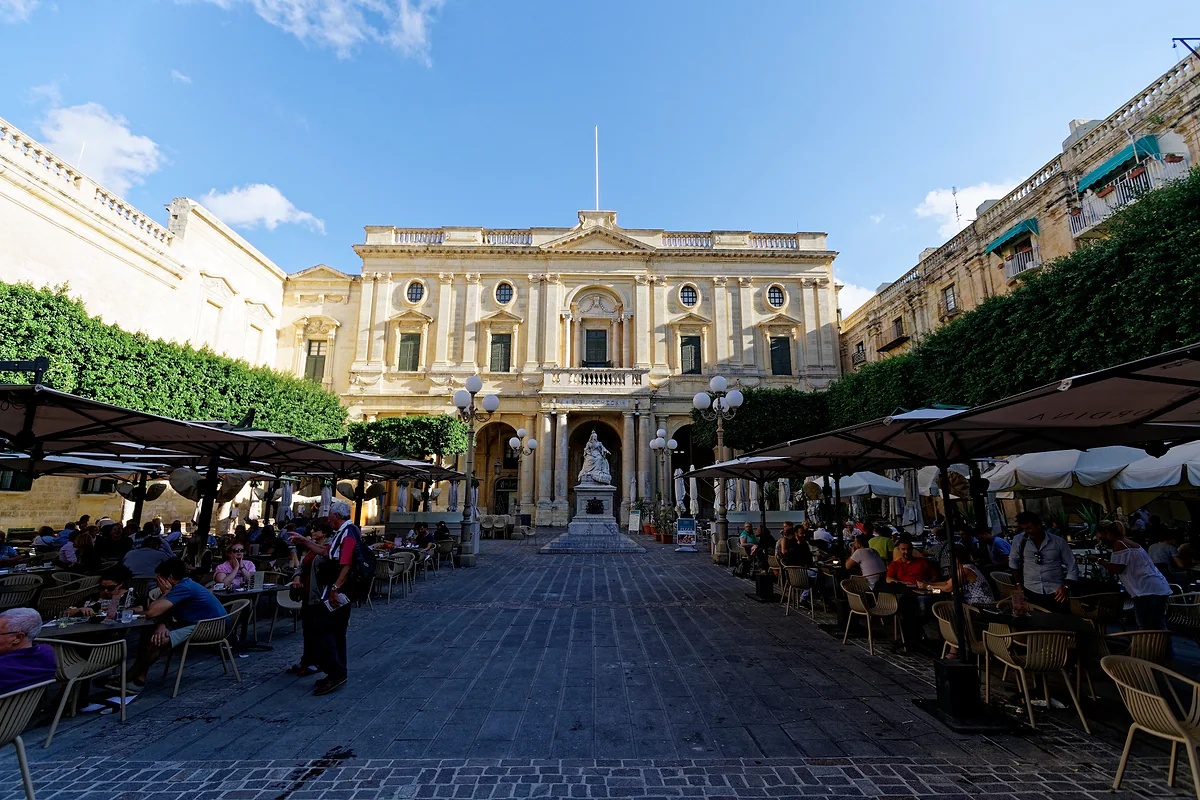
If anyone in your group thinks Malta is basically a sunny bit of Britain, I'd take them to the Grandmaster's Palace, now home to the President's Office. It's a country with more than 60 years of independence and an identity quite unlike any of its neighbours.

Before you go
What I would keep in mind
-
01 My tip
Schengen rules apply to UK visitors
Malta follows Schengen rules, so you can stay 90 days in any 180 without a visa. The Foreign Office adds that your passport must have been issued less than 10 years before you arrive.
Malta entry requirements -
02 Money
Euros, not pounds
Malta adopted the euro on 1 January 2008, and since 1 February that year it has been the only legal tender. Your UK debit or credit card works as normal, since Visa and Mastercard are widely accepted.
Malta currency -
03 Most beautiful
The George Cross on the flag
The white and red flag carries the George Cross that George VI awarded to Malta and its people in 1942 for their bravery in the war. It has been on the flag since 1943.
the Malta flag
What I would book
It’s a fair question. English is everywhere, the traffic keeps left, the plugs are the ones you have at home, and the island sits just 93 km from Sicily with food that often tastes Italian. With clues like that, it’s easy to assume Malta is some leftover corner of Britain or an Italian island. It’s neither. It’s a sovereign country with more than 60 years of independence behind it, and here’s how it got there.
Yes, Malta is a country, and here’s since when
Malta became independent from the United Kingdom on 21 September 1964, the same year it adopted the constitution still in force, according to Spain’s foreign ministry. Ten years later, on 13 December 1974, it abolished the British monarchy and became a republic within the Commonwealth. Today, in the EU’s own words, it’s a single-chamber parliamentary republic where the president’s role is largely ceremonial and the prime minister heads the government. I explain how that system works in how Malta is governed.
Both dates, 21 September and 13 December, are national holidays. A third is tied to sovereignty too, 31 March, Freedom Day, marking the closure of the last British base in 1979.
Why do people think Malta is British?
Because for a long time it was. Napoleon took Malta in 1798 on his way to Egypt, but the French didn’t last. The Maltese asked the British for help, and the British blockaded the islands in 1800. British rule then ran until 1964. To me you can still see it in the left-hand driving, the three-pin plugs and English sitting alongside Maltese as an official language.
The Second World War tied the two countries even closer. Heritage Malta says the islands were among the most heavily bombed places in the world between 1940 and 1942. In 1942 George VI awarded Malta and its people the George Cross, and Malta was the first Commonwealth country to receive it. It has been on the flag since 1943. The full story, from the temples to the EU, is in the history of Malta.
And why do others think it’s Italian?
Because before the British, and before the Knights, it was tied to Sicily. The Maltese tourist board says that until 1530 the islands were an extension of Sicily. That year they passed to the Order of St John, which ruled for more than two and a half centuries and founded Valletta. I cover the Knights in the Knights of Malta. Since then, Malta has never belonged to an Italian state.
Island or country?
Here’s the other mix-up. Malta is both the name of the country and the name of its main island. The island of Malta covers 245 km², but the country as a whole is 316 km², because it includes Gozo, Comino and several islets, a split I set out in how big Malta is. Only three islands are inhabited. You can see how they fit together in where is Malta.
A full member of Europe
Malta joined the European Union on 1 May 2004, Schengen on 21 December 2007 and the euro on 1 January 2008. For a British visitor that means Schengen rules at the border, with visa-free stays capped at 90 days in any 180-day period, and paying in euros rather than pounds. Your GHIC covers medically necessary state healthcare, according to the Foreign Office. I cover EES registration at the border in is Malta in the EU. If you ask me, it’s that blend of Sicily, the Knights and Britain that makes Malta so fascinating, and it’s also why it feels familiar and foreign at the same time.
A state with its own rules
Being a country shows up in details that surprise visitors. The flag, for instance, is protected by its own rules. The Maltese government bans its use in advertising and on vehicles, and it may only be flown with the George Cross at the bottom as a signal of dire distress. The national symbol, meanwhile, is the Maltese Cross, the eight-pointed emblem of the Order of St John. And the national anthem, L-Innu Malti, has words by Dun Karm Psaila and music by Robert Sammut. They’re small signs of a country that, at 316 km², takes its sovereignty very seriously indeed. Another one few people know is that Valletta wasn’t named as capital in the Constitution until December 2025, and it sits with the rest in my Malta facts.
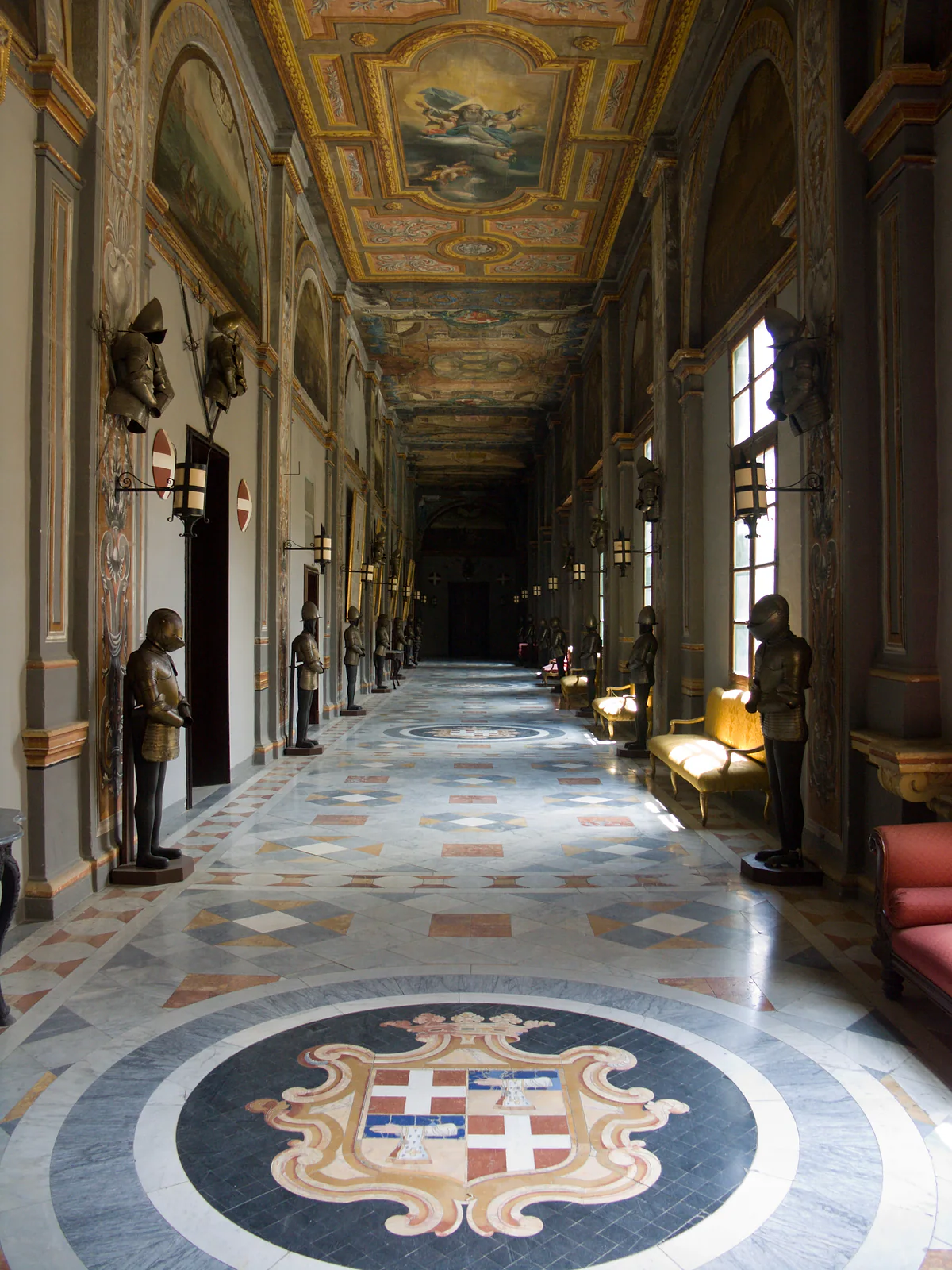
A corridor in the Grandmaster's Palace in Valletta, lined with suits of armour, with painted ceilings and the Order's arms in the marble floor.
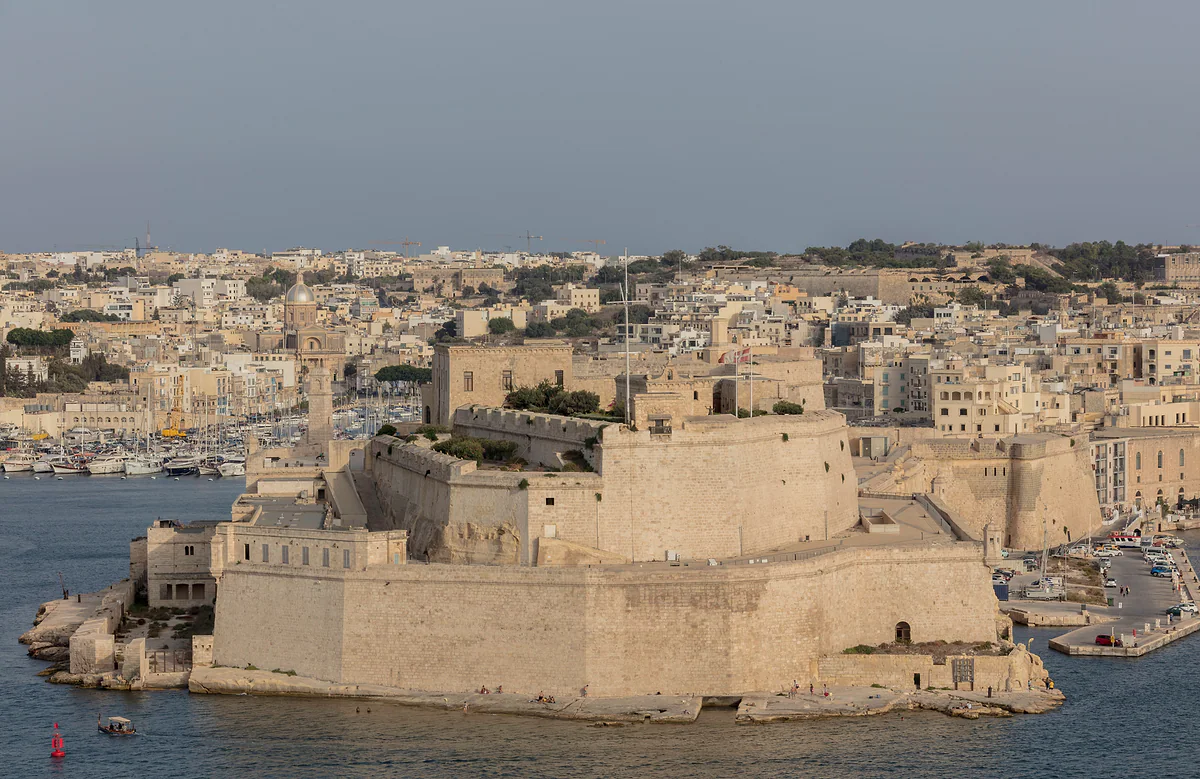
Fort St Angelo on the tip of Birgu, its stone bastions rising from the Grand Harbour with the houses of the Three Cities behind.
The dates that made Malta a country
| Year | What happened | Source |
|---|---|---|
| Until 1530 | An extension of Sicily | Malta tourist board |
| 1530 | The islands pass to the Order of St John | Malta tourist board |
| 1798 | Napoleon takes Malta from the Knights | Malta tourist board |
| 1800 | The British blockade the islands at the Maltese people's request | Malta tourist board |
| 21-9-1964 | Independence from the United Kingdom | European Commission |
| 13-12-1974 | Republic within the Commonwealth | Spanish foreign ministry |
| 31-3-1979 | The last British base closes (Freedom Day) | Government of Malta |
| 1-5-2004 | Joins the European Union | European Union |
| 21-12-2007 | Joins Schengen | European Union |
| 1-1-2008 | Adopts the euro | European Union |
Test yourself
True or false?
0/4 Pick before you peek.
-
Malta is still a British Overseas Territory.
See the answer
False. It became independent on 21 September 1964 and a republic in 1974. The last British base closed on 31 March 1979.
-
Malta became a republic in the same year it gained independence.
See the answer
False. Independence came in 1964, and the republic ten years later, on 13 December 1974.
-
Malta was the first Commonwealth country to receive the George Cross.
See the answer
True. The European Commission's speech repository notes that Malta was the first Commonwealth country to receive the bravery award, usually given to individuals, in 1942.
-
Malta is a member of the European Union.
See the answer
True. It has been since 1 May 2004, according to the EU's own website, which adds Schengen from 2007 and the euro from 2008.
- Year of independence
- 1964
- Year it became a republic
- 1974
- Last British base closes
- 1979
- Area of the country
- 316 km²
0 of 279 Malta guides
Your next stamp
- EU, Schengen and the euro
- Malta government
- History
- Where is Malta
- Entry requirements
- Language
- Malta facts
- Things to do in Malta
- Gozo
- Most beautiful places
- Comino
- Prettiest villages
- UNESCO World Heritage Sites
- The Maltese islands
- Towns and villages
- Island of Malta
- Blue Lagoon
- Fort Rinella
- Fort St Angelo
- Gardjola Gardens
- Ħal Saflieni Hypogeum
- Popeye Village
- Tarxien Temples
- Things to do in Gozo
- Valletta
- Esplora
- Golden Bay
- Gozo day trip
- Inquisitor's Palace
- Population
- St John's Co-Cathedral
- St Mary's Tower
- Grandmaster's Palace
- How big is Malta
- Maritime Museum
- Mellieħa Bay
- Fort St Elmo
- Malta at War Museum
- Paradise Bay
- Barrakka Gardens
- Red Tower
- Religion
- Saluting Battery
- MUŻA
- National Museum of Archaeology
- Underground Valletta
- Lascaris War Rooms
- Casa Rocca Piccola
- Malta in one day
- Three Cities
- Victoria
- Birgu
- Manoel Theatre
- Weekend in Malta
- Xagħra
- City Gate and Parliament
- Malta in three days
- Nadur
- Senglea
- Cospicua
- Malta in four days
- Qala
- Valletta Waterfront
- Għajnsielem
- Kalkara
- Malta in five days
- Malta in a week
- Paola
- Xewkija
- Sannat
- Tarxien
- Munxar
- Żabbar
- Fgura
- Fontana
- Kerċem
- Luqa
- Floriana
- Marsa
- Mellieħa
- The Citadel, Gozo
- Żebbuġ (Gozo)
- Ġgantija Temples
- Marsalforn
- Santa Luċija
- Ramla Bay
- San Lawrenz
- Xgħajra
- Xwejni salt pans
- Calypso's Cave
- Għarb
- Żejtun
- Għasri
- Gudja
- San Blas Bay
- Għaxaq
- Ħondoq Bay
- Marsaxlokk
- Kirkop
- Marsaxlokk Fish Market
- Mqabba
- St Peter's Pool
- Marsaskala
- Qrendi
- Żurrieq
- Beaches
- Comino ferry
- Ħaġar Qim and Mnajdra
- Mdina
- Mġarr (Gozo)
- Blue Grotto
- Diving
- Mdina Cathedral
- Xewkija Rotunda
- Birżebbuġa
- Money and payments
- Palazzo Falson
- Safi
- Shipwrecks
- Ta' Ċenċ Cliffs
- Għar Dalam
- Mdina Dungeons
- Mġarr ix-Xini
- Prices and budget
- Snorkelling
- Boat trips
- Malta on a budget
- Playmobil FunPark
- Rabat (Malta)
- Xlendi
- Dwejra
- Gozo beaches
- Siġġiewi
- St Paul's Catacombs
- Tipping
- Azure Window
- Domvs Romana
- Għar Lapsi
- Great Siege of 1565
- Plugs
- Limestone Heritage Park
- Second World War
- St Paul's Grotto
- Ta' Pinu Basilica
- Time zone
- Buskett Gardens
- Knights of Malta
- Mobile and roaming
- Wied il-Għasri
- Dingli
- Maltese cross
- Dingli Cliffs
- Flag
- Żebbuġ
- Coat of arms
- Mtarfa
- Balzan
- National anthem
- Lija
- Game of Thrones
- Iklin
- Attard
- Film locations
- Forts and fortifications
- San Anton Gardens
- Ta' Qali Crafts Village
- Victoria Lines
- Megalithic temples
- Catacombs
- Museums
- Where to eat
- Where to stay
- Churches
- Hotels in Valletta
- Restaurants in Valletta
- Hotels in Sliema
- Maltese food
- Restaurants in Marsaxlokk
- Viewpoints
- Hotels in St Julian's
- Pastizzi
- Walking and hiking
- Hotels in Buġibba and Qawra
- Maltese rabbit stew
- Safety
- Hotels in Mellieħa
- Kinnie and Cisk
- Scams
- Gozo hotels
- Nightlife
- Tap water
- Boat parties
- Holiday packages
- Tourist tax
- All inclusive
- Gay Malta
- Sightseeing passes
- Apartments
- Malta with kids
- Public holidays
- How to get there
- Luxury
- Malta for couples
- Taxis and ride-hailing
- Weather
- Best time to visit
- Cycling
- English schools
- Flights
- Flights from Madrid
- Sea temperature
- Shopping and souvenirs
- Airport
- Free walking tours
- In winter
- Airport transfers
- Day trips and tours
- In summer
- Ferry from Sicily
- In January
- Cruise stop
- In February
- In March
- In April
- In May
- Getting around
- In June
- Buses
- July
- August
- Hop on hop off
- Gozo ferry
- September
- Gozo fast ferry
- October
- November
- Valletta ferries
- Car hire
- December
- Driving
- Events
- St Paul's Bay
- Village feasts
- Buġibba
- Christmas
- Easter
- Qawra
- Carnival
- Xemxija
- Fireworks festival
- Malta National Aquarium
- Isle of MTV
- St Paul's Islands
- Mosta
- Mosta Rotunda
- Naxxar
- Palazzo Parisio
- Għargħur
- Mġarr (Malta)
- Sliema
- Ta' Ħaġrat and Skorba Temples
- Għajn Tuffieħa Bay
- Tigné Point
- Ġnejna Bay
- St Julian's
- Paceville
- St George's Bay
- Gżira
- Msida
- Ta' Xbiex
- Pietà
- Pembroke
- Swieqi
- San Ġwann
- Birkirkara
- Ħamrun
- Santa Venera
- Qormi
Frequently asked questions
Is Malta a country?
Yes. It's an independent parliamentary republic, sovereign since 1964, with its own president, government and parliament. It's a member of the EU, Schengen and the eurozone.
Is Malta part of the UK?
Not any more. It was British from 1800 until independence on 21 September 1964, and the last British forces left on 31 March 1979. It remains in the Commonwealth as a republic.
Is Malta part of Italy?
No. The Maltese tourist board says the islands were an extension of Sicily until 1530, when they passed to the Order of St John. Since then they've never been Italian.
Is Malta an island or a country?
Both. Malta is the name of the country and of its main island, which covers 245 km². The whole country, with Gozo, Comino and the islets, adds up to 316 km².
Is Malta in the Commonwealth?
Yes. When it became a republic on 13 December 1974 it stayed in the Commonwealth, according to Spain's foreign ministry and the Maltese government.
Is Malta in the EU?
Yes, since 1 May 2004. It has also been in Schengen since 21 December 2007 and in the eurozone since 1 January 2008.
By
Tourism graduate with a master’s in Tourism Management and Planning from the University of Málaga, who has travelled across Europe. He writes every guide from official sources and his own judgement.
Published on . Facts checked on .
Sources
Photos: Txllxt TxllxT (CC BY-SA 4.0); Jean-Christophe BENOIST (CC BY 2.5); Diego Delso (CC BY-SA 4.0), via Wikimedia Commons.