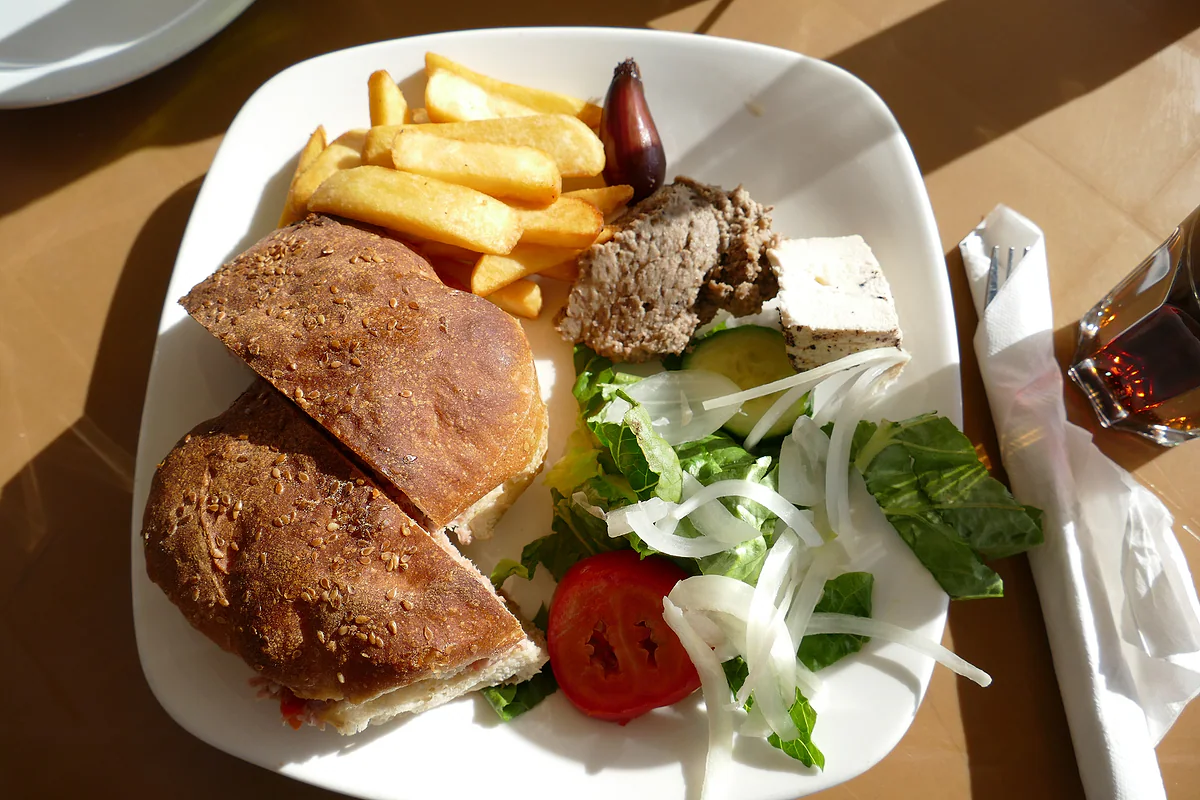
Sicily, North Africa and a lot of rabbit
Maltese food, dish by dish
Traditional Maltese food is rustic and seasonal, built on Sicilian cooking with an Arab accent. The dishes that keep coming up in official sources are pastizzi, ftira, rabbit stew, aljotta fish soup, bragioli, timpana and ġbejniet, small sheep's cheeses. Ftira has been on UNESCO's intangible heritage list since 2020.
In 30 seconds
Full read: 3 min
- Maltese food is rustic and seasonal, with a Sicilian base and North African influence.
- The dishes to know are rabbit stew, pastizzi, ftira, aljotta, bragioli and timpana.
- Ftira has been on UNESCO's intangible heritage list since 2020.
- Each feast has its sweet, figolli at Easter, honey rings at Christmas and nougat at the summer festas.
If I only tried three things in Malta, they'd be a hot pastizz, a filled ftira and a rabbit stew. I'd also save room for aljotta in a fishing village, because it says more about an island that lives off the sea than any other dish.

Before you go
What I would keep in mind
-
01 Most beautiful
A loaf with UNESCO status
UNESCO listed ftira in 2020, a flat sourdough bread with a thick crust and big irregular holes, filled with olive oil, tomato, tuna, capers and olives.
pastizzi -
02 My tip
Every feast has its sweet
Visitmalta lists almond-filled figolli at Easter, honey rings at Christmas, and date pastries and nougat at the summer village festas.
-
03 To save money
Gozo cheeselets from the supermarket
The Ministry for Gozo says ġbejniet, made from sheep's and goat's milk, are sold in supermarkets, Gozitan produce shops and by the cheesemakers themselves.
Malta souvenirs -
04 Worth the splurge
Rabbit with a Bib Gourmand
Rubino in Valletta holds a 2026 Bib Gourmand and keeps fenek moqli, rabbit braised in red wine, on its menu, according to the Michelin Guide.
Maltese rabbit stew
What I would book
- Tours and ticketsGetYourGuide Tasting tours in Malta If you want to try several dishes in one afternoon with someone explaining what you're eating. Pick one that includes pastizzi, ftira and cheeselets.
- Book a tableTheFork Book a Maltese restaurant To get a table for Maltese cooking in high season at the places everyone's heard of.
My ranking, scored
The Maltese dishes I'd try first
My own scores out of 10. They weigh how much the dish tells you about Malta, how easy it is to find and what official sources say about it.
0 of 8 seen
-
Stuffat tal-fenek (rabbit stew)
The dish visitmalta mentions in every food guide, served at family meals after the baked pasta. If you only eat one thing, make it this.
9.4 out of 10
-
Pastizzi
Flaky pastry with ricotta or mushy peas. Cheap, hot and in every village. Visitmalta suggests them with wine or coffee.
9.2 out of 10
-
Ftira
Flat sourdough bread with oil, tomato, tuna and capers. On UNESCO's intangible heritage list since 2020.
9.0 out of 10
-
Aljotta
Garlicky fish soup. You'll find it mostly in restaurants in the fishing villages.
8.7 out of 10
-
Timpana
Macaroni in a meat sauce baked inside a pastry case. A special-occasion dish, according to visitmalta.
8.4 out of 10
-
Gozo ġbejniet
Small cheeses of sheep's and goat's milk, fresh or dried with pepper. They turn up in soups, fillings and platters.
8.3 out of 10
-
Bragioli
Beef olives, thin slices of beef rolled around a filling. On visitmalta's list of traditional cooking.
8.0 out of 10
-
Lampuki pie
Only worth it in season, which the Ministry for Gozo says starts in August.
7.9 out of 10
You can read Maltese cooking off a map. Visitmalta calls it rustic and seasonal, shaped by Malta’s closeness to Sicily and North Africa, and UNESCO backs that up with a single word, ftira, which comes from the Arabic fatir. What I like about it is that it doesn’t try to be clever. It’s village food, fishermen’s food and feast-day food.
Where the flavours come from
Visitmalta sums it up as the result of a long relationship between the islanders and the civilisations that ruled the islands. The upshot is thoroughly Mediterranean. Pasta and pastries in the Sicilian tradition, pulses and spices that feel North African, and a fish repertoire that depends on what the boats bring in each week.
If you know southern Italy you’ll feel at home, but the names and combinations are Malta’s own. Kapunata is Malta’s take on ratatouille, according to visitmalta, and timpana wraps macaroni in a meat sauce inside a pastry case.
Which Maltese dishes should you try?
If I could only choose one dish, it would be rabbit. Visitmalta mentions it in all of its food guides, and at family meals it follows the baked pasta, with potatoes and vegetables. I give it a page of its own, on Maltese rabbit stew.
Next come pastizzi, the flaky pastries with a filling of ricotta or mushy peas, which visitmalta recommends hot with wine or coffee, and ftira, the flat sourdough loaf filled with oil, tomato, tuna, capers and olives. Both are covered in my guide to pastizzi.
For a spoon, there’s aljotta, a very garlicky fish soup, and minestra, the thick vegetable soup of winter. For a main, bragioli, which the British would call beef olives, and ross il-forn, baked rice. And to nibble with a glass of wine, what visitmalta calls the village bar spread. Olives, ġbejniet, zalzett (a coriander sausage), galletti crackers and bigilla, a broad bean pâté.
Gozo does it differently
The Ministry for Gozo keeps coming back to three things. First, rabbit, either stewed or fried with garlic, and often brought to the table with spaghetti in its sauce, plus fried rabbit liver as a starter. Second, fish, which it sends you to Xlendi, Marsalforn and Mġarr for, with lampuki from August. Third, the cheeselets, fresh, sun-dried or peppered with salt and a dash of vinegar, sold in supermarkets and by the cheesemakers themselves.
On Gozo the ftira changes shape too. The Ministry describes an open ftira, more like a pie, with potato, onion, capers, olives and anchovies, and another with fresh cheeselets and egg. If you’re in Victoria, I’d order one instead of a sandwich.
A sweet for every feast
This is where Maltese cooking follows the calendar. At Easter, figolli, pastry figures filled with almond. At Christmas, qagħaq tal-għasel, honey rings. At the summer festas, imqaret, date pastries, and qubbajt, the nougat sold from street stalls. UNESCO, which listed the Maltese village festa in 2023, names nougat as the typical festa food.
The rest of the year there are Sicilian-style kannoli and cassata, and helwa tat-Tork, an almond sweet.
How I’d eat well
Two simple rules. Order what the season puts on the table, which in Malta mostly means fish, and be wary of a menu without a single dish from this page. For names and areas, see where to eat in Malta. And to drink with it, local wine and Kinnie have their own page on Kinnie and Cisk.
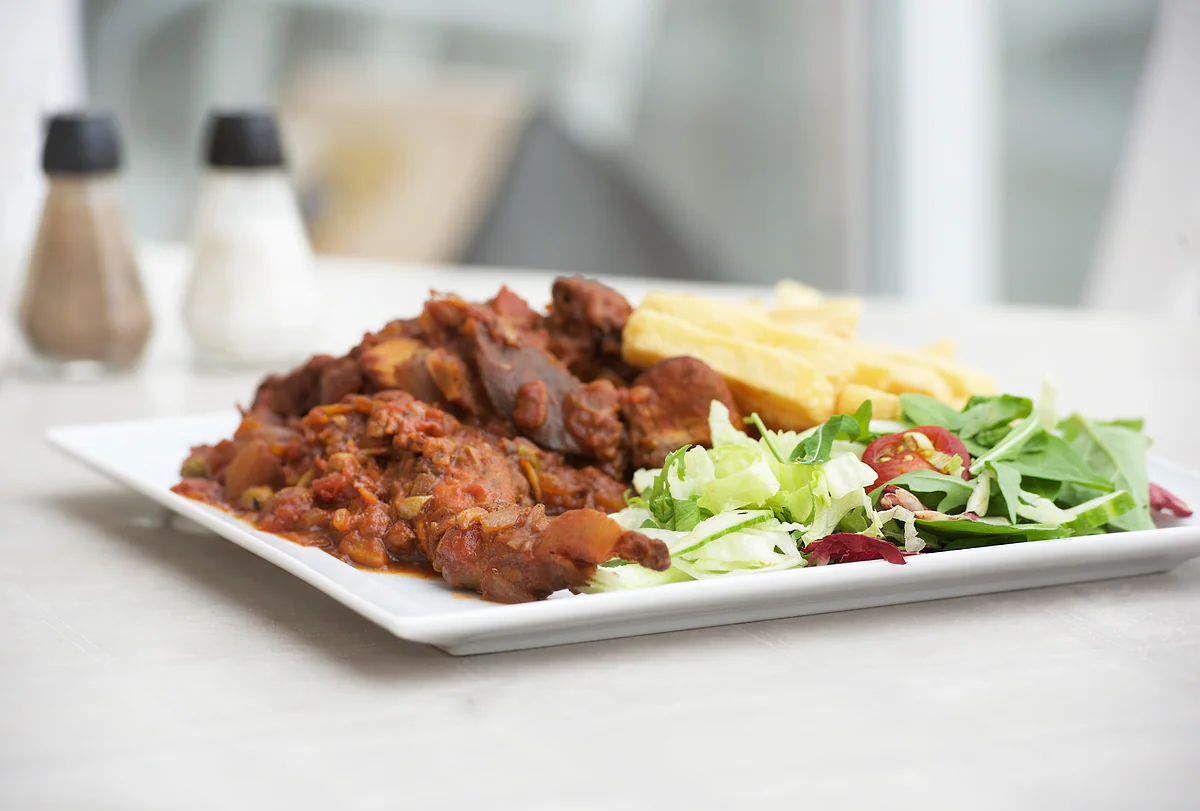
A plate of stuffat tal-fenek, the rabbit stewed in tomato and wine that is Malta's national dish, served with chips and a side salad.
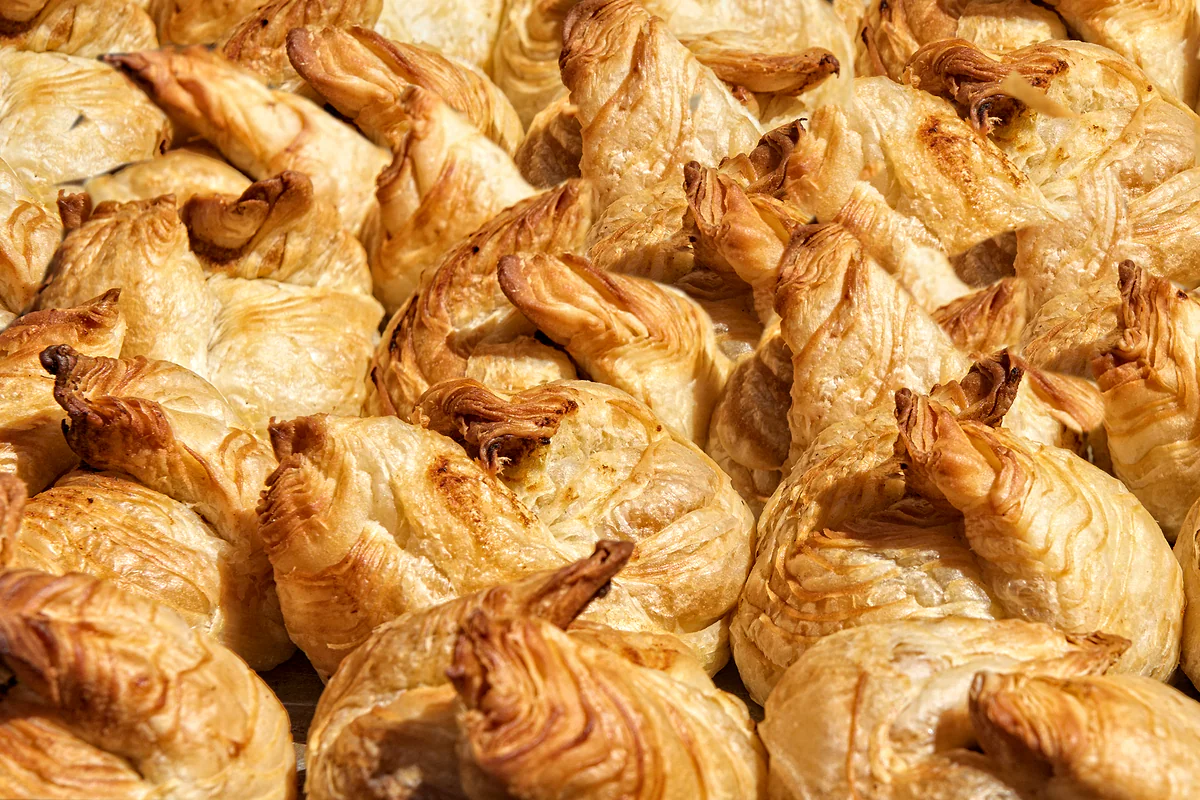
A tray of freshly baked pastizzi, the Maltese flaky pastries filled with ricotta or mushy peas, golden and crisp.
What to eat in Malta, by occasion (visitmalta and Visit Gozo)
| Occasion | Dish | What it is |
|---|---|---|
| Nibbles with wine | Ġbejniet, zalzett, galletti, bigilla | Cheeselets, coriander sausage, crackers and broad bean pâté |
| Beach day | Ħobż biż-żejt | Bread rubbed with tomato and oil, then filled |
| Winter | Minestra | Thick vegetable soup |
| Family Sunday lunch | Ross il-forn, imqarrun, timpana | Baked rice and baked pasta |
| Summer festas | Imqaret, qubbajt | Date pastries and nougat |
| Easter | Figolli | Almond-filled pastry figures |
| Christmas | Qagħaq tal-għasel | Honey rings |
Visitmalta food guides (archive.org copies from 2025 and 2026) and Visit Gozo, checked on 28-09-2026.
Test yourself
True or false?
0/4 Pick before you peek.
-
Maltese ftira is on UNESCO's intangible heritage list.
See the answer
True. It was inscribed in 2020 on the Representative List. UNESCO notes that skilled bakers still shape it by hand.
-
Pastizzi only come with a ricotta filling.
See the answer
False. Visitmalta lists two fillings, ricotta and mushy peas.
-
The word ftira comes from Italian.
See the answer
False. UNESCO explains that it comes from the Arabic fatir, unleavened bread.
-
Kapunata is Malta's version of ratatouille.
See the answer
True. That's how visitmalta describes it in its guide to Maltese food and drink.
- Year UNESCO listed ftira
- 2020
- Classic pastizz fillings
- 2
- Start of the lampuki season
- August
What to see
What to see in Maltese food
0 of 279 Malta guides
Your next stamp
- Maltese rabbit stew
- Pastizzi
- Village feasts
- The Maltese islands
- Prettiest villages
- All inclusive
- Where to eat
- Gozo
- Things to do in Malta
- Most beautiful places
- Comino
- UNESCO World Heritage Sites
- Where is Malta
- Towns and villages
- Island of Malta
- Blue Lagoon
- Fort Rinella
- Fort St Angelo
- Gardjola Gardens
- Ħal Saflieni Hypogeum
- Is Malta a country?
- Popeye Village
- Tarxien Temples
- Things to do in Gozo
- Valletta
- Esplora
- Golden Bay
- Gozo day trip
- Inquisitor's Palace
- Population
- St John's Co-Cathedral
- St Mary's Tower
- Grandmaster's Palace
- How big is Malta
- Maritime Museum
- Mellieħa Bay
- Fort St Elmo
- Language
- Malta at War Museum
- Paradise Bay
- Barrakka Gardens
- Red Tower
- Religion
- Malta government
- Saluting Battery
- MUŻA
- National Museum of Archaeology
- Underground Valletta
- Lascaris War Rooms
- Casa Rocca Piccola
- Malta in one day
- Three Cities
- Victoria
- Birgu
- Manoel Theatre
- Weekend in Malta
- Xagħra
- City Gate and Parliament
- Malta in three days
- Nadur
- Senglea
- Cospicua
- Malta in four days
- Qala
- Valletta Waterfront
- Għajnsielem
- Kalkara
- Malta in five days
- Malta in a week
- Paola
- Xewkija
- Sannat
- Tarxien
- Munxar
- Żabbar
- Fgura
- Fontana
- Kerċem
- Luqa
- Floriana
- Marsa
- Mellieħa
- The Citadel, Gozo
- Żebbuġ (Gozo)
- Ġgantija Temples
- Marsalforn
- Santa Luċija
- Ramla Bay
- San Lawrenz
- Xgħajra
- Xwejni salt pans
- Calypso's Cave
- Għarb
- Żejtun
- Għasri
- Gudja
- San Blas Bay
- Għaxaq
- Ħondoq Bay
- Marsaxlokk
- Kirkop
- Marsaxlokk Fish Market
- Mqabba
- St Peter's Pool
- Marsaskala
- Qrendi
- Żurrieq
- Beaches
- Comino ferry
- EU, Schengen and the euro
- Ħaġar Qim and Mnajdra
- Mdina
- Mġarr (Gozo)
- Blue Grotto
- Diving
- Entry requirements
- Mdina Cathedral
- Xewkija Rotunda
- Birżebbuġa
- Money and payments
- Palazzo Falson
- Safi
- Shipwrecks
- Ta' Ċenċ Cliffs
- Għar Dalam
- Mdina Dungeons
- Mġarr ix-Xini
- Prices and budget
- Snorkelling
- Boat trips
- Malta on a budget
- Playmobil FunPark
- Rabat (Malta)
- Xlendi
- Dwejra
- Gozo beaches
- History
- Siġġiewi
- St Paul's Catacombs
- Tipping
- Azure Window
- Domvs Romana
- Għar Lapsi
- Great Siege of 1565
- Plugs
- Limestone Heritage Park
- Second World War
- St Paul's Grotto
- Ta' Pinu Basilica
- Time zone
- Buskett Gardens
- Knights of Malta
- Mobile and roaming
- Wied il-Għasri
- Dingli
- Maltese cross
- Dingli Cliffs
- Flag
- Żebbuġ
- Coat of arms
- Mtarfa
- Balzan
- National anthem
- Lija
- Malta facts
- Game of Thrones
- Iklin
- Attard
- Film locations
- Forts and fortifications
- San Anton Gardens
- Ta' Qali Crafts Village
- Victoria Lines
- Megalithic temples
- Catacombs
- Museums
- Where to stay
- Churches
- Hotels in Valletta
- Restaurants in Valletta
- Hotels in Sliema
- Restaurants in Marsaxlokk
- Viewpoints
- Hotels in St Julian's
- Walking and hiking
- Hotels in Buġibba and Qawra
- Safety
- Hotels in Mellieħa
- Kinnie and Cisk
- Scams
- Gozo hotels
- Nightlife
- Tap water
- Boat parties
- Holiday packages
- Tourist tax
- Gay Malta
- Sightseeing passes
- Apartments
- Malta with kids
- Public holidays
- How to get there
- Luxury
- Malta for couples
- Taxis and ride-hailing
- Weather
- Best time to visit
- Cycling
- English schools
- Flights
- Flights from Madrid
- Sea temperature
- Shopping and souvenirs
- Airport
- Free walking tours
- In winter
- Airport transfers
- Day trips and tours
- In summer
- Ferry from Sicily
- In January
- Cruise stop
- In February
- In March
- In April
- In May
- Getting around
- In June
- Buses
- July
- August
- Hop on hop off
- Gozo ferry
- September
- Gozo fast ferry
- October
- November
- Valletta ferries
- Car hire
- December
- Driving
- Events
- St Paul's Bay
- Buġibba
- Christmas
- Easter
- Qawra
- Carnival
- Xemxija
- Fireworks festival
- Malta National Aquarium
- Isle of MTV
- St Paul's Islands
- Mosta
- Mosta Rotunda
- Naxxar
- Palazzo Parisio
- Għargħur
- Mġarr (Malta)
- Sliema
- Ta' Ħaġrat and Skorba Temples
- Għajn Tuffieħa Bay
- Tigné Point
- Ġnejna Bay
- St Julian's
- Paceville
- St George's Bay
- Gżira
- Msida
- Ta' Xbiex
- Pietà
- Pembroke
- Swieqi
- San Ġwann
- Birkirkara
- Ħamrun
- Santa Venera
- Qormi
Frequently asked questions
What is traditional Maltese food?
Rabbit stew, pastizzi, ftira, aljotta, bragioli, timpana, kapunata and ġbejniet. All of them appear in the official food guides from visitmalta and the Ministry for Gozo.
What is Malta's national dish?
None of the official sources I've read declares one, but rabbit is the dish that comes up most in the food guides. I'd treat it as the one to try.
What are the influences on Maltese cuisine?
Visitmalta points to Malta's closeness to Sicily and North Africa. UNESCO adds that the word ftira comes from the Arabic fatir.
What desserts should I try in Malta?
Visitmalta lists kannoli, cassata, imqaret (date pastries), almond helwa tat-Tork, figolli at Easter and honey rings at Christmas.
Is Maltese food spicy?
Not in the chilli sense. The official descriptions talk about garlic, olive oil, capers, herbs and coriander in the sausage, so it's closer to southern Italian cooking than to anything hot.
Can I bring Maltese food back to the UK?
The dried Gozo cheeselets keep well, according to the Ministry for Gozo, but check GOV.UK before packing, because there are rules on bringing meat and dairy into Great Britain from abroad.
By
Tourism graduate with a master’s in Tourism Management and Planning from the University of Málaga, who has travelled across Europe. He writes every guide from official sources and his own judgement.
Published on . Facts checked on .
Sources
Photos: Kritzolina (CC BY-SA 4.0); Renata Apan (CC BY-SA 4.0); Renata Apan (CC BY-SA 4.0), via Wikimedia Commons.